
Enjoying the content on 3QD? Help keep us going by donating now.
Category: Recommended Reading
Sunday, August 11, 2024
Jonathan Kramnick on the Craft of Criticism Amid Institutional Decline
Colleen Ruth Rosenfeld in Public Books:
In the face of institutional and economic pressures that privilege the “supra-disciplinary” organization of knowledge and emphasize “humanism” broadly conceived, Jonathan Kramnick believes that the knowledge practices of distinct disciplines are worth preserving. In Criticism and Truth, his name for the distinctive practice of literary studies is “close reading,” or “the craftwork of spinning sentences from sentences already in the world.” Close reading is ubiquitous to the discipline and “that ubiquity,” he writes, is “part of the democratic ethos of this book.” Close reading is thus both the “baseline competence” of the discipline and the permitting condition for all subsequent scales of argumentation across the wide range of theoretical axes that characterize “criticism as it is practiced all the time, everywhere, as part of the ordinary science and everyday brilliance of the discipline.”
Criticism and Truth proceeds by offering us a close reading of close reading. Tracking one writer’s syntactical bend as she accommodates her prose to this clause or that line and another writer’s imitation of the figurative language that she studies, Kramnick asks us to think about the creative dimension of criticism. As “craft knowledge,” close reading treats the many objects of its study as “enabling constraints” for thought. The critic’s woven sentences are an expression of those constraints. Our evaluation of criticism is therefore an aesthetic judgment. When we call a piece of criticism “apt,” our evaluation of the achievement presupposes its truth as the necessary condition of its “elegance.”
More here.
Enjoying the content on 3QD? Help keep us going by donating now.
Don’t Believe the AI Hype
Daron Acemoglu in Project Syndicate:
According to tech leaders and many pundits and academics, artificial intelligence is poised to transform the world as we know it through unprecedented productivity gains. While some believe that machines soon will do everything humans can do, ushering in a new age of boundless prosperity, other predictions are at least more grounded. For example, Goldman Sachs predicts that generative AI will boost global GDP by 7% over the next decade, and the McKinsey Global Institute anticipates that the annual GDP growth rate could increase by 3-4 percentage points between now and 2040. For its part, The Economist expects that AI will create a blue-collar bonanza.
Is this realistic? As I note in a recent paper, the outlook is far more uncertain than most forecasts and guesstimates suggest. Still, while it is basically impossible to predict with any confidence what AI will do in 20 or 30 years, one can say something about the next decade, because most of these near-term economic effects must involve existing technologies and improvements to them.
It is reasonable to suppose that AI’s biggest impact will come from automating some tasks and making some workers in some occupations more productive. Economic theory provides some guidance for assessing these aggregate effects. According to Hulten’s theorem (named for economist Charles Hulten), aggregate “total factor productivity” (TFP) effects are simply the product of the share of tasks that are automated multiplied by the average cost savings.
While average cost savings are difficult to estimate and will vary by activity, there have already been some careful studies of AI’s effects on certain tasks.
Enjoying the content on 3QD? Help keep us going by donating now.
It Is Not America Without Dissent
Catharine Stimpson in The Ideas Letter:
On Christmas Eve, 2016, three grandmothers made a late afternoon pilgrimage to a small pizza place on Connecticut Avenue in Washington, DC. On previous visits, they had walked with their grandchildren down the Avenue to eat pizza and pasta there. Now their visit had a different purpose: For unfathomable reasons, the quiet and friendly restaurant had become the object of a vile conspiracy theory called Pizzagate, which baselessly alleged that children were being held in the basement of Comet. After the conspiracy spread across the Internet, a man showed up with a gun. Fortunately no one was killed, and the owners, unbowed, had insisted on staying open for the community. The grandmothers wanted to thank the owners and staff of Comet Ping Pong for having survived the onslaught of disinformation and the assault by an armed vigilante.
I was one of the grandmothers. The transition from President Obama to President-elect Trump had unsettled all three of us. Both onslaught and assault were baleful warning signs of a recrudescence of past dangers and future dangers to come. As such, they offended my patriotism. They still do.
My patriotism has deep roots. I was a child during World War II. In my small hometown in the Pacific Northwest, we grew silent when we passed a Gold Star Mother banner in a window. We wept, cheered, and threw confetti in 1945 when America and the Allies won. My father came home alive. America was beautiful and majestic and justly powerful.
Since 1945, I have had an immense amount to unlearn about “my” America. Genuine inquiry corrodes naivete. I have had to dive into the American wreck and, in the words of Adrienne Rich, “see the damage that was done/ and the treasures that prevail.”
More here.
Enjoying the content on 3QD? Help keep us going by donating now.
All that is Air Melts into Air
Tega Brain and Sam Lavigne in e-flux Architecture:
Carbon offsetting injects market logic into thin air. It demands that certain activities become measured and standardized, reduced to the single dimension of the carbon dioxide molecule. The goal is fungibility—to assert equivalence between activities by people or environments so that emissions created over here can be traded and (theoretically) compensated for by actions removing or reducing carbon over there. The means is, of course, commodification. Offsets privatize planetary metabolism.
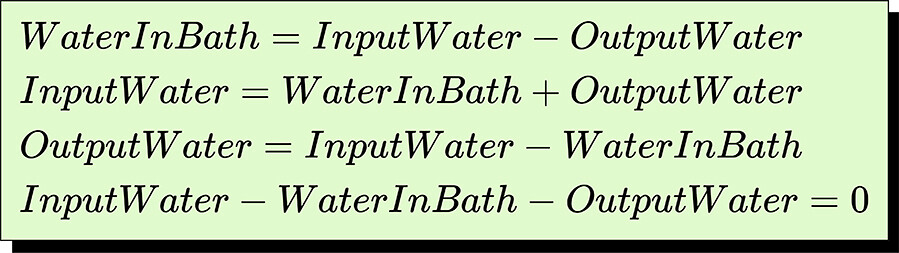
Offsetting is the logic behind “net zero.” “Think about it like a bath,” suggests National Grid. “The amount of water in the bath depends on both the input from the taps and the output via the plughole. To keep the amount of water in the bath at the same level, you need to make sure that the input and output are balanced.”1 Or, as McKinsey & Company puts it: “Net zero is an ideal state where the amount of greenhouse gasses released into the earth’s atmosphere is balanced by the amount of greenhouse gasses removed.”2
Policymakers and corporations around the world have embraced the concept of net zero as a pathway to address the climate crisis. Nation states, corporations, public institutions, and even art exhibitions purchase offsets as financial assets (called carbon credits) in an attempt to compensate for their emissions and reach a state of carbon neutrality. Traded as financial commodities on carbon markets, offsets are supposed to represent either carbon dioxide reductions—via avoided emissions that would have otherwise happened in a business-as-usual scenario—or carbon dioxide removals—where some of the carbon already hanging about in the atmosphere is drawn down.
More here.
Enjoying the content on 3QD? Help keep us going by donating now.
Donald trump & Kamala Harris
Hamza Hajjaj in Cartoon Movement:

More here.
Enjoying the content on 3QD? Help keep us going by donating now.
Are We Happy Yet?
Jessica Grose in The New York Times:
 Three times a day my phone pings with a notification telling me that I have a new happiness survey to take. The survey, from TrackYourHappiness.org, asks me a series of questions about what I was doing the moment right before I take it, whether I wanted to be doing it, how focused I was on my task, how productive I was being and how happy I felt about it all. I measure my emotional levels with a little toggle that slides from “bad” to “good.” Though the trackers’ authors offer a disclaimer that “correlation does not prove causation,” results from thousands of its users published in 2010 suggest that people are happier when they are focused.
After I took 100 surveys over about a month, that’s not what my results told me. I reported the most happiness when I was eating and the least when I was working. I was happier at home than I was outside or anywhere else.
My biggest takeaway, though, is that much of my life consists of things that I don’t particularly want to do, like folding laundry and struggling with the wording of a paragraph. Being reminded that most of my life is obligatory does not exactly spark joy. As the weeks of survey-taking went by, I had another, more paralyzing thought: that this focus on my feelings was instilling a new kind of anxiety. Rather than just walking one of my kids home from school and contentedly listening to her chatter about sedimentary rocks, I was thinking about the survey’s infernal happiness toggle and where this experience ranked relative to the other moments I had tracked.
More here.
Enjoying the content on 3QD? Help keep us going by donating now.
Friday, August 9, 2024
The realist vs the pragmatist view of epistemology
Céline Henne in Aeon:
 How could gaining knowledge amount to anything other than discovering what was already there? How could the truth of a statement or a theory be anything but its correspondence to facts that were fixed before we started investigating them?
Some philosophers have argued that, despite widespread intuitions to the contrary, knowledge is not merely a matter of representation but also of construction, and that truth cannot be completely detached from human needs and interests. John Dewey, for example, argued that the object of knowledge is the product of enquiry and not something that exists independently of that enquiry. But this can’t be right. After all, scientists discovered DNA, distant planets and gravity, they did not create them. Facts are facts. Any other view seems disastrous, from the vague assertion that we all create our own truth to the Nietzschean claim that it’s interpretations all the way down. Without a shared target that we all aim at getting right, rational discussion is no longer possible. So what were these philosophers getting at, exactly?
More here.
Enjoying the content on 3QD? Help keep us going by donating now.
George Scialabba on Michael Walzer
Enjoying the content on 3QD? Help keep us going by donating now.
Yes, You Do Have to Tolerate the Intolerant
Yascha Mounk at his own Substack:

Free speech is under attack.
In the United States, government officials are increasingly telling social media companies which forms of damaging “misinformation” they should censor, and now have the Supreme Court’s implicit blessing to do so. In Europe, overly broad restrictions on hate speech have been used to threaten people making unpopular statements with jail time. According to a government-sponsored draft bill in Canada, political opinions that could be construed as supporting genocide would be punished with life imprisonment.
Plenty of arguments against free speech lack any credible pretense of sophistication. They simply jump from the undoubted fact that many people say dumb or disgusting things on the internet to the understandable, if wrong-headed, wish that anybody who says such things should be made to shut up. But those who argue for restrictions on free speech with an ounce of sophistication have increasingly begun to invoke an idea by a philosopher whose work they otherwise studiously ignore: Karl Popper and his “paradox of tolerance.”
More here.
Enjoying the content on 3QD? Help keep us going by donating now.
OpenAI expert Scott Aaronson on consciousness, quantum physics and AI safety
Enjoying the content on 3QD? Help keep us going by donating now.
Friday Poem
My Quaker-Atheist Friend, Who Has Come to This Meeting-House since 1913, Smokes & Looks Out over the Rawthey to Home Fell
what do you do
anything for?
you do it
for what the Mediaevals would call
the Glory of God
doing it for money
that doesn’t do it;
doing it for vanity,
that doesn’t do it;
doing it to justify a disorderly life,
that doesn’t do it
Look at Briggflatts here . . .
It represents the best
that the people were able to do
they didn’t do it for gain;
in fact, they must have
taken a loss
whether it is stone next to stone
or a word next to a word
it is the glory—
the simple craft of it
and money and sex aren’t worth
bugger-all, not
bugger all
solid, common, vulgar words
the ones you can touch
the ones that yield
and a respect for the music . . .
what else can you tell ’em
by Jonathan Williams
from The Language They Speak Is Things They Eat
University of North Caroline Press, 1994
Who Do They Think They Are? When extraordinary writers prove fallible
Patrick Warner in Literary Review of Canada:
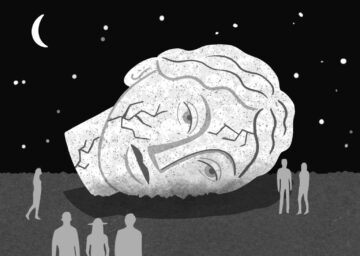 Writers are those naïfs among us who believe that language can be used to take the measure of experience. Readers demonstrate faith in them when they commit to a book or short story. The reader-writer relationship is a contract of sorts. But because the terms are not written down, there is much room in that contract for misinterpretation. What is at stake is not small: it is a shared picture of reality. Nor is it static. With each new publication or rereading, the reader-writer contract is up for review. What could go wrong?
In every closely examined work of creativity, no matter how successful, there is a frightening degree of illusion. Once, in an art gallery, I was taken with a work of Flemish realism depicting a man who wore the most dazzling lace collar. I moved closer and closer, until I could see that the fine textile was simply a series of crude white dots joined together by off-white and grey dashes. I walked backwards, away from the painting, while keeping my eyes fixed on it. Suddenly the lace collar miraculously and convincingly reappeared. For art lovers, such a thing is a marvel. For those looking for a simplified truth, it can be deeply distressing. Artifice is problematic for those who insist that all sleights of hand are meant to deceive, most likely for nefarious purposes. Is it any wonder that artists and writers in this age of mass media have looked to pull back the curtain on their practice?
More here.
Enjoying the content on 3QD? Help keep us going by donating now.
Maintaining NK Cells’ Killer Instincts
Aparna Nathan in The Scientist:
 When a rogue cell starts proliferating out of control, the first responders on the scene should be the body’s own immune cells—for example, natural killer (NK) cells, which use toxic molecules to dissolve foreign cells. Ideally, proteins that are specific to cancer cells would trigger the immune cells to destroy the cancer cells, and a growing category of new NK cell therapies harness these cellular assassins to fight cancer.
However, cancers have evolved creative strategies to evade these cellular sentinels. One way they do this is by turning cells that are typically cancer assassins into docile bystanders. For example, a 2017 study showed that tumors can avoid being killed by triggering the release of transforming growth factor beta (TGFb), a molecule that can turn NK cells into intermediate type 1 innate lymphoid cells (intILC1).1 This immune cell type is much less effective against tumors, which can undermine immunotherapy efforts.
“Tumors have developed these fantastic environments to survive,” said Sebastian Scheer, an immunologist at the Luxembourg Institute of Health and coauthor of the study. But that environment is not the only way for NK cells to transform into intILC1. In a new study in Cell Reports, a team at Monash University led by Scheer found that the molecule disruptor of telomeric silencing 1-like histone lysine methyltransferase (DOT1L) plays an important role in maintaining NK cell functions.2 When DOT1L levels decline, the NK cells turn into benign intILC1 even in the absence of cancer-induced TGFb.
More here.
Enjoying the content on 3QD? Help keep us going by donating now.
Thursday, August 8, 2024
Be Mean: The Case for Truth
Matt Dinan in The Hedgehog Review:
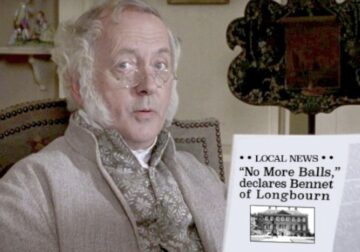 I do not think that being mean is a virtue, but it is related to the virtue by means of which we tell the truth. There are other ways of telling the truth. We can be circumspect or ironic—there is very often a nicer way to put something. Yet there are good reasons for sometimes being just a little bit mean. (No, I am not thinking about that gratuitously nasty and rebarbative character now dominating our public realm.) I think of being mean the way that the King of Brobdingnag in Gulliver’s Travels talks about dangerous views: “For a man may be allowed to keep poisons in his closet, but not to vend them about for cordials.” That is to say, I think being nice is required for good politics, but being mean has definite social utility in private life—and it should stay there.
An example might be useful.
More here.
Enjoying the content on 3QD? Help keep us going by donating now.
Robocars promise to improve traffic even when most of the cars around them are driven by people
Weizi Li in The Conversation:
 Robotic vehicles can optimize the flow of traffic in cities even when mixed in with vehicles driven by humans, thereby improving traffic efficiency, safety and energy consumption, my colleagues and I found.
Robot vehicles are no longer a sci-fi concept: Cities around the world have been testing autonomous robotaxis since 2016. With the increasing presence of robot vehicles in traffic and the foreseeable long period of transitioning from mixed traffic to fully autonomous traffic, my team and I wondered whether robot vehicles and their interactions with human-driven vehicles can alleviate today’s notorious traffic problems.
I am a computer scientist who studies artificial intelligence for transportation and smart cities. My colleagues and I hypothesized that as the number of robot vehicles in traffic increases, we can harness AI to develop algorithms to control the complex mixed traffic system. These algorithms would not only enable all vehicles to travel smoothly from point A to point B but, more importantly, optimize overall traffic by allowing robot vehicles to affect vehicles driven by people.
More here.
Enjoying the content on 3QD? Help keep us going by donating now.
Numberphile: The Clever Way to Count Tanks
Enjoying the content on 3QD? Help keep us going by donating now.
Virtual Reality Reboots History
Charles T. Rubin in The New Atlantis:
 One of the core assumptions of modern liberalism is that if you can solve the problem of material scarcity, you can go a long way to solving the problem of free and peaceful coexistence among equals. Modern technology has been essential to that dynamic from the start, a key driver of “development” and the success of democratic regimes. The West, and large parts of the rest of the world, are what they are today in great measure due to this project.
However, on this basis it is hard to understand why in the West, the first home of modern liberalism, we are also seeing, seemingly increasingly, the rise of illiberal ideologies, political parties, and politicians. Where Marxism and socialism promised to achieve liberal goals better than liberalism could, illiberal politics are based on the premise that the liberal understanding of human beings was mistaken from the start. Liberalism, it is said, puts too much emphasis on our material existence, for example, or is mistaken to give such central roles to human autonomy and equality. Despite technology’s crucial role in the success of liberalism, it now seems to be contributing more to illiberalism.
More here.
Enjoying the content on 3QD? Help keep us going by donating now.
‘Amazing, Isn’t It?’ Long-Sought Blood Test for Alzheimer’s in Reach
Pam Belluck in The New York Times:
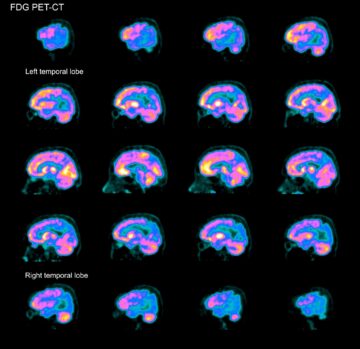 A newly developed blood test for Alzheimer’s has diagnosed the disease as accurately as methods that are far more expensive or invasive, scientists reported on Tuesday, a significant step toward a longtime goal for patients, doctors and dementia researchers. The test has the potential to make diagnosis simpler, more affordable and widely available.
The test determined whether people with dementia had Alzheimer’s instead of another condition. And it identified signs of the degenerative, deadly disease 20 years before memory and thinking problems were expected in people with a genetic mutation that causes Alzheimer’s, according to research published in JAMA and presented at the Alzheimer’s Association International Conference. Such a test could be available for clinical use in as little as two to three years, the researchers and other experts estimated, providing a readily accessible way to diagnose whether people with cognitive issues were experiencing Alzheimer’s, rather than another type of dementia that might require different treatment or have a different prognosis. A blood test like this might also eventually be used to predict whether someone with no symptoms would develop Alzheimer’s.
More here.
Enjoying the content on 3QD? Help keep us going by donating now.
Ozempic-Like Drug Slows Cognitive Decline in Mild Alzheimer’s Disease
Shelly Fan in Singularity Hub:
 If you hear the word Ozempic, weight loss immediately comes to mind. The drug—part of a family of treatments called GLP-1 agonists—took the medical world (and internet) by storm for helping people manage diabetes, lower the risk of heart disease, and rapidly lose weight. The drugs may also protect the brain against dementia. In a clinical trial including over 200 people with mild Alzheimer’s disease, a daily injection of a GLP-1 drug for one year slowed cognitive decline. When challenged with a battery of tests assessing memory, language skills, and decision-making, participants who took the drug remained sharper for longer than those who took a placebo—an injection that looked the same but wasn’t functional. The results are the latest from the Evaluating Liraglutide in Alzheimer’s Disease (ELAD) study led by Dr. Paul Edison at Imperial College London. Launched in 2014, the study was based on years of research in mice showing liraglutide—a GLP-1 drug already approved for weight loss and diabetes management in the United States—also protects the brain.
In Alzheimer’s disease, neurons die off and the brain gradually loses volume. In the trial, Liraglutide slowed the process down, resulting in roughly 50 percent less volume lost in several areas of the brain related to memory compared to a placebo. “We are in an era of unprecedented promise, with new treatments in various stages of development that slow or may possibly prevent cognitive decline due to Alzheimer’s disease,” said Dr. Maria C. Carrillo, Alzheimer’s Association chief science officer and medical affairs lead, in a press release. “This research provides hope that more options for changing the course of the disease are on the horizon.”
More here.
Enjoying the content on 3QD? Help keep us going by donating now.