
Category: Recommended Reading
gloomy sunday
gloomy sunday
monsters
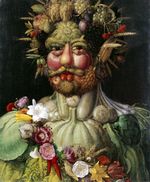
We fill absences. This is what we do. Nature has her way of filling up absence with stars, atoms, frogs, dirt, human beings. Human beings, though, have their own curious way of filling absence. When we lived in caves, we filled the vacuum of the unknown with fear. In ancient times, gods filled the unknown. In 16th-century Europe, the artist Giuseppe Arcimboldo filled the unknown with monsters. In the darkened rooms of the “Arcimboldo, 1526-1593: Nature and Fantasy” exhibit at the National Gallery of Art in Washington, D.C., hang strange and unwholesome monster faces. The portraits lining the walls are a perversion of everything we consider to be natural and right and harmonious about the human visage. In Arcimboldo’s “composite heads,” men are made of candlesticks and gourds and fish and sticks. Arcimboldo also created invertible paintings that, when held over a mirror, show two totally different images. You might think you’re looking at a metal bowl filled with assorted vegetables, except when you hold it over a mirror — reverso! — it’s now a fat guy with thick mushroom lips and a turnip beard sporting a metal bowl for a hat. The exhibition’s signature portrait is “Vertumnus,” the Roman god of the seasons. Like Arcimboldo’s other composite portraits, Vertumnus is something of a riddle, a funny tribute to his benefactor, Emperor Rudolph II. It portrays Rudolph as Vertumnus, as the harvest itself. The face of Rudolph/Vertumnus has nothing human about it save the form — no flesh, no blood, no bones. It is composed entirely of fruits and vegetables. A long pear nose dangles over cherry lips. Root vegetables and gourds arrange a neck and chest, which are adorned with flowers, an artichoke, and a cabbage.
more from Stefany Anne Golberg at The Smart Set here.
Sunday Poem
Nettie Moore
Lost John sitting on a railroad track
Something's out of wack
Blues this morning falling down like hail
Gonna leave a greasy trail
Gonna travel the world is what I'm gonna do
Then come back and see you
All I ever do is struggle and strive
If I don't do anybody any harm, I might make it back home alive
I'm the oldest son of a crazy man
I'm in a cowboy band
Got a pile of sins to pay for and I ain't got time to hide
I'd walk through a blazing fire, baby, if I knew you was on the other side
Oh, I miss you Nettie Moore
And my happiness is o'er
Winter's gone, the river's on the rise
I loved you then and ever shall
But there's no one here that's left to tell
The world has gone black before my eyes
The world of research has gone berserk
Too much paperwork
Albert's in the graveyard, Frankie's raising hell
I'm beginning to believe what the scriptures tell
I'm going where the Southern crosses the Yellow Dog
Get away from these demagogues
And these bad luck women stick like glue
It's either one or the other or neither of the two
She says, “look out daddy, don't want you to tear your pants.
You can get wrecked in this dance.”
They say whiskey will kill ya, but I don't think it will
I'm riding with you to the top of the hill
Oh, I miss you Nettie Moore
And my happiness is o'er
Winter's gone, the river's on the rise
I loved you then and ever shall
But there's no one here that's left to tell
The world has gone black before my eyes
Don't know why my baby never looked so good before
I don't have to wonder no more
She been cooking all day and it's gonna take me all night
I can't eat all that stuff in a single bite
The Judge is coming in, everybody rise
Lift up your eyes
You can do what you please, you don't need my advice
Before you call me any dirty names you better think twice
Getting light outside, the temperature dropped
I think the rain has stopped
I'm going to make you come to grips with fate
When I'm through with you, you'll learn to keep your business straight
Oh, I miss you Nettie Moore
And my happiness is o'er
Winter's gone, the river's on the rise
I loved you then and ever shall
But there's no one here that's left to tell
The world has gone black before my eyes
The bright spark of the steady lights
Has dimmed my sights
When you're around all my grief gives 'way
A lifetime with you is like some heavenly day
Everything I've ever known to be right has proven wrong
I'll be drifting along
The woman I'm lovin', she rules my heart
No knife could ever cut our love apart
Today I'll stand in faith and raise
The voice of praise
The sun is strong, I'm standing in the light
I wish to God that it were night
Oh, I miss you Nettie Moore
And my happiness is o'er
Winter's gone, the river's on the rise
I loved you then and ever shall
But there's no one here that's left to tell
The world has gone black before my eyes
by Bob Dylan
from Modern Times
Copyright © 2006 by Special Rider Music
The Little White Cottage by Marshall S. Pike
Mistresses: A History of the Other Woman
From The Telegraph:
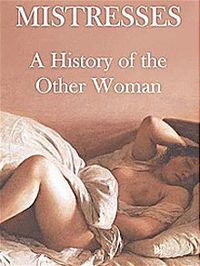
The answer is usually money. Financial support is 'integral to mistressdom, indeed one of its most attractive features’. The late Sir James Goldsmith observed that a man who marries his mistress creates a vacancy: mistressdom is a profession, replete with perks, promotions and – all being well – a pension. For 40 years, Marion Davies was swathed in mink and doused in champagne by the newspaper mogul William Randolph Hearst, who kept his wife on the east coast and his mistress on the west coast. 'May I be a mother to you?’ he asked Marion. She would have preferred him to be a husband, but settled for calling him 'daddy’ instead.
More here.
Study reveals ‘secret ingredient’ in religion that makes people happier
From PhysOrg:
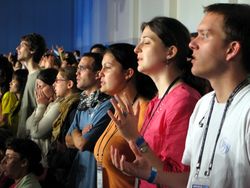
According to the study, 33 percent of people who attend religious services every week and have three to five close friends in their congregation report that they are “extremely satisfied” with their lives. “Extremely satisfied” is defined as a 10 on a scale ranging from 1 to 10.
More here.
Saturday, December 11, 2010
A Matter of Optics

In the evening, “with the odor of the elephants after the rain and the sandalwood ashes growing cold in the braziers,” Kublai Khan despairs of ever knowing or understanding the empire he has built. And in the dusk, the Venetian Marco Polo tells the great Khan of the unknown cities he rules. So begins Italo Calvino’s Invisible Cities, that mystifying, illuminating, bedazzling compendium of fantastical places. Among these imagined cities, Polo tells the emperor of Irene. “Irene is the city visible when you lean out from the edge of the plateau at the hour when the lights come on, and in the limpid air, the pink of the settlement can be discerned spread out in the distance below…Those who look down from the heights conjecture about what is happening in the city; they wonder if it would be pleasant or unpleasant to be in Irene that evening. Not that they have any intention of going there (in any case the roads winding down to the valley are bad), but Irene is a magnet for the eyes and thoughts of those who stay up above.”
People love vantage points from which they can take in the city. Gustave Flaubert’s Madame Bovary does not observe Rouen from the street, but from a hilltop, where seen from above, “the whole landscape had the static quality of a painting.” William Wordsworth paused on Westminster Bridge in 1802 to observe London laid out before him:
This city now doth, like a garment, wear
The beauty of the morning; silent, bare,
Ships, towers, domes, theaters, and temples lie
Open unto the fields, and to the sky;
All bright and glittering in the smokeless air.Tall towers have always delighted, because they provide such visions of the city spread out before the gaze. Where towers or hills failed, medieval or Renaissance painters imagined the city from on high, in a celestial view that no human eye had yet achieved. Technology eventually caught up to this desire. A straight line can be drawn from Félix Nadar’s first aerial photographs of Paris taken from his balloon in 1858 to my ability to google views of my city, my house, or my backyard from outer space.
The god’s-eye perspective is the ultimate expression of the human desire to make the city visible, to see it in a glance, to read it as an intelligible and unified object of human making. Yet, as Marco Polo tells Kublai Khan, those on the plateau cannot know Irene, for, “If you saw it, standing in its midst, it would be a different city; Irene is a name for a city in the distance, and if you approach, it changes.”
Theory of Technology
The Arab World’s Silent Feminist Revolution
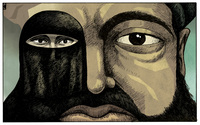
Consider Arab women. The predominant image is of a passive, exotic, and veiled victim-woman who reacts to events instead of actively participating in them. She is an impersonal object of communal stereotypes that sustain cultural prejudices.
In fact, Arab societies are engaged in a process of immense and irreversible change in which women are playing a crucial role. During the last half-century, intense urbanization and feminization of the workforce in all Arab countries has propelled women into the public arena on a massive scale.
During this period, differences in schooling levels between boys and girls have lessened everywhere – though at different speeds. Indeed, in many Arab countries, more girls than boys are now in secondary and higher education, which shows that parents consider their daughters’ education to be just as important as that of their sons. And all surveys show that young men and women want to study and have a job before they marry. (Moreover, they increasingly want to choose their own partner.)
At the same time, demographic shifts, along with social and economic factors affecting education and work, are forcing profound change on the traditional model of the Arab family. Higher ages for marriage and declining fertility – resulting directly from widening use of artificial contraception – are reducing family size to something much closer to the “nuclear families” of the West. The Maghreb region may lead in this regard, but the phenomenon is observable throughout the Arab world, even in the most rigidly conservative states.
This new family model has gained so much force that it is imposing itself on rural society, too, where the decline of the agrarian economy is accompanied by a strong shift towards smaller families. This change is occurring at slightly different speeds across the Arab world, but often it is occurring simultaneously in town and country.
Not surprisingly, these changes have led to a redistribution of power between old and young – and between men and women.
twombly
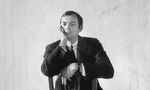
Cy Twombly is a painter of thinking aloud, of thoughts checked and then resumed, hesitancies and the rush of ideas. Twombly, now 82, is the great survivor of the heroic age of American painting, the generation of Jasper Johns, Robert Rauschenberg and Jackson Pollock, who upended what was expected in contemporary art. Somehow he has managed to continue to create profoundly affecting work without histrionics or hubris. Twombly is known for his scribbles, great looping calligraphies of white on black, of white on white – or, in the more recent Bacchus series, swoops of carmine three metres high. His paintings are a mass of marks, erasures and words. Phrases come and go, lines are repeated until they become incantatory. Sometimes you read a fragmentary part of a poem, or an allusion to a classical text, only for it to be crossed out. There are puns and odd misspellings: erudition giving way to doodling at the back of the class. And this is what I love: the way that there is slippage between an intended epic expression and a failure to finish.In his work he has both the shopping list and the great list of ships sent to attack Troy.
more from Edmund de Waal at The Guardian here.
genius
At the age of 14, in 1846, James Clark Maxwell published his first scientific paper in a learned journal, having already seen his poetry printed in the Edinburgh Courant. In 1864, he went on to write the classic A Dynamical Theory of the Electromagnetic Field, which gave a unified account of electricity, magnetism and light in just four equations. Einstein later remarked that he stood on the shoulders of not Newton but Maxwell. Almost everyone would agree that Maxwell was a genius. But what exactly does this mean? In the popular imagination, geniuses are a breed apart. They are capable of insights or artistic creations that no amount of training and effort could produce in mere ordinary folk. You can squander your genius or fail to fulfil it but, ultimately, you either have it at birth or you don’t. Four new books about genius all interrogate this powerful myth. At the very least, they show that the soil in which genius grows matters at least as much as the seed, which is why particular cultures produce particular types of genius at particular times in history. This is the implicit message of Peter Watson’s The German Genius and Robert Uhlig’s Genius of Britain, which look at collective as well as individual brilliance. In Sudden Genius? Andrew Robinson goes further in undermining the myths of genius, suggesting that virtually none of the common-sense ideas we have about it stack up. And in The Genius in All of Us, David Shenk claims the idea that genius is dispensed at birth is still based on discredited genetics.
more from Julian Baggini at the FT here.
a desperate nomadic quality
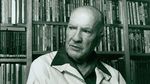
“I am submitting the enclosed short story ‘LIFE-LINE’ for either ‘Astounding’ or ‘Unknown,'” Robert A. Heinlein wrote to editor John Campbell in 1939, “because I am not sure which policy it fits the better.” The former magazine published science fiction, the latter fantasy. Heinlein’s short story — the first he had attempted professionally, at age 31 — concerns a machine that can predict when a person will die. That he sold this neophyte production, on first submission, to a top pulp editor (kicking off an intense friendship and correspondence) is exciting in and of itself. Heinlein’s uncertainty about to which slice of genre this story belonged is an ironic and humanizing detail, given what a titan Heinlein would become as the author of everything from juvenile SF in character-building Horatio Alger mode to the counterculture touchstone “Stranger in a Strange Land” (1961).
more from Ed Park at the LA Times here.
Iftar at Isabelle’s
Ian Bassingthwaighte in Guernica:

“Probably,” she says. “Are you going to?”
“Not yet,” I say.
Wendell laughs, but I don’t think it’s funny.
Wendell is a fat man with a twisted wit and he wants to fuck my lover more than I do. He is the best friend I have and I would loathe to lose him. He has a glass in his hand and he raises it. I raise mine. Isabelle raises the entire bottle and we drink until the room spins faster than the Earth does, which makes us dizzy and prone to tipping. We go outside and into the city, which is a messy conglomerate of heat and waste. We would breathe air if there were any, but instead there are varieties of emissions and so we breathe those instead. We dodge speeding vehicles as we meander blindly across highways and side streets. Isabelle whispers a prayer at each crossing. She says it for all of us so that we won’t get splattered. One street short of the Nile, a cat scrambles across the road and is squished halfway to the other side by a bus. Then I mimic the cat and scramble too, but I make it. Divine intervention or slop-fed luck, I don’t know which. But I’m the winner this time and I celebrate by cheering.
More here.
Working on the Ending
Gail Godwin in The New York Times:
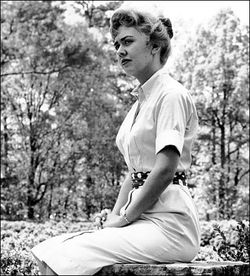
“How does what you want out of writing change with age?” Terry Gross asked Philip Roth on NPR’s “Fresh Air” in October. Roth, 77, told her it hadn’t changed much for him. He wanted to be as alert and energetic as ever at the keyboard, he wanted to be taken seriously, and he wanted to make a work of art out of his subject. You want to be taken seriously; that doesn’t change. What has changed for me is the degree of compromise I am willing to inflict on my work in order to see it in print. As a young writer, I was told by the fiction editor at Esquire that he’d publish my story if I took out the woman’s dreams. I took them out. “It will make her more inscrutable,” he promised, chuckling. It certainly did. Forty years later, “A Sorrowful Woman” is my most anthologized story, and I get regular e-mails from bewildered high school and college students asking why this woman did what she did.
More here.
Friday, December 10, 2010
WikiLeaky Power, or The Dark Side of Internet Freedom

In the late 1980’s, glasnost – transparency – was one of the nails in the coffin of the Soviet Union. While WikiLeaks has certainly not had a similar effect, it epitomizes the extent of the individual’s empowerment in a networked world. All that was necessary to challenge the world’s mightiest power, after all, was a disgruntled US Army intelligence analyst, some hacking knowledge, a few computers, and a handful of determined activists enrolled under the contested banner of transparency.
At the time she was named Director of Policy Planning at the US State Department, Anne-Marie Slaughter, a respected scholar of international affairs, boldly heralded the advent of a networked world. “War, diplomacy, business, media, society…are networked,” she wrote in Foreign Affairs in January 2009, and “in this world, the measure of power is connectedness.” Having the greatest potential for connectivity, America has the edge in a “networked century.”
This drive prompted US Secretary of State Hillary Clinton in January 2010 to proclaim the “freedom to connect” as the cyber-equivalent of the more familiar freedoms of assembly or expression. Of course, Clinton added, these technologies are not an unmitigated blessing, and can be misused for darker purposes. But her list of the potential abuses of the connected world contained nothing similar to the WikiLeaks storm.
That storm will leave behind no trace of understanding if it is assessed in isolation, rather than as part of a broader pattern. WikiLeaks’ latest release demonstrates that the transformation of power by the “digital revolution” could be as far-reaching as that brought about by the fifteenth-century printing revolution. In this game, where new players invite themselves, the edge goes to agility and innovation.
Second, Evgeny Morozov in The Christian Science Monitor:
The Crisis of the American Intellectual
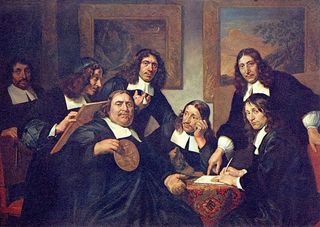
[T]he biggest roadblock today is that so many of America’s best-educated, best-placed people are too invested in old social models and old visions of history to do their real job and help society transition to the next level. Instead of opportunities they see threats; instead of hope they see danger; instead of the possibility of progress they see the unraveling of everything beautiful and true.
Too many of the very people who should be leading the country into a process of renewal that would allow us to harness the full power of the technological revolution and make the average person incomparably better off and more in control of his or her own destiny than ever before are devoting their considerable talent and energy to fighting the future.
I’m overgeneralizing wildly, of course, but there seem to be three big reasons why so many intellectuals today are so backward looking and reactionary.
First, there’s ideology. Since the late nineteenth century most intellectuals have identified progress with the advance of the bureaucratic, redistributionist and administrative state. The government, guided by credentialed intellectuals with scientific training and values, would lead society through the economic and political perils of the day. An ever more powerful state would play an ever larger role in achieving ever greater degrees of affluence and stability for the population at large, redistributing wealth to provide basic sustenance and justice to the poor. The social mission of intellectuals was to build political support for the development of the new order, to provide enlightened guidance based on rational and scientific thought to policymakers, to administer the state through a merit based civil service, and to train new generations of managers and administrators. The modern corporation was supposed to evolve in a similar way, with business becoming more stable, more predictable and more bureaucratic.
Most American intellectuals today are still shaped by this worldview and genuinely cannot imagine an alternative vision of progress. It is extremely difficult for such people to understand the economic forces that are making this model unsustainable and to see why so many Americans are in rebellion against this kind of state and society – but if our society is going to develop we have to move beyond the ideas and the institutions of twentieth century progressivism.
Tea’d Off
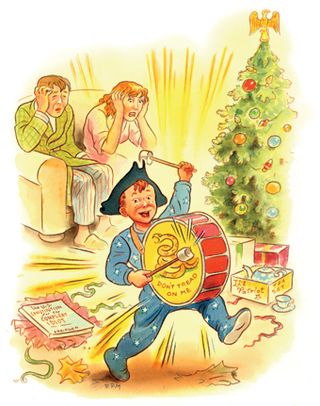
It is often in the excuses and in the apologies that one finds the real offense. Looking back on the domestic political “surge” which the populist right has been celebrating since last month, I found myself most dispirited by the manner in which the more sophisticated conservatives attempted to conjure the nasty bits away.
Here, for example, was Ross Douthat, the voice of moderate conservatism on the New York Times op-ed page. He was replying to a number of critics who had pointed out that Glenn Beck, in his rallies and broadcasts, had been channeling the forgotten voice of the John Birch Society, megaphone of Strangelovian paranoia from the 1950s and 1960s. His soothing message:
These parallels are real. But there’s a crucial difference. The Birchers only had a crackpot message; they never had a mainstream one. The Tea Party marries fringe concerns (repeal the 17th Amendment!) to a timely, responsible-seeming message about spending and deficits.
The more one looks at this, the more wrong it becomes (as does that giveaway phrase “responsible-seeming”). The John Birch Society possessed such a mainstream message—the existence of a Communist world system with tentacles in the United States—that it had a potent influence over whole sections of the Republican Party. It managed this even after its leader and founder, Robert Welch, had denounced President Dwight D. Eisenhower as a “dedicated, conscious agent” of that same Communist apparatus. Right up to the defeat of Barry Goldwater in 1964, and despite the efforts of such conservatives as William F. Buckley Jr. to dislodge them, the Birchers were a feature of conservative politics well beyond the crackpot fringe.
Now, here is the difference. Glenn Beck has not even been encouraging his audiences to reread Robert Welch. No, he has been inciting them to read the work of W. Cleon Skousen, a man more insane and nasty than Welch and a figure so extreme that ultimately even the Birch-supporting leadership of the Mormon Church had to distance itself from him. It’s from Skousen’s demented screed The Five Thousand Year Leap (to a new edition of which Beck wrote a foreword, and which he shoved to the position of No. 1 on Amazon) that he takes all his fantasies about a divinely written Constitution, a conspiratorial secret government, and a future apocalypse. To give you a further idea of the man: Skousen’s posthumously published book on the “end times” and the coming day of rapture was charmingly called The Cleansing of America. A book of his with a less repulsive title, The Making of America, turned out to justify slavery and to refer to slave children as “pickaninnies.” And, writing at a time when the Mormon Church was under attack for denying full membership to black people, Skousen defended it from what he described as this “Communist” assault.
All Of Humanity
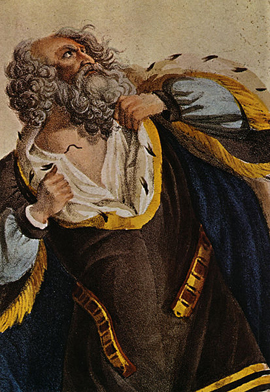
For centuries after Shakespeare wrote King Lear, interpreters refused to accept the play’s desolation and lack of redemption. Nahum Tate gave it a happy ending in 1691, and for 200 years a redeemed Lear and the Earl of Gloucester would peacefully retire while their good children, Cordelia and Edgar, marry and rule a unified Britain. As late as the start of the twentieth century, preeminent Shakespeare scholar A. C. Bradley lectured that Lear had reached transcendence through his suffering and died happy. Even though the play contains the bleakest line in all of Shakespeare—Lear’s “Never, never, never, never, never,” as he holds his daughter’s dead body in his arms—Bradley insisted on a Christian moral to the story.
Today King Lear is recognized as the greatest tragedy in the English language, less brilliant than Hamlet but more profound and prophetic: “Humanity,” the Duke of Albany laments, “must perforce prey on itself, Like monsters of the deep.” There is no god or justice in the pre-Christian world that Shakespeare invented for Lear. Stanley Cavell’s justly famous essay “The Avoidance of Love” captures the paradox of Lear for modern audiences. “We can only learn through suffering” but have “nothing to learn from it,” he writes.
Stalin’s reign of terror, Hitler’s concentration camps, and the atomic bombs that fell on Hiroshima and Nagasaki gave philosophers, literary critics, and theater directors a context for understanding Shakespeare’s grim text. Even so, actors and directors remained puzzled by Lear. Lear himself asks in Act I, “Does any here know me?” Was he already senile before he divided up his kingdom in exchange for public professions of love from his three daughters, or was he driven mad by the consequences of his rash decision as he realized that the two daughters who professed so much love and devotion—Goneril and Regan—now ruled over him? Regan and her husband, the Duke of Cornwall, lock Lear out of Gloucester’s home, and leave him in a terrible storm. “Blow winds and crack your cheeks! Rage, blow! You cataracts and hurricanes, spout till you have drenched out steeples,” he cries. But there is also pathos, “Here I stand your slave, a poor, infirm, weak and despised old man.” Lear is at once emotionally transparent and unable to acknowledge what he has done—“Who is it that can tell me who I am?” he wonders.
Over the past four decades some of the world’s most eminent film directors and actors have attempted an answer to Lear’s question. Among them are the Soviet Russian Grigori Kozintsev with the Estonian actor Jüri Järvet as Lear, and Britain’s Peter Brook with Paul Scofield—both productions from 1971. On television, Michael Elliott and Laurence Olivier tackled Lear in 1983, and Trevor Nunn and Ian McKellen tried their hand in 2008. And there are many others, including Akira Kurosawa, whose Ran is an Edo-period interpretation in which three sons replace Lear’s daughters.
None of these films give us the definitive answer to Lear’s question.
Consciousness on the Page: A Primer on the Novels of Nicholson Baker
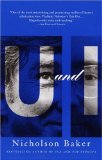
1. Telepathy on a budget
If you don’t know Nicholson Baker as an intensive describer of everyday minutiae, surely you know him as an intensive describer of goofy sexual fantasy. At the very least, you might hold the broad notion that he’s very, very detail-oriented. None of those images capture the novelist in full, but if you twist them into a feedback loop by their common roots, you’ll get closer to the reality. Whatever the themes at hand, Baker adheres with utter faith to his narrators’ internal monologues, carefully following every turn, loop, and kink (as it were) in their trains of thought. He understands how often people think about sex, but he also understands that, often times, they just think about shoelaces — and he understands those thoughts of sex and shoelaces aren’t as far apart, in form or in content, as they might at first seem.
This is why some find Baker’s novels uniquely dull, irritating, or repulsive, and why others place them in the small league of books that make sense. Not “sense” in that they comprise understandable sentences, paragraphs, and chapters; the existential kind of sense. So many novels exude indifference to their medium, as though they could just as easily have been — or are merely slouching around before being turned into — movies, comics, or interpretive dances. The Baker novel is long-form text on the page as well, but it’s also long-form text at its core, and on every level in between. Adapting it into anything else would be a ludicrous project at best and an inconceivable one at worst; you might as well “adapt” a boat into a goat.
Baker lays out certain clues to the effectiveness — or if you’re on the other side, ineffectiveness — of his concept of the novel in the texts themselves. Brazen, perhaps, but awfully convenient.