Word: Jay-Z’s “Decoded” and the language of hip-hop

From The New Yorker:

Book Jay-Z grew up absorbing many of the rhymes that Bradley and DuBois celebrate. He was born in 1969, and raised in the Marcy Houses, in an area of Brooklyn from which Times Square seemed to be “a plane ride away.” (Nowadays, some real-estate agents doubtless consider it part of greater Williamsburg.) “It was the seventies,” he writes, “and heroin was still heavy in the hood, so we would dare one another to push a leaning nodder off a bench the way kids on farms tip sleeping cows.” He was a skinny, watchful boy with a knack for rhyming but no great interest in the music industry, despite some early brushes with fame—he briefly served as Big Daddy Kane’s hype man. Besides, Jay-Z had a day job that was both more dangerous and more reliable: he says he spent much of the late eighties and early nineties selling crack in Brooklyn and New Jersey and down the Eastern Seaboard. He was no kingpin, but he says he was a fairly accomplished mid-level dealer, and though he hated standing outside all day, he found that he didn’t hate the routine. “It was an adventure,” he says. “I got to hang out on the block with my crew, talking, cracking jokes. You know how people in office jobs talk at the watercooler? This job was almost all watercooler.” Then, almost as an afterthought, “But when you weren’t having fun, it was hell.”

Early recordings of Jay-Z reveal a nimble but mild-mannered virtuoso, delivering rat-a-tat syllables (he liked to rap in double-time triplets, delivering six syllables per beat) that often amounted to études rather than songs. But by 1996, when he released his début album, “Reasonable Doubt,” on a local independent label, he had slowed down and settled into a style—and, more important, settled into character. The album won him underground acclaim and a record deal with the very above-ground hip-hop label Def Jam, which helped him become one of the genre’s most dependable hitmakers. He was a cool-blooded hustler, describing a risky life in conversational verses that hid their poetic devices, disparaging the art of rapping even while perfecting it:

Who wanna bet us that we don’t touch lettuce, stack
cheddars forever, live treacherous, all the et ceteras.
To the death of us, me and my confidants, we
shine. You feel the ambiance—y’all niggas just rhyme.

More here.

Could X particle solve two puzzles?

From MSNBC:

Anti Can one particle explain both dark matter and the mysterious origins of matter and antimatter? Some physicists think so. They're calling the as-yet-only-theoretical object the “X particle.” Physicists from Canada's TRIUMF particle-physics facility, the University of British Columbia and Brookhaven National Laboratory laid out their ideas on the X particle in a paper published last month by Physical Review Letters — and since then, the ideas have been picked up by PhysicsWorld magazine as well as Discovery News. (You can read a full draft of the paper on the arxiv.org website.) The concept addresses two of the deep mysteries in modern physics:

  • Dark matter: Observations of distant galaxies and galaxy clusters suggest that the matter we can see accounts for about a fifth of their gravitational mass. The other four-fifths is thought to exist in the form of exotic matter than can be detected only by its gravitational effect. So what is that stuff?
  • Matter vs. antimatter: Theory dictates that equal amounts of matter and antimatter must have existed at the beginning of the universe — and yet, we see lots of matter and virtually no antimatter in the universe today. What happened to the antimatter, and why did matter win out?

More here.

Saturday, December 4, 2010

Why Are There No Great Women Chefs?

NigellaCharlotte Druckman in Gastronomica:

It started a few years ago when I noticed that Food & Wine’s annual roundup of ten Best New Chefs always listed one token woman.

And it lingered.

In 2007 Michelin awarded French chef Anne-Sophie Pic three stars, making her only the fourth woman in her country’s history to receive that honor (fifty years had passed since the last of her sex had garnered that third sparkler).2 The following year, in the United Kingdom, it was considered breaking news when ten female chefs won any Michelin stars at all. The tabloid Telegraph announced: “It could be the beginning of the end for the foul-mouthed, macho, and defiantly male master chef. The number of women with Michelin stars has nearly doubled in just 12 months.”3

Then came the 2009 James Beard Awards gala, held after the ceremony and annually assigned a theme. “Women in Food” was the chosen motif, but since only sixteen of the evening’s ninety-six nominees were, in fact, women, it seemed like a cruel joke. In the end, only two of those sixteen went home victorious, out of nineteen winners total.4

Next, Phaidon announced the publication of its forthcoming cookbook Coco: 10 World Leading Masters Choose 100 Contemporary Chefs, for which one Alice Waters and nine of her male comrades each picked ten young chefs whose work they admire. Collectively, these culinary authorities managed to put fewer than ten women on the roster—less than 10 percent of the total talent featured.

Finally, in Bravo tv’s Top Chef Masters competition, a paltry three out of twenty-four American “Masters” were women. Really.

The “It” in the pit of my stomach was the sinking realization that female chefs do not attain the same recognition or critical acclaim as their male peers. No one doubts women’s abilities in the kitchen. They certainly have skill and creativity. So what is the problem? This conundrum reminded me of something I’d read in an undergraduate art history class, Linda Nochlin’s “Why Have There Been No Great Women Artists?” Her article was a watershed not just because it posed such a loaded question—a rhetorical device, as it turns out—but also because by posing that question Nochlin forced academics and feminists to challenge their own practices.

Utopian Failing

Images Roman Schmidt in Eurozine:

In early 1963 they admitted defeat. Conceived in late 1960, Revue internationale was intended by its French, German and Italian founders to be the historic realization of the idea of a “plural writing”. Yet it remained a project and no more. In 1964, a record of the collated material[1] appeared in Italy. Hans Magnus Enzensberger called it the “remnants of a shipwreck”.

Ships run into trouble not when they are in the harbour but when they are on the high seas. If the boards shatter, then the collapse, in all senses, is the result of great activity.[2] Failure results from aiming too high.

This is where the idea of an international journal comes into its own. At the point of failure it is most true to itself. “For indeed”, as Daniel Defoe noted as early as 1697 in his Essay upon Projects, “the true definition of a project, according to modern acceptation, is […] a vast undertaking, too big to be managed, and therefore likely enough to come to nothing.”[3] Defoe portrays the project-maker as a Promethean figure drawing up plans at the margins of the era, stretching the limits of what the era allows. Fascinated yet at sea, he knows that, as he steps into the realm of practice, he may run aground. As he wrote these words, Defoe, the writer and businessman, may well have been thinking of the mountain of debt his own commercial failures had saddled him with.[4]

From the perspective of a “poetics of failure”, then, successful enterprises are suspect of having played it safe from the start. Whatever can be achieved effortlessly, without a critical mass of aspirations, hopes and adversity, cannot claim the title of “project” in the emphatic sense. Somewhere below there runs a line separating projects from things one simply does (admittedly, this line has been drawn absurdly low in recent years, so that today even the most banal tasks in life qualify).

Christo’s ‘Over the River’: An Act of Homage

36688_131741930182484_131695920187085_233280_1460286_n_jpg_470x552_q85Leo Steinberg in the NYRB blog:

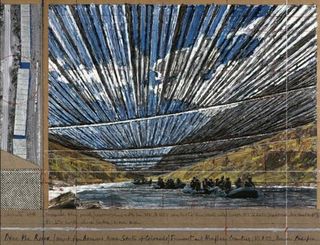
When a Christo project sets out to engage a body of water, as in Surrounded Islands, some prognosticators inevitably foresee an assault upon peaceable, innocent nature. The work completed reveals, on the contrary, acts of homage secured in reverence and affection.

And so Over the River, Christo/Jeanne-Claude’s still fought-over bid to canopy portions of the Arkansas River in Colorado. Once again, we hear the project denounced as an imposition that would deny the river and its dependents access to quickening sunshine and rain; as if the instigators were out to crush whatever under the sun grows, flows, or draws breath. But many among us foresee the river’s planned canopy delivering a benign gesture.

From Christo’s explanations and explicit drawings of what is envisioned, I anticipate certain surprises, among them a welcome revision of the river’s deportment in three-dimensional space. A river tends to be seen and thought of along the horizontality of its stream—a level course which Christo’s parallel canopy seems to confirm. But that canopy—pitched only 8 feet above the water’s surface—is to be of a transparent cloth that keeps sky and cloud always in evidence, and with it (I hope) a sharpened awareness of living under pillars of air. To say nothing of the river’s own depth in unceasing play. In other words, I expect Over the River—more precisely the low thatch overhead—to impart a livelier sense of the river’s participation in verticality.

The word “thatch,” just used, confesses another association. That of roofing for protection from, say, “inclement” weather. Not that a river needs such solicitude; what threatens it is the insidious infusion of industrial waste. But Over the River is not out to indict a pollutant. Its metaphorical idiom is content to assert the immanence of a champion, a protective agent just now engaged in benediction.

Mathematical immortality? Give a theorem your name

Dn19809-1_300Jacob Aron in New Scientist:

During my time as an eager undergraduate mathematician, I'd often wonder what it would feel like to prove a truly new result and have my name immortalised in the mathematical history books. I thought that dream had died when I gave up maths to become a science writer, but Aron's theorem is now a reality – and I've got the certificate to prove it.

While most mathematical theorems result from weeks of hard work and possibly a few broken pencils, mine comes courtesy of TheoryMine, a company selling personalised theorems as novelty gifts for £15 a pop.

Its automated theorem-proving software can churn out a theoretically infinite number of theorems for customers wishing to join the ranks of Pythagoras and Fermat. “We generate new theorems and let people name them after themselves, a friend, a loved one, or whoever they want to name it after,” explains Flaminia Cavallo, managing director of TheoryMine, based in Edinburgh, UK.

You may think this is an elaborate scam, or that you'll just end up with an obscure equation copied from some long-forgotten textbook, but TheoryMine claims to have far more validity than superficially similar companies selling star names.

for the love of god

E529637a-fef1-11df-ae87-00144feab49a

Hirst talks about the diamond skull almost as if it’s a mythical treasure – something that Indiana Jones might don his fedora for, that criminal gangs might plan to steal. In time, he imagines people fighting over it, dying for it. He sounds almost disappointed that he can’t keep it at home – “The insurance companies would go mental.” He’d evidently like it to end up in an international museum or gallery. As I am about to leave his office, Hirst and his assistants are trying on wigs: there’s a Ramones theme to the office Christmas party; the place rings with laughter. Hirst, in the silliest of wigs, asks whether I fancy some crisps or chocolate, pulling out a drawer stuffed full of both. I help myself to a chocolate bar. It’s a childish treat from someone with a lot of money who remembers what it was like to be born with very little.

more from Nicholas Glass at the FT here.

locations with unstable converging forces

05funderburg-articleInline

Some years ago, I began spending time in the rural Southern town where my father had been raised, and I often found myself wishing for a decoder ring. Squirrels had longer tails, wisteria bloomed off schedule, and with all the diphthongs and dropped syllables, I had no idea what people were saying. The local language sprouted from the literal and cultural landscape that informed it — its racial history and disappearing farms, the coexistence of deer festivals and meth busts, the households where people wore Carhartts without irony and put “Queer Eye” on TiVo. How to understand all this? An atlas would have helped. Not any atlas, mind you, but one as inventive and affectionate as Rebecca Solnit’s Infinite City: A San Francisco Atlas (University of California; cloth, $49.95; paper, $24.95), a collection of 22 maps and accompanying essays paying homage to the city where the author lives. “Infinite City” started as a commissioned project for the San Francisco Museum of Modern Art, which turned to Solnit as it geared up for its 75th anniversary this year.

more from Lise Funderburg at the NYT here.

language itself becomes a life preserver

20100109-DSC05185-2

Not a short story, not quite a novella — wasn’t that a Britney Spears song? — the oxymoronic long short story is an underemployed literary form. (For argument’s sake, let’s say the long short story ranges from 30 to 60 pages.) F. Scott Fitzgerald’s “The Curious Case of Benjamin Button” (1922) is a perfect example of the length’s virtues: the story, covering the whole of a character’s life, is ample enough to be divided into chapters, yet the execution retains an antic swiftness that lofts the bizarre premise. Contemporary practitioners who thrive at this length include Alice Munro, Ethan Canin and the underread Rachel Ingalls. To this list must be added Ted Chiang, whose “Stories of Your Life and Others” (Small Beer Press: 320 pp., $16 paper) contains a half-dozen such specimens, along with a regulation-length short story and a three-pager, commissioned by the magazine Nature, in the form of a letter to the editor of a science magazine. Originally published in 2002 by Tor and newly reissued by Small Beer Press, the stories range widely in time, subject and style but are united by a patient but ruthless fascination with the limits of knowledge.

more from Ed Park at the LA Times here.

Students are supposed to read books, not burn them

From Spiked:

Greg_lukianoff If you thought it was only uneducated Muslims in dusty towns ‘over there’ who burnt things that upset them, think again. In 2006, The Dartmouth, the student newspaper of Dartmouth College, a liberal arts college in New Hampshire, published a cartoon showing Nietzsche conversing with a male student. The student was with a very drunk girl after a night of boozing and schmoozing and was wondering whether or not he should have sex with her. ‘Will to power’, Nietzsche tells him. The cartoonist said it was intended as a pisstake of Nietzsche, and more broadly of his rehabilitation in liberal academic circles, but some Dartmouth students saw things differently – in their eyes the cartoon was effectively okaying date rape. So they did what any well-educated, privileged students at a liberal arts college would do – gathered outside the offices of The Dartmouth and publicly burned copies of the offending newspaper. Like fascists.

Greg Lukianoff’s mouth is agape as he recounts the incident four years on, clearly still shocked by the demented censoriousness and humourlessness of the Dartmouth book-burners. Lukianoff is president of the Foundation for Individual Rights in Education (FIRE, ironically), which was founded in 1999 to defend ‘freedom of speech, legal equality, due process, religious liberty and sanctity of conscience’ on American campuses, those ‘essential qualities of liberty and dignity’. ‘There was a time when people believed free speech on campus should be as wild and freewheeling as possible’, he tells me in his garden in the Italian part of Brooklyn, New York City. ‘Not anymore. Today students are apparently too sensitive to be able to deal with hard ideas or outrageous humour.’

More here.

Saturday Poem

A Homeless Sindhi Woman

In Akbar the Great’s durbar,
Anarkali, Queen of Beauty, reigned.
Yet
even she was buried alive.

Delhi, India’s pride, and I,
inheritor of the marvels of Indus architecture.
Yet
even I have been buried alive

homeless in history’s graveyard.

by Popati Hiranandani
from Man Sindhin
publisher: Lok-Sur, Mumbai, 1988
translation 1998, Anju Makhija and Menka Shivdasani,
with Arjan Shad

Killing the Gods

From The New York Times:

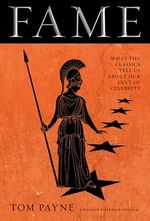
FAME-Final In his trenchant, unsettling, darkly hilarious “Fame,” Tom Payne also examines the murky pact that binds stars to their public. For him, this relationship stands to reveal “grim truths about humanity that we would struggle to express otherwise — those desires so unspeakable that we have to evolve a kind of code.” But where Dickinson uses the language of sparks and fire to rewrite this code, Payne, a former deputy literary editor for The Daily Telegraph in England, works to decipher it, uncovering clues in the foundational texts of Western culture. Moving seamlessly between yesterday’s great literature — Greek, Roman, early Christian, Enlightenment and Romantic — and today’s trashy tabloids, Payne advances a persuasive, if disturbing, definition of what fame is now, and what it has ever been. Above all else, it is “a systematic cycle of celebration, consecration and sacrifice,” in which cultures create gods and goddesses in order to kill them.

More here.

Friday, December 3, 2010

The Guest from the Future

2010110750160501 Navtej Sarna in The Hindu:

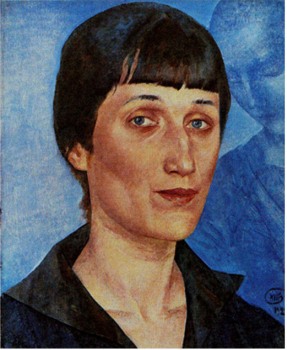
Things left half done tend to nag. Last year, I recounted the meetings of the Oxford Don Isaiah Berlin with Boris Pasternak but left for another time the story of his dramatic night conversation with the poetess Anna Akhmatova which she, with some artistic exaggeration, identified as the cause of the Cold War. To set matters at rest, I turned to the biography, Anna Akhmatova: Poet and Prophet, by Roberta Reeder.

Berlin enters the scene only on Page 286, more than half way through. Akhmatova was in her mid-fifties, having been born in 1889, in the twilight of Imperial Russia. She had already been the toast of literary Petersburg to the extent that she appears as a defining detail in a contemporary memoir of the city: “Fog, streets, bronze horses, triumphal arches over the gates, Akhmatova, sailors and academics, the Neva, railings, murmuring lines at the bread shops, stray bullets of light from broken street lamps have settled in my memory…of the past, like love, like a disease, like the years.”

She had also been condemned as a “half nun, half harlot” after the revolution and regarded as a relic of a bygone corrupt age, a selfish poetess obsessed with personal feelings and not sufficiently starry-eyed about the revolution. The Literary Encyclopaedia of 1929 described her as “a poetess of the aristocracy who has not found a new function in capitalist society, but has already lost her old function in feudal society.” She was not permitted to publish for 15 years until one day in 1939 Stalin asked: “Where is Akhmatova? Why isn't she writing?” Evidently, her collection From Six Books was allowed to come out because Stalin's daughter loved her poetry; the book was nick-named “Papa's gift to Svetlana.”

Akhmatova had already loved, and been loved by, many men; including the painter Modigliani, then unknown and poor. Together, they walked the streets of Paris in the moonlight and he drew her enigmatic features. As she wrote, the relationship was a turning point in their artistic lives: “Everything that had happened to us up until that point was the prehistory of our lives…it was the hour just before the dawn.” She had also seen many loved ones become victims to Stalinist terror in the years of the dreaded midnight knock including her first husband Gumilyov and the poet Osip Mandelstam.

Browsing in a Leningrad bookstore in the autumn of 1945, Berlin — then functioning as a First Secretary in the British embassy — met the literary scholar, V.N. Orlov. The two went to see Akhmatova the same afternoon.

Letter from Dublin

Rourke Kevin O'Rourke on Ireland's financial crisis:

It is one thing to know that someone you love is terminally ill; their death still comes as a shock.

I certainly don’t want to compare the arrival of the EU-IMF team in Dublin last week to a bereavement. But I was surprised at how upsetting I found it, given that it came as no surprise. It had been clear for a long time that the blanket guarantee given to the liabilities of Ireland’s rotten banks, in September 2008, had saddled the State with a debt that was too big for it to handle. Ten successive quarters of declining real GNP, and one attempt too many to draw a line under the losses of our banks, made our exclusion from international capital markets inevitable. But to know something is one thing; to see it actually happen is something entirely different.

I am not alone in feeling this way, it seems. The economics editor of the Irish Times, Dan O’Brien, wrote that

“nothing quite symbolised this State’s loss of sovereignty than the press conference at which the ECB man spoke along with two IMF men and a European Commission official. It was held in the Government press centre beneath the Taoiseach’s office. I am a xenophile and cosmopolitan by nature, but to see foreign technocrats take over the very heart of the apparatus of this State to tell the media how the State will be run into the foreseeable future caused a sickening feeling in the pit of my stomach.

This is not to say that we would be happy to have our country’s affairs managed by the current, disgraced, government. I yield to no-one in my loathing of the men and women who have done this to my country. What has been the intellectual low-point of the last couple of years? Was it the cash-for-clunkers stimulus package (Ireland does not produce any cars)? Or the statement by our Finance Minister that Ireland need not fear a bank run, since Ireland is an island? Or the biggest Irish joke of them all, which underpinned the bank guarantee in the first place: that if we wanted investors to retain confidence in the creditworthiness of the Irish State, we needed to make sure that nobody who invested in our (private sector) banks ever lost a penny?”

The latter decision is the one that sank the country. It was the last great act of hubris of the Celtic Bubble, and was immediately denounced by one of the heroes of the crisis, my old UCD colleague Morgan Kelly. On the night the guarantee was announced, Kelly pointed out that while it was the right policy if the Irish banks were facing a liquidity crisis, it was a terrible policy if they were insolvent, which was in fact the case. As they always do when confronted with someone smarter than them, the Dublin establishment circled the wagons, and Kelly was dismissed as an irresponsible young troublemaker of no consequence.

Nadine Gordimer on Dividing Fact from Fiction

Nadine-Gordimer-006 Emma Brockes in The Guardian:

Nadine Gordimer is 87 this year and as resistant to autobiography as ever. The Nobel prize winner, small, chic, straight-backed as a dancer, says “my private life is my private life” – a practical as well as a moral concern: what she calls the “jealous hoarding of private experience for transmutation into fiction”.

It makes reading her non-fiction, collected earlier this year in a single volume and plain to the point of snappish, an exercise in sifting for lapses: the “bun-faced” nuns who taught her at school; her early “talent for showing off”. The only thing that could deflect her from work, she once wrote, was “being in love”, whereupon everything else flew out the window. She smiles indulgently. “Yes, I used to make bargains. I used to say I don't care if that book's published or not, it's the man that I want.”

It is, for Gordimer, a year of collections; on the heels of the non-fiction, an equally large volume of collected stories, both covering a period from the early 1950s, when she started writing, to the present. It is a huge amount of work – “you're surprised that you've worked so hard” – and not even the main event. “That's nothing,” she says, of the essays. “That was just on the side. Fiction is what really matters.” Her writings about politics served a purpose, surely?

Joseph Stiglitz On Principles and Guidelines for Deficit Reduction

Joseph-stiglitz Over at new deal 2.0:

In the next few weeks, the United States will be focused on deficit reduction. Analytically, the task of deficit reduction is simple: cu!ing expenditures and raising taxes. Politically, the task of deficit reduction is enormously difficult, for each cut in expenditure or increase in taxes hurts someone, and typically, some powerful group. Each, pursuing its own interests, has led the country into what is widely viewed as an untenable position. The hope is that a National Commission would devise an acceptable framework for shared sacrifice. It is more likely that that will be the case if there is an enunciated set of criteria against which we can judge proposals.

Different individuals may put more or less weight on different criteria, but behind them all is one core principle: at the head of the list of reforms are measures which increase both efficiency and equity; unacceptable are measures which decrease efficiency and equity.

A few statistics provide some guidance to these deliberations. Median income has declined by some 5% over the past decade—and was even in decline before the recession. Poverty has increased from 11.9% in 1999 to 14.3% in 2009. Median income of males with only a high school education has decreased some 13.5% from 1999 to 2009, as measured in 2009 dollars. The upper 1% of Americans accounted for an average of some 22% of the nation’s taxed income during 2004-2008. 65% of the income growth during the Bush expansion was captured by the top 1% of families.

Given the enormous increase in inequality that has occurred in the United States over the past three decades, any measure that harms those at the boom should also be unacceptable, and measures that impose undue burdens on the middle class should receive careful scrutiny.

There is a further principle which should guide deliberations: what matters is not the deficit itself or the short-run national debt, but long-run levels of the national debt. The country should be looking at its national balance sheet. Debt reflects only the liability side. In assessing the economic strength of a firm, no one would look just at its liabilities; they would also look at its assets. The single-minded focus on deficits and short-run debt is thus fundamentally misguided.

I knew I was fictional

Duncker_12_10

The root of the word ‘pseudonym’ is ‘pseudos’, which means a lie. Romain Gary (1914-80) acted out his life and published his writing via a welter of pseudonyms. He called himself Shatan Bogat, René Deville, Fosco Sinibaldi (after Count Fosco in The Woman in White, a novel he adored), John Markham Beach and, most famously, Emile Ajar. Why use a pseudonym? Always, or almost always, it means you have something to hide. Many eighteenth-century novels were published anonymously, but to publish as Anon, as Jane Austen did in her lifetime, is not the same thing as adopting another identity or gender different from your own. George Eliot could be a respectable clergyman whereas Marian Evans was a public scandal, and the careful sexual ambiguity of some contemporary writers – J K Rowling, A L Kennedy, A S Byatt – suggests that being read as a woman is still perceived as a disadvantage. Gary’s problem was literary success. Writing as Romain Gary he became a bestselling author in France and the Anglo-Saxon countries, translating his own work and writing both in French and in English, during the Forties, Fifties and Sixties. He won the Prix des Critiques in 1945 for his first novel Education européenne (A European Education ), and the prestigious Prix Goncourt in 1956 for Les Racines du ciel (The Roots of Heaven ). Towards the end of his life he reinvented himself as Emile Ajar and sent the manuscript of Gros-Câlin (French publication 1974) to his publishers, arranging for the work to be sent from Brazil.

more from Patricia Duncker at Literary Review here.

is there a secular body?

0816633320.big_

Let me start by noting that, while the secular body may remain something of an enigma, we do know quite a lot about the techniques that different religious traditions have developed in order to hone a pious sensorium, i.e., the embodied aptitudes and affects necessary for the achievement of a virtuous life as defined by those traditions. One of the richest and most influential examples of such scholarship is Asad’s own pioneering work on techniques of the body practiced by medieval Christian monks. Extending insights from Marcel Mauss’s writings on body techniques and Foucault’s inquiries into Greek and Christian arts of self-cultivation, Asad examined a variety of disciplinary exercises and techniques of self-cultivation (in short, ritual practices) by which medieval Christians sought to reshape their wills, desires, and emotions in accord with authoritative standards of virtue. I mention this work here because it provides an extremely useful model for thinking about the interrelation of knowledge, practice, and embodiment within a tradition, directing us to forms of collective and individual discipline and to the concepts of self and body that inform them. It is interesting, therefore to note at the outset that, despite an emphasis on embodied modes of appraisal in both Asad’s Formations and Connolly’s Why I am not a Secularist, descriptions of self-cultivation or practices of self-discipline are largely (though not entirely, as I note below) absent from both texts. That is, we find very little in these works in regard, not only to how the sensibilities and visceral modes of judgment of secular subjects are cultivated, but to how they give shape to and find expression in a secular life? Admittedly, a cautious approach to this issue is entirely warranted in light of how new and unfamiliar the secular is as a research problem. Nonetheless, I want to look at certain points in these texts where this question is most directly addressed. One word of warning: the few comments I will make on Asad’s and Connolly’s writings barely scratch the surface of these immensely rich books.

more from Charles Hirschkind at Immanent Frame here.

lost art

ID_BS_CRISP_LOST_AP_001

So 271 “new” Picassos have been discovered. They were living with a former electrician of Picasso’s, who claimed that, near the end of his life, the artist gave the works to him as gifts and as payment. Picasso’s heirs, of course, are suing and charging the man with theft. Two hundred seventy-one new works by Pablo Picasso, ranging from 1900 to 1932. New works from his blue period, a new portrait of his first wife, Olga. You can hear the auction houses warming up their gavels, can’t you? Scholars lining up to recalibrate the Picasso timeline. It’s unclear so far who has been wronged here — the heirs, who possibly should have inherited these works after Picasso’s death? The electrician and his wife, who apparently never tried to sell and profit from these pieces, despite their value reaching the tens of millions? The public — historians, museum-goers, scholars, art lovers — who were not even aware they were missing such a large part of Picasso’s oeuvre? The elderly electrician has been arrested and shamed by the heirs for “concealing” these great works. The works have been confiscated from the electrician’s home as everyone debates where their new home should be. When it comes to art, “private” and “public” take on confused, tangled meanings.

more from Jessa Crispin at The Smart Set here.