3QD Politics Prize 2010 Finalists

Hello,

The editors of 3QD have made their decision. The twenty semifinalists have been winnowed down to six, and three wildcard entries added. Thanks again to all the participants.

Once again, Carla Goller has provided a “trophy” logo that our finalists may choose to display on their own blogs. And if you like our site, please do add us to your blogroll!

So, here it is, the final list that I am sending to Mr. Lewis H. Lapham, who will select the 1st, 2nd, and 3rd prize winners: (in alphabetical order by blog name here)

  1. TOP_Quark_Finalist_Politics 3 Quarks Daily, The Trappers and the Trapped
  2. Huffington Post, The Two Most Essential, Abhorrent, Intolerable Lies Of George W. Bush's Memoir
  3. Huffington Post, Haiti's Political and Economic Earthquake “Made in the USA”
  4. Muhammad Cohen, Twenty reasons Barack Obama stinks
  5. Paul Street’s Blog, A Comeback for Chattel Slavery? Remarkable Revelations from a Top Obama Aide
  6. Stephen Walt, Why America is going to regret the Cordoba House controversy
  7. The Heart of the Matter, It's Just a Leak
  8. The Philosopher's Beard, Politics: Can't Someone Else Do It?
  9. Zunguzungu, Julian Assange and the Computer Conspiracy; “To destroy this invisible government”

We'll announce the three winners on December 21, 2010.

Good luck!

Abbas

P.S. The editors of 3QD will not be making any comments on our deliberations, or the process by which we made our decision, other than to simply say that we picked what we thought were the best posts out of the semifinalists, and added three others which we also liked.

How Can Anyone Defend Kissinger Now?

101213_FW_HenryKissinger_TN Christopher Hitchens in Slate:

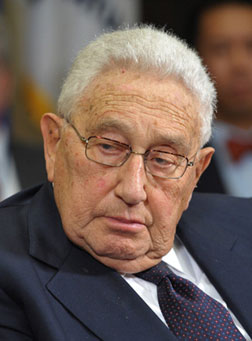
Henry Kissinger should have the door shut in his face by every decent person and should be shamed, ostracized, and excluded. No more dinners in his honor; no more respectful audiences for his absurdly overpriced public appearances; no more smirking photographs with hostesses and celebrities; no more soliciting of his worthless opinions by sycophantic editors and producers. One could have demanded this at almost any time during the years since his role as the only unindicted conspirator in the Nixon/Watergate gang, and since the exposure of his war crimes and crimes against humanity in Indochina, Chile, Argentina, Cyprus, East Timor, and several other places. But the latest revelations from the Nixon Library might perhaps turn the scale at last. (Click here to listen to the conversation; the offending section begins at 13:56.)

Chatting eagerly with his famously racist and foul-mouthed boss in March 1973, following an appeal from Golda Meir to press Moscow to allow the emigration of Soviet Jewry, Kissinger is heard on the tapes to say:

The emigration of Jews from the Soviet Union is not an objective of American foreign policy. And if they put Jews into gas chambers in the Soviet Union, it is not an American concern. Maybe a humanitarian concern.

(One has to love that uneasy afterthought …)

In the past, Kissinger has defended his role as enabler to Nixon's psychopathic bigotry, saying that he acted as a restraining influence on his boss by playing along and making soothing remarks. This can now go straight into the lavatory pan, along with his other hysterical lies. Obsessed as he was with the Jews, Nixon never came close to saying that he'd be indifferent to a replay of Auschwitz. For this, Kissinger deserves sole recognition.

It's hard to know how to classify this observation in the taxonomy of obscenity. Should it be counted as tactical Holocaust pre-denial? That would be too mild. It's actually a bit more like advance permission for another Holocaust. Which is why I wonder how long the official spokesmen of American Jewry are going to keep so quiet. Nothing remotely as revolting as this was ever uttered by Jesse Jackson or even Mel Gibson, to name only two famous targets of the wrath of the Anti-Defamation League. Where is the outrage? Is Kissinger—normally beseeched for comments on subjects about which he knows little or nothing—going to be able to sit out requests from the media that he clarify this statement? Does he get to keep his op-ed perch in reputable newspapers with nothing said? Will the publishers of his mendacious and purloined memoirs continue to give him expensive lunches as if nothing has happened?

After I published my book calling for his indictment, many of Kissinger's apologists said that, rough though his methods might have been, they were at least directed at defeating Communism. I never quite saw how the genocide in East Timor, say, had any effect in eroding the Berlin Wall. But I also pointed out that Kissinger did many favors for the heirs of Stalin and Mao: telling President Gerald Ford not to invite Alexander Solzhenitsyn to the White House, for example, and making lavish excuses for the massacre in Tiananmen Square. He is that rare and foul beast, a man whose record shows sympathy for communism and fascism.

Needed: An Economics for Grownups

Over at The National Review, Matthew Shaffer interviews Deirdre McCloskey:

Shaffer: Before Bourgeois Dignity you wrote The Bourgeois Virtues. Do you think our debt-ridden culture is a manifestation of a decline in the bourgeois virtues, or is that just romantic nonsense?

McCloskey: Conservative romantic nonsense, similar to the cries in the 18th century that commerce would corrupt the Spartan virtues. Dr. Johnson, who was a conservative but no sort of romantic, said in 1778, “Depend upon it, sir, every state of society is as luxurious as it can be. Men always take the best they can get.” And the blessed David Hume had said in 1742, “Nor is a porter less greedy of money, which he spends on bacon and brandy, than a courtier, who purchases champagne and ortolans [little songbirds rated a delicacy]. Riches are valuable at all times, and to all men.” Of course.

There’s a progressive version of the nonsense, the complaining about “consumerism.”

A more up-to-date reply is that so long as various Oriental protectionists (in the 1970s it was the Japanese, not the Chinese) are so foolish as to send Americans TV sets and hammers and so forth in exchange for IOUs and green pieces of paper engraved with American heroes, wonderful. Would you personally turn down such a deal? If your personal checks circulated as currency, and the grocer was willing to give you tons of groceries in exchange for eventually depreciated Matt-dollars, wouldn’t you go for it? I would, and drink champagne.

Shaffer: Do you think bourgeois virtues can be inculcated by public institutions, including schools?

McCloskey: The merchant academies of England in the 17th and 18th centuries raised up prudent bourgeois boys (they were mostly excluded from Oxford and Cambridge because many of the merchant families were not conforming members of the Church of England). The universities in Scotland had teachers like Adam Smith, and raised up boys (they were very young in Scotland) who admired commerce. Our culture, so corrupt and so little reflecting the classical virtues in the eyes of conservatives like Allan Bloom, admires innovation extravagantly in its rock music and its movies and its ethernet. It’s innovation, not respect for hierarchy or love of military glory, that makes for a successful society.

Against Literary Darwinism

Kramnick_pic Jonathan Kramnick in Critical Inquiry:

Literary Darwinism promises to show that literature played an important role in the evolution of the species, but what adaptive function could be served by bare themes, by subject matter as such? Failing to describe how “the adapted mind produces literature,” literary Darwinism often falls back on more general and even genteel notions of improvement (LD, p. xii). The move has a certain logic. Literary Darwinism has a difficult time finding a place for literary forms in the story of adaptation under selection pressure. At the same time, it is committed to the proposition that literature must have helped us to become the species we are. The result of this curious imbalance is that literature simply is about who we are in a relatively straightforward and uplifting sense. Literary texts provide “lively and powerful images of human life suffused with the feeling and understanding of the astonishingly capable and complete human beings who wrote them.”77 There is something tender-hearted in this bid for the function of literature to create “healthy human possibility” (LD, p. 68). It exchanges a hardheaded naturalism for mushier notions of moral cultivation. and strikes an ethical note reminiscent of F. R. Leavis. But surely this is a most remarkable turn of events. Casting about for a function specific to literature, the friends of adaptation seem to settle for it making us better, more decent, or more complete human beings (see LD, p. 68). Yet value-laden ideas like complete humanity have no meaning in the terms of evolutionary or any other science and tell us very little about any cultural artifact. And this is precisely my point. With the turn to a kind of pabulum, Darwinian criticism seems not very scientific at all.

the roads of Guatemala

1291822612757

The roads of Guatemala have always been its best and worst theatre. Beautiful dirt roads leading to a vast green nowhere. Old gravel roads winding up active volcanoes, around rivers and lakes, through screaming jungles. Long, eternal roads whose ends dip into two great oceans. City roads that are barely paved, barely straight and barely navigable. A few years ago, after spending some time in Spain, I finally moved back to Guatemala and was struck when friends and family members gave me the same piece of advice. Don’t honk your horn at another car, don’t overtake another car, don’t dare raise your headlights at another car. Why? On several occasions I forgot this advice and was then able to confirm its gloomy wisdom. Once I was chased fiercely for ten or fifteen minutes, until my pursuer either got tired or grew bored. Still another time, and without me ever knowing why, an elderly woman drove for a few blocks right next to my car, screaming and insulting me with the most lavish vocabulary I’d ever heard. Another time a man pulled up beside me at a red light and proceeded to show me, all the while smiling, his handgun.

more from Eduardo Halfon at Granta here.

Who is Hedda Sterne?

Boxer-2-122310_jpg_470x760_q85

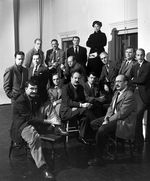
At the summit of “The Irascibles,” Life magazine’s 1951 portrait of the Abstract Expressionist painters, stands an imperious-looking woman, the Romanian-born artist Hedda Sterne. She is the only female in the photograph and, in some sense, the most prominent figure—the “feather on top,” as she once put it. Now, at age one hundred, she is the sole survivor. “I am known more for that darn photo than for eighty years of work,” Sterne told me a few years ago. “If I had an ego, it would bother me.” Plus, she said, “it is a lie.” Why? “I was not an Abstract Expressionist. Nor was I an Irascible.” Who is Hedda Sterne? In 2003, when she was ninety-two and still drawing every day, I interviewed her and tape-recorded the conversation. We met in her apartment on East 71st Street near Third Avenue, where she’d lived for almost sixty years—first with her then husband, Saul Steinberg, the New Yorker artist, and later, beginning in the 1960s, alone. The kitchen and living room were one space. On a table were Sterne’s recent white-on-white drawings. Just about all the other art was Steinberg’s. On a wall hung a trompe l’oeil work spoofing Mondrian; a small table was piled with Steinberg’s wooden “books.” Over the stove hung a faux diploma for cooking, which Steinberg had presented to Sterne in the 1950s, and over the sink was another diploma, for dishwashing. A large carpet of raw canvas lay on the floor, with handwritten lines organized into the squares of a grid. This, I realized, was Sterne’s Diary from 1976, and a perfect emblem of her: a dense fabric of words, drawn with intense concentration, left to be obliterated underfoot.

more from Sarah Boxer at the NYRB here.

when allegory gets nasty

A-serbian-film-007

If you like torture porn, rape porn, incest porn, paedo porn, snuff porn, necro porn and (a bit of a breakthrough here) newborn porn, A Serbian Film has much to offer you. Even after the 49 cuts demanded by the BBFC spoilsports, it certainly earns its place on the shortlist for that sought-after accolade, “the nastiest film ever made”. Good luck to it, you may or may not think. Yet we’re not allowed to leave it at that. Famously, this film is laid before us not as a robust piece of entertainment for what will doubtless prove an appreciative niche audience, but as a political allegory. Whenever he gets the chance, the director, Srdjan Spasojevic, insists: “This is a diary of our own molestation by the Serbian government. It’s about the monolithic power of leaders who hypnotise you to do things you don’t want to do.” Understandably enough, this claim has been derided as a pathetic attempt to accord respectability to a straightforward exercise in sensationalist depravity. Yet the more you hear of Spasojevic’s apologia, the more sincere he seems to be. He has after all lived through a traumatic period in his country’s history. He says he spent a decade trying to work out how to translate its essence into cinema, and concluded that pornography was the only possible metaphor for “the almost indescribable and exploitative chaos” that had dominated his life.

more from David Cox at The Guardian here.

Tuesday Poem

To the Newlyweds in the Barrio

Subtract the size of the world
from an empty stomach
and over the difference construct a roof.

Wall up hunger
give it no room to spread
to the eyes, hands and feet.

Later you'll be able to afford a TV
to bring you reports
of soldiers invading with their shadows.

But for the time
all you can afford is a radio
and guilt as you dance around your house.

by Rebecca Gonzales
from After Aztlan – Latino Poets of the Nineties
David R. Godine, Publisher, 1992

The wonders of the cell go online

From MSNBC:

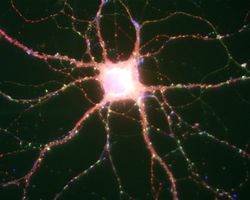
Cell For many of us, the wonders of cell biology came alive when we peered through a microscope at an amoeba in science class. Today, a new online image library of cells brings that same sense of wonder and magic to anyone with an Internet connection. The library contains more than 1,000 images, videos, and animations of cells from a variety of organisms — from the Chinese hamster (Cricetulus griseus) to humans (Homo sapiens). The database aims to advance research on cellular activity with the ultimate goal of improving human health, according to the American Society for Cell Biology, which has created the database in partnership with Glencoe Software and the Open Microscopy Environment.

“In our research of disease, one of the key features is to understand the mechanism of disease — and that is going to happen, in many cases, at the cellular level,” David Orloff, manager of The Cell image library, told me. For example, the library will make it possible for scientists to compare different cell types online and understand the nature of specific cells and cellular processes, both normal and abnormal. This may lead to new discoveries about diseases, as well as new targets for drug development.

More here.

Real Evidence for Diets That Are Just Imaginary

John Tierney in The New York Times:

Diet Call it the Imagine Diet. You wouldn’t have to count calories, track food points or memorize rules. If, say, some alleged friend left a box of chocolate truffles in your home this holiday season, you would neither throw them away nor inhale them all. Instead, you would start eating imaginary chocolates.

You would give yourself a few seconds to imagine tasting and chewing one truffle. (If there’s a picture on the box, you could focus on it.) Then you would imagine eating another, and then another and another…until at last you could open the box of real chocolates without making a total pig of yourself. And then you could start on fantasies of other vices you wanted to eliminate. So far, the Imagine Diet exists only in my imagination, as does any evidence of its efficacy. But there is some real evidence for the benefits of imaginary eating from experiments at Carnegie Mellon University reported in the current issue of Science. When people imagined themselves eating M & M’s or pieces of cheese, they became less likely to gorge themselves on the real thing.

More here.

3QD Politics Prize 2010 Semifinalists

Hello,

The voting round of our politics prize (details here) is over. A total of 493 votes were cast for the 44 nominees (click here for full list of nominees). Thanks to the nominators and the voters for participating.

Carla Goller has designed a “trophy” logo that our top twenty vote-getters may choose to display on their own blogs. So here they are, in descending order from the most voted-for:

  1. Politics_160_seminfinalist Muhammad Cohen, Twenty reasons Barack Obama stinks
  2. Huffington Post, Haiti's Political and Economic Earthquake “Made in the USA”
  3. 3 Quarks Daily, The Trappers and the Trapped

  4. Sexy Beast, Spitzer, Stop Hiding From Your Call Girl Past
  5. Accidental Blogger, What was malt liquor?
  6. Farming Pathogens, The Alan Greenspan Strain
  7. 3 Quarks Daily, Who Will Be A Champion Of The Left We Can Believe In? As Bush-lite, Obama Ain't It
  8. 3 Quarks Daily, The Revolution Will Not Be PowerPointed
  9. True/Slant, Some Iran Questions Without Answers
  10. Ideas in Motion, Covering Mirrors *
  11. The South Asian Idea Weblog, 9/11: Socrates, Machiavelli, Christ and Gandhi
  12. Wisdom of the West, Politics
  13. 3 Quarks Daily, War and the American Republic
  14. NPR Check, Asymmetric Accomplices to Murder
  15. PH2.1, Getting to Agreement
  16. Zunguzungu, Julian Assange and the Computer Conspiracy; “To destroy this invisible government”
  17. The Philosopher's Beard, Politics: Can't Someone Else Do It?
  18. The Heart of the Matter, It's Just a Leak
  19. Naked Capitalism, End This Fed
  20. Stephen Walt, Why America is going to regret the Cordoba House controversy
  21. Black Agenda Report, The Unraveling of the Empire of Finance Capital

* This post was inadvertently left out of the list of semifinalists, so I am adding it now. My apologies. It was considered for the finalists but did not make the cut. See comments below.

The editors of 3 Quarks Daily will now pick the top six entries from these, and after possibly adding up to three “wildcard” entries, will send that list of finalists very soon, possibly even later today, to Lewis Lapham. We will also post the list of finalists here then.

Good luck!

Abbas

Monday, December 13, 2010

Sunday, December 12, 2010

Anthropology, Science, and the AAA Long-Range Plan: What Really Happened

Ps.xhwsxbbt.170x170-75The American Anthropological Association at its annual meeting dropped the word “science” from its long-range plan. Daniel Lende, over at Neuroanthropology, discusses the change:

Nicholas Wade in the NY Times article Anthropology a Science? Statement Deepens a Rift has brought the controversy over the American Anthropological Association dropping “science” from its long-range plan back into the public eye.

The decision has reopened a long-simmering tension between researchers in science-based anthropological disciplines — including archaeologists, physical anthropologists and some cultural anthropologists — and members of the profession who study race, ethnicity and gender and see themselves as advocates for native peoples or human rights.

I already covered the controversy in my post Anthropology, Science and Public Understanding, where I also provide an up-to-date list of reactions to the controversy – including reactions to Wade’s NYT article. So look there for my points about the changes in the AAA long-range plan and the different takes anthropologists have had. Because today I want to provide a more accurate recounting of the controversy than Wade presents, and also defend anthropology.

Why Did the Controversy Explode? An Internal Process Gone Public

Nicholas Wade paints the explosion in light of the “bitter tribal warfare after the more politically active group attacked work on the Yanomamo people of Venezuela and Brazil by Napoleon Chagnon, a science-oriented anthropologist, and James Neel, a medical geneticist.”

This is not an apt reading of what actually happened. The issues that prompted this debate are both more mundane and more central to the present state of anthropology than some “tribal warfare” trope. Indeed, in the more than 50 reactions to the AAA decision, the el Dorado controversy has been a minor sidenote, when mentioned at all.

The blow-up over the dropping of “science” began as a two-step process: (1) a new document created through an internal process became public, and (2) initial reactions on the Internet fueled a broader controversy through polarizing takes on the meaning of that document.

Also see this statement from the AAA.

[H/t: Linta Varghese]

The Tolstoy We’ve Forgotten

188220560Anatoly Naiman in Moscow News:

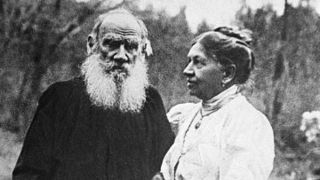
On November 20, 1910 (November 7 by the old calendar), the 82-year-old Lev Nikolayevich Tolstoy died at the obscure railway station of Astapovo. No death before or since has produced such a shock wave in Russia or such resonance throughout the world.

It is impossible to convey just what Tolstoy was. The closest you can come to it, if asked, would be to point a finger toward 100 or so volumes that make up his complete collected works and the memoirs people wrote about him: Read these, you might tell the inquirer, and things will be a little clearer.

But one thing is already clear, actually – that there is no answer to who Tolstoy was, and there can’t be, in principle. Dealing with Tolstoy is like dealing with a concept on the order of life, earth, or mankind: no matter how closely you examine it or try to stretch your imagination around it, the only thing you understand completely is that you can’t fit it into a formula.

Or put it this way: modernity can’t cope without the irrational value of Pi, which trails off elusively into numerical infinity. The more you read Tolstoy, and the more you read about Tolstoy, the more obvious his Pi-ness – his infinite and elusive nature – becomes.

The best at writing about Tolstoy were Maxim Gorky, Vladimir Korolenko and Alexander Kuprin, largely because they were major figures themselves; as such they were big enough to understand that the lesser are not given scales by which to measure the greater. But they could, and did, find a point from which they could observe him, both in his human simplicity and in the complexity of his spirit at a given moment.

The worst at describing him were the ideologists – including, alas, the Tolstoyans themselves. My father was a Tolstoyan (not one of the “professionals”, happily) who in 1920, as a member of the Tolstoyan community at Taininka, in the Moscow region, served the time in Butyrka prison required of those who refused to enter the military in those days. So for me Tolstoy was from childhood a sort of distant relative, a mysterious, not entirely real uncle.

Tough Love and Revelation: The Films of Frederick Wiseman

TiticutFollies1_jpg_470x457_q85Andrew Delbanco in the NYRB blog:

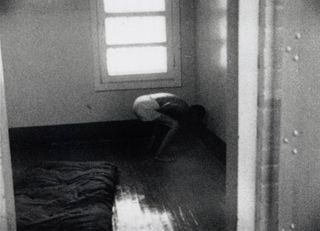
The first film by Frederick Wiseman I saw was Titicut Follies (1967). It was the fall of 1969, my freshman year of college, too long ago to trust my memory scene by scene. What I mainly remember is the festive mood in the dining-hall-turned-theater as the lights went down and latecomers ducked under the projector’s cone of bluish light as they made their way to sit with friends across the room. A very cool senior had made introductory remarks to the effect that what we were about to see had been “banned in Boston” (always promising), and I think we half-expected the local police to show up as if we had gathered in Rick’s gambling den in Casablanca (1942). I remember a little snickering during the opening pan across the expressionless faces of the inmates singing “Strike up the Band” while they wave—tentatively, almost spastically—their pompoms. But once the film started, there was only silence in the room, interrupted now and then by a gasp.

A few months ago, forty years older, I watched Titicut Follies on a DVD on my computer screen in my study at home. Memories of that first viewing came flooding back: the guards tormenting an inmate named Jim, marching him naked up and down the bright-lit hallways, peppering him with variations on one relentless question: “How’s that room, Jim? … You gonna keep that room clean, Jim? … How’s that room gonna be tomorrow, Jim? … How come it’s not clean today?” until he screams out his compliance in rage and helplessness. And then there was the German psychiatrist who looks for all the world like Hermann Goring, pestering an inmate with questions in a monotone voice about how often he masturbates. Did he feel guilty after raping his own child? “I need help but I don’t know where I can get it,” says the young man, handsome and fit, but with a deadness in his eyes. “You get it here, I guess,” says the doctor—help, as the rest of the film makes clear, in the form of lockdowns, hosings, strip searches, and assorted other humiliations…

Watching the film today is an utterly different experience. I see images of Abu Ghraib. I see failed men exposed to mockery for having failed, men who once had families and jobs and respectable credentials, but, unable to manage their sexual or violent urges, descended into the pit into which any of us might fall.

Evidence-based Policy: Where is Our Theory of Evidence?

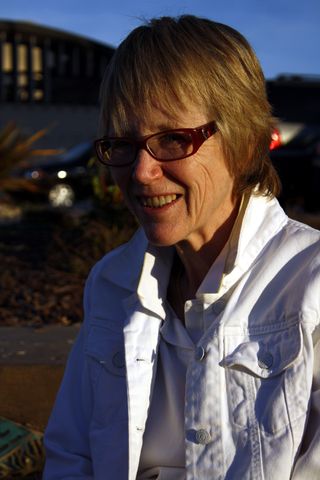
NancyfromCohen Nancy Cartwright, Andrew Goldfinch and Jeremy Howick in Journal of Children's Services:

What is it in virtue of which a fact is evidence for a hypothesis? Our philosophical accounts fall into two categories. First are accounts based on some features of the probabilistic relations between the evidence and the hypothesis – for example, increase in probability or various functions of likelihoods (see Mayo, 1996 Chapter 3 for an overview of such positions). These are not useful for evidence-based policy. What we need is a concept of evidence that we can use to judge whether some fact should be taken into consideration – whether it should be ‘on the table’ for consideration. Then we would expect to look at all the evidence on the table to decide on the probability of the proposed policy claim. Concepts of evidence based on facts about probabilities put the cart before the horse. We need a concept that can give guidance about what is relevant to consider in deciding on the probability of the hypothesis not one that requires that we already know significant facts about the probability of the hypothesis on various pieces of evidence.

Second are those accounts that are based on facts about explanation – for example, versions of inference to the best explanation (Lipton, 2004) or explanatory connectedness (Achinstein, 2001). The problem here is the concept of explanation. A good many accounts end up explaining explanation by reference to probability relations between the ‘explanans’ [the means of making plain] and the ‘explanandum’ [that which is being made plain]. This simply recreates the previous problem.

Rebalancing Drug Policy

DrugWar_AP_mthumb_0 Over at The Nation, Ethan Nadelmann, Marc Mauer, Bruce Western, Tracy Velázquez, David Cole, and Laura Carlsen in a forum discuss the war on drugs. Western:

Drugs are intensively criminalized among the poor but largely unregulated among the rich. The pot, coke and ecstasy that enliven college dorms, soothe the middle-class time bind and ignite the octane of capitalism on Wall Street are unimpeded by the street sweep, the prison cell and the parole-mandated urine tests that are routine in poor neighborhoods.

The drug war is nitro to the ghetto's glycerin. In neighborhoods of mass unemployment, family breakdown and untreated addiction, punitive drug policy (and its sibling, the war on crime) has outlawed large tracts of everyday life. By 2008 one in nine black men younger than 35 was in prison or jail. Among black male dropouts in their mid-30s, an astonishing 60 percent have served time in state or federal prison.

The reach of the penal system extends beyond the prison population to families and communities. There are now 2.7 million children with a parent in prison or jail. There are 1.2 million African-American children with incarcerated parents (one in nine), and more than half of those parents were convicted of a drug or other nonviolent offense.

In the absence of any serious effort to improve economic opportunity, particularly among young men with little schooling, drug control has become our surrogate social policy. For all the billions spent on draconian criminalization, addiction remains a scourge of the disadvantaged in inner cities and small towns, drugs are still plentiful and the drug trade remains a ready but risky source of casual employment for low-education men and women with no legitimate prospects. Though drugs are at the center of an array of serious social problems in low-income communities, things are made worse by a dysfunctional policy in which arrest, imprisonment and a criminal record have become a normal part of life.

A Naturalistic Ontology for Mechanistic Explanations in the Social Sciences

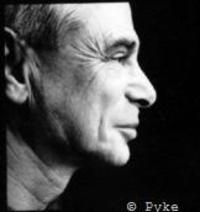
Large_dan.sperber Dan Sperber over at his website, also forthcoming in Pierre Demeulenaere, ed., Analytical sociology and social mechanisms:

There are several approaches in the social sciences that seek to provide causal explanations of social phenomena neither in terms of general causal laws nor in terms of case-specific narratives, but, at a middle level of generality, in terms of recurrent causal patterns or “mechanisms” (Hedström & Swedberg 1988). Typically, these approaches invoke micro-mechanisms to explain macro social phenomena. Most of them, ‘analytical sociology’ in particular (Hedström 2005), are versions or offshoots of methodological individualism. These individualistic approaches either stick to the “methodological” in “methodological individualism” and leave aside ontological issues, or else they are also individualistic in the metaphysical sense and deny the existence of supra-individual social phenomena that cannot be analysed in terms of the aggregation of individual actions (see Ruben 1985).

The ontological challenge to which individualism responds is that presented by holistic approaches that place the social on a supra-individual level of reality. Another possible challenge, coming not from above but from below, that is, from the natural sciences, is generally not considered. The individuals invoked in individualism are not so much the individual organisms recognised in biology as the individual agents recognised in commonsense ontology. Individual agency is taken as a primitive in this approach, rather than as a tentative construct that should be unpacked and possibly questioned by psychology and biology.

Most mechanistic approaches, whether their individualism is just methodological or also metaphysical, show little interest in providing the social sciences with a naturalistic ontology, that is, one continuous with that of the natural science. The main goal of this chapter is to outline such a naturalistic ontology. But why should we want such an ontology in the first place? I don’t, by the way, believe that the social sciences in general should systematically work within naturalistic ontology: many of their goals, concern and programs are better pursued with the usual commonsense ontology. But when it comes to providing a scientific causal explanation of social phenomena, there are at least two reasons to prefer a naturalistic approach. The first reason is trivial: To the extent that it is possible, we would prefer our understanding of the world to be integrated, both for the sake of generality and for that of coherence.

The second, more interesting reason to want a naturalistic ontology has to do with the quality of our causal explanations. Either the laws of physics admit of exception and social events provides such exceptions (and there is a Nobel Prize in physics to be won by doing sociology!), or else whatever has causal powers in the universe at large and among humans on earth in particular has them in virtue of its physical properties. Of course, this does not mean that social scientists should get involved in the physics of social causality. What it does mean though is that, when we attribute causal powers to some social phenomena, we should be able to describe it in such terms that its physical character is not a total mystery but raises a set of sensible questions that can be passed on to neighbouring natural sciences, psychology, biology, and ecology in particular, that directly or indirectly do ground their understanding of causal powers in physics.