
A Kind of Biography
All night the language dog
gnaws at the meaning bone.
Soon the sea begins
to question its shuffling
from east to west, and the stars
their vast, ordinary circuits.
So my friend has fled into his father’s fields.
He leans against a fence
and wonders what the ant means
and the moonlit grasses as they bend
and spread and flow beneath
a wind whose beginning seems obscure
and whose end, uncertain.
He notices that something of himself
has set off with the wind
and that he is now two.
He wonders at this doubleness.
Back home, he sits in the kitchen,
and ordinary boy watching
his mother cook breakfast,
but something of him is in
another place, and some other thing
is with him even here.
by Nils Peterson
from The Dear Time of Our Talking
Frog On The Moon, Small Press, 2020
 W
W Shouldn’t charity serve the needs of recipients, not givers?
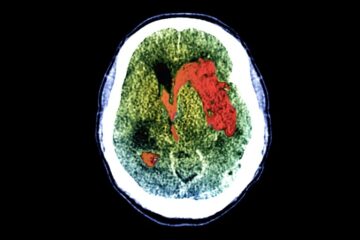 At least one-quarter of people who have severe brain injuries and cannot respond physically to commands are actually
 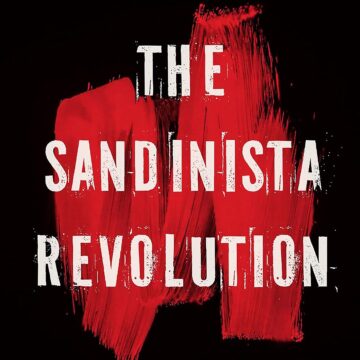 In 1979, most Latin American countries were ruled by right-wing military dictatorships. The Cuban Revolution was 20 years old, and copycat guerrilla groups had been comprehensively defeated across the region thanks in part to heavy United States counterinsurgency efforts. The flame of revolution appeared to be spent. It was in this unpropitious regional context, in the small Central American nation of Nicaragua, that the Frente Sandinista de Liberación Nacional (Sandinista National Liberal Front, FSLN), the guerrilla group known colloquially as the Sandinistas, overthrew the brutal, United States–backed dictatorship of Anastasio Somoza. It would turn out to be the last of Latin America’s Cold War revolutions. But for a moment, the Sandinistas’ feat returned hope to a battered socialist Left in the region.
 Gena Rowlands, who died last Wednesday, at the age of ninety-four, is, of all the actresses I’ve ever seen onscreen, the greatest artist. She’s the one whose performances offer the most surprises, the most shocks, the most moment-to-moment inventiveness, and, above all, the most almost-unbearable force of emotional expression, combining extremes of strength and vulnerability, of overt display and inner life. Her mighty talent is also a peculiar one, the strangeness of which is exemplary of the art of movies: it might never have come so fully to light were it not for her marriage to John Cassavetes and for the movies that they made together—especially the personal six that extend from “
 When Devin Singh was a paediatric resident, he attended to a young child who had gone into cardiac arrest in the emergency department after a prolonged wait to see a doctor. “I remember doing CPR on this patient and feeling that kiddo slip away,” he says. Devastated by the child’s death, Singh remembers wondering whether a shorter waiting time could have prevented it.
 But then there are the parts of effective altruism that are just … weird.
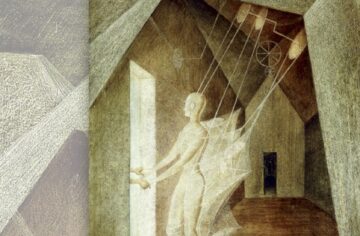 In 1884, William James began his celebrated essay “The Dilemma of Determinism” by begging his readers’ indulgence: “A common opinion prevails that the juice has ages ago been pressed out of the free-will controversy, and that no new champion can do more than warm up stale arguments which everyone has heard.” James persisted and rendered the subject very juicy, as he always did. But if the topic appeared exhausted to most people then, surely a hundred and forty years later there can’t be anything new to say. Whole new fields of physics, biology, mathematics, and medicine have been invented—surely this ancient philosophical question doesn’t still interest anyone?
 I’m an engineer who
 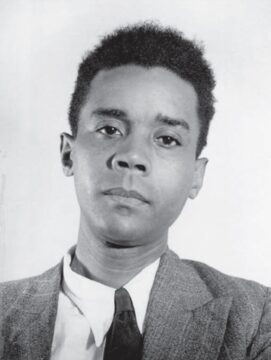 In late 1949, the West Indian intellectual
  The actual exchange between Oppenheimer and Einstein was, as it happened, far less cordial than the film’s version. It ended with an exasperated Einstein telling his assistant, “There goes a Narr [fool],” nodding toward the Institute director.
 I
I