Formerly Blind Children Shed Light on a Centuries-Old Puzzle

Greg Miller in Science:

ScreenHunter_03 Apr. 19 11.12 In 1688, an Irish polymath named William Molyneux wrote the English philosopher John Locke a letter in which he posed a vexing question: Could a blind person, upon suddenly gaining the ability to see, recognize an object by sight that he'd previously known by feel? The answer has potentially important implications for philosophers and neuroscientists alike. Now, researchers working with a medical charity that provides surgery to restore vision in blind children say they've found the answer to Molyneux's question. It's “no” but with a twist.

Molyneux posed his question in the midst of a philosophical debate about how we comprehend the world around us. An affirmative answer to the question would support the argument that we possess innate (and presumably God-given) concepts that are independent of the senses—for example, that we possess a concept of a sphere, regardless of whether we have only seen one, only felt one, or both. A negative answer to Molyneux's question would support the alternative argument that any concept of a sphere or other object must be tied to sensory experience. In that view, a blind person would have only a tactile concept of a sphere that would be of no use in recognizing the shape by sight.

More here.
The Liberation War Museum in Dhaka

Huma Imtiaz in the Express Tribune:

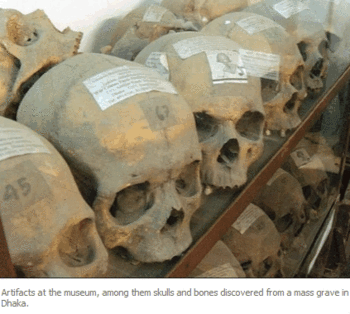
ScreenHunter_02 Apr. 19 10.26 As a Pakistani schooled in a sanitised version of history, the museum makes one cringe with revulsion. Skulls and bones recovered from a killing field in Mirpur, Dhaka, stare at you from a glass cupboard. A black and white image shows vultures picking at the bodies of those left for dead. In another image, a snake is stretched out on the back of a dead body — an unknown victim of the cyclone that battered East Pakistan in 1970, and led to increased feelings of alienation amongst East Pakistanis with the slow aid response from West Pakistan. Lewd sketches of women are among the graffiti found in a Pakistan Army camp.

My tour guide turns to me, “You tell me, how can we forgive or forget this?” Umm-e-Hani Shoily is a college student and, though this is her third visit to the museum, some of the images still fill her with horror.

Occupying a two-storeyed house, the Liberation War Museum documents the history of East Pakistan from the days of British Rule to 1971.

More here. More photos can be seen at Huma Imtiaz's blog here.

Monday, April 18, 2011

Sunday, April 17, 2011

How Congress can balance the budget in eight years by literally doing nothing. This is not a joke.

Annie Lowrey in Slate:

110412_Budget_TN The overarching principle of the Do-Nothing Plan is this: Leave everything as is. Current law stands, and spending and revenue levels continue according to the Congressional Budget Office's baseline projections. Everyone walks away. Paul Ryan goes fishing. Sen. Harry Reid kicks back with a ginger ale. The rest of Congress gets back to bickering about mammograms. Miraculously, the budget just balances itself, in about a decade.

I know. Your eyebrows are running for your hairline; your jaw is headed to the floor. You've had the bejesus scared out of you by deficit hawks murmuring about bankruptcy and defaults and Chinese bondholders. But don't take it from me. Take it from the number crunchers at the CBO. Look at the first chart here, and check the “primary deficit” in 2019. The number is positive. The deficit does not exist. There's a technicality, granted: The primary deficit is the difference between spending and revenue. The total deficit, the number more commonly cited as “the deficit,” includes mandatory interest payments on the country's debt. Even so, the total fiscal gap is a whisper, not a shout—about 3 percent of GDP, which is what economists say is healthy for an advanced economy.

So how does doing nothing actually return the budget to health? The answer is that doing nothing allows all kinds of fiscal changes that politicians generally abhor to take effect automatically. First, doing nothing means the Bush tax cuts would expire, as scheduled, at the end of next year.

More here.

Questions over Greg Mortenson’s stories

From CBS News:

60_minutes_palewski_promo_110417_244x183 Some of the most inspiring and dramatic stories in the best-selling book, “Three Cups of Tea,” by Greg Mortenson, are not true, multiple sources tell “60 Minutes” as part of an investigation by correspondent Steve Kroft that will be broadcast on “60 Minutes” this Sunday, April 17 at 7 p.m. ET/PT.

The stories in “Three Cups of Tea” have become the source of inspirational speeches Mortenson is paid to make and the partial basis for donations of nearly $60 million to the charity he founded. Steve Kroft's investigation also reveals that Mortenson's charity, Central Asia Institute, has spent more money in the U.S. talking about education in Pakistan and Afghanistan than actually building and supporting schools there, according to an analysis of the organization's last financial report.

A charity watchdog group expresses concern that money donors have given to build schools in Pakistan and Afghanistan is actually being used to promote Mortenson's books.

The heart of Mortenson's “Three Cups of Tea” is the story of a failed attempt in 1993 to climb the world's second-highest peak, K2.

On the way down, Mortenson says, he got lost and stumbled, alone and exhausted, into a remote mountain village in Pakistan named Korphe.

According to the book's narrative, the villagers cared for him and he promised to return to build a school there. In a remote village in Pakistan, “60 Minutes” found Mortenson's porters on that failed expedition. They say Mortenson didn't get lost and stumble into Korphe on his way down from K2. He visited the village a year later.

More here.

Sunday Poem

The Abuelita Poem
……………..
I. SKIN & CORN
Her brown skin glistens as the sun
pours through the kitchen window
like gold leche. After grinding
the nixtamal, a word so beautifully ethnic
it must not only be italicized but underlined
to let you, the reader, know you’ve encountered
something beautifully ethnic, she kneads
with the hands of centuries-old ancestor
spirits who magically yet realistically possess her
until the masa is smooth as a lowrider’s
chrome bumper. And I know she must do this
with care because it says so on a website
that explains how to make homemade corn tortillas.
So much labor for this peasant bread,
this edible art birthed from Abuelitas’s
brown skin, which is still glistening
in the sun.

II. APOLOGY
Before she died I called my abuelita
grandma. I cannot remember
if she made corn tortillas from scratch
but, O, how she’d flip the factory fresh
El Milagros (Quality Since 1950)
on the burner, bathe them in butter
& salt for her grandchildren.
How she’d knead the buttons
on the telephone, order me food
from Pizza Hut. I assure you,
gentle reader, this was done
with the spirit of Mesoamérica
ablaze in her fingertips.

by Paul Martinez Pompa
from My Kill Adore Him © 2009

Julie Taymor’s The Tempest

Alan A. Stone in the Boston Review:

Stone_36_2_tempest There were high hopes for Julie Taymor’s The Tempest. She had a track record, having rescued one of Shakespeare’s earliest plays, Titus Andronicus, from the waste heap of Elizabethan theater where academics such as Harold Bloom thought it belonged. Bloom called it a “poetic atrocity” and claimed the role of Titus was not “playable, except as parody.” But Taymor’s cinematic miracle made Shakespeare’s genius visible. On her screen we discovered archetypes of some of Shakespeare’s greatest characters, and her Titus (Anthony Hopkins) found a way to play his part after all. With Titus she achieved what even celebrated directors rarely can: a modern and lasting interpretation of a Shakespeare play. It is impossible now to think about Titus Andronicus without seeing it through her lens.

The greatest modernizer of Shakespeare for American theater was, like Taymor, a woman. Margaret Webster rediscovered the full-length Hamlet, with Maurice Evans, decades before Kenneth Branagh. She then teamed the marvelous Paul Robeson with Uta Hagen in the first realistic Othello and made theater history. And in 1945 she saved from obscurity the Tempest, rarely performed in the United States at the time, and gave it a post-colonial spin.

More here.

Where does good come from?

From The Boston Globe:

Wheredoesgoodcomefrom__1302973750_1135 On a recent Monday afternoon, the distinguished Harvard biologist Edward O. Wilson was at his home in Lexington, talking on the phone about the knocks he’s been taking lately from the scientific community, and paraphrasing Arthur Schopenhauer to explain his current standing in his field. “All new ideas go through three phases,” Wilson said, with some happy mischief in his voice. “They’re first ridiculed or ignored. Then they meet outrage. Then they are said to have been obvious all along.” Wilson is 81, an age at which he could be forgiven for retreating to a farm and lending his name to the occasional popular book about science. Over the past year he’s tried his hand at fiction writing, publishing a novel about ants — his scientific specialty — and landing a short story in The New Yorker. But he has also been pressing a disruptive scientific idea, one he reckons is currently in phase two of the Schopenhauer progression: outrage. What Wilson is trying to do, late in his influential career, is nothing less than overturn a central plank of established evolutionary theory: the origins of altruism. His position is provoking ferocious criticism from other scientists. Last month, the leading scientific journal Nature published five strongly worded letters saying, more or less, that Wilson has misunderstood the theory of evolution and generally doesn’t know what he’s talking about. One of these carried the signatures of an eye-popping 137 scientists, including two of Wilson’s colleagues at Harvard.

His new argument, in a nutshell, amounts to a frontal attack on long-accepted ideas about one of the great mysteries of evolution: why one creature would ever help another at its own expense. Natural selection means that the fittest pass down their genes to the next generation, and every organism would seem to have an overwhelming incentive to survive and reproduce. Yet, strangely, self-sacrifice exists in the natural world, even though it would seem to put individual organisms at an evolutionary disadvantage: The squirrel that lets out a cry to warn of a nearby predator is necessarily putting itself in danger. How could genes that lead to such behavior persist in a population over time? It’s a question that bedeviled even Charles Darwin, who considered altruism a serious challenge to his theory of evolution.

More here.

In Search of Civilization

From The Washington Post:

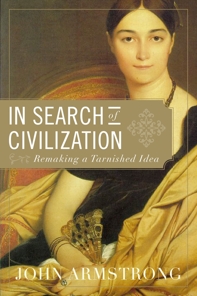
Books0414dirda What does the word “civilization” mean? Philosopher John Armstrong opens his engrossing “In Search of Civilization” by imagining a late-night discussion program in which four panelists propose different definitions. To the first panelist, a civilization consists of simply “what is shared and taken for granted by whole societies.” The second insists that “civilization is connected to the development and deployment of wealth and material power.” It’s what people mean when they say they’re out in the country, miles from civilization. A third speaker — Armstrong identifies him as a languid aesthete — murmurs that the word refers to “the sophisticated pursuit of pleasure,” to elegance and the enjoyment of good food and wine. The last panelist asserts that civilization “doesn’t indicate what is normal in a society; it picks out the grandest, most noble achievements,” that is, the great life-giving ideas, the best that humankind can achieve.

In the rest of his book, Armstrong examines more deeply these definitions and their implications for us today. In his opening discussion of the “clash of civilizations” — the title of a well-known book by Samuel P. Huntington — he emphasizes that the rich accomplishments of China, the West and Islam are not in conflict, but are rather “on the same side in a clash between cultivated intelligence and barbarism. The irony is that such barbarism too often goes under the name of loyalty to a civilization.” In fact, true civilization is “the life-support system for high-quality relationships to people, ideas and objects.” (Love, Armstrong explains, is the one-word version of the phrase “high quality of relationship.”) Civilization, then, seeks “to find and protect the good things with which — potentially — we can form high-quality relationships.” It also “fosters and protects the qualities in us that allow us to love such things for the right reasons. The qualities that inspire love are: goodness, beauty and truth. And when we love these qualities, we come to possess the corresponding capacities of wisdom, kindness and taste.”

More here.

Saturday, April 16, 2011

Morality without God

From The New Yorker:

Art When the sociologist Max Weber wrote of the disenchantment of the modern world in the late 19th and early 20th century, he struck a loud and resonant chord. Just look at the dog-eat-dog, bureaucratic, soulless world we live in. Ugh! How pleasant to dream of something better: a magical world unfolding in providential ways: perplexing, perhaps, and sometimes sad, but in the end benign, good and safe. How nice as well to be part of a congregation or church, united in celebrating these venerable enchantments through rituals, poetry and music, all expressing awe and wonder, gratitude, hope and consolation. On the one hand, meaningless bustle, absurdity and despair; on the other, peace, warmth and comfort. If these are the alternatives, the surprise is not that religions refuse to die, but that they ever become sickly.

Picture: The Grand Canyon: ageless, implacable, indifferent and sublime, says Simon Blackburn, and more worthy of our admiration than gods

More here.

the pale king

The-pale-king-cover

“The Pale King” is composed of parts of the “something long” on which 46-year-old David Foster Wallace was working before he hanged himself at his home in Claremont on Sept. 12, 2008. Wallace — author of fictions such as “The Broom of the System,” “Girl With Curious Hair,” “Infinite Jest” and “Brief Interviews With Hideous Men,” not to mention a score or so of wonderful loopy discursive nonfiction essays on subjects as diverse as tennis, John McCain, David Lynch, cruise ships, and baton-twirling — left more than 200 pages of typed manuscript for “The Pale King” in a neat pile, almost as if spotlighted, on the desk in the garage that served as an office. Thousands of other pages and fragments were later found elsewhere in the garage, on hard drives and floppies, in storage boxes, file folders, three-ring binders, and notebooks adorned with smiley stickers. It’s hard to define exactly what “The Pale King” is, let alone judge it — are we talking about an unfinished novel, or just a version of an unfinished novel or a grab by publisher and estate or a fine and necessary tribute to a writer whose pain, genius, and, yes, tragic glamour, have touched so many? Reviewers line up to debate the point. The book, as here published, has been assembled by Michael Pietsch, Wallace’s longtime editor at Little, Brown. Pietsch has accomplished the task with diligence and even, I’d venture to say, love, though the 500-plus page result is inevitably just a guess at the intentions of a writer who was an obsessive reviser and a notoriously reluctant finisher of his work.

more from Richard Rayner at the LAT here.

DFW as Bartleby

McCarthy-articleInline

It seems to me there are two ways of understanding the document assembled from a jumble of boxes, disks and printed or handwritten papers that, at the time of David Foster Wallace’s suicide in 2008, ran into the high hundreds of pages — a document that, conscientiously and intelligently whittled down by Wallace’s editor Michael Pietsch to 500-odd pages, is now being published under the title “The Pale King,” and, just as significantly, the subtitle “An Unfinished Novel.” The first is as a coherent, if incomplete, portrayal of our age unfolding on an epic scale: a grand parable of postindustrial culture or “late capitalism,” and an anguished examination of the lot of the poor (that is, white-collar) individual who finds himself caught in this system’s mesh. The setting that Wallace has chosen as his background (and foreground, and pretty much everything in between) could not be more systematic: the innards of the Internal Revenue Service — the sheer, overwhelming heft of its protocols and procedures. If, as one of Wallace’s characters asserts, “the world of men as it exists today is a bureaucracy,” then the I.R.S., “a system composed of many systems,” not only represents that world but also furnishes the ultimate stage on which its moral dramas are enacted. In the words of Midwest Regional Examination Center Director DeWitt Glendenning Jr., one of the more shadowy (or pale) presences in this ­multicharactered and multivoiced book, “The tax code, once you get to know it, embodies all the essence of [human] life: greed, politics, power, goodness, charity.”

More from Tom McCarthy at the NYT here.

The rapidity of his canonisation

Cda51d64-6708-11e0-8d88-00144feab49a

One measure of a great fiction writer is the ability – possessed by very few – to bend reality, to seem to mould the world into shapes you have created. When David Foster Wallace hanged himself on the porch of his house in Claremont, California, on September 12 2008, he set in motion a chain of events that has come to seem like one of his own sprawling, multistranded fictions, a story whose central image is the transmutation of a much-loved living writer into that bogeyman of the literary canon, the Dead White Male. Wallace was 46, preternaturally talented, and at the height of a career crowned by the publication in 1996 of Infinite Jest, a 1,100-page slab of a novel set in a future North America where corporations have naming rights over the calendar, the action thus taking place in the Year of the Depend Adult Undergarment. Unashamedly cerebral, maximalist, digressive, infuriating and often very funny, Infinite Jest became an underground badge of belonging, appearing on hipster bookshelves next to copies of William Gaddis’s The Recognitions, Thomas Pynchon’s Gravity’s Rainbow, and Don DeLillo’s White Noise. Before its publication, Wallace’s work had been acclaimed in the relatively small world of contemporary experimental fiction. His debut novel, The Broom of the System, started when he was still an undergraduate and published in 1987, had signalled that he was a writer to watch and a 1989 volume of short stories (Girl With Curious Hair) had been greeted with good notices but relatively low sales. After Infinite Jest, he was an international figure, as readers discovered that his work was both formally innovative and extremely entertaining.

more from Hari Kunzru at the FT here.

Fiscal Policy and Growth in Light of the Crisis

Solow An interview with Robert Solow, at Vox:

Viv [Davies]: And what are your views on the current growth prospects for the US?

Professor Solow: I've had another difficulty with the discussion at the conference today, which relates to this, and I'll mention it first. Some of the speakers, it seemed to me, talked about economic growth, when what they were talking about really was short term increases in output. Since I've spent my life doing growth theory – my adult life, anyhow, doing growth theory – this kind of distinction matters a lot to me. I think of economic growth as being a fundamentally long term proposition that relates primarily to the growth of potential output, of the supply of output. Of course, it's an economic responsibility to have demand grow to match the supply, but the growth problem for an economy is to make its capacity to produce grow.

The US, I don't think, in the course of the crisis or the recession, has suffered any dramatic loss in those factors that lead to long term growth, which are primarily productivity increases and innovation, whether organisational or technological, and to a lesser extent, investment in human capital and tangible capital.

The problem that's been created by the recession is, because of the loss of wealth and the buildup of debt, private and public, the problem has been a difficulty in using the capacity that we have. But I think that, if and when we can solve the problem of a return to reasonable full utilisation of the productive capacity that's already in existence, and to a much lower unemployment rate, the underlying growth factors in the economy are still there, so that over the next 50 years, 30 or 40 years, I would not think that the likely long term growth rate of the US will be very different from what it was before.

What do the Popular Uprisings in the Middle East Mean for the Future of Political Islam?

CAP Discussion Over at CAP, a discussion with Tariq Ramadan, Hussein Ibish, and Brian Katulis:

The popular uprisings in the Middle East have brought the question of political Islam to the center stage of America’s policy debate. How do Islamist thinkers view the political transitions underway in Egypt and Tunisia, and what are they saying about the turmoil in places such as Libya and Yemen? What role will Islamist political groups play in countries opening up to democratic reforms, and what are the implications for U.S. policy in the Middle East.