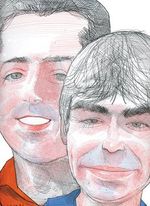
Natalie Abbasi in Guernica:
In each image I’ve incorporated myself twice, once as the Iranian and once as the American.

More here.

Natalie Abbasi in Guernica:
In each image I’ve incorporated myself twice, once as the Iranian and once as the American.
More here.
From PhysOrg:

The scientists drew their data from the NIH National Center for Biotechnology Information Gene Expression Omnibus, a publicly available database that contains the results of thousands of genomic studies on a wide range of topics, submitted by researchers across the globe. The resource catalogs changes in gene activity under various conditions, such as in diseased tissues or in response to medications. Butte's group focused on 100 diseases and 164 drugs. They created a computer program to search through the thousands of possible drug-disease combinations to find drugs and diseases whose gene expression patterns essentially cancelled each other out. For example, if a disease increased the activity of certain genes, the program tried to match it with one or more drugs that decreased the activity of those genes. Many of the drug-disease matches were known, and are already in clinical use, supporting the validity of the approach. For example, the analysis correctly predicted that prednisolone could treat Crohn's disease, a condition for which it is a standard therapy.
More here.
For years after the war and after the camps, Chava Rosenfarb woke up every morning at 4:00 a.m. to write. She’d open her eyes in the darkness and slip out of bed without waking her husband, make herself a cup of coffee, and sit down in her study, still wearing her nightgown. The study was even smaller than her kitchen—barely large enough for the table she had bought from a doctor’s office for ten dollars. On it she kept her notebooks. Sipping coffee, she’d start with the one on top, and by the light of a table lamp, beneath a portrait of the Yiddish writer I.L. Peretz, she’d review yesterday’s stories. Re-reading drew her back like a current, not into her pages but into the world to which she wanted to return. When she felt that world thickening around her, she’d skip ahead to where she’d left off the night before, pick up a pencil, and begin to write, slipping from her apartment in Montreal back to the last days of the Lodz ghetto. First to greet her there was always her favorite creation, Samuel Zuckerman. Born of Chava’s memories of the rich men of Lodz, Samuel was a “salon Zionist” and heir to a fortune, a Polish patriot who dreamed of Israel for other, poorer people; he couldn’t bear to think of leaving of Lodz, the Manchester of Poland. His passion was writing—a history of the Jews of Lodz, 250,000 of them, living in a city then known as the Manchester of Poland for its forest of smokestacks. But Samuel never got to tell the story.
more from Jeff Sharlet at Killing The Buddha here.
Was theory a gigantic hoax? On the contrary. It was the only salvation, for a twenty year period, from two colossal abdications by American thinkers and writers. From about 1975 to 1995, through a historical accident, a lot of American thinking and mental living got done by people who were French, and by young Americans who followed the French. The two grand abdications: one occurred in academic philosophy departments, the other in American fiction. In philosophy, from the 1930s on, a revolutionary group had been fighting inside universities to overcome the “tradition.” This insurgency, at first called “logical positivism” or “logical empiricism,” then simply “analytic philosophy,” was the best thing going. The original idea was that logical analysis of language would show which philosophical problems might be solved, and which eradicated because they were not phraseable in clear, logical language. That meant wiping out most of what Hegel had left us, and Europe still understood, as philosophy—including history, being, death, recognition, love. Still brand new in the 1930s (Carnap, Russell, Ayer) when trying to develop its ideal logical language, it had only just become institutional in the analytic pragmatism of the 1950s and 1960s (Quine), in time to be cranked up again in the 1970 (Kripke), saved from termination by the reintroduction of naive assumptions rejected at the start.
more from the editors at n+1 here.
From The Independent:

Even before coming to the main drama, Ghosh has in place this rich background of complex loyalties and antipathies among his polyglot cast. It's a background that is Dickensian in both its scope and tone. Effete young artist Robin Chinnery captures much of this colour in missives regaling Paulette with Canton news. Chinnery's gossipy asides offset the increasingly sombre turn of events when a reputedly incorruptible new governor is sent from Beijing to stamp out Canton's opium traffic.
More here.
From Scientific American:

A new flexible electronic circuit promises to do just that, by moving with the skin and staying in place without any adhesive. The research used existing semiconductor technology to imprint integrated circuits onto a thin, flexible silicon film that can be applied directly on the skin. The device is described in a new paper published online August 11 in Science. “The goal is really to blur the distinction between electronics and biological tissues,” John Rogers, a professor of materials science and engineering at the University of Illinois at Urbana-Champaign (U.I.C.U.) and co-author of the new study, said in a podcast interview. The new technology might soon allow monitoring to become “simpler, more reliable and uninterrupted,” Zhenqiang Ma, a professor at the University of Wisconsin–Madison's Department of Electrical and Computer Engineering, wrote in an essay in the same issue of Science.
More here.
Proof
Her skin, saffron toasted in the sun,
eyes darting like a gazelle.
—That god who made her, how could he
have left her alone? Was he blind?
—This wonder is not the result of blindness:
she is a woman, and a sinuous vine.
The Buddha's doctrine is thus proven:
nothing in this world is created.
(Dharmakirti, 7th Century)
Prueba
La piel es azafrán al sol tostado,
son de gacela los sedientos ojos.
—Ese dios que la hizo, ¿cómo pudo
dejar que lo dejase? ¿Estaba ciego?
—No es hechura de ciego este prodigio:
es mujer y es sinuosa enredadera.
La doctrina del Buda así se prueba:
nada en este universo fue creado.
(Dharmakriti, siglo VII)
by Octavio Paz
from The Collected Poems 1957-1987
Carcanet Press, 1988
The eighth-grade students gathering on the west lawn of the state capitol in Sacramento were planning to lunch on fried chicken with California’s new governor, Ronald Reagan, and then tour the granite building constructed a century earlier to resemble the nation’s Capitol. But the festivities were interrupted by the arrival of 30 young black men and women carrying .357 Magnums, 12-gauge shotguns, and .45-caliber pistols. The 24 men and six women climbed the capitol steps, and one man, Bobby Seale, began to read from a prepared statement. “The American people in general and the black people in particular,” he announced, must “take careful note of the racist California legislature aimed at keeping the black people disarmed and powerless Black people have begged, prayed, petitioned, demonstrated, and everything else to get the racist power structure of America to right the wrongs which have historically been perpetuated against black people The time has come for black people to arm themselves against this terror before it is too late.” Seale then turned to the others. “All right, brothers, come on. We’re going inside.” He opened the door, and the radicals walked straight into the state’s most important government building, loaded guns in hand. No metal detectors stood in their way. It was May 2, 1967, and the Black Panthers’ invasion of the California statehouse launched the modern gun-rights movement.
more from Adam Winkler at The Atlantic here.
ONE DAY IN THE FALL of 2006 my mother, visiting from Chicago, and I were having breakfast in Brooklyn, with her rolling through updates on distant relatives who occupy various corners of the Midwest. She told me about our cousin, Helene Leaf, who was researching a Lutheran church founded in East Union, Minnesota, by my great-great-great uncle, Peter Carlson. I was until that point failing to pay attention, dutifully nodding and uttering, “Really?” every few seconds. But then something cut through the static of anonymous small towns and genealogical records: Helene had learned that another great-great-great uncle named Anders Johan Carlson had served in the Union army during the Civil War, and had been standing guard during the execution of several Indians, the sight of which had made him vomit—even, I imagined, as a crowd stood by stolidly, or perhaps even jubilantly. I had grown up in Chicago and had never heard of any such execution, and neither had my mother. The story stuck with me, though, quickly shifting into that category of things you feel like you’ve known all your life. A few months later, I did a cursory Google search and found that the event in question had taken place in Mankato, an unassuming town in southern Minnesota, on December 26, 1862. Thirty-eight Dakota men were hanged by the army, making it the largest mass execution to ever take place in the US. A story began to take shape: The scaffold fell from the Dakotas’ feet, the nooses tightened around their throats, and a resounding cry went up from the throng of a thousand onlookers.
more from Claire Barliant at Triple Canopy here.
Tweets Alain de Botton, philosopher, author, and now online aphorist: The logical conclusion of our relationship to computers: expectantly to type “what is the meaning of my life” into Google. You can do this, of course. Type “what is th” and faster than you can find the e Google is sending choices back at you: what is the cloud? what is the mean? what is the american dream? what is the illuminati? Google is trying to read your mind. Only it’s not your mind. It’s the World Brain. And whatever that is, we know that a twelve-year-old company based in Mountain View, California, is wired into it like no one else. Google is where we go for answers. People used to go elsewhere or, more likely, stagger along not knowing. Nowadays you can’t have a long dinner-table argument about who won the Oscar for that Neil Simon movie where she plays an actress who doesn’t win an Oscar; at any moment someone will pull out a pocket device and Google it. If you need the art-history meaning of “picturesque,” you could find it in The Book of Answers, compiled two decades ago by the New York Public Library’s reference desk, but you won’t. Part of Google’s mission is to make the books of answers redundant (and the reference librarians, too). “A hamadryad is a wood-nymph, also a poisonous snake in India, and an Abyssinian baboon,” says the narrator of John Banville’s 2009 novel, The Infinities. “It takes a god to know a thing like that.” Not anymore.
more from James Gleick at the NYRB here.
From Slate:
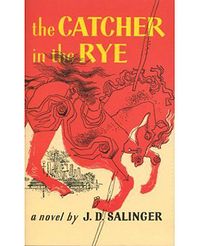
On a recent episode of South Park, the kids got all excited about reading The Catcher in the Rye, the supposedly scandalous novel that's been offending teachers and parents for generations. They were, of course, horribly disappointed: As Kyle says, it's “just some whiny annoying teenager talking about how lame he is.” Is it more than that? Lots of people, including some writers I revere, seem to think so. But I've never been able to see what they're seeing, nor can I buy into the myth that Holden is some sort of representative American teenager. He's a self-pitying prep school esthete obsessed with his little sister, the kind of boy who takes it upon himself to erase obscene graffiti from bathroom walls. And that fantasy about catching children in a field of rye? “Thousands of little kids, and nobody's around—nobody big, I mean—except me.” What's that all about? I'm not suggesting we need to like Holden in order to consider him important, I'm just baffled by the reverence and affection so many readers seem to feel for this peculiar creep.
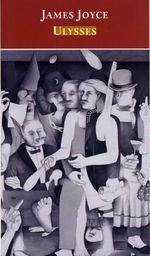
Honestly I've never been persuaded by Ulysses. To my mind, Joyce's best and most genuine work is the wonderful Dubliners; everything afterwards smacks of striving to write a “great” work, rather than simply striving to write—it's all too voulu. Although there are, of course, beautiful and breathtakingly authentic things in the novel (who could not love that tang of urine in the breakfast kidneys?), what spoils Ulysses for me, each time, is the oppressive allusiveness, the wearyingly overdetermined referentiality, the heavy constructedness of it all. Reading the book, for me, is never a rich and wonderful journey, filled with marvels and (no matter how many times you may read a book) surprises—the experience I want from a large and important novel; it's more like being on one of those Easter egg hunts you went on as a child—you constantly feel yourself being managed, being carefully steered in the direction of effortfully planted treats. Which, of course, makes them not feel very much like treats at all.
More here.
From The New York Times:

“We’ve been obsessively focusing our attention on 2 percent of the genome,” said Dr. Pier Paolo Pandolfi, a professor of medicine and pathology at Harvard Medical School. This spring, at the annual meeting of the American Association for Cancer Research in Orlando, Fla., he described a new “biological dimension” in which signals coming from both regions of the genome participate in the delicate balance between normal cellular behavior and malignancy. As they look beyond the genome, cancer researchers are also awakening to the fact that some 90 percent of the protein-encoding cells in our body are microbes. We evolved with them in a symbiotic relationship, which raises the question of just who is occupying whom. “We are massively outnumbered,” said Jeremy K. Nicholson, chairman of biological chemistry and head of the department of surgery and cancer at Imperial College London. Altogether, he said, 99 percent of the functional genes in the body are microbial.
More here.
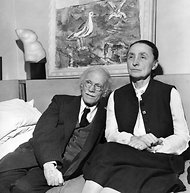
The first thing one notices about “My Faraway One: Selected Letters of Georgia O’Keeffe and Alfred Stieglitz: Volume I, 1915-1933” is its elephantine bulk. Running to more than 800 extra-large, text-crammed pages, it inherently raises the question of whether O’Keeffe is a sturdy enough talent to support such heavy, reverential treatment. She was, to this viewer, an original painter, but the distilled lushness of her early scenes of flowers and skies eventually ossified, and her work became formulaic, one of the first brands in American art. She claimed to have found her inspiration in nature, but her paintings — with their radical simplification of form and near abstractness — perhaps owe more to the early experiments in close-up photography of Paul Strand, who was part of the Stieglitz circle and a close friend of hers.
But let’s just leave her art out of this for now. In “My Faraway One,” Sarah Greenough, a senior curator at the National Gallery of Art in Washington, has assembled some 650 letters into a volume that is basically a love story pitched at the highest romantic level. Which is not to say that O’Keeffe and Stieglitz were actually compatible. They were the sort of couple who seemed to experience their most genuine togetherness when they were separated by a safe distance of at least a few hundred miles. Astoundingly, some 5,000 letters survive. Most of them are housed at the Beinecke Library at Yale, where O’Keeffe deposited them on the condition that they remain sealed until 20 years after her death. (She died in 1986.)
Moral leadership is challenging for an obvious reason — you have to know what's right and wrong. But it's also difficult because, on the whole, people are ambivalent about moral crusaders. Now there's a name for that strange mixture of admiration, guilt, and defensive dismissiveness you feel when you encounter someone better than you: it's called “anticipated reproach,” and Benoît Monin, a psychologist at Stanford, has studied it in a number of fascinating experiments. His essential finding: The more we feel as though good people might be judging us, the lower they tend to fall in our regard. As he explains in a recent paper, coauthored with Julia Minson of Wharton, “overtly moral behavior can elicit annoyance and ridicule rather than admiration and respect” when we feel threatened by someone else's high ethical standards.
Monin has documented the effect most vividly in a 2008 study, “The Rejection of Moral Rebels: Resenting Those Who Do the Right Thing,” written with Pamela Sawyer and Matthew Marquez. It revolves around a simple task, in which you're asked to decide which of three suspects is most likely to have committed a burglary. To make the decision, you consult a group of photographs and a table of evidence. The evidence clearly points to one of the suspects, “Steven Jones”: he's unemployed, has no alibi, and has been arrested carrying cash and a screwdriver. He's also — as his photo reveals — African-American. The task is set up, in fact, so that you have little choice but to accuse Jones of burglary, and to explain your reasoning in writing at the bottom of the questionnaire.
Along with the detective work, Monin asked participants to perform another task — sometimes beforehand, sometimes afterward. In this second task, you're given another participant's questionnaire, and asked to rate and describe that participant's personality. Unbeknownst to you, the questionnaire you're given is fictional. Sometimes it explains why Jones must have done it (“I think Steven Jones did it because 1) He’s got no real alibi, 2) He’s done it before, and 3) He’s carrying a lot of cash….”); other times, it articulates a principled objection to the whole experiment. There's no face circled on the “rebel” questionnaire. Instead the 'previous participant' has lodged a protest: “I refuse to make a choice here — this task is obviously biased… Offensive to make black man the obvious suspect. I refuse to play this game.”
The study works, essentially, by swapping the order of the two tasks. The results are striking. Participants who looked at the rebel questionnaire and rated its author before accusing Jones tended to admire the rebel, using words like “strong,” “independent,” and “socially conscious” to describe him. By contrast, participants who encountered the rebel questionnaire after accusing Jones of burglary tended to find fault with him, describing him as “self-righteous,” “defensive,” “opinionated,” and “confused.” Implicit in the rebel's objection, after all, was an accusation of racism. The threat of that accusation was enough to make participants change their opinions, replacing respect with dismissiveness.
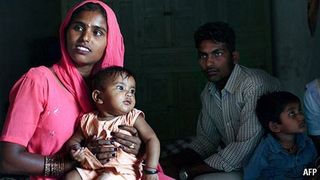
AS HE walked into the maternity ward of Lok Nayak Jayaprakash Narayan Hospital in Delhi on his first day at work in 1978, Puneet Bedi, a medical student, saw a cat bound past him “with a bloody blob dangling from its mouth.” “What was that thing—wet with blood, mangled, about the size of Bedi’s fist?” he remembers thinking. “Before long it struck him. Near the bed, in a tray normally reserved for disposing of used instruments, lay a fetus of five or six months, soaking in a pool of blood…He told a nurse, then a doctor, I saw a cat eat a fetus. Nobody on duty seemed concerned, however.” Mara Hvistendahl, a writer at Science magazine, is profoundly concerned, both about the fact that abortion was treated so casually, and the reason. “Why had the fetus not been disposed of more carefully? A nurse’s explanation came out cold. “Because it was a girl.”
Sex-selective abortion is one of the largest, least noticed disasters in the world. Though concentrated in China and India, it is practised in rich and poor countries and in Buddhist, Hindu, Christian and Muslim societies alike. Because of males’ greater vulnerability to childhood disease, nature ensures that 105 boys are born for every 100 girls, so the sexes will be equal at marriageable age. Yet China’s sex ratio is 120 boys per 100 girls; India’s is 109 to 100.
The usual view of why this should be stresses traditional “son preference” in South and East Asia. Families wanted a son to bear the family name, to inherit property and to carry out funerary duties. Ms Hvistendahl has little truck with this account, which fails to explain why some of the richest, most outward-looking parts of India and China have the most skewed sex ratios.
The university is in crisis, almost everywhere. In the broadest terms, the university’s position as simultaneously inside and outside society, simultaneously participant in and observer of society – always precarious – has been eroded. With the exception of a few hold‐outs the ivory tower has gone. We can no longer hold a position of splendid isolation. We can think of the era that has disappeared as the Golden Age of the University, but in reality it was a fool’s paradise that simply couldn’t last. Today, the academy has no option but to engage with the wider society, the question is how, and on whose terms?
In this essay I examine the twin pressures of regulation and commodification to which the university is subject (→Market and Regulatory Models), propose a vision of the public university (→An Alternative Framing), position that vision within different national contexts (→University in the National Context) and then within a global context (→The Global Context) before concluding with the assertion of critical engagement and deliberative democracy as central to a redefined public university (→What Is To Be Done?).
Market and Regulatory Models
We face enormous pressures of instrumentalization, turning the university into a means for someone else’s end. These pressures come in two forms – commodification and regulation. I teach at the University of California, which had been one of the shining examples of public education in the world. In 2009 it was hit with a 25% cut in public funding. This was a sizable chunk of money. The university has never faced such a financial crisis since the depression and it was forced to take correspondingly drastic steps – laying off large numbers of non‐academic staff, putting pressure on already outsourced low‐paid service workers, furloughing academics that included many world renowned figures, introducing management consultants to cut costs and increase efficiency. Most significantly it involved a 30% increase in student fees, so that they now rise to over $10,000 a year, but still only a quarter of the price of the best private universities. At the same time, the university is seeking to increase the proportion of students from out of state as these pay substantially more than those from in‐state. There has been talk of introducing distance learning and even the shortening of the time to degree.
by Gary Snyder
from Axe Handles
Shoemaker and Hoard, 1983
Robbie Kaye in lensculture:

More here.