
Category: Recommended Reading
A Triumph in the War Against Cancer
From Smithsonian:

At Dana-Farber, Druker landed in a laboratory studying how a normal human cell gives rise to runaway growth—malignancy. Among other things, the lab focused on enzymes, proteins that change other molecules by breaking them down (gut enzymes, for example, help digest food) or linking them up (hair follicle enzymes construct silky keratin fibers). Enzymes also figure in chain reactions, with one enzyme activating another and so on, until some complex cellular feat is accomplished; thus a cell can control a process such as growth or division by initiating a single reaction, like tipping the first domino. Under the lab’s chief, Thomas Roberts, Druker mastered numerous techniques for tracking and measuring enzymes in tissue samples, eventually turning to one implicated in CML.
More here.
Amis on Hitchens
From Guardian:
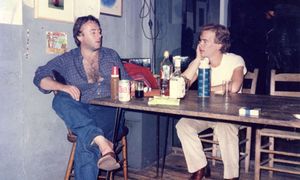
Mr Hitchens isn't like that. Christopher and His Kind runs the title of one of Isherwood's famous memoirs. And yet this Christopher doesn't have a kind. Everyone is unique – but Christopher is preternatural. And it may even be that he exactly inverts the Nabokovian paradigm. He thinks like a child (that is to say, his judgments are far more instinctive and moral-visceral than they seem, and are animated by a child's eager apprehension of what feels just and true); he writes like a distinguished author; and he speaks like a genius. As a result, Christopher is one of the most terrifying rhetoricians that the world has yet seen. Lenin used to boast that his objective, in debate, was not rebuttal and then refutation: it was the “destruction” of his interlocutor. This isn't Christopher's policy – but it is his practice.
More here.
Sunday Poem
Regarding Wave
The voice of Dharma
….. the voice
……. now
A shimmering bell
……. through all.
Every hill, … still.
Every tree alive. Every leaf.
All the slopes flow.
…… old woods, new seedlings,
…… tall grass plumes.
Dark hollws; Peaks of light.
. wind stirs.. the cool side
Each leaf living.
….. All the hills.
………The Voice
……… is a wife
……….. to
……….
…… .. Him still.
by Gary Snyder
Saturday, April 23, 2011
Philip Larkin, the Impossible Man
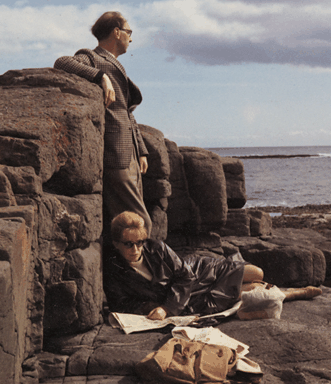
Christopher Hitchens in The Atlantic:
More here.
What is 0^0? And is math true, or just useful?
Julia Galef in Measure of Doubt:

The alternate view, however, is that math is something we invent, and that math has the form it does because we decided that form would be useful to us, not because we discovered it to be true. Skeptical? Consider imaginary numbers: The square root of X is the number which, when you square it, yields X. And there’s no real number which, when you square it, yields -1. But mathematicians realized centuries ago that it would be useful to be able to use square roots of negative numbers in their formulas, so they decided to define an imaginary number, “i,” to mean “the square root of -1.” So this seems like a clear example in which a mathematical concept was invented, rather than discovered, and in which our system of math has a certain form simply because we decided it would be useful to define it that way, not because that’s how things “really are.”
More here.
Saturday Poem
Old Skin
staggering towards me
I’ve cast you off
years ago
shrugged you off
left you, put you down at the side of the road
for ravening
by any passing predator
old skin – when your face splits open
in recognition –
you know me now
but not what bar you left me in –
what else would you say but
‘how’re ya, me oul skin’
by Paula Meehan
publisher PIW © 2005
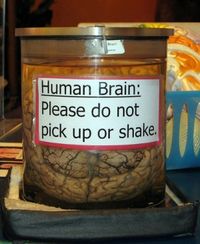
Dear Humans, We Want Your Brains. –Neuroscientists
From Discover:
More here.
A Daughter Remembers William Styron
From The New York Times:
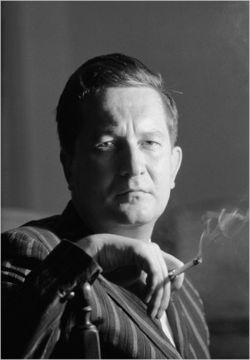
In recording a family history as rich and fascinating as this, as any privileged author is entitled to do, the trick is to tell the tales without seeming to be showing off. Alexandra Styron has no difficulty in this respect. For her purpose in “Reading My Father,” by turns brilliant and shocking, is to play the high-society tune in counterpoint with another, harsh and discordant one: life with Father was practically unbearable.
More here.
The Science of Why We Don’t Believe Science
Chris Mooney in Mother Jones:
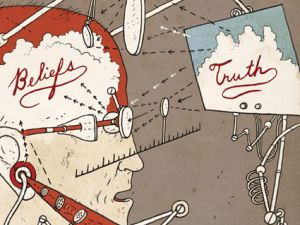
Festinger and several of his colleagues had infiltrated the Seekers, a small Chicago-area cult whose members thought they were communicating with aliens—including one, “Sananda,” who they believed was the astral incarnation of Jesus Christ. The group was led by Dorothy Martin, a Dianetics devotee who transcribed the interstellar messages through automatic writing.
Through her, the aliens had given the precise date of an Earth-rending cataclysm: December 21, 1954. Some of Martin's followers quit their jobs and sold their property, expecting to be rescued by a flying saucer when the continent split asunder and a new sea swallowed much of the United States. The disciples even went so far as to remove brassieres and rip zippers out of their trousers—the metal, they believed, would pose a danger on the spacecraft.
Festinger and his team were with the cult when the prophecy failed.
More here.
Darkness Before Dawn? The Future of Pakistan
What are the chances of successful democratic transitions in Tunisia and Egypt?
Alfred Stepan in The Immanent Frame:

The first reality to appreciate is that, despite worries about the incompatibility of Islam and democracy, over 500 million Muslims live in Muslim majority countries that are commonly classified as democracies: Indonesia, Turkey, Bangladesh, Senegal, Mali and Albania. But, for almost forty years, not a single Arab majority country has been classified as a democracy. Thus, if Arab-majority Egypt and Tunisia become democracies, it would thus be of immense importance for the Arab world and, indeed, for world affairs.
I believe Tunisia’s chances of becoming a democracy before the year ends are surprisingly good.
More here.
Friday, April 22, 2011
Evolution, Creationism, Templeton, Religion, Atheism, Dawkins, etc.
Nick Smyth in Yeah, OK, But Still:
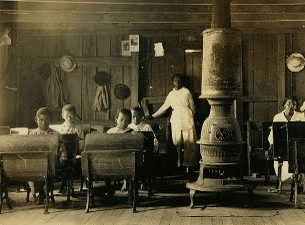
By comparison, as if, as if the educational health of children depended in some vital way on their acceptance of Darwinian biology or Intelligent Design Theory. Any idiot, let alone anyone who knows anything about education, will tell you that the vast majority of educational value is realized from the ages of 5-12, long before any child is able to take in upper-level biological theory. Participants in this debate should not be worried about whether students will read Darwin. They should be worried about whether they will be able to read Darwin.
More here.
The Perils of Metaphorical Thinking

[A] lot of recent research suggests that these metaphors operate below the level of conscious thought. In one study, participants who were asked to recall a past event leaned slightly backwards, while participants who were asked to anticipate a future event leaned slightly forwards. Other studies have shown that our metaphorical use of temperature to describe people’s demeanors (as in, “He greeted me warmly,” or “He gave me the cold shoulder”) is so deep-seated, we actually conflate the two. When people are asked to recall a time when they were rejected by their peers, and then asked to estimate the temperature of the room they’re sitting in, their average estimate is several degrees colder than that of people who were asked to recall being welcomed by their peers. And in one study that asked participants to read the dossier of an imaginary job applicant and then rate his or her personality, participants who had just been holding a hot object rated the imaginary applicant as being friendlier, compared to participants who had just been holding a cold object.
Another classic example is the “morality is cleanliness” metaphor. We talk about people having a clean record or a tarnished one, about dirty dealings and coming clean. And of course, religions are infused with this metaphor — think of baptism, the washing away of sin. One clever study published in Science in 2006 showed how deep-seated this metaphor is by dividing participants into two groups: those in the first group were asked to reflect on something virtuous they’d done in the past, and those in the second group were asked to reflect on a past moral transgression. Afterwards, each participant was offered a token gift of either a pencil or a package of antiseptic wipes. The result? Those who had been dwelling on their past wrongdoing were twice as likely to ask for the antiseptic wipes.
Associating the future with the forward direction and the past with the backwards direction seems pretty harmless. But cases like “morality equals cleanliness” start to suggest how dangerous metaphorical thinking can be. If people conflate dirtiness with immorality, then the feeling of “Ugh, that’s disgusting” becomes synonymous with the judgment, “That’s immoral.” Which is likely a reason why so many people insist that homosexuality is wrong, even though they can’t come up with any explanation of why it’s harmful — any non-contrived explanation, at least. As the research of cognitive psychologist Jonathan Haidt has shown, people asked to defend their purity-based moral judgments reach for logical explanations, but if they’re forced to admit that their explanation has holes, they’ll grope for an alternative one, rather than retracting their initial moral judgment. Logic is merely a fig leaf; disgust is doing all the work.
Treasure Hunt
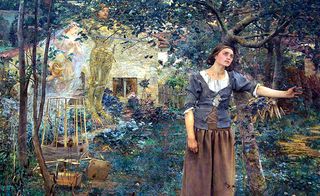
However powerful our technology and complex our corporations, the most remarkable feature of the modern working world may in the end be the widely held belief that our work should make us happy. Our choice of occupation is held to define our identity to the extent that the most insistent question we ask of new acquaintances is not where they come from or who their parents were but what they do, the assumption being that the route to a meaningful existence must invariably pass through the gate of remunerative employment.
It was not always this way. In the fourth century BC, Aristotle defined an attitude, which was to last almost two millennia, in the phrase “All paid jobs absorb and degrade the mind.” For the Greek philosopher, financial need placed one on a par with slaves and animals. The labor of the hands, as much as of the mercantile sides of the mind, would lead to psychological deformation. Only a private income and a life of leisure could afford citizens adequate opportunity to enjoy the higher pleasures of music and philosophy.
Early Christianity appended to Aristotle’s notion the still darker doctrine that the miseries of work are the appropriate means of expiating the sins of Adam. It was not until the Renaissance that new notes began to be heard. In the biographies of great artists, men like Leonardo da Vinci and Michelangelo, we hear early references to the glories of practical activity. While this reevaluation was at first limited to artistic work, and even then only to its most exalted examples, it came in time to encompass almost all occupations. By the middle of the eighteenth century, in a direct challenge to the Aristotelian position, Denis Diderot and Jean le Rond d’Alembert published their twenty-eight-volume Encyclopédie, filled with articles celebrating the particular genius and joy involved in baking bread, planting asparagus, operating a windmill, forging an anchor, printing a book, and running a silver mine. Accompanying the text were illustrations of the tools employed to complete such tasks, among them pulleys, tongs, and clamps, instruments whose precise purpose readers might not always understand, but which they could nonetheless recognize as furthering the pursuit of skillful and therefore dignified ends.
Patron Saints of Literary Gloom
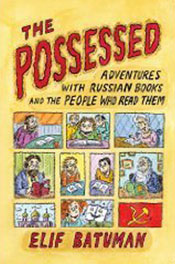
ACADEMICS are rarely reliable guides to literature. The magic that draws eggheads to certain books tends to get bludgeoned by theory, jargon and the need to be obscure. This is what makes “The Possessed” such a joy to read. In a handful of essays about Russian books and the people who read them (published in America last year), Elif Batuman, a Turkish-American professor with a doctorate from Stanford University, infectiously conveys the dreamlike inscrutability of Russian literature. With personal anecdotes about Tolstoy conferences, ice-castles in St Petersburg and a summer spent in Samarkand, she also captures the way life can be as mystifying and profound as these books.
Ms Batuman describes her route to a PhD in comparative literature with unusual verve. Perhaps this is because her explanation feels slightly defensive. An aspiring novelist, she had long assumed that fiction must come from experience, not from the study of other books. But there was something about Russian literature, indeed about “Russianness”, that tugged at her ever since her first violin lessons with a fascinatingly odd Russian man named Maxim. Something of a contemporary Eugene Onegin, Maxim wore black turtlenecks and appeared “deeply absorbed by considerations and calculations beyond the normal range of human cognition”. Mercurial and unpredictable, he was the kind of man who could only be explained by Pushkin or Tolstoy, if by anyone at all.
But it was at university that Ms Batuman came around to the idea that Russian — the language and the literature — was the best way to comprehend “the riddle of human behaviour and the nature of love”. When she describes the “otherworldly perfection” of “Anna Karenina”, her pulse quickens: “How had any human being ever managed to write something simultaneously so big and so small…so strange and so natural?” She marvels that the heroine doesn’t turn up until chapter 18, and the book goes on for 19 more chapters after her death. She recalls her first Russian- language textbook, which featured a story about a woman who goes to visit her boyfriend only to discover a note saying, “Forget me.” Intent on exploring how literature echoes and influences experience, is it any wonder that Ms Batuman chose to “immerse” herself in this world of compelling ambiguity?
What Makes a Riderless Bike Stable?
John Matson in Scientific American:
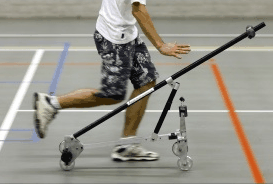
The question of how bicycles work—and what causes self-stability—has been around since the 19th century. Over the years, two main factors have emerged to explain a riderless bicycle's balancing act. One is the gyroscopic motion of the spinning front wheel; the other, a design feature known as trail, is the placement of the bicycle's steering axis so that the axis intersects the ground ahead of the point where the front wheel meets the ground. Both features act to couple the bicycle's steering to its leaning—if the bicycle tips rightward, it will steer to the right—allowing it to turn into a fall and remain upright.
But those two factors are not needed for a self-stable bicycle, as it turns out. In the April 15 issue of Science a team of researchers from the Netherlands and the U.S. describe an experimental bicycle that exhibits self-stability despite having neither trail nor a gyroscopic wheel.
More here.
Guilty or not – does it really matter?
Dawood Ahmed in Dawn:
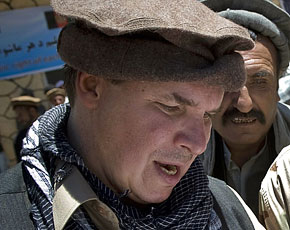
At such, I firmly believe we may be shooting ourselves in the foot by participating in this blame-game. If Mortenson is discredited and his organisation shuts down, we will gain nothing. Instead, we will suffer great harm by the sudden loss in whatever funding we receive from the Central Asia Institute. Rather as Pakistanis, our interests would be much better served by acknowledging this American’s contributions to our country, maintaining neutrality in this dispute but at the same time showing honesty by co-operating with investigations. In return we should use this opportunity strategically to negotiate for more transparency and a greater share of donations in the future.
More here.
Cameras capture the wonders of the underwater world
From MSNBC:

More here.