Wednesday Poem

Arctic Starflower

Block Number 11

Anywhere in the forest, but often freely
around the underbush, along rich moor edges
or in the loose moss. When the arctic starflower stands beneath
leafy trees, it’s as if it, too, rustles
and the crown draws shine from the silver of the aspen leaf.

There was a block called number 11.
There was a prison innermost in the prison.
There was a window in there without sound.
There was a thing which was to wait.
There was a hunger punishment meant to make the hip-bone shine.

The arctic starflower spreads like silent shoots
under turf, with buds and wounds where a new
stalk is to grow. Each star opened on its own.
No neighbour. But at night the crown’s threads
step forth with blood veins in a little too white skin.

There was a block called number 11.
There was a punishment innermost in the punishment.
It was slow and like a kiss given by no one.
It was like a groom for Antigone locked inside the cave.
It was behind an electric fence that was to be transformed into a wide-open gate.

The name of the arctic starflower saves no one,
and the crown has just as often seven lobes as six.
So let’s call it “history’s cracked bandage”,
as stunted and tasteful as a white hair in the mouth.
The arctic starflower sparkles in the forest against rust-red ground.

by Øyvind Rimbereid
from Herbarium
Publisher: Gyldendal Forlag, Oslo, 2008

© Translation: 2011, May-Brit Akerholt
Publisher: First published on PIW, 2011
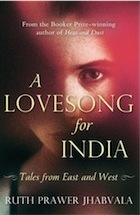
A Lovesong for India by Ruth Prawer Jhabvala

From The Guardian:

A-Lovesong-For-India-Tales-fIn a long and distinguished writing career, Ruth Prawer Jhabvala has moved with apparent ease between novels, short stories and film scripts. She has also moved between continents: India, to which she went with her husband as a young woman, New York, London. She is now 84; this collection of short stories has all her trademark versatility, throwing up a diverse cast of characters, skipping from the mansion of a Bollywood star to professional life in New York. Eleven stories, sternly sorted into categories: India, Mostly Arts and Entertainment, The Last Decades.

I think I would rather have had them shuffled. Variety is one of her strengths – the shape-shifting quality of her imagination, the flourish of some new and entirely different setting, occupation, personality. Her own life would seem to be without compartments, and it is impossible not to see the life reflected in the work, the chameleon quality of a person moving at ease through Delhi or SoHo, but perhaps always the outsider looking on, taking note. The powerful title story seems to be an indictment of some parts of contemporary India. The outsider in this case is an Englishwoman, herself with British Indian Civil Service ancestry, long married to an Indian administrator of probity and integrity, who is chagrined by their son's involvement with a new power structure of corruption and manipulation; perhaps both he and his wife are now the outsiders. The theme of the European absorbed by – besotted with – India surfaces again in the story of Maria, a professor of oriental studies, who becomes the acolyte to a flamboyant and possessive Indian poetess, thus losing, eventually, all control over events.

More here.

Researchers find a country’s wealth correlates with its collective knowledge

From PhysOrg:

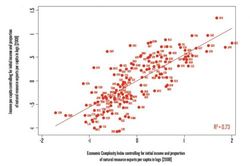
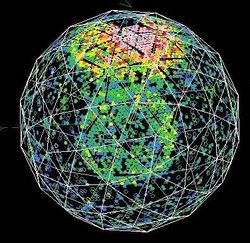
EconomiccompWhat causes the large gap between rich and poor countries has been a long-debated question. Previous research has found some correlation between a nation’s economic prosperity and factors such as how the country is governed, the average amount of formal education each individual receives, and the country's overall competiveness. But now a team of researchers from Harvard and MIT has discovered that a new measure based on a country's collective knowledge can account for the enormous income differences between the nations of the world better than any other factor.

The researchers, led by Ricardo Hausmann, director of Harvard’s Center for International Development and former Minister of Planning for Venezuela, and Cesar A. Hidalgo, assistant professor at MIT’s Media Laboratory and faculty associate at Harvard’s Center for International Development, have published a book called The Atlas of Economic Complexity. Starting today, the book is free to download at http://atlas.media.mit.edu. The authors plan to launch the book during an exclusive event at Harvard's Center for International Development on October 27th. Attendees will include chief economists of the World Bank and the Asian Development Bank, among other guests. In the book, the authors show how the total amount of knowledge embedded in a country’s economy can be measured by a factor they call “economic complexity.” From this perspective, the more diverse and specialized jobs a country’s citizens have, the greater the country’s ability to produce complex products that few other countries can produce, making the country more prosperous.

More here.

How Revolutionary Tools Cracked a 1700s Code

John Markoff in the New York Times:

25code_graphic-thumbWideIt has been more than six decades since Warren Weaver, a pioneer in automated language translation, suggested applying code-breaking techniques to the challenge of interpreting a foreign language.

In an oft-cited letter in 1947 to the mathematician Norbert Weiner, he wrote: “One naturally wonders if the problem of translation could conceivably be treated as a problem in cryptography. When I look at an article in Russian, I say: ‘This is really written in English, but it has been coded in some strange symbols. I will now proceed to decode.’ ”

That insight led to a generation of statistics-based language programs like Google Translate — and, not so incidentally, to new tools for breaking codes that go back to the Middle Ages.

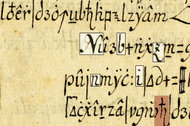
Now a team of Swedish and American linguists has applied statistics-based translation techniques to crack one of the most stubborn of codes: the Copiale Cipher, a hand-lettered 105-page manuscript that appears to date from the late 18th century. They described their work at a meeting of the Association for Computational Linguistics in Portland, Ore.

Discovered in an academic archive in the former East Germany, the elaborately bound volume of gold and green brocade paper holds 75,000 characters, a perplexing mix of mysterious symbols and Roman letters. The name comes from one of only two non-coded inscriptions in the document.

More here.

Johnny Depp on Hunter S. Thompson

Johnny Depp in The Daily Beast:

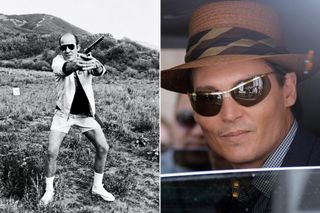
1319382410987You’d get a phone call at 3 a.m., and he used to call me “Colonel Depp,” because he made me a Kentucky colonel, and he’d say, “Colonel, what do you know of black-hairy-tongue disease?” And I was like, “What? I don’t know!” He’d say, “Well, I’m going to send you all the information about this, man. We must be aware of this thing.” He was deeply concerned that the disease would infiltrate our ranks.

Or you’d get a call in the middle of the night saying, “When can you meet me in Cuba? I need you in Havana, man, I’m going to do a piece down there and we’re going to go as Rolling Stone correspondents.” When Hunter made a request like that, you made it happen. Hunter wanted to interview Castro, but we never got through to him, so the story turned into our adventures down there. He referred to me as “Ray, my bodyguard.” It was wonderful—just me and Hunter prowling around Havana, going to these various restaurants or homes that you’re not supposed to go and eat at, but you’re invited. It was totally ludicrous and surreal.

If I have a favorite period with Hunter, it would most definitely be when I was living with him in his basement in the spring of ’97 in this one room across from the “war room” that he called “Johnny’s room.” We were like a couple of roommates. I went onto Hunter’s hours. We’d go to sleep about 9 or 10 in the morning and be up for breakfast at about 7 p.m.

More here.

Aaloo Andey: Satire with a bite in Pakistan

M Ilyas Khan at the BBC:

ScreenHunter_15 Oct. 26 12.32Aaloo Andey (potato and egg curry) is the first single from an underground band called the Bayghairat (Shameless) Brigade and the video has gone viral in Pakistan, with tens of thousands of hits on YouTube.

Its scathing lyrics take on taboo subjects such as Islamic fundamentalism and the Pakistani army chief in a way that no one has done before.

It also pours scorn on Pakistani society where ruthless killers – such as Mumtaz Qadri who killed a politician for his religious views and Ajmal Qasab the sole surviving gunman from the deadly 2008 Mumbai attacks – are glorified as heroes by some.

This is a place, the song goes, where a Pakistani Nobel prize-winning physicist, Abdus Salam, is forgotten because he is from the minority, and much reviled, Ahmadi community.

Bayghairat Brigade are three young men with a sense of humour but also, clearly, with a sense of despair about Pakistan.

The potato and egg curry of the title is just a way of lamenting how Pakistani society dishes out the same old rubbish year after year.

But do the band members realise that they may have put their lives on the line?

More here. And here's the video:

OWS’s Beef: Wall Street Isn’t Winning – It’s Cheating

Matt Taibbi in Rolling Stone:

D46de7e669258111981a55aa5da100884fbbc2a2I was at an event on the Upper East Side last Friday night when I got to talking with a salesman in the media business. The subject turned to Zucotti Park and Occupy Wall Street, and he was chuckling about something he'd heard on the news.

“I hear [Occupy Wall Street] has a CFO,” he said. “I think that's funny.”

“Okay, I'll bite,” I said. “Why is that funny?”

“Well, I heard they're trying to decide what bank to put their money in,” he said, munching on hors d'oeuvres. “It's just kind of ironic.”

Oh, Christ, I thought. He’s saying the protesters are hypocrites because they’re using banks. I sighed.

“Listen,” I said, “where else are you going to put three hundred thousand dollars? A shopping bag?”

“Well,” he said, “it's just, they're protests are all about… You know…”

“Dude,” I said. “These people aren't protesting money. They're not protesting banking. They're protesting corruption on Wall Street.”

“Whatever,” he said, shrugging.

These nutty criticisms of the protests are spreading like cancer.

More here.

Tuesday, October 25, 2011

John McCarthy — Father of AI and Lisp — Dies at 84

Cade Metz in Wired:

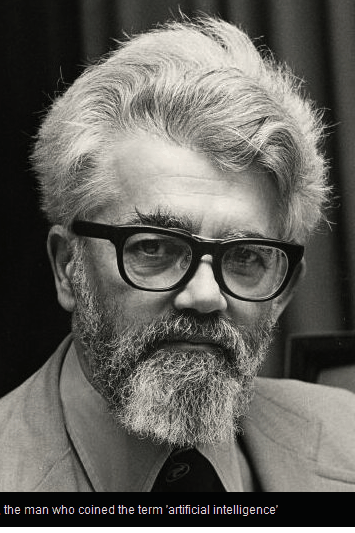
ScreenHunter_14 Oct. 25 17.11When IBM’s Deep Blue supercomputer won its famous chess rematch with then world champion Garry Kasparov in May 1997, the victory was hailed far and wide as a triumph of artificial intelligence. But John McCarthy — the man who coined the term and pioneered the field of AI research — didn’t see it that way.

As far back as the mid-60s, chess was called the “Drosophila of artificial intelligence” — a reference to the fruit flies biologists used to uncover the secrets of genetics — and McCarthy believed his successors in AI research had taken the analogy too far.

“Computer chess has developed much as genetics might have if the geneticists had concentrated their efforts starting in 1910 on breeding racing Drosophila,” McCarthy wrote following Deep Blue’s win. “We would have some science, but mainly we would have very fast fruit flies.”

According Daphne Koller — a professor in the Stanford AI Lab who still carries the torch for McCarthy’s orthodox vision of artificial intelligence — it’s a quote that sums up both McCarthy and his work. “The word that bests describes him is ‘uncompromising’,” she tells Wired. “He believed in artificial intelligence in terms of building an artifact that could actually replicate human level intelligence, and because of this, we was very unhappy with a lot AI today, which provides some very useful applications but focuses on machine learning.

More here.

An epic journey through the Arabian desert

Michael Dirda in Salon:

Arabian_sands_stewart_coverFor years I meant to read “Arabian Sands,” Wilfred Thesiger’s account of two punishing camel journeys during the late 1940s across Southern Arabia’s Empty Quarter. Now that I have, I can sheepishly join the chorus of those who revere the book as one of the half dozen greatest works of modern English travel writing. Thesiger’s other masterpiece, “The Marsh Arabs” (1964), is almost as good. There he describes the seven years during the 1950s that he spent living in the wetlands of Iraq’s Tigris and Euphrates rivers.

“The Marsh Arabs” is enthralling, yet “Arabian Sands” remains the austere masterpiece, worthy of comparison with the classics of polar endurance, like Apsley Cherry-Gerrard’s “The Worst Journey in the World,” and with those roomy mansions of desert literature, C. M. Doughty’s “Travels in Arabia Deserta” and T. E. Lawrence’s “Seven Pillars of Wisdom.” While most travel writing today is essentially journalism, Arabian Sands is an epic poem:

A cloud gathers, the rain falls, men live; the cloud disperses without rain, and men and animals die. In the deserts of southern Arabia there is no rhythm to the seasons, no rise and fall of sap, but empty wastes where only the changing temperature marks the passage of the years. It is a bitter, desiccated land which knows nothing of gentleness or ease…. Men live there because it is the world into which they were born; the life they lead is the life their forefathers led before them; they accept hardships and privations; they know no other way. Lawrence wrote in “Seven Pillars of Wisdom,” “Bedouin ways were hard, even for those brought up in them and for strangers terrible: a death in life.” No man can live this life and emerge unchanged. He will carry, however faint, the imprint of the desert, the brand which marks the nomad; and he will have within him the yearning to return, weak or insistent according to his nature. For this cruel land can cast a spell which no temperate clime can match.

This is the stirring prologue to “Arabian Sands,” yet it already sounds a faintly elegiac tone, a recognition that an ages-old way of life is vanishing. As Thesiger writes, “I went to Southern Arabia only just in time.”

More here.

Particles Faster Than the Speed of Light? Not So Fast, Some Say

Dennis Overbye in The New York Times:

Anet“Does E still equal MC squared?”

So asks the Irish band the Corrigan Brothers in a new song, “Einstein and the Neutrinos,” that is the latest rollicking riff on news that shocked the scientific world last month.

A group of physicists from Italy claimed they had observed the subatomic particles called neutrinos traveling faster than the speed of light. That, of course, is the cosmic speed limit declared in Albert Einstein’s theory of special relativity in 1905.

If they are right — and the jury is still out — Einstein might have some explaining to do. Among other things, a neutrino or anything else that went faster than the speed of light could go backward in time.

Physicists, who are quite sure that in fact E does still equal MC squared — whatever may come of this experiment — have expressed skepticism. But that has not stopped the ghostly neutrinos, which can sail through miles of solid lead with impunity, from achieving a sort of pop culture fame not seen since 1960, when John Updike published a poem about them in The New Yorker:

The Earth is just a silly ball

To them through which they pass

Like dustmaids down a drafty hall

Or photons through a sheet of glass.

Neutrino time-travel jokes have proliferated on the Internet. Example: “We don’t serve faster-than-light neutrinos here,” said the bartender. A neutrino walks into a bar.

More here.

John Paul Stevens on Our ‘Broken System’ of Criminal Justice

John Paul Stevens in the New York Review of Books:

Stevens_1-111011_jpg_230x447_q85William Stuntz was the popular and well-respected Henry J. Friendly Professor of Law at Harvard University. He finished his manuscript of The Collapse of American Criminal Justice shortly before his untimely death earlier this year. The book is eminently readable and merits careful attention because it accurately describes the twin problems that pervade American criminal justice today—its overall severity and its disparate treatment of African-Americans.

The book contains a wealth of overlooked or forgotten historical data, perceptive commentary on the changes in our administration of criminal justice over the years, and suggestions for improvement. While virtually everything that Professor Stuntz has written is thought-provoking and constructive, I would not characterize the defects in American criminal justice that he describes as a “collapse,” and I found his chapter about “Earl Warren’s Errors” surprisingly unpersuasive.

Rather than focus on particular criminal laws, the book emphasizes the importance of the parts that different decision-makers play in the administration of criminal justice. Stuntz laments the fact that criminal statutes have limited the discretionary power of judges and juries to reach just decisions in individual cases, while the proliferation and breadth of criminal statutes have given prosecutors and the police so much enforcement discretion that they effectively define the law on the street.

More here.

Using Light to Flip a Tiny Mechanical Switch

Adrian Cho in Science:

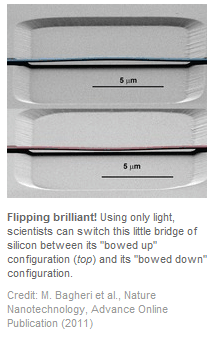
ScreenHunter_11 Oct. 25 11.20The feeble force of light alone can flip a nanometer-sized mechanical switch one way or the other, a team of electrical engineers reports. The little gizmo holds its position without power and at room temperature, so it might someday make a memory bit for an optical computer. Other researchers say it also introduces a promising new twist into the hot field of “optomechanics,” which marries nanotechnology and optics. “This a new paradigm,” says Markus Aspelmeyer, a physicist at the University of Vienna who was not involved in the research. “People are going to take a good look at this and use it in other schemes.”

Since 2005, physicists and engineers have been using light to set tiny structures vibrating and control their motion. Much of their effort has focused on using light to suck energy out of a vibrating beam or cantilever to try to achieve new states of motion that can be described only by quantum mechanics, extending the quantum realm to the movement of humanmade objects. In fact, Aspelmeyer, Oskar Painter of the California Institute of Technology in Pasadena, and colleagues have managed to use laser light to “cool” a vibrating beam to the lowest energy state possible, the so-called quantum ground state, a key step toward achieving more complex quantum states of motion, as they reported 6 October in Nature.

Now, taking a different tack, Mahmood Bagheri, Hong Tang, and colleagues at Yale University have used laser light to pump energy into a tiny bridge of silicon, flipping it between two stable configurations—in effect, making a mechanical switch. The bridge measured 10 micrometers long, 500 nanometers wide, and 110 nanometers thick and was suspended about 250 nanometers above a glass chip. When researchers etched glass out from under it, the silicon expanded, so the bridge bowed either upward or downward, like a playing card squeezed lengthwise between your thumb and forefinger.

The trick was to use light to make the bridge shift between the two positions in a controllable way.

More here.

Raj Rajaratnam reveals the reasons he didn’t take a plea that could have saved him from 11 years in jail

Suketu Mehta in The Daily Beast:

ScreenHunter_10 Oct. 25 11.01It was 6 a.m. on Oct. 16, 2009, and Raj Rajaratnam, head of the Galleon Group hedge fund, was at home on his exercise bike looking out over Manhattan’s Turtle Bay, thinking about how many shirts he would have to pack for his trip to England that day. He was to go there to launch a $200 million fund to invest in the Sri Lankan stock market, in which he, the richest Sri Lankan on the planet, was the biggest single investor.

At 6:30 his doorbell rang. He answered it to find a number of policemen and men in suits outside. An FBI agent named B. J. Kang told him he was under arrest for insider trading. There were five other agents with him, come to collect Rajaratnam. They asked if he had a gun, if he had drugs on the property. For a moment he was afraid they would plant something.

As they led him away from his family, Rajaratnam says Kang told him, “Take a good look at your son. You’re not going to see him for a long time.” He added, for good effect, “Your wife doesn’t seem so upset. Because she’s going to spend all your money.”

More here.

Monday, October 24, 2011

Sunday, October 23, 2011

How to Read Moby-Dick

Kathryn Harrison in The New York Times:

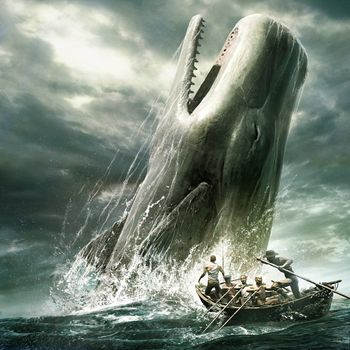
Moby-dick-jumpingIt’s a hard sell Nathaniel Philbrick has undertaken in “Why Read Moby-Dick?” The novel’s plot has been recycled for decades, inspiring films, radio dramas, cartoons, comic books, a television mini-series, a couple of heavy metal albums, a music video and a rap rendition. How many potential readers approach the masterwork of Herman Melville without already knowing the story of Captain Ahab and the white whale? Any? And why would such an overly exposed audience embrace a work of such heft, especially as almost every edition carries the added weight of ponderous academic commentary? “Moby-Dick” would appear to be one of those unfortunate books that are taught rather than enjoyed.

But who knows how many teeter in the aisles of Barnes & Noble, both drawn and repelled by the promise of edification? It’s the historian Nathaniel Philbrick’s intent to give those uncertain consumers a gentle shove toward the “one book that deserves to be called our American Bible.” He wants “you — yes, you — to read . . . ‘Moby-Dick.’”

More here.

The trouble with my blood

Will Self in The Guardian:

Red-blood-cells-007It didn't help that we seemed to be at the centre of a cancer cluster: one friend was dying of leukaemia in Hammersmith hospital, another was in the process of being diagnosed, a third had had half his throat and jaw chopped out. I fully expected cancer myself. To paraphrase the late and greatly pathetic roué Willie Donaldson, you cannot live as I have and not end up with cancer. There was the genetic factor to begin with, and then there's been the toxic landscape of carcinogens – the yards of liquor, the sooty furlongs left behind by chased heroin, the miles driven and limped for over a decade to score crack which then scoured its way into my lungs. The prosaically giant haystacks of Virginia tobacco hardly bear mentioning – being, in contrast, merely bucolic.

No, I was on the lookout for the crab – not a pair of lobster's claws. It was my wife who eventually sent me across the road to the GP, a shrewdly downbeat practitioner who in the past had declined to check my cholesterol levels or send me for a prostate-cancer biopsy, but now took one look at the human-into-crustacean transmogrification and sent me straight down to St Thomas's for a blood test. The results came within a couple of days, and when I saw him in person he confirmed what he'd told me over the phone: “Your haemoglobin is right up, and your white blood cell count is also elevated. I can't be certain but I think there's a strong possibility it's …”

I pre-empted him: “Polycythaemia vera?”

“Aha,” he said. “Been googling, have you?”

I conceded that I had.

“Well,'” he continued, “the Wiki entries are pretty thoroughly vetted – if you stick to that you're on safe ground.”

More here.