
Category: Recommended Reading
Fiesta! for Michael D Higgins
Michael D Higgins Career Montage
Irish President Elect Michael D Higgins Acceptance Speech
An amazing speech by a friend of ours here at 3QD, Michael D Higgins, who has just been elected president of Ireland in a rather incredible story of last minute political heroics and the like. Again, our congratulations to Michael and to the whole Higgins family (Alice Mary in particular). A frickin’ incredible story all around.
Saturday, October 29, 2011
Editing the genome: Scientists unveil new tools for rewriting the code of life
R. Alan Leo in the Harvard Gazette:

“The payoff doesn’t really come from making a copy of something that already exists,” said George Church, a professor of genetics at Harvard Medical School who led the research effort in collaboration with Joe Jacobson, an associate professor at the Media Lab at the Massachusetts Institute of Technology. “You have to change it — functionally and radically.”
Such change, Church said, serves three goals. The first is to add functionality to a cell by encoding for useful new amino acids. The second is to introduce safeguards that prevent cross-contamination between modified organisms and the wild. A third, related aim, is to establish multiviral resistance by rewriting code hijacked by viruses.
More here.
How Samuel Beckett Stood Up for German Jews
Benjamin Ivry in Forward:
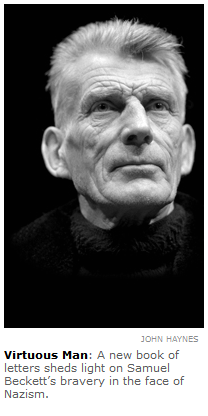
Like his mentor, James Joyce, Beckett was unusually philo-Semitic among European modernist writers, and he joined the Résistance, Knowlson notes, soon after Joyce’s Jewish friend and amanuensis, Paul Léon, was arrested in Paris (Léon would later be murdered in Auschwitz). A fuller understanding of Beckett’s motivation for his pro-Jewish and anti-Nazi activism had to wait until two new books appeared.
Taking us from wartime to the early part of the author’s great achievements, Cambridge University Press has just published “The Letters of Samuel Beckett: Volume 2, 1941–1956” following the first volume in 2009. This adds to insight gleaned from “Samuel Beckett’s German Diaries 1936–1937,” released in June by Continuum. Author Mark Nixon, analyzing still-unpublished journals by Beckett, describes the latter’s reactions to a sojourn in Germany intended to improve his grasp of the language and knowledge of the visual arts.
Together, these books underline how profound Beckett’s ties were with the Jewish people.
More here.
Ashis Nandy: on Pakistan’s latent “potentialities”
Christopher Lydon at Radio Open Source:
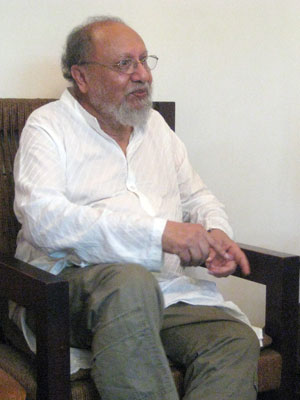
Such is the myth. The reality and the possibility of Pakistan, and Ashis Nandy’s feeling about India’s neighbor come out very differently in conversation. “I feel at home in Pakistan,” said the poster version of the Bengali intellectual. “I miss only the vibrancy, the stridency of the political opinions that are articulated against fundamentalism and the state.” Pakistan is “a troubled country,” he is saying, “but not moribund, not a failed state” and not about to become one.
Ashis Nandy has just made his own study, in 1500 interviews, of the wounds of the 1947 Partition of India and Pakistan — among the searing and decisive memories of his own boyhood in Calcutta.
Read more and listen to the interview here.
Why We Can’t Tell Good Wine From Bad
David McRaney in The Atlantic:
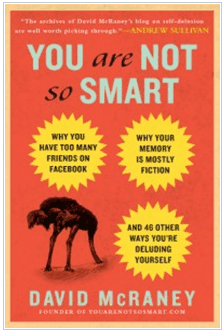
The Truth: Wine experts and consumers can be fooled by altering their expectations.
You scan the aisles in the liquor store looking for a good wine. It's a little overwhelming — all those weird bottle shapes with illustrations of castles and vineyards and kangaroos. And all those varieties? Riesling, Shiraz, Cabernet — this is serious business. You look to your left and see bottles for around $12; to your right you see bottles for $60. You think back to all the times you've seen people tasting wine in movies, holding it up to the light and commenting on tannins and barrels and soil quality — the most expensive wine has to be the better one, right?
Well, you are not so smart. But, don't fret — neither are all those connoisseurs who swish fermented grape juice around and spit it back out.
Wine tasting is a big deal to a lot of people. It can even be a professional career. It goes back thousands of years, but the modern version with all the terminology like notes, tears, integration, and connectedness goes back a few hundred. Wine tasters will mention all sorts of things they can taste in a fine wine as if they were a human spectrograph with the ability to sense the molecular makeup of their beverage. Research shows, however, this perception can be hijacked, fooled, and might just be completely wrong.
In 2001, Frederic Brochet conducted two experiments at the University of Bordeaux.
More here.
Boy From Ghana Has Got Beat Boxing Talent
a fantasy of empire

In 1929, two years after he resigned from his job as a policeman in Burma, George Orwell settled, in his mind at least, the question that still troubles many people in Britain and the US: whether the British empire was good or bad. Burma’s “relationship with the British empire”, Orwell wrote, “is that of slave and master. Is the master good or bad? That is not the question; let us simply say that this control is despotic and, to put it plainly, self-interested.” Writing in 1942 about Rudyard Kipling’s legend of British soldiers, administrators and engineers in the colonies carrying heroically the white man’s burden, Orwell was blunter. “He does not seem to realise,” Orwell wrote, “any more than the average soldier or colonial administrator, that an empire is primarily a money-making concern.” This, broadly speaking, was a consensus about the British empire that Orwell shared with some unlikely people: India’s governor-general Lord Bentinck, who in 1834 reported that the “bones of the cotton weavers” driven into destitution by British free traders “are bleaching the plains of India”; Adolf Hitler, who greatly admired and sought to emulate in eastern Europe what he called “the capitalist exploitation of the 350m Indian slaves”; as well as anti-colonial leaders and thinkers from Egypt to China who developed a systematic critique of the empire of “free trade”.
more from Pankaj Mishra at the FT here.
the maus’ shadow
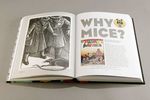
Art Spiegelman has been here before. At 63, dressed in black jeans, a denim shirt and that ubiquitous vest, he is talking, again, about his graphic memoir “Maus,” the saga of his father Vladek’s experiences during the Holocaust and of Spiegelman’s efforts to get to know that father — to inhabit his story, if you will. “Maus” was originally published in two parts, the first in 1986 and the second in 1991; it won a special Pulitzer Prize in 1992, the first comic to be so honored. Still, for the last two decades, Spiegelman has kept doubling back, reconsidering the project, drawing its mouse-like protagonist into nearly everything. “I’m blessed and cursed by this thing I made that obviously looms large for me and for others,” he observes on a sunny October morning in Beverly Hills, eyes blinking behind wire-frame glasses as he smokes on the balcony of his room in the Four Seasons Hotel. “But the result is that I can’t do this thing that seems quite easy but that I just can’t do, which is: ‘That’s that, and now I’m working on a new thing, and it’s a whole other thing.’ I just can’t get out of its gravitational field.”
more from David L. Ulin at the LA Times here.
Why Malthus is back in fashion
From Spiked:
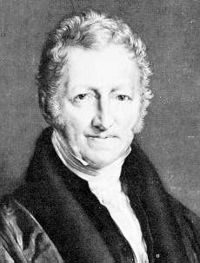
Earlier this summer, a columnist for Time magazine was in no doubt as to the pastor’s relevance. The global population is ‘ever larger, ever hungrier’, he noted, ‘food prices are near historic highs’ and ‘every report of drought or flooding raises fears of global shortages’. ‘Taking a look around us today’, he continued, ‘it would be easy to conclude that Malthus was prescient’. Writing in the British weekly, the New Statesman, wildlife lover Sir David Attenborough was similarly convinced: ‘The fundamental truth that Malthus proclaimed remains the truth: there cannot be more people on this Earth than can be fed.’ Not to be outdone, the liberal-left’s favourite broadsheet, the Guardian, also suggested that Malthus may have been right after all: ‘[His] arguments were part of the inspiration for Charles Darwin’s theory of evolution, and they have validity in the natural world. On the savannah, in the rainforests, and across the tundra, animal populations explode when times are good, and crash when food reserves are exhausted. Is homo sapiens an exception?’ The melancholy tone whispered its answer in the negative. Writing in the New York Times, Paul Krugman was less coy: ‘Malthus was right!’ shouted the headline. Given the encomia that are currently coming the way of Malthus you may well wonder what exactly it was that he was meant to be right about. To find the answer to this it is worth actually taking a look at the work, first published in 1798, on which his supposed prescience is based: An Essay on the Principle of Population. It makes for surprising reading.
More here.
Roaring at the Screen With Pauline Kael
Frank Rich in The New York Times:
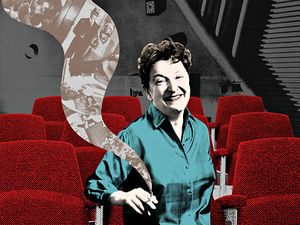
Kael and Horan hitchhiked across America in 1941 to break into the Manhattan literary world. Broke and homeless upon arrival, they camped out in Grand Central Terminal. Horan wandered the streets in search of food, and one night caught the eye of the composers and lovers Samuel Barber and Gian Carlo Menotti when they spotted him weaving in front of Saks Fifth Avenue as they walked home from the opera. The couple unofficially adopted Horan, and, unsurprisingly, he peeled away from Kael. Thus began an odyssey, lasting more than a decade, in which she supported her writing habit with what she called “crummy jobs” — among them stints as a publishing-house grunt, a clerk at Brentano’s, a violin teacher and a freelance tutor. After some four years of defeat in her efforts to break into professional writing in New York, she returned to San Francisco. By the early ’50s, she was running a laundry and tailoring business off Market Street, desperate to support her young daughter, Gina, fathered out of wedlock by Broughton in 1948. She continued to crank out unpublished stories and unproduced plays in whatever spare time she could find. When she learned that Gina had a congenital heart defect, she could not afford the surgery needed to repair it. Once Kael’s fortunes finally changed, it was through a lucky break as improbable as starlets being discovered at Schwab’s drugstore. Arguing with a friend about a film in a Berkeley coffeehouse in the fall of 1952, she was overheard by Peter D. Martin, the founder of a new film-criticism journal, City Lights. Martin was so captivated by Kael’s riff that he invited her to review Chaplin’s “Limelight” — which she did, in a pan revealing her critical voice in embryo. Mocking the film’s climax, in which the Chaplin hero, a has-been clown, dies in the wings of a theater after achieving redemption, Kael wrote that it was “surely the richest hunk of self-gratification since Huck and Tom attended their own funeral.” The piece attracted the attention of Mary McCarthy, among others, and soon Kael was submitting articles about film to other small but prestigious outlets like Partisan Review and Sight and Sound. At the ripe age of 33, she had at last found her subject as a writer. She had also found a literary community, in an exploding Bay Area bohemia populated by the likes of Kenneth Rexroth, Robert Creeley, Allen Ginsberg and Lawrence Ferlinghetti, Peter Martin’s partner in creating the legendary City Lights bookstore and the founder of its publishing-house spinoff.
More here.
Friend of 3QD just declared president of Ireland

VETERAN Labour politician Michael D Higgins was declared Ireland’s next president last night after a collapse in support for his nearest challenger, Independent Sean Gallagher, in Thursday’s vote. The first official count gave Mr Higgins 40 per cent of the vote. The resounding victory – 701,101 votes out of 1.77 million – was secured with a tidal wave of 11th hour support for the 70-year-old from Galway after controversy over his biggest rival’s political fundraising past. Mr Higgins, a former government minister, came from 15 points behind in the opinion polls last weekend to seal his victory, with all other candidates conceding defeat. Amid hectic scenes at the National Count Centre in Dublin Castle, president-elect Mr Higgins said his term in office would be about inclusion, ideas and transformation.
more from The Scotsman here. (Some of us will never forget Michael Higgins reciting his poetry at Flux Factory during a late night event some years ago. Wonderful man. Congrats to Ireland!)
Friday, October 28, 2011
Philosophical Education or Legitimations of Analytic Philosophy?
Santiago Zabala in Purlieu:

More here.
Wouldn’t It Be Cool if Shakespeare Wasn’t Shakespeare?
Stephan Marche in the New York Times:

Professors of Shakespeare — and I was one once upon a time — are blissfully unaware of the impending disaster that this film means for their professional lives. Thanks to “Anonymous,” undergraduates will be confidently asserting that Shakespeare wasn’t Shakespeare for the next 10 years at least, and profs will have to waste countless hours explaining the obvious. “Anonymous” subscribes to the Oxfordian theory of authorship, the contention that Edward de Vere, the 17th earl of Oxford, wrote Shakespeare’s plays. Among Shakespeare scholars, the idea has roughly the same currency as the faked moon landing does among astronauts.
The good news is that “Anonymous” makes an extraordinarily poor case for the Oxfordian theory. I could nitpick the film all day.
More here.
Christopher Hitchens Drops the Hammer
Counsel for OWS from Iran’s Green Movement
Kusha Sefat in Juan Cole's blog Informed Consent:

1) Pick a color to represent your movement and wear it daily in public places (work, restaurant, etc.). Remember, this is a numbers game. You want maximum visibility, and to bring your movement into everyday life.
2) Have an all-inclusive strategy. Accept people with different views who are willing to join you in protest. Contrary to popular belief, you don’t have to know what you want as a movement yet. The goal at this stage is to point to your opponents and say that they have been lying to you; that the show they have constructed is false and that you are sick of it.
3) Demonstrate peacefully. Committing violence during demonstrations leads to ruptures within your movement, diminishes public sympathy, and gives the security forces a reason to violently suppress your protest.
More here.
Didion’s Details
From The Paris Review:

This was a shopping center that embodied the future for which El Salvador was presumably being saved, and I wrote it down dutifully, this being the kind of “color” I knew how to interpret, the kind of inductive irony, the detail that was supposed to illuminate the story. As I wrote it down I realized that I was no longer much interested in this kind of irony, that this was a story that would not be illuminated by such details, that this was a story that would perhaps not be illuminated at all.
Her intelligence excavates a truth at once uncomfortable and crystalline: in the middle of a war you can’t see, you still want to look. You want to squint your keen and cutting eyes at whatever you can find. Because your subject is fear, and fear isn’t something with a particular scent or tint, only something in the air that makes it difficult to breath. It will not respond to any name when you call it into the light. Every night in El Salvador, people were being picked up in trucks, killed, and thrown in landfills, and Joan Didion stood looking at a row of imported vodkas, thinking, What? Just pointing at them, because they were there, and what right did they have? Irony is easier than hopeless silence but braver than flight. The problem is that sometimes your finger shakes as you gesture, there is no point, and you can’t point anywhere—or at least not at anything visible. I sometimes find myself in the role that Didion casts aside—the aisle-wandering, detail-pillaging self, who comes for water-purifying tablets and leaves with the price-tagged Cliff Notes of a country’s suffering.
More here.
Friday Poem
Matriot Acts, Act 1 (History of Mankind)
you no longer believe in anything
movement of train, mauve waves
grammar's anomie
gets you down or
war at the back and crown of head
PsyOps, o chicken little the sky! the sky!
o the fallen sky an edge of blue
hanging but
still breathing those colors?
a garden broken & restored many times
how often trying to leave it, bend away
words from that beautiful throat
listen or break or oscillate or
clamor as opposed to "read about"
could you be my model human being
up there on the dais?
o you, she...maybe he's the one
& we came back from the cinema
glow behind our tears
and you saying a woman, a woman!
how tragic to be such slender thread of a woman
where was I being led?
more people thick in space
in constant motion
twisted around a clock
solar wind, solar heat, sociable matrix
it's an atavistic mixed-up dream
and stirs the branches
high in Freedom Park
it was the voice of a desultory fragment
of speech now, talking about "state" and "union"
how darkness turns at the wrist
.
by Anne Waldman
from History of Mankind