From Smithsonian:

More here.

From Smithsonian:
More here.
From Science:
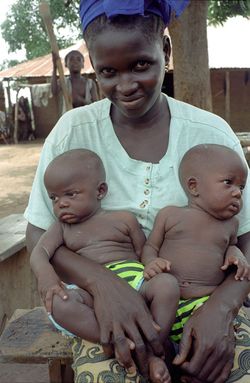
Both findings suggest that the disadvantages of having twins balance out when a mother gives birth to additional children, who tend to be larger and healthier on average than children born to mothers who don't have twins, Rickard says. And that may explain why twinning has stuck around.
More here.
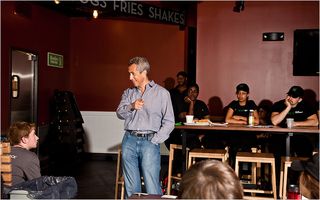
New York is a city of rooms. Most of them are tiny, dark, lonely and the wrong temperature. Meyer makes rooms that are exquisite — overlooking, in the case of the Modern, the greatest sculptures of the 20th century — and intimate. You feel at home. His goal, he told me, is for customers to make his restaurants their clubhouses.
Meyer’s track record is near perfect: one closing (Tabla, a 283-seat Indian place that lasted for 12 years), 25 openings and counting. And for most of his career he has expanded without repeating himself. He has created new restaurants as though they were each his first and only — the singularity of a place always as important as the food. His looseness and precision are qualities more reminiscent of an athlete or an artist. Whatever Meyer is engaged in — jaywalking, French-speaking, grease-inhaling — receives his complete attention.
Some of this is hereditary. Meyer’s father, Morton, owned hotels and had a gift for hospitality. As Meyer told me, “My dad gave me the gene to enjoy cooking, and to enjoy consuming good food and wine.”
After college, Meyer apprenticed in European kitchens, worked as a successful salesman (of plastic shoplifting-prevention tags) in New York, became an assistant manager at a Manhattan seafood restaurant, got to know chefs and critics and one of his future partners, and met the woman who would become his wife, Audrey Heffernan, who was working as a waitress. In 1985, he withdrew his savings and opened Union Square Cafe. Anticipating that The New York Times was going to review the place, he came down with Bell’s palsy. The left half of his face was paralyzed, and the left half of his tongue lost its sense of taste. Symptoms abated after two weeks. The review was a rave. And Union Square Cafe went on to critical and popular acclaim.
3
The polarisation between the claim that ‘the riots are a response to unemployment and wasted lives’ and the insistence ‘the violence constitutes mere criminality’ makes little sense. There is clearly more to the riots than simple random hooliganism. But that does not mean that the riots, as many have claimed, are protests against disenfranchisement, social exclusion and wasted lives. In fact, it’s precisely because of disenfranchisement, social exclusion and wasted lives that these are not ‘protests’ in any meaningful sense, but a mixture of incoherent rage, gang thuggery and teenage mayhem. Disengaged not just from the political process (largely because politicians, especially those on the left, have disengaged from them), there is a generation (in fact more than a generation) with no focus for their anger and resentment, no sense that they can change society and no reason to feel responsible for the consequences of their actions. That is very different from suggesting that the riots were caused by, a response to, or a protest against, unemployment, austerity and the cuts.
4
We should ignore anyone who talks about what ‘the community’ wants or needs. So called ‘community leaders’ are very much part of the problem.
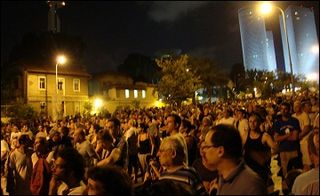
WHAT IS happening in Israel? As usual, no one expected, no one predicted, the massive uprising of Israel’s young people—joined last Saturday night by large numbers, amazing numbers, of their parents and grandparents. What started as a demand for affordable housing has turned into something much bigger. I can only watch, and cheer, and try to figure out what’s going on. Here are four “takes” on the uprising.
1. This is a rebellion of the mainstream against the privileged sectors—most important, though no one says this, against the settlers and the ultra-orthodox. Proportional representation makes it possible for relatively small groups of bloc voters to achieve disproportionate power, and these two groups, as key participants in (mostly) right-wing coalitions, have won benefits available to no one else. As one Haaretz columnist wrote, Netanyahu is a socialist in the occupied territories, where a fully developed welfare state exists, though only for the settlers. The settlers now include many ultra-orthodox Jews—who have been pulled into the nationalist camp by the gift of housing for their large and growing families in the territories. In the early years of the state, the ultra-orthodox had no politics beyond the demand that their children be exempt from army service and that their way of life be subsidized by the state. Given this, they were as ready to join the Left as they were to join the Right. Now they have been decisively incorporated into the Right. All this comes at the expense of the Israeli mainstream—of all Israelis, really, who live and work inside the Green Line. And who want to live and work inside the Green Line: they won’t be moved by the argument of right-wing members of the Knesset who say that there is plenty of cheap housing in the territories—the protestors should go there.
Second, Gregg Carlstrom in Al Jazeera:
The left's sudden return to politics has, in turn, led some commentators to speculate that protesters might broaden their focus beyond purely socioeconomic issues – that they might agitate for equal rights for Israeli Arabs, or push for an end to Israel's occupation of the Palestinian territories.
Those issues were visible at Saturday night's massive rally in Tel Aviv, attendees say, though far from the focal point of the protests. People waved Palestinian flags, chanted “end the occupation”, and carried posters with slogans linking Israel's occupation to the broader demand for social justice. The “1948” tent on Rothschild Boulevard houses Palestinian and Israeli activists who argue for Palestinian rights. It was attacked on Sunday by nationalist Jewish extremists belonging to a Kahanist group.
But for all those efforts, activists do not expect the protest movement to speak out loudly on the occupation or social justice for Palestinians. Organisers are reluctant to touch the issue, they say, because of fear that it will divide a movement which so far has almost universal support in Israel.
John Allen Paulos in the New York Times Book Review:
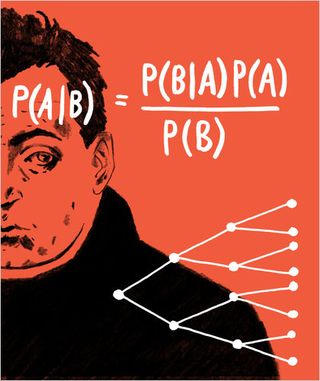
Bayes’s theorem, named after the 18th-century Presbyterian minister Thomas Bayes, addresses this selfsame essential task: How should we modify our beliefs in the light of additional information? Do we cling to old assumptions long after they’ve become untenable, or abandon them too readily at the first whisper of doubt? Bayesian reasoning promises to bring our views gradually into line with reality and so has become an invaluable tool for scientists of all sorts and, indeed, for anyone who wants, putting it grandiloquently, to sync up with the universe. If you are not thinking like a Bayesian, perhaps you should be.
At its core, Bayes’s theorem depends upon an ingenious turnabout: If you want to assess the strength of your hypothesis given the evidence, you must also assess the strength of the evidence given your hypothesis. In the face of uncertainty, a Bayesian asks three questions: How confident am I in the truth of my initial belief? On the assumption that my original belief is true, how confident am I that the new evidence is accurate? And whether or not my original belief is true, how confident am I that the new evidence is accurate?
More here.
Laurie Penny in Penny Red:
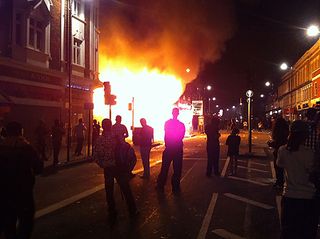
In the scramble to comprehend the riots, every single commentator has opened with a ritual condemnation of the violence, as if it were in any doubt that arson, muggings and lootings are ugly occurrences. That much should be obvious to anyone who is watching Croydon burn down on the BBC right now. David Lammy, MP for Tottenham, called the disorder 'mindless, mindless'. Nick Clegg denounced it as 'needless, opportunistic theft and violence'. Speaking from his Tuscan holiday villa, Prime Minister David Cameron – who has finally decided to return home to take charge – declared simply that the social unrest searing through the poorest boroughs in the country was “utterly unacceptable.”
More here.
Avner Inbar and Assaf Sharon in the Boston Review:
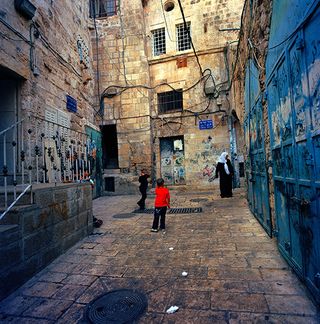
Almost a quarter century and many such stages later, the Palestinian leadership is better prepared than ever for independence. The Palestinians have been steadily building political and economic institutions in the West Bank, and just a few weeks ago Hamas and Fatah agreed to end a five-year feud and unify control of the West Bank and Gaza. Recent statements by the United Nations, World Bank, and International Monetary Fund declaring that the Palestinians are ready for statehood verify the success of these efforts. Given his past positions, Nusseibeh—now President of Al-Quds University in Jerusalem—could be expected to support these developments and the declaration of Palestinian independence scheduled for September. Yet his new book, What Is a Palestinian State Worth?, defies such expectations.
More here.
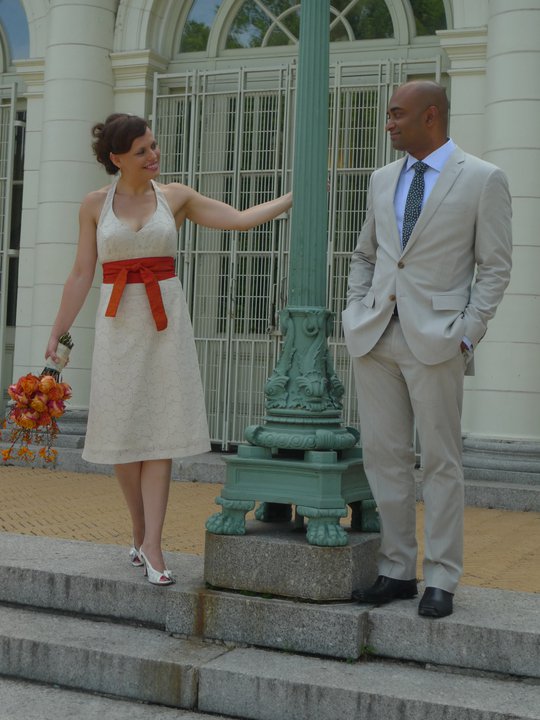
My best friend and fellow 3QD editor Robin Varghese got hitched to his longtime girlfriend Maeve Adams this past weekend in New York City in the classiest, most fun wedding ever. Please join me in wishing this beautiful couple a long life of married bliss!
From City Journal:
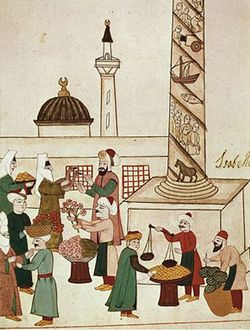
Greif’s theory suggests that cultural differences explain economic development better than religious beliefs do. Indeed, from a strictly religious perspective, one could view Muslims as having an advantage at creating wealth. After all, Islam is the only religion founded by a trader—one who also, by the way, married a wealthy merchant.The Koran has only good words for successful businessmen. Entrepreneurs must pay a 2.5 percent tax, the zakat, to the community to support the general welfare, but otherwise can make money guilt-free. Private property is sacred, according to the Koran. All this, needless to say, contrasts with the traditional Christian attitude toward wealth, which puts the poor on the fast track to heaven and looks down in particular on merchants (recall Jesus’s driving them from the Temple).
More here.
From The New York Times:

Ms. Kolstad is one of many septuagenarians, octogenarians and even nonagenarians who are burnishing their golden years with help from the plastic surgeon. According to the American Society for Aesthetic Plastic Surgery, in 2010 there were 84,685 surgical procedures among patients age 65 and older. They included 26,635 face-lifts; 24,783 cosmetic eyelid operations; 6,469 liposuctions; 5,874 breast reductions; 3,875 forehead lifts; 3,339 breast lifts and 2,414 breast augmentations. Except for a brief turndown during the recession, those numbers have been rising for years now, and experts say the trend seems likely to accelerate as baby boomers begin to pass age 65. But the increase also has raised concerns about safety and the propriety of performing invasive elective surgery on older patients, who may suffer unintended physical and psychological consequences.
More here.
Epilogue
We all live in darkness, kept apart from each other
by walls easily crossed but full of fake doors;
money drawn for light spending on friends or love
our arguments
about the inexhaustible don't even graze it
just when it's time to start talking again, and take
a different road to get to the same place.
We have to get used to knowing how
to live from day to day, each one on his own
as in the best of all possible worlds.
Our dreams prove it: we're cut off.
We can feel for each other,
and thats more than enough: that's all, and it's hard
to bring our stories closer together
trimming off from the excess we are,
to get our minds off the impossible and on the things
we have in common,
and not to insist, not to insist too much:
to be a good storyteller who plays his role
between clown and preacher.
by Enrique Lihn
from The Dark Room and Other Poems
New Directions Books 1978
translation: Jonathan Cohen, John Felstiner and David Unger
From The New Yorker:
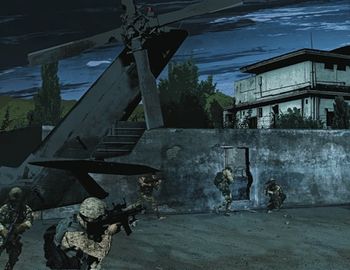
Fifteen minutes later, the helicopters ducked into an alpine valley and slipped, undetected, into Pakistani airspace. For more than sixty years, Pakistan’s military has maintained a state of high alert against its eastern neighbor, India. Because of this obsession, Pakistan’s “principal air defenses are all pointing east,” Shuja Nawaz, an expert on the Pakistani Army and the author of “Crossed Swords: Pakistan, Its Army, and the Wars Within,” told me. Senior defense and Administration officials concur with this assessment, but a Pakistani senior military official, whom I reached at his office, in Rawalpindi, disagreed. “No one leaves their borders unattended,” he said. Though he declined to elaborate on the location or orientation of Pakistan’s radars—“It’s not where the radars are or aren’t”—he said that the American infiltration was the result of “technological gaps we have vis-à-vis the U.S.” The Black Hawks, each of which had two pilots and a crewman from the 160th Special Operations Aviation Regiment, or the Night Stalkers, had been modified to mask heat, noise, and movement; the copters’ exteriors had sharp, flat angles and were covered with radar-dampening “skin.”
The SEALs’ destination was a house in the small city of Abbottabad, which is about a hundred and twenty miles across the Pakistan border.
More here.
From The Boston Globe:
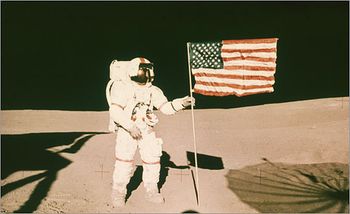
Even in space, where none of us live, some of what we’ve left is space junk: stuff orbiting the earth that nobody particularly intended to leave anywhere. But much of what we’ve left in space is intentional. Some of it is symbolic artifacts intended for an audience of people here on Earth – the fallen astronaut, the American flag on the moon, a CD containing a list of over half a million people who wanted to send their names to a comet, courtesy of a NASA probe. In some cases, however, we are also sending a deliberate signal out beyond Earth, to be received by forces unknown. Rather than just listening for radio signals, which has been a staple of the Search for Extraterrestrial Intelligence, some earthlings have become interested in actively reaching out – broadcasting radio messages to anyone, or anything, out there that might be able to hear them.
More here.
Funk Lore
We are the blues
ourselves
our favorite
color
Where we been, half here
half gone
We are the blues
our selves
the actual
Guineas
the original
Jews
the 1st
Caucasians
That's why we are the blues
ourselves
that's why we
are the
actual
song
So dark & tragic
So old &
Magic
that's why we are
the Blues
our Selves
In tribes of 12
bars
like the stripes
of slavery
on
our flag
of skin
We are the blues
the past the gone
the energy the
cold the saw teeth
hotness
the smell above
draining the wind
through trees
the blue
leaves us
black
the earth
the sun
the slowly disappearing
the fire pushing to become
our hearts
& now black again we are the
whole of night
with sparkling eyes staring
down
like jets
to push
evenings
ascension
that's why we are the blues
the train whistle
the rumble across
the invisible coming
drumming and screaming
that's why we are the
blues
& work & sing & leave
tales & is with spirit
that's why we are
the blues
black & alive
& so we show our motion
our breathing
we moon
reflected soul
that's why our spirit
make us
the blues
we is ourselves
the blues
by Amiri Baraka
from Funk Lore, Littoral Books, 1996