Thursday Poem

Morning Swim

Into my empty head there come
a cotton beach, a dock wherefrom

I set out, oily and nude
through mist, in chilly solitude.

There was no line, no roof or floor
to tell the water from the air.

Night fog thick as terry cloth
closed me in its fuzzy growth.

I hung my bathrobe on two pegs.
I took the lake between my legs.

Invaded and invader, I
went overhand on that flat sky.

Fish twitched beneath me, quick and tame.
In their green zone they sang my name

and in the rhythm of the swim
I hummed a two-four-time slow hymn.

I hummed “Abide With Me.” The beat
rose in the fine thrash of my feet,

rose in the bubbles I put out
slantwise, trailing through my mouth.

My bones drank water; water fell
through all my doors. I was the well

that fed the lake that met my sea
in which I sang “Abide With Me.”

by Maxine Kumin
from Selected Poems 1960-1990 (Norton)

Wednesday, August 10, 2011

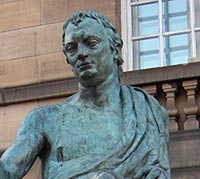
David Hume’s Impact on Causation

Hume200 Helen Beebee in The Philosopher's Magazine:

Hume’s account of causation has a good claim to being one of the most influential views in the history of philosophy. It not only set much of the agenda for large swathes of analytic philosophy in the 20th century and beyond, but it also awoke Immanuel Kant from his “dogmatic slumber” – as he put it in his Prolegomena to any Future Metaphysics – and prompted him to write the mighty Critique of Pure Reason, itself a hugely influential work and arguably the starting-point for the continental tradition in philosophy.

So why has Hume’s view on causation proved to be so influential? Well, let’s start with the state of play in philosophy at the time Hume was writing. The dominant view of causation at the time was a part of what Edward Craig (in The Mind of God and the Works of Man calls the “Image of God doctrine”. The idea here is, as the name suggests, that we are made in God’s image: our mental faculties are of course rather feeble compared to God’s, but they are of the same kind as God’s. If you were in the grip of the Image of God doctrine, you might think something like this. Our mental faculties are at their most perfect – their most God-like – when we’re engaged in a priori reasoning, for example when we’re constructing a mathematical proof. And in a mathematical proof, we can (if we’re really good at maths) just “see” or “intuit” that each successive stage of the proof follows from, or is entailed by, the preceding stage. So, if our mental faculties generally are God-like, then the same kind of thing must be going on when we turn our attention to the causal structure of the world. At least in principle, if I look at some event – the cue ball hitting the black ball in snooker, say – I can tell, just by observing that event, what must happen next: I can infer, on the basis of just that experience, what the collision will cause, just as I can in principle tell just by looking at a mathematical theorem what follows from it.

Hume’s fundamental insight when it comes to causation is that that story cannot possibly be right. No matter how hard I look, and no matter how much I know about the size and shape and weight of the balls and their position on the table, nothing whatsoever follows about what the collision is going to cause. Of course, what I expect to happen is that the black ball will move off in a certain direction and (let’s suppose) land in the corner pocket. But that is not something I can deduce just from careful observation of the collision. As Hume puts it: “If we reason a priori, any thing may appear able to produce anything”.

A Too-Modest Proposal

Inbar_36.4_palestine Avner Inbar and Assaf Sharon review Sari Nusseibeh's What Is a Palestinian State Worth?, in The Boston Review:

In the summer of 1988 Israeli authorities arrested Faisal Husseini, the Palestinian leader of East Jerusalem. The arrest came after the Israelis discovered in Husseini’s office a draft proposal for a unilateral declaration of Palestinian statehood. The document was part of an effort by the West Bank leadership to chart a political path following the eruption of the popular uprising, the intifada. Asked for his opinion of the Husseini document, the distinguished Palestinian philosopher and peace activist Sari Nusseibeh said, “The idea of declaring independence is becoming more necessary by the day. Our state will not arrive by registered mail to the main post office on Salah-al-Din street. It has to be created in stages.”

Almost a quarter century and many such stages later, the Palestinian leadership is better prepared than ever for independence. The Palestinians have been steadily building political and economic institutions in the West Bank, and just a few weeks ago Hamas and Fatah agreed to end a five-year feud and unify control of the West Bank and Gaza. Recent statements by the United Nations, World Bank, and International Monetary Fund declaring that the Palestinians are ready for statehood verify the success of these efforts. Given his past positions, Nusseibeh—now President of Al-Quds University in Jerusalem—could be expected to support these developments and the declaration of Palestinian independence scheduled for September. Yet his new book, What Is a Palestinian State Worth?, defies such expectations.

That same summer of 1988, Israel arrested and deported another Jerusalemite Palestinian, Mubarak Awad. The offense in this case was the promotion of non-violent resistance to the Israeli occupation. A Jerusalem-born, U.S.-educated psychologist who adopted Gene Sharp’s strategies of non-violent resistance, Awad returned to Palestine in 1985 to promote his philosophy among Palestinians. Two violent decades later, the practice of non-violence has spread widely among Palestinians. Every Friday hundreds of Palestinians join hands with Israelis and others to protest peacefully in the West Bank villages Bil’in, Ni’lin, Nabi Salih, Ma’asara, and Beit Ummar and in the East Jerusalem neighborhoods of Sheikh Jarrah and Silwan. Following the lead of their Egyptian counterparts, young Palestinians have been taking to the streets in Ramallah, Jenin, Hebron, Nablus, and Gaza demanding political unity and freedom. One would expect to find Nusseibeh hailing the Palestinian popular struggle, too. And once again, his new book defies expectations.

The Lost Art of Postcard Writing

Oranges_postcard_jpg_470x397_q85 Charles Simic in the NYRB blog:

Here it is already August and I have received only one postcard this summer. It was sent to me by a European friend who was traveling in Mongolia (as far as I could deduce from the postage stamp) and who simply sent me his greetings and signed his name. The picture in color on the other side was of a desert broken up by some parched hills without any hint of vegetation or sign of life, the name of the place in characters I could not read. Even receiving such an enigmatic card pleased me immensely. This piece of snail mail, I thought, left at the reception desk of a hotel, dropped in a mailbox, or taken to the local post office, made its unknown and most likely arduous journey by truck, train, camel, donkey—or whatever it was— and finally by plane to where I live.

Until a few years ago, hardly a day would go by in the summer without the mailman bringing a postcard from a vacationing friend or acquaintance. Nowadays, you’re bound to get an email enclosing a photograph, or, if your grandchildren are the ones doing the traveling, a brief message telling you that their flight has been delayed or that they have arrived. The terrific thing about postcards was their immense variety. It wasn’t just the Eiffel Tower or the Taj Mahal, or some other famous tourist attraction you were likely to receive in the mail, but also a card with a picture of a roadside diner in Iowa, the biggest hog at some state fair in the South, and even a funeral parlor touting the professional excellence that their customers have come to expect over a hundred years. Almost every business in this country, from a dog photographer to a fancy resort and spa, had a card. In my experience, people in the habit of sending cards could be divided into those who go for the conventional images of famous places and those who delight in sending images whose bad taste guarantees a shock or a laugh.

Does Philosophy Matter? (Part Two)

Fish.190 Stanley Fish in the NYT:

Some of the readers who were not persuaded by my argument that abstract moral propositions do not travel into practical contexts (see, “Does Philosophy Matter?”) offer what they take to be obvious counterexamples. Joe (187) cites “the ‘Philosophers’ Brief’ on assisted suicide that was submitted to the Supreme Court.” The example, however, counts for my side.

The brief was written by Ronald Dworkin, Thomas Nagel, Robert Nozick, John Rawls, Thomas Scanlon and Judith Jarvis Thomson (an all-star roster if there ever was one). It argues against a Washington state law prohibiting assisted suicide. The philosophers hope to persuade the Court to strike down the law by invoking a “liberty interest” all men and women have in making their own “personal decisions” about the “most intimate … choices a person may make in a lifetime” including the choice to die. “Death is, for each of us, among the most significant events of life.”

The Court alludes to this argument in passing when it acknowledges that the “decision to commit suicide with the assistance of another” may be “personal and profound.” The point, however, is summarily dismissed in the same sentence: “but it has never enjoyed … legal protection” (Washington v. Glucksberg, 1997). That is to say, while “abstract concepts of personal autonomy” (the Court’s phrase) may be interesting, they are not currency here in the world of legal deliberation. What is currency is the line of decisions preceding this one: “The history of the law’s treatment of assisted suicide in this country has been and continues to be the rejection of nearly all efforts to permit it.” Case closed. The editors of a leading jurisprudence casebook observe that “The Philosophers’ Brief arguments about autonomy seem not to have influenced the Supreme Court at all” (Jurisprudence Classic and Contemporary, 2002). Why should it have? The Court isn’t doing philosophy, it is doing law. Grand philosophical statements may turn up in a Supreme Court opinion, but they are not doing the real work.

Austerity and Anarchy

Via Crooked Timber, where Henry Farrell rightly notes, “the timing of this paper’s release is extraordinary,” a new working paper by Jacopo Ponticelli and Hans-Joachim Voth:

Does fiscal consolidation lead to social unrest? From the end of the Weimar Republic in Germany in the 1930s to anti-government demonstrations in Greece in 2010-11, austerity has tended to go hand in hand with politically motivated violence and social instability. In this paper, we assemble cross-country evidence for the period 1919 to the present, and examine the extent to which societies become unstable after budget cuts. The results show a clear positive correlation between fiscal retrenchment and instability. We test if the relationship simply reflects economic downturns, and conclude that this is not the key factor. We also analyse interactions with various economic and political variables. While autocracies and democracies show a broadly similar responses to budget cuts, countries with more constraints on the executive are less likely to see unrest as a result of austerity measures. Growing media penetration does not lead to a stronger effect of cut-backs on the level of unrest.

Whither goest thou, America, in thy shiny car at night?

Artwork_images_1011_325327_ed-ruscha

If each successive era has closed an old realm of exploration while opening up another, then what are we to make of the innovations in navigational technologies that have just gotten underway in earnest over the last ten years? The rise of digital mapping and the Global Positioning System (GPS) has seemed to come upon us almost as a matter of course, blended in with the general dawning of the digital age, and on its own relatively unremarked — but it has in a blink ushered in the greatest revolution in navigation since the map and compass. The conception of GPS by the U.S. military began in the 1960s. Satellites with extremely precise onboard clocks constantly send out packets of information containing the time and coordinate at which they were sent; navigation devices here below receive the signal and calculate the transit time and distance. By combining information from several satellites, an accurate and precise coordinate for the navigation device can be calculated. In 1983, a navigational error sent Korean Air Lines Flight 007 into restricted Soviet airspace, where it was shot down, killing all 269 people aboard; subsequently, President Reagan directed that GPS be opened up for civilian use once it had been fully implemented. This occurred in the early 1990s, when a network of satellites was put in place. Just as GPS was coming online, digital mapping applications were coming into widespread use.

more from Ari N. Schulman at The New Atlantis here.

memory’s paradox

Img_mnemosyne

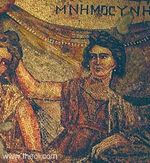
According to Karl Barth, a paradox is a statement “that is not made via dóxa, via ‘appearance’, but is to be understood parà tin dóxan, i.e. contrary to what the appearance as such seems to say, in order to be understood at all.”[1] Remembering and forgetting are deeply paradox human capabilities. A heightened capacity for remembering holds the promise of extended human access to the past, hence increased human sovereignty. At the same time, however, it is tied to the oppressive growth of the burden of the past, which hovers over the living like a nightmare. The burden of the past can, in turn, only be cast off through the development and cultivation of the opposite of remembrance, the ability to forget. The more we remember and thereby seemingly extend our power, the more are we in need of its opposite ability, forgetting. Forgetfulness ceases to be a fault – as it is generally understood – and becomes, as Nietzsche says, an “active, strictly speaking positive, capacity for restraint”. We need it like a “gatekeeper”, an “keeper of the order of the soul, calmness, etiquette”.

more from Helmut König at Eurozine here.

Beyond the Hero Syndrome

Navyseals

With apologies to the authors of the Old Testament, the popular myths of war heroes could well have started with the sacking of Troy, as recorded by Homer circa 850 BC. But in the telling of the Greek poets, heroes weren’t exactly winners. The higher they went, the deeper they fell. However, sometime between then and the mid-twentieth century, the tragedy that clung like a gray ghost to military heroes in the Western tradition withered away. Today there’s hardly an ironic note, much less a tragic one, to be found in accounts of the so-called war on terror. Counterinsurgency does not lend itself to Homeric heroes. Even when Julius Caesar paraded Vercingetorix, the captured leader of the Gauls, through Rome in a victory celebration, everybody knew something bad was going to happen. In today’s counter-insurgency engagements, there are no Berlins or Tokyos to be sacked. Victories are short, dirty, ambiguous, morally questionable, and often inconsequential. From the muck of the war on terror, heroes have to be invented. Take, for example, reports on the last breaths of Osama bin Laden.

more from Jeff Stein at Bookforum here.

The Smithsonian Life List: 43 Places to See Before You Die

From Smithsonian:

Lifelist-aurora-631 Gaze at the Aurora Borealis: Never mind the grizzly bears, the glaciers and the tundra. The best reason to go north (to Alaska, the Yukon or anywhere else above about 60 degrees latitude) is to see the Northern Lights. Try to imagine the most colorful, textured sunset you've ever seen, then send it swirling and pulsing across an otherwise clear and starry sky. Maybe add some faint outlines of mountains on the horizon and a hooting gray owl for ambience. But even more fabulous, in its own way, is the physics. Your planet is being buffeted by solar wind—particles of protons and electrons that the sun spews into space. Some of the charged particles get sucked into the earth's magnetic field and flow toward the pole until they collide with our atmosphere. Then, voilà: the aurora borealis (or aurora australis, if you happen to be at the bottom of the Southern Hemisphere).

More here.

Why Do Women Have Twins?

From Science:

Twinning Giving birth to twins is rough, especially in rural regions. They tend to be born smaller and weaker than single babies, and their mothers have more complications during childbirth. So why did twinning evolve? A new study in Gambia finds that women who have twins also tend to have single babies that are heavier than average at birth, which makes them more likely to survive. Since the 1950s, the U.K. Medical Research Council has been collecting data and providing medical care in Gambia. It's a highly unusual data set, says evolutionary anthropologist Rebecca Sear of Durham University in the United Kingdom, with a length and thoroughness that's “unheard of for populations without good access to medical care.” Evolutionary biologist Ian Rickard of the University of Sheffield in the United Kingdom wondered whether the data could shed light on the biology of twins. Rickard and colleagues looked at the birth weights of 1889 single babies born to Gambian women over a 30-year period. Then they examined which of these mothers also had twins. Single babies born after twins were 226 grams heavier on average than single babies whose mothers had no twins, the team reports today in Biology Letters. This wasn't surprising, Rickard says, because carrying twins is thought to improve blood flow to the uterus and “prime” it for later children, allowing them to more easily receive nutrients. What did surprise the researchers was the discovery that when single babies were born before twins, the singles tended to be 134 grams heavier than average.

Both findings suggest that the disadvantages of having twins balance out when a mother gives birth to additional children, who tend to be larger and healthier on average than children born to mothers who don't have twins, Rickard says. And that may explain why twinning has stuck around.

More here.

Tuesday, August 9, 2011

A Movable Feast: Danny Meyer on a Roll

MEYER_CHAMELEON-slide-NQUV-articleLargeSean Wilsey in the NYT Magazine:

New York is a city of rooms. Most of them are tiny, dark, lonely and the wrong temperature. Meyer makes rooms that are exquisite — overlooking, in the case of the Modern, the greatest sculptures of the 20th century — and intimate. You feel at home. His goal, he told me, is for customers to make his restaurants their clubhouses.

Meyer’s track record is near perfect: one closing (Tabla, a 283-seat Indian place that lasted for 12 years), 25 openings and counting. And for most of his career he has expanded without repeating himself. He has created new restaurants as though they were each his first and only — the singularity of a place always as important as the food. His looseness and precision are qualities more reminiscent of an athlete or an artist. Whatever Meyer is engaged in — jaywalking, French-speaking, grease-inhaling — receives his complete attention.

Some of this is hereditary. Meyer’s father, Morton, owned hotels and had a gift for hospitality. As Meyer told me, “My dad gave me the gene to enjoy cooking, and to enjoy consuming good food and wine.”

After college, Meyer apprenticed in European kitchens, worked as a successful salesman (of plastic shoplifting-prevention tags) in New York, became an assistant manager at a Manhattan seafood restaurant, got to know chefs and critics and one of his future partners, and met the woman who would become his wife, Audrey Heffernan, who was working as a waitress. In 1985, he withdrew his savings and opened Union Square Cafe. Anticipating that The New York Times was going to review the place, he came down with Bell’s palsy. The left half of his face was paralyzed, and the left half of his tongue lost its sense of taste. Symptoms abated after two weeks. The review was a rave. And Union Square Cafe went on to critical and popular acclaim.

Five Quick Points About The Riots

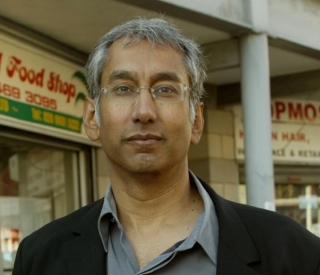
KenanMalik2 Kenan Malik on the riots in teh UK, over at his website Panaemonium:

3

The polarisation between the claim that ‘the riots are a response to unemployment and wasted lives’ and the insistence ‘the violence constitutes mere criminality’ makes little sense. There is clearly more to the riots than simple random hooliganism. But that does not mean that the riots, as many have claimed, are protests against disenfranchisement, social exclusion and wasted lives. In fact, it’s precisely because of disenfranchisement, social exclusion and wasted lives that these are not ‘protests’ in any meaningful sense, but a mixture of incoherent rage, gang thuggery and teenage mayhem. Disengaged not just from the political process (largely because politicians, especially those on the left, have disengaged from them), there is a generation (in fact more than a generation) with no focus for their anger and resentment, no sense that they can change society and no reason to feel responsible for the consequences of their actions. That is very different from suggesting that the riots were caused by, a response to, or a protest against, unemployment, austerity and the cuts.

4

We should ignore anyone who talks about what ‘the community’ wants or needs. So called ‘community leaders’ are very much part of the problem.

Tent Cities and Demonstrations

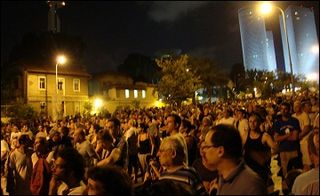
Telaviv8611 On the demos in Israel, first Michael Walzer in Dissent:

WHAT IS happening in Israel? As usual, no one expected, no one predicted, the massive uprising of Israel’s young people—joined last Saturday night by large numbers, amazing numbers, of their parents and grandparents. What started as a demand for affordable housing has turned into something much bigger. I can only watch, and cheer, and try to figure out what’s going on. Here are four “takes” on the uprising.

1. This is a rebellion of the mainstream against the privileged sectors—most important, though no one says this, against the settlers and the ultra-orthodox. Proportional representation makes it possible for relatively small groups of bloc voters to achieve disproportionate power, and these two groups, as key participants in (mostly) right-wing coalitions, have won benefits available to no one else. As one Haaretz columnist wrote, Netanyahu is a socialist in the occupied territories, where a fully developed welfare state exists, though only for the settlers. The settlers now include many ultra-orthodox Jews—who have been pulled into the nationalist camp by the gift of housing for their large and growing families in the territories. In the early years of the state, the ultra-orthodox had no politics beyond the demand that their children be exempt from army service and that their way of life be subsidized by the state. Given this, they were as ready to join the Left as they were to join the Right. Now they have been decisively incorporated into the Right. All this comes at the expense of the Israeli mainstream—of all Israelis, really, who live and work inside the Green Line. And who want to live and work inside the Green Line: they won’t be moved by the argument of right-wing members of the Knesset who say that there is plenty of cheap housing in the territories—the protestors should go there.

Second, Gregg Carlstrom in Al Jazeera:

The left's sudden return to politics has, in turn, led some commentators to speculate that protesters might broaden their focus beyond purely socioeconomic issues – that they might agitate for equal rights for Israeli Arabs, or push for an end to Israel's occupation of the Palestinian territories.

Those issues were visible at Saturday night's massive rally in Tel Aviv, attendees say, though far from the focal point of the protests. People waved Palestinian flags, chanted “end the occupation”, and carried posters with slogans linking Israel's occupation to the broader demand for social justice. The “1948” tent on Rothschild Boulevard houses Palestinian and Israeli activists who argue for Palestinian rights. It was attacked on Sunday by nationalist Jewish extremists belonging to a Kahanist group.

But for all those efforts, activists do not expect the protest movement to speak out loudly on the occupation or social justice for Palestinians. Organisers are reluctant to touch the issue, they say, because of fear that it will divide a movement which so far has almost universal support in Israel.

The Mathematics of Changing Your Mind

John Allen Paulos in the New York Times Book Review:

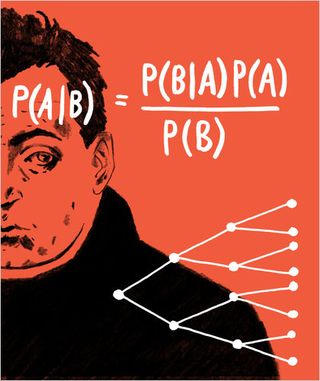
Paulos-popup Sharon Bertsch McGrayne introduces Bayes’s theorem in her new book with a remark by John Maynard Keynes: “When the facts change, I change my opinion. What do you do, sir?”

Bayes’s theorem, named after the 18th-century Presbyterian minister Thomas Bayes, addresses this selfsame essential task: How should we modify our beliefs in the light of additional information? Do we cling to old assumptions long after they’ve become untenable, or abandon them too readily at the first whisper of doubt? Bayesian reasoning promises to bring our views gradually into line with reality and so has become an invaluable tool for scientists of all sorts and, indeed, for anyone who wants, putting it grandiloquently, to sync up with the universe. If you are not thinking like a Bayesian, perhaps you should be.

At its core, Bayes’s theorem depends upon an ingenious turnabout: If you want to assess the strength of your hypothesis given the evidence, you must also assess the strength of the evidence given your hypothesis. In the face of uncertainty, a Bayesian asks three questions: How confident am I in the truth of my initial belief? On the assumption that my original belief is true, how confident am I that the new evidence is accurate? And whether or not my original belief is true, how confident am I that the new evidence is accurate?

More here.

Panic on the streets of London

Laurie Penny in Penny Red:

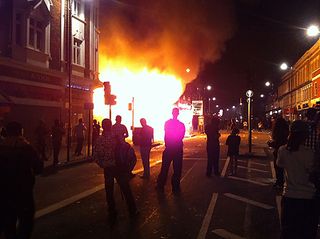
Aaaa120511074 I’m huddled in the front room with some shell-shocked friends, watching my city burn. The BBC is interchanging footage of blazing cars and running street battles in Hackney, of police horses lining up in Lewisham, of roiling infernos that were once shops and houses in Croydon and in Peckham. Last night, Enfield, Walthamstow, Brixton and Wood Green were looted; there have been hundreds of arrests and dozens of serious injuries, and it will be a miracle if nobody dies tonight. This is the third consecutive night of rioting in London, and the disorder has now spread to Leeds, Liverpool, Bristol and Birmingham. Politicians and police officers who only hours ago were making stony-faced statements about criminality are now simply begging the young people of Britain’s inner cities to go home. Britain is a tinderbox, and on Friday, somebody lit a match. How the hell did this happen? And what are we going to do now?

In the scramble to comprehend the riots, every single commentator has opened with a ritual condemnation of the violence, as if it were in any doubt that arson, muggings and lootings are ugly occurrences. That much should be obvious to anyone who is watching Croydon burn down on the BBC right now. David Lammy, MP for Tottenham, called the disorder 'mindless, mindless'. Nick Clegg denounced it as 'needless, opportunistic theft and violence'. Speaking from his Tuscan holiday villa, Prime Minister David Cameron – who has finally decided to return home to take charge – declared simply that the social unrest searing through the poorest boroughs in the country was “utterly unacceptable.”

More here.

A Palestinian Peacemaker Gives Up on Politics

Avner Inbar and Assaf Sharon in the Boston Review:

Inbar_36_4_palestine In the summer of 1988 Israeli authorities arrested Faisal Husseini, the Palestinian leader of East Jerusalem. The arrest came after the Israelis discovered in Husseini’s office a draft proposal for a unilateral declaration of Palestinian statehood. The document was part of an effort by the West Bank leadership to chart a political path following the eruption of the popular uprising, the intifada. Asked for his opinion of the Husseini document, the distinguished Palestinian philosopher and peace activist Sari Nusseibeh said, “The idea of declaring independence is becoming more necessary by the day. Our state will not arrive by registered mail to the main post office on Salah-al-Din street. It has to be created in stages.”

Almost a quarter century and many such stages later, the Palestinian leadership is better prepared than ever for independence. The Palestinians have been steadily building political and economic institutions in the West Bank, and just a few weeks ago Hamas and Fatah agreed to end a five-year feud and unify control of the West Bank and Gaza. Recent statements by the United Nations, World Bank, and International Monetary Fund declaring that the Palestinians are ready for statehood verify the success of these efforts. Given his past positions, Nusseibeh—now President of Al-Quds University in Jerusalem—could be expected to support these developments and the declaration of Palestinian independence scheduled for September. Yet his new book, What Is a Palestinian State Worth?, defies such expectations.

More here.

Is Islam Compatible with Capitalism?

From City Journal:

Arab Muslim economies haven’t always been low achievers. In his seminal work The World Economy, economist Angus Maddison showed that until the twelfth century, per-capita income was much higher in the Muslim Middle East than in Europe. Beginning in the twelfth century, though, what Duke University economist Timur Kuran calls the Long Divergence began, upending this economic hierarchy, so that by Rifaa’s time, Europe had grown far more powerful and prosperous than the Arab Muslim world. A key factor in the divergence was Italian city-states’ invention of capitalism—a development that rested on certain cultural prerequisites, Stanford University’s Avner Greif observes. In the early twelfth century, two groups of merchants dominated Mediterranean sea trade: the European Genoans and the Cairo-based Maghrebis, who were Jewish but, coming originally from Baghdad, shared the cultural norms of the Arab Middle East. The Genoans outpaced the Maghrebis and eventually won the competition, Greif argues, because they invented various corporate institutions that formed the core of capitalism, including banks, bills of exchange, and joint-stock companies, which allowed them to accumulate enough capital to launch riskier but more profitable ventures. These institutions, in Greif’s account, were an outgrowth of the Genoans’ Western culture, in which people were bound not just by blood but also by contracts, including the fundamental contract of marriage. The Maghrebis’ Arab values, by contrast, meant undertaking nothing outside the family and tribe, which limited commercial expeditions’ resources and hence their reach. The bonds of blood couldn’t compete with fair, reliable institutions (see “Economics Does Not Lie,” Summer 2008).

Greif’s theory suggests that cultural differences explain economic development better than religious beliefs do. Indeed, from a strictly religious perspective, one could view Muslims as having an advantage at creating wealth. After all, Islam is the only religion founded by a trader—one who also, by the way, married a wealthy merchant.The Koran has only good words for successful businessmen. Entrepreneurs must pay a 2.5 percent tax, the zakat, to the community to support the general welfare, but otherwise can make money guilt-free. Private property is sacred, according to the Koran. All this, needless to say, contrasts with the traditional Christian attitude toward wealth, which puts the poor on the fast track to heaven and looks down in particular on merchants (recall Jesus’s driving them from the Temple).

More here.