think odessa

Morris_08_11

Like other burgeoning seaports of southern Europe, such as Trieste or Thessalonica, Odessa became a magnet for Jewish enterprise, and by the late nineteenth century Jews constituted a third of its population. They suffered the usual indignities and impertinences of prejudice (‘No Jews are admitted’, blandly says my Murray’s Handbook, 1899, of the Odessa Commercial Club): they responded with perhaps more than the usual vivacity. They never, it seems, realised the commercial and financial dominance that they achieved in Trieste, under the Austro-Hungarian Empire; but during the later years of tsarist rule many of them played prominent parts in the intellectual and artistic society of Odessa. Theatre, literature and opera flourished in the city. Writers, actors and musicians responded to its generous climate, and cultivated Jews contributed largely to the style of a city that was sometimes called the southern capital of Russia, and sometimes the Pearl of the South. King traces this rise to celebrity with vivid portraits of the people who inspired it. There was Grigory Potemkin himself, whose very first show-villages were built to ornament a preposterously grand visit by the Empress Catherine, his lover as well as his boss. There was the French Duc de Richelieu, the first governor of the city, whose statue stands to this day at the head of the Steps; there was also the very Russian Count Mikhail Vorontsov, governor-general of New Russia. There was Alexander Pushkin, the poet, who was exiled to Odessa because of his subversive attitudes and presently had an affair with the governor-general’s wife. And there was Lev Bronstein, who learnt, as a troublesome Jewish schoolboy in this city of cross-currents, some of the insights that would guide him when he became, in later life, Leon Trotsky.

more from Jan Morris at Literary Review here.

Do You Suffer From Decision Fatigue?

John Tierney in the New York Times Magazine:

ScreenHunter_05 Aug. 23 13.21 Three men doing time in Israeli prisons recently appeared before a parole board consisting of a judge, a criminologist and a social worker. The three prisoners had completed at least two-thirds of their sentences, but the parole board granted freedom to only one of them. Guess which one:

Case 1 (heard at 8:50 a.m.): An Arab Israeli serving a 30-month sentence for fraud.

Case 2 (heard at 3:10 p.m.): A Jewish Israeli serving a 16-month sentence for assault.

Case 3 (heard at 4:25 p.m.): An Arab Israeli serving a 30-month sentence for fraud.

There was a pattern to the parole board’s decisions, but it wasn’t related to the men’s ethnic backgrounds, crimes or sentences. It was all about timing, as researchers discovered by analyzing more than 1,100 decisions over the course of a year. Judges, who would hear the prisoners’ appeals and then get advice from the other members of the board, approved parole in about a third of the cases, but the probability of being paroled fluctuated wildly throughout the day. Prisoners who appeared early in the morning received parole about 70 percent of the time, while those who appeared late in the day were paroled less than 10 percent of the time.

More here.

The Iceman’s last meal: goat

Alexandra Witze in Science News:

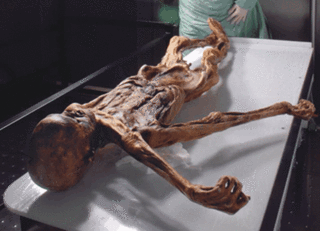
ScreenHunter_04 Aug. 23 13.17 Outside of the Nancy Grace show, few people have had their final hours as poked, prodded and scrutinized as much as Ötzi, the “Iceman” who died high in the Italian Alps 5,300 years ago.

Hikers discovered his frozen, mummified body in 1991. Two decades later, scientists have a good idea of what happened to Ötzi: Fleeing pursuers, he retreated to the mountains only to be shot in the back with an arrow. But even today, the Iceman is still giving up surprises.

New, more detailed radiological images of the mummy have revealed his stomach for the first time and shown that he didn’t die hungry. Within an hour of his murder, Ötzi ate a big meal mostly of the wild goat called ibex, reports a team led by Albert Zink, head of the Institute for Mummies and the Iceman in Bolzano, Italy.

“We now think that he must have felt quite safe, because otherwise he wouldn’t have had this big meal,” Zink says. “This was a really big surprise.” The work was published online August 17 in the Journal of Archaeological Science.

More here.

Gaddafi Found Running for Republican Nomination

From the Borowitz Report:

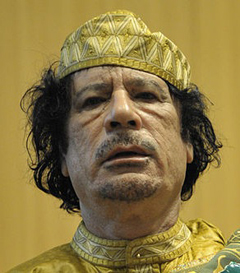
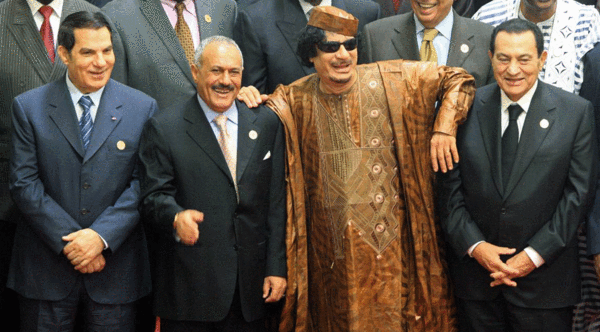
Gaddafi1 The mystery surrounding Col. Muammar Gaddafi’s whereabouts was resolved today as the dictator announced his candidacy for the Republican presidential nomination in a town hall meeting in Concord, New Hampshire.

In announcing his candidacy, the Libyan madman joins a Republican field which is believed to number in excess of seven hundred candidates.

While some New Hampshire Republicans seemed surprised to see Col. Gaddafi shaking hands and kissing babies at the Concord town hall, an aide to the Libyan strongman said his transformation to GOP candidate made perfect sense.

“In those final days in Tripoli he was becoming increasingly disconnected from reality,” said the aide. “So I think he’ll fit right in.”

More here.

The Cat’s Table, By Michael Ondaatje

From The Independent:

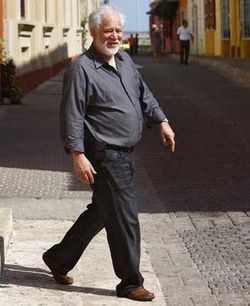
On As a young boy in 1954, Michael Ondaatje left Sri Lanka – which was then Ceylon – for England. After schooling at Dulwich College, he continued on to Canada, where as a young man he would finally put down roots and take Canadian citizenship. In his latest novel, The Cat's Table, his pre-pubescent narrator, also named Michael, is placed alone on to a giant liner pulling out of Colombo and set for London in the early Fifties. Any autobiographical qualities can only partly be responsible for what proves to be an eloquent, elegiac tribute to the game of youth and how it shapes what follows. “He was 11 years old that night when, green as he could be about the world, he climbed aboard the first and only ship of his life,” states Michael, looking back from adulthood. “It felt as if a city had been added to the coast, better lit than any town or village.” The boy is to be met on the London docks by his mother. Until then, The Oronsay, a floating palace of a ship, is a bobbing realm of unlimited possibilities for a boy on the cusp of adolescence.

At meal times, the boy is relegated to Table 76, the cat's table of the title. This is the dining equivalent of the boondocks, as far from the Captain's table as is physically possible and the dumping ground of the ship's most insignificant passengers. It is at this table that he makes friends with two boys of a similar age to him, Ramadhin and Cassius. The former is gentle and sickly, the latter rebellious and bold. Over the course of 21 days, the trio's friendship is forged in bad behaviour, exploration and learning. “Each day we had to do at least one thing that was forbidden. The day had barely begun, and we still had hours ahead of us to perform this task.”

More here.

Examining the Mystery of Skeleton, Sugar and Sex

From The New York Times:

THE HYPOTHESIS Bones help regulate fertility in men.

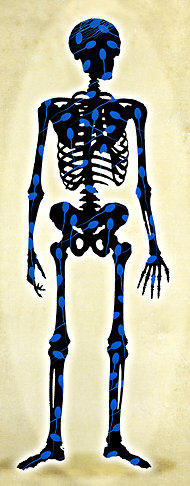
Bone For years, scientists thought they understood the skeleton. It serves as structural support for the body. It stores calcium and phosphate. It contributes to blood cell development. And it serves, indispensably, as the creepy mascot of Halloween. But as it turns out, there may be still more to bone. A few years ago, researchers at Columbia University Medical Center discovered, to everyone’s surprise, that the skeleton seems to help regulate blood sugar. Now the team, led by Dr. Gerard Karsenty, geneticist and endocrinologist at Columbia University, has found that bone may play an unexpected role in reproduction. If the work pans out, it may help to explain some cases of low fertility in men. “It’s definitely an attention-grabber,” Dr. William Crowley of Harvard Medical School, who was not involved in the research, said of the new finding regarding fertility. “I think it will turn out to be a seminal observation.” (No pun intended, presumably.)

It is well known that the hormones estrogen and testosterone, produced in the ovaries and testes, help to regulate bone growth. When women reach menopause, estrogen levels decrease along with bone mass, putting them at increased risk for osteoporosis. As men age, their testosterone and estrogen levels decline, as well. Men lose bone, but much more slowly than women do. “We thought that if the sex organs talk to the skeleton, then the skeleton should talk back to the sex organs,” Dr. Karsenty said.

Apparently it does.

More here.

Tuesday Poem

Wind in a Box

This ink. This name. This blood. This blunder.
This blood. This loss. This lonesome wind. This canyon.
This / twin / swiftly / paddling / shadow blooming
an inch above the carpet-. This cry. This mud.
This shudder. This is where I stood: by the bed,
by the door, by the window, in the night / in the night.
How deep, how often / must a woman be touched?
How deep, how often have I been touched?
On the bone, on the shoulder, on the brow, on the knuckle:
Touch like a last name, touch like a wet match.
Touch like an empty shoe and an empty shoe, sweet
and incomprehensible. This ink. This name. This blood
and wonder. This box. This body in a box. This blood
in the body. This wind in the blood.

by Terrance Hayes
from Win In A Box
Penguin, 2006

Monday, August 22, 2011

Sunday, August 21, 2011

All Over the Map

From The Telegraph:

The New York architect Michael Sorkin is celebrated for his utopian urban creations. Robert Douglas-Fairhurst assesses his bold artistic vision, and argues that we create the most vivid cities in our own imagination.

City In his inaugural lecture at Cambridge, the poet A E Housman pointed out that a boy who makes mud pies also turns himself into a little lord of creation. His scooping and scraping form “a small world out of a small chaos”, and once finished he can “behold the works of his hands” and pronounce it “pretty good”. Many people never grow out of this desire to create new worlds. Long after hanging up their buckets and spades, adults can enjoy computer games such as City Creator or Virtual City, which allow users to construct entire urban environments online as easily as clicking together pieces of Lego.

Such games encourage fantasies every bit as startling as those depicted in Christopher Nolan’s film Inception, in which a crack team of architects use blueprints and scale models to design a virtual city and then enter it through the portals of the unconscious. Recent games include Fun Ville as well as more earnest enterprises such as Wilsonville, but even the jolliest of such places cannot disguise the fact that they have a population of precisely one. They offer an escape from the loneliness of city life while simultaneously magnifying it to gigantic proportions. Real cities are far harder to control. In a series of journal articles reprinted in this collection, the New York architect Michael Sorkin traces the years of turmoil that followed the 2001 terrorist attacks on the World Trade Center.

More here.

Can the Middle Class Be Saved?

Don Peck in The Atlantic:

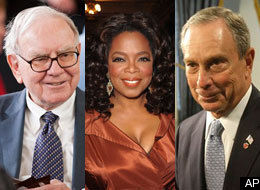
S-RICH-PEOPLE-MEETING-large In October 2005, three Citigroup analysts released a report describing the pattern of growth in the U.S. economy. To really understand the future of the economy and the stock market, they wrote, you first needed to recognize that there was “no such animal as the U.S. consumer,” and that concepts such as “average” consumer debt and “average” consumer spending were highly misleading.

In fact, they said, America was composed of two distinct groups: the rich and the rest. And for the purposes of investment decisions, the second group didn’t matter; tracking its spending habits or worrying over its savings rate was a waste of time. All the action in the American economy was at the top: the richest 1 percent of households earned as much each year as the bottom 60 percent put together; they possessed as much wealth as the bottom 90 percent; and with each passing year, a greater share of the nation’s treasure was flowing through their hands and into their pockets. It was this segment of the population, almost exclusively, that held the key to future growth and future returns. The analysts, Ajay Kapur, Niall Macleod, and Narendra Singh, had coined a term for this state of affairs: plutonomy.

In a plutonomy, Kapur and his co-authors wrote, “economic growth is powered by and largely consumed by the wealthy few.” America had been in this state twice before, they noted—during the Gilded Age and the Roaring Twenties. In each case, the concentration of wealth was the result of rapid technological change, global integration, laissez-faire government policy, and “creative financial innovation.” In 2005, the rich were nearing the heights they’d reached in those previous eras, and Citigroup saw no good reason to think that, this time around, they wouldn’t keep on climbing. “The earth is being held up by the muscular arms of its entrepreneur-plutocrats,” the report said. The “great complexity” of a global economy in rapid transformation would be “exploited best by the rich and educated” of our time.

More here.

High food prices driving world unrest: study

Stephen Pincock in ABC Science:

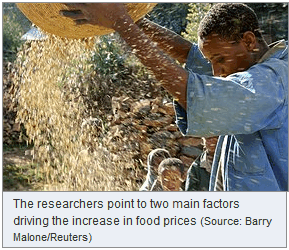
ScreenHunter_02 Aug. 21 13.24 The waves of social unrest and political instability seen recently around the world have coincided with large peaks in global food prices, US researchers have found.

They warn that unless something is done urgently to address rising food prices, it could trigger more widespread trouble in the near future.

Professor Yaneer Bar-Yam, president of the New England Complex Systems Institute , and colleagues, correlated the dates of riots around the world with data from the United Nations that plots changes in the price of food.

They found evidence that episodes of social unrest in North Africa and the Middle East coincided closely with peaks in the UN Food and Agriculture Organization's Food Price Index.

Reporting their findings on the pre-press website arXiv.org the researchers say that although the riots reflect many factors such as the long-standing political failings of governments, high food prices provide a tipping point.

“There are indeed many factors that can contribute to unrest,” Bar-Yam explains. “What we see, however, is that these conditions can persist for many years without causing this level of protest, rebellion and revolution …. Then food prices go up to a certain level and social order falls apart.”

Specifically, the researchers found strong statistical evidence that social unrest and rioting occurred when the Food Price Index hit sharp peaks above a figure of 210.

On 13 December last year, the researchers say, they wrote to the US government pointing out the link between global food prices and unrest. Four days later, Mohamed Bouazizi set himself on fire in Tunisia in protest at government policies, an event that catalysed social unrest throughout the Middle East.

More here.

American Prospect: Decline and Rebirth (or “USA #1?”)

Gus Speth in Solutions:

Images To our great shame, among the 20 major advanced countries America now has

  • the highest poverty rate, both generally and for children;
  • the greatest inequality of incomes;
  • the lowest government spending as a percentage of GDP on social programs for the disadvantaged;
  • the lowest number of paid holiday, annual, and maternity leaves;
  • the lowest score on the United Nations’ index of “material well-being of children”;
  • the worst score on the United Nations’ gender inequality index;
  • the lowest social mobility;
  • the highest public and private expenditure on health care as a portion of GDP,

yet accompanied by the highest

  • infant mortality rate;
  • prevalence of mental health problems;
  • obesity rate;
  • portion of people going without health care due to cost;
  • low-birth-weight children per capita (except for Japan);
  • consumption of antidepressants per capita;

along with the shortest life expectancy at birth (except for Denmark and Portugal);

  • the highest carbon dioxide emissions and water consumption per capita;
  • the lowest score on the World Economic Forum’s environmental performance index (except for Belgium), and the largest ecological footprint per capita (except for Belgium and Denmark);
  • the highest rate of failing to ratify international agreements;
  • the lowest spending on international development and humanitarian assistance as a percentage of GDP;
  • the highest military spending as a portion of GDP;
  • the largest international arms sales;
  • the most negative balance of payments (except New Zealand, Spain, and Portugal);
  • the lowest scores for student performance in math (except for Portugal and Italy) (and far from the top in both science and reading);
  • the highest high school dropout rate (except for Spain);
  • the highest homicide rate;
  • and the largest prison population per capita.

More here.

Saturday, August 20, 2011

The Beginning of the End?

8737.anna-cover Hartosh Bal Singh in Open the Magazine:

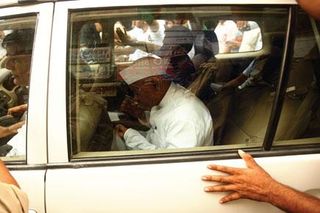
What Anna Hazare could not achieve in months, what the continued revelations in the 2G and Commonwealth scams could not ensure, the Congress party has managed in a moment of suicidal decisiveness. The arrest and subsequent attempts to release Hazare have isolated the Government in Parliament, where the BJP, the constituents of what was once the Third Front and the Left have come closer together. And they have isolated the Congress outside Parliament, with even those who have set no store by the Anna movement left aghast by this arbitrary display of government might.

And despite the Congress’ prevarications, it has to face up to the consequences of ordering Hazare’s arrest. At the very press conference where Home Minister P Chidambaram, Telecom Minister Kapil Sibal and Minister for Information and Broadcast-ing Ambika Soni were explaining that the decision to arrest Anna Hazare was taken by the Delhi Police and the Government had no hand in it, Chidamba- ram declared that he had told the Police Commis- sioner to address the media about the arrest. He left no one in doubt about who did the telling between the Home Minister and the Police Commissioner.