
David Adam in Nature:
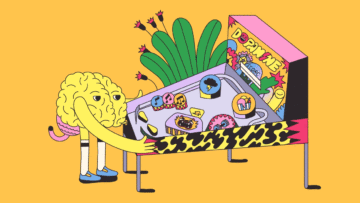 When neuroscientists gather in the Spanish city of Seville in May for the annual Dopamine Society meeting, one discussion could be unusually lively. Session 31 will feature a debate between researchers who fundamentally disagree about the role dopamine has in the brain.
Dopamine is one of the most extensively studied neurotransmitters, chemicals that convey signals from cell to cell. It’s the one with the highest profile outside neuroscience: often known as the ‘pleasure chemical’, it’s depicted as the hit of reward that people get from recreational drugs or scrolling through social media. That’s a gross simplification of what dopamine does; on that, researchers agree. But beyond that, where once there was a simple model that explained how dopamine works in the brain, now there are challenges that seek to amend the theory — or even to overturn it.
More here.
Enjoying the content on 3QD? Help keep us going by donating now.
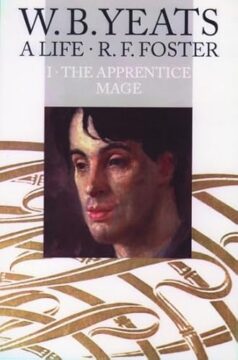 Burying memory and melting into forgetfulness are sometimes necessary conditions for continued coexistence when faced with a history of hatred. This raises the question of why and how a people—or peoples—can nurture animosity. The eighteenth-century lexicographer Dr. Samuel Johnson, who was a good hater, was asked by a friend whether, if he visited Ireland, he would be as hard on the Irish as he had famously been on the Scots. To his interlocutor’s surprise, Johnson forcefully denied that this would be the case. For one thing, he said, while the Irish could annoy you in a teasing way, like a fly, the Scots got at your blood and sucked it, like a leech. And unlike the despised Scots, he retorted, “The Irish are not in a conspiracy to cheat the world by false representations of the merits of their countrymen. No, Sir [he concluded]; the Irish are a fair people—they never speak well of one another.” Johnson’s prejudices were not exercised to the detriment of the Irish; in fact, he rather favored them. He believed that the study of Irish literature should be cultivated and that Ireland’s traditions of piety and learning showed them to have been “both an ancient and an illustrious people.” Above all, Johnson believed that the record of history showed how badly the Irish had been treated by the English, though he did not conclude that this was the reason why they abused
  Since her debut
 No doubt Paul Mescal, playing Shakespeare, wanted to say “To be, or not to be”—what actor wouldn’t want his turn? And it’s not surprising that Hamnet’s director, Chloé Zhao, wanted to include it for general audiences that might not recognize any of the movie’s other Shakespearean lines. But it’s nowhere in Maggie O’Farrell’s 2020 novel on which the movie is based. And here it’s a mistake.
 A few weeks ago, a curious story began circulating among software developers.
  Besides invading other countries, there are other ways to defy international law. The U.S. embargo of Cuba, begun in 1960 and continuing to this day, has caused incalculable suffering. It is flatly, unambiguously illegal. Every year the UN General Assembly votes, virtually unanimously, to require the United States to end it. But Florida’s electoral votes are far more important in Washington than international law. The U.S. embargo of Iran is also illegal—embargoes and blockades are acts of war, which can only be authorized by the Security Council. And every year since 1967, the General Assembly has voted—again near-unanimously—to require Israel to withdraw from the Palestinian territories it has illegally occupied. But thanks to unflagging American support, Israel, too, can ignore international law, on the West Bank and, apocalyptically, in Gaza.
 In a hotel room in Santa Clara, Calif., five members of the AI company Anthropic huddled around a laptop, working urgently. It was February 2025, and they had been at a conference nearby when they received disturbing news: results of a controlled trial had indicated that a soon-to-be-released version of Claude, Anthropic’s AI system, could help terrorists make biological weapons.
 IN 1999, AT THE AGE OF FORTY-THREE, ANTHONY BOURDAIN had all but given up hope that he would ever be recognized as a major talent in anything. For the man who would soon become famous for courting extremes, this mediocrity was a kind of torture. After a promising start at the Culinary Institute of America, he had been working in kitchens of low-to-middling repute for two decades. As a chef, he was merely competent, having spent his early years chasing good money and hard drugs instead of working his way up in high-end kitchens. Still, he was perpetually in debt, getting by largely because he lived in a rent-stabilized apartment on the Upper West Side with the woman he had loved since high school, who kept them out of housing court by flexing the legal knowledge she had absorbed from watching Court TV. Throughout the 1980s, both were heavy heroin users. They had survived low lows (Bourdain selling his record collection on the street) and gotten clean, and now, every year or so, they went to the Caribbean for a Margaritaville vacation. But Bourdain had always thought he would amount to more. In the early ’90s, thanks to a “freakishly lucky break” courtesy of a college friend, Bourdain got a book deal. But his two novels—a murder mystery about an Italian restaurant run by the mob and a crime thriller set in the Caribbean about married expat-assassins—were, in his own words, “spectacularly unsuccessful.”
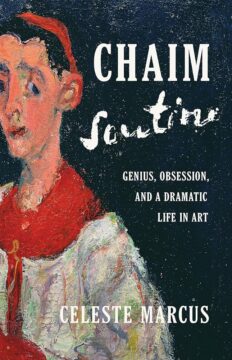 The artist Chaim Soutine was obsessed with Rembrandt’s painting of a flayed and headless ox. After managing at the age of twenty, in 1913, to get from Smilovichi, a shtetl in present-day Belarus, to Paris, Soutine made many visits to the Louvre to study the canvas. In the mid-1920s, he decided to translate it into his own idiom: a voluminous impasto, churning with deep, febrile colours. Where Rembrandt’s hanging carcass is mottled with pale tones indicating where the blood has drained away, Soutine’s reds, oranges and roses appear to be fermenting. It’s less a picture of mortality than of some process in medias res. Interpreters of Rembrandt’s ox often place it in the tradition of memento mori, but Soutine’s picture convulses with what is happening right now.
 “Worship the Lord