
Martin Filler at the NYRB:
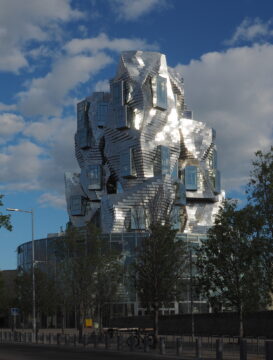
The great liberator of late-twentieth-century architecture, Gehry was a latter-day Alexander who sliced through the Gordian Knot formed by an exhausted Modernism intertwined with a callow Postmodernism. Instead of trying to untangle those two discordant stylistic visions, which wastefully dominated American architectural discourse during the 1970s and 1980s, he showed an exhilarating way forward with freeform designs that drew on advanced contemporary art as their primary source of inspiration. He made the world safe for oddball buildings, and whatever one might think of the idiosyncratic architecture by the generation who followed him—Santiago Calatrava, Zaha Hadid, Daniel Libeskind, Thom Mayne, and their ilk—their careers would be unthinkable without the precedent he set.
Although his dramatic departure from architectural convention was at first confrontational and forbidding, it gradually became more buoyant and embracing. As his clients’ budgets increased and he moved from corrugated metal to shiny titanium, unfinished plywood to polished Douglas fir, and rubber matting to travertine flooring, his architecture lost none of its expressive power and appealed to many who’d found his earlier tough-guy efforts more alienating than audacious.
more here.
Enjoying the content on 3QD? Help keep us going by donating now.