
Muhammad Aurangzeb Ahmad at Digital Dopplegangers:
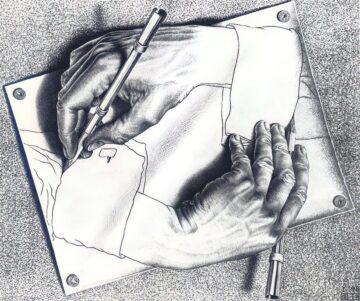 Most current digital doppelgängers, for all practical purposes, are automatons i.e., their behavior is relatively fixed with relatively well defined boundaries. I would argue that this is a feature and not a bug. The fixed nature of the automata is what gives them the feeling of familiarity. Now imagine if we were to take away this assumption and tried to incorporate semblance of some of autonomy in digital doppelgängers. In other words we would be allowing it to evolve and make its own decisions while staying true to the original person that it is based upon. A digital self trained on a person’s emails, messages, journals, and conversations may approximate that person’s style, but approximation is not equivalent to being the same. Over time, the model encounters friction e.g., queries it cannot answer cleanly, emotional tones it cannot reconcile, contradictions it can detect but not resolve. If we let the digital doppelgänger evolve to address these challenges, divergence between the model and the original will start to emerge until one point one is forced to admit that one is no longer dealing with a representation of the same person. What if it not an outsider interlocutor that comes upon this realization but the digital clone itself?
More here.
Enjoying the content on 3QD? Help keep us going by donating now.