One of the most cunning and improbable feats of modern dictatorships

Max Fisher in The Atlantic:

ScreenHunter_02 Oct. 21 20.09In the first few months of 1969, Libya was so filled with rumors that the country's senior military leadership would oust the king in a bloodless coup that, when the coup actually happened on September 1, nobody bothered to check who had led it. A handful of military vehicles had rolled up to government offices and communication centers, quietly shutting down the monarchy in what was widely seen as a necessary and overdue transition. King Idris's government had become so incapable and despised that neither his own personal guard nor the massive U.S. military force then stationed outside Tripoli intervened. Army units around the country, believing that the coup was an implicit order from the military chiefs, quickly secured local government offices. Not a single death was reported; all of Libya, it seemed, had welcomed the military revolution.

It was not until almost a week later that an unknown 27-year-old lieutenant with the army signal corps announced that he and a group of 70 low-level officers had in fact staged the coup. They had, in a sense, faked the senior military takeover that everyone had been expecting. But by then it was too late — the upstarts were already in charge of Libya. The young signal corps lieutenant, a nobody named Muammar al-Qaddafi who'd been raised in a Bedouin tent, had effectively tricked Libya and its powerful Western allies into helping him take over a country he had no business ruling.

More here.

Aamer Hussein on ‘The Cloud Messenger’

From The Paris Review:

Hussein300Though The Cloud Messenger is Aamer Hussein’s first novel, it comes after five collections of stories and a novella, Another Gulmohar Tree. Born in Karachi, Pakistan, but a long-time resident of London, Hussein has dramatized the sorts of encounters between and within cultures that reflect his own facility in seven languages. He writes with intelligent restraint about the experience of displacement, but also the indelible richness of wherever we like to think of as home. The Cloud Messenger draws on his own unsentimental education as a student of Farsi to create a romance about language and the unexpected life that reading and translating can take. Last year, we met to discuss the Granta anthology of writing from and about Pakistan at his home in West London.

Could you begin by explaining your background?

I’m from Karachi, third-generation in almost an accidental way, because both my grandfather and father were born there, even though they hadn’t lived there very much until after partition because of certain historical … mishaps, you might say. My mother is from Northern India and from a much more traditional family, although her father was an academic. My own background is very mixed, but all my education was English until I left Pakistan. At the same time, both languages were spoken at home and both parents were practicing believers. Yet we had no sense of confusion about our belonging. It was only when we left the country that we realized how Western we were.

More here. (Note: Both Another Gulmohar Tree and The Cloud Messenger are exquisite books!)

When Gertrude Stein Toured America

From Smithsonian:

Gertrude-Stein-in-Bilignin-631When people envision the life and times of Gertrude Stein, it is often in the context of 1920s Paris. Her home at 27 rue de Fleurus was a fabulously bohemian outpost, where she, Pablo Picasso, Henri Matisse and writers, including Ernest Hemingway and F. Scott Fitzgerald, discussed the merits of art. It was the type of salon that makes writers, artists and historians swoon, “If only I were a fly on the wall.” Perhaps that is why Woody Allen transports his time-traveling character there in his latest film, Midnight in Paris. Gil, a modern-day Hollywood screenwriter portrayed by Owen Wilson, asks Stein (with Kathy Bates in the role) to read his fledgling novel.

The story of the writer’s “salon years” is a familiar one, after all. Stein popularized that interlude in her most successful book, The Autobiography of Alice B. Toklas. But it is entirely fresh stories, as relayed by Wanda M. Corn, a leading authority on Stein, that we encounter in the Stanford art historian’s “Seeing Gertrude Stein: Five Stories,” an exhibition at the Smithsonian’s National Portrait Gallery on view through January 22.

More here. (Note: I just read The Autobiography of Alice B. Toklas and it is extremely good and extremely funny!)

Thursday, October 20, 2011

Secularism: Its Content and Context

Power-of-Religion-200x300Akeel Bilgrami over at The Immanent Frame. (The post is an excerpt from a longer SSRC Working Paper.)

If secularism has its relevance only in context, then it is natural and right to think that it will appear in different forms and guises in different contexts. But I write down these opening features of secularism at the outset because they seem to me to be invariant among the different forms that secularism may take in different contexts. It is hard to imagine that one hasn’t changed the subject from secularism to something else, something that deserves another name, if one finds oneself denying any of the features that I initially list below. Though I say this is ‘hard to imagine,’ I don’t mean to deny that there is a strong element of stipulation in these initial assertions to come. I can’t pretend that these are claims or theses about some independently identified subject matter—as if we all know perfectly well what we are talking about when we speak of secularism—and the question is only about what is true of that agreed upon concept or topic. The point is rather to fix the concept or topic. But, on the other hand, such talk of ‘fixing’ should not give the impression that it is a matter of free choice, either. Once the initial terminological points about ‘secularism’ are made, the goal of the rest of the paper will be to show why they are not arbitrary stipulations. So the reader is urged to be unreactive about these initial topic-setting assertions until the dialectic of the paper is played out.

First, secularism is a stance to be taken about religion. At the level of generality with which I have just described this, it does not say anything very specific or precise. The imprecision and generality have two sources. One obvious source is that religion, regarding which it is supposed to take a stance, is itself, notoriously, not a very precise or specifically understood phenomenon. But to the extent that we have a notion of religion in currency—however imprecisely elaborated—‘secularism’ will have a parasitic meaning partially elaborated as a stance regarding whatever that notion stands for. Should we decide that there is no viability in any notion of religion, and should the notion pass out of conceptual currency, secularism too would lapse as a notion with a point and rationale. The other source of imprecision is that I have said nothing specific or precise about what sort of stance secularism takes towards religion. One may think that it has to be in some sense an adversarial stance since surely secularism, in some sense, defines itself against religion. This is true enough, but still the very fact that I find the need to keep using the qualifier ‘in some sense’ makes clear that nothing much has been said about the kind of opposing stance this amounts to. Part of the point of this essay is to add a little precision to just this question.

Second, for all this generality just noted, ‘secularism’—unlike ‘secular’ and ‘secularization’—is quite specific in another regard. It is the name of a political doctrine.

Libertarianism and Liberty: How Not to Argue for Limited Government and Lower Taxes

Scanlon_36.5_libertyThomas Scanlon discusses libertarianism in the Boston Review. Brad DeLong and Will Wilkinson comment (with a response from Scanlon). Scanlon:

Libertarianism presents itself as a simple, clear, and principled view. It appears to provide a moral basis, in the value of individual liberty, for a specific political program of limited government and low taxes. The moral significance of liberty seems obvious even to those who believe it is not the only thing that matters. But the claim of the libertarian political program to be founded on this value is illusory. Three lines of thought lead to conclusions that might be seen as libertarian. But none of these shows that respect for the value of individual liberty should lead one to support the political program of low taxes and limited government that libertarians are supposed to favor.

One route to libertarian conclusions appeals to an idea of productive efficiency. As Hayek argued, the market is, in an important range of cases, a more efficient mechanism for deciding what to produce than decisions by any central planner. This is so for two reasons. The first is the flow of information: no planner could acquire information about what consumers want to buy as efficiently as the market does. The second is capture by interests: decisions by state-owned industries are likely to be guided by the interests of those who run or work in those industries rather than by the goal of efficient overall production. Where they apply, these arguments are powerful. As recent financial crises show, however, these considerations do not lead to the conclusion that government regulation is always a bad thing. And even Hayek would not deny that government intervention is needed in the case of externalities such as pollution and climate change. The considerations just mentioned provide some guidance about how to deal with these problems, but they provide no reason for thinking that they should be dealt with by simply leaving it to the market.

Pierangelo Garegnani, 1930-2011

GaregnaniOne of the principal figures in the Capital Controversy has passed away. Over at Naked Keynesianism:

Last weekend Pierangelo Garegnani passed away in Rome. He was the main disciple of Piero Sraffa, and one of the most important heterodox critics of the mainstream marginalist (neoclassical) approach. A full account of his contributions to economics is well beyond what I can offer in this space, but here are a few highlights.

As early as 1961, while spending an academic year at MIT, he suggested during a presentation by Paul Samuelson that his results depended on the assumption that all sectors use the same capital-labor ratio. The final results of his critique were presented in Garegnani's paper “Heterogeneous Capital, the Production Function and the Theory of Distribution.” His paper shows conclusively that the marginalist theory of value and distribution based on an aggregate production function is untenable. This of course builds on Sraffa's work in the Production of Commodities (PC). By 1966, in the famous Quarterly Journal of Economics (QJE) Symposium, Samuelson had admitted that the neoclassical parable was not defensible.

Is the Brain Good at What It Does?

Christopher Chabris in the New York Times Book Review:

ScreenHunter_06 Oct. 20 16.40The human brain gets a lot of press these days, but not all the publicity has been good. Its reviews are reminiscent of Barack Obama’s during the 2008 presidential campaign, when one side said he was a socialist Muslim foreigner and the other thought he was a savior from on high. To its detractors, the brain is a kludge, a hacked-up device beset with bugs, biases and self-­deceptions that undermine our decision making and well-being at every turn. To its admirers, it contains vast potential we can all unlock to improve our lives, thanks to “neural plasticity” that enables the adult nervous system to change in more dramatic ways than previously thought. Lately, a growing army of Chicken Littles retorts that this very plasticity has been hijacked by the Internet and other forms of technological crack that are rewiring our brains into a state of continual distraction and intellectual torpor.

The “your brain, warts and more warts” genre is well represented by the new book “Brain Bugs: How the Brain’s Flaws Shape Our Lives,” by Dean Buonomano, a neuroscientist at U.C.L.A. He takes readers on a lively tour of systematic biases and errors in human thinking, citing examples that are staples of psychology courses and other popular books. What is new, however, is Buonomano’s focus on the mechanisms of memory, especially its “associative architecture,” as the main causes of the brain’s bugs.

More here.

Jamil Ahmad: The Wandering Falcon

The book has been described as “one of the finest collections of short stories to come out of South Asia in decades”.

From The Express Tribune:

ScreenHunter_05 Oct. 20 16.03A retired civil servant nearing 80 may not sound like the most obvious debut author to take the international publishing world by storm, but Jamil Ahmad has done precisely that.

Over a cup of tea and a glass of lime juice, he talked about a career as an administrator along Pakistan’s desolate borders with Afghanistan and Iran, and how he turned those memories into a book that has earned rave reviews.

“The Wandering Falcon”, published this month, captures the raw romance of Pakistan’s wildest terrain — associated today in the West with Taliban lairs and Al-Qaeda terror plots.

Seduced by tales of “cowboys and Indians” as a schoolboy, Ahmad quickly developed a lifelong passion for the tribal way of life in Balochistan and the tribal areas along the Afghan border in the northwest.

He joined the civil service in 1954 and later became commissioner of Swat and Waziristan. He served at the embassy in Kabul from 1978 to 1980, a crucial time for both Afghanistan and Pakistan, coinciding with the Soviet invasion of the former.

When he showed his German wife Helga some poetry, she dismissed it as “rubbish” and told him to write about something he knew — namely, the tribal way of life. The result was a manuscript finished in 1974 and tucked away in a drawer.

More here.

Julian Barnes – quotes on literature

From The Telegraph:

Julian_barnes_2030375b“Books say: She did this because. Life says: She did this. Books are where things are explained to you; life is where things aren't. I'm not surprised some people prefer books. Books make sense of life. The only problem is that the lives they make sense of are other people's lives, never your own.” (Flaubert’s Parrot)

“The greatest patriotism is to tell your country when it is behaving dishonorably, foolishly, viciously.” (Flaubert’s Parrot)

“The writer must be universal in sympathy and an outcast by nature: only then can he see clearly.” (Flaubert’s Parrot)

“The first draft is fraught with difficulty. It’s like giving birth, very painful, but after that taking care of and playing with the baby is full of joy.” (Interview, Paris Review)

“(Literature is) a process of producing grand, beautiful, well-ordered lies that tell more truth than any assemblage of facts. Beyond that, literature is many things, such as delight in, and play with, language; also, a curiously intimate way of communicating with people whom you will never meet.

“And being a writer gives you a sense of historical community, which I feel rather weakly as a normal social being living in early twenty-first-century Britain. For example, I don’t feel any particular ties with the world of Queen Victoria, or the participants of the Civil War or the Wars of the Roses, but I do feel a very particular tie to various writers and artists who are contemporaneous with those periods and events.” (Interview, Paris Review)

More here.

Can you inherit a long life?

From MSNBC:

BugParents may be passing more to their offspring than their DNA. A new study shows some worms pass along non-genetic changes that extend the lives of their babies up to 30 percent. Rather than changes to the actual genetic code, epigenetic changes are molecular markers that control how and when genes are expressed, or “turned on.” These controls seem to be how the environment impacts a persons' genetic nature. For instance, a recent study on diet showed that what a mouse's parents ate affected the offspring's likelihood of getting cancer. Studies in humans have suggested that if your paternal grandfather went hungry, you are at a greater risk for heart disease and obesity.

The new study's results “could potentially suggest that whatever one does during their own life span in terms of environment could have an impact on the lives of their descendents,” study researcher Anne Brunet, of Stanford University, told LiveScience. “This could impact how long the organism lives, even though it doesn't affect the genes themselves.” The study was conducted in the model organism C. elegans, a small, wormlike nematode often used in experiments as a stand-in for humans because of their genetic similarities. Even so, the researchers aren't sure how their results would apply to human life span. They are currently studying fish and mice to see if their findings hold true in different species.

More here.

Wednesday, October 19, 2011

OWS: The search for a message

Mary Elizabeth King in Waging Nonviolence:

WDOu1As the Occupy Wall Street (OWS) phenomenon grows, it has been expressing many truths, even while struggling to find a single over-arching message. The search for captions, slogans, and themes that illuminate the changes sought is characteristic of civil resistance campaigns. This is not merely branding, but a way to sharpen the concrete results that can result from such a dramatic outpouring of human aspiration, emotion, energy, protest, and yearning. Some observers have grown impatient with the evolving messaging coming out of OWS, but, historically, slogans have often changed as a campaign proceeds.

In East Germany in 1989, with 13 consecutive Monday-night demonstrations in Leipzig from September 25 to December 18, the largest public assemblies in German history occurred. Surges of demonstrators carrying candles flowed from the Protestant churches of Leipzig and other cities, bidding the government to reform and liberalize. Five million East German citizens eventually participated in these candlelit marches, exerting immense political pressure that led to the crumbling of the communist regime. Throughout that autumn, as I have written elsewhere, the slogan-writers adapted their messages to reflect the changing popular sentiments. In November, chants went from “We want to leave” to “We are staying here.” Other calls asked for popular sovereignty: “We are the people!” (Wir sind das Volk). Eventually, as the hoped-for reunification of East and West Germany increasingly became a possibility, the painted signs proclaimed of the two Germanys, “We are one people!” (Wir sind ein Volk).

More here.

Notes From a Dragon Mom

Emily Rapp in the New York Times:

DRAGON-articleLargeMy son, Ronan, looks at me and raises one eyebrow. His eyes are bright and focused. Ronan means “little seal” in Irish and it suits him.

I want to stop here, before the dreadful hitch: my son is 18 months old and will likely die before his third birthday. Ronan was born with Tay-Sachs, a rare genetic disorder. He is slowly regressing into a vegetative state. He’ll become paralyzed, experience seizures, lose all of his senses before he dies. There is no treatment and no cure.

How do you parent without a net, without a future, knowing that you will lose your child, bit by torturous bit?

Depressing? Sure. But not without wisdom, not without a profound understanding of the human experience or without hard-won lessons, forged through grief and helplessness and deeply committed love about how to be not just a mother or a father but how to be human.

More here.

What possible motive does Islamabad have for supporting Afghanistan’s bloody insurgency?

John R. Schmidt in Foreign Policy:

Pakistan_12Secretary of State Hillary Clinton is headed to Islamabad this week for what U.S. officials are billing as a last-ditch effort to patch up ties with Pakistan and urge the country's ruling generals to crack down on the Haqqani network, an Afghan insurgent group based in Pakistan's tribal areas that Washington is increasingly putting on par with al Qaeda and the Taliban as a threat to the United States.

The recent drumbeat of stories about the Haqqanis began when Adm. Mike Mullen, then the chairman of the Joint Chiefs of Staff, called the Haqqanis “a veritable arm of Pakistan's Inter-Services Intelligence agency.” Although less frequently mentioned, the Pakistanis are also providing sanctuary to the other main Afghan Taliban group, Taliban leader Mullah Omar's Quetta Shura, based in Baluchistan province to the south. But very little has been written about why the Pakistanis support these groups. What possible motive, after all, could they have for supporting forces that are engaged in a nasty guerrilla war against their ostensible American allies in Afghanistan? The reason is simple: The Pakistanis fear that if these Taliban forces are defeated, the United States will abandon the country, leaving behind what they believe will be a hostile Afghan government allied to their mortal enemy, India. And if Clinton fails to understand this dynamic, the latest bid to salvage what's left of U.S.-Pakistani ties will end in failure.

More here.

Booker prize 2011: Julian Barnes triumphs at last

From Guardian:

-Julian-Barnes-007Julian Barnes finally won the literary prize that has eluded him on three previous occasions when he was tonight presented with the Man Booker prize for his short novel, The Sense of an Ending.

His victory came after one of the most bitter and vituperative run-ups to the prize in living memory – not among the shortlisted writers, but from dismayed and bemused commentators who accused judges of putting populism above genuine quality. But few of those critics could claim Barnes' novel is not of the highest quality. The chair of this year's judges, former MI5 director general Stella Rimington, said it had “the markings of a classic of English Literature. It is exquisitely written, subtly plotted and reveals new depths with each reading.” Much of the row over the shortlist has stemmed from Rimington's own prioritisation of “readability” in the judging criteria. But tonight, she said quality had always been just as important. “It is a very readable book, if I may use that word, but readable not only once but twice and even three times,” she said. “It is incredibly concentrated. Crammed into this short space is a great deal of information which you don't get out of a first read.”

More here.

Dinner and Derangement

Frank Bruni in The New York Times:

Bruni_new-articleInline-v2During thousands of elaborate restaurant meals over dozens of piggy years, I’ve received many exacting, even loopy, instructions. I’ve been prodded to dab a special scent on my wrist before savoring my salad. To proceed through the five microscopic canapés before me from left to right, as if they were words in a sentence that would lose all meaning if scrambled. To exhale a particular way as I chewed an avant-garde popcorn cluster so that the smoke inside it billowed from my nostrils. Romera New York is the first restaurant where I was told to “make a memory” of my water. Romera is Manhattan’s newest culinary oddity, an elegant hideaway whose conceits include the pairing of each dish in an 11-course meal with a lukewarm flavored water in a lidded grappa glass. One water might be infused with leek and radish, another with jasmine and dried seaweed. Most taste like indecisive teas, commitment-phobic broths or pond runoff. “Feel free to smell them,” said a server, as if I might otherwise feel jailed. “And to taste them.” He paused. “Make a memory of them.”

While blazers are optional at Romera, straitjackets would be a fine idea.

It’s the craziest example I’ve encountered of the way our culture’s food madness tips into food psychosis, at least among those with keen appetites and the means to indulge them. But it’s hardly the only illustration. Surf the cable channels and clock the time before you spy a spatula, a strainer, someone chewing, someone oohing or Gordon Ramsay. I bet it’s less than 11 seconds. Diners at the latest hot bistro or trattoria snap loving pictures of everything they eat, seeming to forget that it’s dinner, not “America’s Next Top Chicken Breast.” In New York, even the meatballs have paparazzi. Steaks come with discourses on breed, feed and dry versus wet aging; coffee with soliloquies about growing regions, grinding methods and the optimal pour-over technique; beer with overwrought tasting notes. We’ve tumbled far, far down the organic rabbit hole. And with Romera, which opened a month ago in Chelsea, we may have finally hit bottom.

More here.

“We Are Moving in a More Humanitarian Direction”: An Interview with Philosopher Peter Singer (Full Text and Video)

Matthew Bieber in The Wheat and the Chaff:

Peter Singer is perhaps the world’s most influential philosopher and the Ira W. DeCamp Professor of Bioethics at Princeton University. In late August, I sat down with him to discuss his most recent book, The Life You Can Save.

At the outset of your recent book, The Life You Can Save, you lay out two goals: to challenge readers to think about their obligations to those trapped in extreme poverty, and to convince readers to choose to give more of their income to help the poor.

What do you mean by extreme poverty?

Well, when I talk about extreme poverty, I use the definition that the World Bank has, which is really based on people having enough income to meet their basic needs for food, shelter, and maybe to educate their children, or some very minimal, basic healthcare.

The World Bank has calculated that in order to do that, you need to have the purchasing power equivalent in your local currency of US $1.25. So, we’re really talking about people who have less than what you can buy for $1.25 in the United States. It’s not what you would get for US $1.25 if you went to a bank in Mozambique or Mauritania. It’s what would have the same purchasing power in those local currencies as $1.25 has in the United States, and that’s what you have to live on for a day. If you have less than that, the World Bank classifies you as being extremely poor.

More here.  And here’s the video:

Wednesday Poem

The Couple

They turn the light off, and its white globe glows
an instant and then dissolves, like a tablet
in a glass of darkness. Then a rising.
The hotel walls shoot up into heaven’s darkness.

Their movements have grown softer, and they sleep,
but their most secret thoughts begin to meet
like two colors that meet and run together
on the wet paper in a schoolboy’s painting.

It is dark and silent. The city however has come nearer
tonight. With its windows turned off. Houses have come.
They stand packed and waiting very near,
a mob of people with blank faces.

by Tomas Tranströmer
from 20 Poems by Tomas Tranströmer
Translated by Robert Bly
Seventies Press (1970)

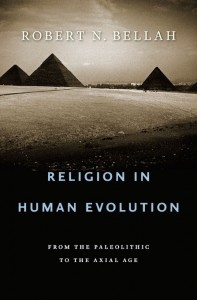
the roots of religion

Bellah_jacket

RB: I have found that the very mention of the words “religion” and “evolution” sets off a kind of reflex reaction among some, but fortunately not all, contemporary Americans. Among both religious fundamentalists and what might be called atheistic fundamentalists these terms set off a war to the death, with abusive language directed toward the supposed opposition. In that kind of atmosphere any rational discussion becomes impossible. What unites these two groups is the idea that religion and science are essentially the same thing: sets of propositional truths that can be judged in terms of argument and evidence. What surprised me when I began to read the work of leading scientists in the fields of cosmology and evolution is how many of them rejected this idea and argued instead that science and religion are really two different spheres that may at points overlap but that operate in accordance with different logics. Science operates with scientific method in terms of which different theories can be tested and proved or disproved, though if Karl Popper is right, proof is always problematic and we are safer to stick to disproof. Religion on the other hand is a way of life more than a theory. It is based on beliefs that science can neither prove nor disprove. Its “proof” is the kind of person the religious way of life produces.

more from the Robert Bellah interview at Big Questions here.

Hats Off to (Roy) Harper

51VnflC2IUL._SL500_AA300_

In 1970, shortly before the release of Led Zeppelin III, guitarist Jimmy Page invited his folk-singing chum Roy Harper up to his Oxford Street offices to have a look at the new album. ‘What do you think?’ asked Page. ‘It’s nice,’ replied Harper, toying with the amusing picture wheel built into the sleeve. ‘Look at it!’ said Page. ‘Yes, it’s nice,’ said Harper. ‘No. Look at it!’ said Page, growing exasperated. And then Harper noticed the title of track five, side two. ‘Oh. Oh! Thanks! I don’t know what to say.’ And this is the reason I’m sitting here with Harper 41 years on, in a café near Paddington station. As a long-standing Led Zep fan, I’d often wondered about the identity of the man namechecked in that song title ‘Hats Off to (Roy) Harper’. Just how good is his music? Can he really have been that important and influential? Now here’s my chance to find out.

more from James Delingpole at The Spectator here.