The Crises of Democratic Capitalism

3050102Wolfgang Streeck in New Left Review:

The collapse of the American financial system that occurred in 2008 has since turned into an economic and political crisis of global dimensions. How should this world-shaking event be conceptualized? Mainstream economics has tended to conceive society as governed by a general tendency toward equilibrium, where crises and change are no more than temporary deviations from the steady state of a normally well-integrated system. A sociologist, however, is under no such compunction. Rather than construe our present affliction as a one-off disturbance to a fundamental condition of stability, I will consider the ‘Great Recession’ and the subsequent near-collapse of public finances as a manifestation of a basic underlying tension in the political-economic configuration of advanced-capitalist societies; a tension which makes disequilibrium and instability the rule rather than the exception, and which has found expression in a historical succession of disturbances within the socio-economic order. More specifically, I will argue that the present crisis can only be fully understood in terms of the ongoing, inherently conflictual transformation of the social formation we call ‘democratic capitalism’.

Democratic capitalism was fully established only after the Second World War and then only in the ‘Western’ parts of the world, North America and Western Europe. There it functioned extraordinarily well for the next two decades—so well, in fact, that this period of uninterrupted economic growth still dominates our ideas and expectations of what modern capitalism is, or could and should be. This is in spite of the fact that, in the light of the turbulence that followed, the quarter century immediately after the war should be recognizable as truly exceptional. Indeed I suggest that it is not the trente glorieuses but the series of crises which followed that represents the normal condition of democratic capitalism—a condition ruled by an endemic conflict between capitalist markets and democratic politics, which forcefully reasserted itself when high economic growth came to an end in the 1970s. In what follows I will first discuss the nature of that conflict and then turn to the sequence of political-economic disturbances that it produced, which both preceded and shaped the present global crisis.

Walk-Through-Wall Effect Might Be Possible With Humanmade Object

Sn-tunneling-thumb-200xauto-11637Nathan Collins in Science Now:

If you've ever tried the experiment, you know you can't walk through a wall. But subatomic particles can pull off similar feats through a weird process called quantum tunneling. Now, a team of physicists says that it might just be possible to observe such tunneling with a larger, humanmade object, though others say the proposal faces major challenges.

If successful, the experiment would be a striking advance toward fashioning mechanical systems that behave quantum mechanically. In 2010, physicists took a key first step in that direction by coaxing a tiny object into states of motion that can be described only by quantum mechanics. Tunneling would be an even bigger achievement.

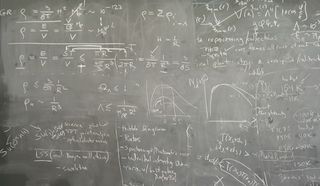
So how does quantum tunneling work? Imagine that an electron, for example, is a marble sitting in one of two depressions separated by a small hill, which represent the effects of a sculpted electric field. To cross the hill from one depression to the other, the marble needs to roll with enough energy. If it has too little energy, then classical physics predicts it can never reach the top of the hill and cross over it.

Tiny particles such as electrons, however, can still make it across even if they don't have enough energy to climb the hill. Quantum physics describes such particles as extended waves of probability—and it turns out that there is a probability that one of them will “tunnel” through the hill and suddenly materialize in the other depression, even though the electron can't occupy the high ground between the two low spots.

It sounds unlikely, but scientists and engineers have amply demonstrated quantum tunneling in semiconductors in which electrons tunnel through nonconducting layers of material.

Slavoj Zizek and Harum Scarum

Hamid Dabashi in Al Jazeera:

In Gene Nelson's “Harum Scarum” (1965), featuring Elvis Presley as the Hollywood heartthrob Johnny Tyronne, we meet the action movie star travelling through the Orient while promoting his new film, “Sands of the Desert”. Upon arrival, however, Elvis Presley/Johnny Tyronne is kidnapped by a gang of assassins led by a temptress “Oriental” named Aishah, who wish to hire him to carry out an assassination. Emboldened by proper “Western virtues”, Elvis will do no such thing and manages to sing and dance his way out of the way of the conniving “Orientals”.

In an interview with Al Jazeera, Slavoj Zizek, the Slovenian philosopher, made a rather abrupt staccato observation – a hit-and-run strike worthy of an action hero – very much reminiscent of the fate of Elvis Presley and his Oriental sojourn:

“I think today the world is asking for a real alternative. Would you like to live in a world where the only alternative is either anglo-saxon neoliberalism or Chinese-Singaporean capitalism with Asian values? I claim if we do nothing we will gradually approach a kind of a new type of authoritarian society. Here I see the world historical importance of what is happening today in China. Until now there was one good argument for capitalism: sooner or later it brought a demand for democracy … What I'm afraid of is, with this capitalism with Asian values, we get a capitalism much more efficient and dynamic than our western capitalism. But I don't share the hope of my liberal friends – give them ten years [and there will be] another Tiananmen Square demonstration – no, the marriage between capitalism and democracy is over.”

What precisely are these “Asian values,” when uttered by an Eastern European, we Asians of one sort or another may wonder? Did capitalism really have to travel all the way to China and Singapore (as Elvis did to the Orient) to lose all its proper Western virtues (and what exactly might they be) and become corrupted (or indeed carry its destructive forces to its logical conclusions)? So, are we to believe, when it flourishes in “the West”, capitalism flowers in democracy and when it assumes “Asian values” it divorces that virtue and becomes a promiscuous monster?

Elvis Presley indeed. Let us rescue capitalism from that treacherous Aishah and her Asian values and have it go back to his Western virtues.

What Zizek is warning the world against is capitalism with its newly acquired “Asian values”, as distinct from what he calls “our [his] Western capitalism”, he insists, obviously adorned with “Western virtues” – which promiscuity has already resulted in decoupling the happily-ever-after marriage of capitalism and democracy.

Tuesday, November 29, 2011

Richard Rhodes explores Hedy Lamarr’s other career

Sam Kean in Slate:

111117_BOOK_hedy_lamarr_jpg_CROP_article250-mediumImagine that, on Sept. 12, 2001, an outraged Angelina Jolie had pulled out a pad of paper and some drafting tools and, all on her own, designed a sophisticated new missile system to attack al-Qaida. Now imagine that the design proved so innovative that it transcended weapons technology, and sparked a revolution in communications technology over the next half-century.

Believe it or not, this essentially happened to Hedy Lamarr. Often proclaimed “the most beautiful woman in the world,” the 26-year-old Lamarr was thriving in Hollywood when, in mid-September 1940, Nazi U-boats hunted down and sank a cruise ship trying to evacuate 90 British schoolchildren to Canada. Seventy-seven drowned in the bleak north Atlantic. Lamarr, a Jewish immigrant from Nazi-occupied Austria, was horrified. She decided to fight back, but instead of the usual celebrity posturing, she sat down at a drafting table at home and sketched out a revolutionary radio guidance system for anti-submarine torpedoes.

This unlikely tale is the subject of Richard Rhodes’ new book, Hedy’s Folly. Compared to his other works, like the magisterial (and quite hefty) The Making of the Atomic Bomb, this book breezes by in 272 chatty pages. Rhodes succeeds in the most vital thing—capturing the spirit of a willful woman who wanted recognition for more than her pretty face—but he skims over the deeper questions that Lamarr’s life story raises about the nature of creative genius.

More here.

Occupation as Fairness

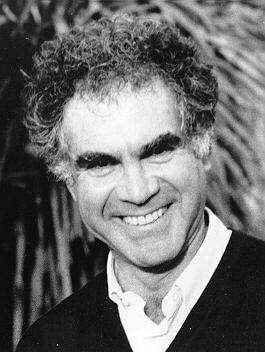
Cohen_36.6_flagJoshua Cohen and Seth Resler in The Boston Review:

Seth Resler: John Rawls’s magnum opus is A Theory of Justice, published in 1971. Let’s talk about what the theory actually is. It has its own name, which is “justice as fairness,” and there are two principles involved. Tell me about them.

Joshua Cohen: A Theory of Justice defends two principles of justice. The first principle is an expression of what we conventionally refer to in the United States as liberal ideas about liberty. The idea is that everyone is entitled to equal fundamental liberties including political liberty, freedom to participate in the political process, religious liberty, freedom of speech and association, freedoms associated with the rule of law—including protection of bodily integrity. Rawls says that principle has priority. That’s the first principle of the theory. We’ll call it the Liberty Principle.

The second principle has two parts, and because it has two parts it is a little more complicated than the first one. The first part of the second principle provides a way to think about equality of opportunity. The idea is that where you end up shouldn’t depend on where you start out, that your birth should not fix your fate. A little more precisely, it says that if you take two people who are equally motivated and equally able, their chances in life should not depend on differences in their social backgrounds. Your chances in life shouldn’t depend on your class background, your family background, the neighborhood you grow up in; they should depend on what you’re able to do and what you’re motivated to do. So, equally able and equally motivated, you have equal chances. That is Equality of Fair Opportunity.

The Debated Truth About the Crackdown on Occupy

Brandon-Watts-lies-injure-007Naomi Wolf in The Guardian:

US citizens of all political persuasions are still reeling from images of unparallelled police brutality in a coordinated crackdown against peaceful OWS protesters in cities across the nation this past week. An elderly woman was pepper-sprayed in the face; the scene of unresisting, supine students at UC Davis being pepper-sprayed by phalanxes of riot police went viral online; images proliferated of young women – targeted seemingly for their gender – screaming, dragged by the hair by police in riot gear; and the pictures of a young man, stunned and bleeding profusely from the head, emerged in the record of the middle-of-the-night clearing of Zuccotti Park.

But just when Americans thought we had the picture – was this crazy police and mayoral overkill, on a municipal level, in many different cities? – the picture darkened. The National Union of Journalists and the Committee to Protect Journalists issued a Freedom of Information Act request to investigate possible federal involvement with law enforcement practices that appeared to target journalists. The New York Times reported that “New York cops have arrested, punched, whacked, shoved to the ground and tossed a barrier at reporters and photographers” covering protests. Reporters were asked by NYPD to raise their hands to prove they had credentials: when many dutifully did so, they were taken, upon threat of arrest, away from the story they were covering, and penned far from the site in which the news was unfolding. Other reporters wearing press passes were arrested and roughed up by cops, after being – falsely – informed by police that “It is illegal to take pictures on the sidewalk.”

Corey Robin responds:

On Friday, Naomi Wolf made the attention-grabbing accusation in the Guardian that federal officials were involved in, indeed ordered, the violent crackdowns against Occupy Wall Street protesters that we’ve been seeing across the country these past few weeks.

Congressional overseers, with the blessing of the White House, told the DHS [Department of Homeland Security] to authorise mayors to order their police forces – pumped up with millions of dollars of hardware and training from the DHS – to make war on peaceful citizens.

The next day, Joshua Holland debunked Wolf’s claims on Alternet.

I don’t have anything to add to Holland’s excellent critique. Wolf gets her facts wrong, and he shows it.

To my mind, though, the problem is bigger than that: The reason Wolf gets her facts wrong is that she’s got her theory wrong. And though many were quick to jump off her conspiracy bandwagon once Holland pointed out its flaws, I suspect that one of the reasons they were so quick to jump on it in the first place is that they subscribe to her theory.

Why Marriage is a Declining Option for Modern Women

Kate-bolick-007Kate Bolick in The Observer:

For thousands of years, marriage had been a primarily economic and political contract between two people, negotiated and policed by their families, church and community. It took more than one person to make a farm or business thrive, and so a potential mate's skills, resources, thrift and industriousness were valued as highly as personality and attractiveness. This held true for all classes. In the American colonies, wealthy merchants entrusted business matters to their landlocked wives while off at sea, just as sailors, vulnerable to the unpredictability of seasonal employment, relied on their wives' steady income as domestics in elite households. Two-income families were the norm.

Not until the 18th century did labour begin to be divided along a sharp line: wage-earning for the men and unpaid maintenance of household and children for the women. Coontz notes that as recently as the late 17th century, women's contributions to the family economy were openly recognised, and advice books urged husbands and wives to share domestic tasks. But as labour became separated, so did our spheres of experience – the marketplace versus the home – one founded on reason and action, the other on compassion and comfort. Not until the postwar gains of the 1950s, however, were a majority of American families able to actually afford living off a single breadwinner.

All of this was intriguing, for sure – but even more surprising to Coontz was the realisation that those alarmed reporters and audiences might be on to something. Coontz still didn't think that marriage was falling apart, but she came to see that it was undergoing a transformation far more radical than anyone could have predicted, and that our current attitudes and arrangements are without precedent. “Today we are experiencing a historical revolution every bit as wrenching, far-reaching, and irreversible as the Industrial Revolution,” she wrote.

Last summer I called Coontz to talk to her about this revolution. “We are without a doubt in the midst of an extraordinary sea change,” she told me. “The transformation is momentous – immensely liberating and immensely scary. When it comes to what people actually want and expect from marriage and relationships, and how they organise their sexual and romantic lives, all the old ways have broken down.”

Giving thanks for error bars

Sean Carroll in Cosmic Variance:

FileStandard_deviation_diagramError bars are a simple and convenient way to characterize the expected uncertainty in a measurement, or for that matter the expected accuracy of a prediction. In a wide variety of circumstances (though certainly not always), we can characterize uncertainties by a normal distribution — the bell curve made famous by Gauss. Sometimes the measurements are a little bigger than the true value, sometimes they’re a little smaller. The nice thing about a normal distribution is that it is fully specified by just two numbers — the central value, which tells you where it peaks, and the standard deviation, which tells you how wide it is. The simplest way of thinking about an error bar is as our best guess at the standard deviation of what the underlying distribution of our measurement would be if everything were going right. Things might go wrong, of course, and your neutrinos might arrive early; but that’s not the error bar’s fault.

Now, there’s much more going on beneath the hood, as any scientist (or statistician!) worth their salt would be happy to explain. Sometimes the underlying distribution is not expected to be normal. Sometimes there are systematic errors. Are you sure you want the standard deviation, or perhaps the standard error? What are the error bars on your error bars?

More here.

the suffering of the vegetables

15318_420789977847_538727847_5357287_3545709_n

Sir Jagadish Chandra Bose, the aforementioned carrot vivisector, was a serious man of science. Born in what is today Bangladesh in 1858, Bose was a quintessential polymath: physicist, biologist, botanist, archaeologist. He was the first person from the Indian subcontinent to receive a U.S. patent, and is considered one of the fathers of radio science, alongside such notables as Tesla, Marconi, and Popov. He was elected Fellow of the Royal Society in 1920, becoming the first Indian to be honored by the Royal Society in the field of science. It’s clear that Sir Jagadish Chandra Bose was a scientist of some weight. And, like many scientists of weight, he has become popularly known for his more controversial pursuits — in Bose’s case, his experiments in plant physiology. Perhaps it was his work in radio waves and electricity that inspired Bose’s investigations into what we might call the invisible world. Bose strongly felt that physics could go far beyond what was apparent to the naked eye. Around 1900, Bose began his investigations into the secret world of plants. He found that all plants, and all parts of plants, have a sensitive nervous system not unlike that of animals, and that their responses to external stimuli could be measured and recorded. Some plant reactions can be seen easily in sensitive plants like the Mimosa, which, when irritated, will react with the sudden shedding or shrinking of its leaves. But when Bose attached his magnifying device to plants from which it was more difficult to witness a response, such as vegetables, he was astounded to discover that they, too, became excited when vexed. All around us, Bose realized, the plants are communicating. We just don’t notice it.

more from Stefany Anne Golberg at The Smart Set here.

on the American way of death

Tumblr_lvaf00DUTj1qhwx0o

There are, in other words, two aspects to the phenomenon of death. On the one hand, there is death itself — immutable, the single certainty all of us face, unchanging as it has always been. On the other hand, though, is how we living face the death of others, which is constantly changing, composed of ritual, emotion, and something that each culture and each generation must define — and redefine — for itself. Our current culture seems generally uncomfortable with facing the prospect of mourning, and even more uncomfortable with the dead body itself. Only nine days after the attacks of September 11, 2001, George W. Bush forcefully declared that it was time to turn grief into action, attempting to foreclose any extended period of public mourning period. And personal losses aren’t much different; half a century ago, Jessica Mitford’s The American Way of Death laid bare the amount of chemicals, makeup, and money we waste in order to give death a pleasant, less death-like appearance. Death is a thing to be acknowledged but not dwelled on, not faced head-on.

more from Colin Dickey at the LA Review of Books here.

ken russell (1927-2011)

10-Ken-Russell-1-REX

It is the commonplace fate of British cinema’s more visionary talents to end their careers marginalised and even mocked. This was certainly what happened to Ken Russell, who has died aged 84. In his latter years, with his shock of white hair and his red face, the director cut a cantankerous and slightly buffoonish figure. He asked for money for interviews. His greatest work wasn’t much in circulation. Those who knew him from such lesser efforts as The Fall Of The Louse Of Usher (2002), his eccentric and low-budget Edgar Allan Poe adaptation, or for his Cliff Richard and Sara Brightman videos, were probably baffled that he had such a glowing reputation. The director’s son Alex Verney-Elliott said his father had died in hospital after a series of strokes. Russell’s widow, Elize, said she was “devastated” by her husband’s death, which had been “completely unexpected”. Even in his pomp, he had always been a figure of considerable controversy. He was so often called the “enfant terrible” of British film that no one paid as much attention to his craftsmanship as they should have done.

more from Geoffrey Macnab at The Independent here.

Tuesday Poem

Vocation

Each cold October morning he went out
into the Gate Field and walked up and down,
like the horse-drawn seed-drill quartering every inch
to make sure the harvest was kept constant,
reading his Office, every sentence
of the forty pages for the day. In the evening,
as the colder darkness fell with the crows’
harsh calling, he sat alone in the back
benches of the unheated chapel, hour
after hour, staring for inspiration
at the golden, unresponsive tabernacle.

by Bernard O'Donoghue
Publisher: PIW, © 2011

Aging stem cells may explain higher prevalence of leukemia, infections among elderly

From PhysOrg:

Stem cellsHuman stem cells aren't immune to the aging process, according to scientists at the Stanford University School of Medicine. The researchers studied hematopoietic stem cells, which create the cells that comprise the blood and immune system. Understanding when and how these stem cells begin to falter as the years pass may explain why some diseases, such as acute myeloid leukemia, increase in prevalence with age, and also why elderly people tend to be more vulnerable to infections such as colds and the flu.

“We know that immune system function seems to decline with increasing age,” said Wendy Pang, MD. “This is the first study comparing the function and gene expression profiles of young and old purified, human hematopoietic stem cells, and it tells us that these clinical changes can be traced back to stem cell function.” Specifically, the researchers found that hematopoietic stem cells from healthy people over age 65 make fewer lymphocytes — cells responsible for mounting an immune response to viruses and bacteria — than stem cells from healthy people between ages 20 and 35. (The cells were isolated from bone marrow samples.) Instead, elderly hematopoietic stem cells, or HSCs, have a tendency to be biased in their production of another type of white blood cell called a myeloid cell. This bias may explain why older people are more likely than younger people to develop myeloid malignancies.

More here.

Human Nature’s Pathologist

Carl Zimmer in The New York Times:

PinkerDr. Pinker has focused much of his research on language on a seemingly innocuous fluke: irregular verbs. While we can generate most verb tenses according to a few rules, we also hold onto a few arbitrary ones. Instead of simply turning “speak” into “speaked,” for example, we say “spoke.” As a young professor at the Massachusetts Institute of Technology, he pored over transcripts of children’s speech, looking for telling patterns in the mistakes they made as they mastered verbs. Out of this research, he proposed that our brains contain two separate systems that contribute to language. One combines elements of language to build up meaning; the other is like a mental dictionary we keep in our memory.

This research helped to convince Dr. Pinker that language has deep biological roots. Some linguists argued that language simply emerged as a byproduct of an increasingly sophisticated brain, but he rejected that idea. “Language is so woven into what makes humans human,” he said, “that it struck me as inconceivable that it was just an accident.” Instead, he concluded that language was an adaptation produced by natural selection. Language evolved like the eye or the hand, thanks to the way it improved reproductive success. In 1990 he published a paper called “Natural Language and Natural Selection,” with his student Paul Bloom, now at Yale. The paper was hugely influential. It also became the seed of his breakthrough book, “The Language Instinct,” which quickly became a best seller and later won a place on a list in the journal American Scientist of the top 100 science books of the 20th century.

More here.

Monday, November 28, 2011

Sunday, November 27, 2011

Inverting the Turing Test

Stuart Shieber in American Scientist:

Most-human-what-talking-with-computers-teaches-brian-christian-hardcover-cover-artIn his book The Most Human Human, Brian Christian extrapolates from his experiences at the 2009 Loebner Prize competition, a competition among chatbots (computer programs that engage in conversation with people) to see which is “most human.” In doing so, he demonstrates once again that the human being may be the only animal that overinterprets.

You may not have heard of the Loebner competition, and for good reason. The annual event was inspired by the Turing test, proposed by Alan Turing in his seminal 1950 paper “Computing Machinery and Intelligence” as a method for determining in principle whether a computer possesses thought. Turing meant his test as a thought experiment to address a particular philosophical question, namely, how to define a sufficient condition for properly attributing intelligence, the capacity of thinking, to a computer. He proposed that a blind controlled test of verbal indistinguishability could serve that purpose. If a computer program were indistinguishable from people in a kind of open-ended typewritten back-and-forth, the program would have passed the test and, in Turing’s view, would merit attribution of thinking.

The Loebner competition picks up on this idea; it charges a set of judges to engage in conversation with the chatbot entrants and several human confederates, and to determine which are the humans and which the computers. At the end, a prize is awarded to the “most human” chatbot—that is, the chatbot that is most highly ranked as human in paired tests against the human confederates. “Each year, the artificial intelligence (AI) community convenes for the field’s most anticipated and controversial annual event,” Christian says. Well, not so much. The AI community pretty much ignores this sideshow. It’s the chatbot community that has taken up the Loebner competition.

More here.

Offense, irony, comedy, and who knows what else

Jed Perl in The New Republic:

MaurizioCattelanHimThey are selling postcards of Hitler in the gift shop at the Guggenheim Museum. To be precise, they are selling photographic reproductions of a work entitled Him, a polyester portrayal of the Führer that is one of the works by Maurizio Cattelan in his retrospective at the museum. I can imagine being outraged or at least troubled by the postcards in the gift shop, except that by the time I saw them I had already been bombarded by this exhibition in which nearly all of Cattelan’s oversized neo-Dadaist baubles have been hung from the ceiling of Frank Lloyd Wright’s rotunda. Cattelan’s Hitler doll—like his Picasso doll, his bicycle, his dinosaur, and the rest of the 128 items in this stupefyingly sophomoric show—is engineered for offense, irony, comedy, or who knows what else. Those who are bothered by the Hitler postcards in the gift shop are naturally going to be dismissed as insufficiently hip. The same goes for those who are disturbed by the sight of one of the world’s greatest public spaces once again turned over to an art world charlatan as his personal playpen. My own feeling is that the postcards, however misbegotten, are speech we accept, although not necessarily embrace, in a society we prize for its openness. What is really disquieting is the event that has occasioned these postcards. “Maurizio Cattelan: All”—that’s the title of the show—amounts to hate speech directed at the sponsoring institution.

More here.