
Category: Recommended Reading
Good news from the grand narrative
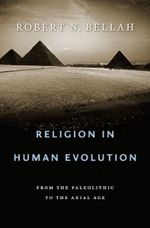
First, on religion: Both neo-Marxist and neo-Weberian grand narratives tend to downplay or even ignore religion as they reduce it to its political and organizational features and neglect its ideational side. Bellah restores religion to its former glory, not by reminding the reader of its Durkheimian or Weberian features, but by locating it in a wider framework of an endless quest for meaning and alternative perceptions of reality. In this context, religion becomes the key to understanding social evolution (at least up to modernity), since religion and its concomitant practices are the means to firmly establish increasingly complex social power arrangements and structures that otherwise would be unattainable. For Bellah, religion is a generalized means of social action: as religion derives from the relaxed field of play (not “functional” itself), it remains, even in its most institutional forms, a bridge between necessity and freedom, between actual and potential forms of social life, and thus a privileged locus for social criticism and new visions of social organization and justice.
more from Manussos Marangudakis at Immanent Frame here.
magic hours
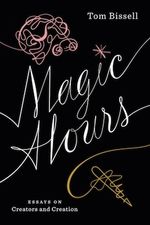
The best thing about Tom Bissell: He is fun. I think of him as “a wild and crazy guy.” I’m by turns entertained and completely aghast at his antics. He is totally obsessive. He’s watched that appalling movie The Room a bajillion times. I loved the idea of him and David Foster Wallace negotiating gravely about whether or not they ought to dip tobacco together (they did). Bissell, apparently, travels all over the place with a hardcover copy of Infinite Jest, which is surely the most inconvenient thing outside of, like, a chihuahua, to have to pack in a suitcase. And I don’t know if he’s given it up by now (I hope so) but he used to drink 10 Diet Cokes every day. Ten! That is terrible, Tom Bissell! I worry about him. Magic Hours demonstrates clearly the bind of being a modern essayist: One must present oneself as an authority, but an authority who is also compelled to confess that to be human is necessarily to be weak, frightened, flawed. The position is somewhat irreconcilable, and the discomfort thereby engendered also speaks to something very deep, I suspect, in the kind of North American reader liable to have picked up the book in the first place. It’s a very familiar discomfort.
more from Maria Bustillos at The LA Review of Books here.
beauty was invariably his criterion
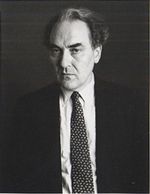
With Hilton Kramer’s passing last month, American high culture lost a fearless – and at times feared – dissenter. He was also among the last of a remarkable generation of New York intellectuals. A sometime idealistic anti-communist liberal turned neo-conservative, Kramer reshaped debates about politics and culture with unstinting passion and erudition. His enduring legacy was The New Criterion, the journal he co-founded in 1982. He had a long career in criticism that came to include almost two decades as the chief critic of the New York Times, his other posts – en route or subsequent to that defining appointment – including stewardship of Arts Magazine, critic’s chairs at The Nation and the New York Observer, influential teaching posts at Columbia, Berkeley, and Bennington, and the authorship of books and monographs. While his politics shifted significantly to the right, his artistic tastes, it can be claimed, remained consistent: the art world changed around him and he stuck to his aesthetic guns. He was what can be called a soft modernist: he admired the historic avant garde, but strictly for its advances to the language of plastic expression, rather than for its revolutionary or subversive aspirations. He was an ardent student, for instance, of the Russian Constructivists, planning later in his life to write a monograph on the subject, while having no particular affection for its political or theosophical ideals.
more from David Cohen at Artcritical here.
Thursday, April 19, 2012
Two scientists debate whether music comes from biological evolution or from the advent of civilization
Gary Marcus and Geoffrey Miller in The Atlantic:

Here, scientists Gary Marcus and Geoffrey Miller debate these issues. Marcus, a professor of psychology at New York University and the author of Guitar Zero: The New Musician and The Science of Learning and Kluge: The Haphazard Evolution of The Human Mind, argues that music is best seen as a cultural invention. Miller, a professor of psychology at the University of New Mexico and the author of The Mating Mind: How Sexual Choice Shaped the Evolution of Human Nature and Spent: Sex, Evolution, and Consumer Behavior, makes the case that music is the product of sexual selection and an adaptation that's been with humans for millennia.
Gary Marcus: We both love music and think it's important in modern human life, but we have different views about how music came to be. In Guitar Zero, I argued that music is a cultural technology, something that human beings have crafted over the millennia, rather than something directly wired into our genomes. Why do you think music is a biological adaptation?
Geoffrey Miller: Music's got some key features of an evolved adaptation: It's universal across cultures, it's ancient in prehistory, and kids learn it early and spontaneously.
More here.
Holocaust Remembrance Day in Tel Aviv
Traffic comes to a respectful halt on a Tel Aviv highway as a siren comes on indicating the beginning of Holocaust Remembrance Day which is being observed between yesterday evening and this evening.
‘Extreme Universe’ puzzle deepens
Jason Palmer at the BBC:
The particles, known as cosmic rays, can show up with energies a million times higher than the biggest particle accelerators on Earth can produce.
Astrophysicists believed that only two sources could make them: supermassive black holes in active galaxies, or so-called gamma ray bursts.
A study in Nature has now all but ruled out gamma ray bursts as the cause.
Gamma ray bursts (GRBs) are the brightest events we know of, though their sources remain a matter of some debate. They can release in hours more energy than our Sun will ever produce.
Computer models predict that GRBs could be the source of cosmic rays – mostly subatomic particles called protons, accelerated to incredibly high speeds.
But they were also predicted to produce a stream of neutrinos, the slippery subatomic particles recently brought to fame in claims of faster-than-light travel.
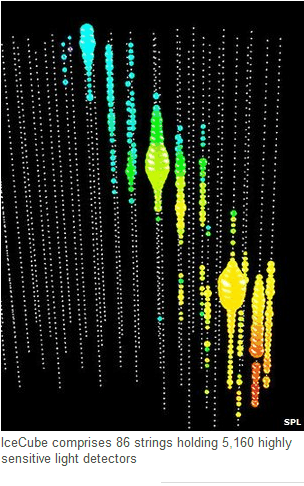
So researchers at the IceCube neutrino telescope went looking for evidence of neutrino arrival that coincided with measurements of gamma ray bursts detected by the Fermi and Swift space telescopes.
But it found none – suggesting that active galactic nuclei, where supermassive black holes reside, are likely to be the source.
More here.
Thursday Poem
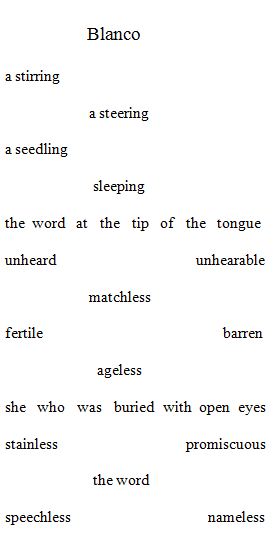
.
………………………………..
……………………………………
…………………………………………….
………………………………………………………………………………………………………..
by Octavio Paz
from The Collected Poems 1957-1987
Publisher Carcanet.1983
Labyrinths and clues
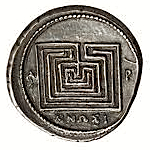
IF THE WORD ‘labyrinth’ does not lead us eventually back to the very earliest human communities, it has a good try. The Greek labyrinthos appears to be a linguistic echo from Egypt and Asia Minor. It is possible that it relates to labrys, a double-edged axe, emblem of the Cretan royal family. No one is certain, since tracing the origin of the word ‘labyrinth’ is itself an etymological labyrinth. It creeps into something like modern English as laboryntus in Chaucer’s House of Fame and has become by the early fifteenth century laberynthe, a maze. Except for specialised usages the terms ‘maze’ and ‘labyrinth’ then become almost indistinguishable in English. Fanshawe’s seventeenth-century Horatian translations talk about clews and mazes, so we are back with the Cretan labyrinth and Ariadne’s bobbined thread, which permitted Theseus to find his way out of the maze after he had executed his monster. Such a thread was a clew, or ball of yarn, providing us with our modern word ‘clue’. THE SENSE INITIALLY was of a structure designed to baffle and disorientate; to prevent curiosity; to hide that which must not be found, either because it was sacred or because it was shameful. It may not always be a minotaur in there (and see below), but there will be something whose immediate disclosure is either undesirable or forbidden. It could be a monster, a priest or a crocodile.
more from Alan Wall at The Fortnightly Review here.
arab hamlet
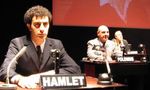
I s there a “right” view of Hamlet? The very question presupposes he is a personage or a historical entity, rather than a created dramatic character. Margaret Litvin’s absorbing study examines this confected persona as it has appeared in the Arab world, especially as it emerged reborn from the fervent matrix of modern Egyptian politics. She supplies a fascinating account of the translations which came at first to Arabic through French versions, which were often heavily cut and bowdlerized. In Dumas’s influential version, the character of Fortinbras was omitted, and the opening scene on the battlements was completely cut. English literary influences were later arrivals, and interpreted locally with anti-colonial implications (Muhammad Hamdi’s 1912 edition of Julius Caesar described the author as “William Shakespeare, the democratic English poet and playwright”). If Arab audiences viewed Hamlet as a heroic figure, it was at first mainly as a fighter against colonial tyranny, engaged in a struggle against the usurper. This was the role that leaders such as Nasser originally adopted: only later in their political careers did they themselves become the tyrants, the “Claudius” figures against whom the younger generation had to act.
more from Jane Jakeman at the TLS here.
hobsbawm on judt
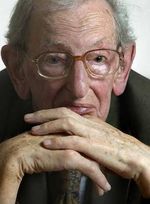
My relations with Tony Judt date back a long time but they were curiously contradictory. We were friends, though not intimate ones, and while both of us were politically committed historians, and both preferred wearing informal gear as historians rather than regimental uniform, we marched to different drummers. Nevertheless our intellectual interests had something in common. Both of us knew that the 20th century can only be understood fully by those who became historians because they lived through it and shared its basic passion: namely the belief that politics was the key to our truths as well as our myths. In spite of our differences, both Tony’s Marxism and the French Left and my own recent How to Change the World are dedicated to the memory of the same independent thinker, the late George Lichtheim. We got on well in personal terms – but then Tony was easy to like, and generous. He thought very well of my own work and said so in his last book. At the same time he launched one of the most implacable attacks on me in a passage which has become widely quoted, especially by the ultras of the right-wing American press. It amounted to: make a public confession that your god has failed, beat your breast and you may win the right to be taken seriously. No man who doesn’t think socialism equals Gulag should be listened to. It was no doubt a sincerely felt rhetorical figure in an anti-red polemic. Fortunately practice differed from theory. For most of us the image of Tony is dominated by the boundless admiration we feel for the way he confronted his death.
more from Eric Hobsbawm at the LRB here.
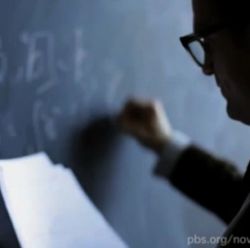
The Story of the Higgs Boson, as Told by Higgs Himself
From Scientific American:
More here.
See the beauties and the beasts that live under the sea
From MSNBC:

More here.
Wednesday, April 18, 2012
Causal Machines

3:AM: Your approach to philosophy may strike some as being not really philosophical. This is because you place neuroscience at the heart of your approach. Can you say something about why you think this approach has caused some people to worry that it undermines the claims of philosophical enquiry proper and how you respond?
PC: Philosophical enquiry proper – mmmmmm is that the sort of thing Aristotle and Hume were doing, or the sort of thing that Kripke and Gettier were doing? Let me sound curmudgeonly for a moment: if I want to know how people use words, I will go to sociolinguists, who actually do science to try to find those things out. If I want to know how we learn and remember and represent the world, I will go to psychology and neuroscience. If I want to know where values come from, I will go to evolutionary biology and neuroscience and psychology, just as Aristotle and Hume would have, were they alive.
Theorizing is of course essential to make progress in understanding, but theorizing in the absence of knowing available relevant facts is not very productive. Given how long philosophers have been at conceptual analysis (I mean the 20th century stuff), and how many have been doing it, what can we say are the two most important concept results of all that effort? By ‘important’ here, let’s mean ‘has a significant impact outside philosophy on how people understand something’. Otherwise, as Feyerabend said, we are just talking to ourselves; taking in each other’s laundry. Incidentally, the analytic claim that knowledge is “true justified belief” does not accord with how ordinary people in fact use the word “know”. So whose concept is being analyzed? When philosophers try to understand consciousness, much of what they claim is not conceptual analysis at all, though it may be shopped under that description. Actually, they are really offering a theory about the nature of consciousness. When that theory is isolated from known facts, it is likely not to be productive.
What It Cost Eight Women Writers To Make It In New York

In 1967, Patti Smith wrote in Just Kids, she was considering a move to New York City. “I had enough money for a one-way ticket. I planned to hit all the bookstores in the city. This seemed ideal work to me.” Twenty-seven years before her, in 1940, Shirley Jackson and her soon-to-be husband Stanley Hyman graduated from Syracuse and moved to New York. According to this biography, “For quite some time they had known exactly what they were going to do: move to New York City, live as cheaply as possible, take menial jobs if necessary and wait for the Big Break. Not just wait—push for it.”
And fifteen years before that: “The first week of January 1925, Zora Neale Hurston moved to New York City, as she recalled, with a dollar and fifty cents in her purse, 'no job, no friends, and a lot of hope,'” as one of her biographers put it.
The equivalent young female writer arriving in New York in search of literary success in 2012 (as calculated by the CPI Inflation Calculator) would have $19.51 in her purse, which could buy breakfast at Balthazar, or a pack of smokes and one Happy Hour cocktail, or about ten hours' rent.
We've looked at how much the costs of things like Reeses peanut butter cups and TV sets have changed over time—very specific items. Let's cast a wider net. For more than a century, the young flock to New York as the place to launch a career in the arts. Is it as expensive a proposition now as it always has been? Has the size of the potential rewards increased or decreased? And more importantly, just what was it like? In what ways was hanging at the Algonquin Roundtable just like (and not like) bumming around the lobby of the Chelsea Hotel? Let's look at the Bohemian set over time, as seen through the eyes (and pocketbooks) of some of the women writers we've been reading for decades, from Dorothy Parker and Hurston onward to today.
Edward Witten on String theory
The man most physicists refer to as the “Einstein of our day” or the “most intelligent human alive” talks about his life's work here.
Defending Muslim Law From Those Invoking It
From The New York Times:

Mr. Kadri’s background gives him a grounded and many-angled perspective on Islamic law. He finds a great deal to admire in it, and he is deft at dispelling myths. Stoning, for example, is not mentioned in the Koran as a punishment for adultery. In his reading of the Shariah, he finds rationality and flexibility. His argument is with recent hard-liners who, he writes, “have turned Islamic penal history on its head.” He is furious that fundamentalists “have associated the Shariah in many people’s minds with some of the deadliest legal systems on the planet.” He calls them traditionalists who ignore tradition. He is disgusted that warped opinions “are mouthed today to validate murder after murder in Islam’s name.”
More here.
Memory Foraging: When the Brain Behaves Like a Bee
From Scientific American:

Hills and his colleagues asked 141 Indiana University Bloomington students to type the names of as many animals as they could think of in three minutes. For decades, psychologists have used such “verbal fluency tasks” to study memory and diseases in which memory breaks down, such as Alzheimer's and dementia. Again and again, researchers have found that people name animals—or vegetables or movies—in clusters of related items. They might start out saying “cat, dog, goldfish, hamster”—animals kept as pets—and then, having exhausted that subcategory, move onto ocean animals: “dolphin, whale, shark, octopus.” On average, the students in Hills's experiment named 37 animals in three minutes and, like so many of their predecessors, the lists they typed were organized into groups of animals unified by a single theme—pets, the savanna, etcetera. What Hills and his colleagues really wanted to know was whether the students shifted from one themed cluster to another the same way some animals hop from patch to patch of food. To make the most of its time and get the most food possible, a bird feeding on berries, for example, should only stay on any one particular bush if the plant will yield more berries than nearby bushes. At some point, the bird has eaten so many berries on the first bush that it makes more sense to switch to one with more to offer.
More here.
Wednesday Poem
A Poem I Wrote Standing Up- Indictment
We are proud to be Africans on distant shores,
learning ancient tongues, fighting for their survival,
while forgetting our own.
We adopt new inflections
and sing-song ways of speaking
to camouflage our origins,
hiding from the tainted brush.
We are the new Celts – darker, more robust.
We sanction our memories of sun and hunger
and hopeful hopelessness.
We unlearn our songs and disappear through our children –
the pristine generation, unmarked by unpopular citizenry.
We are not proud. We are not Africans.
by Blessing Musariri
publisher: PIW, 2011
White Noir

A man with a briefcase arrives in a place called City-A looking like a double agent from 1973: mustachioed and trenchcoated, forever ducking into phone booths for cryptic conversations. The man, Mr. Holz, is a geophysicist of unknown origin. He has come here to work for the New Method Oil Well Cementing Company. City-A is mesmerizingly bleak, a grid of concrete high-rises set between a brackish sea and a wintry industrial wasteland, all of it reeking of environmental contamination and failed utopia. Many things, Holz notices, are amiss here. Clocks don’t run sixty seconds to the minute in City-A. The drinking water is spiked with lithium, a shadowy entity has confiscated his passport, language is rationed, and what exactly is this New Method Oil Well Cementing Company, anyway? As the bewildered-looking Holz moves through the city, is he piecing together clues to solve these mysteries or just being shuttled around by a powerful unseen force?
more from Jane Yager at the Paris Review here.