enthusiasms

Parker_238475h

W hen reading for relaxation, Mark Girouard explains in the introduction to this highly diverting collection of essays, “I have often come across something that has especially intrigued or irritated me: a clue that I wanted to follow up, a point that others seem to have overlooked, a misidentification that I long to correct, a neglected work that I would like to publicise, and so on”. Enthusiasms is the result of these promptings and is rather like a bumper issue of Notes and Queries. Is Arundel, rather than Carisbrooke, the setting for Charlotte Mew’s poem “Ken”? Is Edward Lear’s Yonghy-Bonghy-Bo really modelled on Oscar Wilde? These “literary excursions”, as he calls them – away-days from Girouard’s career as one of our leading architectural historians – sometimes turn out to be wild goose chases, but they are nonetheless entertaining for that. “It would be wearisome to go in any detail into my work in libraries, on the computer and in the National Archives, my trawling through Post Office directories, wills and censuses”, he writes about his attempts to uncover the identity of “Walter”, the anonymous author of My Secret Life (c.1882–94); but we are drawn into his dogged pursuit, which leads him to the streets of Camberwell in South London. If, as he at first deduces, Walter’s family house was on the corner of De Crespigny Terrace and Love Lane, then it is possible that the author’s real name was Horner. This all sounds too good to be true, and indeed it is: the essay is subtitled “a hunt but no kill”.

more from Peter Parker at the TLS here.

Tilda Swinton on Virginia Woolf’s Orlando

Tilda Swinton in The Telegraph:

TildaOne morning, Virginia Woolf sat down to work on a critical piece of fiction and, having first dropped her head in her hands in despair: “dipped my pen in the ink, and wrote these words as if automatically, on a clean sheet: Orlando: a Biography. “No sooner had I done this than my body was flooded with rapture and my brain with ideas. I wrote rapidly till 12.” A year and two days later, she laid down her pen, having written the date – 11 October 1928 – as the book’s final words.

Virginia Woolf was the loyal daughter, not only of an erudite and distinguished biographer, but also of his library, her early dependence on which formed the foundation of her entire intellectual life. Her later biography of Roger Fry must have satisfied this debt in a quite particular way. But at this point she wanted to write freely – “wildly” – as an imaginative novelist, and Orlando gave her the chance to split the atom: a fantastical biography – inspired by a very real human being – but essentially a whim of imagination, a wild-goose chase. She called it her “writer’s holiday”. Vita Sackville-West was the intended recipient of “the longest love letter in the world”, as Sackville-West’s own son Nigel Nicholson described it. She was certainly its primary inspiration. Writing to her on the day of Orlando’s inception, Woolf asks: “Suppose Orlando turns out to be Vita… there’s a kind of shimmer of reality which sometimes attaches itself to my people, as the lustre on an oyster shell… shall you mind? Say yes or no.

More here.

Thursday Poem

The Coora Flower

Today I learned the coora flower
grows high in the mountains of Itty-go-luba Bésa.
Province Meechee.
Pop. 39.

Now I am coming home.
This, at least, is Real, and what I know.

It was restful, learning nothing necessary.
School is tiny vacation. At least you can sleep.
At least you can think of love or feeling your boy friend
ppppppppp against you
(which is not free from grief).

But now it's Real Business.
I am Coming Home.

My mother will be screaming in an almost dirty dress.
The crack is gone. So a Man will be in the house.

I must watch myself.
I must not dare to sleep.

by Gwendolyn Brooks
from Children Coming Home
The David Company, 1991

Evolution is written all over your face

From PhysOrg:

Evolutionisw“If you look at New World primates, you're immediately struck by the rich diversity of faces,” said Michael Alfaro, a UCLA associate professor of ecology and evolutionary biology and the senior author of the study. “You see bright red faces, moustaches, hair tufts and much more. There are unanswered questions about how faces evolve and what factors explain the evolution of facial features. We're very visually oriented, and we get a lot of information from the face.” Some of the primate species studied are solitary, while others live in groups that can include dozens or even hundreds of others.

The life scientists divided each face into 14 regions; coded the color of each part, including the hair and skin; studied the patterns and anatomy of the faces; and gave each a “facial complexity” score. They studied how the complexity of primate faces evolved over time and examined the primates' social systems. To assess how facial colors are related to physical environments, they analyzed environmental variables, using the longitude and latitude of primates' habitats as a proxy for sun exposure and temperature. They also used statistical methods to analyze the evolutionary history of the primate groups and when they diverged from one another. “We found very strong support for the idea that as species live in larger groups, their faces become more simple, more plain,” said lead author Sharlene Santana, a UCLA postdoctoral scholar in ecology and evolutionary biology and a postdoctoral fellow with UCLA's Institute for Society and Genetics. “We think that is related to their ability to communicate using facial expressions. A face that is more plain could allow the primate to convey expressions more easily.

More here.

Wednesday, January 11, 2012

The Accidental Universe: Science’s Crisis of Faith

96664main_galaxy_string_4Alan Lightman in Harper's Magazine:

In the fifth century B.C., the philosopher Democritus proposed that all matter was made of tiny and indivisible atoms, which came in various sizes and textures—some hard and some soft, some smooth and some thorny. The atoms themselves were taken as givens. In the nineteenth century, scientists discovered that the chemical properties of atoms repeat periodically (and created the periodic table to reflect this fact), but the origins of such patterns remained mysterious. It wasn’t until the twentieth century that scientists learned that the properties of an atom are determined by the number and placement of its electrons, the subatomic particles that orbit its nucleus. And we now know that all atoms heavier than helium were created in the nuclear furnaces of stars.

The history of science can be viewed as the recasting of phenomena that were once thought to be accidents as phenomena that can be understood in terms of fundamental causes and principles. One can add to the list of the fully explained: the hue of the sky, the orbits of planets, the angle of the wake of a boat moving through a lake, the six-sided patterns of snowflakes, the weight of a flying bustard, the temperature of boiling water, the size of raindrops, the circular shape of the sun. All these phenomena and many more, once thought to have been fixed at the beginning of time or to be the result of random events thereafter, have been explained as necessary consequences of the fundamental laws of nature—laws discovered by human beings.

This long and appealing trend may be coming to an end. Dramatic developments in cosmological findings and thought have led some of the world’s premier physicists to propose that our universe is only one of an enormous number of universes with wildly varying properties, and that some of the most basic features of our particular universe are indeed mere accidents—a random throw of the cosmic dice. In which case, there is no hope of ever explaining our universe’s features in terms of fundamental causes and principles.

The Far-Apart Artists

Benfey_1-011212_jpg_230x803_q85Christopher Benfey on Georgia O’Keeffe and Alfred Stieglitz, in the NYRB:

It is tempting to imagine Stieglitz as Pygmalion, with O’Keeffe groomed and marketed until her work sold for sufficiently high prices to make her, according to Barbara Buhler Lynes, “a millionaire in today’s dollars” by 1929. And yet, as one reads the letters and considers the shifting shapes of these complicated careers, one has the impression that it was Stieglitz, past fifty when they first met, who experienced the greater awakening. He felt a renewed sense of purpose in his self-consciously American gallery; at the same time, he rededicated himself to photography, embarking on an ambitious project of photographing cloud formations reminiscent of Constable’s studies. These he named “Equivalents,” suggesting that he was finding sublime metaphors in the sky. On one occasion, he bragged to the poet Hart Crane, with his customary grandiosity, that he had “photographed God.”

In a parallel undertaking, Stieglitz began to compile the series of over three hundred photographic images that comprised his “Portrait of O’Keeffe.” He photographed every part of her body, nude and variously clothed. In one intriguing letter, a meditation on an artist’s relation to her own hands, she tried to make sense of her hand holding one of Stieglitz’s photographs of her hand:

I wondered at my hand—my left one as I saw it on the last printed page of the last book—and my mind wandered to the prints of my hands—I moved to get up to look for them—No—The other hand reached for the book…. So I sat looking at the hand—then at them both—I’ve looked at them often today—they have looked so white and smooth and wonderful—I’ve wondered if they were really mine—

The cloud studies and the portraits intersected when Stieglitz titled a dramatic convolution of clouds, resembling a torso with open legs, Portrait of Georgia.

The Idea of Happiness

Ashis Nandy in Economic & Political Weekly:

CulturePrize78imagejaIn 2007, one of Britain’s leading schools, Wellington College at Crowthorne, announced that it would offer classes on happiness to combat materialism and celebrity obsession. The following year, New Scientist summarised the results of a 65-country survey to show that the highest proportion of happy persons lived in, of all places, Nigeria, followed by Mexico, Venezuela, El Salvador and Puerto Rico. It is true that happiness surveys differ in their findings. According to some, happiness has much to do with prosperity, levels of development and healthcare; according to others, these things do not matter. It is the second set that has produced countries like Vanuatu, a former happiest country in the world that most have not heard of, and last year’s world champion in happiness, Bangladesh, which many believe could well qualify as one of the world’s unhappiest countries. In comparison, some of the richest nations languish near the bottom of the list.

However, I am not concerned here with comparative happiness or the methodology of studying happiness. I am concerned with the emergence of happiness as a measur­able, autonomous, manageable, psychological variable in the global middle-class culture. And the two events can be read as parts of the same story. If the first factoid – discovery of happiness as a teachable discipline – suggests that in some parts of the world happiness is becoming a realm of training, guidance and expertise, the second reaffirms the ancient “self-consoling” “naïve” belief that you cannot always be happy just by virtue of being wealthy, secure or occupied. You have to learn to be happy.

Together they partly explain why clenched-teeth pursuit of happiness has become a major feature and a discovery of our times.

More here.

The Grammarian Was a He

Jessica Love in The American Scholar:

According to modern-day grammar books, “they” as a singular, gender-neutral pronoun (e.g., I saw someone, but I don’t think they saw me) is incorrect, since a plural pronoun cannot describe a singular referent. And so we have settled on the generic “he.” This is, we are told, the way things have always been—good enough for Jonathan Swift or Jane Austen.

Except that what was in fact good enough for Swift and Austen was “they.” As Ann Bodine argues in her 1975 article “Androcentrism in Prescriptive Grammar,” prior to the 19th century, “they” was commonly—and uncontroversially—used as a generic singular pronoun. Grammarians were the ones who inserted the generic “he” into English about 200 years ago in an effort to improve the language.

Bodine is skeptical that such logical improvements are either improvements or logical. She points out that although “they” does not agree with a singular, gender-neutral referent by the single feature of number, “he” also does not agree with its singular, gender-neutral referent by the single feature of gender. “A non-sexist ‘correction,’ ” she writes, “would have been to advocate ‘he or she,’ but rather than encourage this usage the grammarians actually tried to eradicate it also, claiming ‘he or she’ is ‘clumsy,’ ‘pedantic,’ or ‘unnecessary.’ Significantly, they never attacked terms such as ‘one or more’ or ‘person or persons,’ although the plural logically includes the singular more than the masculine includes the feminine.”

More here.

War Horse: An Illustrated Review

The Browser calls this “Arguably the best review ever. Certainly of “War Horse”, as filmed by Steven Spielberg. Possibly of any film. Or indeed anything else. Charming, concise, evocative.” Lisa Hanawalt in The Hairpin:

• The woman sitting in front of me keeps falling asleep and I want to yell “HEY SNORE HORSE” so bad it hurts.

• Spielberg made a big deal about casting an unknown actor as the main dude, but he's really just a hunk, a baby Casper Van Dien. He's good at running through fields and aiming wet looks at the horse.

• If you explain how important something is to a horse, it will understand you and do that thing!

Warhorse8a-640x506

Warhorse8b-640x609

More here.

Wednesday Poem

Chernobyl

No, child, not rain.
It was not rain fallen down
to make the mind go flying quick,
away, above the fields, to turn
the bodies of the people into ramshackle yards,
depositories of poison dressed as clouds. Say,
It was not the fault of sky.
It was not the plan of the weather.
The poison caught fire in Belarus. &, child,
I cannot forget your eyes,
how they sit like two grey stones
or ringed steel in the hollows of your face.
& your brain ballooning out
from its eggshell skull.
& your young boy legs
swelled large as legs of horses. Still,
you cannot walk, even when the heart sings, “Walk!”
Even when the heart sings, “Get up
from there.” Instead, the days push through you
like an oxygen tube
whose air blindly fumbles
through your body of arms
until deep in the bulrush
of your bones & curtains,
the heart shuts its red, fat eye,
& sends what’s left of you out: gentle-like
& finished into world.

by Aracelis Girmay
from Teeth
© 2007, Curbstone Press

Why eating together matters

From Salon:

EatWe sapiens are the only animals that look each other in the eye while eating without getting violent. At least most of the time. The other beasts fight over their food; we talk over ours, and share. We have ancient rules of the table, early glimpses of civilization, covenants that have softened into traditions reflecting the basic humanity we find in eating, its rituals, and its memories. If there is a leitmotif that follows the sinuosities of Adam Gopnik’s “The Table Comes First” — his investigation into the pleasures of the table, peeling back its veneer to examine the mechanisms that make it tick — it is “the simple path between eating well and feeling happy,” whether the table is at Noma or the humble home of a friend.

Gopnik writes with an easy cultural fluency; his sentences are roomy and comfortable, but agile. He alternates between chapters with definite shape and momentum, with specific centers of gravity, and chapters that chew on ideas, a ruminant grazing in a field of culinary philosophy. The birth of what we would identify as a restaurant, in Paris in the mid-18th century, falls into the first group. It is a terrific story, told here with grace and insight, that buries the old tale of chefs being shown the château door during the French Revolution and, so, opening their own. The restaurant rose earlier, when Paris was awash in a cult of health and simplicity, when the Palais Royal assumed the mantle of the modern street store, and when notions of caste were already in disarray, long before the revolution. A public place, welcoming as home — women, too, anyone with a sou — but capable of “a primal magic, a mood of mischief, stolen pleasures, a retreat from the world, a boat on the ocean.”

More here.

What will the $1000 genome do for you?

From MSNBC:

BookThe $1,000 genome has been hotly sought ever since a crude map of the human genome was first published in 2001. The Carlsbad, Calif. biotech company, part of Life Technologies, will sell its device to research labs and medical clinics for $99,000 to $149,000, compared to the current price of about $750,000 for existing sequencers, Reuters reported on its website Tuesday. According to Reuters, a doctor will be able to sequence a patient’s entire genome for $1,000, compared to the current rate of $3,000 just to test for breast cancer gene mutations, for example. And the company says its new machine can complete the genome analysis within a day, rather than the two months previously needed. It's widely believed this type of genetic analysis will revolutionize medicine, that patients will learn their risk profile for potential diseases by having their DNA read right in the doctor's office. Drugs and vaccines will be designed to fit our genes, in order to maximize efficacy and minimize any side-effects. Newborn babies would have someone peek at their genes so parents could take steps to prevent genetic risks from becoming realities.

…Will genetic information be any more motivating to get people to lose weight, stop smoking, reduce their stress, stay active, wear a seatbelt or a condom, than stepping on a scale or coping with a smokers’ hack? Two cheers to scientists and businessmen for reaching the $1,000 genome. But, only two cheers. There is a long way to go before the achievement gets translated into bottom line health results that we can put to practical use.

More here.

Tuesday, January 10, 2012

Friendship in the Time of Terror

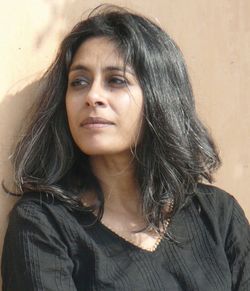
Nadezhda_mandelshtamFelix Philipp Ingold in Sign and Sight (for Marina S.):

Although the Russian poet Anna Akhmatova (1889–1966) never received the highest literary honour, the Nobel Prize, the veneration she enjoyed during her lifetime as well as her ever increasing posthumous fame have made her one of the luminary figures of modern Europe. Few authors of the past century have been portrayed more often in paintings, sculptures or photographs; few bodies of poetry has been more extensively translated, interpreted, recorded and illustrated; few individuals have featured more in the letters, journals or memoirs of her contemporaries. The extensive biographical chronicles of Lydia Chukovskaya, Emma Gerstein, Mikhail Ardov and other associates have helped create a larger-than-life and almost heroic image of the poet, which has become inseparable from her work.

Anna Akhmatova herself propelled this image to mythical dimensions through the consistent self-stylisation and dramatisation of her own persona. A modern-day Cassandra, she lamented, exhorted, raged. Her view of life was characterised by an omnipresence of violence, betrayal and death. Her first husband was executed as a counterrevolutionary; her son was repeatedly sent to labour camps for political reasons; her second husband was murdered in prison; numerous friends and colleague were victims of the so-called purges.

Meanwhile, she was prohibited from publishing, forced to eke out an existence, mostly living in other people's apartments, places of asylum, emergency accommodation. The body of work that she was able to garner in the midst of her extreme suffering in life and love is a unique and varyingly orchestrated requiem. The fact that the poet was officially and publicly reviled as “half whore, half nun” in the post-war Stalinist period is certainly due to the aura and exalted image that enveloped her, and which was to be maligned at all costs – because it posed an intolerable provocation to the Soviet literary scene.

Among those who accompanied Anna Akhmatova throughout the “century of the wolves” and enjoyed her steadfast trust was Nadezhda Mandelstam.

Fellini’s Fantastic TV Commercials

Mike Springer in Open Culture:

Last month we brought you some little-known soap commercials by Ingmar Bergman. Today we present a series of lyrical television advertisements made by the great Italian filmmaker Federico Fellini during the final decade of his life.

In 1984, when he was 64 years old, Fellini agreed to make a miniature film featuring Campari, the famous Italian apéritif. The result, Oh, che bel paesaggio! (“Oh, what a beautiful landscape!”), shown above, features a man and a woman seated across from one another on a long-distance train. The man (played by Victor Poletti) smiles, but the woman (Silvia Dionisio) averts her eyes, staring sullenly out the window and picking up a remote control to switch the scenery. She grows increasingly exasperated as a sequence of desert and medieval landscapes pass by. Still smiling, the man takes the remote control, clicks it, and the beautiful Campo di Miracoli (“Field of Miracles”) of Pisa appears in the window, embellished by a towering bottle of Campari.

Is Evolving Reproductive Technology Ushering in a New Age of Eugenics?

WEBbaby-jpg_jpg_1360199cl-8Carolyn Abraham in The Globe and Mail:

Humanity has long dreamed of perfection, striving to be faster, stronger and brighter, pushing nature to the limit. Four centuries before people were conceived in a petri dish, Swiss alchemist Paracelsus claimed flawless little beings could be grown in pumpkins filled with urine and horse dung, but there is no record he produced a crop.

With the birth of Louise Brown in 1978, the test tube finally succeeded where the pumpkin had failed, and the year she turned 11, scientists moved beyond making life in a lab: They found a way to peer into an embryo's genes and predict what that life might be like.

That ability is now morphing into a whole new approach to baby-making, one that gives people an unprecedented power to preview, and pick, the genetic traits of their prospective children.

Just as Paracelsus wrote that his recipe worked best if done in secret, modern science is quietly handing humanity something the quirky Renaissance scholar could only imagine: the capacity to harness our own evolution. We now have the potential to banish the genes that kill us, that make us susceptible to cancer, heart disease, depression, addictions and obesity, and to select those that may make us healthier, stronger, more intelligent.

The question is, should we?

It has been barely a year since the Supreme Court of Canada struck down the federal government's attempt to regulate assisted reproductive technology, handing the reins to the provinces, most of which have done nothing to fill the void.

King of the Cosmos

NeilCarl Zimmer profiles Neil deGrasse Tyson:

On a hay-mown crest, dozens of people are crouching in the dark. The Earth has turned away from the sun, and the sky has flowed down a color chart, from light gray to orange to bluish-black. A sliver of a waxing moon has appeared briefly and then slipped below the western horizon, leaving the sky to blinking airplanes rising from La Guardia fifty miles to the south, to satellites gliding in low orbit, to Jupiter and its herd of moons and to the great river of the Milky Way beyond.

The crowd that sits in this chilly field in North Salem, New York, is surrounded by a ring of telescopes. There’s a Dobsonian, a giant barrel-shaped contraption that’s so tall you have to climb a stepladder to look through its eyepiece. Small, squat Newtonian cylinders sit on tripods, rigged to computers that give off a weak lamp-glow from their monitors. A few older men are fussing over the telescopes, but everyone else is huddled on the grass.

“Just get snuggly. There’s nothing wrong with that. Get snuggly.”

The voice is deep and loud–not loud from shouting, but from some strange acoustic property that gives it a conversational boom. It comes from a man who looms in the dark at the edge of the crowd.

CIA agents in Pakistan

Najam Sethi in Pakistan's Friday Times:

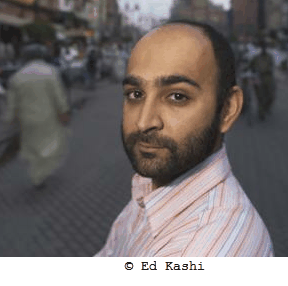
Najam sethiThese are difficult times for professional journalists in Pakistan. Eleven were killed last year in the line of duty. They were either caught in the crossfire of ethnic or extremist violence or targeted and eliminated by state and non-state groups for their political views.

Saleem Shehzad, for example, was abducted, tortured and killed last year and a commission of inquiry is still floundering in murky waters. He had exposed the infiltration of the armed forces by elements affiliated with Al-Qaeda or the Taliban. Several journalists from Balochistan have been killed by non-state vigilantes sponsored by state agencies, others have fled to Europe or USA because they had sympathies with the nationalist cause in the province. Some from Karachi have taken refuge abroad because they were threatened by ethnic or sectarian groups or parties.

Now an insidious campaign is afoot to target senior journalists who question the wisdom of the security establishment on a host of thorny issues. They are being labeled as “American-CIA agents”. This is an incitement to violence against them in the highly charged anti-American environment in Pakistan today. Consider.

If you say the military's notion of “strategic depth” in Afghanistan is misplaced, outdated or counter-productive, you are a CIA agent.

If you say the military was either complicit or incompetent in the OBL-Abbottabad case, you are a CIA agent.

If you say that the civilians should have control over the military as stipulated in the constitution, you are a CIA agent.

More here.

If I ruled the world: Steven Pinker

Steven Pinker in Prospect:

ScreenHunter_17 Jan. 10 18.05Language mavens commonly confuse their own peeves with a worsening of the language. A century ago editors issued fatwas against barbarous innovations such as “standpoint,” “bogus,” “to run a business,” and “to quit smoking.” Decades ago they fulminated against “six people” (as opposed to persons), “fix” (for repair), and the verbs “to contact” and “to finalise.” Today this linguistic contraband is unexceptionable, if not indispensable. Also vilified is the seepage of new technological jargon into the language (leverage, incentivise, synergy). Yet old technological jargon (proportional, placebo, false positive, trade-off) has made it easier for everyone to think about abstract concepts, and may even have contributed to the Flynn effect, the relentless increase in IQ scores during the 20th century.

And speaking of technology, today's Luddites have a short memory. Parents who lament the iPods and mobile phones soldered onto the ears of teenagers forget that their own parents made the same complaint about them and their bedroom telephones and transistor radios. The abbreviated prose in tweets and instant messages is no more likely to corrupt the language or shorten attention spans than the telegrams, radio ads, and advertising catchphrases of yesteryear. Email can seem like a curse, but who would go back to stamps, phone booths, carbon paper, and piles of phone messages? And now that dinner companions can fact-check any assertion on an iPhone, we are coming to realise how many of our everyday beliefs are false—a valuable lesson in the fallibility of memory.

But nowhere is the confusion of a data point with a trend more pernicious than in our understanding of violence. A terrorist bomb explodes, a sniper runs amok, an errant drone kills an innocent, and commentators ask “What is the world coming to?” Yet they seldom ask, “How bad was the world in the past?”

More here.