Peoples bore me

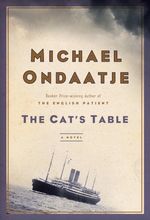
0374530661.01.MZZZZZZZ

If poetry is going to be tortured, agonized, and morbidly introspective, it might as well be funny too. John Berryman’s The Dream Songs are all that and more. Half elegiac lyricism and half lowdown buffoonery, they’re like nothing else in American literature, though they owe a debt to Saul Bellow’s breakthrough mixture of high and low in The Adventures of Auggie March. (The two men shared an office at the University of Minnesota in the 1950s. Can you imagine being an undergraduate there and making a routine appointment to discuss your C+ with Mr. Bellow or Mr. Berryman?) Although I can’t claim to understand The Dream Songs fully, I’m not required to. No one said it better than Berryman himself: “These Songs are not meant to be understood, you understand./They are only meant to terrify & comfort.” Reading all 385 of them at a stretch (not recommended), I sometimes find myself bored as well as baffled.

more from Stephen Ackey at The Millions here.

Pauline Kael and the Paulettes

Showalter_260521m-1

As chief film critic for the New Yorker from 1968 to 1991, sometimes alternating for six months of the year with Penelope Gilliatt, Kael had one of the best pulpits in the world during some of the greatest decades of international film. Phenomenally productive, she published twelve books of film criticism, many of them bestsellers, and one, Deeper into Movies, the winner of the National Book Award in 1974. Over her career, she wrote over 11,000 reviews, most of them reprinted in 5001 Nights at the Movies (1982). Her career coincided with the rise of film studies, and she received honorary degrees from Haverford, Reed, Smith and Kalamazoo colleges, Columbia University, and Berkeley. The archive of her manuscripts and letters is held at the Lilly Library of Indiana University. It’s difficult to imagine another film critic with both such a popular audience and such high-culture respect – at least in America. British readers, I think, have not been as much in her thrall. Although she was an early admirer of British cinema, a perceptive and bold critic of British acting (see her candid review of Laurence Olivier as Othello in 1966: “What Negro actor at this stage in the world’s history could dare bring to the role the effrontery that Olivier does?”), and a devoted follower of British film criticism in both newspapers and journals, she was not as widely read outside the US, or as significant.

more from Elaine Showalter at the TLS here.

The Case Against Kids

Elizabeth Kolbert in The New Yorker:

ScreenHunter_03 Apr. 12 13.30Barring infertility or other complications—and despite the best efforts of Rush Limbaugh and Senate Republicans—couples today, at least in the U.S. and the rest of the developed world, can determine how many children they will have—five, four, three, two, one, or zero. Several recent books look at this decision from different vantage points, and come to surprising—some might say even alarming—conclusions.

In “Why Have Children?: The Ethical Debate” (M.I.T. Press), Christine Overall tries to subject that decision to morally rigorous analysis. Overall, who teaches philosophy at Queen’s University, in Ontario, dismisses the notion that childbearing is “natural” and therefore needs no justification. “There are many urges apparently arising from our biological nature that we nonetheless should choose not to act upon,” she observes. If we’re going to keep having kids, we ought to be able to come up with a reason.

Of course, people do give reasons for having children, and Overall takes them up one by one. Consider the claim that having a child benefits the child. This might seem self-evident. After all, a child deprived, through some Knowltonian means, of coming into existence, loses everything. She can never experience any of the pleasures life has to offer—eating ice cream, say, or riding a bike, or, for the more forward-thinking parents among us, having sex.

More here.

Thursday Poem

Hot Late Summer

What to do with the rose in my garden,
this remaining rose?

I ended up looking at the abandoned garden.
My old mother, senile, asleep,
carelessly showed it
because of the unusually humid heat past noon
with no autumn wind to stir the blinds.
The withered gate that couldn’t possibly have
anyone to wait for or to visit
was not so much obscene
as openly, casually, innocent.
Having hurried past the verandah outside her chamber,
I wipe the sweat that covers my skin.
The heat of this year, this crazy heat.

What to do with the rose in my garden,
this private rose?
,

by Kazue Shinkawa
from Hiyu dewa naku
Publisher: Chikyusha, Tokyo, 1968

translation: Hiroaki Sato
from Not a Metaphor
P.S., A Press, Middletown Springs, VT, USA, 1999

Amazon’s $1 million secret

From Salon:

Money_books-460x307The Brooklyn Book Festival’s website debuts a new feature this year called OnePage. Every week from March through September, OnePage will post part of a previously unpublished work — chunks of correspondence, scenes from books in progress — by authors such as Darcey Steinke, Martha Southgate, Paula Fox and Stefan Merrill Block. There will also be mini-profiles of participating small presses, including indie mainstays McSweeney’s and Akashic. That a Brooklyn book festival would promote small presses and their authors isn’t surprising. But the sponsor of OnePage has raised a few eyebrows. As the festival’s press release noted, “The project is made possible with a grant from Amazon.com.” Yes, much of the literary world is in full-throated revolt against Amazon’s dominance — bookstores fear Amazon will push them out of business, authors worry about deep discounting, and the Department of Justice is considering the major publishers’ challenge over the price of e-books. But amid the public and private rancor, the massive e-retailer is very quietly trying to make friends in the book world. Its strategy is simple and employs a weapon Amazon has in overwhelming supply: Money.

The Brooklyn Book Festival is just one of many recent beneficiaries of Amazon’s largess. According to a list on Amazon’s site, prestigious groups such as the PEN American Center, journals like the Los Angeles Review of Books, One Story, Poets & Writers and Kenyon Review, mentorship programs such as 826 Seattle and Girls Write Now, and associations including the Lambda Literary Foundation, Voice of Witness and Words Without Borders have all received grants. While the dollar figures are not always announced, according to interviews and press reports, many recipients said they have received between $20,000 and $25,000. With the more than 40 current grants listed on Amazon’s site, this suggests the company distributes approximately $1 million annually to small presses and other literary-minded nonprofits. (Publishing sources confirmed that number, but Amazon would not.)

More here.

Homophobes Might Be Hidden Homosexuals

From Scientific American:

Homophobes-might-be-hidden-homosexuals_1Homophobes should consider a little self-reflection, suggests a new study finding those individuals who are most hostile toward gays and hold strong anti-gay views may themselves have same-sex desires, albeit undercover ones. The prejudice of homophobia may also stem from authoritarian parents, particularly those with homophobic views as well, the researchers added.

“This study shows that if you are feeling that kind of visceral reaction to an out-group, ask yourself, 'Why?'” co-author Richard Ryan, a professor of psychology at the University of Rochester, said in a statement. “Those intense emotions should serve as a call to self-reflection.” The research, published in the April 2012 issue of the Journal of Personality and Social Psychology, reveals the nuances of prejudices like homophobia, which can ultimately have dire consequences. [The 10 Most Destructive Human Behaviors] “Sometimes people are threatened by gays and lesbians because they are fearing their own impulses, in a sense they 'doth protest too much,'” Ryan told LiveScience. “In addition, it appears that sometimes those who would oppress others have been oppressed themselves, and we can have some compassion for them too, they may be unaccepting of others because they cannot be accepting of themselves.” Ryan cautioned, however, that this link is only one source of anti-gay sentiments.

More here.

Nobel Winner Eric Kandel: ‘The Age of Insight,’ Memory, the Holocaust, and the Art of Vienna

Jimmy So in The Daily Beast:

KANDEL_AgeInsight-660x983Start at the end. My advice, if you were to find yourself with a copy of Eric Kandel's new book, The Age of Insight—and I recommend that you do—is to first read the acknowledgments, on page 511. For at the end of this handsome chunk of text come the most personal memories: “I was born in Vienna on November 7, 1929 … Near our house were three museums that I never visited as a child, but whose subject matter later came to fascinate me and that now assumed a significant role in this book.”

The first is the Vienna Medical Museum celebrating, among others, the pioneering work of medical doctor Carl von Rokitansky. The second is the Sigmund Freud Museum, which used to be the great man’s apartment. The third is the Upper Belvedere Museum, which houses the world’s greatest collection of the paintings of Gustav Klimt, Oskar Kokoschka, and Egon Schiele. So arrives, in the autumn of a long and decorated life, The Age of Insight, which really is one continuous and loving acknowledgment—of the debt that Kandel owes to the ghosts of great figures.

Kandel, the founding director of the Center for Neurobiology and Behavior at Columbia University, always has a lab coat that drapes over his body. He wears a bow tie, and holds court in a spectacular corner office overlooking the Hudson River. I walked in thinking these were signs of authority and tradition, of an outer protective layer. But I was mistaken. Kandel laughs so very easily, and when he does his mouth opens like a Muppet’s. He points to a small painting on his wall, a Bruegel-like scene of town folks punching one another. “That? That is Columbia academics,” and bursts into giggles.

More here.

In Defense of Superstition

Matthew Hutson in the New York Times:

ScreenHunter_02 Apr. 12 12.45Superstition is typically a pejorative term. Belief in things like magic and miracles is thought to be irrational and scientifically retrograde. But as studies have repeatedly shown, some level of belief in the supernatural — often a subtle and unconscious belief — appears to be unavoidable, even among skeptics. One study found that a group of seemingly rational Princeton students nonetheless believed that they had influenced the Super Bowl just by watching it on TV. We are all mystics, to a degree.

The good news is that superstitious thought, or “magical thinking,” even as it misrepresents reality, has its advantages. It offers psychological benefits that logic and science can’t always provide: namely, a sense of control and a sense of meaning.

Consider one “law of magic” that people tend to put stock in: the idea that “luck is in your hands,” that you can affect your fate via superstitious rituals like knocking on wood or carrying a lucky charm. We often rely on such rituals when we are anxious or want to perform well, and though they may not directly have their intended magical effects, these rituals produce an illusion of control and enhance self-confidence, which in turn can improve our performance and thus indirectly affect our fate.

More here. Buy Matthew Hutson's book here.

Wednesday, April 11, 2012

The British Longitude Act Reconsidered

William E. Carter and Merri Sue Carter in American Scientist:

ScreenHunter_01 Apr. 12 12.19Travel by sea was slow and dangerous during the age of sail. Many ships intending to carry cargo or passengers to distant ports, to wage war or to discover new lands, met disaster at sea and were never heard from again. It was not at all uncommon for coastal vessels simply transporting goods from port to port along the rugged British coastlines to get caught up in fast-moving storms and be driven ashore, at the cost of cargo, ships and lives. But it was extraordinary when, in 1707, a fleet of British naval vessels under the command of Admiral Sir Cloudesley Shovell sailed headlong into the Isles of Scilly off the coast of Cornwall. Having the bodies of hundreds of British seamen, including members of some of the nation’s leading families, wash up on homeland beaches was simply unacceptable. People demanded that an effort be made to prevent such a tragedy from occurring again.

Shovell and his fleet had sailed from Gibraltar bound for England on or about October 10, 1707. They suffered stormy weather nearly continuously for the next 10 days. They were unable to make reliable astronomic observations and were forced to navigate by dead reckoning, a process that combined compass readings and speed estimates. On October 21, soundings found the water depth to be some 90 fathoms, suggesting that the fleet was nearing land, and the skies cleared enough to permit some astronomic observations. The results were inconsistent but seemed to indicate that the fleet was just offshore of Ushant, France. If that was the case, sailing northeast would carry the fleet safely into the English Channel and Admiral Shovell issued orders to do just that.

More here.

The peculiar habits of the pedestrian, explained

Tom Vanderbilt in Slate:

NYC18141What does famed urbanist William “Holly” Whyte have in common with David Simon’s award-winning television series The Wire?

They both understood the importance of street corners. On The Wire, drug slingers battle for control of Baltimore’s choicest retail outlets; “them corners” offer strategic advantage: double the traffic, better sightlines, more escape routes, and the presence of businesses, magnets for potential customers.

Several decades earlier, Whyte, in his films of New York City street life, identified the street corner as an important factor in urban dynamics. Here was a zone of serendipity where people encountered one another beneath the blinking walk man, where they paused to chat before parting, where they formed small convivial islands just as pedestrian flow was surging most strongly. Even today, corners offer new uses; one often finds people talking there on their mobile devices, either held up by the signal or forgetting to move after the signal has changed. Either way, the corner is urban punctuation, a place to pause, essential to the whole civic grammar.

More here.

The Subaltern Sings

9735.books-dalitShruti Ravindran in Open the Magazine:

The average reader might imagine Dalit writing to be anthemic, and engulfed in incandescent rage. For writing with a quieter, infinitely varied sort of power, the average reader would do well to get a copy of Gogu Shyamala’s book of short stories, Father May be an Elephant, and Mother only a Small Basket, But…, just published by Navayana.

Shyamala is a former activist of the Communist Party of India (Marxist-Leninist)—members of which were branded ‘Naxalites’ in Andhra Pradesh—and a Dalit, feminist and Telangana activist. She grew up in the Madiga quarter of Peddamul village in the Tandur region of western Telangana. Her father, a bonded agricultural labourer, got both her brothers to work in the fields as he was determined to send Shyamala to school, so that she’d be able to decipher complicated land deeds and ensure the family didn’t get cheated out of their small land holdings.

In her stories, Shyamala writes about the lives of agricultural labourers, drummers and performers of the untouchable Madiga community, in the half-forgotten Telugu of the Telangana region, which is substantially different from the flavourless Sanskritised tongue of coastal Andhra. From the banned yet persistent practice of jogini—the upper caste-enforced ‘tradition’ of making a Dalit girl available to all the men of the village—and landlords cheating unlettered Dalits out of their land, to Dalits being called disrespectful ‘half-names’ and verbally abused, Shyamala’s stories are underpinned by the everyday brutality that Dalit communities face. In them, hardworking Dalits who walk with ‘swift, long strides’ to match the canter of calves are juxtaposed against lazy landowners who dawdle in bed, and ‘lentil-eating, milk-drinking’ Brahmins, who grow as soft as dung-worms.

But Shyamala’s stories do more than make the margin the centre; they make the margin a place of vivid enchantments, rendered with idiomatic vitality. In these tales, set in the villages, forests and fields of western Telangana, shiny buffaloes luxuriate like queens in tanks, calves spring about with swirling and swishing tails, children flit along the bunds like dragonflies, and winter suns set like diving birds.

First Universal Quantum Network Prototype Links 2 Separate Labs

Universal-quantum-network_1John Matson in Scientific American:

Quantum technologies are the way of the future, but will that future ever arrive?

Maybe so. Physicists have cleared a bit more of the path to a plausible quantum future by constructing an elementary network for exchanging and storing quantum information. The network features two all-purpose nodes that can send, receive and store quantum information, linked by a fiber-optic cable that carries it from one node to another on a single photon.

The network is only a prototype, but if it can be refined and scaled up, it could form the basis of communication channels for relaying quantum information. A group from the Max Planck Institute of Quantum Optics (M.P.Q.) in Garching, Germany, described the advance in the April 12 issue of Nature. (Scientific American is part of Nature Publishing Group.)

Quantum bits, or qubits, are at the heart of quantum information technologies. An ordinary, classical bit in everyday electronics can store one of two values: a 0 or a 1. But thanks to the indeterminacy inherent to quantum mechanics, a qubit can be in a so-called superposition, hovering undecided between 0 and 1, which adds a layer of complexity to the information it carries. Quantum computers would boast capabilities beyond the reach of even the most powerful classical supercomputers, and cryptography protocols based on the exchange of qubits would be more secure than traditional encryption methods.

A Forum on The Port Huron Statement at 50

Port_huron_statement_37.2_bookIn the Boston Review, Tom Hayden, Kim Phillips-Fein, Bill Ayers, Angus Johnston, Eric Mann, Kirkpatrick Sale, Danielle Allen, Jennifer Hochschild, Trevor Stutz and Bernardine Dohrn discuss the Port Huron statement. Hayden:

Spirits of the ’60s keep appearing before me.

I see the spirit of the 1961 Freedom Rides in today’s bold undocumented undergraduates fighting for the Dream Act at the risk of deportation. These young people are putting their bodies on the line, as so many students did in the ’60s when facing segregation, the draft, and the university-turned-knowledge-factory. I see the same ’60s spirit reborn in the one million strong protesting for immigrant rights on the streets of Los Angeles. I see it in the students being dragged away or pepper-sprayed as they assemble to fight escalating tuitions. I see it in the movement to confront global warming, where, in the words of the Port Huron Statement, if activists “appear to seek the unattainable, let it be known that we do so to avoid the unimaginable.” And I see it in the Occupy Movement, whose own September 17 manifesto’s first principle demands a “direct and transparent participatory democracy.”

The Port Huron Statement is, in other ways, irrelevant and retro today. It was written before the Kennedy assassination; before the Vietnam escalation; before the modern women’s movement, the farm workers’ union, the peace, anti-draft, and GI movements. But its call for participatory democracy echoed through all those struggles. For example, the late community organizer Carl Wittman saw the student, civil rights, and anti-poverty movements as a collective realization of the Statement’s vision and, furthering that belief, wrote the first gay liberation manifesto during the Stonewall riots in 1969. Millions of people like Carl were in the closet one way or another in the early ’60s. Participatory democracy was a great coming out by everyone.

Why We Need an Open Debate on Israel

Image-336818-panoV9free-efvh

Jakob Augstein weighs in on the Günter Grass controversy, in Spiegel:

A great poem it is not. Nor is it a brilliant political analysis. But the brief lines that Günter Grass has published under the title “What Must Be Said” will one day be seen as some of his most influential words. They mark a rupture. It is this one sentence that we will not be able to ignore in the future: “The nuclear power Israel is endangering a world peace that is already fragile.”

It is a sentence that has triggered an outcry. Because it is true. Because it is a German, an author, a Nobel laureate who said it. Because it is Günter Grass who said it. And therein lies the breach. And, for that, one should thank Grass. He has taken it upon himself to utter this sentence for all of us. A much-delayed dialogue has begun. It is a discussion about Israel and whether Israel is preparing a war against Iran, a country whose leader Mahmoud Ahmadinejad has threatened Israel, referring to it as a “cancer” that must be “wiped off the map.” Israel, a country that has been surrounded by enemies for decades, many of whom believe that Israel has no right to exist — even independent of its policies.

It is a war that could plunge the entire world into the abyss. When a German speaks about such things, Germany must be part of the discussion — and Germany's historical responsibility.

Such debates follow a pre-established pattern. Grass knew that he would be chided as an anti-Semite — a risk taken by any German critic of Israel. Indeed, Mathias Döpfner — the head of the publishing house Axel Springer, the parent company of the country's largest daily, Bild — accused Grass of “politically correct anti-Semitism” in a Thursday editorial. Döpfner, a man who fancies himself the guardian of German-Israeli relations, also suggested that Grass should be committed to a historical rehabilitation center and inserts a few jabs about Grass' long-secret World War II membership in the Waffen-SS. Yes, Grass has to deal with such charges, as well.

(Also on the German reaction to Israel's ban on Grass here.)

The Failure of European Intellectuals?

Benda_225wJan-Werner Müller in Eurozine:

Towards the end of last year, as the Eurozone crisis was reaching (yet another) climax, a number of journalists in the German quality press alerted their readers to an aspect of the crisis which had received scant attention so far: the euro crisis marked not only the failure of Europe's central bankers, or Greek bureaucrats, or Italian non-taxpayers, or Angela Merkel (all depending on one's perspective) – it also signified a comprehensive failure of intellectuals. Why were they not defending the great achievements of European integration? Why were they not putting forward appealing visions of the continent's future, instead squandering a great legacy of mutual trust and understanding among Europeans which had been nurtured over many decades? Were they simply sleeping through a crisis that might eventually usher in the return of ugly nationalisms? Or even military conflict, as elder European statesmen like Helmut Kohl never tire of warning?

The idea of a distinctive “failure” or even “betrayal” of the intellectuals originated in the twentieth century. The latter was commonly understood as an “age of ideologies”: ideas not only mattered in some vague general manner, they could be directly translated into politics and turn into deadly forces. Just think of Czeslaw Milosz's famous observation that in mid-twentieth-century Europe “the inhabitants of many European countries came, in general unpleasantly, to the realization that their fate could be influenced directly by intricate and abstruse books of philosophy”. Intellectuals acted on the world-historical stage, taking part in the bloody drama of the battle between liberal democracy, fascism, and Soviet communism.

Given this role, what constituted “failure”? Not speaking one's ideologically prescribed lines correctly? In 1927 the French essayist and moraliste Julien Benda accused fellow writers and philosophers of betraying their vocation by advocating nationalist positions: proper intellectuals would speak (universal and timeless) truth to power, he argued, instead of being in the business of advancing the national interest.

Wednesday Poem

Riverbend Subdivision

Before all these houses and their shrubs,
at the end of the stretch of hardwoods,
there was a stand of white pines
edging the big bottom field by the river.
I would save going there,
wait until the morning had warmed a little,
until the sun had worked all the way to the forest floor,
until the frost-latch on the dead leaves,
those brown oak leaves still clinging,
had released and the ones that were going to fall that day
had fallen.
Then I’d walk to the chapel of the pines,
carpeted with years of the blonde needles
that silenced my walking.
Their trunks were grey, green, blue, lichen-pocked,
or maybe it was a moss.
There were long white tear streaks of resin
from the knot holes.
At the base of a few trunks were swirled nests
that looked like something had slept there.
I would stand silent in that vestibule
to the flat, corn-growing bottom land,
the workland of corn planting and corn cutting,
that earning, feeding land
outside the shade of the quiet, quiet trees
in the river’s bend.

by Michael Chitwood
from Drafthorse

Lessons From Ants to Grasp Humanity

From The New York Times:

AntsTo the biologist Edward O. Wilson, the Metropolitan Museum of Art encapsulates some of the conflicting impulses natural selection has instilled in humans: the innate drive for expression that spurs some of us to make art, the selfishness that motivates others to earn the riches needed to collect it, and the altruism that compels the donation of collections for the public good — as long as the donors’ names are inscribed on the walls too. But asked to imagine the museum from the perspective of ants, whose intricate social world he has built a towering reputation by studying, Dr. Wilson painted a scene that was less a lesson in evolution than a chaotic free-for-all. “To them the crowds would just be a flank-to-flank herd of enormous elephants you have to dodge around,” he said with a boyish giggle from the museum’s teeming steps during a recent visit to New York to promote his 27th book, “The Social Conquest of Earth,” which is being published Monday by Liveright. “I don’t think ants would have any aesthetic or intellectual interest in the museum, though they would certainly find a happy home in Central Park.”

An ant’s-eye view of an art museum may seem odd. But Dr. Wilson, 82, has made a grand scientific and literary career by bringing Homo sapiens and the natural world we emerged from closer together, uniting phenomena great and small under the grand perspective of evolution. “Human history makes no sense without prehistory, and prehistory makes no sense without biology,” he said, echoing a line from the new book, which offers a sweeping account of the human rise to domination of the biosphere, rounded out with broad reflections on art, ethics, language and religion.

More here.

Tuesday, April 10, 2012

Geometry, Topology and Destiny

Mark Trodden in Cosmic Variance:

When we apply GR to cosmology, we make use of the simplifying assumptions, backed up by observations, that there exists a definition of time such that at a fixed value of time, the universe is spatially homogeneous (looks the same wherever the observer is) and isotropic (looks the same in all directions around a point). We then specialize to the most general metric compatible with these assumptions, and write down the resulting Einstein equations with appropriate sources (regular matter, dark matter, radiation, a cosmological constant, etc.). The solutions to these equations are the famous Friedmann, Robertson-Walker spacetimes, describing the expansion (or contraction) of the universe.

It is important to take a moment to emphasize what we have done here. GR is indeed a beautiful geometric theory describing curved spacetime. But practically, we are solving differential equations, subject to (in this case) the condition that the universe look the way it does today. Differential equations describe the local behavior of a system and so, in GR, they describe the local geometry in the neighborhood of a spacetime point.

Because homogeneity and isotropy are quite restrictive assumptions, there are only three possible answers for the local geometry of space at any fixed point in time – it can be spatially positively curved (locally like a 3-dimensional sphere), flat (locally like a 3-dimensional version of a flat plane) or negatively spatially curved (locally like a 3-dimensional hyperboloid). A given cosmological solution to GR tells you one of these answers around a spacetime point, and homogeneity then tells you that this is the same answer around every spacetime point. This is what we mean when we say that GR tells us about geometry – the shape of the universe – as depicted in the NASA graphic below.

This raises a very different question that is often confused with the one above. If our solution tells us that the universe is locally a 3-sphere (or flat space, or a hyperboloid) around every point, then does that mean it is a 3-sphere, or an infinite flat 3-dimensional space, or an infinite hyperboloid. This is really a question of topology – how is it connected up – which also answers the question of whether the universe is finite or infinite.