The Many Sides Of Hillary Clinton

From Huffington Post:

HILLARY-largeWe came across Sarah Ferguson's “Hillary & I” series a while back, and marveled at the coy and arresting paintings of the Secretary of State. We just never thought of Hillary in that way before. But after “Texts from Hillary” we began to seriously consider the multiple facets of this dynamic woman. And then we saw the Buzzfeed article, where a nude Hillary gazed down upon us from a lonely New York apartment window. Where did this come from? And who would paint such a thing? We had to ask the artist about it. Sarah Ferguson was there to answer our queries.

HP: On “In Belief We Change,” you riff on “Diamonds are a girl's best friend”: “But when mean affairs / are a girl's best friend, / a lass needs a lawyer / and a hard-boiled employer.” How do you see Hillary as embodying Marilyn Monroe?

SF: I’m not sure that I do. In fact the paintings of Hillary as Marilyn embody someone more like Anna Nicole Smith. It’s more of a caricature of femininity. For me the feminine is encoded in form, not cosmetic adornment, so I don’t read high heels, short skirts, makeup, hairstyle etc, as intrinsically feminine at all. It’s just what most women do to mate. But Hillary’s appeal transcends that. I mean when someone says, “Hillary is hot!” they’re responding to something else, something inside her. Maybe it’s her martial energy, her facility with language, her confidence or some combination of those things and her curves. I don’t know, but whatever the thing is about Hillary both men and women respond to it, especially her male counterparts around the globe. They totally dig her. So in that world, she is a modern day Marilyn, hence the rip on “Diamonds are a girls best friend.” Of course in Hillary’s case, political clout trumps diamonds.

More here.

Saturday, April 21, 2012

BFF?: Cell Phone Study Shows Evolving Lifetime Relationships in Men and Women

Bff-cell-phone-call-study_1

Daisy Yuhas in Scientific American:

An analysis of 1.95 billion cell phone calls and 489 million text messages reveal how men and women follow different relationship patterns during their lifetimes. The researchers argue that women's friendships in particular drive the process of finding a mate and supporting the next generation.

The data could also undermine traditional notions about how humans like to organize themselves. “There has been a view in anthropology that the ancestral state for humans is a form of patriarchy, and I'm not sure that that's true,” says University of Oxford anthropologist Robin Dunbar, an author of the study published April 19 by Nature Scientific Reports. (Scientific American is a part of Nature Publishing Group.)

Dunbar and an interdisciplinary team examined cell phone data from a single provider in an undisclosed European country. (Specific locations were kept anonymous to protect cell phone users' identities.) The researchers worked with data gathered over a seven-month timeframe and restricted themselves to studying communications between cell phone users of a known age and sex, making a data set of about 3.2 million subscribers, or about 20 percent of the nation's cell phone users. Working on the assumption that close friends communicate most frequently, the team analyzed the top three friendships of each cell phone user based on the frequency of communication to spot patterns in the average male or female user at various ages.

The researchers expected to find “homophily,” or the tendency for an individual to pick a friend like him or herself. Instead, it seems that romance trumps other forms of friendship: The data revealed that an individual's best friend, particularly in one's 20s and 30s, happens to be someone of the opposite sex and a similar age. In addition, striking differences exist in how men and women communicate with their presumed romantic partner. For one, the man in a woman's life was her very best friend for roughly 15 years, compared with seven years in the case for men. The peak age for partner parlance also differed: 27 years old for women and 32 for men.

After age 50, however, things change. The preference for a romantic partner peters out in both men and women, and toward the oldest age range in the data set, both sexes seek companionship first and foremost.

What a Hollande Victory Would Mean for Merkel

Image-341096-panoV9free-vhzcVeit Medick and Severin Weiland in Spiegel:

As Europe continues to integrate both economically and politically, the outcomes of national elections have grown in importance to reach beyond their own borders. German Chancellor Angela Merkel knows that, and it's why she will travel on Sunday to Paris, where voters will be heading to the polls in the first round of the French presidential elections.

Conservative French President Nicolas Sarkozy is fighting for a second term, but he has a strong opponent. The Socialist candidate, François Hollande, has a good chance of moving into the Élysée Palace. The latest polls show Hollande leading in the first round of voting, as well as in the possible run-off vote on May 6.

For Merkel, this is an election like no other, and one that is even more important to her than many German state elections. Whoever wins in France will help drive European policy by her side. If the victor proves to be Hollande, who differs with Merkel's closely allied partner Sarkozy on many issues, not the least of which involve rescuing of the euro, things could become uncomfortable for her, both in Brussels and at home in Berlin.

The election in France could even alter the political landscape ahead of Germany's upcoming federal election in 2013. The center-left Social Democrats (SPD), who are trailing the chancellor in recent polls, desperately need a boost. If Hollande were to win, it would send a signal that social democracy in Europe, and in Germany, is still a force to be reckoned with. That's how party members see it, at least.

The Crisis of Big Science

Weinberg_1-051012_jpg_470x633_q85Steven Weinberg in the NYRB:

The discovery of the Higgs boson would be a gratifying verification of present theory, but it will not point the way to a more comprehensive future theory. We can hope, as was the case with the Bevatron, that the most exciting thing to be discovered at the LHC will be something quite unexpected. Whatever it is, it’s hard to see how it could take us all the way to a final theory, including gravitation. So in the next decade, physicists are probably going to ask their governments for support for whatever new and more powerful accelerator we then think will be needed.

That is going to be a very hard sell. My pessimism comes partly from my experience in the 1980s and 1990s in trying to get funding for another large accelerator.

In the early 1980s the US began plans for the Superconducting Super Collider, or SSC, which would accelerate protons to 20 TeV, three times the maximum energy that will be available at the CERN Large Hadron Collider. After a decade of work, the design was completed, a site was selected in Texas, land bought, and construction begun on a tunnel and on magnets to steer the protons.

Then in 1992 the House of Representatives canceled funding for the SSC. Funding was restored by a House–Senate conference committee, but the next year the same happened again, and this time the House would not go along with the recommendation of the conference committee. After the expenditure of almost two billion dollars and thousands of man-years, the SSC was dead.

One thing that killed the SSC was an undeserved reputation for over-spending. There was even nonsense in the press about spending on potted plants for the corridors of the administration building. Projected costs did increase, but the main reason was that, year by year, Congress never supplied sufficient funds to keep to the planned rate of spending. This stretched out the time and hence the cost to complete the project. Even so, the SSC met all technical challenges, and could have been completed for about what has been spent on the LHC, and completed a decade earlier.

tomb raiders

4c45fffe-8a9d-11e1-93c9-00144feab49a

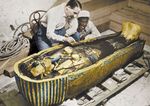
As the world-weary preacher in Ecclesiastes tells us, “Of making many books there is no end”, and there are times when this rings true. Books on ancient Egypt are no exception to this rule, and a new title seems to appear every month. But there are some titles that give the lie to the old cynic of the Bible. In each of these three new books Egyptology is in good hands, and so is the reader. The subject has great popular appeal, and because of this professionals in other branches of archaeology sometimes distrust it. Here are three reasons for them to feel that this is something worth studying. Anyone with an interest in ancient Egypt will know that the subject began with Napoleon’s invasion of the country in 1798. This led to the discovery of the Rosetta Stone in the following year. A major figure in the story is Jean-François Champollion (1790-1832), the restless Frenchman who deciphered the Rosetta’s hieroglyphs and went on to be the first professor of Egyptology. This may be all that most people know about him but his true history is more complex – and more fascinating – than this. The standard biography of Champollion, by Hermine Hartleben, first published in 1906, borders on hagiography. Here is the standard picture of the penniless scholar who, by genius and inspiration, took on the French establishment and overcame the darkness which had veiled the hieroglyphs for the better part of two millennia.

more from John Ray at the FT here.

the riots

600

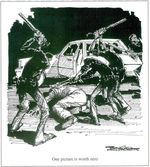
One of my favorite pieces of writing to emerge from the 1992 Los Angeles riots is a poem by a writer named Nicole Sampogna, called “Another L.A.” In it, the poet traces the odd dislocation of living on the Westside while so much of the city burns. “They send us home early, again,” she begins, “supposedly for curfew sake, / but I know it’s to beat the traffic.” And then: “over there the smoke rises, / horns blare, streets scream, / shoot, loot, / bash windows, bash heads, / lights out / knocked out / by a black & white with a baton. / but, here / will the pizza man deliver after sunset?” There it is, the dislocation that so often marks Los Angeles, and never more profoundly than when the not-guilty verdicts in the LAPD beating of Rodney King came down 20 years ago. Depending on where you lived or the part of town in which you found yourself, the atmosphere was static or chaotic, suspended or engaged. I remember, on the second afternoon of the conflagration, watching as a Fairfax district neighbor sunned herself on her small front lawn, while in the distance, sirens screamed. There’s a metaphor in there somewhere, perhaps in the way it reflects Sampogna’s sense of the city as disoriented, in which we connect (or don’t) “to the other LA with the flip of a switch.” How in such a place do we evoke the larger story? How do we find common ground?

more from David L. Ulin at the LA Times here.

fusing the bravura of Byzantium with the banality of Bisto

Muldoon-sfSpan

Philip Larkin’s body of work is so slender and, often, so seemingly slight, so devoid of belly fat and blather, as to make Elizabeth Bishop (whom I now think of as his nearest American counterpart) look like a blimp and a bigmouth. Of the 730 pages of “The Complete Poems,” a mere 90 are taken up by those poems Larkin saw fit to collect in his lifetime. One of the main challenges posed by this edition is that it asks us to reconcile the discrepancy between those slim 90 pages and the sprawling rest. What’s evident immediately is that the qualities that have, so far, allowed Bishop to triumph over her American contemporaries (notably Lowell) have their counterparts in Larkin, who has, so far, triumphed over his English contemporaries (notably Hughes). Bishop’s characteristic modesty, meticulousness and, even, anti-Modernism are everywhere to be found in Larkin; what gives the archetypical speaker of a Larkin poem his very particular tone of voice, though, is the peculiarly English sense of his being at once slightly muffled and slightly miffed…

more from Paul Muldoon at the NY Times here.

The Tyranny of the Many is (Perhaps) as Bad as the Tyranny of One

Tauriq Moosa in Big Think:

ScreenHunter_02 Apr. 21 14.03A society that forces its citizens to be shaped into the mould of whatever prevailing opinion thinks true or good, by virtue only and through the use of majority viewpoints, is as dangerous as any oppressive regime. Just because the weapon is prevailing opinion doesn’t mean it is any less oppressive of those who happen to dissent. Instead of a powerful individual throttling the freedom of the many, it is now the many who, by virtue of number, become powerful enough to throttle the freedom of the individual.

The reason we ought to be on our guard, then, rests in the incredible power tyranny fueled by prevailing opinion has. It rivals any of the great tyrants and tyrannies of history and today: it’s a tyranny that has built into it a watchdog alertness to individual activities, requiring no cameras or bugged houses, only paternalistic quidnuncs with idle hands, assertive self-righteousness and morally sensitive personalities; it’s a communication device with a thousand tongues, willingly able to turn into a vengeful arm of enforcement through coercion and ostracism; it sustains itself in, for example, media outlets that are twisted to take its form, as these are businesses who do not want to lose their clients and so will feed what most of them, being the majority, want to hear and see.

More here.

Was Hitler a Bully? Teaching the Holocaust to Kids

New 3QD columnist Evan Selinger in Slate:

ScreenHunter_01 Apr. 21 13.57Should I allow my 5-year-old daughter to embrace the world of Disney, or break Prince Charming’s spell by pointing out that royalty got awesome castles by exploiting poor serfs? Answers to questions like this define a parent’s outlook on what childhood should be like. Despite my exposure to critical gender studies, I generally encourage my daughter to get her politically incorrect princess on. So, imagine my dismay at discovering that her kindergarten class planned to commemorate Yom Hashoah (Holocaust Remembrance Day) by discussing a person called “Bully Hitler.”

To be fair, the teachers did their best when comparing the worst criminal in history to a playground tormentor. By combining Chrysanthemum, a story about a young girl bullied because of her unusual name, with the forest-animal tale Terrible Things: An Allegory About the Holocaust, no traumatic detail was ever uttered. Nobody mentioned concentration camps filled with emaciated prisoners and flesh incinerating ovens. And that’s a good thing, because 5- and 6-year-olds just can’t grasp the complexity of the Holocaust.

Young children do, however, understand bullying. And since bullying is dangerous and pervasive, kindergartners should be taught how to identify and properly respond to its troubling manifestations. As with “stranger danger” training, promoting safety requires piercing the innocence bubble with some knowledge of potential peril. Indeed, to advocate for a “pure childhood” is to recommend a dangerous naiveté.

So, why not depict Hitler as the ultimate bully?

More here.

Evolution has given humans a huge advantage over most other animals: middle age

From The Washington Post:

ManAs a 42-year-old man born in England, I can expect to live for about another 38 years. In other words, I can no longer claim to be young. I am, without doubt, middle-aged. To some people that is a depressing realization. We are used to dismissing our fifth and sixth decades as a negative chapter in our lives, perhaps even a cause for crisis. But recent scientific findings have shown just how important middle age is for every one of us, and how crucial it has been to the success of our species. Middle age is not just about wrinkles and worry. It is not about getting old. It is an ancient, pivotal episode in the human life span, preprogrammed into us by natural selection, an exceptional characteristic of an exceptional species.

Compared with other animals, humans have a very unusual pattern to our lives. We take a very long time to grow up, we are long-lived, and most of us stop reproducing halfway through our life span. A few other species have some elements of this pattern, but only humans have distorted the course of their lives in such a dramatic way. Most of that distortion is caused by the evolution of middle age, which adds two decades that most other animals simply do not get. An important clue that middle age isn’t just the start of a downward spiral is that it does not bear the hallmarks of general, passive decline. Most body systems deteriorate very little during this stage of life. Those that do, deteriorate in ways that are very distinctive, are rarely seen in other species and are often abrupt. Each of these changes can be explained in evolutionary terms. In general, it makes sense to invest in the repair and maintenance only of body systems that deliver an immediate fitness benefit — that is, those that help to propagate your genes. As people get older, they no longer need spectacular visual acuity or mate-attracting, unblemished skin. Yet they do need their brains, and that is why we still invest heavily in them during middle age.

More here.

Post-Prozac Nation

Siddhartha Mukherjee in The New York Times:

ProzacFew medicines, in the history of pharmaceuticals, have been greeted with as much exultation as a green-and-white pill containing 20 milligrams of fluoxetine hydrochloride — the chemical we know as Prozac. In her 1994 book “Prozac Nation,” Elizabeth Wurtzel wrote of a nearly transcendental experience on the drug. Before she began treatment with antidepressants, she was living in “a computer program of total negativity . . . an absence of affect, absence of feeling, absence of response, absence of interest.” She floated from one “suicidal reverie” to the next. Yet, just a few weeks after starting Prozac, her life was transformed. “One morning I woke up and really did want to live. . . . It was as if the miasma of depression had lifted off me, in the same way that the fog in San Francisco rises as the day wears on. Was it the Prozac? No doubt.”

Like Wurtzel, millions of Americans embraced antidepressants. In 1988, a year after the Food and Drug Administration approved Prozac, 2,469,000 prescriptions for it were dispensed in America. By 2002, that number had risen to 33,320,000. By 2008, antidepressants were the third-most-common prescription drug taken in America. Fast forward to 2012 and the same antidepressants that inspired such enthusiasm have become the new villains of modern psychopharmacology — overhyped, overprescribed chemicals, symptomatic of a pill-happy culture searching for quick fixes for complex mental problems. In “The Emperor’s New Drugs,” the psychologist Irving Kirsch asserted that antidepressants work no better than sugar pills and that the clinical effectiveness of the drugs is, largely, a myth. If the lodestone book of the 1990s was Peter Kramer’s near-ecstatic testimonial, “Listening to Prozac,” then the book of the 2000s is David Healy’s “Let Them Eat Prozac: The Unhealthy Relationship Between the Pharmaceutical Industry and Depression.”

More here. (Note: Congratulations to colleague and dear friend Sid for a brilliant article).

Saturday Poem

Looking Around, Believing
How strange that we can begin at any time. With two feet we get down the street. With a hand we undo the rose. With an eye we lift up the peach tree And hold it up to the wind —  white blossoms At our feet. Like today. I started In the yard with my daughter, With my wife poking at a potted geranium, And now I am walking down the street, Amazed that the sun is only so high, Just over the roof, and a child Is singing through a rolled newspaper And a terrier is leaping like a flea And at the bakery I pass, a palm, Like a suctioning starfish, is pressed To the window. We're keeping busy — This way, that way, we're making shadows Where sunlight was, making words Where there was only noise in the trees.
.
by Gary Soto
from New and Selected Poems by Gary Soto
Chronical Books, 1995

Friday, April 20, 2012

Synthetic DNA Created, Evolves on Its Own

Christine Dell'Amore in National Geographic:

ScreenHunter_03 Apr. 20 14.33Step aside, DNA—new synthetic compounds called XNAs can also store and copy genetic information, a new study says.

And, in a “big advancement,” these artificial compounds can also be made to evolve in the lab, according to study co-author John Chaput of the Biodesign Institute at Arizona State University. (See “Evolution vs. Intelligent Design: 6 Bones of Contention.”)

Nucleotides, the building blocks of DNA are composed of four bases—A, G, C, and T. Attached to the bases are sugars and phosphates. (Get a genetics overview.)

First, researchers made XNA building blocks to six different genetic systems by replacing the natural sugar component of DNA with one of six different polymers, synthetic chemical compounds.

The team—led by Vitor Pinheiro of the U.K.'s Medical Research Council Laboratory of Molecular Biology—then evolved enzymes, called polymerases, that can make XNA from DNA, and others that can change XNA back into DNA.

This copying and translating ability allowed for genetic sequences to be copied and passed down again and again—artificial heredity.

Last, the team determined that HNA, one of the six XNA polymers, could respond to selective pressure in a test tube.

More here.

Book sculpting by Alexander Korzer-Robinson

From The Telegraph and AKR website:

Through my work in the tradition of collage I am pursuing the very personal obsession of creating narrative scenarios in small format. Using antiquarian books, makes the work at the same time an exploration and a deconstruction of nostalgia. We create our own past from fragments of reality in a process that combines the willful aspects of remembering and forgetting with the coincidental and unconscious. On a general level, I aim to illustrate this process that forms our inner landscape. By using pre-existing media as a starting point, certain boundaries are set by the material, which I aim to transform through my process. Thus, an encyclopedia can become a window into an alternate world, much like lived reality becomes its alternate in remembered experience. These books, having been stripped of their utilitarian value by the passage of time, regain new purpose. They are no longer tools to learn about the world, but rather a means to gain insight about oneself. I make book sculptures / cut books by working through a book, page by page, cutting around some of the illustrations while removing others. In this way, I build my composition using only the images found in the book.

I am an artist from Berlin now living in Bristol. Drawing from a background in psychology, my
art practice focuses on the notion of the “inner landscape”. Using generally discarded
materials, I make objects as an invitation to the viewer to engage her/his own inner life in
order to assign meaning to the artwork.
The cut book art has been made by working through the books, page by page, cutting around
some of the illustrations while removing others. The images seen in the finished work, are
left standing in the place where they would appear in the complete book. As a final step the
book is sealed around the cut, and can no longer be opened.
As we remember the books from our own past, certain fragments remain with us while others
fade away over time – phrases and passages, mental images we created, the way the stories
made us feel and the thoughts they inspired. In our memory we create a new narrative out of
those fragments, sometimes moving far away from the original content. This is, in fact, the
same way we remember our life – an ever changing narrative formed out of fragments.
This mostly subconscious process of value judgements and coincidence is what interests me as
an artist and as a psychologist.
Through the artistic work, these books, having been stripped of their utilitarian value by
the passage of time, regain new purpose. They are no longer tools to learn about the world,
but rather a means to gain insight about oneself.

More here.

Survey finds no hint of dark matter near Solar System

From Nature:

ImagesCAHBB3ZVIn the largest survey of its kind to date, astronomers scouring the space around the Solar System for signs of dark matter — the hypothetical material believed to account for more than 80% of the mass in the Universe — have come up empty-handed. If confirmed, the surprising result would upend a long-established consensus, researchers not involved in the study say. For decades, cosmic theories have relied on dark matter — which exerts gravitational pull but emits no light — to be the hidden scaffolding that explains how structure arose in the Universe, how galaxies formed and how the rapidly spinning Milky Way manages to keep from flying apart. Without dark matter, theorists say, the visible material in the Universe, such as stars and gas, would not have the heft to do the job alone. “If the results stand up, it’s going to be very difficult to make them compatible with the conventional view of dark matter,” says Scott Tremaine, an astrophysicist at the Institute for Advanced Study in Princeton, New Jersey, who was not involved in the study.

The researchers measured the velocity of more than 400 stars within 4,000 parsecs (13,000 light years) of the Sun in a limited volume — a 15-degree cone — below the flattened disk of the Milky Way Galaxy, and then used those observations to extrapolate the velocities of stars on the other side of the disk, above the plane. This volume is approximately four times greater than that surveyed by other teams in previous studies. The researchers found that at most, only about one-tenth the amount of dark matter predicted by models could exist in the volume of space they examined, Moni Bidin says.

More here.

Friday Poem

America
.
Then one of the students with blue hair and a tongue stud
Says that America is for him a maximum-security prison

Whose walls are made of RadioShacks and Burger Kings, and MTV episodes
Where you can’t tell the show from the commercials,

And as I consider how to express how full of shit I think he is,
He says that even when he’s driving to the mall in his Isuzu

Trooper with a gang of his friends, letting rap music pour over them
Like a boiling Jacuzzi full of ballpeen hammers, even then he feels

Buried alive, captured and suffocated in the folds
Of the thick satin quilt of America

And I wonder if this is a legitimate category of pain,
or whether he is just spin doctoring a better grade,

And then I remember that when I stabbed my father in the dream last night,
It was not blood but money

That gushed out of him, bright green hundred-dollar bills
Spilling from his wounds, and—this is the weird part—,

He gasped “Thank god—those Ben Franklins were
Clogging up my heart—

And so I perish happily,
Freed from that which kept me from my liberty”—

Which was when I knew it was a dream, since my dad
Would never speak in rhymed couplets,

And I look at the student with his acne and cell phone and phony ghetto clothes
And I think, “I am asleep in America too,

And I don’t know how to wake myself either,”
And I remember what Marx said near the end of his life:

“I was listening to the cries of the past,
When I should have been listening to the cries of the future.”

But how could he have imagined 100 channels of 24-hour cable
Or what kind of nightmare it might be

When each day you watch rivers of bright merchandise run past you
And you are floating in your pleasure boat upon this river

Even while others are drowning underneath you
And you see their faces twisting in the surface of the waters

And yet it seems to be your own hand
Which turns the volume higher?
.
.
by Tony Hoagland
from What Narcissism Means to Me
Graywolf Press, St. Paul, Minnesota

Why India Is Democratic and Pakistan Is Not

Christophe Jaffrelot in Foreign Affairs:

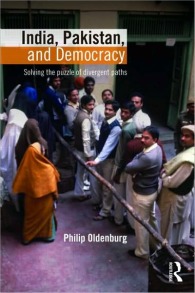
Indiapakistananddemocracy195Since 1995, when the historian Ayesha Jalal's pathbreaking and controversial book Democracy and Authoritarianism in South Asia was published, there has been no serious study comparing the political trajectories of India and Pakistan. Those who have tried to fill this gap have succumbed to the temptation of attributing India's democracy to Hinduism and Pakistan's autocracy to Islam — a reductionist and not particularly productive approach, since religion is usually only secondary in explaining political trajectories, whether it is Indonesia's democratization or Sri Lanka's march to dictatorship. In the remarkable India, Pakistan, and Democracy, Philip Oldenburg, a research scholar at Columbia University, is wise enough not to resort to such sociocultural explanations. Instead, he examines historical, political, sociological, cultural, and external factors to explain the reasons why India and Pakistan diverged.

Oldenburg is quick to dispel some common misunderstandings about India and Pakistan, the first being that they had similar experiences during the colonial era. In the late nineteenth and early twentieth centuries, the British began gradually devolving power to local authorities in several provinces across India. They did not pursue such reform very far in the North-West Frontier Province and Punjab, two provinces that would make up the bulk of Pakistan after the 1947 partition. Both territories were important military recruitment grounds for the Raj and were located along its restive western frontier, where devolution was considered a security threat. Whereas several of the provinces India inherited from the Raj had experience with some democracy, Pakistan inherited two highly militarized provinces with no such background, laying the groundwork for the country's military-bureaucratic ethos. Even more, India was born with an intact bureaucratic apparatus in Delhi, whereas Pakistan had to build an entire government in 1947 under a state of emergency.

More here.

The Stages of Grading

Debby Thompson in McSweeney's:

Stage I

Stage I begins in benign resentment. You’re determined, this time, not to let those 80 term papers and final exams destroy you. It won’t be like the last grading marathon at semester’s end. You will stay in charge. You have 800 pages to grade, 400 on American Drama and 400 on Literary Theory. You take out your purple grading pen.

“Power serves as an overhanging subconscious,” says the first sentence. You experience your first twinges of pain. But it’s mild, still mild. You can still giggle at the assertion that “we adopt our social roles in order to panda to society.” You picture your social role—your teacher persona—as a black-and-white herbivore performing in a zoo for a crowd of unruly students. Then a character in a play you read this semester, you learn, suffers from “post-dramatic stress disorder.” He’s also in a “post-depressive state.” You’re still pre-, but barely.

Stage II

Stage II presents with mild but steady localized pain, mostly along the GI tract, and an inability to concentrate. Despair is still contained, but it’s eyeing the lymphatic system’s freedom train. Women are “co-modified.” Men are “discluded.” Role models are “immolated.” Passages are “taken out of context due to objective reality.” “Often times” is everywhere.

Bad things are happening to language.

Martin Luther King, Jr. is “African,” while Shakespeare’s Othello is “African American,” and Shylock is “a Hebrew.”

More here. [Thanks to Maeve Adams.]