Category: Recommended Reading
albinoni
i started a joke
Sunday Poem
Shanghai Traffiic
Morning traffic makes excuses at every changing light.
Now the whole world is jealous of Shanghai, humming
And hawing, purring and growling. One heart beats faster
As it runs the red, a double-decker bus screams with rage:
A spluttering of outrage, a fit of blue pique. There is only
One life, you fool, the conductor says, as he pummels
The green bonnet of something smaller than mankind.
This morning the whole world should be one Shanghai,
Quick-witted, light-footed, like the handsome young novelists
Having cocktails at the Glamour Bar, beautiful as Shanghai
That turns its proud head to foreigners, not caring a damn
As the fish rise in the canal seine-net, as the scholar turns
To split an atom. I turn into the Nanking Road and find
A sheet of luminescent Venetian glass, colours of agave
And opal, texture of oriental cloth upon the window of morning,
Upon the face of my Lord Byron. Traffic like this is worth it –
Worth it to have so many humans in the nest of life together.
Though these are mostly the swollen lights and embarrassed tails
Of saloon and estate Fords, of aluminium grills, forgotten marques,
Stray Bentleys and garaged ZV plates. A mist of life,
An apron of colour, a human luminescence, levitates over
The asphalt of Shanghai. Here, the sin of the world is bleached
With business. It is history that the traffic circles round,
History that pulls the night-grill from its earth-lock and begins
To trade. Such morning traffic: here in Shanghai it teaches me
improvisations of perfect form, the beginnings of
Yeatsean indigo, a shadow disturbed, the colour of beautiful.
.
by Thomas McCarthy
publisher: PIW, 2010
Saturday, May 26, 2012
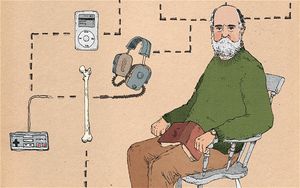
B. F. Skinner’s ideas are making an unlikely comeback
B. F. Skinner’s notorious theory of behavior modification was denounced by critics 50 years ago as a fascist, manipulative vehicle for government control. But Skinner’s ideas are making an unlikely comeback today, powered by smartphone apps that are transforming us into thinner, richer, all-around-better versions of ourselves. The only thing we have to give up? Free will.
David H. Freedman in The Atlantic:
Most of us know someone who lost weight years ago and has kept it off, and we all see celebrities who claim to have slimmed down for good using plain old diet and exercise, from Bill Clinton to Drew Carey to Jennifer Hudson. But we keep hearing that the vast majority of us—98 percent is a figure that gets thrown about—can’t expect to do the same.
Alcoholics don’t seem to face such dismal prospects, thanks to Alcoholics Anonymous and similar multistep programs, which are widely regarded as effective treatments. With obesity, we’re apparently at a loss for a clear answer. Fads like the Atkins diet slowly fade in popularity after dieters watch the weight return. We’re left with the impression that the techniques needed to permanently lose weight don’t exist, or apply to only a tiny percentage of the population, who must be freaks of willpower or the beneficiaries of exotic genes. Scientists and journalists have lined up in recent years to pronounce the diet-and-exercise regimen a nearly lost cause—a view argued in no fewer than three cover stories and another major article in The New York Times Magazine over the past 10 years, and in a cover story in this magazine two years ago.
All of which is odd, because weight-loss experts have been in fairly strong agreement for some time that a particular type of diet-and-exercise program can produce modest, long-term weight loss for most people. But this program tends to be based in clinics operated by relatively high-priced professionals, and requires a significant time commitment from participants—it would be as if the only way to get treated for alcoholism were to check into the Betty Ford Center. The problem is not that we don’t know of a weight-control approach that works; it’s that what works has historically been expensive and inconvenient.
More here.
The Self Illusion: An Interview With Bruce Hood
Jonah Lehrer in Wired:
LEHRER: The title of The Self Illusion is literal. You argue that the self – this entity at the center of our personal universe – is actually just a story, a “constructed narrative.” Could you explain what you mean?
HOOD: The best stories make sense. They follow a logical path where one thing leads to another and provide the most relevant details and signposts along the way so that you get a sense of continuity and cohesion. This is what writers refer to as the narrative arc – a beginning, middle and an end. If a sequence of events does not follow a narrative, then it is incoherent and fragmented so does not have meaning. Our brains think in stories. The same is true for the self and I use a distinction that William James drew between the self as “I” and “me.” Our consciousness of the self in the here and now is the “I” and most of the time, we experience this as being an integrated and coherent individual – a bit like the character in the story. The self which we tell others about, is autobiographical or the “me” which again is a coherent account of who we think we are based on past experiences, current events and aspirations for the future.
The neuroscience supports the claim that self is constructed. For example, Michael Gazzaniga demonstrated that spilt-brain patients presented with inconsistent visual information, would readily confabulate an explanation to reconcile information unconsciously processed with information that was conscious. They would make up a story. Likewise, Oliver Sacks famously reported various patients who could confabulate accounts to make sense of their impairments. Ramachandran describes patients who are paralyzed but deny they have a problem. These are all extreme clinical cases but the same is true of normal people. We can easily spot the inconsistencies in other people’s accounts of their self but we are less able to spot our own, and when those inconsistencies are made apparent by the consequences of our actions, we make the excuse, “I wasn’t myself last night” or “It was the wine talking!” Well, wine doesn’t talk and if you were not your self, then who were you and who was being you?
More here.
American rage at Pakistan over the punishment of a CIA-cooperating Pakistani doctor is revealing
Glenn Greenwald in Salon:
Americans of all types — Democrats and Republicans, even some Good Progressives — are just livid that a Pakistani tribal court (reportedly in consultation with Pakistani officials) has imposed a 33-year prison sentence on Shakil Afridi, the Pakistani physician who secretly worked with the CIA to find Osama bin Laden on Pakistani soil. Their fury tracks the standard American media narrative: by punishing Dr. Afridi for the “crime” of helping the U.S. find bin Laden, Pakistan has revealed that it sympathizes with Al Qaeda and is hostile to the U.S. (NPR headline: “33 Years In Prison For Pakistani Doctor Who Aided Hunt For Bin Laden”; NYT headline: “Prison Term for Helping C.I.A. Find Bin Laden”). Except that’s a woefully incomplete narrative: incomplete to the point of being quite misleading.
What Dr. Afridi actually did was concoct a pretextual vaccination program, whereby Pakistani children would be injected with a single Hepatitis B vaccine, with the hope of gaining access to the Abbottabad house where the CIA believed bin Laden was located. The plan was that, under the ruse of vaccinating the children in that province, he would obtain DNA samples that could confirm the presence in the suspected house of the bin Laden family. But the vaccine program he was administering was fake: as Wired‘s public health reporter Maryn McKenna detailed, “since only one of three doses was delivered, the vaccination was effectively useless.” An on-the-ground Guardian investigation documented that ”while the vaccine doses themselves were genuine, the medical professionals involved were not following procedures. In an area called Nawa Sher, they did not return a month after the first dose to provide the required second batch. Instead, according to local officials and residents, the team moved on.”
That means that numerous Pakistani children who thought they were being vaccinated against Hepatitis B were in fact left exposed to the virus.
More here.
Martin Amis: over-60 and under-appreciated
From The Telegraph:
In the days when he was the hip young gunslinger of British fiction, the Martin Amis interview tended to follow a certain form. This would involve tyro journalists – Amis wannabes for the most part – joining their subject at the snooker table or on the tennis court, where the author would go through his famously competitive paces, presenting the journalist with the tricky dilemma of whether to throw the game and curry his favour, or beat him and risk his resentment. But at 62, time and Amis’s recent relocation to New York have put something of a damper on his sporting enthusiasms. The pub and snooker evenings were long ago sacrificed to family life. And he no longer plays tennis. 'It just got so tragic,’ he says with a sigh. 'I hated it so much – because I wasn’t winning. Isabel says, “Play 80-year-olds, you’ll win against them.” But that’s no good. I can still run – not as fast. My game was built on mobility; didn’t have any big shots or anything. A defensive lob was my big shot. But it’s more to do with reflexes. You shape to do it and you’re not there – you’re crowding it, and the ball’s out of reach, and it fills you with a weird sort of self-disgust. Solemn exasperation and self-disgust.’ Nowadays, he can’t even watch the Premier League because he is unable to operate the television. 'Pathetic!’ He gives a rueful shrug. 'The technology has moved so far beyond my competence.’
Amis relocated to New York some 18 months ago, and now lives in the Cobble Hill district of Brooklyn, in a handsome four-storey brownstone, with his wife, the writer Isabel Fonseca, and their two teenage daughters, Fernanda and Clio. It is tempting to read something into the move. One of the recurring themes of Amis’s pronouncements over the past few years has been a palpable disenchantment with England and English life: the 'skanky town’ malice of London’s literary world; his bald declaration to a French newspaper that he would 'prefer not to be English’; the sense that his homeland is a busted flush; the fact that his new book, Lionel Asbo, is a satire on the shallowness and vulgarity of celebrity-obsessed Britain. All of this may or may not be true, but it is not the reason he has decamped to America. Isabel, he says, is a New Yorker, and wanted to be closer to her mother and stepfather as they grew older.
More here.
A Moveable Feast rises above the struggle of Hemingway’s later years
From The Guardian:
In looking at In Our Time and A Moveable Feast, we've mainly focused on Hemingway as a young man: fit, young and heading for the stratosphere. But as Mogger64 noted in his original nomination, it's significant that A Moveable Feast was “written at the end of his life”. It isn't quite the work of an old man. Hemingway never made it that far. But it's pretty much the last word from someone on the way out. It speaks as loudly of Hemingway at the end of his career as it does of the beginning. And that career was remarkable. He had done it all by 1956, when he was spurred into reminiscence following the rediscovery of some old Paris notebooks which had lain for many years in a trunk in the basement of the Ritz hotel. He'd won the Nobel prize. He'd won the Pulitzer prize. He'd sold hundreds of thousands of books. He'd inspired dozens of imitators. He'd become an adjective and a legend. His life outside writing was just as celebrated: the bull fight aficionado, the boxer, the big game hunter, the fisherman, the friend of Spanish Republicans, the man who liberated Paris. Papa: the tall, handsome, heavyweight alpha male.
But by 1956 all that was heading into memory, if it had ever really existed.
More here.
Guy Plays A Cat Organ
For James McVinnie:
Mohammed Hanif On Secrets And Lies In Pakistan
At NPR:
The Pakistani writer Mohammed Hanif is living proof that you can sometimes tell the truth more easily with fiction than facts. Hanif is a journalist in one of the world's more dangerous places to be a journalist: Pakistan. He's also become one of the country's most prominent and provocative novelists. His book A Case of Exploding Mangoes told the tale of real-life Pakistani dictator Zia-ul-Haq, who died in a plane crash in 1988. Few believed it was an accident, and Hanif's novel delved into the conspiracies (and conspiracy theories).
Hanif joins NPR's Steve Inskeep to discuss the reception of A Case of Exploding Mangoes and his new novel, Our Lady of Alice Bhatti, the story of a poor hospital nurse in the city of Karachi.
On choosing to fictionalize Zia-ul-Haq's death
“Like all young reporters, I was like, this is going to be my big story, and I started working on it. After a few months, I realized that there was no way I was going to get to the bottom of it. There were layers and layers and layers of deception and cover-ups to cover the other cover-ups. Then it occurred to me that I would just make up my own facts. If no one was willing to tell me who did it, then as a fictional character, I'll raise my hand and say, 'Well, I did it,' and I'll write a book about it. And so, basically, it was a failed journalist's revenge.”
On people accepting his version of events
“The funny thing is, after the book came out, a lot of people — and some of them were heads of intelligence agencies — I've run into them at a party or at a social gathering, and they take me into a corner and say, 'Son, you've written a brilliant novel. Now tell me, who's your source?' I used to find it a bit scary at the beginning that, my God, these people are running my country and they actually believe all the lies that I've written.”
More here.
wonder, melancholy
We don’t have a good name for it – “nature writing” is about the best one can come up with. But that label has an obvious flaw. Anyone who was around 50 years ago will recall that the terms of reference changed radically, almost overnight, in the 1960s. The word “nature” gave way in popular discourse to “environment” and “nature writing” mutated into varieties of “eco-criticism”. The difference was conceptual. “Nature”, drawing on primeval myth and Romantic literature, had traditionally been conceived of as something superhuman and invincible. As Wordsworth grandly described it: A motion and a spirit that impels All thinking things, all objects of all thought, And rolls through all things. Humans were part of that everything. Our species was no more capable of “destroying” nature than jellyfish can reverse the course of the Gulf Stream.
more from John Sutherland at the FT here.
a writer of place
It’s tempting to call Richard Ford a writer of place. Beginning with his first novel, 1976’s “A Piece of My Heart,” the 68-year-old author has tended toward the border among landscape, language and character, using setting to help drive his narratives. Think of Frank Bascombe, who in “The Sportswriter,” “Independence Day” and “The Lay of the Land” drifts across the bland surfaces of New Jersey, seeking not stimulation but a stasis similar to that of the suburbs where he resides. Or the people of Ford’s Montana books, “Rock Springs” and “Wildlife”: etched by the stark environment in which they find themselves, staring down the elements of their lives. It’s as if, Ford wants us to imagine, we live at the mercy of larger forces, forces outside ourselves, forces that determine who we are. And yet, he insists by phone from his home in East Boothbay, Maine, that’s not the case — or not exactly, anyway. “Growing up in Mississippi,” he recalls, “and being told that this defined me, set me on a path away from place as generative. When I started writing, I took the Toulouse-Lautrec attitude that place is background scenery. I didn’t want the place I came from to be responsible for me.”
more from David L. Ulin at the LA Times here.
land of promise
Whatever their political party, American leaders have generally subscribed to one of two competing economic philosophies. One is a small-government Jeffersonian perspective that abhors bigness and holds that prosperity flows from competition among independent businessmen, farmers and other producers. The other is a Hamiltonian agenda that believes a large, powerful country needs large, powerful organizations. The most important of those organizations is the federal government, which serves as a crucial partner to private enterprise, building roads and schools, guaranteeing loans and financing scientific research in ways that individual businesses would not. Today, of course, Republicans are the Jeffersonians and Democrats are the Hamiltonians. But it hasn’t always been so. The Jeffersonian line includes Andrew Jackson, the leaders of the Confederacy, William Jennings Bryan, Louis Brandeis, Barry Goldwater and Ronald Reagan. The Hamiltonian line includes George Washington, Henry Clay, Abraham Lincoln, William McKinley, both Roosevelts and Dwight Eisenhower. Michael Lind’s “Land of Promise” uses this divide to offer an ambitious economic history of the United States.
more from David Leonhardt at the NY Times here.
Friday, May 25, 2012
Divine Machines: Leibniz and the Sciences of Life
Jeffrey K. McDonough reviews Justin Smith's Divine Machines: Leibniz and the Sciences of Life:
It is widely recognized that Leibniz's philosophical thought is deeply influenced by the mathematics, physics and philosophical theology of his era. Justin E. H. Smith's Divine Machines argues that many of Leibniz's most central philosophical doctrines are similarly bound up with the life sciences of his time, where the “life sciences” are understood very broadly to include fields as diverse as alchemy, medicine, taxonomy, and paleontology. Smith's groundbreaking exploration represents an important contribution to our understanding of both Leibniz's philosophy and the study of life in the early modern era. It is to be recommended to historians, philosophers, and historians of philosophy alike. Below I highlight four central topics in Smith's book, raising some reservations along the way.
1. First Things
The first part of Divine Machines is divided into two chapters, the first of which explores Leibniz's views on medicine. As Smith shows in detail, Leibniz, like many of his early modern contemporaries, was deeply interested in the study of medicine and its ancillary fields. Thus in a letter of 1697, Leibniz declares medicine to be “the most necessary of the natural sciences” and maintains that it is “the principal fruit of our knowledge of bodies,” since the promotion of health may allow us to “work for the glory of God” (26). This lofty aim no doubt bolstered Leibniz's interest in (what we would call) chemistry and anatomy (28-33, 48-58). In connection with the former, Smith provides a rather detailed account of Leibniz's treatise on the “purgative power” of the ipecacuanha root, a treatise that Smith calls, with (I assume) unintentionally faint praise, “the most comprehensive and influential of Leibniz's contributions to the history of medicine and pharmacy” (40). In connection with anatomy, Smith chronicles what he sees as a shift in Leibniz's enthusiasms away from vivisection towards microscopy.
Ideology Never Ends: An Interview with Daniel Chirot
Almantas Samalavicius in Eurozine:
AS: Recently there has been a revival of leftist ideologies and discourses all over eastern Europe. Younger intellectuals have set out to reanimate the “Left” with a set of western discursive practices (multicultural, feminist, queer critique and the like). Do you think such “revivalism” has any potential?
DC: The “end of ideology” proposed by Daniel Bell a half century ago was exaggerated even then. In fact, not long after that book, which was based heavily on the death of the old Left as a dynamic ideology, a new kind of Left surged, and by 1968, it was very clear that ideology was far from ended. I once asked Bell if he had abandoned the idea of the end of ideology. His answer, which was no answer at all, was that this was like asking him when he had stopped beating his wife. In other words, whether or not he did (and there is no evidence he did!), once the question was posed that way, he could not answer without seeming foolish. Later, with the fall of European communism, Fukuyama and others made the same claim. But ideology never ends. Yes, of course, there will be a resurgent Left, though it is more likely to take the form of protest against the unfairness of the existing economic order. We see this slowly forming in the United States. A large part of the population wants a fairer taxation system, greater toleration of gays and racial minorities, and greater investments in education. But there is also a very active Right that does not want these things. What are called the “culture wars” in the United States is actually another form of a quite traditional left-right struggle. In Europe, both the Right (think Viktor Orban or the anti-immigrant parties in places like the Netherlands or Denmark) and the Left, particularly in southern Europe, are going to get much stronger. Economic crises have a way of doing that, and the one we have now is not going to go away so quickly.
Should Hate Speech Be Outlawed?
Former Justice John Paul Stevens reviews Jeremy Waldron's The Harm in Hate Speech in the NYRB:
…Waldron reviews his debate with Anthony Lewis about freedom for the thought that we hate. Lewis argues that we should learn to tolerate hate speech because codes regulating it would create a danger of overenforcement that could seriously threaten the expression of unpopular ideas. Waldron believes Lewis undervalues two points: first, that what is regulated by hate speech laws is not hateful thought but hateful expression (a point that seems unimportant to me, since thought and expression are closely intertwined in this context); and second, as Waldron often repeats, that toleration of ugly speech is easier for liberal bystanders than for the target of the speech.
Waldron and Lewis agree, however, that “Americans are freer to think what we will and say what we think than any other people.” They also agree, up to a point, about the history that led to that freedom. In 1798, when Congress enacted the Alien and Sedition Act, the United States was a young country and federal authority was precarious:
George Washington was denounced as a thief and a traitor; John Jay was burned in effigy; Alexander Hamilton was stoned in the streets of New York…. Republican militias armed and drilled openly, ready to stand against Federalist armies. Over everything, like a specter, hung news of the Jacobin terror in France. It was by no means obvious in those years—though it seems obvious to us now—that the authorities could afford to ignore venomous attacks on the structures and officers of government, or leave the publication of such attacks uncontested in the hope that they would be adequately answered in due course in the free marketplace of ideas.
It was over a century later—in the aftermath of World War I—that federal judges began to see the power of the state as much more of a threat to the individual than vice versa.
The interesting and informative discussion of history in this chapter omits any comment on the importance of a unique aspect of American history: the fact that during the period under discussion the dynamic growth of America was fueled by immigration of several different ethnic groups, each attracted by the freedom of opportunity here but also each engaged in economic and political competition with other groups of immigrants. What might now be classified as “hate speech” included not merely comments by members of the majority but exchanges between rival ethnic groups.
The University Poem
By Vladimir Nabokov, in the LRB:
1.
‘So then you’re Russian? It’s the first time
I have met a Russian …’
And the lively, delicately bulging
eyes examine me. ‘You take your tea
with lemon, I already know.
I also know that you have icons
where you live, and samovars.’
A pretty girl. A British glow
spreads across her tender skin.
She laughs, she speaks at a quick clip:
‘Frankly, our town is dullish,
though the river’s charming!
Do you row?’ Big girl,
with sloping shoulders, hands that are large,
bereft of rings.2
Thus, at the vicar’s, over tea,
brand-new acquaintances, we chat,
and I endeavour to be droll.
In troubling, dulcet worry lost
at the legs that she has crossed
and at her vivid lips I peer,
then, once again, I quickly shift
my cheeky gaze. She, as expected,
has come with aunt, although the latter
is busy with her left-wing patter – ,
and, contradicting her, the vicar,
a timid man (large Adam’s apple),
with a brown-eyed, canine squint,
chokes upon a nervous cough.
The Precarious State of the Literary Interview
From The Atlantic:
The 2010s may rightly be called the age of the interview. Interviews appear regularly in magazines and newspapers, on blogs, websites, videocasts, television, and podcasts. On iTunes this week, eight of the top-ten podcast revolve around or include conversations or interviews. The popularity of interviews indicates that although we may be isolated in our technology-clad bubbles, we still like to listen to people talk and engage, reflect and share, even if we've stopped doing it ourselves. According to some, literary interviews—which were oncethe apotheosis of the form—have become platitudinal and monotonous. In 2006, Pico Iyer attributed the decline of the literary interview to an overreliance on sound bites about authors plucked from search engines like Google and recommended that interviewers actually read an author's work. “[I]nterviews,” he wrote, “have become a circular form in which almost every interviewer asks the same questions as every previous interviewer.” Although some writers and readers have given up on literary interviews, now is not the time to abandon the form; some of the best examples of literary interviews are available on the Internet.
KCRW's weekly half-hour broadcast and podcast “Bookworm” with host Michael Silverblatt reminds us that the literary interview can function as art. Silverblatt prepares for each interview by reading almost everything a guest has ever written. He is a sensitive and careful reader who shapes his questions based on a guest's responses rather than a set of rote queries. Silverblatt's questions spark analysis, discussion, and storytelling. As a result, his guests break subjects apart and examine them more closely, entertain multiple points of view, and create narratives rather than blab anecdotes. Silverblatt takes the role of “host” literally. He is cordial and considerate without being sycophantic. (Silverblatt's Lannan Podcasts are also available via podcast.)
More here.
Designs for a New India
From Harvard Magazine:
There are two Hyderabads. One, a historic city in the heart of India, established with a hilltop fort built by Hindu rulers in the fourteenth century, is rich with ancient palaces, tombs, and mosques built by the Muslim rulers who came later. The other is HITEC City, the northwestern suburb booming with industry linked to that acronym: Hyderabad Information Technology Engineering Consultancy. The two worlds rarely mix. Workers from HITEC City’s towering office buildings—emblazoned with their logos: Motorola, Novartis, Deloitte, Tata Consultancy—tend to live in equally monolithic apartment towers near their offices. They rarely come in contact with old Hyderabad, a densely populated district of winding medieval streets, inhabited mostly by poor Muslims. Rahul Mehrotra, M.Arch. ’87, has seen both Hyderabads. His Mumbai-based architecture firm designed a corporate campus in HITEC City and restored a palace in the historic center. In his work, Mehrotra—now professor of urban design and planning at the Graduate School of Design—endeavors to engage disparate worlds with each other, reminding the inhabitants of each to consider the existence of the other. “Softening thresholds” between different sectors of society is one of his guiding principles.
More here.