Cruel Conservatives Throw a Masquerade Ball

Maureen Dowd in The New York Times:

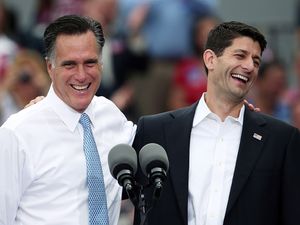
Romney-ryan2It was remarkable to watch Mitt Romney ignore the empty seats and airless mood and reach deep inside himself to give a speech in which he appeared genuine. It was also remarkable to see that even when he looks genuine, he still seems fake. And despite the soft quiver in his voice, and Ann’s nonstop transfusions of emotion and wrenching testimonials from Mormons forced to publicly relive family tragedies simply to give Mitt a personality, the terribly erect candidate still seemed as remote as Jupiter. It was truly thrilling to watch the blindingly white older male delegates greet their young, blue-eyed future: Paul Ryan, the 42-year-old Wisconsin congressman who turns out to be more talented than anyone had anticipated — a prodigy of prestidigitation.

In his speech Wednesday night, the altar boy altered reality, conjuring up a world so compassionate, so full of love-thy-neighbor kindness and small-town goodness, that you had to pinch yourself to remember it was a shimmering mirage, a beckoning pool of big, juicy lies. (The fitness freak may have also fibbed about running a sub-three-hour marathon in 1991; Runner’s World reports that his time was 4 hours and 1 minute.) As the writer Dermot McEvoy notes, Ryan has “the so sincere, so phony air of a gloomy Irish undertaker standing outside the funeral parlor where you’ve come to plant your mother, shaking his head consolingly and giving you that firm two-handed Irish handshake.”

Except with Ryan, it’s the safety net in the coffin.

More here.

Beyond a joke: the truth about why we laugh

From The Guardian:

Laughing-008Consider the bizarre events of the 1962 outbreak of contagious laughter in Tanganyika (now Tanzania). What began as an isolated fit of laughter in a group of 12-to 18-year-old schoolgirls rapidly rose to epidemic proportions. Contagious laughter propagated from one individual to the next, eventually infecting adjacent communities. Like an influenza outbreak, the laughter epidemic was so severe that it required the closing of at least 14 schools and afflicted about 1,000 people. Fluctuating in intensity, it lasted for around two and a half years. A psychogenic, hysterical origin of the epidemic was established after excluding alternatives such as toxic reaction and encephalitis. Laughter epidemics, big and small, are universal. Contagious laughter in some Pentecostal and related charismatic Christian churches is a kind of speaking in tongues (glossolalia), a sign that worshippers have been filled with the Holy Spirit. Before looking askance at this practice, consider that it was present at the historic Cane Ridge revival of 1801, in Kentucky, and part of an exuberant religious tradition in which the Shakers actually shook and the Quakers quaked. Even John Wesley, founder of the Methodist Church, did some of his own quaking and shaking. Those experiencing the blessing of holy laughter spread it back to their home congregations, creating a national and international wave of contagious laughter. Contrast, now, the similarity between the propagation of such religious anointings and what was called the “laughing malady puzzle in Africa“. They are strikingly similar, tap the same social trait, and are an extreme form of the commonplace, not pathology.

…The innovation of laugh tracks in early television shows kindled the fears of some cold war-era politicians that the pinko media was trying to surreptitiously control the masses. Psychology researchers jumped on the new phenomenon of “canned” laughter, confirming that laugh tracks do indeed increase audience laughter and the audience's rating of the humorousness of the comedy material, attributing the effect to sometimes baroque mechanisms (deindividuation; release restraint mediated by imitation; social facilitation; emergence of social norms, etc). Decades later, we learned that the naked sound of laughter itself can evoke laughter – that you don't need a joke

More here.

Saturday, September 1, 2012

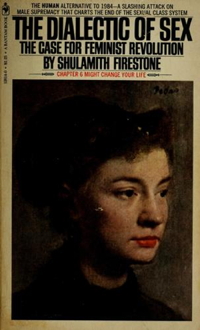
Eulogy for a Sex Radical: Shulamith Firestone’s Forgotten Feminism

Dialecticofsex-smallerEmily Chertoff in The Atlantic:

It's hard to imagine that Shulamith Firestone and Helen Gurley Brown thought very highly of each other. Gurley Brown wore immaculate make-up and had a driver. There were needlepoint pillows in her office. She had sex. She told other women that they should have sex, too.

Firestone, on the other hand, did not have sex. In fact, she was a political celibate. She encouraged other women to become celibate. Some of them did. She wore owl glasses; she looked like the 70s radical she was.

Firestone, whose death was reported yesterday, will not receive a fraction of the encomia Gurley Brown did after her death earlier this month. Why? Both women were feminist pioneers. Both wrote canonical feminist texts that became bestsellers when they were published about a half century ago. Both shaped absolutely the ways we think about gender, education, and the family today. Both put sex at the center of their analyses.

Yet Gurley Brown became one of the most successful magazine editors of all time. Firestone became a hermit and suffered from mental illness. She'd been dead for a weekwhen neighbors found her. But her reclusiveness isn't the only reason we don't remember her.

Here's the main reason. Firestone wanted to eliminate the following things: sex roles, procreative sex, gender, childhood, monogamy, mothering, the family unit, capitalism, the government, and especially the physiological phenomena of pregnancy and childbirth. She wanted to mechanize reproduction — gestating fetuses in artificial wombs — and raise the offspring communally, treating them no differently from adults at the earliest possible age. Sound crazy? It was certainly extreme. But it's surprising how many ideas that are now starting to gain currency can be found in kernel form in her 1970 book The Dialectic of Sex.

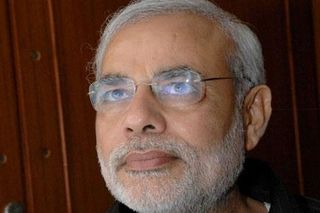
Modi’s Teflon Is Wearing Off

10374.modi-teflonHartosh Singh Bal in Open:

In August 2004, I went with a colleague to the office of the Vishwa Hindu Parishad (VHP) in Ahmedabad to meet its general secretary Dilip Trivedi, who was also the Government Pleader of Mehsana district. We were asked to wait outside a room, where a meeting of senior VHP leaders was underway. The discussions could be heard clearly. My colleague who spoke Gujarati told me they were expressing a real fear that the Supreme Court could hand over investigation of riot cases to the CBI, and the VHP was working out a strategy to preempt this. As the meeting finished, we were surprised to see a correspondent for a leading national weekly troop out. My colleague, who knew him, said he was an active participant in the discussion. Eight years later, week after week, I still find him writing pieces praising the rapid pace of development of Gujarat under Narendra Modi.

It has left me with a deep suspicion of all those who attempt to separate Modi’s governance during the riots from his achievements as an administrator. Such disingenuous attempts always begin by a passing reference to the 2002 massacres and end by extolling him.

For one, they are wrong on facts. Modi’s Gujarat has done no better than many other large states, and in fact it has done better under earlier chief ministers. For another, Modi’s Gujarat has managed the unenviable feat of economic growth without alleviating the day-to-day living of its citizens. Its record on basic human development indicators places it among the worst states in the country.

But even if the commentators were granted their falsehoods, the case for separating communal violence from governance while including economic growth is so absurd that it can only be made with an intent to justify the events of 2002. It comes from an intellectual complicity in murder.

The Five-Star Occupation

Ramallah_features_575_2Naomi Zeveloff asks, “Is Ramallah’s economic boom a sign of progress or surrender?” in Guernica:

There is no simple explanation for Ramallah’s economic crescendo; Palestinian economists, businessmen, and commentators speculate that many factors are at play. First and foremost, Israel has eased restrictions on the movement of people and goods throughout the West Bank by lifting checkpoints and roadblocks. A pledged $7.4 billion uptick in foreign aid spurred the Palestinian government to spend on a series of ambitious infrastructure projects, helmed by the internationally popular Palestinian Prime Minister Salam Fayyad. Reforms in the Palestinian banking sector freed up capital for small business loans. And relative political calm encouraged private investment. The international press called the resulting phenomenon—a proliferation of luxury cars, condominiums, new businesses, pre-planned neighborhoods, and the creation of two new private equity funds—the “Ramallah boom.”

Both Fayyad and Israeli Prime Minister Benjamin Netanyahu have made Palestinian revival a major facet of their national plans, calling economic growth a prerequisite to Palestinian statehood. But the growth has yet to spread beyond Ramallah. Even in the city, the plan has only mixed support.

Some Palestinians see the boom as a perversion of the Palestinian independence movement, an indication that the government has given up its political program in favor of meaningless economic reforms. Forty-four years into the Israeli occupation of the West Bank and the Gaza Strip, with a peace plan nowhere in sight, the Ramallah boom looks more like an attempt to placate a battle-worn Palestinian populace than to prepare for its independence. “It is a five-star occupation,” a skeptical Palestinian businessman named Sam Bahour told me. “It gives the impression to the outside world that everything is OK in Palestine.”

Others disagree. Palestine Investment Fund CEO Mohammad Mustafa sees the Ramallah boom as an example of Palestinian economic prowess under the constraints of the Israeli occupation. Since the Israeli government controls Palestinian borders, airspace, and water, Ramallah’s new façade is a taste of what the Palestinians might do if they could grow their economy unencumbered. “If the occupations goes away, we can do anything,” Mustafa said. “We can be like Dubai, like New York, like Kuala Lumpur in Malaysia, or like Istanbul.”

A Truth in conservatism: Rescuing conservatism from the Conservatives

In the wake of the RNC, here's G.A. Cohen's paper from a few years ago, before his death obviously:

“Professor Cohen, how many Fellows of All Souls does it take to change a light bulb?”

“Change?!?”

The present paper defends the attitude that I just expressed in my answer to the chair’s question. I have for decades harboured strongly conservative, that is, strongly small-c conservative, opinions, on many matters that are not matters of justice, and I here mount an exposition and defence of what I believe to be my widely, although perhaps not universally, shared, conservative attitude. (I do not have conservative views about matters of justice because what conservatives like me want to conserve is that which has intrinsic value, and injustice lacks intrinsic value2 (and has, indeed, intrinsic disvalue). I shall say something in section 7 about the relationship between small-c conservatism and large-C Conservatives, many of whom are indeed devoted to conserving injustice.)

I am a kind of conservative not only in that I have the strong small-c conservative attitude that I shall describe, but also in that I endorse certain conservative factual assessments according to which a lot of valuable things have been disappearing lately. I join the ranks of the complainers down the ages who say: “Things ain’t what they used to be.”

Do not suppose that, because that lamentation is perennial, it’s misplaced. Anti- conservatives say, “Oh, well, people have always said that things are getting worse”, and anti-conservatives mean thereby to convey that the conservative lamentation expresses an illusion.3 But it is entirely possible that at any rate certain kinds of things have always been worse than they were before.4 Remember the wise Hungarian, who, upon being asked how things were going for him, said: “Oh, you know, things are about average. Not as good as yesterday, better than tomorrow.” In fact, I think lots of good old things are being lost and lots of good new things are arriving. It is the conservative disposition, in the present sense of ‘conservative’, to lament the first fact more than non conservatives do. (As I’ll explain in section 3, it doesn’t follow that a person who is conservative in the present sense welcomes the second fact – that lots of good new things are arriving – less than non-conservatives do.) But there will be no defence of my conservative factual assessments in what follows.

Does Contemporary Neuroscience Support or Challenge the Reality of Free Will?

GettyImages_91665755-1Eddy Nahmias in Big Questions Online:

Humans love stories. We tell each other the stories of our lives, in which we are not merely players reading a script but also the authors. As authors we make choices that influence the plot and the other players on the stage. Free will can be understood as our capacities both to make choices—to write our own stories—and to carry them out on the world’s stage—to control our actions in light of our choices.

What would it mean to lack free will? It might mean we are merely puppets, our strings pulled by forces beyond our awareness and beyond our control. It might mean we are players who merely act out a script we do not author. Or perhaps we think we make up our stories, but in fact we do so only after we’ve already acted them out. The central image in each case is that we merely observe what happens, rather than making a difference to what happens.

How might neuroscience fit into the story I am telling? Most scientists who discuss free will say the story has an unhappy ending—that neuroscience shows free will to be an illusion. I call these scientists “willusionists.” (Willusionists include Sam Harris, Jerry Coyne, Jonathan Bargh, Daniel Wegner, John Dylan Haynes, and as suggested briefly in some of their work, Stephen Hawking and Richard Dawkins.) Willusionists say that neuroscience demonstrates that we are not the authors of our own stories but more like puppets whose actions are determined by brain events beyond our control. In his new book Free Will, Sam Harris says, “This [neuroscientific] understanding reveals you to be a biochemical puppet.” Jerry Coyne asserts in a USAToday column: “The ineluctable scientific conclusion is that although we feel that we’re characters in the play of our lives, rewriting our parts as we go along, in reality we’re puppets performing scripted parts written by the laws of physics.”

There are several ways willusionists reach their conclusion that we lack free will. The first begins by defining free will in a dubious way. Most willusionists’ assume that, by definition, free will requires a supernatural power of non-physical minds or souls: it’s only possible if we are somehow offstage, beyond the causal interactions of the natural world, yet also somehow able to pull the strings of our bodies nonetheless.(For example, Read Montague.) It’s a mysterious picture, and one that willusionists simply assert is the ordinary understanding of free will. Based on this definition of free will, they then conclude that neuroscience challenges free will, since it replaces a non-physical mind or soul with a physical brain.

But there is no reason to define free will as requiring this dualist picture.

On Arabs and the Art Awakening: Warnings from a Narcoleptic Population

Kirsten Scheid in Jadaliyya:

CamelofHardships_SuleimanMansourAmidst commentaries on American crony capitalism, security feminism, and the democracy movement in Mexico, “Art and the Arab Awakening,” Nama Khalil’s article in Foreign Policy in Focus (2 August 2012), stands out with its colorful, playful, joyful descriptions of the art production that has come to international attention during the “Arab Awakening.” Many celebrations of Arab art have been pouring forth since 2001[i], but the placement of Khalil’s article in a forum for American-Anglophone foreign policy raises important questions about international relations conducted in cultural production[ii]: 1) Why “art”? 2) Why an “awakening”? 3) Why foreign policy? Why do these terms orient the discussion? I want to argue that this approach to art is the flip-side of a policy of humanitarian intervention that minimizes and limits how victimized people may come to participate in global politics.

Early in her catalogue of new works Khalil avers, “Art has also been an ongoing experience for therevolutionary youth that is strengthening civil society and democratic process” (my emphasis). The same bywords reverberated at a conference recently held in Ramallah by a European funding umbrella to glean suggestions from “cultural producers” for ways they could contribute to civil society. Eerily, Khalil’s article reads like a grant application to this EU organization, and posted on a policy advocacy website, it constitutes a call for a new type of humanitarian intervention. Enfolded in the technicolor robes of art, is an argument about what a human is and how humans who were “asleep” can experience and exist in a global world of unequal power.

More here.

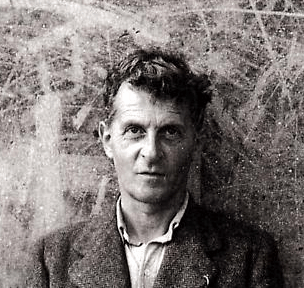
Ludwig Wittgenstein’s passion for looking, not thinking

Ray Monk in the New Statesman:

ScreenHunter_08 Sep. 01 14.26“Thinking in pictures,” Sigmund Freud once wrote, “stands nearer to unconscious processes than does thinking in words, and is unquestionably older than the latter both ontogenetically and phylogenetically.” There is, in other words, something primordial, something foundational, about thinking visually.

Such a view is anathema to many philoso- phers, a good many of whom believe that all thought is propositional, that to think is to use words. For some of the most distinguished philosophers in history, thinking and verbalis- ing were practically the same thing. Bertrand Russell sometimes to his great frustration, was hopeless at visualising and was more or less indifferent to the visual arts. His mental life seemed almost entirely made up of words rather than images. When his friend Rupert Crawshay-Williams once gave him an intelligence test that involved matching increasingly complicated geometrical shapes, Russell did extremely well up to a certain point and then exceptionally badly after that. “What happened?” Crawshay-Williams asked. “I hadn’t got any names for the shapes,” Russell replied.

In this, as in many other respects, Ludwig Wittgenstein was Russell’s opposite. For Wittgenstein, to think, to understand, was first and foremost to picture. In conversation with his friends, he several times referred to himself as a “disciple” or “follower” of Freud and many people since have been extremely puzzled what he might have meant by this. I think Freud’s remark quoted above might provide the key here, that it might have something to do with the emphasis one finds in Freud on the primordiality of “thinking in pictures”.

More here.

Does English have the biggest vocabulary? There’s no simple answer

From The Economist:

Stephen Fry, whom I always enjoy, makes a claim (at about 6:10 of the video)

[English] certainly has the largest vocabulary … by a long, long, long long, way. Rather as China is to the rest of the world in population, English is in the population of its words.

Words2Is that true, a friend e-mails me to ask?

There's a longish answer. For the summary version, skip to the end. For the really short version, though, the answer is “Sorry, Mr Fry.” English is certainly rich in vocabulary, but this claim is nearly always made by enthusiastic lovers of English who don't really know how the many varieties of language beyond English work. It's not that another language has more words. The comparison simply can't be made in any agreed apples-to-apples way.

The simplest problem is inflection. Do we count “run”, “runs” and “ran” as separate? The next problem is multiple meanings. “Run” the verb and “run” the noun: one or two? What about “run” as in the long run of a play on Broadway? Different enough from a jog around the park for its own entry? Different enough from a run in cricket?

Do we count compounds? Is “home run” one word or two? Are the names of new chemical compounds, which could virtually infinite, words? What role does mere orthographic convention play? Is “home run” two words, but “homerun” (as it's often written) one? What sense does that make?

More here.

‘We Can Change It’

From Opposing Views:

Stewart_rect-460x307On 'The Daily Show,' host Jon Stewart called out GOP Vice Presidential candidate Paul Ryan for attacking President Obama over cutting Medicare, allowing an auto plant to fail [when President Bush was still in office] and other misstatements that Ryan made (video below) during his speech. Stewart was then joined by correspondent John Oliver, who said that the Republican's 'We Can Change It' theme was actually about changing “facts, reality, and the meaning of words in order to make a much larger point,” reports Mediaite.com. At one point, Oliver compared Republicans to himself making up lies to hit on a woman.

A must watch video here.

Staying Power

Christopher Buckley in The New York Times:

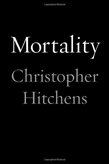
ChrisChristopher Hitchens began his memoir, “Hitch-22,” on a note of grim amusement at finding himself described in a British National Portrait Gallery publication as “the late Christopher Hitchens.” He wrote, “So there it is in cold print, the plain unadorned phrase that will one day become unarguably true.” On June 8, 2010, several days after the memoir was published, he awoke in his New York hotel room “feeling as if I were actually shackled to my own corpse. The whole cave of my chest and thorax seemed to have been hollowed out and then refilled with slow-drying cement.” And so commenced an 18-month odyssey through “the land of malady,” culminating in his death from esophageal cancer last December, when the plain unadorned phrase that had prompted him to contemplate his own mortality became, unarguably, true. He was 62 years old. “Mortality” is a slender volume — or, to use the mot that he loved to deploy, feuille­ton — consisting of the seven dispatches he sent in to Vanity Fair magazine from “Tumorville.” The first seven chapters are, like virtually everything he wrote over his long, distinguished career, diamond-hard and brilliant. An eighth and final chapter consists, as the publisher’s note informs us, of unfinished “fragmentary jottings” that he wrote in his terminal days in the critical-care unit of the M. D. Anderson Cancer Center in Houston. They’re vivid, heart-wrenching and haunting — messages in a bottle tossed from the deck of a sinking ship as its captain, reeling in agony and fighting through the fog of morphine, struggles to keep his engines going:

“My two assets my pen and my voice — and it had to be the esophagus. All along, while burning the candle at both ends, I’d been ‘straying into the arena of the unwell’ and now ‘a vulgar little tumor’ was evident. This alien can’t want anything; if it kills me it dies but it seems very single-minded and set in its purpose. No real irony here, though. Must take absolute care not to be self-pitying or self-centered.”

More here. (Note: I handed out the first essay when it appeared as a must reading for the Oncology Fellows-in-training at Columbia University. The writing is simply exquisite, heartbreaking and a rare but poignant insight into what our patients go through)

Saturday Poem

The Fox

Because the snow is deep
Without spot that white falling through white air

Because she limps a little – bleeds
Where they shot her

Because hunters have guns
And dogs have hangman's legs

Because I'd like to take her in my arms
And tend her wound

Because she can't afford to die
Killing the young in her belly

I don't know to say of a soldier's dying
Because there are no proportions in death.
.

by Kenneth Patchen
from Selected Poems
New Directions Paperbooks,1957

Friday, August 31, 2012

Speech, Lies and Apathy

Jason Stanley in the New York Times:

ScreenHunter_07 Sep. 01 10.36In previous columns for The Stone, I argued that the public’s trust in public speech, whether by politicians or in the media, has disintegrated, and to such a degree that it has undermined the possibility of straightforward communication in the public sphere. The expectation is that any statement made either by a politician or by a media outlet is a false ideological distortion. As a result, no one blames politicians for making false statements or statements that obviously contradict that politician’s beliefs. I believe that the unfolding presidential campaign provides a compelling demonstration of my previous claims.

Consider Paul Ryan’s speech at the Republican National Convention last night. Ryan took President Obama to task for allegedly having “funneled out of Medicare” $716 billion dollars. It is simple for anyone with a computer to discover that the claim is problematic.

More here.

The quest to find the purring heart of cat videos

Gideon Lewis-Kraus in Wired:

ScreenHunter_05 Sep. 01 10.30Oh hai. A cat wearing a short tie plays music on a cat-shaped keyboard (“Pancake Meowsic Video“, 188,083 views). A woman performs Sun salutations with a cat on her back (“Cat Loves Yoga“, 1,584 views). A man slaps two cats on an ironing board to the beat of “Atmosphere” (“Cat Slap Joy Division“, 359,461 views; watch this one). Kittens try to keep up with an accelerating treadmill (“Treadmill Kittens“, 3.4 million views). A fat cat walks on an underwater treadmill (“Fat Cat Walking on Underwater Treadmill“, 136,922 views). Two cats cuff at a treadmill in perplexed inquisition (“Cats Try to Understand Treadmill“, 1.9 million views). Search YouTube for “cat treadmill” and see how many results there are. Or, actually, don't.

Writing that paragraph took more than an hour. To continue the catalogue for an entire page would've taken weeks. But if one has set out to say something definitive about the relationship between cats and the internet, it's important not to allow oneself to be delayed indefinitely by internet cats.

The obvious place to begin an inquiry into the internet cat is with Maru, the most famous feline on the internet. Maru's shtick, in brief: Maru gets into a box (“大きな箱とねこ“,8.1 million views). Maru gets into a box (“箱とねこ8. A box and Maru 8“, 3.2 million views). Maru gets into some boxes (“いろいろな小さ過ぎる箱とねこ. Many too small boxes and Maru“, 8.1 million views). Maru tries to get into a box (“入れない箱とねこ. The box which Maru can't enter“, 2.3 million views).

More here.

Reinventing Society in The Wake of Big Data

Bk_151_Pentland630A conversation with Alex (Sandy) Pentland, in Edge:

[SANDY PENTLAND:] Recently I seem to have become MIT's Big Data guy, with people like Tim O'Reilly and “Forbes” calling me one of the seven most powerful data scientists in the world. I'm not sure what all of that means, but I have a distinctive view about Big Data, so maybe it is something that people want to hear.

I believe that the power of Big Data is that it is information about people's behavior instead of information about their beliefs. It's about the behavior of customers, employees, and prospects for your new business. It's not about the things you post on Facebook, and it's not about your searches on Google, which is what most people think about, and it's not data from internal company processes and RFIDs. This sort of Big Data comes from things like location data off of your cell phone or credit card, it's the little data breadcrumbs that you leave behind you as you move around in the world.

What those breadcrumbs tell is the story of your life. It tells what you've chosen to do. That's very different than what you put on Facebook. What you put on Facebook is what you would like to tell people, edited according to the standards of the day. Who you actually are is determined by where you spend time, and which things you buy. Big data is increasingly about real behavior, and by analyzing this sort of data, scientists can tell an enormous amount about you. They can tell whether you are the sort of person who will pay back loans. They can tell you if you're likely to get diabetes.

They can do this because the sort of person you are is largely determined by your social context, so if I can see some of your behaviors, I can infer the rest, just by comparing you to the people in your crowd. You can tell all sorts of things about a person, even though it's not explicitly in the data, because people are so enmeshed in the surrounding social fabric that it determines the sorts of things that they think are normal, and what behaviors they will learn from each other.

As a consequence analysis of Big Data is increasingly about finding connections, connections with the people around you, and connections between people's behavior and outcomes. You can see this in all sorts of places. For instance, one type of Big Data and connection analysis concerns financial data. Not just the flash crash or the Great Recession, but also all the other sorts of bubbles that occur. What these are is these are systems of people, communications, and decisions that go badly awry. Big Data shows us the connections that cause these events. Big data gives us the possibility of understanding how these systems of people and machines work, and whether they're stable.

Occupy Wall Street, Flash Movements, and American Politics

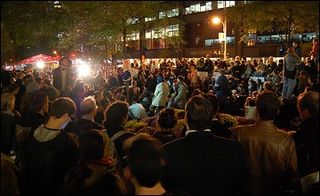
NycgafeatureDavid Plotke, one of the smarter observers of social movements and collective action I know of, in Dissent:

I survey the main accounts of what Occupy did and what it might mean. Proponents of these views often claim both to provide analytical insight (this is what OWS was and is) and to express valid preferences (this is what OWS should be).

1. It was a flash movement.

Occupy assembled and expressed anger about economic and social injustice. Not many opinions changed, but the terms of national debate shifted, with durable aftershocks. OWS actions registered deep concern among significant parts of several (mainly left-of-center) publics. Yet OWS as we saw and knew it is gone.

If this is the trajectory—an explosion and then a fast decline toward a nominal but not significant Occupy—no one gets to own it except as a memory. It can’t be reconvened. On this account, with the election season underway, OWS seems like a reminder of the angry public mood of 2011. It is tempting to say that rather than the Tea Party of the left, it was the Herman Cain of the left, but that understates the force of the views OWS expressed and its likely persistence as a symbol.

More important, OWS represents a new kind of political and social effort—intense, broad, brief, and dramatic. Such efforts involve large numbers of people rather than narrow groups. There are leaders and organizers but they do not simply control the movement, which expands rapidly and surprisingly in size and forms.

2. Occupy is a significant current on the left of the Democratic coalition.

While it arrived too late to field its own primary candidates it will be a presence in the 2012 election cycle and perhaps beyond.

Although most OWS supporters hate the Tea Party analogy, here it’s apt. The Tea Party experience shows how political currents can now appear both inside and outside the party system. One hope (for those who want to re-elect Obama) is that OWS as a symbol can attract some independent voters. This may be wishful thinking, insofar as the 2011 Occupy story occurred to such a large extent among people who were already likely Democratic voters and in pro-Democratic settings.

The Last Word

Cover00Jeff Sharlet on Christopher Hitchens's Mortality (via Corey Robin), in Bookforum:

In the book’s best essay, a literal consideration of “freedom of speech” following the partial loss of his voice—“like a silly cat that had abruptly lost its meow”—Hitchens writes of the “awful fact” that friends are coerced by cancer into listening to his attempts at communication “sympathetically.” And yet Hitchens had always been a sentimentalist despite himself—a quality that is no small part of his popularity with readers who think themselves too reasonable for emotional appeals. Hitchens’s sentimentalism, in fact, allowed him at his best to detect the false sweetening of public ideas—and that is also the case here, in the more private world of Tumortown. His most sustained argument is with Nietzsche’s oft-quoted maxim on being made stronger by that which doesn’t kill you, but the sharpest rebuke of Mortality is reserved for Pausch’s enormously popular farewell video made before his own death from cancer, a catalogue of clichés “so sugary you may need an insulin shot to withstand it.” Hitchens proposes the criminalization of such saccharine: “It ought to be an offense to be excruciating and unfunny in circumstances where your audience is almost morally obliged to enthuse.”

Of course, that’s also the dilemma of Mortality. “My grandmother was diagnosed with terminal melanoma of the G-spot,” he writes, mimicking the cancer tales imposed on him by ostensible well-wishers, “but she hung in there . . . and the last postcard we had was from her at the top of Mount Everest.” Funny, sort of, but more like stand-up shtick than the wit that made Hitchens famous. His arguments with the pious, too, have been whittled down, but not sharpened, by suffering. Prayer is silly, he proposes, because if god (no capitalization here) is in fact almighty, he is “enjoined or thanked to do what he was going to do anyway.” Noting the Jewish woman’s prayer thanking god “for creating her ‘as she is,’” he observes that for a true divine “the achievement would seem rather a slight one.”

One needn’t be religious to grasp that Hitchens is bickering with a straw man’s notion of prayer (or, as the case may be, a straw woman’s), a crudely utilitarian conception of the appeal to divine power that seems pointedly deaf to the nuances of meaning contained within even the most rote devotions. Almost all prayer contains at least the bones of a story about how the prayerful supplicant understands suffering—“or misunderstands,” one can imagine one of Hitchens’s own devotees quipping. Perhaps; but the distinction misses a larger truth to which Hitchens himself returns again and again throughout Mortality: To understand suffering is not to master it, or to defeat it. Whether one understands chemotherapy or not makes it no more or less painful.