The “New Obama”: Michelle Keeps Hope Alive

From The New Yorker:

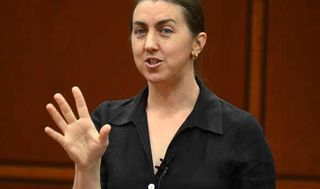
Michelle-speech-cassidyIt was powerful stuff:

We learned about dignity and decency—that how hard you work matters more than how much you make…. That helping others means more than just getting ahead yourself. We learned about honesty and integrity—that the truth matters…. That you don’t take shortcuts or play by your own set of rules … and success doesn’t count unless you earn it fair and square. We learned about gratitude and humility—that so many people had a hand in our success, from the teachers who inspired us to the janitors who kept our school clean…. And we were taught to value everyone’s contribution and treat everyone with respect. Those are the values Barack and I—and so many of you—are trying to pass on to our own children. That’s who we are.

In the final part of the speech, she drew the threads together, insisting that her husband, in fighting for things like equal pay for women, universal health care, and a thriving auto industry, was simply doing what he had always done.

Barack knows the American Dream because he’s lived it … and he wants everyone in this country to have that same opportunity, no matter who we are, or where we’re from, or what we look like, or who we love. And he believes that when you’ve worked hard, and done well, and walked through that doorway of opportunity…you do not slam it shut behind you…. You reach back, and you give other folks the same chances that helped you succeed. So when people ask me whether being in the White House has changed my husband, I can honestly say that when it comes to his character, and his convictions, and his heart, Barack Obama is still the same man I fell in love with all those years ago. He’s the same man who started his career by turning down high paying jobs and instead working in struggling neighborhoods where a steel plant had shut down, fighting to rebuild those communities and get folks back to work…. Because for Barack, success isn’t about how much money you make, it’s about the difference you make in people’s lives.

If that last line was an indirect jab at her husband’s opponent, it was about the only one in the speech. Rather than trying to tear down Romney and the G.O.P., she tried to elevate her husband and his works, assuring disappointed Democrats and independents that, she, for one, still had faith in him. Obviously, it was a one-sided speech. She glossed over Obama’s comfortable upbringing in Hawaii, failed to mention his role in bailing out Wall Street banks, and didn’t mention the housing crisis, the soaring deficit, or the fall in median income. But that was hardly her role. She came to bolster Obama, and in doing so she demonstrated that effective speeches don’t have to be full of attack lines. Direct statements, sincere expressions of personal feeling, and a bit of poetry can do the job just as well. So, let us praise Michelle Obama, a tall, glamorous, intelligent, and strong-minded daughter of the Windy City who finally came into her own, without any apologies or histrionics. She may well be sincere when she says that she has no political ambitions of her own. But after Tuesday evening, the option will always be there.

More here.

Gene therapy restores sense of smell to mice

From Nature:

RatGene therapy can fix a defective sense of smell in mice by repairing problems with the hair-like structures on their olfactory neurons, researchers report this week in Nature Medicine1. The study suggests that abnormalities in these structures, called cilia, can be treated, but how the findings can be applied to other organs is unclear. Cilia are found on the surfaces of many types of cell, and they affect various functions, including sensory perception, movement and cell signaling. Damage to cilia as a result of genetic mutation can cause kidney and liver cysts, extra digits, obesity, blindness and hearing loss in mammals. The mutations and cellular mechanisms that contribute to such ciliopathies have been well studied, but “there's been very little work done in the area of therapeutics”, says study leader Jeffrey Martens, a pharmacologist at the University of Michigan in Ann Arbor.

Martens and his colleagues used mice in which a mutant protein causes effects similar to polycystic kidney disease in humans. Mutation of this protein, called intraflagellar transport 88 (IFT88), disrupts cilia expression and function, causing impaired growth, extra digits, blindness and brain abnormalities2. These mice, called Oak Ridge polycystic kidney (ORPK) mice, die by early adulthood. Because olfactory dysfunction is a common effect of ciliopathy, the researchers examined the olfactory neurons of ORPK mice. In healthy mice, numerous cilia project from the olfactory neurons, but ORPK mice had fewer cilia, and those that remained were shortened and malformed. As expected, these mice also had a deficient sense of smell. To reverse this defect, the authors inserted a functional IFT88 protein into an adenovirus and then injected the virus into the noses of ORPK mice. The injection restored normal cilia number and structure as well as sense of smell.

More here.

Tuesday, September 4, 2012

assenting to life up to the point of death

Cover00

The whole of the first book in E. L. James’s trilogy might be seen as one woman’s struggle against norms of “sexual health.” Anastasia Steele is not under the impression that there is something health giving about being repeatedly flogged for disrespecting a dominant man—or that being someone’s sex slave “encourages a dialogue.” But she does get off on the proximity to dissolution, the flirtation with violence. And so, for many tedious pages I imagine most of us skim, she worries about what is acceptably normal, until she mercifully returns to the playroom. Fifty Shades of Grey breaks none of the taboos listed on those Guidelines for Submission; it merely exists in a space where rules like “no weapons in dark places” become suddenly necessary. That the erotic moment can be cleaved so cleanly from chaos is a fantasy far more absurd than Anastasia Steele’s pursuit by “the richest, most elusive, most enigmatic bachelor in Washington State.” There are, it turns out, women who want to read stories in which protagonists get slapped around, have sex with tigers, and violate the nonvampire dead.

more from Kerry Howley at Bookforum here.

the key step of universalising his neurosis

Leith_09_12

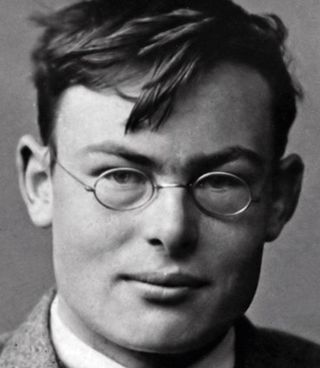
Wallace wrote and lived like someone who had become consumed by his own themes: media supersaturation (for Wallace it was television, though as Max points out he’s been posthumously claimed for the Internet generation); the scrambling of high and low culture; the moral imperative and extreme difficulty of paying close, continuous and loving attention to the right things amid a blizzard of distractions and addictions. Wallace’s recursive, doodling sentences, his self-consciousness, his goofy and sometimes childish pot-head humour, his emotional lability – all had about them a distinct and deliberate air of the teenage slacker. The images that survive of him – long-haired, wide-eyed, stubbly, wearing T-shirts, unlaced hiking boots, flannel shirts and the bandanna which he told a friend’s child was to prevent his head from exploding – cemented that image.

more from Sam Leith at Literary Review here.

our Horsemen ride the trains

Image-1

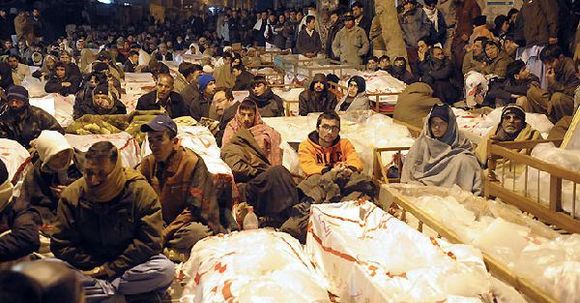
There’s no picture more traumatic to the Indian imagination than that of thousands of people crammed into trains, fleeing for their lives. Flash back to 1947, when trains crossing between West Pakistan and north India steamed out of their stations filled with refugees and arrived at their destinations filled with corpses. The migrating dead were Hindus, Sikhs and Muslims who—stranded on the wrong side of the religious partition of British India, learning that it was now open season on their community and property—took flight for the border. About a million never made it. So (sixty-five years ago to the day), as India awoke to sovereignty and democracy, the sight before its eyes was a snarl of minority terror, slaughter, and trains. This was the image that much of India had to suppress, and a few provocateurs predictably stoked, on August 15 this year. It should have been another drowsy Independence Day, a mid-week chance to sleep in while the monsoon shook the last drops out of its watering-can. Instead, at Bangalore’s City Station, thousands of people pressed into emergency trains leaving for distant Guwahati, the latter a transport hub for the seven small states in India’s out-flung northeastern limb.

more from Raghu Karnad at n+1 here.

the real Hawaii

Article_pasulka

Eddie Aikau was born in 1946, and grew up with his five siblings in a Chinese graveyard in Pauoa Valley, on Oahu. Hawaiians of Chinese ancestry have lived in Hawaii for more than two hundred years, though most showed up in the mid-to-late nineteenth century to work on booming sugar and pineapple plantations. Pops Aikau and his kids maintained the cemetery grounds, digging up old bones and placing them in a mausoleum. The close-knit Aikau family spent most of their free time in the ocean. Diving, fishing, and paddleboarding animated a day-to-day existence of near poverty. As they became more proficient in the waves, Eddie and his brother Clyde started surfing with the native Hawaiian beach boys who partied with tourists and flirted with divorcées on the pristine beaches of Waikiki. Hawaiians have been surfing for more than a thousand years. There are legends and prayers dedicated to surfing, and the practice deeply influenced and reflected Hawaiians’ social status. In Waves of Resistance, a groundbreaking study of the relationship between surfing, Hawaiian identity, and the movement for native sovereignty, historian Isaiah Helekunihi Walker identifies a “culture of respect and exchange” on the beaches of Hawaii.

more from Nicole Pasulka at The Believer here.

Down and out in North-West London

From The Telegraph:

Zadie_2318279bIt might be any one of a thousand things, but the thing which convinced me of the virtuosity of Zadie Smith’s technique was the word “anyway”. It’s one of those words that an inept novelist will use as characters begin to speak, to indicate casual dialogue. “Anyway, can you go to the shops?” But people don’t really use it like that. Nowadays, they use it at the end of a speech, or to suggest a change of subject. And that’s how it happens in NW. “… is really about integrity of like a, like a, like an idea? Blew me away. Anyway.” This is a book written by someone who really knows how to listen, and who truly understands what people are like, and what they might become. In a hundred years time, when readers want to understand what the English novel was capable of, and what English life truly felt like, they will look at NW, and warm to it. The novel is set in, and around, one of those mixed London suburbs where deprivation bangs up against wealth. The range is embodied in an old friendship: Natalie (once Keisha) Blake, now a barrister married to a handsome socialite in a grand villa, and Leah Hanwell, doing all right in a council flat with her black French partner Michel. Their friendship goes far back, but when we see them, Leah is irritated by Natalie’s social climb, her dinner parties, her new way of patronising her old friend. Natalie has climbed and climbed; Leah has stayed much where she was.

And there is also the sight of Nathan Bogle; once a beautiful boy at school, obsessively loved by Leah, now a crack-smoking wreck hanging about the bus station. Felix is someone none of them know; he will not meet Leah or Natalie at all, and will say only eight sentences to Nathan. His story, brutally cut short, is one of a struggle to overcome the troubles of the past, to do as well as can be done. His encounters with destructive privilege, and, finally, with Nathan, define his moral stance, his striving to improve. “There is no such thing as society,” Mrs Thatcher said. “There are individual men and women, and there are families.” There is such a thing as society in NW, but it’s the result of millions of individual lives, and the individual’s responsibility to take charge. On the other side to Keisha and Leah, there are the feckless: whether rich, braying Tom – “My father says there’s only two sentences a self-respecting Englishman should accept in this situation” – Trustafarian drug-addict Annie, or the poor, Felix’s disastrous father Lloyd and the crack-smokers who are forever trying to get money out of Leah – “My mum had a heart – a heart attack? Five… pounds.”

More here.

A Redoubt of Learning Holds Firm

From The New York Times:

NurseLONDON — To stroll out of Carlton Gardens into the elegant confines of the Royal Society is to find a trove of centuries-old wonders, from Sir Isaac Newton’s reflecting telescope to the first electric machine to fantastical illustrated catalogs of fish and birds. Then you enter the sunlight-suffused office of the society’s president, Sir Paul Nurse. With his spiky mass of white hair, broad nose, ready smile and thick work boots, he looks the part of old-fashioned knight of science ready to tramp through the fens. But this Nobel Prize winner in medicine offers a very 21st-century lament. “Policy debate these days involves trying to rubbish the science, and that is dangerous,” Dr. Nurse says. “Global warming denialists, those who oppose genetically modified crops and vaccinations, or the teaching of evolution: their trick is treat scientific argument as if it’s a political argument, and cherry-pick data.”

Dr. Nurse feels this danger more passionately than most, for the society he presides over was the crucible of the scientific revolution that formed the modern world. The society conducts studies, consults on government panels and has 1,450 fellows, about 80 of them Nobel winners. Yet theirs is, at times, an embattled world.

More here.

‘A Clockwork Orange’ at 50

Martin Amis in the New York Times Book Review:

AMIS-articleInlineWhen, in 1960, Anthony Burgess sat down to write “A Clockwork Orange,” we may be pretty sure that he had a handful of certainties about what lay ahead of him. He knew the novel would be set in the near future (and that it would take the standard science-fictional route, developing, and fiercely exaggerating, current tendencies). He knew his vicious antihero, Alex, would narrate, and that he would do so in an argot or idiolect the world had never heard before (he eventually settled on a blend of Russian, Romany and rhyming slang). He knew it would have something to do with Good and Bad, and Free Will. And he knew, crucially, that Alex would harbor a highly implausible passion: an ecstatic love of classical music.

We see the wayward brilliance of that last decision when we reacquaint ourselves, after half a century, with Burgess’ leering, sneering, sniggering, sniveling young sociopath (a type unimprovably caught by Malcolm McDowell in Stanley Kubrick’s uneven but justly celebrated film). “It wasn’t me, brother, sir” Alex whines at his social worker, who has hurried to the local jailhouse: “Speak up for me, sir, for I’m not so bad.” But Alex is so bad; and he knows it. The opening chapters of “A Clockwork Orange” still deliver the shock of the new: a red streak of gleeful evil.

More here.

Tariq Ali on the recent killings in Kashmir

Tariq Ali in the London Review of Books:

Tariq_aliA Kashmiri lawyer rang me last week in an agitated state. Had I heard about the latest tragedies in Kashmir? I had not. He was stunned. So was I when he told me in detail what had been taking place there over the last three weeks. As far as I could see, none of the British daily papers or TV news bulletins had covered the story; after I met him I rescued two emails from Kashmir informing me of the horrors from my spam box. I was truly shamed. The next day I scoured the press again. Nothing. The only story in the Guardian from the paper’s Delhi correspondent – a full half-page – was headlined: ‘Model’s death brings new claims of dark side to India’s fashion industry’. Accompanying the story was a fetching photograph of the ill-fated woman. The deaths of (at that point) 11 young men between the ages of 15 and 27, shot by Indian security forces in Kashmir, weren’t mentioned. Later I discovered that a short report had appeared in the New York Times on 28 June and one the day after in the Guardian; there has been no substantial follow-up. When it comes to reporting crimes committed by states considered friendly to the West, atrocity fatigue rapidly kicks in. A few facts have begun to percolate through, but they are likely to be read in Europe and the US as just another example of Muslims causing trouble, with the Indian security forces merely doing their duty, if in a high-handed fashion. The failure to report on the deaths in Kashmir contrasts strangely with the overheated coverage of even the most minor unrest in Tibet, leave alone Tehran.

On 11 June this year, the Indian paramilitaries known as the Central Reserve Police Force fired tear-gas canisters at demonstrators, who were themselves protesting about earlier killings. One of the canisters hit 17-year-old Tufail Ahmad Mattoo on the head. It blew out his brains. After a photograph was published in the Kashmiri press, thousands defied the police and joined his funeral procession the next day, chanting angry slogans and pledging revenge.

More here.

Tuesday Poem

The River

Earth-colored water hesitates, flows
I realize it is a river
The descendant of formless underground dwellers,
the water is heading toward the sea, that much I know
but I don’t know when and how it welled up

As the train crosses the river a young woman next to me yawns
There is something welling up, too, from the shadowy depth of her mouth
Suddenly I realize my brain is more dull-witted than my flesh

Feeling uneasy that I, the flesh, riding a train,
am made mostly of water
I, the brain, prop myself up with words

Sometime in a distant past, somewhere in a distant place
words were much less voluminous, but
their ties to the nether world were perhaps much stronger

Water remains on this planet
morphing into seas, clouds, rains and ice
Words, too, cling to this planet
morphing into speeches, poems, contracts and treaties

I, too, cling to this planet

by Shuntaro Tanikawa
from Watashi (I Myself)
publisher: Shichosha, Tokyo, 2007
translation: Takako Lento, 2011

Monday, September 3, 2012

The First DAG-3QD Peace and Justice Symposium

Online-symposium

Dear Reader,

We are very pleased to announce a collaboration with the Amsterdam-based Dialogue Advisory Group (DAG) to bring to our audience quarterly online symposia on topics of international peace and justice.

DAG is an organization which discreetly assists government, inter-government and other actors to confidentially manage national and international mediation efforts. Their work is by its nature confidential and therefore not well known to the public. Among their publicly known activities is DAG’s involvement in verifying the ETA ceasefire in Basque Country and the decommissioning of the weapons of INLA, a dissident Republican armed group in Northern Ireland.

DAG is directed by Ram Manikkalingam who also teaches politics at the University of Amsterdam. He advised the previous President of Sri Lanka during the peace process with the Tamil Tigers and prior to that advised the Rockefeller Foundation’s program in international peace and security.

In the DAG-3QD Peace and Justice Symposia internationally recognized figures will debate challenges in conflict resolution and human rights. One author will present a thesis in the form of a short essay and then the others will present critiques of that point of view. Finally, the initial author will also have an opportunity to present a rebuttal to the critiques.

For the first symposium the topic is whether military intervention is a desirable and viable means to end human rights violations. This is a particularly timely subject because of the ongoing international debate on how to end the recent turmoil in Syria.

The distinguished participants in our first symposium are:

  • David Petrasek: Associate Professor, Graduate School of Public and International affairs,
    University of Ottawa, formerly Special Adviser to the Secretary-General of Amnesty International, has worked extensively on human rights, humanitarian and conflict resolution issues, including for Amnesty International (1990-96), for the Office of the UN High Commissioner for Human Rights (1997-98), for the International Council on Human Rights Policy (1998-02), and as Director of Policy at the HD Centre (2003-07). He has taught international human rights and/or humanitarian law courses at the Osgoode Hall Law School, the Raoul Wallenberg Institute at Lund University, Sweden, and at Oxford University.
  • Gareth Evans: Australian Foreign Minister (1988-96) and President of the International Crisis Group (2000-09), co-chaired the International Commission on State Sovereignty (2001), is a member of the UN Secretary-General’s Advisory Committee on the Prevention of Genocide, and is the author of The Responsibility to Protect: Ending Mass Atrocity Crimes Once and for All (Brookings Institution Press 2008, 2009). He is Chancellor of The Australian National University.
  • Kenneth Roth: Executive Director of Human Rights Watch, one of the world's leading international human rights organizations. Roth has also served as a federal prosecutor in New York and for the Iran-Contra investigation in Washington. A graduate of Yale Law School and Brown University, Roth has conducted numerous human rights investigations and missions around the world. He has written extensively on a wide range of human rights abuses, devoting special attention to issues of international justice, counterterrorism, the foreign policies of the major powers, and the work of the United Nations. You may follow him on Twitter: @KenRoth

I would like to thank the participants as well as Fleur Ravensbergen and Amanda Beugeling of the Dialogue Advisory Group for working closely with me in organizing these symposia. The logo for the symposia has been designed by Amanda Beugeling.

We look forward to your comments and feedback.

Yours,

S. Abbas Raza

NOTE: DAG and 3QD wish to acknowledge the generous contribution of the Nederlandse Organisatie voor Wetenschappelijk Onderzoek (NWO, the Dutch Organisation for Scientific Research) toward these symposia, as well as the support of our readers.

THE SYMPOSIUM

[Click the links below to read the essays.]

  1. The New Interventionism – Promise and Reality by David Petrasek
  2. Mass Atrocity Crimes Are Everybody's, Not Nobody's, Business by Gareth Evans
  3. Stopping an Occasional Genocide is Better than None by Kenneth Roth
  4. Further Thoughts on the New Interventionism by David Petrasek

***********************

***********

******

*


Please leave comments about any of the essays in the symposium on this post. Thank you.


The New Interventionism – Promise and Reality

by David Petrasek

The news is alarming: whole families killed in the mountain villages near Lebanon and massacres in Damascus; sectarian clashes between Christian, Alawite and Sunni communities risk a descent into full-scale civil war. The French are demanding intervention, and together with the British
threatening to dispatch warships to the Syrian coast; they seek an international mandate to do so. The Russians, wary of western plans in a region where their own influence is waning, are loath to agree. Quote DavidThe Turks are anxious about the escalating violence, but ill-equipped to respond on their own.

Syria, in the summer of 2012? No, the Ottoman Syrian provinces – in 1860!

Thousands were killed in the clashes in 1860, and European newspapers printed lurid articles describing the violence against Christians. British and French objectives in the region were above all to extend their influence, lest the Russians fill the vacuum created by weakening Ottoman rule. The eventual French intervention, however, of several thousand troops, backed by the European powers, was justified in humanitarian terms – to protect innocent Christian lives. The French action is often referred to as the first modern example of a ‘humanitarian’ intervention.

There are, of course, important differences between the events of 1860 and a possible intervention to address the violence in Syria today. Recalling these events, however, reminds us that urge to intervene forcefully to protect innocents abroad is hardly new. Much is made of 24/7 news cycles, and the wonders of the Internet. But already in 1860, the public in Europe could be moved to outrage by newspaper accounts of atrocities in foreign lands.

If the impulse to intervene to protect innocents is not new, neither is the penchant to do so by invoking international law or moral arguments that appeal to the preservation of life or freedom. Just war theory is well-grounded in the law of nations. And armed interventions to seize colonies, or, more recently, to counter (or support) communist, nationalist or anti-colonial insurgency, have often invoked as rationales in their favour the overthrow of tyranny and despotism and putting and end to the suffering of innocents.

So what’s different about the debate today over a possible intervention in Syria, or indeed about NATO’s actual intervention in Libya in 2011? To some critics, not much; it’s just old wine in new bottles. They believe powerful states have invested the old interventionism with a new respectability, under the guise of the Responsibility to Protect (R2P). This doctrine, grounded in universal human rights, holds that when states are unable or unwilling to prevent mass atrocity within their borders, the UN has a duty to step in — including as a last resort by authorising the intervention of foreign troops.[1]To its most strident critics, R2P undermines the independence of states and is a cover for NATO (or western) interventionism.

Read more »

Mass Atrocity Crimes Are Everybody’s, Not Nobody’s, Business

by Gareth Evans

David Petrasek is not alone in his anxiety that the new ‘Responsibility to Protect’ (R2P) doctrine will be misused to the point of doing more harm than good. His arguments are well articulated and need to be taken seriously by R2P advocates. But in seeking to answer them, what I will be defending is the R2P Quote Kennorm that has originated and evolved over the last decade, not the miscellany of different positions that he lumps together as the ‘new interventionism’.

Petrasek’s ‘new interventionists’ seem to embrace not only R2P supporters who understand and accept that coercive military intervention is defensible only in the most extreme, exceptional and clearly defined circumstances, but also latter-day enthusiasts for the kind of ‘humanitarian intervention’ or ‘right to intervene’ doctrine re-popularised, after a century’s lapse, by Bernard Kouchner in the 1990s, and more recently embraced by commentators like Anne-Marie Slaughter, who is a fine scholar but has rarely seen an argument she didn't like for shedding blood in a good cause.

The difference between the ‘humanitarian intervention’ and the new R2P norm unanimously adopted by the UN General Assembly at the 2005 World Summit really is crucial. It’s not just a matter of acknowledging, as Petrasek does, that R2P is about much more than just the use of force, focusing as it does on preventive strategies, both long and short term, plus a whole suite of non-military reaction options (including diplomatic persuasion, targeted sanctions and threat of international criminal prosecution) should prevention fail.

The more important point is that R2P approaches coercive military force itself with a completely different mindset, one much less enthusiastic about military solutions. And it does so both because R2P advocates are both acutely conscious of the demonstrable risks associated with too cavalier an approach to military instruments, and determined to achieve and maintain an international consensus – sadly lacking in the past – that mass atrocity crimes are everybody’s, not nobody’s, business.

Read more »

Stopping an Occasional Genocide is Better than None

by Kenneth Roth

David Petrasek argues that humanitarian intervention—the use of military force to stop mass slaughter—risks becoming a “Frankenstein” because some governments that intervene do so inconsistently or out of self-interest. I see the matter differently. I assume that all governments act inconsistently and for reasons of self-interest. Yet because I am appalled at the idea of doing nothing when we have the Quote Garethcapacity to stop mass slaughter, I prefer a tainted humanitarian intervention to the supposed purity of passivity and indifference.

But before even going there, it’s worth pointing out that things are not nearly as bad as Petrasek suggests in his essay. Part of the problem is that he jumps repeatedly from situations of mass slaughter, which cry out for humanitarian intervention, to serious but lesser abuses, which do not. The breadth of the “Responsibility to Protect” doctrine, or R2P, facilitates this sleight of hand. It addresses a range of crimes in addition to mass slaughter, including ethnic cleansing and war crimes, but it doesn’t require military force in all such cases. Rather, it contemplates a range of interventions, including diplomacy and sanctions. Because military intervention, by definition, entails killing people, most R2P proponents would advocate military force to halt only large-scale slaughter.

By that standard, most of the cases in which Petrasek faults the world for not intervening militarily are inappropriate for such intervention. The mass displacement from the Houthi rebellion in Yemen or the violent repression of Burma’s Rohingya Muslims are awful human rights abuses that should be vigorously opposed, but they don’t justify the killing that is inherent in military intervention.

Moreover, a high level of killing is a necessary but not a sufficient condition for humanitarian intervention. It is also important to determine that other reasonable options short of military force have been tried or would be futile, that military intervention is reasonably likely to do more good than harm, and that the intervention will be conducted in a way that respects international humanitarian law.

Read more »

Further Thoughts on the New Interventionism

by David Petrasek

Ken Roth and Gareth Evans are eager to defend a doctrine that would permit States acting under UN authority – and in narrowly defined cases – to intervene in other countries to prevent or stop mass atrocities. So am I, and in this, at least, we are in full agreement. Where we part company, I think, is Quote David Rebuttalin the degree to which we believe that R2P, as it stands, provides such a doctrine – or that there are sufficient safeguards in place against its misuse.

Let’s be clear. One of the most important achievements in establishing the UN was to outlaw war except in self-defence. Unless done to thwart an actual or impending military attack, any use of force in (or over) the territory of another state amounts to aggression – an international crime. The sole exception is when the Security Council permits the use of force to respond to a “threat to the peace”. Widespread attacks against civilians might trigger such a decision. However, because humanitarian intervention is an exception to the general rule it is an obvious temptation; so much so, that States may be inclined to act under international mandates that fall short of Security Council approval.

Both Roth and Evans argue we can distinguish R2P from past interventionism and that the risks of its misuse can be managed. They do so by pointing to several criteria that are intended to limit R2P’s application. Yet such criteria (last resort, proportionality, etc.) are neither new and distinct to R2P, nor very helpful in placing firm constraints on its application. Philosophers who debated just war doctrine centuries ago set very similar criteria (although the ‘just cause’ trigger for intervention wasn’t expressed in terms of human rights abuse), and more recently international lawyers have debated these and other criteria for many decades.

Read more »

Sunday, September 2, 2012

How to Read Žižek

Adam Kostko in the Los Angeles Review of Books:

1346611538SLAVOJ ŽIŽEK, a philosopher and psychoanalyst from Slovenia, is one of the few academics to have achieved a degree of genuine popularity among general readers. He regularly lectures to overflow crowds, is the subject of a documentary film (called simplyŽižek!), and surely counts as one of the world’s most visible advocates of left-wing ideas. When Žižek first broke into the English-speaking academic scene, however, few would likely have predicted such success. For one thing, his research focused on an unpromising topic: the long-neglected field of “ideology critique,” a staple of Marxist cultural criticism that had fallen into eclipse as Marxism became less central to Western intellectual life in the second half of the twentieth century.

“Ideology” is one of those philosophical terms that has entered into everyday speech with an impoverished meaning. Much as “deconstruction” means little more than “detailed analysis” in popular usage, so “ideology” tends to refer to a body of beliefs, most often with overtones of inflexibility or fanaticism. But as Žižek argued in his 1989 book The Sublime Object of Ideology, ideology is not to be found in our conscious opinions or convictions but, as Marx suggested, in our everyday practices. Explicit opinions are important, but they serve as symptoms to be interpreted rather than statements to be taken at face value.

More here.