Interview with Alex Cooley

_aii0177

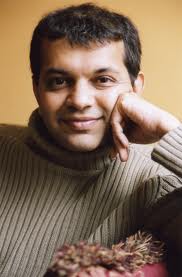
Over at Duck of Minerva, Dan Nexon interviews Alex Cooley:

The seventh episode of the Duck of Minerva Podcast just went live. In it, I interview Alex Cooley about his books on hierarchy, basing, incomplete contracting, and his new book — Great Games, Local Rules: The New Great Power Contest in Central Asia (Oxford University Press, 2012). Contents

  • Front Matter
  • Who is Alex Cooley?
  • Logics of Hierarchy
  • Base Politics
  • Contracting States
  • Great Games, Local Rules: The New Great Power Contest in Central Asia
  • End Matter

Note: the publication date of the podcasts remains in flux, but I am aiming to have them appear Friday-Sunday each week.A reminder: I am running the podcast feed on a separate blog. You can subscribe to our podcasts either via that blog's Feedburner feed or its original atom feed (to do so within iTunes, go to “Advanced” and then choose “Subscribe to Podcast” and paste the feed URL). Individual episodes may be downloaded from the Podcasts tab.

In Praise of Being Daring (And Wrong)

Shulamith-FirestoneSady Doyle in In These Times:

Shulamith Firestone, who died last week at the age of 67, was the sort of woman who seems almost unimaginable to us today. She was a “political celibate,” a Marxist who applied her political theories to her intimate life on a profound level, a woman who argued, in her landmark work The Dialectic of Sex, for the implementation of “cybernetics” so as to relieve women of the burdens of pregnancy and childbearing, a woman who wanted not to end gender-based oppression but to end gender: “the end goal of feminist revolution must be… not just the elimination of male privilege but of the sex distinction itself.” And when she went, with her went part of the legacy of radically creative feminism.

Feminist writing nowadays seems mostly to stay at the level of “critique,” of protest. We have certain well-established truths—people should be able to get abortions; people should not rape or sexually harass each other; women should not have to model themselves on sexist male fantasies; ladies have complex inner lives and enjoy sex, just like men; a true feminism should be intersectional, in order to account for the experiences of all women—and we largely stick to them. They are good truths; I’m a fan of them all. They provide a very solid foundation. But, having established them, we often stay at the level of pointing out which people have recently failed to uphold them, and why they’re wrong.

Plunging into the intellectual climate of the ‘70s and ‘80s, if one is conditioned largely by contemporary feminism, is like entering an alternate reality. It feels like what would happen if your RSS feed were filmed by David Lynch. The theories were often wild, and wildly creative. Point me to a feminist working today who would propose a theory as perverse and inflammatory as Andrea Dworkin’s idea that penetrative intercourse was the model for all male domination. Or even Adrienne Rich’s theory that all women existed primarily on a “lesbian continuum” of relationship to women, and were thereafter policed into heterosexuality (or at least the appearance of heterosexuality) by men, as a means of controlling and constraining them. These weren’t critiques; they were constructions, fundamentally questioning and re-organizing the shape of culture itself.

What They Built at Brain Camp

From Chronicle Review:

Like so many love stories, this one started with a cup of wine and a guitar. It was late on a summer's night in 2001, and a group of neuroscience graduate students and postdoctoral fellows from around the country and the world were spread across an oversize balcony on the campus of Dartmouth College. They had all given up their summers to come to Hanover, N.H., and spend their days listening to lectures and their nights discussing and debating them as part of the 14th annual Cognitive Neuroscience Summer Institute—or, as they called it, “Brain Camp.” On the balcony that night, beer, wine, and conversation flowed freely: these three discussing executive function and its control by parts of the frontal cortex, those other two, in the corner, tossing back and forth perspectives on memory and the hippocampus. But off to one side, a guitar had materialized, and a young man, a graduate student from Princeton, was playing. A woman, late in her Ph.D. studies at the University of Iowa, was listening, hearing little else. Eleven years later, that woman, Andrea Heberlein, and that man, Joshua Greene, are happily married. They are also leaders in their chosen field of cognitive neuroscience, working at Boston College and Harvard University, respectively. Both look back at their time in Brain Camp as a foundational, formative experience in their personal and professional lives.

Greene arrived at Brain Camp that summer as a late-stage doctoral candidate in philosophy with a budding interest in cognitive neuroscience. He left, he says, transformed and motivated, having seen a human brain in the flesh for the first time and with a network of close contacts spread throughout the world. “Before I went I knew no one in the field, except for a couple of people in my lab,” he says. “And after, I felt like I was part of a community.” Today Greene is known as an innovator in that community, for using techniques from psychology and neuroscience to answer philosophical questions, like why we make the moral decisions we do and whether there truly is such a thing as objective morality. Heberlein likewise has made a name for herself, studying theory of mind and social neuroscience. Like her husband, she raves about Brain Camp—how she suddenly went from being relatively isolated to being part of a team. To hear Greene tell it, Brain Camp was instrumental in imparting the methodological knowledge, the contacts, and, perhaps most of all, the chutzpah that have taken him from a humanities Ph.D. program to prominence in his scientific field. “It would be hard for me to point to two weeks in my life that were more consequential than those two weeks,” Greene says. “I mean, my children owe their existence to Brain Camp.”

More here.

An Open Letter to Wikipedia Posted by Philip Roth

From The New Yorker:

Philip-roth-afI am Philip Roth. I had reason recently to read for the first time the Wikipedia entry discussing my novel “The Human Stain.” The entry contains a serious misstatement that I would like to ask to have removed. This item entered Wikipedia not from the world of truthfulness but from the babble of literary gossip—there is no truth in it at all. Yet when, through an official interlocutor, I recently petitioned Wikipedia to delete this misstatement, along with two others, my interlocutor was told by the “English Wikipedia Administrator”—in a letter dated August 25th and addressed to my interlocutor—that I, Roth, was not a credible source: “I understand your point that the author is the greatest authority on their own work,” writes the Wikipedia Administrator—“but we require secondary sources.” Thus was created the occasion for this open letter. After failing to get a change made through the usual channels, I don’t know how else to proceed.

My novel “The Human Stain” was described in the entry as “allegedly inspired by the life of the writer Anatole Broyard.” (The precise language has since been altered by Wikipedia’s collaborative editing, but this falsity still stands.) This alleged allegation is in no way substantiated by fact. “The Human Stain” was inspired, rather, by an unhappy event in the life of my late friend Melvin Tumin, professor of sociology at Princeton for some thirty years. One day in the fall of 1985, while Mel, who was meticulous in all things large and small, was meticulously taking the roll in a sociology class, he noted that two of his students had as yet not attended a single class session or attempted to meet with him to explain their failure to appear, though it was by then the middle of the semester. Having finished taking the roll, Mel queried the class about these two students whom he had never met. “Does anyone know these people? Do they exist or are they spooks?”—unfortunately, the very words that Coleman Silk, the protagonist of “The Human Stain,” asks of his classics class at Athena College in Massachusetts. Almost immediately Mel was summoned by university authorities to justify his use of the word “spooks,” since the two missing students, as it happened, were both African-American, and “spooks” at one time in America was a pejorative designation for blacks, spoken venom milder than “nigger” but intentionally degrading nonetheless. A witch hunt ensued during the following months from which Professor Tumin—rather like Professor Silk in “The Human Stain”—emerged blameless but only after he had to provide a number of lengthy depositions declaring himself innocent of the charge of hate speech.

More here.

The Triumph and Tragedy of Greater Israel

Henry Siegman in The National Interest:

Ma'aleAdumimThe Middle East peace process is dead. More precisely, the two-state solution is dead; the peace process may well go on indefinitely if this Israeli government has its way.

The two-state solution did not die a natural death. It was strangulated as Jewish settlements in the West Bank were expanded and deepened by successive Israeli governments in order to prevent the emergence of a viable Palestinian state. The settlement project has achieved its intended irreversibility, not only because of its breadth and depth but also because of the political clout of the settlers and their supporters within Israel who have both ideological and economic stakes in the settlements’ permanence.

The question can no longer be whether the current impasse may lead to a one-state outcome; it has already done so. There is also no longer any question whether this government's policies will lead to what can legitimately be called apartheid, as former prime minister Ehud Olmert and other Israeli leaders predicted they would. Palestinians live in a one-state reality, deprived of all rights, and enclosed in enclaves surrounded by military checkpoints, separation walls, roadblocks, barbed-wire barriers and a network of “for-Jews-only” highways.

More here.

Nokia’s Visionary Wants to Out-Design Apple

Steven Levy in Wired:

ScreenHunter_01 Sep. 09 13.26Marko Ahtisaari spreads out several models of Nokia’s new smartphone with the self-assurance of a Tiffany diamond salesman. It is several weeks before the launch of Nokia’s Lumia 920 — the flagship phone for Microsoft’s Windows Phone 8 platform, a crucial product for both companies — and the head of Nokia design has come to New York City to reveal his wares in advance of today’s glitzy event.

There they are, shiny colored polymer bars fronted by bold 4.7-inch Gorilla Glass screens. Good looking, to be sure. Ahtisaari, who heads Nokia’s design studio, picks up a canary yellow one. Others are black, gloss red and matte gray. His face is all business, but his fingertips caress the surface like a lover’s.

“Our products are human,” he says. “They’re natural. They’re never cold. That’s partly driven by color, but also partly how they feel in the hand. This looks less like a product coming off a production line in a factory — though it does—than a product that might have grown on a tree. The grandest way I could put it, is post-industrial.”

More here. [Disclosure: Marko is an old friend of mine from Columbia University where we studied philosophy together. He got me started in blogging in 2002, when I had never even heard of blogs, by inviting me to join a Finnish group blog called Aula POV which I ended up running for a couple of years. And 3 Quarks Daily was started by me in 2004 at Marko's suggestion. Thanks to Aditya Dev Sood for sending me this article.]

Sunday Poem

And so our mothers and grandmothers have, more often than
not
anonymously, handed on the creative spark, the seed of the
flower
they themselves never hoped to see. . . . Alice Walker

My Grandmother's Needlework

As I unwind the yarn
to begin another
winter shawl,

I look up
at the frayed
tip of the thread

in the sampler cloth
where my grandmother created
a barefoot girl

holding a bowl
of lemons,
her hair

braided back,
an oval of vines
around her,

tiny leaves
not quite closing
at the bottom

a space of
untatted white perhaps
a gate ajar

where her sadness
or dreams
escaped.
.

by Andrea Potos
from Adanna Literary Journal

Saturday, September 8, 2012

Pride and Prejudice

CoverZoë Heller reviews Naomi Wolf's Vagina: A New Biography, in the NYRB:

For those familiar with Wolf’s career as a polemicist and memoirist, it will not come as a complete surprise to find her attributing occult properties to the female anatomy. Wolf, who has always understood feminism to be a spiritual cause as much as a civil rights movement, has made several moony allusions over the years to the numinous character of female sexuality. In Promiscuities, her memoir of growing up in 1970s San Francisco, she proposed that “female sexuality participates in the divine image.” More recently, in 2006, she told a startled reporter from the GlasgowSunday Herald that she had experienced a vision of Jesus during a therapy session and was now more certain than ever that her purpose on earth was to remind women of “what’s sacred about femininity.” Vagina, however, represents her frankest exposition of these themes to date and as such, it offers an unusually clear insight into the workings of her mystic feminist philosophy.

As Wolf explains in her introduction, her original plan was to write a book surveying cultural representations of the vagina through the ages. In the course of her research, however, she decided that “the truth about the vagina” lay not in history or culture, but in the latest findings of neuroscience and evolutionary psychology. So the survey was sidelined and her book became instead a sort of character study of the vagina. What now remains of the original, “biographical” project—a fifty-seven page overview of some of the “dramatic shifts” in historical attitudes toward the vagina—is a shoddy piece of work, full of childlike generalizations and dreary, feminist auto-think: the ancient Sumerians and Babylonians worshiped the vagina, the post-Pauline Christians were really horrid about it, male modernists objectified it, and so on.

One particular source of irritation is Wolf’s conviction that “the way in which any given culture treats the vagina…is a metaphor for how women in general in that place and time are treated.” If it is rash to dip into The Perfumed Garden, an erotic manual from fifteenth-century Arabia, and conclude that Islamic culture five hundred years ago had “a very non-Western awareness that vaginas are pluralistic, individualistic, and have wills and intentions of their own,” it is rasher still to assume that this text tells us anything useful about how women were treated “in general in that place and time.” The veneration of vaginas does not equal the veneration of women. (The Perfumed Garden contains, as it happens, an entire chapter dedicated to “The Deceits and Treacheries of Women.”) And unpleasant ideas about female sexuality are not the same as principled objections to women’s civil rights. This is why America is able to produce both Hustler magazine and a female secretary of state.

In Defense of Bradley Manning

ManningChris Bray in The American Conservative:

In a short new book about Bradley Manning, journalist and civil rights lawyer Chase Madar necessarily and appropriately looks beyond the figure of Manning himself to ask how we understand information, how we perceive our relationship to state authority, and how people who serve the armed power of the state see their own place in its project. Writing from what often seems to be a leftist perspective, Madar nevertheless builds on a deeply conservative explanatory foundation in which political illnesses have cultural causes.

“The United States is an increasingly depoliticized society,” he writes, “and we struggle to comprehend the very concept of the political.” Our most urgent problem lies not in the nature of government but in the failures of civil society. The pathologies of empire and the national-security state grow from our own pathologies of thought and speech. This approach is familiar: it’s a republic if you can keep it, and we apparently can’t.

Madar is most successful at two points. First, he places Manning’s attempt to explain himself against the explicatory efforts of an exhaustingly banal news media. In chat sessions with a stranger on the Internet who (shockingly enough) turned out to be an FBI snitch, Manning is said to have written that he wanted to share “the non-PR versions of world events and crises” with his fellow citizens. Information, he wrote, “should be a public good,” allowing people to assess state action with something more than the information the state chooses to provide. Like Madar, Manning appears to have blended the premises of the left and the right, promising to reveal “how the first world exploits the third” in very nearly the same breath with which he compared his own alleged leaks to the release of the Climategate emails. However it varies in theme and perspective, though, Manning’s discussion focuses on state power and public engagement: what is government doing, and what do we know about it?

Rob Carter, Faith in a Seed

Justin E.H. Smith, over at his blog:

This is an excerpt from my essay for the New Commission project at New York's Art in General, an exhibition by Rob Carter entitled 'Faith in a Seed'. For more information about the show, go here.

I was slow in noticing the wonder of plants, and in this I do not believe I was unusual. When one is young, it is the furry things with faces, the creatures that dart about looking for food, driven on by their appetitive souls, that attract attention. At this stage, the plants are only the stage-setting, the animals the protagonists.

But in my case the innatention to the vegetal order continued well past my first youth. I long took Aristotle's greatness as a philosopher, for example, relative to that of his disciple Theophrastus, to consist principally in this, that whereas the former wrote books on the generation, parts, motion, and history of animals, the latter only came up with a couple of books about plants. It strikes me now, however, that this lack of interest would better be described as a severe case of phytophobia: I insisted plants were uninteresting, but what I really meant is that they are positively threatening.

“Naturam expellas furca, tamen usque recurret,” said Horace: you can drive nature out with a pitchfork, but she always comes back. This does not mean what I long thought it meant, but let us proceed as though it did. The Roman poet intended to say that innate character (the 'nature' of an individual being) cannot be supressed, but what the dictum long said to me was rather more literal: that nature, or rather Nature, cannot be beaten back for long. In appealng to 'Nature' here, what naturally comes to mind is of course the world of plants. Animals can be contained, more or less (other than insects and other microanimals, which, modern taxonomy be damned, no one really thinks are animals anyway), but the order of plants, as Lord Shaftesbury already understood in contemplating an early modern English garden, is sublime.

Reclaiming the Politics of Freedom

RobinCorey Robin in The Nation (via Zujaja Tauqeer):

Conservatives often complain that they’ve been exiled from power, whether in the corridors of the Capitol or the pages of the New York Times. Yet conservative ideas have dominated American politics for thirty years. The centerpiece of that dominance is the notion that the market equals freedom and government is the threat to freedom. Despite the Great Recession and election of Barack Obama, the most progressive candidate to win the presidency since 1964, that idea retains its hold. The ideological realignment we have been waiting for, in which that idea is repudiated, has yet to come.

One reason for the dominance of this idea is that since the ’70s, liberals and leftists have misidentified the source of conservatism’s appeal. Confident that no one short of a millionaire could endorse the right’s economic ideology, everyone from Clintonite centrists to radical populists has treated conservatism as essentially a politics of distraction and delusion. Conservatives, it’s said, are just good salespeople, wrapping their ugly wares in the pretty paper of the culture wars. The way to combat them is not to challenge their ideas or defend ours but to use prettier wrapping paper.

Instead of confronting the allure of the free market, as conservatives understand it, liberals have tried to co-opt the discourse of traditional values. Painting themselves as the new Victorians, they’ve claimed, We stand for thrift and family, God and country. We put people to work rather than on welfare. We don’t spend recklessly; we reduce the deficit. We provide security: not just the physical security of cops on the street, crooks behind bars and troops in Afghanistan but the economic security of shared risk and protection from risk. We stand for responsibilities over rights, safety over freedom, constraint rather than counterculture.

This strategy might have something to recommend it if it worked. But it hasn’t. When right-wing ideas dominate, we get right-wing policies. After the midterm elections in November, it seemed the most natural thing in the world—to the right, the media, Obama and parts of the Democratic Party—to freeze the pay of federal workers and extend the Bush tax cuts for two years. Incoherent as policy—the first presumes that the deficit is the greatest threat to the economy; the second, the lack of consumer spending—it makes sense as ideology. The best (and only) thing the government can do for you and the economy is to get out of your way.

HOW CULTURE DROVE HUMAN EVOLUTION

A conversation with Joseph Henrich in Edge:

Edge[JOSEPH HENRICH:] The main questions I've been asking myself over the last couple years are broadly about how culture drove human evolution. Think back to when humans first got the capacity for cumulative cultural evolution—and by this I mean the ability for ideas to accumulate over generations, to get an increasingly complex tool starting from something simple. One generation adds a few things to it, the next generation adds a few more things, and the next generation, until it's so complex that no one in the first generation could have invented it. This was a really important line in human evolution, and we've begun to pursue this idea called the cultural brain hypothesis—this is the idea that the real driver in the expansion of human brains was this growing cumulative body of cultural information, so that what our brains increasingly got good at was the ability to acquire information, store, process and retransmit this non genetic body of information. The two systems begin interacting over time, and the most important selection pressures over the course of human evolution are the things that culture creates—like tools. Compared to chimpanzees, we have high levels of manual dexterity. We're good at throwing objects. We can thread a needle. There are aspects of our brain that seem to be consistent with that as being an innate ability, but tools and artifacts (the kinds of things that one finds useful to throw or finds useful to manipulate) are themselves products of cultural evolution.

Another example here is fire and cooking. Richard Wrangham, for example, has argued that fire and cooking have been important selection pressures, but what often gets overlooked in understanding fire and cooking is that they're culturally transmitted—we're terrible at making fires actually. We have no innate fire-making ability. But once you got this idea for cooking and making fires to be culturally transmitted, then it created a whole new selection pressure that made our stomachs smaller, our teeth smaller, our gapes or holdings of our mouth smaller, it altered the length of our intestines. It had a whole bunch of downstream effects.

More here.

Murder in the Cathedral

From The New York Times:

Beckett“The biographer’s trap,” John Guy remarks in “Thomas Becket,” his portrait of that foremost friend turned foremost foe of Henry II, “is to look for a decisive moment of change.” But, he adds, “to do that is to write the history of the saint without his shadow.” With ­Becket, this temptation often seems to have been irresistible, from the very night of his murder, Dec. 29, 1170, near the high altar of Canterbury Cathedral. As a crowd swooped down on the battered corpse of the archbishop, tearing off pieces of clothing to dip in the gruesome puddle of his blood and brains, the outlines of the story of Becket’s sudden conversion from ­luxury-loving chancellor to ascetic defender of the church were already being rehearsed, soon to be followed by tales of his miraculous powers. Although Guy is known as a historian of the Tudor period, he admits to a long-held fascination with the 12th century’s “extraordinary galaxy of larger-than-life characters.” And his previous book, “A Daughter’s Love: Thomas More and His Dearest Meg,” must have provided ample psychological grounding for this new one, tracing another struggle between an imperious, unscrupulous monarch, Henry VIII, and another stubborn commoner who found it impossible to bend to the royal will. In the case of Becket, Guy was also aided by an array of firsthand source materials, many of them biographies written by men who knew Becket themselves. Shrewdly contrasting them and assessing their biases, Guy has constructed his own modern successor, assisted by electronic search engines and high-resolution digital photography, which revealed previously invisible annotations in volumes from Becket’s personal library.

After almost 900 years, are there any shocking discoveries to be made? Was Becket, as an “impressionable teenager,” rather more than the fast friend and protégé of Richer de l’Aigle, a Norman aristocrat and dashing older man who introduced him to hawking and hunting and courtly manners? Guy assembles enough evidence to suggest that Becket’s mother (to whom he was very close) might have tried to separate the pair by sending her son to Paris for schooling. But he hedges his bet, arguing that the adult Becket “could not have been homosexual” because Henry would have used this as evidence in the course of their deeply acrimonious public feud.

More here.

Saturday Poem

Become Becoming
.
Wait for evening.
Then you’ll be alone.
.
Wait for the playground to empty.
Then call out those companions from childhood:
.
The one who closed his eyesand pretended to be invisible.
The one to whom you told every secret.
The one who made a world of any hiding place.
.
And don’t forget the one who listened in silence
while you wondered out loud:
.
Is the universe an empty mirror? A flowering tree?
Is the universe the sleep of a woman?
.
Wait for the sky’s last blue (the color of your homesickness).
Then you’ll know the answer.
.
Wait for the air’s first gold (that color of Amen).
Then you’ll spy the wind’ barefoot steps.
.
Then you’ll recall that story beginning with a child who strays in the woods.
The search for him goes on in the growing shadow of the clock.
.
And the face behind the clock’s face
is not his father’s face.
.
And the hands behind the clock’s hands
are not his mother’s hands.
.
All of Time began when you first answered
to the names your mother and father gave you.
.
Soon, those names will travel with the leaves.
Then, you can trade places with the wind.
.
Then you’ll remember your life as a book of candles,
each page read by the light of its own burning.
.
.
by Li-Young Lee
from Behind My Eyes

Emrys Westacott on Philosophy and Everyday Living

Interview by Sophie Roell in The Browser:

25rude_CA1.450Your own book, The Virtues of our Vices makes, I think, a brilliant case for applying philosophy to everyday living, because, as you point out in the introduction, apparently trivial things – like a colleague being rude to us – have a much bigger impact on us on a day-to-day basis than ruminations on the meaning of life.

A lot of philosophy concerns fairly theoretical issues – the correct definition of concepts like justice, the relation between mind and body, or the nature of the soul. These are problems that have been inherited down the years from Plato and Aristotle, Descartes and Kant. There is another tradition which sees philosophy as a reflection on life. This includes discussion of ethical problems that we face, but also focuses on the way we conduct ourselves, the way we live, the way we relate to each other. I see my book as a contribution to that tradition. Not so much an attempt to solve complex metaphysical problems, or problems in the theory of knowledge or the philosophy of mind, but a reflection on the way we live.

Do you feel this side of philosophy has been neglected?

I do. In one of the books I’ve chosen, The Guide to the Good Life: The Ancient Art of Stoic Joy, William Irvine makes this very explicit. In ancient times, Plato and Aristotle and other philosophers did deal with theoretical problems, but the Greeks and the Romans understood philosophy as something that people had and used in everyday life, and there were competing schools of philosophy.

More here.

How Bill Clinton ad-libs his way to a winning speech

David Kusnet at CNN:

By one account, the former president spoke for 48 minutes and 5,895 words, while his prepared text, which had been distributed beforehand to the media, was only 3,136 words. No wonder, when asked about her husband's speech, Secretary of State Hillary Clinton said she was looking forward to comparing the “as prepared” and “as delivered” texts.

Reviewing each version, it's clear that the same person wrote both — the same president who improvised 20% of his first State of the Union address and explained his health-care plan from memory to a joint session of Congress after the teleprompter displayed the text of an earlier speech.

Clinton's improvisations are instructive because they show how the nation's most popular political figure (69% approval rating, according to a USA Today/Gallup poll) still serves as extemporizer-in-chief. While most speakers ad-lib anecdotes, Clinton also explains complex issues off-the-cuff.

More here. And here's the full speech from the DNC:

Dispatches From ‘Tumorland’

Chris Lehmann in the Los Angeles Review of Books:

1346436019Mortality is not the sustained Socratic mediation on the human condition that the title might suggest. It is, rather, made up largely of just this sort of carefully reported, drily ironic dispatches from the sick country (or “Tumorland,” as Hitchens comes to call it) — meticulously recording both the physical symptoms of rapidly encroaching decay, and the feeble human effort to assimilate them into whatever semblance of a recognizably normal life may still remain. At its heart, this slender volume is a prolonged and painful study in cognitive dissonance, as the robust, high-living and (yes) terminally witty Hitchens records the galloping dissolution of his health and consciousness — the two things that humans almost have to take for granted in order to function in any reliable fashion. If, as Montaigne famously said (by way of Cicero) “to study philosophy is to learn to die,” Mortality is a crash course in lived philosophy, without benefit of abstraction or metaphysical speculation.

More here.