Quantum measurements leave Schrödinger’s cat alive

Lisa Grossman in New Scientist:

Dn22336-1_300Schrödinger's cat, the enduring icon of quantum mechanics, has been defied. By making constant but weak measurements of a quantum system, physicists have managed to probe a delicate quantum state without destroying it – the equivalent of taking a peek at Schrodinger's metaphorical cat without killing it. The result should make it easier to handle systems such as quantum computers that exploit the exotic properties of the quantum world.

Quantum objects have the bizarre but useful property of being able to exist in multiple states at once, a phenomenon called superposition. Physicist Erwin Schrödinger illustrated the strange implications of superposition by imagining a cat in a box whose fate depends on a radioactive atom. Because the atom's decay is governed by quantum mechanics – and so only takes a definite value when it is measured – the cat is, somehow, both dead and alive until the box is opened.

Superposition could, in theory, let quantum computers run calculations in parallel by holding information in quantum bits. Unlike ordinary bits, these qubits don't take a value of 1 or 0, but instead exist as a mixture of the two, only settling on a definite value of 1 or 0 when measured.

But this ability to destroy superpositions simply by peeking at them makes systems that depend on this property fragile. That has been a stumbling block for would-be quantum computer scientists, who need quantum states to keep it together long enough to do calculations.

More here.

A Pragmatic Way to Resolve the Israeli-Palestinian Conflict

Salim Ali in National Geographic:

Ipc_logo_big1Six years ago, I received an invitation to participate in an event on peace-building in the Middle East at the University of California, Los Angeles. The seminar had been organized by a local lawyer, Josef Avesar, along with academics at UCLA to find a novel way to resolve the Israeli-Palestinian conflict. The idea was taken from other historic territorial conflicts and rivalries – to establish an Israeli-Palestinian Confederation – analogous to the cantons of Switzerland uniting or indeed the articles of confederation of the United States, as noted by Amherst College political scientist Ronald Tiersky in the Jerusalem Post earlier this year. However, unlike earlier efforts, this idea was to be implemented from the grassroots using the internet as a platform to recruit candidates for a “virtual parliament,” while the policy-makers remained deadlocked. In six years, Mr. Avesar has been determined despite all odds and has managed to get over 700 Israelis and Palestinians (including in Gaza) to run in a virtual election which will be held on December 12, 2012. Those who may dismiss this as a gimmick should note that even a willingness to run in an election of this kind poses peril to the candidates but they are willing to do so because they see this as the most tangible effort to “think outside the box” and move beyond the stagnation of one-state/ two-state fixes.

More here.

this endlessly fascinating, endlessly multiple hero

P13_Wilson_paper_297571k

The problem with Odysseus’ intelligence, for many philosophical readers, is that it looks too self-serving. Odysseus is willing to put his mind to anything, and adopt any available means, in order to achieve his own selfish goals. This is the sophistical Odysseus damningly represented in Sophocles’ Philoctetes, the man who is perfectly willing to trick a sick, lonely old man into giving up his only weapon and only means of livelihood – and do it without compunction, if that’s what it takes to win the war. No moral philosopher wants to taint himself with that particular kind of cleverness. Philosophers who focus on Odysseus’ intelligence, then, had to make extremely clear that the hero does not use his intelligence at the service of his own gain. Rather, he subdues his selfish passions for the sake of wisdom. The Calypso episode is a key piece of evidence for Stoics such as Epictetus. Odysseus’ behaviour in leaving Calypso is taken as a sign that he subordinates mere pleasure to the higher calling of wisdom – despite the fact that, as Montiglio notes, Odysseus in Homer doesn’t seem to be having any fun with Calypso at all (he is crying; he wants to go home).

more from Emily Wilson at the TLS here.

Die Physiker

20120926_TNA36Matlackhomepage

Dürrenmatt was not alone in voicing criticism of the role of science in Western democracy in the early 1960s. In the same month that Dürrenmatt began writing The Physicists, January 1961, President Eisenhower delivered his famous farewell address. In it, he warned of two particular threats to the American political system that closely parallel Dürrenmatt’s nightmare. First, “we must guard against the acquisition of unwarranted influence, whether sought or unsought, by the military-industrial complex. The potential for the disastrous rise of misplaced power exists and will persist.” The now-permanent coalition of the military and mass industry, Eisenhower observed, was at that point unprecedented in American history. One might say that a military-industrial complex (the phrase has been in common parlance since Eisenhower used it) that exists for the purpose of being ready for war at all times leads to a situation in which even peace implies a state of war. Of course, it is the ever-increasing resources of science and technology that make possible the maintenance of such a military-industrial complex.

more from Samuel Matlack at The New Atlantis here.

Bonhoeffer and Dohnanyi

Sifton-stern_1-102512_jpg_470x775_q85

The end was coming in different forms. On April 5, Hitler was shown more Zossen files; enraged anew, he ordered the liquidation of the Canaris group, and in the chaos of impending defeat the Nazis indulged in a final spasm of murder. Tietze, told to transfer Dohnanyi back to Sachsenhausen, arranged for Christine to see her husband one last time, and then sedated Hans heavily. The next day, when his “trial” took place, Hans was still drugged and only intermittently conscious, thus spared the offense of having to participate in this travesty of justice with its foreordained verdict and sentence. On April 9 he was carried on a stretcher to the place of his execution and hanged. Buchenwald was where Dietrich and other Gestapo prisoners had been taken. On April 3, as the guards heard the rumble of nearby American cannons, some of them took away a group of prisoners and drove them south to the concentration camp at Flossenbürg, where the Gestapo and SS had orders to obey and work to do no matter how close the enemy, how close their own defeat. Survivors of the macabre journey remembered Bonhoeffer’s calm, reassuring presence throughout.

more from Elisabeth Sifton and Fritz Stern at the NYRB here.

Why School Should Be More Like Summer Camp

From Smithsonian:

In 2004, hedge fund analyst Salman Khan began tutoring his 12-year-old cousin, Nadia, in some basic math concepts. Since he lived in Boston and she in New Orleans, they spoke by telephone, and he used Yahoo! Doodle to work through specific problems. As other family members requested his services, Khan began to post simple video lectures on YouTube. Khan realized he was on to something when strangers began leaving comments, thanking him for explaining things like systems of equations and geometry in a way that finally made sense. In 2009, Kahn quit his lucrative job to put all his efforts into Khan Academy. He founded the nonprofit with a lofty goal in mind: to provide a free, world-class education for anyone, anywhere.

Students from 234 countries and territories have logged on to Khan’s site to watch any number of his 3,400 video lectures on topics in math, science, computer science, economics and history. Teachers in some 15,000 classrooms now incorporate his lessons and software into their instruction. In his new book The One World Schoolhouse, Khan totally reimagines education. He diagnoses the problems with our century-old model for education and envisions schools that better prepare students for today’s world.

More here.

Mouse stem cells lay eggs

From Nature:

EmbryoJapanese researchers have coaxed mouse stem cells into becoming viable eggs that produce healthy offspring1. The work provides a powerful tool to study basic elements of mammalian development and infertility that have long been shrouded in mystery. People have been trying to make sex cells from embryonic stem cells and from pluripotent cells for years, says Evelyn Telfer, a reproductive biologist at the University of Edinburgh, UK. “They’ve done it — and they’ve done it really well.” Stem-cell scientists have derived many types of cells from stem-cell precursors, but have struggled with sex cells. These cells have significantly more complex developmental programmes, in part because of the difference in the way they divide. Most cells in the body undergo mitosis, in which both sets of chromosomes are copied, but sex cells are produced by meiosis, which results in cells containing a single copy of each chromosome. Last year, the same team from Mitinori Saitou’s lab at Kyoto University in Japan successfully used mouse stem cells to make functional sperm2. Whereas sperm cells are some of the simpler cells in the body, oocytes are much more complex. “It was always believed that making sperm was probably easier,” says Davor Solter, a developmental biologist at the Institute of Medical Biology in Singapore, who was not involved with the study. “The oocyte is the thing which makes the whole of development possible.”

In the latest study, published today in Science, Saitou and his colleagues started with two cell types: mouse embryonic stem cells and induced pluripotent stem cells, which can be derived from adult cells. Just as in the earlier sperm study, they used a cocktail of signalling molecules to transform the stem cells first into epiblast cells and then into primordial germ cells (PGCs), both egg precursors. Whereas male PGCs could be injected directly into infertile male mice to mature into sperm, the female version required further coddling. The researchers isolated embryonic ovary tissue that did not contain sex cells and then added their lab-made PGCs to the dish. The mixture spontaneously formed ovary-like structures, which they transplanted into female mice. After four weeks, the stem-cell-derived PGCs had matured into oocytes. The team fertilized them and transplanted the embryos into foster mothers. The offspring that were produced grew up to be fertile themselves.

More here.

Thursday, October 4, 2012

The very laws of physics imply that artificial intelligence must be possible. What’s holding us up?

David Deutsch in Aeon:

It is uncontroversial that the human brain has capabilities that are, in some respects, far superior to those of all other known objects in the cosmos. It is the only kind of object capable of understanding that the cosmos is even there, or why there are infinitely many prime numbers, or that apples fall because of the curvature of space-time, or that obeying its own inborn instincts can be morally wrong, or that it itself exists. Nor are its unique abilities confined to such cerebral matters. The cold, physical fact is that it is the only kind of object that can propel itself into space and back without harm, or predict and prevent a meteor strike on itself, or cool objects to a billionth of a degree above absolute zero, or detect others of its kind across galactic distances.

But no brain on Earth is yet close to knowing what brains do in order to achieve any of that functionality. The enterprise of achieving it artificially — the field of ‘artificial general intelligence’ or AGI — has made no progress whatever during the entire six decades of its existence.

Why? Because, as an unknown sage once remarked, ‘it ain’t what we don’t know that causes trouble, it’s what we know for sure that just ain’t so’ (and if you know that sage was Mark Twain, then what you know ain’t so either). I cannot think of any other significant field of knowledge in which the prevailing wisdom, not only in society at large but also among experts, is so beset with entrenched, overlapping, fundamental errors. Yet it has also been one of the most self-confident fields in prophesying that it will soon achieve the ultimate breakthrough.

Despite this long record of failure, AGI must be possible. And that is because of a deep property of the laws of physics, namely theuniversality of computation. This entails that everything that the laws of physics require a physical object to do can, in principle, be emulated in arbitrarily fine detail by some program on a general-purpose computer, provided it is given enough time and memory. The first people to guess this and to grapple with its ramifications were the 19th-century mathematician Charles Babbage and his assistant Ada, Countess of Lovelace. It remained a guess until the 1980s, when I proved it using the quantum theory of computation.

More here.

Legally Poisoned: How the Law Puts Us at Risk from Toxicants

Emily Monosson in American Scientist:

PCBs are one of the best kept secrets,” a chemist once told me. This was the 1980s, and he made his livelihood extracting polychlorinated biphenyls, a class of synthetic chemicals whose production in the United States was banned in 1979, from fish tissues and sediments. What he meant was that although we hadn’t yet fully understood the toxicology of these chemicals, there was plenty of concern about widespread contamination: enough to keep cadres of federal and private-industry chemists employed for years studying the PCBs which had made their way from factories into air and water and eventually into fish, birds, whales and humans. At the time, PCB analyses were about $500 a pop, and tests for dioxins (PCBs’ more nefarious cousin) cost more than $1,000. Add to this all the dollars that have been spent funding toxicologists and other health-related scientists, engineers and clean-up experts—and the more difficult-to-measure costs associated with health effects. For the past 30 years or more, our collective experience with these synthetic pollutants has been costly, and we—the public—are too often the ones footing the bill. As Carl F. Cranor describes them in Legally Poisoned,these costs represent the externalitiescosts not fully reflected in the market price of a product—so often associated with industrial chemicals and our ongoing reliance on postmarket environmental-health laws to protect us. Cranor explains that many important chemicals, including drugs, pesticides and food additives, are regulated by premarket testing, a flawed but relatively effective approach in which, as the phrase implies, toxicity testing is required before commercialization. But far too many chemicals, such as PCBs, bisphenol A (BPA) and polybrominated flame retardants are subject only to postmarket laws. These chemicals are commonly referred to as “innocent until proven guilty,” and they are the chemicals that all too often invade our most private spaces—our bodies.

The market is awash with books about toxic bodies, babies, rubber ducks, homes and workplaces (not to mention in-laws, men, faith and assets). Cranor, a legal and moral philosopher and a faculty member in the University of California, Riverside’s graduate environmental toxicology program, cannot resist reiterating how contaminated we all are. Nonetheless, Legally Poisonedoffers a refreshingly different take on toxic chemicals in our lives, explaining how this situation came to be and what we might do about it.

More here.

The Blog as Mask and Gravestone

6a00d83453bcda69e2014e6110cd8c970c-400wi

Justin Smith over at his blog:

In a fine introduction to a recent edition of The Anatomy of Melancholy (1621), William Gass writes that what he admires most about Robert Burton's life-work is “the width of the world that can be seen from one college window…; what a love of all can be felt by one who has lived it sitting in a chair.” Burton’s Anatomy, indeed, often gives the impression that its author set out to create a Gesamtkunstwerk, a total work of art whose aim was nothing less than to reproduce the world.

As with the Internet, the result is clumsy and chaotic, and Burton recognizes as much; and yet, in this way, both haphazard and cloistered, he manages to create, over the course of a life, a thousand-page mirror of the world:

I have confusedly tumbled over divers authors in our libraries, with small profit for want of art, order, memory, judgment. I never travelled but in map or card, in which my unconfined thoughts have freely expatiated, as having ever been especially delighted with the study of cosmography… A mere spectator of other men’s fortunes and adventures, and how they act their parts, which methinks are diversely presented unto me, as from a common theatre or scene.

Burton loved the world, though he knew it almost entirely through the books he kept in his cell. While at nearly the same moment in European history, Burton’s contemporaries, such as René Descartes, were denouncing ‘book learning’ as inauthentic, as an impediment to true knowledge, Burton reminds us, as Gass so well understands of his predecessor, that whether out in the world or locked in our cell, it is the human mind that is doing most of the work of experience anyway; a rich, full life may be led with only the most two-dimensional of stimuli to carry it along. The Anatomy of Melancholy is proof of this.

Today, too, the Internet can seem an impediment to many of what are thought to be our more authentic experiences. But it may also be facilitating the sort of experience we have always had, qua human beings, experience based in love, which can be had just as intensely in virtual form (letters from friends, books about nature, the Internet), as in ‘reality’ (seeing friends face-to-face, going camping). Sometimes I imagine I am feeling a love of the world as strong as Burton’s when I click, say, on a link from the Wikipedia entry on the Finno-Ugric languages to the entry on the Samoyed people of the Russian Arctic, and from there to the entry, written in Samoyed, on reindeer. There is so much out there, and it’s all in here!

True enough, in here, in this hyperlinked, screen-shaped reproduction of the world, what we find for the most part is a great mess “of barbarism, Doric dialect, extemporanean style, tautologies, apish imitation, a rhapsody of rags gathered together from several dung-hills, excrements of authors, toys and fopperies confusedly tumbled out, wihout art, invention, judgment, wit, learning, harsh, indigested, vain, scurrile, idle, dull, and dry.” But this is nothing new, and as Burton shows, it is the variety stacked upon variety, and the detail squeezed between details, the inexhaustible proliferation of adjectives, that makes this whole mess a mirror of human ingenium.


do we need adorno?

Adorno

The stakes of Adorno and Horkheimer’s influential revision of Marxism emerges in the new translation of their dialogue Towards a New Manifesto. The title is an inspired misnomer; it is hard to see how “Discussion on Theory and Praxis”—the original title in Horkheimer’s Nachlass—would attract any but the most dedicated readers. But what makes the brief volume—113 generously spaced pages—so engaging and what partially legitimates the English title, is the space devoted to a reassessment of key Marxist concepts. We should “write a manifesto that will do justice to the current situation,” Adorno says (92) and he adds a surprising addendum: it should be “a strictly Leninist manifesto” (94). Despite Adorno’s thoroughgoing use of Marxist terminology, his explicit engagement with Marx is slim (roughly four essays in an extensive body of writing are devoted to class analysis). In the twelve discussions that make up Towards a New Manifesto nearly half revolve around the problem of work and “political concreteness.” But as Adorno and Horkheimer make clear, their theory “no longer has anything in common with Marx, with the most advanced class consciousness; our thoughts are no longer a function of the proletariat” (99).

more from Todd Cronan and his responders at nonsite here.

the genovese story

Genovese

Eugene Genovese’s scholarship made an enormous difference despite the challenges that he faced. As a self-proclaimed Marxist, he had to make his way through an unreceptive professional discipline – history – in a country still feeling the effects of McCarthyism, and he took on one of the central areas of historical interpretation, the coming and significance of the Civil War. What got him a hearing and then the notice of distinguished historians like C. Vann Woodward and David Potter was the breadth of his research, the clarity of his arguments, and the respect he paid to intellectual adversaries (sometimes more than they deserved). At a time when most scholars thought the debates over the Civil War had largely been resolved and a “consensus” interpretation reigned supreme, Genovese wrote of a fundamental, and revolutionary, battle between two different and increasingly antagonistic societies: a bourgeois North and a pre-capitalist South. In a series of immensely influential books – especially The Political Economy of Slavery (1965), and The World the Slaveholders Made (1969) – he insisted that slavery established the foundation of a radically different order in the southern states, limited the course of southern economic development, and gave rise to a pre-bourgeois ruling class that fashioned a distinctively reactionary world view.

more from Steven Hahn at TNR here.

austen and the haters

199_arts_beck

The most entertaining episode in western literature’s 200-year-long fight over who loves Jane Austen most took place in 1940, when a psychiatrist and literary critic named DW Harding published an essay called “Regulated Hatred: An Aspect of the Work of Jane Austen.” His argument was simple: “[Jane Austen’s] books are, as she meant them to be, read and enjoyed by precisely the sort of people whom she disliked.” Whether this is an accurate description of Austen’s own feelings towards her imagined readership (I don’t think it is), “regulated hatred” is a perfect name for the feelings Austen lovers often bear towards one another. “Anyone who has the temerity to write about Jane Austen,” said Virginia Woolf, “is aware… that there are 25 elderly gentlemen living in the neighbourhood of London who resent any slight upon her genius as if it were an insult to the chastity of their Aunts.”

more from Richard Beck at Prospect Magazine here.

Thursday Poem

New Year's

Let other mornings honor the miraculous.
Eternity has festivals enough.
This is the feast of our mortality,
The most mundane and human holiday.

On other days we misinterpret time,
Pretending that we live the present moment.
But can this blur, this smudgy in-between,
This tiny fissure where the future drips

Into the past, this flyspeck we call now
Be our true habitat? The present is
The leaky palm of water that we skim
From the swift, silent river slipping by.

The new year always brings us what we want
Simply by bringing us along—to see
A calendar with every day uncrossed,
A field of snow without a single footprint.

by Dana Gioia
from Interrogations at Noon
© Graywolf Press, 2001.

A Grimm Tale For The Modern Age

From The Telegraph:

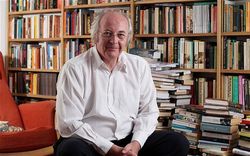
Jones_main_2352665bAs we sit by the stone fireplace in his home, a comfortable former farmhouse in an Oxfordshire village, Philip Pullman talks about his retellings of Grimms’ fairy tales. There is driving rain outside, though it’s not wintry enough for there to be an actual fire. These hearthside stories have a long history in Pullman’s life. He enjoyed them as a child, but built on his knowledge when he trained teachers in storytelling at Westminster College. When he was approached by Penguin to use his expertise and give the tales his own voice, he “leapt at the chance”. Pullman whittled down the 200 original tales recorded by the brothers Jacob and Wilhelm Grimm to 50, in a volume that is still 400 pages long. “I’m sure I have the best 50,” he says. The complete collection would have been repetitive, while some tales lacked quality or completeness. “Some excluded themselves: there were a couple of nasty anti-Semitic ones, for instance.”

Pullman worked with the 1857 collection in German in front of him, though he calls the finished book a “version” rather than a translation: “my German is not that rich, or that good”. He was helped by several translations, the earliest of them Victorian, and précised and made notes on all the tales before he made his choices. Inevitably these include famous favourites: Snow White, Hansel and Gretel, Cinderella, Briar Rose (the precursor of Sleeping Beauty), Rapunzel, Rumpelstiltskin… But there are also tales that have been hidden by time, like Briar Rose’s castle. Pullman has chopped down the undergrowth from, say, the ghoulish The Boy Who Left Home to Find Out About the Shivers, the delightfully silly Lazy Heinz, and his favourite, a story both violent and lyrical, The Juniper Tree.

More here.

The Connectome Debate: Is Mapping the Mind of a Worm Worth It?

From Scientific American:

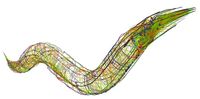
C-elegans-connectome_2In the 1970s biologist Sydney Brenner and his colleagues began preserving tiny hermaphroditic roundworms known as Caenorhabditis elegans in agar and osmium fixative, slicing up their bodies like pepperoni and photographing their cells through a powerful electron microscope. The goal was to create a wiring diagram—a map of all 302 neurons in the C. elegans nervous system as well as all the 7,000 connections, or synapses, between those neurons. In 1986 the scientists published a near complete draft of the diagram. More than 20 years later, Dmitri Chklovskii of Janelia Farm Research Campus and his collaborators published an even more comprehensive version. Today, scientists call such diagrams “connectomes.” So far, C. elegans is the only organism that boasts a complete connectome. Researchers are also working on connectomes for the fruit fly nervous system and the mouse brain. In recent years some neuroscientists have proposed creating a connectome for the entire human brain—or at least big chunks of it. Perhaps the most famous proponent of connectomics is Sebastian Seung of the Massachusetts Institute of Technology, whose impressive credentials, TED talk, popular book, charisma and distinctive fashion sense (he is known to wear gold sneakers) have made him a veritable neuroscience rock star.

More here.

Wednesday, October 3, 2012

Graham Priest on Buddhism and Other Asian Philosophies

Over at Rationally Speaking Massimo Pigliucci and Julia Galef talk to Graham Priest:


For all the time Massimo and Julia have spent discussing and debating philosophy on Rationally Speaking, so far, it's all been philosophy from Europe and North America. What about the philosophical traditions of, for example, Asia? In this episode, professor of philosophy Graham Priest offers a brief introduction to the philosophy of India, China, and Japan, and explains why he thinks it should be better known in the West.

Graham's pick: “The Tristan Chord: Wagner and Philosophy”