A bad few weeks for girls’ schools in Pakistan

From New Statesman:

GirlsIt has been a bad few weeks for girls’ schools in Pakistan. The shooting of 15 year old educational activist Malala Yousafzai in October sent shockwaves through the country. Other female activists spoke out about being targeted, and the spotlight has been placed on the Taliban’s numerous attacks on girls trying to get an education. The latest incident was the burning down of the Farooqi Girls’ High School in Lahore on Thursday. This was not the doing of the Taliban, but an angry mob. Why? Because a teacher, Arfa Iftikhar, had allegedly set a piece of homework that contained derogatory references to the Prophet Muhammad. Iftikhar has been forced into hiding, while the 77 year old principal of the school, Asim Farooqi, has been detained for 14 days on blasphemy charges. At the protests on Thursday, the mob distributed photocopies of the offending homework, and broke and burnt everything they could lay their hands upon. Unsurprisingly, the school has been closed ever since.

Blasphemy is an extremely inflammatory issue in Pakistan. Insulting the Prophet or the Quran can carry the death penalty, while even the suggestion that blasphemy has taken place is enough to trigger violent outburst of public anger. Not a single newspaper has specified exactly what the alleged blasphemy is – indeed, to do so could lead to fresh charges being directed at the publishers. On this basis, accusers can even refuse to repeat the blasphemy in court, leading to a situation that would be farcical were it not so dangerous. The light burden of proof means that the law is often used to settle scores – indeed, it has been suggested that this charge could be a plot against the school, which is one of the most successful in Lahore. The complaint was lodged by Abdullah Saqib, the vice principal of Jamia Kareemia Sadidia, a religious school in the same area. Possible conspiracies aside, what does this incident tell us? First of all, women and girls are ready to defend their right to be educated. Following the violence of the mob reaction, around 2,000 students, parents and teachers took to the streets on Saturday to demand that the school reopen. The crowd, predominantly made up of teenage girls, carried placards and chanted slogans including “release our principal”. Just like the reaction to the Malala shooting, this demonstrates that society is not willing to compromise on its right to educate its daughters, whether the threat is coming from armed militants or from an angry mob.
Secondly, it shows that the tide has not turned against blasphemy laws.
More here.

Blind mole rats may hold key to cancer

From Nature:

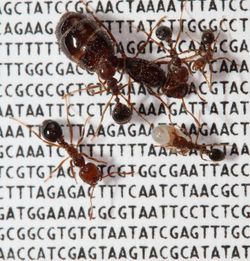
RatsThere's more than one way for long-lived subterranean rodents to avoid cancer, and they might hold cellular clues to effective treatments in humans. Cell cultures from two species of blind mole rat, Spalax judaei and Spalax golani, behave in ways that render them impervious to the growth of tumours, according to work by Vera Gorbunova at the University of Rochester in New York and her colleagues1. And the creatures seem to have evolved a different way of doing this from that observed in their better known and similarly cancer-resistant cousin, the naked mole rat (Heterocephalus glaber). Some 23% of humans die of cancer, but blind mole rats — which can live for 21 years, an impressive age among rodents — seem to be immune to the disease. “These animals are subject to terrific stresses underground: darkness, scarcity of food, immense numbers of pathogens and low oxygen levels. So they have evolved a range of mechanisms to cope with these difficulties,” explains co-author Eviatar Nevo at the University of Haifa in Israel, who has published papers on the creatures since 1961. “I truly believe work with these animals will bring a dramatic revolution in medicine.”

Three years ago, Gorbunova was involved in another study that described the unusual way in which the cells of the naked mole rat behave in the lab2. The authors say that this hints at how the rats resist cancer. When cells from most animals are grown in a culture dish, they divide until they form a single layer of cells covering the base of the dish. At this point, healthy cells stop dividing, whereas cancerous ones continue. But the cells of naked mole rats behave as if they are 'claustrophobic', ceasing to divide much sooner than cells from other species. “We thought the blind-mole-rat cells would use the same mechanism as those of naked mole rats,” says Gorbunova, “so the fact that they do not was a big surprise”. Rather than ceasing to divide, the cells of blind mole rats reach a point at which they die en masse in a bout of cell suicide that Gorbunova and her co-authors call “concerted cell death”. This seems to be triggered by the collective release of a signalling molecule called interferon-beta, although what causes this is unclear. “The cells have some way of sensing when they are overproliferating, but we still don’t know precisely how they sense that,” Gorbunova says. “This is what we need to find out next, because it could provide some clue as to how we could activate the same process in human cells.”

More here.

Monday, November 5, 2012

Sunday, November 4, 2012

Seeing what isn’t there

From Salon:

Hallucinations_rect-460x307Oliver Sacks may be the father of the popular neurological best-seller, but he’s distinctly different from the current crop of authors, be they as substantive as Daniel Kahneman (“Thinking Fast and Slow”) or as dodgy as Jonah Lehrer. The latest iteration of the genre usually makes generalizations about human behavior on the basis of quantitative studies. The particular histories of the unnamed subjects of those studies are irrelevant; all that matters is the aggregate, because only in writing about the average person can today’s neuroscience author claim that his book is about you, the average reader.

Sacks, on the other hand, has always been fascinated by outliers. It’s his professed belief that the underlying structures and functions of the brain can be most captivatingly glimpsed in the experiences of the man who mistook his wife for a hat and the man who kicked his own leg out of bed. This approach, not incidentally, also makes for much better stories than, say, descriptions of studies in which college students were asked to memorize numbers under trying circumstances. There’s an aura of self-help surrounding most popular neuroscience books today, with all the banality that term implies. What the Sacks style lacks in personal applicability it makes up for in marvels. So much so, in fact, that filmmaker Wes Anderson offered a parody version of Sacks in “The Royal Tenenbaums”: a shrink, played by Bill Murray, whose career is built on exhibiting his clients’ freakishness to the public.

More here.

Beautiful physics: Tying knots in light

From PhysOrg:

BeautifulphyDr Anton Desyatnikov from the Nonlinear Physics Centre at The Australian National University is part of an international team of scientists who are designing knots in light, with potential applications in advanced modern optics, laser beams and even quantum computing. Using concepts from mathematics and physics the model Dr Desyatnikov and his colleagues have explored creates optical vortices with dark cores in a bright laser beam, that can then tangle and form links and knots.

“Apart from their curiosity value, what's really interesting and useful about these knots of darkness is that they show you what the power flow is doing,” Dr Desyatnikov said. “It is part of the incredible progress science is making in the field of optics, we're beginning to do things with light that would have once seemed impossible.” “The idea of a knot of light is something scientists have been exploring for years and a few groups have managed to achieve just that by precisely engineering laser beams with “artificial” or “hand-made” knots. But what we've been working on are models in which the knots spontaneously form on their own, just like those annoying knots that you always get in electrical cables. “However unlike electrical cables which love to form knots, light doesn't. Scientists have found that inducing knots to form in laser beams by introducing perturbations in the form of laser speckle only very rarely induces knots. “Our models suggest that you have to get the key parameters of the light in a certain range before you can easily tie the light in knots but once you do, the knots are virtually guaranteed,” he said.

More here.

Colm Tóibín: you have to be a terrible monster to write

With a mind as formidable as his features, Colm Tóibín is now firmly a part of Ireland’s literary landscape. It’s both a blessing and a curse.

Nigel Farndale in The Telegraph:

ScreenHunter_13 Nov. 04 16.58‘Listen,” Colm Tóibín says. I listen, though there is nothing to hear. “And it gets even quieter at night,” he adds, “because nearly all the properties around here are used as offices.” We are standing in the upstairs study of his four-storey Georgian house in Dublin, the place where he does his writing in a hard-backed rattan chair, at night.

The 57-year-old author shows me a work-in-progress on his desk, written in longhand in a notebook. “I have to write a first draft with a fountain pen before I type it up as a second,” he explains. “John Lanchester and Philip Hensher do the same. I bumped into them the other night and we were all doing our pen talk.”

Tóibín talks in a strong but ponderous voice — which is, by the way, as Irish as whiskey with an “e”. The deliberation, he reckons, may be a compensation for a childhood stammer. He avoids starting sentences with hard consonants. In conversation with him you have to hold your nerve and not rush to fill the long silences, as he is probably half way through a thought.

“I was waiting to get money out of a machine last night,” he tells me, “and there were these two lads who were slightly drunk messing about in front of me in the queue. The cheekier one looked at me and said: ‘So you’re busy at the moment?’ I must have been looking quite severe and was about to say ‘Yes I am, and I want to get home’ when he added ‘with the writing?’ and I had to smile. I took out my ink pen, held it up and went ‘Yeah’.”

More here.

The Great Repudiation and the Return to Normalcy: Prospects for Obama’s Second Term

Anis Shivani in Big Think:

ScreenHunter_12 Nov. 04 16.39I’ve been contemplating the notion of a graduated return to normalcy for about a year. A few days from election, with Obama’s chances having dimmed considerably, would seem to be the most perilous time to put this idea forward, but I’ll go ahead and propose anyway that a slow but definite return to normalcy has been under way for a while, and that if Obama is reelected, this countertendency is likely to pick up steam in the next four years.

I assert this because before Mitt Romney chose the first debate to unveil his etch-a-sketch moment—very smart, because it left little time for the obvious deceit to be exposed, and because he’d already signaled his allegiance to the extreme right for much of the campaign—he was headed for a historic loss. If Romney has any chance in the election, it’s only because he’s temporarily assumed the posture of a Massachusetts moderate, a persona relatively low-information voters partly bought into, as he repudiated every single extremist policy position of his, both domestic and international, over the course of three debates.

Romney and the Republicans, it was clear by October 3, could not win on their terms; the Romney-Ryan agenda was dead in the water, if it was going to be presented for what it really was. Voucherization of Medicare is a loser, as is ending abortion in cases of rape and incest, or self-deportation for “illegals.”

More here.

Impressions of Gaza

Noam Chomsky at his website:

Noam-chomsky3Even a single night in jail is enough to give a taste of what it means to be under the total control of some external force. And it hardly takes more than a day in Gaza to begin to appreciate what it must be like to try to survive in the world’s largest open-air prison, where a million and a half people, in the most densely populated area of the world, are constantly subject to random and often savage terror and arbitrary punishment, with no purpose other than to humiliate and degrade, and with the further goal of ensuring that Palestinian hopes for a decent future will be crushed and that the overwhelming global support for a diplomatic settlement that will grant these rights will be nullified.

The intensity of this commitment on the part of the Israeli political leadership has been dramatically illustrated just in the past few days, as they warn that they will “go crazy” if Palestinian rights are given limited recognition at the UN. That is not a new departure. The threat to “go crazy” (“nishtagea”) is deeply rooted, back to the Labor governments of the 1950s, along with the related “Samson Complex”: we will bring down the Temple walls if crossed. It was an idle threat then; not today.

The purposeful humiliation is also not new, though it constantly takes new forms. Thirty years ago political leaders, including some of the most noted hawks, submitted to Prime Minister Begin a shocking and detailed account of how settlers regularly abuse Palestinians in the most depraved manner and with total impunity. The prominent military-political analyst Yoram Peri wrote with disgust that the army’s task is not to defend the state, but “to demolish the rights of innocent people just because they are Araboushim (“niggers,” “kikes”) living in territories that God promised to us.”

More here.

Saturday, November 3, 2012

State of the Species

Charles C. Mann in Orion Magazine:

MannND12_Anonymous-silo-e1421175894287THE PROBLEM WITH environmentalists, Lynn Margulis used to say, is that they think conservation has something to do with biological reality. A researcher who specialized in cells and microorganisms, Margulis was one of the most important biologists in the last half century—she literally helped to reorder the tree of life, convincing her colleagues that it did not consist of two kingdoms (plants and animals), but five or even six (plants, animals, fungi, protists, and two types of bacteria).

Until Margulis’s death last year, she lived in my town, and I would bump into her on the street from time to time. She knew I was interested in ecology, and she liked to needle me. Hey, Charles, she would call out, are you still all worked up about protecting endangered species? Margulis was no apologist for unthinking destruction. Still, she couldn’t help regarding conservationists’ preoccupation with the fate of birds, mammals, and plants as evidence of their ignorance about the greatest source of evolutionary creativity: the microworld of bacteria, fungi, and protists. More than 90 percent of the living matter on earth consists of microorganisms and viruses, she liked to point out. Heck, the number of bacterial cells in our body is ten times more than the number of human cells! Bacteria and protists can do things undreamed of by clumsy mammals like us: form giant supercolonies, reproduce either asexually or by swapping genes with others, routinely incorporate DNA from entirely unrelated species, merge into symbiotic beings—the list is as endless as it is amazing. Microorganisms have changed the face of the earth, crumbling stone and even giving rise to the oxygen we breathe. Compared to this power and diversity, Margulis liked to tell me, pandas and polar bears were biological epiphenomena—interesting and fun, perhaps, but not actually significant.

Does that apply to human beings, too? I once asked her, feeling like someone whining to Copernicus about why he couldn’t move the earth a little closer to the center of the universe. Aren’t we special at all? This was just chitchat on the street, so I didn’t write anything down. But as I recall it, she answered that Homo sapiens actually might be interesting—for a mammal, anyway. For one thing, she said, we’re unusually successful.

More here.

The Human Centipede; Or, How to Move to New York

Elissa Bassist in The Paris Review:

Horrormovies-300x280I moved to New York for graduate school. I was in my mid-twenties, and what do we do when we’re in our mid-twenties? We move to New York with very little money and very high hopes. Like many, I entered into the nexus of love and wealth and fame looking for a piece of the glistering and transmutable dream itself. In short, I was here to write a book. But standing on the threshold of this dream, I began to panic. I thought, I have arrived, and thought nothing of how far I had to go or what it would take to get there. I could see downtown Brooklyn from my window, and most days my impression of New York came from inside my bedroom. Outside, the sidewalks were cobbled and uneven, and the houses and apartments looked like replicas of the houses and apartments I’d watch on TV.

I’d lived in Brooklyn less than a month but had already settled into an inexplicable depression I’d nicknamed The Darkness. I couldn’t leave my apartment, except to attend class in Manhattan two nights a week. Sitting on the F train, I felt sure no one could lived in New York without a constantly replenished supply of antidepressants, courtesy of some kind of pharmaceutical Fresh Direct. The city and its boroughs, alternating blocks under perpetual construction, seemed to reflect its residents. Walking home on those Mondays and Wednesdays, I saw the funeral parlors and casket makers on what felt like every corner and wondered if funeral parlors and casket makers really were ubiquitous in New York, or if I was just noticing them more.

More here.

Hounding the Dissenters

20121025_09

In the wake of the Lahore Institute of Management Sciences' (LUMS) decision to not renew Pervez Hoodbhoy's contract, Mohammad Taqi in Daily Times:

Pakistan has an unfortunate track record of hounding dissenters from Dr Fatima Ali Jinnahbhoy to Dr Pervez Amirali Hoodbhoy. And the bullying has gone on with impunity and without shame. The recent slap-on-the-wrist verdict by the Supreme Court (SC) in the 16-year-old Asghar Khan case barely scratches the surface of how institutionalised and deep the rot is.

A hyperactive judiciary that has been adjudicating anything from samosa prices to the National Reconciliation Ordinance (NRO) 2007 and had no hesitation in sending an elected prime minister packing for non-implementation of its orders in the NRO case, danced around the substance of the Asghar Khan case. The SC has recommended action ‘under the law’ against the former army chief, General (retired) Mirza Aslam Beg and the ISI boss at the time, General (retired) Asad Durrani, for their illegal actions. The court effectively turfed the matter to the government by ordering it to set off this process through the Federal Investigation Agency.

The lawyer for the petitioner, the outstanding Salman Akram Raja, is spot on when he says that proceedings against the culprits should be initiated under Article six of the constitution. What could serve as the touchstone here is the SC’s own judgment in the Asma Jilani vs Government of Punjab case 1972 that, “As soon as the first opportunity arises, when the coercive apparatus falls from the hands of the usurper, he should be tried for high treason and suitably punished. This alone will serve as a deterrent to the would-be adventurers.” It would have certainly helped the civilian leadership if the SC had provided at least some clarity as to what exactly it had in mind when it directed the government to punish the offenders. The verdict left the door open to proceed potentially against the political activity of the president, but it would neither touch the political beneficiaries of the Mehran Bank-army collusion or the army itself with a 10-foot pole. Nonetheless, the ruling provides the civilian leadership an opportunity to proceed against those who have directly or indirectly, as in the 1990 stolen elections, usurped the people’s mandate or refused to honour it when the Pakistani people have spoken despite their machinations.

Why IQs Rise

IQ_curve.svg_

Meehan Crist and Tim Requarth in TNR:

IN THE MID-’80s, the political philosopher James Flynn noticed a remarkable but puzzling trend: for the past century, average IQ scores in every industrialized nation have been steadily rising. And not just a little: nearly three points every decade. Every several years, IQ tests test have to be “re-normed” so that the average remains 100. This means that a person who scored 100 a century ago would score 70 today; a person who tested as average a century ago would today be declared mentally retarded.

This bizarre finding—christened the “Flynn effect” by Richard Herrnstein and Charles Murray inThe Bell Curve—has since snowballed so much supporting evidence that in 2007 Malcolm Gladwell declared in The New Yorker that “the Flynn effect has moved from theory to fact.” But researchers still cannot agree on why scores are going up. Are we are simply getting better at taking tests? Are the tests themselves a poor measure of intelligence? Or do rising IQ scores really mean we are getting smarter?

In spite of his new book’s title, Flynn does not suggest a simple yes or no to this last question. It turns out that the greatest gains have taken place in subtests that measure abstract reasoning and pattern recognition, while subtests that depend more on previous knowledge show the lowest score increases. This imbalance may not reflect an increase in general intelligence, Flynn argues, but a shift in particular habits of mind. The question is not, why are we getting smarter, but the much less catchy, why are we getting better at abstract reasoning and little else?

Koshik the Elephant Can Speak Korean

49233-1024x684

Becky Crew in Scientific American:

Upstaged spectacularly by a young Beluga whale that can sort of speak human, an Asian elephant named Koshik can also imitate human speech, but in Korean, using his trunk.

Captive-born in 1990 and transferred to South Korea’s Everland Zoo three years later, Koshik lived with two female Asian elephants for a couple of years before being kept completely alone for the following seven years. During this time, he showed a keen interest in learning several spoken commands, and by August 2004, when he was 14 years old and about to reach sexual maturity, his trainers noticed that he was attempting to imitate their speech.

It’s not known if this was the first time Koshik imitated human speech, or if he’d started doing it earlier and his trainers hadn’t noticed, but there’s a good chance the reason he had started was because, for a long period of time during his formative years, the only social interaction he had was with humans.

Isolation from conspecifics has led to speech intimation in a number of unlikely animals, such as Hoover the harbour seal (Phoca vitulina) from Maine, who in 1976 showed an ability to imitate human speech. Hoover was found as an orphaned cub, and was hand-reared by locals before being transferred at three months old to the New England Aquarium. Here he shared an exhibit pool with other harbour seals, but he was the oldest male for most of his life.