The best books on the Beatles

From The Gaurdian:

The-Beatles-in-London-196-0085 October is the 50th birthday of the Beatles' first single, released back when Harold Macmillan was the PM, and the Cuban missile crisis was only weeks away.

“Love Me Do” sounds like the world in which it was made: tentative, still feeling the pinch of post-war austerity. Ian MacDonald's wonderful song-by-song history of the group, Revolution in the Head, reckoned that the song's “modal gauntness” is subtly cunning, serving notice of the Beatles' “unvarnished honesty”, and – via John Lennon's wailing harmonica part – the “blunt vitality” of their native Liverpool. In the surviving Beatles' own account, the huge Anthology, Paul McCartney recalls that the song was meant to sound hard and authentic: “blues” rather than “la de da de la”. Many Beatles books barely mention “Love Me Do” at all. But there it is: a number 17 hit, long rumoured to have been propelled into the charts thanks to bulk-buying by manager Brian Epstein. If, like me, one of your first experiences of Beatles music was the collection 1962-66 (known as “The Red Album”, as against 1967-70 “The Blue Album”), you will probably have experienced it as a strangely muted opening to a listening experience that quickly flared into spectacular life: a prologue, rather than a first chapter proper.

The Beatles' second single, “Please Please Me”, was released in January 1963, in the midst of a legendarily biting British winter, to which its giddy sound was an antidote. “Congratulations, Gentlemen, you've just made your first number one,” said their producer, George Martin. And he was right. By early the following year, their songs were crowding the US charts, and they were about to play to 73 million Americans on The Ed Sullivan Show. Once again, they were adopted as a panacea for cold and grim times – this time less a matter of the weather than the pall cast by the murder of President Kennedy. Only two years later, they would reach the apex of their fame, chased around the Deep South by fundamentalist Christians outraged by John Lennon's claim that they were “bigger than Jesus”, while their music took on the textures and expanded horizons traceable – at least in part – to Lennon and George Harrison's use of LSD. Such is the remarkable pace of a story that has been told by scores of writers, a story about four young musicians but no end of other things: the cities of Liverpool, Hamburg and London; class, and the shaking of English hierarchies; pop's transmutation into a global culture; and the western world's passage from a world still defined by the second world war and its aftermath, to the accelerated modernity we know today. Everything in the tale pulses with significance and drama. It seems barely believable, and in the best Beatles books, it still burns.

More here.

Researchers prevent heart failure in mice

From PhysOrg:

HeartCardiac stress, for example a heart attack or high blood pressure, frequently leads to pathological heart growth and subsequently to heart failure. Two tiny RNA molecules play a key role in this detrimental development in mice, as researchers at the Hannover Medical School and the Göttingen Max Planck Institute for Biophysical Chemistry have now discovered. When they inhibited one of those two specific molecules, they were able to protect the rodent against pathological heart growth and failure. With these findings, the scientists hope to be able to develop therapeutic approaches that can protect humans against heart failure.

A research team at the Göttingen Max Planck Institute for Biophysical Chemistry and the Hannover Medical School discovered that two small RNA molecules play a key role in the growth of heart muscle cells: the microRNAs miR-212 and miR-132. The scientists had observed that these microRNAs are more prevalent in the cardiac muscle cells of mice suffering from cardiac hypertrophy. To determine the role that the two microRNAs play, the scientists bred genetically modified mice that had an abnormally large number of these molecules in their heart muscle cells. “These rodents developed cardiac hypertrophy and lived for only three to six months, whereas their healthy conspecifics had a normal healthy life-span of several years,” explained Dr. Kamal Chowdhury, researcher in the Department of Molecular Cell Biology at the Max Planck Institute for Biophysical Chemistry. “For comparison, we also selectively switched off these microRNAs in other mice. These animals had a slightly smaller heart than their healthy conspecifics, but did not differ from them in behavior or life-span,” continued the biologist. The crucial point is when the scientists subjected the hearts of these mice to stress by narrowing the aorta, the mice did not develop cardiac hypertrophy – in contrast to normal mice.

More here.

Wednesday Poem

Gratitude to Old Teachers

When we stride or stroll across the frozen lake,
We place our feet where they have never been.
We walk upon the unwalked. But we are uneasy.
Who is down there but our old teachers?

Water that once could take no human weight
We were students then-holds up our feet,
And goes on ahead of us for a mile.
Beneath us the teachers, and around us the stillness.

by Robert Bly
from Eating the Honey of Words, 1999
Harper Collins Publishers, New York, NY

Tuesday, September 25, 2012

Reinventing Ethics

Howard Gardner in the New York Times:

Ten_commandmentsWhat’s good and what’s bad? There are plenty of reasons to believe that human nature changes slowly, if at all — all’s still fair in love and war. For millennia, religious believers have attributed our nature to God’s image, as well as to God’s plan. In recent years, evolutionary psychologists peered directly at our forerunners on the savannahs of East Africa; if human beings change, we do so gradually over thousands of years. Given little or nothing new in the human firmament, traditional morality — the “goods” and “bads” as outlined in the Ten Commandments or the Golden Rule — should suffice.

My view of the matter is quite different. As I see it, human beings and citizens in complex, modern democratic societies regularly confront situations in which traditional morality provides little if any guidance. Moreover, tenable views of “good” and “bad” that arose in the last few centuries are being radically challenged, most notably by the societal shifts spurred by digital media. If we are to have actions and solutions adequate to our era, we will need to create and experiment with fresh approaches to identifying the right course of action.

More here.

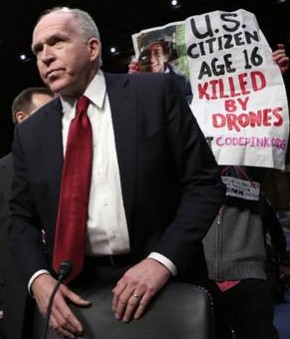
Do Targeted Killings Work?

Micah Zenko at the Council on Foreign Relations website:

ScreenHunter_03 Sep. 26 11.40Pir Zubair Shah: My answer is that in Pakistan, targeted killings have worked to a large extent—CIA operated drone strikes have eliminated top al-Qaeda and local Taliban leadership. The tribal region of Pakistan along the Afghanistan border turned into a safe haven for the Taliban and other foreign fighters affiliated with groups like al-Qaeda and the Islamic Movement of Uzbekistan (IMU) that fled Afghanistan in the wake of the U.S. invasion. Because Pakistan was unable and sometimes unwilling to take on such groups, drone strikes became the only politically viable option for U.S. counterterrorism goals, such as destroying al-Qaeda safe heavens.

The first known case of targeted killing by a drone strike is when a Pakistani Taliban commander, Nek Mohammad, was killed in 2004. Since then, more than three hundred strikes have killed dozens of al-Qaeda leaders and local insurgent commanders. The main focus of the drone attacks have been the tribal districts of South and North Waziristan, where al-Qaeda militants and other foreign fighters took refuge after the fall of the Taliban regime in Afghanistan. Drone strikes have also killed fighters who posed a greater threat to Pakistan than to the United States, including commanders like Baitullah Mehsud, Qari Hussain, and Badar Mansoor. Similarly, some of the top al-Qaeda commanders were Abu Yahya al Libi, Khalid Habib, Osama Alkini, and many others. Drones have also killed the head of IMU, Qari Tahir Yeldeshev, and the commander of the Eastern Turkistan Movement in North Waziristan. In recent months, drones have also targeted members of the Haqqani network, including the sons of Jalaluddin Haqqani, the symbolic head of the network that is now run by his son from safe havens in North Waziristan and other places in Pakistan.

Drone strikes have also resulted in civilian deaths, although far less than what is reported (mostly) in Pakistani media. The number of civilians killed by drones is also fewer than those killed by Pakistani jet bombers and artillery shelling. Similarly, the tribal areas targeted by drones have a favorable view of the attacks, compared to mainstream Pakistani society, who view the strikes as violations of their national sovereignty.

More here.

Defending Just-So Stories

Jonathan Gottschall in Psychology Today:

ScreenHunter_02 Sep. 26 11.32Which brings me to Adam Gottlieb, a New Yorker writer who recently stirred controversy with his critique of evolutionary psychology. Gottlieb’s argument is quite dusty. It goes back more than 30 years to the fervent ur-critic of sociobiology and evolutionary psychology Stephen Jay Gould. Following Gould, Gottlieb argues that evolutionary psychology lacks scientific merit because it amounts to nothing more than an anthology of just-so stories.

But this critique holds little water. Evolution is an intrinsically story-based discipline. All evolutionists shape hypotheses in the form of historical narratives. That is, they develop a plausible account of how some biological feature—from pair-bonding, to upright posture, to aggression–may have emerged through the evolutionary process, and then seek to test the account against information derived from a wide variety of sources. So Gould, as an evolutionist, was actually a thoroughgoing just-so storyteller himself. His story of how the woman got her orgasm is as speculative and storylike as anything you’ll find in evolutionary psychology. The difference: EP has tended to favor stories where features of human anatomy and behavior serve a specific evolutionary function, and Gould favored stories where they didn’t. In Gould’s account, a man’s orgasm serves an obvious evolutionary function, while a woman’s orgasm—and the clitoris that enables it—is a functionless (if fortunate) evolutionary side effect. (Perhaps one day I’ll write a post on why I find this particular story to be so far-fetched.)

Critics of evolutionary psychology, including Gould, have pointed out many weaknesses in the discipline, and have helped it reach a more humble and mature form. And they are right to point out that it is hard to test certain EP ideas as thoroughly as we might like. But EP stories make predictions that can be tested against data from genetics, primatology, sociology, developmental psychology, and many other fields.

More here.

Writers’ Favorite Punctuation Marks

Jen Doll in The Atlantic:

D87414a85a5bc898047c851015d57662_300x300Ben Zimmer, executive producer of the Visual Thesaurus and Vocabulary.com, and language columnist for the Boston Globe: “When I revealed in a New York Times article last year that I'm overly attached to em-dashes, I was taken to task by the redoubtable John McIntyre, copy editor for the Baltimore Sun. 'When you are tempted to use dashes,' he wrote, 'stop for a moment to consider whether you really want dashes there rather than commas or parentheses.' Properly chastened, I've tried to tone down my dashiness. But I still admire the artfully wielded em-dash, especially used near the end of a sentence—when it works, it really works. (Some might have preferred a semicolon in the previous sentence; I can appreciate the affection for the humble semicolon, less flashy than the em-dash.)”

More here.

the departed

StoryBigImageKEOHNJWTHE-DEPARTED-big

THE MEN WHO GATHERED in Srinagar on a bright Sunday morning in early July had all left their lives behind; not once, but twice. They sat, about 25 of them, on the lawn outside the historic Mujahid Manzil—once the epicentre of a movement for Kashmiri independence—trading stories, chain-smoking cheap filterless cigarettes, inspecting old wounds. More than 20 years ago, all these men left their homes in Kashmir to cross to the other side—to Azad Kashmir, a sliver of the former princely state under Pakistani control. They crossed the mountains to become militants; to be trained with guns and explosives and grenades in camps run by Pakistan’s Inter-Services Intelligence (ISI). Some returned as fighters; some never fired a shot. Within six or seven years, they had all ceased to fight; they left the camps, became refugees in Pakistan, and started new lives on the other side of the line. They married, had children, scraped together work. And then, two decades after they first crossed over, they began to return, in ones and twos—smuggling themselves back into the state they once dreamt of liberating from Indian rule.

more from Mehboob Jeelani at Caravan here.

Lincoln’s Indispensable Man

121001_r22608_p233

Although Seward retired at the age of sixty-eight, in 1869, when Grant assumed the Presidency, he continued to be, as Frances had described him a quarter century earlier, “the most indefatigable of men.” He said, “At my age, and in my condition of health, ‘rest was rust,’ and nothing remained, to prevent rust, but to keep in motion.” Still suffering from pain in his face and neck, his hands crippled, and paralysis creeping up his arms, he went on a journey with his family on the newly opened transcontinental railroad—a cause that he had championed in the Senate—and then on to British Columbia, Alaska, Cuba, and Mexico. He returned home for five months before setting off for Japan, China, and Europe with the two daughters of an old political friend. There had been speculation that he would marry one of them, twenty-four-year-old Olive Risley, whom he had been seeing regularly in Washington. (One paper, alluding to the age difference, described Seward as “amiable, sportive, frisky, foxy.”) Instead, Seward adopted her, thus preëmpting any stories about the impropriety of travelling with two very young women. After the trip, he finally settled down in Auburn, where he worked with Olive on a book about their journeys, and received frequent visitors at home.

more from Dorothy Wickenden at The New Yorker here.

Kael

Prikryl_1-101112_jpg_470x647_q85

Kael’s taste tended toward quick pacing and a down-to-earth story that could grab an audience and make it feel something. A movie didn’t have to be hysterically funny to win her over; she found it especially thrilling when a loose, jocular tone somehow eloped with otherwise straight-faced genres—hence her lifelong allegiance to Jean Renoir and Robert Altman and Jonathan Demme. Praising a movie by another one of her favorites, Jean-Luc Godard, Kael wrote that its “fusion of attitudes—seeing characters as charming and poetic and, at the same time, preposterous and absurd—is one of Godard’s contributions to modern film.” Her most withering scorn was reserved for movies that she took to deny the possibility of laughter or pretended they were above it—her blacklist included much of Bergman, most of Kubrick, and pretty much all of Hitchcock.

more from Jana Prikryl at the NYRB here.

Common Parasite Linked to Personality Changes

From Scientific American:

Common-parasite-linked-to-personali_1Feeling sociable or reckless? You might have toxoplasmosis, an infection caused by the microscopic parasite Toxoplasma gondii, which the CDC estimates has infected about 22.5 percent of Americans older than 12 years old. Researchers tested participants for T. gondii infection and had them complete a personality questionnaire. They found that both men and women infected with T. gondii were more extroverted and less conscientious than the infection-free participants. These changes are thought to result from the parasite's influence on brain chemicals, the scientists write in the May/June issue of the European Journal of Personality. “Toxoplasma manipulates the behavior of its animal host by increasing the concentration of dopamine and by changing levels of certain hormones,” says study author Jaroslav Flegr of Charles University in Prague, Czech Republic.

Although humans can carry the parasite, its life cycle must play out in cats and rodents. Infected mice and rats lose their fear of cats, increasing the chance they will be eaten, so that the parasite can then reproduce in a cat's body and spread through its feces. In humans, T. gondii's effects are more subtle; the infected population has a slightly higher rate of traffic accidents, studies have shown, and people with schizophrenia have higher rates of infection—but until recent years, the parasite was not thought to affect most people's daily lives.

More here.

Feathered Freeloaders at the Ant Parade

Natalie Angier in The New York Times:

AntsBARRO COLORADO ISLAND, Panama — Here in the exuberantly dour understory of the Panamanian rain forest, the best way to find the elusive and evolutionarily revealing spotted antbird is to stare at your boots. For one thing, if you don’t tuck in your pant legs to protect against chiggers and ticks, you will end up a color plate in “Rook’s Textbook of Dermatology.” For another, sooner or later — O.K., much later, many, many hiking hours later — you will finally step into a swarm of army ants boiling out across the forest floor. At that point you should step right back out of the swarm and start looking for the characteristic flitting and hopping of the thrush-size antbird, listening for its vibrato “peee-ti peee-it” call. Because wherever there are army ants out on a hunting raid, peckish antbirds are almost sure to follow. The birds are not foolish enough to try to eat them: Army ants are fiercely mandibled and militantly cohesive. Instead, they hope to skim off a percentage of the ants’ labor, by snatching up any grasshoppers, beetles, spiders or small lizards that may jump to the side in a frantic attempt to elude the oncoming avalanche of predatory ants. It’s a gleeful reversal of the conventional notion of parasites as little, ticky things that plague large, poorly dressed hosts. Here the big vertebrates are the parasites, freeloading off insects a fraction of their size. And the parasitic strategy is so irresistible that according to recent research in the journal Ecology, the spotted antbirds on Barro Colorado Island just may be taking it professional. Whereas the species has traditionally opted for a mixed approach — filching from ant swarms but also finding food on its own — the island-bound antbirds appear to increasingly depend on army ants to scare up their every meal. Janeene M. Touchton a researcher associated with the Smithsonian Tropical Research Institute and Princeton, and the principal author of the report, is now trying to identify the personality traits that may facilitate a spotted antbird’s leap from amateur to polished parasite. Is it boldness, aggressiveness, a love of novelty? Or maybe a lack of aggressiveness, a nonchalance about territory and a refusal to pick a fight? She is collaborating on the project with Martin Wikelski of the Max Planck Institute for Ornithology.

Dr. Touchton, who is 37, looks as if she could be Keira Knightley’s sister and has the field-hardiness of a Dr. Livingstone. In her view, studying spotted antbirds offers an extraordinary opportunity to catch evolution on the wing, to identify the precise steps behind the great mystery of how new species arise from old ones.

More here.

Tuesday Poem

A Stranger's Arms

In any dream of confession
I enter the chapel barefoot
Having come straight
From a stranger's arms
On the crooked side of town
Where a song came to us in fragments
From a safe room.
“…down to Georgia
Gonna weep no more.”

It's okay
That I have lost my shoes
And wear only a crepe dress
Although it's 10 days
Before Christmas.
I am warm with wine
And crossing myself
With tepid holy water.

When I speak
To the smoke screen
Of the priest's face
I tell him
How the stars
Drag me down with wishing,
How I am reluctant to be
Only one song
In the whole universe.

by Corrine De Winter
from The Southern Cross Review #56

Monday, September 24, 2012

The Winners of the 3QD Philosophy Prize 2012

PhilTop2012 PhilStrange2012V2 PhilCharm2012

Justin E. H. Smith has picked the three winners:

  1. Top Quark, $1000: Wesley Buckwalter, Factive Verbs and Protagonist Projection
  2. Strange Quark, $300: Elizabeth Anderson, Recharting the Map of Social and Political Theory: Where is Government? Where is Conservatism?
  3. Charm Quark, $200: Thomas Rodham, Democracy is not a truth machine

Here is what Justin had to say about them:

This was a very good year to be chosen as judge for the 3QD Philosophy Prize, for there were many worthy entries and all of the pieces that made the final round were, to my mind, eminently worth reading. Of course, the consistently high quality of the entries made selecting the winners a very difficult task, and even if my choices were somewhat more based in shareable reasons than those of, say, Paul the Octopus (RIP), they were in the end, admittedly, my choices, based on my own views about what matters in philosophy blogging, and about the direction I would like to see this activity take in the future.

Now before I get to these choices, some preliminary thoughts on the current state of this new genre of philosophical writing. There are plenty of jokes going around these days about bloggers haughtily claiming to have 'published' what they have in fact only 'posted', or calling their posts 'pieces'. A number of the finalists here go so far as to call their posts 'essays'. At the same time, many academic philosophers (and presumably academics in other disciplines too), not a few of whom have taken to projecting their own views throughout the blogospheric ether, have been intent to draw a sharp distinction between real philosophical writing on the one hand –rigorous, exhaustive, footnoted, peer-reviewed, consequential for the shaping of debates within the discipline– and the blog-based letting-off of steam on the other.

The facts about the sociology of knowledge in the Internet age are making this distinction ever harder to maintain, however. Many of the finalist entries here are in fact rigorous and exhaustive, some are footnoted. They are not peer-reviewed in the same way that articles submitted to journals are, but arguably being invited to contribute to an academic group blog, in recognition of one's scholarly achievement, is not in principle different from the vetting process involved in scholarly publication. It is true that such an invitation is explicitly based on personality and reputation, while journals are in principle based on anonymous, merit-based selection. But this is only how things work in principle, while in reality personality and reputation do take a person a long way in the peer-review process, and, conversely, merit takes a person a long way in the project of becoming a blogger deemed worth listening to. As for shaping debates within the discipline, finally, there is no doubt that blogs are already doing this. Whether this is good for philosophy or not is another question, but it is a fact that it is happening.

Increasingly, though, I am finding it difficult to say what counts as a blog post, and in this respect I do not think that the substitution of older, more familiar terms such as 'piece' or 'essay' should always be met with derision. Surely, it cannot just be that a piece of writing is disseminated by electronic means, to screens rather than paper, since if this were the case then it would follow that (probably) within the next decade or so, all philosophy writing will be philosophy blogging. So then we must search for other, narrower criteria for identifying a 'piece' as a 'blog piece': non-password-protected, perhaps, or smattered with hyperlinks. One common criterion for identifying a piece of writing as a piece of blog writing is that it be relatively informal, conversational, or fun. Relatedly, it is often supposed that blog writing should be unpolished, cranked out at a rapid-fire pace, unedited. Finally, blogging is often held to be relatively ephemeral, to be launched out there like some quasi-utterance, and then to fade as the days pass and it slides further down the blog wall (or whatever that's called).

But these are neither necessary nor sufficient criteria for being a blog piece, and most of the finalists here do not meet them. Some of the entries were in fact heavily edited by people other than the author, such as the piece from the New York Times Opinionator series, which this bellwether newspaper is trying to promote as its blogging arm. How exactly we are supposed to distinguish between the online edition of the Times and a Times-related blog, or between Stanley Fish's 'posts' and David Brooks' 'columns', is something we are left on our own to figure out. In the present contest, even where the entries are likely not edited by committee, there is still nothing informal about most of them. In many cases, the entries are explicitly presented as drafts of academic 'pieces' properly speaking. I have tried, nonetheless, to stay fairly close to the current accepted meaning of 'blogging', even if this meaning is, as I believe, untenable in the long run, and to prefer entries that are relatively informal, that experiment with images and links rather than just delivering text, and that in other ways seize onto and celebrate the opportunities that online, non-peer-reviewed, spontaneous writing opens up. I have, namely, chosen the following three finalists for the first, second, and third prizes:

1. Experimental Philosophy: Factive Verbs and Protagonist Projection This is a very well written piece, and it might serve as a model for how to address important philosophical issues while still staying true to the free and informal spirit of the blogging genre. More importantly, it is a fine example of what I take to be an important, if still adolescent, movement in contemporary philosophy, which takes empirical research on the way actual human beings reason exactly as seriously as it deserves to be taken. This is a movement that is particularly well adapted to the blog medium, and it is no coincidence that so many experimental-philosophy supporters have jumped into this medium so avidly. I am not completely convinced that we can answer the philosophical question of whether only true things can be known by going out and learning what ordinary people say about the matter. But then I am not convinced that we can answer the philosophical question at all, and I suppose, at least, that learning what ordinary people think about truth and knowledge will help us to take a measure of the difficulty of the problem.

2. Bleeding Heart Libertarians: Recharting the Map of Social and Political Theory: Where is Government? Where is Conservatism? Along with the other contributions to the symposium of which it is a part, this piece provides a very nice example of the sort of serious and high-level exchange that is facilitated by the blog medium. Blogging is not always about the solitary emission of individual opinions; sometimes, as in the web symposium, it is also about building intellectual community. In her contribution, Elizabeth Anderson offers a lucid and substantive critique of John Tomasi's book, Free Market Fairness, pointing up the limitations of a libertarian conception of justice, but also compelling the non-libertarian reader to appreciate and take seriously the possibility of a morally well-founded vision of free markets.

3. The Philosopher's Beard: Democracy is not a truth machine. This piece is a very lively engagement with J. S. Mill's defence of the freedom of opinion, and its failure to distinguish between two very different domains in which human beings might have opinions: the ethical and religious domain on the one hand, and the domain of facts on the other. The author goes on to show how a failure to distinguish between these threatens to hamper democracy, by opening up the possibility of democratic debate about rational truths and facts that in fact require a very different sort of treatment. The argument seemed fairly obvious to me, but the author succeeds very well at that other task often held to be distinctive of philosophical blogging, as opposed to properly academic philosophical writing: he engages with important issues in the current news cycle, and shows how philosophy can help us to make sense of them.

Congratulations also from 3QD to the winners (remember, you must claim the money within one month from today–just send me an email). And feel free, in fact we encourage you, to leave your acceptance speech as a comment here! And thanks to everyone who participated. Many thanks also, of course, to Justin E. H. Smith for doing the final judging and for his charming judging essay.

The three prize logos at the top of this post were designed by Sughra Raza, Carla Goller, and me. The photograph used in the charm quark logo was taken by Margit Oberrauch. I hope the winners will display them with pride on their own blogs!

Details about the prize here.

Sunday, September 23, 2012

If I ruled the world: Michael Sandel

It is time to restore the distinction between good and gold.

Michael Sandel in Prospect:

199_ruledIf I ruled the world, I would rewrite the economics textbooks. This may seem a small ambition, unworthy of my sovereign office. But it would actually be a big step toward a better civic life. Today, we often confuse market reasoning for moral reasoning. We fall into thinking that economic efficiency—getting goods to those with the greatest willingness and ability to pay for them—defines the common good. But this is a mistake.

Consider the case for a free market in human organs—kidneys, for example. Textbook economic reasoning makes such proposals hard to resist. If a buyer and a seller can agree on a price for a kidney, the deal presumably makes both parties better off. The buyer gets a life-sustaining organ, and the seller gets enough money to make the sacrifice worthwhile. The deal is economically efficient in the sense that the kidney goes to the person who values it most highly.

But this logic is flawed, for two reasons. First, what looks like a free exchange might not be truly voluntary. In practice, the sellers of kidneys would likely consist of impoverished people desperate for money to feed their families or educate their children. Their choice to sell would not really be free, but coerced, in effect, by their desperate condition.

So before we can say whether any particular market exchange is desirable, we have to decide what counts as a free choice rather than a coerced one. And this is a normative question, a matter of political philosophy.

The second limitation to market reasoning is about how to value the good things in life.

More here.

Among the Alawites: Nir Rosen reports from Syria

Nir Rosen in the London Review of Books:

Nir-Rosen-2Syria’s Alawite heartland is defined by its funerals. In Qirdaha in the mountainous Latakia province, hometown of the Assad dynasty, I watched as two police motorcycles drove up the hill, pictures of Bashar mounted on their windshields. An ambulance followed, carrying the body of a dead lieutenant colonel from state security. As the convoy passed, the men around me let off bursts of automatic fire. My local guides were embarrassed that I had seen this display, and claimed it was the first time it had happened. ‘He is a martyr, so it is considered a wedding.’ Schoolchildren and teachers lining the route threw rice and flower petals. ‘There is no god but God and the martyr is the beloved of God!’ they chanted. Hundreds of mourners in black walked up through the village streets to the local shrine. ‘Welcome, oh martyr,’ they shouted. ‘We want no one but Assad!’

It was April, my sixth month travelling through Syria. After I left I heard of another funeral not far away, in the village of Ras al-Ayn, near the coast. A village of seven thousand people now had seven martyrs from the security forces, six missing or captured and many wounded. ‘Every day we have martyrs,’ an officer said. ‘It’s all a sacrifice for the nation.’ Another talked about ‘their’ crimes, and said ‘they’ had killed the soldier because he was an Alawite. One of my guides berated him for speaking of the conflict in sectarian terms in front of me. ‘The opposition have left us no choice,’ another soldier said. ‘They accept nothing but killing.’

Alawites – the heterodox Shia sect to which the Assads belong and which remains most loyal to the president and his government – make up about 10 per cent of the population.

More here.

The drugs don’t work: a modern medical scandal

The doctors prescribing the drugs don't know they don't do what they're meant to. Nor do their patients. The manufacturers know full well, but they're not telling.

Ben Goldacre in The Guardian:

ScreenHunter_01 Sep. 24 08.05Reboxetine is a drug I have prescribed. Other drugs had done nothing for my patient, so we wanted to try something new. I'd read the trial data before I wrote the prescription, and found only well-designed, fair tests, with overwhelmingly positive results. Reboxetine was better than a placebo, and as good as any other antidepressant in head-to-head comparisons. It's approved for use by the Medicines and Healthcare products Regulatory Agency (the MHRA), which governs all drugs in the UK. Millions of doses are prescribed every year, around the world. Reboxetine was clearly a safe and effective treatment. The patient and I discussed the evidence briefly, and agreed it was the right treatment to try next. I signed a prescription.

But we had both been misled. In October 2010, a group of researchers was finally able to bring together all the data that had ever been collected on reboxetine, both from trials that were published and from those that had never appeared in academic papers. When all this trial data was put together, it produced a shocking picture. Seven trials had been conducted comparing reboxetine against a placebo. Only one, conducted in 254 patients, had a neat, positive result, and that one was published in an academic journal, for doctorsand researchers to read. But six more trials were conducted, in almost 10 times as many patients. All of them showed that reboxetine was no better than a dummy sugar pill. None of these trials was published. I had no idea they existed.

It got worse.

More here.

Michael Chabon on race, sex, Obama

Andrew O'Hehir in Salon:

Chabon_rect-460x307If you’ve ever lived in Berkeley, Calif., that much-ridiculed college town on the eastern shores of San Francisco Bay, or even visited the place, you probably have highly specific associations with Telegraph Avenue, a historic street of political protests and retail commerce (legal and otherwise) that dead-ends against the University of California campus at Sather Gate. Michael Chabon’s new novel is pointedly not about that Telegraph Avenue, and its characters have no relationship to the university campus or to the 1960s explosion of left-wing activism that made Berkeley internationally famous – and, briefly, in my childhood, the locus of martial law as ordered by the governor of California, Ronald Reagan.

Chabon’s “Telegraph Avenue” calls our attention, literally and figuratively, to the other end of the street, where Telegraph crosses the city line and becomes the main drag of the Temescal district, a racially and economically mixed neighborhood in northwest Oakland. That’s where Archy Stallings, a 36-year-old African-American Gulf War vet who is the novel’s central character, and his Jewish partner Nat Jaffe (whose background resembles Chabon’s own) are not so slowly running a vintage vinyl emporium called Brokeland Records into the ground. It’s the summer of 2004, and a wealthy former NFL star and Oakland native, Gibson “G-Bad” Goode, is planning to open an immense new retail-entertainment complex – called, wonderfully, the “Dogpile Thang” – four blocks away, applying the coup de grace to Archy and Nat’s failing business.

More here.