The Self in Self-Help

From New York Magazine:

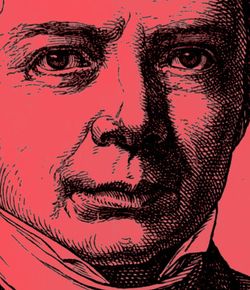
Selfhelp130107_schulz_560In The Age of Anxiety, W.H. Auden observed that we human beings never become something without pretending to be it first. The corollary is more prosaic but, regrettably, at least as true: We humans never become most of the things we pretend we will someday be. Nevertheless, last Monday, you and I and several billion other incorrigible optimists raised our glasses and toasted all the ways we will be different in 2013.

It’s easy to understand why we want to be different. We are twenty pounds overweight; we are $20,000 in debt; we can’t believe we slept with that guy; we can’t believe we didn’t. What’s harder to understand is why transforming ourselves is so difficult. Changing other people is notoriously hard; the prevailing wisdom on that one is Don’t hold your breath. But it’s not obvious why changing oneself should present any difficulty at all. And yet, demonstrably, it does. The noted self-help guru Saint Augustine identified this problem back in the fourth century A.D. In his Confessions, he records an observation: “The mind gives an order to the body and is at once obeyed, but when it gives an order to itself, it is resisted.” I cannot improve upon Augustine’s insight, but I can update his examples. Say you want to be skinny. You’ve signed on with Weight Watchers, taken up Zumba, read everything from Michael Pollan to French Women Don’t Get Fat, and scrupulously recorded your every workout, footstep, and calorie on your iPhone. So whence the impulsive Oreo binge? Or say you are a self-identified co-dependent. You know your Melody ­Beattie, listen to your therapist, and tell yourself every morning, quite firmly, just what you will and will not do that night. So what are you doing back in bed with that man? Or say you are a professional writer who values being conscientious, respects her editors, and passionately believes that good writing requires time. So—well, let’s drop the pretense. Why am I sitting here typing this at 4 a.m., two days past deadline?

I don’t know, but misery loves company, and such acts of auto-insubordination happen all the time.

More here. (Note: Thanks to Ruchira Paul)

Are Babies Born Good?

From Smithsonian:

Born-to-Be-Mild-angel-devil-631Arber Tasimi is a 23-year-old researcher at Yale University’s Infant Cognition Center, where he studies the moral inclinations of babies—how the littlest children understand right and wrong, before language and culture exert their deep influence.“What are we at our core, before anything, before everything?” he asks. His experiments draw on the work of Jean Piaget, Noam Chomsky, his own undergraduate thesis at the University of Pennsylvania and what happened to him in New Haven, Connecticut, one Friday night last February. It was about 9:45 p.m., and Tasimi and a friend were strolling home from dinner at Buffalo Wild Wings. Just a few hundred feet from his apartment building, he passed a group of young men in jeans and hoodies. Tasimi barely noticed them, until one landed a punch to the back of his head. There was no time to run. The teenagers, ignoring his friend, wordlessly surrounded Tasimi, who had crumpled to the brick sidewalk. “It was seven guys versus one aspiring PhD,” he remembers. “I started counting punches, one, two, three, four, five, six, seven. Somewhere along the way, a knife came out.” The blade slashed through his winter coat, just missing his skin. At last the attackers ran, leaving Tasimi prone and weeping on the sidewalk, his left arm broken. Police later said he was likely the random victim of a gang initiation. After surgeons inserted a metal rod in his arm, Tasimi moved back home with his parents in Waterbury, Conn­­ecticut, about 35 minutes from New Haven, and became a creature much like the babies whose social lives he studies. He couldn’t shower on his own. His mom washed him and tied his shoes. His sister cut his meat.

Spring came. One beautiful afternoon, the temperature soared into the 70s and Tasimi, whose purple and yellow bruises were still healing, worked up the courage to stroll outside by himself for the first time. He went for a walk on a nearby jogging trail. He tried not to notice the two teenagers who seemed to be following him. “Stop ca­tastrophizing,” he told himself again and again, up until the moment the boys demanded his headphones. The mugging wasn’t violent but it broke his spirit. Now the whole world seemed menacing. When he at last resumed his morality studies at the Infant Cognition Center, he parked his car on the street, feeding the meter every few hours rather than risking a shadowy parking garage. “I’ve never been this low in life,” he told me when we first met at the baby lab a few weeks after the second crime.

“You can’t help wonder: Are we a failed species?”

More here.

Tuesday, January 8, 2013

The Psychoanalysis of Ruins

Ruins2

Dylan Trigg in 3:AM Magazine:

Freudianism is an explicit and thematized archaeology.
– Ricoeur, Freud and Philosophy

Time Out of Joint
How does a ruin — be it the remains of an industrial factory or the relic of an ancient civilization — fit into the landscape of a city? Beyond its warped mass of broken materiality, a ruin is also a disordering of time. It maligns time, dissolving boundaries between past and present. The question is not where the ruin is located, but when? Not in the present, but neither in the past. Time out of joint, to invoke the spectre of Hamlet.

More than this, the ruin undercuts our attachment to places. If there is sometimes a tendency to become overly attached to our little corner in the world, then where that corner is a ruin, such attachment is overrun by constant change. Becoming overly attached to one’s favourite ruin is likely to result in heartbreak. Impossible, after all, to become nostalgic about something that resists a fixed identity. No matter how much we want the ruin to testify to a past of our own — to be one’s own ruin — in the glance of an eye, it assumes a different past, and wholly disconnected to the one we may have incorporated as our own.

Ruins return. This is one of the great surprises that the ruin presents to us: its persistence in time alongside its disordering of time. Far from the waste matter of culture, the ruin always resists repression, finding ways to fend off the very decay that constitutes the ruin in the first instance.

No wonder, then, given this complex structure that Freud elected the ruin to the principle metaphor not only for the practice of psychoanalysis but also for the mind itself. In the archaeological excavation of the ruin, Freud found the means to articulate a set of themes central to his thinking as a whole, not least the very preservation of the past in the mind.

Why the image of the ruin? What can it tell us about psychoanalysis — and equally, what can psychoanalysis tell us about ruins? And moreover, if Freud’s concern is with the ruins of classical Rome and Athens, then how can psychoanalysis contend with the contemporary ruins of Detroit and Chernobyl?

Snap Goes the Crocodile

Akhmedova_2_468w

Marina Akhmedova in Eurozine:

On 28 July, “Crocodile”, my reportage on life inside a drug den in provincial Russia, was published in the Russian magazine, Russky reporter. Three days later, Roskomdadzor, the Russian media regulator issued an official warning against the publisher for so-called promotion of narcotics, and demanded that my article be pulled from the magazine's website. The warning mentioned the fact that the piece contained information about how to prepare “crocodile”, i.e. desomorphine, a hard drug produced using everyday medicines and now increasingly popular within Russia.

All I can say is the following: if these same officials had undertaken some basic research, they would understand that preparing “crocodile” is, in fact, a very complicated process, and one that cannot be mastered from a few short sentences. Even after long periods of addiction, not every drug user is able to prepare it (indeed, those who can't are expected to buy all the ingredients and share the dose out among those present in the kitchen). I included such details in my article only as background in an attempt to create an atmosphere faithful to what I saw.

On Theory And Finance: Review Of Berardi’s “The Uprising”

OCC_1

Jonathon Kyle Sturgeon in The American Reader:

Franco “Bifo” Berardi’s newly translated book The Uprising: On Poetry and Financeis light on two things: poetry and finance. What Berardi gives the reader instead is a poetics loaded with quasi-literary keywords and bits of post-Marxist critique, a poetics that is semiotized and Search Engine Optimized for the reader of contemporary theory. If we were to give this poetics a name, we might call it reverse symbolism, for Berardi means quite literally to reverse the project of symbolist poetry, or what he calls “the main thread of twentieth century poetic research.” The symbolist culprit, the moving target of Berardi’s reversionism, is what he calls the “dereferentialization” of language, the tearing apart of the signifier and the referent. To put this in another way, The Uprising argues that symbolist experiments with language in the early twentieth century have found their deepest expression in our current predicament. We now find ourselves in the throes of a symbolist “semio-capitalism” where the word and the world are no longer linked together in meaning.

Semio-capitalism is a portable concept; it is easy to pack and travels light. In parable form, it goes something like this:

Financialization and the virtualization of human communication
are obviously intertwined: thanks to the digitization of exchanges,
finance has turned into a social virus that is spreading everywhere,
transforming things into symbols. The symbolic spiral of financialization
is sucking down and swallowing up the world of physical things, of
concrete skills and knowledge. The concrete wealth of Europeans is
vanishing into a black hole of pure financial destruction.

Now, I’ve never seen a symbol “suck down” or “swallow up” anything—including matter, skills, and knowledge—but Berardi does tie another knot between symbolist poetry and finance: deregulation. Citing Rimbaud’s phrase “dérèglement des sens et des mot,” Berardi, through sleight of hand, hitches the symbolist (or proto-symbolist) “deregulation (or derangement) of the senses and the word” to the economic project of financial deregulation that took place throughout the 1980s, 1990s, and 2000s in Europe and America. The idea is that symbolism “deregulated” language by divorcing it from the world in much the same way that financial deregulation led to a disconnect between financial instruments and the value of labor.

Cairo Vision 2050

Cairo_deknatel_ftr

In Cairo, there is a street named after the Arab League. It’s a grand boulevard that cuts through Mohandiseen, a neighborhood built in the 1950s to house engineers and other civil servants, whose ranks swelled during the 1960s with the guarantee of employment under the state socialism of President Gamal Abdel Nasser. These days, the boulevard is lined with luxury car showrooms, drab mid-rises and fast-food chains, all forming the commercial spine of an upscale area too expensive for most clerks and bureaucrats. Last December, on one of the quiet streets that radiates off the boulevard, I visited the office of an architect named Dina Shehayeb. A professor at the Housing and Building National Research Center in Cairo, Shehayeb also runs her own firm, which focuses on community-based development and the revitalization of historic areas. The deadly street battles of late November between the police and unarmed protesters on Mohamed Mahmoud Street near Tahrir Square had ended, and the attacks on protesters by military police outside the People’s Assembly near Tahrir were a week away. Cairo was relatively calm. But in her office, Shehayeb spoke heatedly of a city transformed during the reign of the recently deposed president, Hosni Mubarak.

more from Frederick Deknatel at The Nation here.

I’m wired up, baby

Cn_image.size.quantified-self-wolcott

Along with my digital wristbands, I am packing an emWave2 pocket-size Personal Stress Reliever, which, through an earlobe attachment or thumb sensor, measures heart-rate variability (H.R.V.) and doubles as a biofeedback meditation assistant. By breathing in unison with a climbing and descending column of illuminated beads and thinking happy thoughts of ballerinas, I seek to raise my coherence level from red (low) to blue (medium) to green (high), achieving a steady-state flow of relaxed awareness that will undulate through the day, until somebody annoying calls. It’s like a mood ring for the heart. I practice with the emWave2 five minutes at a stretch, because any longer than that and its beeps begin to bug me and drop me into the red zone, which defeats the purpose. On sunny days I dude myself out with a pair of Pivothead sunglasses, which have a spy camera dead center in the nose bridge that can take multiple shots at sequential intervals. Another technological advance in voyeurism, perhaps, but I didn’t purchase them with pervy intent, honest, Officer. Ever since I read Gordon Bell and Jim Gemmell’s Total Recall: How the E-Memory Revolution Will Change Everything (later reissued as Your Life, Uploaded, perhaps so as not to be mistaken for the Arnold Schwarzenegger film), I’ve been intrigued with the notion of digitizing life into a present-tense documentary, a first-person narrative capturing and preserving events as they unfold and filing them away as visual evidence rather than putting them through the filtration process of the brain, where they survive as scraps and scratchy flashbacks of unreliable memory.

more from James Wolcott at Vanity Fair here.

changed by pots

Waal_12_12

There is an image of the potter Michael Cardew in old age, almost as wrinkled as Auden, gaunt and with sunken cheeks, dressed in a medieval-looking shirt with cut-off arms, wearing shorts, throwing a pot on a kick-wheel. He has wet clay plastered up his arms, and his hands are in mid-flight and are as wild as any conductor’s. He is surrounded by young students and he looks completely and utterly enthused, in the grip of the compulsion to make and talk and inspire. The photograph seems to suggest that making a pot is simply not enough – discipleship is called for. In Tanya Harrod’s magnificent biography of Cardew she traces his complicated trajectory from the romantic attempt to revive a folk-tradition of country pottery in the Cotswolds through his 25 years of experiment in West Africa to his later life as counter-cultural seer in Cornwall. The people who fell into his orbit were rarely unchanged by his charisma, the fierceness of his arguments, or, indeed, by his pots.

more from Edmund de Waal at Literary Review here.

Wodehouse and Fitzgerald – emblems of a lost age

From The Guardian:

F-Scott-Fitzgerald-and-PG-007English literature is full of likely encounters one would love to know more about. Marlowe bumping into Shakespeare, perhaps, or Oscar Wilde at dinner with Henry James. In the department of lost meetings, one near-miss that's always fascinated me is the on-off friendship between F Scott Fitzgerald and PG Wodehouse, both of whom came to prominence in America at the end of the Great War. Wodehouse shared a literary agent (Paul Reynolds) with Fitzgerald, a connection that strengthened when Wodehouse moved to Great Neck on Long Island in 1923. At that point the author of post-war bestseller The Inimitable Jeeves was riding high on Broadway. Indeed, if he had been run over by a bus in the 1920s (he was, in fact, knocked down by a car but remained miraculously unscathed), he would have been noted as much for his musical lyrics as for Bertie Wooster, or indeed for Lord Emsworth and the Empress of Blandings. Fitzgerald was out there in Great Neck, too, riding high on the success of This Side of Paradise (1920) and The Beautiful and Damned (1922), and beginning to work on his masterpiece, The Great Gatsby, a novel set in Manhattan and Long Island.

We know the two men met, but that's about it. Wodehouse writes to his daughter Leonora about seeing “Scott” on the train to the city: “I believe those stories you hear about his drinking are exaggerated,” he wrote. “He [FSF] seems quite normal, and is a very nice chap indeed. You would like him. The only thing is, he does go into New York with a scrubby chin, looking perfectly foul. I suppose he gets a shave when he arrives there, but it doesn't show him at his best in Great Neck. I would like to see more of him.” And there, tantalisingly, the scene fades. If they did “see more” of each other, Wodehouse does not mention it. All we know is that, towards the end of his life, Wodehouse occasionally wrote about Fitzgerald's work, in rather disparaging terms, I regret to say. Certainly, he never vouchsafed any biographical snippet to interest posterity. Too bad. Now, almost a hundred years later, the respective worlds of Wodehouse and Fitzgerald are coming back into view with the imminent launch of the BBC TV series, Blandings, and the forthcoming spring premiere of Baz Luhrmann's re-make of The Great Gatsby. Each, in different ways, represent archetypal visions of Britain and America.

More here.

The Long Life of the ‘Perfect’ Woman

Pam Belluck in The New York Times:

ElsieWhat did happen to Elsie Scheel, the “perfect” woman mentioned in an article in Wednesday’s New York Times that described how people considered overweight had a slightly lower risk of dying than those of normal weight? A century ago, at age 24, Miss Scheel was the subject of a spate of news media coverage after the “medical examiner of the 400 ‘co-eds’ ” at her college, Cornell University, described her as the epitome of “perfect health,” according to a 1912 New York Times article. That article and others also gave her dimensions: 5-foot-7 and 171 pounds, which would have corresponded to a body mass index of 27, putting Miss Scheel in the overweight category. Miss Scheel, it turns out, lived a long life, dying in 1979 in St. Cloud, Fla., three days shy of her 91st birthday. But though it may be tempting to conclude that Miss Scheel’s longevity exemplifies the benefits of a not-too-low B.M.I, her case is only one anecdote, of course. And, according to family members and to hints provided in early articles, she was a person who valued being active and athletic, had a strong and confident attitude, and, as a daughter of a doctor and a mother of a doctor, may have been steeped in healthy habits that were much more relevant to her survival than her weight.

“She never took an aspirin or a Tylenol,” a granddaughter, Karen Hirsh Meredith, of Broken Arrow, Okla., said in an interview Wednesday. She kept up hobbies like stamp collecting and wrote pieces for the St. Cloud newspaper. And, Ms. Meredith said, “she was still driving late in life.” Ms. Meredith said she did not recall her grandmother having any illnesses or being hospitalized except for shortly before she died, when she went into the hospital with stomach pain. She ended up having surgery for a perforated bowel and died the next day, Ms. Meredith said. A death notice said Miss Scheel, who was Mrs. Hirsh when she died, had been a “practical nurse,” although Ms. Meredith said the family believed she did not work after she had children. In 1918 she married Frederick Rudolph Hirsh, an architect who supervised the building of the New York Public Library and who was a widower with two children, Frederick Jr. and Mary. He died in 1933 at 68, leaving his wife to raise a son, John, and a daughter, Elise. She moved to Florida from Mount Vernon, N.Y., in the 1940s and never remarried. Miss Scheel’s mother, Sophie Bade Scheel, a physician educated at New York Medical College, maintained an active medical practice at a time when relatively few women did. And Miss Scheel may have benefited from good genes: her three siblings were 79, 88 and 93 when they died. Published reports from 1912 and 1913 provide glimpses of the type of person Miss Scheel was and of her immediate-post-“perfect” experience.

More here.

Tuesday Poem

How the Stone Found Its Voice
.
We had waited through so many lifetimes
for the stone to speak, wondered if

it would make compelling pronouncements,
anything worth writing down.

Then after the war of wars
had ground to a shattering halt, the stone

emitted a small grinding sound rather like
the clearing of a throat.

Let us be indifferent to indifference,
the stone said.

And then the world spoke.
.

by Moniza Alvi
from How the Stone Found Its Voice
publisher: Bloodaxe, Tarset, 2005

Monday, January 7, 2013

Sunday, January 6, 2013

Mo Yan’s Nobel Lecture

From Outlook India:

ScreenHunter_103 Jan. 07 01.05I was born ugly. Villagers often laughed in my face, and school bullies sometimes beat me up because of it. I’d run home crying, where my mother would say, “You’re not ugly, Son. You’ve got a nose and two eyes, and there’s nothing wrong with your arms and legs, so how could you be ugly? If you have a good heart and always do the right thing, what is considered ugly becomes beautiful.” Later on, when I moved to the city, there were educated people who laughed at me behind my back, some even to my face; but when I recalled what Mother had said, I just calmly offered my apologies.

My illiterate mother held people who could read in high regard. We were so poor we often did not know where our next meal was coming from, yet she never denied my request to buy a book or something to write with. By nature hard working, she had no use for lazy children, yet I could skip my chores as long as I had my nose in a book.

A storyteller once came to the marketplace, and I sneaked off to listen to him. She was unhappy with me for forgetting my chores. But that night, while she was stitching padded clothes for us under the weak light of a kerosene lamp, I couldn’t keep from retelling stories I’d heard that day. She listened impatiently at first, since in her eyes professional storytellers were smooth-talking men in a dubious profession. Nothing good ever came out of their mouths. But slowly she was dragged into my retold stories, and from that day on, she never gave me chores on market day, unspoken permission to go to the marketplace and listen to new stories. As repayment for Mother’s kindness and a way to demonstrate my memory, I’d retell the stories for her in vivid detail.

More here.

We found the most sought-after particle in physics. Now what?

Lawrence Krauss in Slate:

CMS_Higgs-eventBefore the Large Hadron Collider at CERN in Switzerland was turned on, there were five possibilities for what might be revealed: 1) No Higgs and nothing else, 2) a Higgs with unexpected properties and nothing else, 3) lots of other stuff but no Higgs, 4) a Higgs and lots of other stuff, and 5) a single Higgs with the properties predicted in the standard model.

Many might imagine that physicists were rooting for door No. 5 because we like to be vindicated. In fact, nothing could be further from the truth. The discovery of the Higgs validates the prediction of the standard model, and with that much of the theoretical underpinning of modern fundamental physics and cosmology. But now we are completely baffled about the origins of the standard model itself. I, for one, was rooting for no Higgs at all, because that would have meant our fundamental ideas were on the wrong track. Nothing can be more exciting than finding that we have to start from scratch and discover a whole new reality hidden.

More here.

On Assholes

Evan R. Goldstein in the Chronicle of Higher Education:

Nota-bene2What are you working on?” is academe's standard conversation starter, and for the past five years Geoffrey Nunberg has had a nonstandard response: “a book on assholes.”

“You get giggles,” says the linguist at the University of California at Berkeley, “or you get, 'You must have a lot of time on your hands'—the idea being that a word that vulgar and simple can't possibly be worth writing about.” Scholars have tended to regard the book as a jeu d'esprit, not a serious undertaking. Their reaction intrigued Nunberg: “When people say a word is beneath consideration, it's a sign that there's a lot going on.”

Aaron James can relate. He is a professor of philosophy at the University of California at Irvine and the author of Assholes: A Theory (Doubleday), which was published in late October, a few months after Nunberg's book, Ascent of the A-Word: Assholism, the First Sixty Years (PublicAffairs). James took up the project with some trepidation. “I felt a real sense of risk about writing something that might not appeal to my intellectual friends.”

Risky? Perhaps, but not without precedent. The Stanford business professor Robert I. Sutton had a best seller in 2007 with The No Asshole Rule. And the nonscholarly asshole canon is vast. Recent titles include A Is for Asshole: The Grownups' ABCs of Conflict Resolution, Assholes Finish First, Assholeology: The Science Behind Getting Your Way—and Getting Away With It, and Dear Asshole: 101 Tear-Out Letters to the Morons Who Muck Up Your Life.

More here.

A Woman in the City

10893.devika-woman

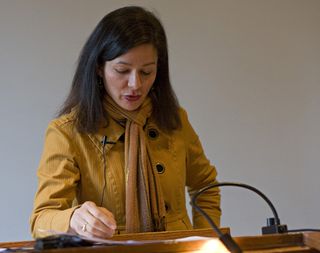
Devika Bakshi in Open The Magazine:

My city is not mine. I have always felt this, but only realised it fully last week, when, in the aftermath of the unspeakably brutal rape of a 23-year-old woman by six men, I began talking to women around me about safety. This is not a new subject. I have grown up and into an understanding that this city is hostile towards me, and that everything possible must be done to keep me safe.

My safety, my mother tells me, has always been a primary concern for her. No men in the house. A maid supervising the daily carpool to school. Boarding school and college abroad. Having spent her youth getting pawed by men in DTC buses, once only narrowly escaping an acid attack, she was determined to shield me from what she knew to be a harsh city for women. Every effort was made, every resource utilised to ensure I could circumvent the hazards of this city and be the independent person I was already becoming—elsewhere.

I now understand that that alternative would have been to stay here, in the city but removed from it, skirting its edges, tunneling through it, being smuggled in a tightly regulated bubble between illusory safe spaces—ones with gates, or guards, or a cover charge—like so many young women I know whose parents can afford to keep them safe, to hold them apart from the city.

Though irreproachable in its intent, the tragedy of this approach, as my mother puts it, is that you can’t give your child the confidence to operate in the world. Indeed, our collective fear of the city transforms it into an adversary, with whom we interact tentatively and only when necessary, careful not to do anything to provoke its ire.

We abide by a hallowed yet vague code of conduct: don’t stay out after dark, don’t wear anything that shows off your legs, don’t trust strangers, especially men, don’t stand out in a crowd.

We negotiate our own curfews: no autorickshaws after 8, no metro after 10, no driving alone after 11.

We permit ourselves small conditional freedoms: if you must go out, go in a group with boys, go to someone’s house, go only to this or that safe neighbourhood, take a driver.