
Category: Recommended Reading
Thursday, June 13, 2013
William Gaddis: A very fine shambles

In a late letter to Stanley Elkin, one of the colleagues he came to admire, Gaddis writes that “age 72 is daily more infringed by that blond pageboy off to boarding school age 5”. This is almost where we begin, with an account of school activities he sent his mother when he was just ten days past his eighth birthday. Edith Gaddis, whose husband had left well before this, was the recipient of most of the letters collected here from the next twenty years and more, years that took her son to Haiti, Mexico, Panama, Costa Rica, Spain, Paris and North Africa, as well as the American West (and Harvard, briefly), as he pursued a life of varied adventure. He was also beginning to write. “I have been working very hard”, he sends word to his mother from Mexico City in April 1947. “Many days. On a novel.” By December – now in Panama, working in the Canal Zone, where he would quickly come to see his country as deserting its responsibilities (“America I have such pity for, fury at”) – he had “started the plans for another novel”, which would be partly a study of abdication, deception and self-deception, expressing pity for and fury at not just one nation but the whole human race: The Recognitions. More than a quarter of this volume of correspondence is devoted to the period when Gaddis was writing his first published novel, though his references to work are at first few, interspersed among travel plans, notes on what he has seen and done, and concerns expressed for his recipients.
more from Paul Griffiths at the TLS here.
byzantium
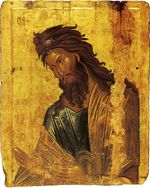
The Turkish emir Osman I, father of the Ottoman dynasty, had a dream. A tree sprang from his loins, and from its roots flowed the great rivers of the world, and its canopy spread from the Caucasus to the Atlas. In the branches nightingales and parrots cried out. Every leaf was a scimitar. A wind blew up that turned these blades toward the cities that lay beneath the tree; most turned toward Constantinople. That city became the emerald in a ring, and the emir slipped the ring on his finger, and awoke. The Byzantines had said that when, as at its founding in a.d. 330, they were again ruled by an emperor named Constantine, son of a Helena, Constantinople would fall, which in 1453 they were and it did. The Muslims foretold that a leader who bore the Prophet’s name would take Constantinople, and in 1453 he did and he did. When the Turks at last breached Constantinople’s walls it was because someone left the door open.
more from Rafil Kroll-Zaidi at Harper’s Magazine here.
cassatt the printmaker

Cassatt’s biographer, Nancy Mowll Mathews, attributes the artist’s affinity for printmaking to her impatience with academic drawing. That’s a shrewd observation; Cassatt used printmaking to keep the image in play, to evade the demand for finish. In the exhibition, there are several opportunities to see two or three versions of the same image and study how Cassatt revised a composition as she worked through her thoughts about it. And any single image can also disclose the restless exploratory nature of Cassatt’s immersion in her subject matter. The earliest of her prints at the NYPL is a costume study after Paul Gavarni from around 1878. In its first state, there is a rather conventional figure against a nearly blank ground; in the second, the ground has been filled in with dark mottling, and details have dropped out of the figure. In the third, the figure has become a vaporous near-absence amid a nocturnal space. All three versions were still in Degas’s studio at his death.
more from Barry Schwabsky at The Nation here.
How nails regenerate lost fingertips
From Nature:
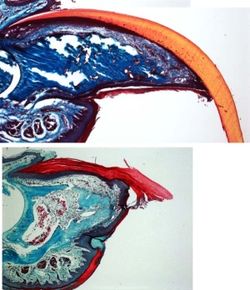
The process is limited compared with the regenerative powers of amphibians, but the two share many features, from the molecules that are involved to the fact that nerves are necessary. “I was amazed by the similarities,” says Ito. “It suggests that we partly retain the regeneration mechanisms that operate in amphibians.” By labelling groups of nail cells so that all the daughter cells they produced were blue, Ito, together with Makoto Takeo and others, showed that the nail base contains a small population of self-renewing stem cells, which sustain the nail’s continuous growth. This ongoing growth depends on signals carried by the Wnt family of proteins — if this signalling pathway is disrupted, mouse nails cannot form.
More here.
Sarah Sze Presents ‘Triple Point’ at the Venice Biennale
From Columbia.edu

Sarah Sze was born in Boston in 1969. She received a BA from Yale University in 1991 and an MFA from the School of Visual Arts in 1997. She has received critical acclaim for her public commissions and site-specific installations, including recent commissions for the New York City High Line, the Cartier Foundation, the Carnegie International and the São Paolo Biennial. A MacArthur Fellow and Louis Comfort Tiffany Award winner, she has challenged architectures and captivated viewers with her large-scale constructions that penetrate walls, suspend from ceilings, burrow into the ground and stretch across museums. Solo museum projects include at the Museum of Contemporary Art in Chicago, The Walker Art Center in Minneapolis, the Whitney Museum of American Art and The Institute of Contemporary Art, London. An exhibition of Sze’s drawings, Infinite Line was on view at the Asia Society in New York last year.
More here.
Thursday Poem
My Father Built England
‘Show me your hands.’ It was the only question
The foreman asked. They were your references
And your scholarship. That is why my father used
Piss to harden his schoolboy hands, as was custom
When blisters set fire to the skin, an ancient trick
Shown to him by a Meath man who died beneath
A truck, sober in Kilburn. In 1939, England needed
A solid Paddy full of gristle, to be counted on,
Semi-British for the duration. You supply your own
Sweat and wellies but could pick a white virgin
Shovel from the Gaffer and return it sharp, shined
By gravel. Only once was he broken, when black
Winds blew down the scaffolding; its tubular legs
Dancing across the unfinished airstrip. As he lay
Dead, a Geordie Tea-Boy nursed him well.
Wet Time was a bloody nightmare; always under
The Landlady’s feet and once he was thrown
Out of digs in a row about Rex’s favourite chair.
It was 1942 before he could pin fifty pounds to
The inside of his overcoat and take himself home.
Then, while German bombs fell on England,
My father built Ireland for Hogan and Son.
by Ron Carey
from Southward Journal
April 2013
Bonjour Tristesse: The Economic and Political Decline of France

Mathieu von Rohr in Spiegel:
[T]he mood hanging over the country is depressed. France is in the midst of the biggest crisis of the Fifth Republic. It feels as if the French model had reached an end stage, not just in terms of the economy, but also in politics and society. A country that long dismissed its problems is going through a painful process of adjustment to reality and, as was the case last week, can now expect to be issued warnings by the European Commission and prompted to implement reforms.
France's plight was initially apparent in the economy, which has been stagnating for five years, because French state capitalism no longer works. But the crisis reaches deeper than that. At issue is a political class that more than three quarters of the population considers corrupt, and a president who, this early in his term, is already more unpopular than any of his predecessors. At issue is a society that is more irreconcilably divided into left and right than in almost any other part of Europe. And, finally, at issue is the identity crisis of a historically dominant nation that struggles with the fact that its neighbor, Germany, now sets the tone on the continent.
The French economy has been in gradual decline for years, without any president or administration having done anything decisive about it. But now, ignoring the problems is no longer an option. The economy hasn't grown in five years and will even contract slightly this year. A record 3.26 million Frenchmen are unemployed, youth unemployment is at 26.5 percent, consumer purchasing power has declined, and consumption, which drives the French economy, is beginning to slow down, as well.
There is a more positive side of the story, which sometimes pales in the face of all the bad news. France is the world's fifth-largest economy, and interest rates for government bonds have been at historic lows for months. The country is far from being on the verge of bankruptcy and cannot be compared with Italy or Spain, and certainly not with Greece. Nevertheless, France is ailing. And looking weak is something the French themselves hate more than anything else.
Physics’s Pangolin

Margaret Wertheim in Aeon:
Theoretical physics is beset by a paradox that remains as mysterious today as it was a century ago: at the subatomic level things are simultaneously particles and waves. Like the duck-rabbit illusion first described in 1899 by the Polish-born American psychologist Joseph Jastrow, subatomic reality appears to us as two different categories of being.
But there is another paradox in play. Physics itself is riven by the competing frameworks of quantum theory and general relativity, whose differing descriptions of our world eerily mirror the wave-particle tension. When it comes to the very big and the extremely small, physical reality appears to be not one thing, but two. Where quantum theory describes the subatomic realm as a domain of individual quanta, all jitterbug and jumps, general relativity depicts happenings on the cosmological scale as a stately waltz of smooth flowing space-time. General relativity is like Strauss — deep, dignified and graceful. Quantum theory, like jazz, is disconnected, syncopated, and dazzlingly modern.
Physicists are deeply aware of the schizophrenic nature of their science and long to find a synthesis, or unification. Such is the goal of a so-called ‘theory of everything’. However, to non-physicists, these competing lines of thought, and the paradoxes they entrain, can seem not just bewildering but absurd. In my experience as a science writer, no other scientific discipline elicits such contradictory responses.
Why Efforts to Bring Extinct Species Back from the Dead Miss the Point

An editorial in Scientific American:
“We will get woolly mammoths back.” So vowed environmentalist Stewart Brand at the TED conference in Long Beach, Calif., in February in laying out his vision for reviving extinct species. The mammoth isn't the only vanished creature Brand and other proponents of “de-extinction” want to resurrect. The passenger pigeon, Caribbean monk seal and great auk are among the other candidates—all species that blinked out at least in part because of Homo sapiens. “Humans have made a huge hole in nature in the last 10,000 years,” Brand asserted. “We have the ability now—and maybe the moral obligation—to repair some of the damage.”
Just a few years ago such de-extinction was the purview of science fiction. Now it is so near at hand that in March, Brand's Long Now Foundation, along with TED and the National Geographic Society, convened an entire conference on the topic. Indeed, thanks to recent advances in cloning and the sequencing of ancient DNA, among other feats of biotechnology, researchers may soon be able to re-create any number of species once thought to be gone for good.
That does not mean that they should, however. The idea of bringing back extinct species holds obvious gee-whiz appeal and a respite from a steady stream of grim news. Yet with limited intellectual bandwidth and financial resources to go around, de-extinction threatens to divert attention from the modern biodiversity crisis.
Wednesday, June 12, 2013
Mark Blyth: A Google Talk on Austerity
i love this dirty town

Attraction and repulsion combined to create a sick fascination for Shillong’s street food when I was growing up in that city in the 1980s and 90s. Brightly-coloured ice lollies, whose flavour diminished as their oranges and yellows drained into one’s mouth, were sold out of ice-boxes slung around the necks of their itinerant vendors, and were nicknamed ‘nala-pani’ or drain water. The dubious provenance of the water that went into them made them something of a delicious taboo. It is impossible to separate the lure of aloo-muri from the unwashed hands of their makers The channa-wallahs, who rang little bells to attract customers to their none-too-clean but delectable wares, were itinerant too, unlike the aloo-muri men who always occupied strategic spots outside schools; they did their best business in the late afternoon when bored and hungry children poured out of classrooms. It is impossible to separate the lure of aloo-muri from the unwashed hands of their makers, the weathered, rusting tins that hold powdered masalas, the grated white papaya standing open to the elements, and the muddy looking tamarind water. This mix of puffed rice and boiled potatoes is Shillong’s signature street food; its overpowering spiciness, so strong that it actually kills all taste, and so remote from the milder and earthier flavours of the food native to the city, is a combination of the forbidden, the grubby and the exotic.
more from Anjum Hasan at Granta here.
taksim square

Today, Taksim Square is Istanbul’s chestnut tree. I’ve been living in Istanbul for sixty years, and I cannot imagine that there is a single inhabitant of this city who does not have at least one memory connected to Taksim Square. In the nineteen-thirties, the old artillery barracks, which the government now wants to convert into a shopping mall, contained a small football stadium that hosted official matches. The famous club Taksim Gazino, which was the center of Istanbul night life in the nineteen-forties and fifties, stood on a corner of Gezi Park. Later, buildings were demolished, trees were cut down, new trees were planted, and a row of shops and Istanbul’s most famous art gallery were set up along one side of the park. In the nineteen-sixties, I used to dream of becoming a painter and displaying my work at this gallery. In the seventies, the square was home to enthusiastic celebrations of Labor Day, led by leftist trade unions and N.G.O.s; for a time, I took part in these gatherings. (In 1977, forty-two people were killed in an outburst of provoked violence and the chaos that followed.) In my youth, I watched with curiosity and pleasure as all manner of political parties—right wing and left wing, nationalists, conservatives, socialists, and social democrats—held rallies in Taksim.
more from Orhan Pamuk at The New Yorker here.
Interview with Jonathan Haidt on Happiness
From Five Books:
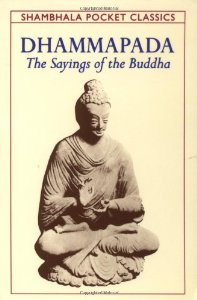
The Dhammapada is one of the greatest psychological works ever written, and certainly one of the greatest before 1900. It is masterful in its understanding of the nature of consciousness, and in particular the way we are always striving and never satisfied. You can turn to it – and people have turned to it throughout the ages – at times of trouble, at times of disappointment, at times of loss, and it takes you out of yourself. It shows you that your problems, your feelings, are just timeless manifestations of the human condition. It also gives specific recommendations for how to deal with those problems, which is to let go, to accept, and to work on yourself. So I think this is a kind of tonic that we ambitious Westerners often need to hear.
Is there a specific saying that you particularly like?
There are two big ideas that I found especially useful when I wrote The Happiness Hypothesis. One is an idea common to most great intellectual traditions. The quote is: ‘All that we are arises with our thoughts, with our thoughts we make the world.’ It’s not unique to Buddha, but it is one of the earliest statements of that idea, that we need to focus on changing our thoughts, rather than making the world conform to our wishes.
The other big idea is that the mind is like a rider on an elephant. Buddha uses this metaphor: ‘My own mind used to wander wherever pleasure or desire or lust led it, but now I have it tamed, I guide it, as the keeper guides the wild elephant.’
More here.
Which philosophy is dead?
Santiago Zabala and Creston Davis in Al Jazeera:
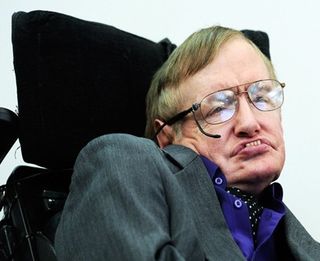
It is dead, he thinks, because philosophy is passé. Hawking believes philosophy is like a guy who shows up at a cocktail party just after the guests have left. Why would one of the most intelligent humans alive say such a provocative thing? His reasons are obvious: “Philosophers,” Hawking says, “have not kept up with modern developments in science. Particularly physics.”
According to Hawking, the conversation about the truth of the world rests in the hands of elite physics professors funded by multinational corporations and national governments. Should we believe this pronouncement just because it comes from an eminence such as Hawking? Could it be that some categorical mistake has been committed by the likes of Hawking who, in our opinion, mistakes philosophy for theology?
The debate over the death of philosophy begun by Hawking not only rests on wrong premises, but also searches for an inadequate solution. First, philosophy is still taught in universities, and second, philosophers continue to write books that disagree on the meaning of our existential relation with the world. We submit that a more precise question needs to be addressed: Which philosophy is dead?
More here.
Simple theory may explain dark matter
From Phys.org:
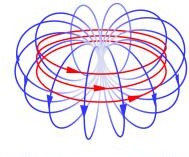
This proposal, which endows dark matter particles with a rare form of electromagnetism, has been strengthened by a detailed analysis performed by a pair of theoretical physicists at Vanderbilt University: Professor Robert Scherrer and post-doctoral fellow Chiu Man Ho. An article about the research was published online last month by the journal Physics Letters B.
“There are a great many different theories about the nature of dark matter. What I like about this theory is its simplicity, uniqueness and the fact that it can be tested,” said Scherrer.
In the article, titled “Anapole Dark Matter,” the physicists propose that dark matter, an invisible form of matter that makes up 85 percent of the all the matter in the universe, may be made out of a type of basic particle called the Majorana fermion. The particle's existence was predicted in the 1930's but has stubbornly resisted detection.
A number of physicists have suggested that dark matter is made from Majorana particles, but Scherrer and Ho have performed detailed calculations that demonstrate that these particles are uniquely suited to possess a rare, donut-shaped type of electromagnetic field called an anapole. This field gives them properties that differ from those of particles that possess the more common fields possessing two poles (north and south, positive and negative) and explains why they are so difficult to detect.
More here.
Amazing cover of Michael Jackson’s “Billie Jean” by Michael Henry & Justin Robinett
The end of the affair: Behind the Candelabra
From New Statesman:
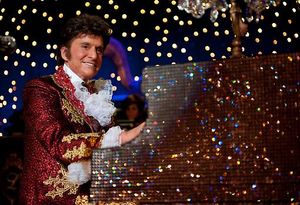
…The movie’s richness lies in its performances. Damon negotiates skilfully Scott’s descent from bliss to frazzled insecurity. Rob Lowe has a succulent cameo as a plastic surgeon whose rigid, feline pout reveals that he has been getting high on his own supply. Douglas, meanwhile, conveys sublimely a creosoted smarm that is rarely unsympathetic. He has captured the preening, liquid voice (he pronounces Scott’s name “Scaaaaart”) and he convinces us that Liberace’s declarations of intimacy were no less sincere for being reproduced verbatim onstage in front of thousands or in a hot tub with his latest squeeze.
More here. (Note: Brilliant performance by Michalel Douglas…see the film if you can.)
‘Master protocol’ aims to revamp cancer trials
From Nature:

Now, an ambitious project aims to improve those success rates and speed new treatments to market by matching companies with the patients whose tumours are most genetically relevant to the therapies they are trying to develop. The project is slated to launch next year and, if successful, could be expanded to other cancers. The project was spearheaded by the Friends of Cancer Research, a think tank and advocacy group in Washington DC, and has won the support of the US National Cancer Institute and the US Food and Drug Administration (FDA). The idea is to streamline the drug-approval process by bringing pharmaceutical companies together to test multiple experimental drugs in late-stage clinical trials under a single, ‘master’ protocol. “The drive is to make the whole process of personalized medicine more efficient,” says Eric Rubin, vice-president of oncology clinical research at Merck, a pharmaceutical firm based in Whitehouse Station, New Jersey.
More here.
The Preface from James Scott’s Two Cheers for Anarchism: Six Easy Pieces on Autonomy, Dignity, and Meaningful Work and Play
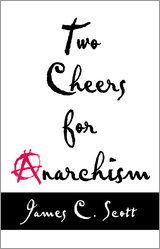
Over at Princeton University Press:
The arguments found here have been gestating for a long time, as I wrote about peasants, class conflict, resistance, development projects, and marginal peoples in the hills of Southeast Asia. Again and again over three decades, I found myself having said something in a seminar discussion or having written something and then catching myself thinking, “Now, that sounds like what an anarchist would argue.” In geometry, two points make a line; but when the third, fourth, and fifth points all fall on the same line, then the coincidence is hard to ignore. Struck by that coincidence, I decided it was time to read the anarchist classics and the histories of anarchist movements. To that end, I taught a large undergraduate lecture course on anarchism in an effort to educate myself and perhaps work out my relationship to anarchism. The result, having sat on the back burner for the better part of twenty years after the course ended, is assembled here.
My interest in the anarchist critique of the state was born of disillusionment and dashed hopes in revolutionary change. This was a common enough experience for those who came to political consciousness in the 1960s in North America. For me and many others, the 1960s were the high tide of what one might call a romance with peasant wars of national liberation. I was, for a time, fully swept up in this moment of utopian possibilities. I followed with some awe and, in retrospect, a great deal of naiveté the referendum for independence in Ahmed Sékou Touré’s Guinea, the pan-African initiatives of Ghana’s president, Kwame Nkrumah, the early elections in Indonesia, the independence and first elections in Burma, where I had spent a year, and, of course, the land reforms in revolutionary China and nationwide elections in India.
The disillusionment was propelled by two processes: historical inquiry and current events. It dawned on me, as it should have earlier, that virtually every major successful revolution ended by creating a state more powerful than the one it overthrew, a state that in turn was able to extract more resources from and exercise more control over the very populations it was designed to serve.