Now What, Liberalism?

Edsall-profile-custom1-v2.tiff

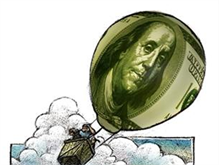
The argument of the political commentator Walter Russell Mead that the United States has reached an end-stage death match between liberal constituent groups has received widespread attention, especially in the conservative blogosphere. Mead, who teaches at Bard College, contends that The core institutions, ideas and expectations that shaped American life for the sixty years after the New Deal don’t work anymore. The gaps between the social system we inhabit and the one we now need are becoming so wide that we can no longer paper over them. In many respects, liberalism is a fat target. Dozens of city and state public employee pension plans are on the verge of bankruptcy – or are actually bankrupt – from Rhode Island to California; in 2010, a survey of 126 state and local plans showed assets of $2.7 trillion and liabilities of $3.5 trillion, an $800 billion shortfall. The national debt exceeds $16 trillion.

more from Tom Edsall at The Opinionater here.

Must good philosophers be good writers?

Bryan Magee in Prospect:

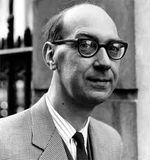
AVT_Bryan-Magee_5781I used to encounter more often than I do now the assumption that philosophy is a branch of literature. In fact when I was younger I often met people-intelligent and educated but untrained in philosophy-who thought that a philosopher was somebody giving voice to his attitudes towards things in general, in the same way as an essayist might, or even a poet, but more systematically, and perhaps on a larger scale: less opinionated than the essayist, less emotional than the poet, more rigorous than either, and perhaps more impartial. With the philosopher, as with the other two, the quality of writing was an essential part of what was most important. Just as the essayist and the poet had a distinctive style which was recognisably theirs, and was an integral part of what they were expressing, so did the philosopher. And just as it would be self-evidently nonsense to say of someone that he was a bad writer but a good essayist, or a bad writer but a good poet, so it must surely be nonsense to say of someone that he was a bad writer but a good philosopher.

This attitude is completely mistaken, of course, because it is refuted by some of the greatest philosophers. Aristotle is regarded as one of the greatest philosophers of all time, but all that remains of his work are lecture notes, made either by him or by a pupil. And as we would expect of lecture notes, they are stodgy, bereft of literary merit. But they are wonderful philosophy just the same, and they have made Aristotle one of the key figures of western civilisation. The conventional wisdom has long held that the outstanding philosopher since the ancient Greeks is Immanuel Kant, but I cannot believe that anyone has regarded Kant as a good writer, let alone a great stylist: to anyone who has actually read his work such an idea would be as difficult to understand as some parts of his transcendental deduction of the categories. The founder of modern empiricism and modern liberal political theory, John Locke, is another central figure in western philosophy, but he writes in a way that most people seem to find dull and pedestrian.

More here.

With the Lance Armstrong era over, a generation of cyclists who insisted on racing clean comes to terms with what was lost

Ian Dille in Texas Monthly:

DispImageFor more than fifteen years, I followed the accusations, denials, and endless debates regarding Lance Armstrong. I made up my own mind about him long ago, but now the world finally has a verdict. In October the U.S. Anti-Doping Agency (USADA) released more than one thousand pages of evidence, including testimony from eleven of Armstrong’s former teammates and friends, that identified the most celebrated American cyclist in history as the ringleader of a sophisticated doping operation that spanned most of his career. The report left little doubt that when Armstrong competed in the Tour de France, one of the sporting world’s greatest spectacles, banned substances coursed through his body. He cheated, and for a long time, he won. Now Armstrong no longer owns the record seven Tour titles. He’s stepped down as the chairman of the Livestrong Foundation. He’s lost his treasured relationship with Nike. And millions of former fans feel duped and heartbroken.

There can be no question that the past decade of professional cycling was dominated by riders whose performance was enhanced by illegal drugs. In its reasoned decision on Armstrong, USADA stated that 20 of the 21 podium finishers in the Tour from 1999 through 2005 have been linked to doping. An era of cyclists played dirty, but buried in the scandal is a lost generation of American pros who stayed clean during a period rife with cheaters. In fact, no top American cyclist who was born after 1980 has ever received a doping sanction. These athletes played by the rules, but they had their careers stunted by a pharmacological glass ceiling. One of them was my childhood friend Pat McCarty.

More here.

How Torture Misled the US into an Illegal War: What Zero Dark Thirty Really Leaves Out

Juan Cole in Informed Comment:

ScreenHunter_103 Jan. 18 13.20An important problem with the narrative line of “Zero Dark Thirty,” Kathryn Bigelow’s film about the Central Intelligence Agency’s quest for Usama Bin Laden, is not just that it comes across as pro-torture but that it ignores the elephant in the room: Bad intelligence elicited by torture almost derailed that quest to put down al-Qaeda by diverting most resources to Iraq.

“Zero Dark Thirty” stands in a long line of Hollywood-Washington collaborations that essentially do the work of propaganda. The lineage includes Michael Curtiz’s 1942 “Casablanca” with Humphrey Bogart, which was produced under the Office of War Information’s guidelines; the director assigned it the government-prescribed theme of “III B (United Nations — Conquered Nations) Drama,” as Tanfer Emin Tunc argues.

The film is misleading precisely because it does what the Bush administration did not do. It stays with Afghanistan, Pakistan and al-Qaeda. At one point a CIA official complains that there are no other working groups concentrating on al-Qaeda, that it is just the handful of field officers around the table. But he does not say that the Bush administration ran off to Iraq and closed down the Bin Laden desk at the CIA. Nor do any of the characters admit that bad intelligence, including that gathered by torture, helped send the United States off on the Great Iraq Wild Goose Chase.

More here.

Friday Poem

The Tao Te Ching
31. A Weapon is a Tool of Death

A weapon is a tool of death.
A tool of death is anti-Tao.
A man of the Way, leading,
will reject tools of death
if he has a choice.

There is a formal attitude
the left of which is life
the right of which is death.

To the left is peace & creation;
violence & destruction
occupy the right.

There is no beauty in death,
this the wise man understands.

If a man finds beauty in death
his self is compromised to its core.
He has lost the Way.

Should a wise man be compelled to violence
he will not rejoice. Victory is not
a time for joy. Victory is a funeral
wherein a multitude is mourned.
.

from The Tao Te Ching of Lao Tzu
An Adaptation by R. Bob

Fecal Transplants: A Clinical Trial Confirms How Well They Work

Maryn McKenna in Wired:

Messtiza-gutsA little more than a year ago, I wrote a piece in Scientific American about fecal transplants — replacing the stool in someone’s colon with stool donated by someone else — as a treatment for the pernicious, recurrent diarrhea caused by Clostridium difficile infection. I have been a journalist for two decades, and some of my stories have won prizes, triggered hearings and legislation, and caused people to change their minds about significant social issues — but I don’t think anything I have written has ever proved as sticky with an audience as that 1,500-word column. In the 60 or so weeks since it was published, I have heard from more than 100 people — yes, that’s more than 1 per week — who are afflicted with C. diff, believe that a transplant could help them, but cannot find a doctor who agrees that the procedure has merit. A paper published Wednesday evening in the New England Journal of Medicine may give those patients assistance, and change those doctors’ minds. It represents the first report from a completed randomized trial of fecal transplants, and it finds that the treatment worked much better than the powerful antibiotics that are usually given for C. diff infection — so much better, in fact, that the trial was ended early, because the monitoring board supervising the trial’s execution could not ethically justify withholding the transplants from more patients.

Here are the details: A group of Dutch and Finnish researchers enrolled patients with severe C. diff (defined as at least one relapse of infection after antibiotic treatment, plus at least three bouts of diarrhea per day or eight over two days) into three groups, who received either a fecal transplant, or one of two comparative treatments: either the standard course of vancomycin, a broad-spectrum, last-ditch antibiotic, for two weeks; or the same antibiotic course with bowel lavage (a high-volume enema that reaches deep into the colon and is used to clean things out before transplanting stool) added on the fourth or fifth day of taking the drugs. The fecal transplant was donor stool, screened for parasites and infectious organisms, diluted and strained, and given by a tube that snaked up through the nose and down through the stomach to the start of the intestine.

…Of 16 transplant patients (one was excluded for reasons unrelated to the trial), 13 were cured on their first infusion, and two more on a repeat round, making the transplant 94 percent effective. In the two drug arms, the rates were 31 percent in the vancomycin-only group (4 of 13) and 23 percent (3 of 13) in the group receiving vancomycin plus lavage.

More here.

Cancer Deaths Stay on Downward Path

From MedPage Today:

U.S. cancer death rates in 2009 were down 20% from their peak in 1991, primarily because of large decreases in death rates from lung and prostate cancer in men and in breast cancer in women, according to the American Cancer Society. In its annual statistical review of cancer incidence and mortality, the ACS estimated that more than 1 million Americans were saved from cancer deaths since 1991 — the difference between the actual cancer mortality and a projection of continued increases in cancer deaths at the 1975-1991 average. The ACS researchers also estimated that the U.S. would see 1,660,290 new cancer cases diagnosed in 2013 and 580,350 cancer deaths.

…Starting in 1990, lung cancer death rates in men dropped about 30%, from 91 per 100,000 to 62 in 2009. Deaths from prostate cancer per 100,000, which had also peaked in the early 1990s, also plummeted — from 40 to 22. In women, lung cancer mortality appeared to have peaked in 2002 at about 42 per 100,000 and has since declined slightly. The largest decrease in cancer death rates for women has been for breast cancer, down 33% since 1990. Colorectal cancer death rates in women have also declined substantially, but that trend began in 1950, according to the ACS report. Decreases in death rates were seen for most other cancer types. The major exception is liver cancer in men, for which mortality has been edging upward since 1980. Siegel and colleagues also found that 5-year survival rates have been trending upward, even for notoriously poor-prognosis cancers such as lung, pancreatic, and esophageal malignancies.

More here.

Thursday, January 17, 2013

this too too solid flesh

Johnston_318233m

“The Receptacle for Suicides”, as Tristman dubs his voguish idea, is a Swiftian institution: utterly outrageous and thoroughly plausible. In offering to make the business of self-destruction both private and classy, Tristman takes it indoors and smothers it with euphemisms, of which “sudden death” was among the most popular in the mid-eighteenth century. It befits a cutting-edge projector to refer, in conclusion, to his would-be clients as “suicides”, a fairly unusual term when The World’s satire was published. The Oxford English Dictionary dates “suicide”, in Tristman’s sense of “One who dies by his own hand”, back to 1732, again in a journalistic context. “Suicide” in the sense of “self-murder” is in use decades earlier, and appears to be Thomas Browne’s coinage. As Kelly McGuire points out in Dying To Be English: Suicide narratives and national identity, 1721–1814, the word has a vexed history. Deploying a pronoun as a prefix in order to describe both an action and a person (a person who is at once victim and perpetrator), it is something of a botched job.

more from Freya Johnston at the TLS here.

the roma

Bogdal_468w

Is Europe anything more than the remnants of a grand political delusion? Is there a cultural bond that unites the nations and peoples of this fragmented continent? From Max Weber to Norbert Elias, the greats of European intellectual history have described and re-described Europe as the birthplace of modernity; not, like the other continents, as the “heart of darkness”, but as the energetic centre of civilizing progress. Their attention has focused on the “grand narratives”: industrialization and economic productivity, state and nation building, science and art. Yet might not an examination from the other side – through an investigation of the marginal – provide essential insights into Europe’s development over the longue dureé? Might not the history of the Roma, a group marginalized like none other, reveal a less auspicious aspect of Europe’s grand narrative of modernity?

more from Klaus-Michael Bogdal at Eurozine here.

the fatwa

Rushdie_ftr

The “match that lit the fire” that would soon consume Rushdie’s life was struck by someone he considered a friend: the journalist Madhu Jain, who interviewed him for India Today. The magazine then ran the piece and an excerpt from the book under headlines that Rushdie found objectionable and misleading: “An Unequivocal Attack on Religious Fundamentalism” and “My Theme Is Fanaticism.” Two Muslim members of the Indian Parliament, Syed Shahabuddin and Khurshid Alam Khan, took offense at the excerpt and responded with letters to the editor. The book had not even been published in India yet. A prominent Sikh columnist and novelist, Khushwant Singh, had read an advance copy; he now called for a ban. From there, The Satanic Verses quickly moved into the nebulous realm of the contentious. A few British newspapers fed on the controversy brewing in India, in pieces that quoted anonymous sources deriding Rushdie for his ego or his education. Literary reviews began to appear—some excellent, others not—but the book was already becoming more than just a work of art: it was seen as a political statement by a willfully offensive author.

more from Laila Lalami at The Nation here.

An Alarm in the Offing on Climate Change

Map-blog480

Justin Gillis in the New York Times:

The natural conservatism of science has often led climatologists to be cautious in their pronouncements about global warming. More than once they have drawn criticism for burying their fundamental message – that society is running some huge risks — in caveats and cavils.

To judge from the draft of a new report issued by a federal advisory committee, that hesitation may soon fall by the wayside. The draft, just introduced for public comment before it becomes final, is the latest iteration of a major series of reports requested by Congress on the effects of climate change in the United States.

I caution that it is a draft, so we don’t know what final language will make it into the report. I am always hesitant to give too much credence to drafts that could change substantially, but in its current form, the document minces no words.

“Climate change is already affecting the American people,” declares the opening paragraph of the report, issued under the auspices of the Global Change Research Program, which coordinates federally sponsored climate research. “Certain types of weather events have become more frequent and/or intense, including heat waves, heavy downpours, and, in some regions, floods and droughts.

“Sea level is rising, oceans are becoming more acidic, and glaciers and Arctic sea ice are melting. These changes are part of the pattern of global climate change, which is primarily driven by human activity.”

More here.

‘Zero Dark Thirty’ Is Osama bin Laden’s Last Victory Over America

Matt Taibbi in Rolling Stone:

ScreenHunter_108 Jan. 17 18.14Zero Dark Thirty is like a gorgeously-rendered monument to the fatal political miscalculation we made during the Bush years. It's a cliché but it's true: Bin Laden wanted us to make this mistake. He wanted America to respond to him by throwing off our carefully-crafted blanket of global respectability to reveal a brutal, repressive hypocrite underneath. He wanted us to stop pretending that we're the country that handcuffs you and reads you your rights instead of extralegally drone-bombing you from the stratosphere, or putting one in your brain in an Egyptian basement somewhere.

The only way we were ever going to win the War on Terror was to win a long, slow, political battle, in which we proved bin Laden wrong, where we allowed people in the Middle East to assess us as a nation and decide we didn't deserve to be mass-murdered. To use another cliché, we needed to win hearts and minds. We had to make lunatics like bin Laden pariahs among their own people, which in turn would make genuine terrorists easier to catch with the aid of genuinely sympathetic local populations.

More here.

Rage Against the Machine

Our own Morgan Meis in The Smart Set:

ID_IC_MEIS_LUDDI_AP_001Can technological progress be stopped? That is the question the Luddites asked 200 years ago in England. They did more than just ask the question — they tried to stop technological progress, physically. The Luddites were not particularly sophisticated in their methodology. Their main idea was to smash things. Their favorite things to smash were stocking frames. Stocking frames are machines used to knit. The first stocking frames were invented in the late 16th century. But stocking frames really came into their own at the beginning of the 19th century, with automation. That's when the industrial revolution was swinging into high gear. The new machines being built in northern England in the early 19th century were transforming the textile industry from one that required highly skilled labor into an industry that required almost no skill at all. A person could be trained to operate a stocking frame in a few hours. Knitting — once a well-paid occupation — was fast becoming a low-wage affair.

According to legend, a young kid named Ned Ludd had smashed up a couple of stocking frames some time in the late 18th century. The Luddites of the early 19th century took up Ludd’s name and cause. They began smashing up factories and, occasionally, killing people. They also wrote letters to politicians and factory owners threatening they would kill them or otherwise make serious trouble. A typical Luddite letter, this one to Henry of Leicester, reads as follows:

It having been presented to me that you are one of those damned miscreants who deligh [sic] in distressing and bringing to poverty those poore unhappy and much injured men called Stocking makers; now be it known unto you that I have this day issued orders for your being shot through the body with a Leden Ball…
(From Writings of the Luddites, edited by Kevin Binfield)

By 1813, the Luddite rebellion had become serious enough to bring out the army.

More here.

Team identifies new ‘social’ chromosome in the red fire ant

From PhysOrg:

AntsThe red fire ants live in two different types of colonies: some colonies strictly have a single queen while other colonies contain hundreds of queens. Publishing in the journal Nature, scientists have discovered that this difference in social organisation is determined by a chromosome that carries one of two variants of a 'supergene' containing more than 600 genes. The two variants, B and b, differ in structure but have evolved similarly to the X and Y chromosomes that determine the sex of humans. If the worker fire ants in a colony carry exclusively the B variant, they will accept a single BB queen, but a colony that includes worker fire ants with the b variant will accept multiple Bb queens. The scientists analysed the genomes of more than 500 red fire ants to understand this phenomenon. “This was a very surprising discovery – similar differences in chromosomal structure are linked to wing patterns in butterflies and to cancer in humans but this is the first supergene ever identified that determines social behaviour,” explains co-author Dr Yannick Wurm, from Queen Mary's School of Biological and Chemical Sciences. “We now understand that chromosomal variants determine social form in the fire ant and it's possible that special chromosomes also determine fundamental traits such as behaviour in other species.”

During the reproductive season, young winged queens from both types of colonies emerge for their mating flights and are fertilised by males. Young queens destined to establish their own single-queen colonies disperse far and wide. This social form is highly successful at invading new territories. The other young queens join existing multiple-queen colonies close to their maternal colony. The multiple queens cooperating in such colonies are able to produce more workers than are found in a single-queen colony. This makes multiple queen colonies the more successful social form in busy environments.

More here.

Thursday Poem

The Gargantuan Muffin Beauty Contest
.
We were at the Edison Hotel on West 47th Street
for the annual muffin beauty contest —
I can’t tell you how pumped up we were.
Times Square was having another psychotic judder.
The bellhop was all thumbs up: Sir, have a nice day
and get one gratis. All those avenues of doors
and the Hispanic chambermaid who couldn’t speak English.
Spider-Man was doing all that Spider-Man shit
just to get a bird’s eye view. Donna Summer
was almost dead and we were barely into spring.
I want to dance to “Love to Love You Baby,” I want to groan.
I’ve never seen so many high-quality muffins.
If  I wasn’t a religious man, and maybe I wasn’t
I would have said the muffins were walking on water:
I’ve never felt so half-and-half. Have you read the Bible?
The bellhop said: You ain’t seen muffin yet.
They were drifting in from Queens, Brooklyn, Harlem,
The Bronx, Manhattan muffins too and that weird
cute coke-faced muffin who’d taken the subway
from Coney Island. If only I were a betting man,
but hey I am a betting man, it’s Coney Island every time.
Lou Reed isn’t getting any younger. Zappa said,
Girl you thought he was a man but he was a muffin,
he hung around till you found he didn’t know nuthin’.
In the lobby Nina Simone was singing, I Loves You Muffin
and in the restroom they piped in “Mack the Knife”:
Hey Suky Tawdry, Jenny Diver, Polly Peachum
and old Miss Lulu Brown. Muffin The Romance
was the biggest show in town. We were hurtling back
to the 1970s and sometimes the 1970s are almost
as good as the 1930s. I want my muffins to be ahistorical:
shit just to say ahistorical makes me joyful.
I saw Leonard Cohen crooning with a couple
of octogenarian muffins and I’m telling you now
the lobby was pleasantly disturbing. You may find
yourself   behind the wheel of a large automobile.
You may find yourself  in another part of  the world.
You may find yourself  at the gargantuan muffin beauty contest
and you may ask yourself, Well, how did I get here?
Times Square was having another psychotic judder.
Love is in the air, it’s in the whisper of the trees.
This is not America, this is the cover version:
sun, sex, sin, divine intervention, death and destruction,
welcome to The Sodom and Gomorrah Show.
All those white muffins trying to be black muffins!
Give us our daily muffin, save us from temptation.
Jimmy Buffett was singing, Why don’t we get drunk
and screw? In Times Square the most beautiful muffins
in the world were hanging on a thousand screens.
Where are my singing Tibetan balls? Am I dead?
,
by Julian Stannard
from Poetry, January 2013

Wednesday, January 16, 2013

Christopher Hitchens faces posthumous ‘prosecution’ in new book

Alison Flood in The Guardian:

ScreenHunter_106 Jan. 16 21.36Christopher Hitchens will go on trial later this month in a “highly critical” new book which interrogates the late polemicist's politics and argues that this celebrated left-wing firebrand became an “amanuensis” of the George W Bush administration in his last years.

Political activist and author Richard Seymour's Unhitched: The Trial of Christopher Hitchens is out on 28 January and promises to cast “a cold eye over the career of the 'Hitch' to uncover an intellectual trajectory determined by expediency and a fetish for power”. “It is written in the spirit of a trial,” said Seymour. “I do attempt to get a sense of the complexity and gifts of the man, but it is very clearly a prosecution, and you can guess my conclusion.”

Unhitched will address how Hitchens moved from a “career-minded socialist” to, post 9/11, a “neoconservative 'Marxist'”, said its radical publisher Verso, and “an advocate of America's invasion of Iraq filled with passionate intensity”. At one point, Seymour describes Hitchens as the “George W Bush administration's amanuensis”, and argues “that not only was Hitchens a man of the right in his last years, but his predilections for a certain kind of right-wing radicalism – the most compelling recent example of which was the Bush administration's invasion of Iraq – pre-dated his apostasy”.

“One chapter deals with the trajectory of his political shift, from the time he was a young socialist who joined Labour,” said Seymour. “I've interviewed a lot of his former comrades. If you read [Hitchens' memoir] Hitch 22, it's not an entirely reliable account – what he remembers and what others remember are different. He's subtly, and sometimes not so subtly, revised things.”

More here. [Thanks to Ahmad Saidullah.]

To raise the spirit

Velasquez490x300

The question that tempts mankind to the use of substances controlled and uncontrolled is next of kin to Hamlet’s: to be, or not to be, someone or somewhere else. Escape from a grievous circumstance or the shambles of an unwanted self, the hope of finding at a higher altitude a new beginning or a better deal. Fly me to the moon, and let me play among the stars; give me leave to drown my sorrow in a quart of gin; wine, dear boy, and truth. That the consummations of the wish to shuffle off the mortal coil are as old as the world itself was the message brought by Abraham Lincoln to an Illinois temperance society in 1842. “I have not inquired at what period of time the use of intoxicating liquors commenced,” he said, “nor is it important to know.” It is sufficient to know that on first opening our eyes “upon the stage of existence,” we found “intoxicating liquor recognized by everybody, used by everybody, repudiated by nobody.”

more from Lewis Lapham at Lapham’s Quarterly here.

An infant crying in the night

Perry_12_12

Like T S Eliot a century later, Tennyson found in the depth of his own suffering a way of reaching into anxieties that defined an epoch: the circling, hesitant stanzas of In Memoriam piled up over the ensuing years until, finally published anonymously in 1850, they came to embody the uneasy, needy spirit of the age. Wordsworth’s The Prelude, posthumously published in the same year, was quite eclipsed: it must have seemed like yesterday’s news. The extraordinary popularity of In Memoriam turned Tennyson into a very great success, which was never going to be unequivocally good news for someone whose métier was founded on the opposite of success. He became Poet Laureate; he married; he gradually turned into an institution. Batchelor is good on the days of fame, both the very great pleasure that Tennyson obviously took in celebrity and how simply awful he found it. His elder son, who was given the Christian name Hallam, remembered walking with his father one day when someone tapped him on the arm. ‘Do you know who it is with whom you are walking?’ asked the grammatically punctilious stranger. ‘Yes, my father,’ replied Hallam. ‘Nonsense, man,’ returned the pest, ‘you are walking with the poet Tennyson.’

more from Seamus Perry at Literary Review here.