The Prejudice of the Modern

Gyan

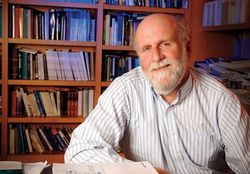
Gyanendra Pandey in News Click (via Vijay Prashad):

Prejudice is cunning. It never appears to the subject or actor as prejudice: it is only ‘others’ who are prejudiced.

And it affects different groups and people in different ways. There are various guises in which modern prejudice masks itself: allowing sectional prejudice (what I call vernacular, visible prejudice) to be disparaged once in a while, but at the same time protecting the ‘common sense’ of our times, the beliefs of those in power (what I call universal, invisible prejudice) from being questioned.

I’ve just written a book that traces the history of modern prejudice, through an investigation of two major formal democracies, the United States and India. In both these countries there is a similar historical process for the social and political distancing of stigmatized, and marginalized populations – such as African Americans and Dalits (or ex-Untouchables). It is of course the case that the older histories of subordination are not shared between African Americans (who only enter into specific modes of modern discrimination and prejudice with plantation slavery) and Dalits (whose much longer history of subordination goes back to Vedic days, although reshaped over the centuries into its modern form). The juxtaposition of these two locations and two histories allows us a rare view of the workings of prejudice in our times.

Pandora’s Boxes: Inside nanotechnology’s little universe of big unknowns

From Orion Magazine:

DNA-unravelingThe regulation of nanoparticles has been recommended for more than a decade, but there’s no agreement on exactly how to do it. Meanwhile, the lid has already been lifted on nanotechnology. The use of man-made nanoparticles has spread into almost every area of our lives: food, clothing, medicine, shampoo, toothpaste, sunscreen, and thousands of other products. Regulatory structures, both here and abroad, are completely unprepared for this onslaught of nanoproducts, because nanoparticles don’t fit into traditional regulatory categories. Additionally, companies often shield details about them by labeling them “proprietary”; they’re difficult to detect; we don’t have protocols for judging their effects; and we haven’t even developed the right tools for tracking them. If nanotechnology and its uses represent a frontier of sorts, it’s not simply the Wild West—it’s the Chaotic, Undiscovered, Uncontrollable West.

…AS WITH MANY THINGS that are invisible and difficult to understand—think subatomic particles such as the Higgs boson, muons, gluons, or quarks—any discussion of nanoparticles quickly shifts into the realm of metaphor and analogy. People working in nanoscience seem to try to outdo each other with folksy explanations: Looking for a nanoparticle is like looking for a needle in the Grand Canyon when the canyon is filled with straw. If a nanoparticle were the size of a football, an actual football would be the size of New Zealand. A million nanoparticles could squeeze onto the period at the end of this sentence.

But what is a nanoparticle?

More here.

Nano particles with a heart of gold can kill cancer cells

From Smithsonian:

Gold-nanoparticles-cancer-600Over thousands of years, gold has been used to treat rheumatoid arthritis, inner ear infections, facial nerve paralysis, fevers and syphilis. Now, preliminary findings suggest a new application for tiny grains of gold—destroying cancer cells. Gold-carrying nanoparticles are capable of killing a common type of cancer that attacks antibody-making B cells in the blood, according to a study published today in the journal Proceedings of the National Academy of Sciences. This cancer, B-cell lymphoma, originates in the lymph glands and is the most common type of non-Hodgkin lymphoma. Last year, it resulted in nearly 19,000 deaths. Developed by researchers at Northwestern University, the nanoparticle mimics the size, shape and surface chemistry of high-density lipoprotein—natural HDL—the preferred meal of these cancer cells. HDL is the “good” cholesterol that cruises through the bloodstream, removing dangerous buildups of LDL, the harmful, “bad” cholesterol.

The bits of gold tucked inside these particles are tiny—just five nanometers wide. A billionth of a meter, a nanometer is a measurement used to size bacteria, X-rays and DNA. The width of a double helix is about two nanometers. Despite its microscopic size, the synthetic particle packs a big punch—more accurately, two of them. Recent research has shown that B-cell lymphoma is dependent on the uptake of natural HDL, from which it derives fat content, to spur cell proliferation. The nanoparticle cuts off its supply. Masquerading as natural HDL, the nanoparticle latched on to cholesterol receptors on deadly lymphoma cells. First, the nanoparticle’s spongy surface sucked out the cell’s cholesterol. Then, it plugged up the cancer cell, preventing it from absorbing natural HDL particles in the future. Deprived of this essential nutrient, the cell eventually died.

More here.

Thursday, January 24, 2013

Jeffrey Eugenides’s Advice to Young Writers

Jeffrey Eugenides in The New Yorker:

Eugenides-writer-233In his 1988 book of essays, “Prepared for the Worst,” Christopher Hitchens recalled a bit of advice given to him by the South African Nobel Laureate Nadine Gordimer. “A serious person should try to write posthumously,” Hitchens said, going on to explain: “By that I took her to mean that one should compose as if the usual constraints—of fashion, commerce, self-censorship, public and, perhaps especially, intellectual opinion—did not operate.” Hitchens’s untimely death last year, at the age of sixty-two, has thrown this remark into relief, pressing upon those of us who persist in writing the uncomfortable truth that anything we’re working on has the potential to be published posthumously; that death might not be far off, and that, given this disturbing reality, we might pay attention to it.

It’s not very nice of me to bring up death tonight, as we gather to celebrate ten emerging writers. Talented and accomplished as you all are, you’re just getting going, so why should I rain on your parade? Here’s why: because Gordimer’s advice about writing posthumously may be the best way to help your writing in the here-and-now. It may inoculate you against the intellectual and artistic viruses that, as you’re exposed to the literary world, will be eager to colonize your system.

More here.

‘Assad is facing assassination no matter what happens’ – Noam Chomsky

Last month Juvana Vukotic interviewed Noam Chomsky in The Voice of Russia:

NATO approved the deployment of Patriot missile interceptors to defend the Turkish border with Syria. What do you think, what is going to happen next?

ScreenHunter_110 Jan. 24 17.02I don’t think anybody knows. Syria is moving towards kind of suicide and there doesn’t seem to be any easy way out. This morning got even worse, as you may have seen there was a battle yesterday between the Kurdish and rebel forces. That adds a new complexity to the situation which of course very much affects Turkey. Turkey is quite worried naturally about the rise of the Kurdish autonomy region in Syria and how it might affect the huge Kurdish problem within Turkey. But inside Syria it just looks like a growing horror story with no real feasible solution insight. There are various proposals, there is another one coming along today in discussions, I believe in Dublin, with Al-Akhdar Ibrahimi and representatives of Russia and the US. But it is going to be extremely difficult to find a way out of this without just destruction of the country.

Assad himself is facing assassination no matter what happens, I mean if he agrees to leave the country – he would probably be killed by his Alawite associates because he is abandoning them to whatever fate would happen. If he doesn’t leave the country sooner or later it would be wiped out. There have been proposals, just a couple of days ago there was a proposal by one serious specialist Nicholas Noe that there will be temporary some kind of partition in which a region around Damascus is left under Assad’s control and the rest of the country is left under rebel control and see if they can work out some modus vivendi in which there could be a reduction of violence and maybe a negotiated settlement. But that’s a long shot and I haven’t really heard any other good proposal.

More here.

The Dangers of Stem Cell Cosmetics

Ferris Jabr in Scientific American:

Stem-cell-cosmetics_1When cosmetic surgeon Allan Wu first heard the woman's complaint, he wondered if she was imagining things or making it up. A resident of Los Angeles in her late sixties, she explained that she could not open her right eye without considerable pain and that every time she forced it open, she heard a strange click—a sharp sound, like a tiny castanet snapping shut. After examining her in person at The Morrow Institute in Rancho Mirage, Calif., Wu could see that something was wrong: Her eyelid drooped stubbornly, and the area around her eye was somewhat swollen. Six and a half hours of surgery later, he and his colleagues had dug out small chunks of bone from the woman's eyelid and tissue surrounding her eye, which was scratched but largely intact. The clicks she heard were the bone fragments grinding against one another.

About three months earlier the woman had opted for a relatively new kind of cosmetic procedure at a different clinic in Beverly Hills—a face-lift that made use of her ownadult stem cells. First, cosmetic surgeons had removed some the woman's abdominal fat with liposuction and isolated the adult stem cells within—a family of cells that can make many copies of themselves in an immature state and can develop into several different kinds of mature tissue. In this case the doctors extracted mesenchymal stem cells—which can turn into bone, cartilage or fat, among other tissues—and injected those cells back into her face, especially around her eyes. The procedure cost her more than $20,000, Wu recollects.

More here.

Where I Saw Tragedy, I Also Saw the Absurd

9780143123064_custom-1dd6823c9111a8964110e5851e01424a973f56f0-s6-c10

Debut novelists David Abrams and Alex Gilvarry discuss “what they learned at the movies, the literature of war, and satire’s reverberations,” in Tottenville Review:

Alex Gilvarry: I was brought up on satire. Comedy in general. Woody Allen’s Bananas and Zelig affected me quite early on before I could comprehend what was being satirized. That's the power of humor. Then there were the books I first purchased on my own. Woody’s Without Feathers, Getting Even,then S.J. Perelman. Eventually I branched out into discovering more serious literature like Catch-22. You know, I guess I was only interested in reading New York Jews. They spoke to me and my little life on Staten Island. I felt a familiar voice, a kinship. There’s that bit by Lenny Bruce which goes “If you’re from New York and you’re Catholic, you’re still Jewish.” I’m half-Filipino with a Scottish last name, but I was brought up in the same shouting, anxiety-laced household that these writers came from—where one needed to raise their voice in order to be heard. That's what first got me about Philip Roth. There are those scenes in Goodbye, Columbus where I felt like it was my family. You couldn’t take a phone call with a girl without two or three people butting in or picking up the other line. I learned to negotiate life and its embarrassments with humor.

In writing From the Memoirs of a Non-Enemy Combatant, a satire about one man's journey from young immigrant, to celebrated fashion designer, to suspected terrorist imprisoned in Guantánamo Bay, I discovered a type of book that I felt we were missing. By 2006, I suppose I was a serious reader of contemporary fiction, and not a lot of what was coming out reflected the fears and climate of what made up my twenties. That is, post-9/11 New York, two wars, and the circumvention of certain human rights. During these formative years I became obsessed with the stories of men locked up without due process, afraid that it could happen to any one of us, and the language being used to designate and dehumanize them—”enemy combatant,” “detainee.” Where I saw tragedy I also saw the absurd. And the topic I found pressing. So the novel became a combination of everything I had loved about humor and literature, with the addition of trying to stick it to the man. The only way I knew how to do that was satire.

Why Stimulus Has Failed

663c8943fbd45ca3597fff5b76de1ffb.portrait

Raghuram Rajan in Project Syndicate:

Two fundamental beliefs have driven economic policy around the world in recent years. The first is that the world suffers from a shortage of aggregate demand relative to supply; the second is that monetary and fiscal stimulus will close the gap.

Is it possible that the diagnosis is right, but that the remedy is wrong? That would explain why we have made little headway so far in restoring growth to pre-crisis levels. And it would also indicate that we must rethink our remedies.

High levels of involuntary unemployment throughout the advanced economies suggest that demand lags behind potential supply. While unemployment is significantly higher in sectors that were booming before the crisis, such as construction in the United States, it is more widespread, underpinning the view that greater demand is necessary to restore full employment.

Policymakers initially resorted to government spending and low interest rates to boost demand. As government debt has ballooned and policy interest rates have hit rock bottom, central banks have focused on increasingly innovative policy to boost demand. Yet growth continues to be painfully slow. Why?

What if the problem is the assumption that all demand is created equal? We know that pre-crisis demand was boosted by massive amounts of borrowing. When borrowing becomes easier, it is not the well-to-do, whose spending is not constrained by their incomes, who increase their consumption; rather, the increase comes from poorer and younger families whose needs and dreams far outpace their incomes. Their needs can be different from those of the rich.

Why We Care About Beyoncé

From The New Yorker:

Beyonce-anthemWhile President Obama’s ascent to the highest seat of government came off with magisterial smoothness, our crown-diva hasn’t fared so well in the days since: yesterday the world was shocked (!) to discover that Beyoncé may have lip-synched her performance of “The Star-Spangled Banner” over a recording that she’d made earlier. (A spokesperson for the United States Marine Band tattled. Later, the band backed off its initial statement and said that they had no way of telling whether or not she was singing live. The controversy continues.) Her critics and fans went at it on Twitter on Tuesday evening at a rate of about fifty tweets per minute. “Beyonce had to lip sync to the same song 11 yr old girls sing live at sports venues all over the U.S. #Disgrace,” wrote one outraged citizen. Others, such as Anderson Cooper, raised their voices in her defense: “Who cares if @Beyonce didn’t sing live at Inauguration. She looked and sounded amazing! More tonight in #theridiculist.” The day’s historic moments—Myrlie Evers-Williams’s stately invocation (she was the first layperson, and the first woman, to recite the ceremony’s opening prayer), Obama’s rousing assertion of a progressive second-term agenda, the presence onstage of more women and minorities than white men—seem to have receded in the wake of lip-sync-gate. This “scandal” may seem trivial (or, as one baffled Twitterer put it “ZOMG BEYONCE LIP SYNC SCANDAL!!! 48 million people on food stamps”), but the sheer number of people interested in discussing it—the story has been reported by nearly every major American news outlet—is telling. Why should it make so many people so angry to know that Beyoncé convincingly tossed her hair and widened her eyes and shimmied her head to the sound of her very own voice? If anything, her zeal for perfection does her credit and befits the grandeur of the occasion. Not to mention the fact that Beyoncé is as skilled at lip-synching as she is at everything else: it’s all part of her carefully trained, cultivated artistry.

Beyoncé’s performance makes us nervous when juxtaposed with the earnest idealism of the inauguration. It is an event that Americans rightfully take pride in: a peaceful transfer of power; a chance to re-affirm the values of openness, freedom of speech, and egalitarianism that define us; a democratic ceremony symbolically attended by all citizens. Beyoncé’s fakery, it seems, implies some larger fakery at the heart of the whole enterprise. But, of course, the ceremony is itself a performance—how else can we explain that it is through the recitation of scripted words in a ritual call-and-response that the President assumes his position of power? We don’t want to be reminded that we’re watching mere mortals who might trip on their way to the podium, stutter through the oaths of office, shiver in the cold, or worse, err in judgment and lead the country on the wrong path. These are the people we are entrusting to enact America’s timeless values? Too bad. Beyoncé reminded us.

More here.

Where Memes Really Come From

Original

Annalee Newitz in io9:

Dawkins was in no way the first person to think about culture in the context of tiny units of meaning that replicate themselves. Linguists had pondered this idea for over a century before Dawkins copied their memes. And in 1970, a few years before The Selfish Gene came out, a philosopher named Roland Barthes published a book called S/Z where he explored the idea of the “seme,” or a single unit of semantic meaning. Like Dawkins's meme, Barthes's seme could be a word, a song, or an image. A seme means many things at once; it is inherently unstable, what Barthes calls “a flicker of meaning.” For example, a description of a large house (the seme) can mean “wealth” or “loneliness” or “family.”

If you analyzed Limecat as a seme, you could say that it means “I am humiliated,” “You suck,” “This is awkward,” “I am all-powerful and regard you as ridiculous,” and any number of other possible things. Today's lolcats and animated gifs fit the definition of Barthes's seme as much as Dawkins's meme because they are used in so many situations to mean so many different things. They become a flicker of meaning in our internet conversations, an ambiguous rejoinder to a comment or a vague representation of a feeling.

Barthes's book S/Z offers, in part, a seme-by-seme analysis of a short story by Honoré de Balzac called “Sarassine.” He uses the story to demonstrate how semes are inherently unstable, taking on meanings and discarding them. This is crucial to Barthes's whole view of how narrative works. Like many philosophers of his time, Barthes insisted that cultural texts — whether books or sporting events — always have many meanings. This is partly because textual meaning is in the mind of the reader, and it's partly because language itself works by implication and suggestion. There is, in other words, no way to test a book in the lab and find out what its absolute meaning is.

If the meme is the basic unit of culture, I suppose you could say the seme is the basic unit of cultural ambiguity. The seme explains why memes never survive intact.

Benedict XVI on Christian Hope Invokes Adorno and Horkheimer

9780745635095

Benedict XVI quotes Negative Dialects:

In the modern era, the idea of the Last Judgement has faded into the background: Christian faith has been individualized and primarily oriented towards the salvation of the believer's own soul, while reflection on world history is largely dominated by the idea of progress. The fundamental content of awaiting a final Judgement, however, has not disappeared: it has simply taken on a totally different form. The atheism of the nineteenth and twentieth centuries is—in its origins and aims—a type of moralism: a protest against the injustices of the world and of world history. A world marked by so much injustice, innocent suffering, and cynicism of power cannot be the work of a good God. A God with responsibility for such a world would not be a just God, much less a good God. It is for the sake of morality that this God has to be contested. Since there is no God to create justice, it seems man himself is now called to establish justice. If in the face of this world's suffering, protest against God is understandable, the claim that humanity can and must do what no God actually does or is able to do is both presumptuous and intrinsically false. It is no accident that this idea has led to the greatest forms of cruelty and violations of justice; rather, it is grounded in the intrinsic falsity of the claim. A world which has to create its own justice is a world without hope. No one and nothing can answer for centuries of suffering. No one and nothing can guarantee that the cynicism of power—whatever beguiling ideological mask it adopts—will cease to dominate the world. This is why the great thinkers of the Frankfurt School, Max Horkheimer and Theodor W. Adorno, were equally critical of atheism and theism. Horkheimer radically excluded the possibility of ever finding a this-worldly substitute for God, while at the same time he rejected the image of a good and just God. In an extreme radicalization of the Old Testament prohibition of images, he speaks of a “longing for the totally Other” that remains inaccessible—a cry of yearning directed at world history. Adorno also firmly upheld this total rejection of images, which naturally meant the exclusion of any “image” of a loving God. On the other hand, he also constantly emphasized this “negative” dialectic and asserted that justice —true justice—would require a world “where not only present suffering would be wiped out, but also that which is irrevocably past would be undone”. This, would mean, however—to express it with positive and hence, for him, inadequate symbols—that there can be no justice without a resurrection of the dead. Yet this would have to involve “the resurrection of the flesh, something that is totally foreign to idealism and the realm of Absolute spirit”.

Synthetic double-helix faithfully stores Shakespeare’s sonnets

From Nature:

DnaA team of scientists has produced a truly concise anthology of verse by encoding all 154 of Shakespeare’s sonnets in DNA. The researchers say that their technique could easily be scaled up to store all of the data in the world. Along with the sonnets, the team encoded a 26-second audio clip from Martin Luther King’s famous “I have a dream” speech, a copy of James Watson and Francis Crick’s classic paper on the structure of DNA, a photo of the researchers' institute and a file that describes how the data were converted. The researchers report their results today on Nature’s website1. The project, led by Nick Goldman of the European Bioinformatics Institute (EBI) at Hinxton, UK, marks another step towards using nucleic acids as a practical way of storing information — one that is more compact and durable than current media such as hard disks or magnetic tape. “I think it’s a really important milestone,” says George Church a molecular geneticist at Harvard Medical School in Boston, Massachusetts, who encoded a draft of his latest book in DNA last year2. “We have a real field now.”

DNA packs information into much less space than other media. For example, CERN, the European particle-physics lab near Geneva, currently stores around 90 petabytes of data on some 100 tape drives. Goldman’s method could fit all of those data into 41 grams of DNA.

More here.

Wednesday, January 23, 2013

How the Vatican built a secret property empire using Mussolini’s millions

David Leigh in The Guardian:

ScreenHunter_108 Jan. 24 08.16Few passing London tourists would ever guess that the premises of Bulgari, the upmarket jewellers in New Bond Street, had anything to do with the pope. Nor indeed the nearby headquarters of the wealthy investment bank Altium Capital, on the corner of St James's Square and Pall Mall.

But these office blocks in one of London's most expensive districts are part of a surprising secret commercial property empire owned by theVatican.

Behind a disguised offshore company structure, the church's international portfolio has been built up over the years, using cash originally handed over by Mussolini in return for papal recognition of the Italian fascist regime in 1929.

Since then the international value of Mussolini's nest-egg has mounted until it now exceeds £500m. In 2006, at the height of the recent property bubble, the Vatican spent £15m of those funds to buy 30 St James's Square. Other UK properties are at 168 New Bond Street and in the city of Coventry. It also owns blocks of flats in Paris and Switzerland.

The surprising aspect for some will be the lengths to which the Vatican has gone to preserve secrecy about the Mussolini millions.

More here.

Small Ads

Image

Dushko Petrovich in n+1:

We are now surrounded on all sides by small ads. For the time being, we reassure ourselves not so much with their tininess, but with their inaccurate aim. My affection for Tottenham Hotspur—the English soccer team—means that omniscient Gmail sends me endless ads about bone spurs. On Facebook, I take some cheap shots at Sarah Palin and the multibillion-dollar, publicly traded behemoth decides I’d like to see . . . ads promoting Mitt Romney. Missed again, you corporate motherfuckers! says the little voice inside my head. Your marketing will never catch me! Of course, it eventually will. It already kind of does. A fleeting invitation to a gout study somehow snares me. Did I post something fatty?

Meanwhile, in the paper-bound world, a different kind of targeting is winding down its long tradition, offering unique pleasures which I am only just starting to savor—both because the internet has taught me things and because I fear these other, less-appreciated tiny ads will soon disappear forever.

So there you are, on a Sunday with your coffee readingHarper’s, or Bookforum, or the New Yorker, and after a series of carefully orchestrated, full-page ads that either flatter your interests (Why yes, I am curious about Bolaño!) or accede quietly to their evolution (Enough with the Žižek, already!)—you come across something altogether different. Their size congratulates your sense of discovery. At first you think these little rectangles are amusing because they offer monogrammed sweaters and self-publishing opportunities—things that are undoubtedly funny, in a sad, Skymall sort of way. But sometimes the funny sadness goes deeper than that, like the sadness of “unique diamond fish jewelry” for $15,000. And then sometimes you are plunged so deep into these ads, you wish there was a German word, or school of social thought, that could sufficiently describe the experience.

The Physics of Wall Street

Floyd Norris in the New York Times:

9780547317274_p0_v1_s260x420Ever since the financial crisis, James Owen Weatherall writes in his new book, “The Physics of Wall Street,” “words like ‘quant,’ ‘derivative’ and ‘model’ have taken on some nasty connotations.” He is out to change that.

What finance and economics need, he says, is more physics, not less. So what if the quantitative models that underlay such products as mortgage-backed securities blew up, nearly bringing down the world financial system in the process? Models always have assumptions; it is up to the users to pay attention to whether those assumptions hold.

Did some so-called quants — investors who use sophisticated mathematical models in deciding what and when to buy and sell — lose their shirts? Indeed they did. But others did not. Weatherall points to Renaissance Technologies, a hedge fund founded by James Simons, who was an esteemed mathematician before he became an esteemed investor. Simons’s success, Weatherall argues, “shows that mathematical sophistication is the remedy, not the disease.”

More here. [An excellent and gripping book which I just finished reading, by the way.]

Why Tolerate Religion?

Robert Merrihew Adams in Notre Dame Philosophical Reviews:

337491“Why tolerate religion?” The question is raised by someone who thinks there is something wrong about religion as such. To tolerate, Brian Leiter emphasizes, is to “put up” with beliefs or practices that one regards as “wrong, mistaken, or undesirable” (p. 8). His paradigm case of principled tolerance is one in which a “dominant group has the means at its disposal to effectively and reliably change or end [a] disfavored group's beliefs or practices, and yet . . . acknowledges that there are moral or epistemic reasons . . . to permit the disfavored group to keep on believing and doing what it does” (p. 13). Forcibly changing or ending religious belief has commonly been extremely difficult or impossible to achieve by any means short of total extermination or banishment of the disfavored group, as history shows, and is therefore a really scary project. With his stated paradigm in mind, we might think that Leiter's statement that “the contemporary problem, at least in the post-Enlightenment secular nations, . . . is why the state should tolerate religion as such at all” (pp. 14-15), would be ominous indeed if it were an accurate reading of political reality.

Fortunately and sensibly, Leiter does not hold that “the protection against intolerance [is] exhausted by a mere prohibition on annihilation or imprisonment of those with the disfavored beliefs and practices” (p. 109). The book's thoughtful and interestingly argued discussions of particular legal issues about tolerance (found mainly in the last of its five chapters) are generally not focused on questions of forcibly ending or fundamentally changing religious beliefs and practices, except for the most blatantly intolerable practices. Rather they concern public policies that (intentionally or unintentionally) limit the scope for exercise of the practices, or more generally disadvantage religious beliefs and practices or their adherents.

More here.

Syria: The West’s Paralysis

Siria war (Homs) FreedomHouseMarco Calamai in Reset DOC:

To what point can international indifference continue in the face of such massacre? Unease within the Obama administration is growing. Uncertain about what to do after recently recognising the SNC (Syrian National Council), a body that assembles a more responsible opposition from an American viewpoint but which only represents ten political groups amongst many more which constitute the rebel front.

Understanding what to do is not easy. If the regime rests in the hands of one group (Alawite clans close to the Assad family), on the other hand opposition is divided into dozens of groups who compete against each other and hold profoundly different views of the future. There are multiple strategic visions amongst militants close to Al Qaeda and the secular who would like a State respectful of the different religious cultures constituting the Syrian terrain (Sunnites, Alawites, Druzes, Christians…). The confrontation/clash between these trends renders international political mediation, impossible so far, strenuous. This is affected in turn by diverging expectations of the main countries closely following the conflict’s evolution: the United States, Russia, Iran, Turkey and Saudi-Arabia.

Who delights in the armed conflict’s aggravation? Is the Financial Times correct in identifying the growing influence of Sunni Salafism as the most worrying political risk in the Syrian conundrum? Time is getting shorter, as the impression, of a situation more and more distant from a secure exit route is gaining ground. This could somehow avert an even bigger humanitarian crisis than the present one, which threatens to put the fragile balance of the Middle East at risk. The uncertain evolution of the situation in Egypt, permanent doubts on Iraq’s future, the uncertain internal situation in Libya, the unresolved Palestinian question along with Israel’s aggressive drive, and justified worries about Lebanon’s future do not bode well.