
Zoe Corbin in Nature:
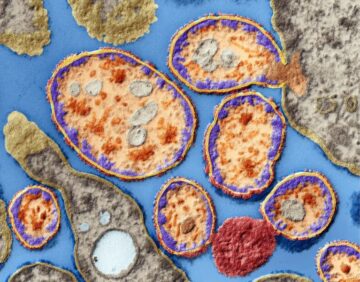 A scientist who successfully treated her own breast cancer by injecting the tumour with lab-grown viruses has sparked discussion about the ethics of self-experimentation. Beata Halassy discovered in 2020, aged 49, that she had breast cancer at the site of a previous mastectomy. It was the second recurrence there since her left breast had been removed, and she couldn’t face another bout of chemotherapy.
Halassy, a virologist at the University of Zagreb, studied the literature and decided to take matters into her own hands with an unproven treatment. A case report published in Vaccines in August1 outlines how Halassy self-administered a treatment called oncolytic virotherapy (OVT) to help treat her own stage 3 cancer. She has now been cancer-free for four years. In choosing to self-experiment, Halassy joins a long line of scientists who have participated in this under-the-radar, stigmatized and ethically fraught practice. “It took a brave editor to publish the report,” says Halassy.
More here.
Enjoying the content on 3QD? Help keep us going by donating now.
 A
A BLVR: You’ve said you want to honor all the poets “whose rapturous ecstasy overwhelmed even language’s ability to transcribe it.” Many of those, I imagine, are the authors you included as the editor of The Penguin Book of Spiritual Verse: 110 Poets and the Divine. Spiritual and religious writing offers some of the deepest considerations of the ineffable but feels a little taboo in our increasingly secular culture.
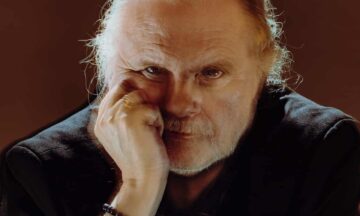 The second part, chiefly told from Johannes’s point of view, chronicles the eerie hours after he wakes up one morning, late in his old age. Johannes is a now retired fisherman. His wife, Erna, is long dead. His mornings are “sad and lonely”. Johannes makes coffee. He steps out of the house and everything he beholds seems different somehow. He meets his dead neighbour, and good friend Peter, and they go fishing. Johannes later bumps into his daughter Signe and “is seized with deep despair, because Signe cannot see him or hear him”. At the tale’s close, Peter accompanies Johannes to a place where nothing hurts and “everything you love is there”.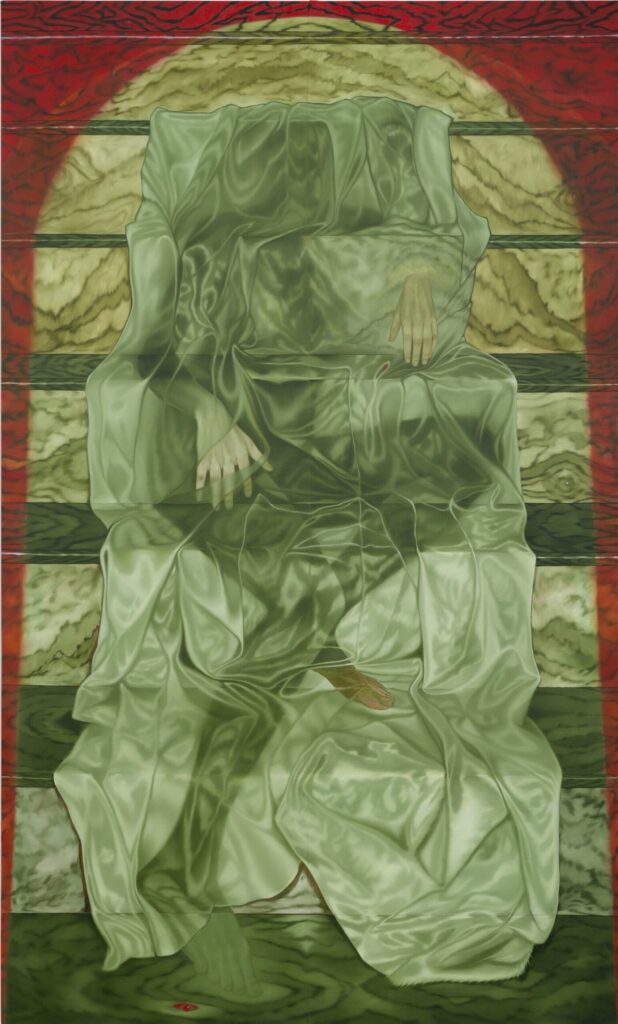
 It’s a good way to spend a Saturday morning—if, admittedly, a strange one. I wake up and pack a tote bag with leather gardening gloves, a water bottle, a towel, and headphones. Then I drive to one of Chicago’s
  I should say: It’s not just me. The photos I take end up on a website called
 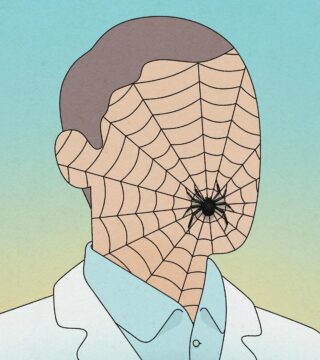 Laskowski revealed that her ambition had drawn her into the web of prolific spider researcher Jonathan Pruitt, a behavioural ecologist at McMaster University in Hamilton, Ontario. Pruitt was a superstar in his field and, in 2018, was named a Canada 150 Research Chair, becoming one of the younger recipients of the prestigious federal one-time grant with funding of $350,000 per year for seven years. He amassed a huge number of publications, many with surprising and influential results. He turned out to be an equally prolific fraud.
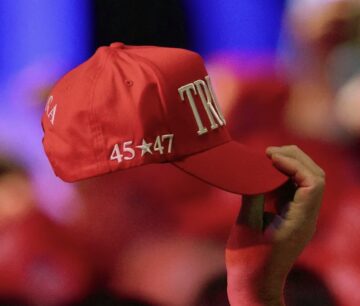 The results this time weren’t, to put it in poker terms, a rare inside straight easily manipulable by nefarious forces. Trump gained ground in nearly every corner of the country, among nearly every segment of the electorate.
 Does anything ever truly happen in the Messiah? This extraordinarily popular tripartite choral work, first performed in Dublin in 1742, consists almost entirely of saying rather than of doing. Circling around the redemptive power of Christ, it combines declarations with questions, prophecies, injunctions and exhortations (‘Who is this King of Glory?’, ‘Behold, I tell you a Mystery’, ‘Daughter of Sion, shout’, ‘He shall speak’). Full of urgency, tribulation and momentum, the Messiah nevertheless lacks a plot – unless we class the perennial human emotions of hope and fear, and the movement between the two, as dramatic action.