Metazoa

Animcoll

Paleontologists tell us that no new species was domesticated after the era of animal sacrifices. Were animals domesticated then—that is, made partially human—in order to sacrifice them, with domestication as a structural by-product of the religious? At the beginning of his essay “Goya’s Dog,” László Földényi quotes a line from an aboriginal Creation Myth—“Once upon a time when the animals were still human.” He remarks that, though the ancient aborigines saw an evident kinship between animals and humans, to suggest today that somebody has something “animalistic” about him is a not inconsequential judgment. It might have been possible for these aborigines to have felt that somebody (what we would recognize as a human) lacked the full qualities of being animal. “The animal is for us the extreme point of humanity. For the ancients, however, the extreme point of animality was the human.” Rilke in his Eighth Duino Elegy saw animals as looking out with full sight into the “open,” which is written all over them, our eyes being, as it were, turned back on themselves to form “traps” for the rest of the world as it emerges into our visual field. We are still in Plato’s cave, or in a deeper cave behind what we thought was philosophy’s back wall.

more from Iain Bamforth at Threepenny Review here.

Against Environmental Panic

Photo_37949_wide_large

This fear of the future, of science, and of technology reflects a time when humanity, and especially Western humanity, has taken a sudden dislike to itself. We are exasperated by our own proliferation and can no longer stand ourselves. Whether we want to be or not, we are tangled up with seven billion other members of our species. Rejecting both capitalism and socialism, ecologism has come to power almost nowhere. But it has won the battle of ideas. The environment is the new secular religion that is rising, in Europe especially, from the ruins of a disbelieving world. We have to subject it to critical evaluation in turn and unmask the infantile disease that is eroding and discrediting it: catastrophism. There are at least two ecologies: one rational, the other nonsensical; one that broadens our outlook while the other narrows it; one democratic, the other totalitarian. The first wants to tell us about the damage done by industrial civilization; the second infers from this the human species’ guilt. For the latter, nature is only a stick to be used to beat human beings. Just as third-worldism was the shame of colonial history, and repentance was contrition with regard to the present, catastrophism constitutes the anticipated remorse of the future: The meaning of history having evaporated, every change is a potential collapse that augurs nothing good.

more from Pascal Bruckner at The Chronicle Review here.

Clive James – a life in writing

From The Guardian:

Clive-James-008I'm told that I'm looking quite shiny,” says Clive James, putting his best face on things with a vintage display of Anglo-Australian stoicism. It's an instinctive optimism that is what you'd expect, but still it is moving. Almost everything in the life of this great literary polymath is edged with darkness. James now dwells in a kind of internal exile: from family, from good health and from convivial literary association, even from his own native land. His circumstances in old age – James is 73 – evoke a fate that Dante might plausibly have inflicted on a junior member of the damned in one of the less exacting circles of hell. James's health has lately been so bad that, last year, he was obliged publicly to deny a viral rumour of his imminent demise. Two or three times, indeed, since falling ill on New Year's day in 2010, he has nearly died, but has somehow contrived (so far) to play the Comeback Kid. Perhaps he has found rejuvenation in the macabre satisfaction of reading premature rave obituaries from fans around the English-speaking world. If word of his death has been exaggerated, there's no question, on meeting him, that he's into injury time, with a nagging cough that punctuates our conversation. “Essentially,” he says, as we settle into the rather spartan living room of his two-up, two-down terraced house in Cambridge, “I've got the lot. Leukaemia is lurking, but it's in remission. The thing that rips up my chest is the emphysema. Plus I've got all kinds of little carcinomas.” He points to the place on his right ear where a predatory oncologist has recently removed a threatening growth. “I'd love to see Australia again,” he reflects. “But I can't go further than three weeks away from Addenbrooke's hospital, so that means I'm here in Cambridge.”

In a recent, valedictory poem, “Holding Court”, which describes his involuntary sequestration, he writes: “My wristband feels too loose around my wrist.” In all other respects, he is tightly shackled to his fate. Exiled from his homeland, where he has now become a much-loved grand old man of Australian letters, James is also exiled in Cambridge. His wife of 45 years, the Dante scholar Prue Shaw, kicked him out of the marital home last year on the disclosure of his long affair with a former model, Leanne Edelsten. This betrayal also devastated his two daughters, though it has ultimately brought them closer to their father. In “Holding Court”, James writes ruefully that “retreating from the world, all I can do, is build a new world”.

More here.

Miniature human liver grown in mice

From Nature:

LiverTransplanting tiny 'liver buds' constructed from human stem cells restores liver function in mice, researchers have found. Although preliminary, the results offer a potential path towards developing treatments for the thousands of patients awaiting liver transplants every year. The liver buds, approximately 4 mm across, staved off death in mice with liver failure, the researchers report this week in Nature1. The transplanted structures also took on a range of liver functions — secreting liver-specific proteins and producing human-specific metabolites. But perhaps most notably, these buds quickly hooked up with nearby blood vessels and continued to grow after transplantation.

The results are preliminary but promising, says Valerie Gouon-Evans, who studies liver development and regeneration at Mount Sinai Hospital in New York. “This is a very novel thing,” she says. Because the liver buds are supported by the host’s blood system, transplanted cells can continue to proliferate and perform liver functions. However, she says, the transplanted animals need to be observed for several more months to see whether the cells begin to degenerate or form tumours. There is a dire scarcity of human livers for transplant. In 2011, 5,805 adult liver transplants were done in the United States. That same year, 2,938 people died waiting for new livers or became too sick to remain on waiting lists. However, attempts to create complex organs in the laboratory have been challenging. Takanori Takebe, a stem-cell biologist at Yokohama City University in Japan who co-led the study, believes this is the first time that people have made a solid organ using induced pluripotent stem cells, which are created by reprogramming mature skin cells to an embryo-like state.

More here.

Friday Poem

A Parable of the Poppy

On a poppy seed is a tiny house,
Dogs bark at the poppy-seed moon,
And never, never do those poppy-seed dogs
Imagine that somewhere there is a world much larger.

The Earth is a seed—and really no more,
While other seeds are planets and stars.
And even if there were a hundred thousand,
Each might have a house and a garden.

All in a poppy head. The poppy grows tall,
The children run by and the poppy sways.
And in the evening, under the rising moon,
Dogs bark somewhere, now loudly, now softly.
.

by Czeslaw Milosz
from The Collected Poems 1391-1987
Penguin Books, 1988

Isaac and Isaiah: The Covert Punishment of a Cold War Heretic

ISAIAH-BERLIN-010

Tariq Ali reviews David Caute's book in The Guardian:

For decades, David Caute has written both histories of ideas and novels. I've always preferred his novels, in particular Comrade Jacob, a sympathetic account of Gerrard Winstanley and the Diggers during the English revolution (Caute's history tutor at Oxford was Christopher Hill). In his new book, he has expanded a cold war footnote into an entire volume, but has performed a valuable service in doing so. The work is a portrait of Isaiah Berlin, with whom the author shared a perch at All Souls College, Oxford, where they engaged in lofty conversations. One of the less elevated talks concerned Isaac Deutscher, and troubled Caute.

Berlin the liberal political philosopher and Deutscher the Marxist historian were both asylum seekers, given refuge and residence in Britain during the early decades of the last century. That was about all they had in common. Their intellectual trajectories pointed in opposite directions. Berlin was escaping the Russian revolution, Deutscher was fleeing from the armies of the Third Reich, poised to take Poland. Both were Jews: the first was a Zionist, who annoyed Chaim Weizmann by refusing all his requests to move to Tel Aviv and become an adviser; the second famously defined himself as a “non-Jewish Jew”, and despite arguing with David Ben-Gurion, remained sympathetic to Israel – until the 1967 war. Deutscher's next of kin had perished in the camps. His surviving relations lived in Israel. He died in 1967 aged 60, and his last interview in the New Left Review took the form of a prescient warning to Israel, comparing its intransigence to that of old Prussia: “To justify or condone Israel's wars against the Arabs is to render Israel a very bad service indeed and harm its own long-term interest … The Germans have summed up their own experience in the bitter phrase: 'Man kann sich totsiegen!' 'You can triumph yourself to death'.”

On Remembering, and Technological Progress

PIC

Houman Barekat in 3:AM Magazine:

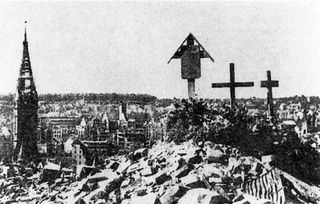
The trauma of growing up among the ruins of World War Two was a formative experience, not only for the late WG Sebald (1944-2001), but for the modern German nation as a whole. The memory of the incineration of large swathes of several of its major cities was tucked away in an obscure recess of the collective consciousness, to be occasionally revisited by scholars and historians but largely effaced in the wider society. Sebald’s Zurich lectures, an impassioned yet laconic interrogation of this historical amnesia, became On the Natural History of Destruction. Originally published in German in 1999 under the title Luftrkridg und Literatur, Anthea Bell’s English translation was first published in 2003 by Hamish Hamilton, and reappears here in a slim hardback courtesy of Notting Hill Editions.

For Sebald, the tragedy of the war and its aftermath had its roots in a fundamental weakness in the national character: he traces a link between ‘the German catastrophe ushered in under Hitler’s regime and the regulation of intimate feelings within the German family.’ This notion was subtlety alluded to in Michael Heneke’s 2009 film, White Ribbon, which hints at a connection between the repressed rigidity of social life in early 20th century Germany and the later brutality of the Third Reich. The same emotionally detached Protestant stoicism that had allowed National Socialism to thrive also coloured the character of the post-war rebuilding – the nation became like a family with dark secret about which it dared not speak. Sebald takes us beyond the cordon sanitaire, and back to the burning cities:

At its height the storm lifted gables and roofs from buildings, flung rafters and entire advertising hoardings through the air, tore trees from the ground and drove human beings before it like living torches. Behind collapsing facades the flames shot up as high as houses, rolled like a tidal wave through the streets at a speed of over 150 kilometres an hour, spun across open squares in strange rhythms like rolling cylinders of fire. The water in some of the canals was ablaze.

His purpose is not to exculpate or rehabilitate the German nation or even to elicit sympathy as such, but merely to invite recognition on a basic human level, to claw something back for posterity in defiance of that blanket silence. ‘The majority of Germans today know,‘ he candidly maintains, ‘that we actually provoked the annihilation of the cities in which we once lived.’

Thursday, July 4, 2013

In Egypt the Military is Supreme

Images (2)

Esam Al-Amin in Counterpunch:

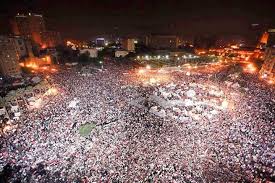
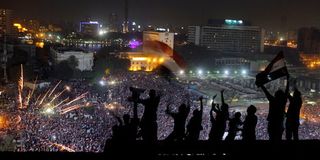
The people in Egypt went to the polls at least six times: to vote for a referendum to chart the political way forward (March 2011), to vote for the lower and upper house of parliament (November 2011-January 2012), to elect a civilian president over two rounds (May-June 2012), and to ratify the new constitution (December 2012). Each time the electorate voted for the choice of the Islamist parties to the frustration of the secular and liberal opposition.

To the discontent of the Islamists, all their gains at the polls were reversed by either the Mubarak-appointed Supreme Constitutional Court (SCC) or the military. The lower house of parliament, of which the Islamists won seventy three percent of the seats, was dissolved by the SCC a year ago, while the military has just suspended the new constitution, while ousting the democratically-elected president.

Undoubtedly, the MB committed colossal mistakes. For example, they reneged on several promises to their secular and liberal coalition partners, including to not contest the majority of parliamentary seats, field a presidential candidate, or exclude others in the composition of the Constitution Constituent Assembly. Perhaps, their gravest mistake was to ally themselves closely with the Salafist groups during the process of writing the constitution, thus alienating many of the secularists, liberals, as well as Christians even though the MB did not care much about the constitutional ideological battle. Their motivation was not to be outflanked by the Salafis on the Islamic identity of the state. To accomplish this objective, they lost most of the others.

In addition, Morsi and the MB did not adhere to their promise of full partnership in governance. Many of the youth and opposition groups felt that the president and MB leadership were not genuine in their outreach and only sought their participation for cosmetic reasons. Even their Islamic partners such as the Salafist Al-Noor Party complained that the MB wanted to monopolize the major power centers in the state.

The Rise of Narendra Modi

Zahir Janmohamed in the Boston Review:

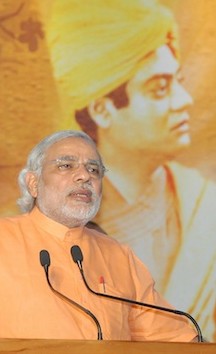
ScreenHunter_234 Jul. 04 16.56The physician sat in the corner of his office in Ahmedabad, a map of India’s western state of Gujarat on one side, a map of the human nervous system on the other, his hip leaning against the drawer that I spent weeks trying to convince him to open.

After agreeing to a list of conditions—I could not take any photographs, I could not remove anything from his office—he agreed to show me the drawer’s contents. It was a six-inch stack of letters between two longtime pen pals, the physician and a young man named Narendra Modi, the current chief minister of Gujarat and the official candidate from the Bharatiya Janata Party to contest next year’s elections for India’s prime minister. I took out my digital recorder and began reading each letter aloud. A few days before I boarded my return flight to California, the physician called me to his office.

“Zahir bhai,” he said. It was unusual for him to address me this way—he is in his 60s, twice my age, and “bhai” means brother in Hindi and is used most often with someone older.

“Zahir bhai,” he repeated. “I am very sorry. You cannot use my name in your piece.”

I was not surprised; very few in Gujarat are willing to use their real name when asked about Modi. I told him I would be happy to change his name.

“No, you cannot use my name or my letters or my story. I have three children. Modi will ruin their lives if people know my views on him.”

I pleaded with him to reconsider but he would not budge.

“You do not have children. You do not know what it is like to live in Gujarat. You will return to America eventually. Please, you must understand.”

Unfortunately, I do understand.

More here.

sheet music

Baer

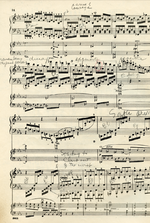
Last fall, the publishing industry met the music world in a cheerfully anachronistic way when Beck, a darling of literary indie-rock aficionados, released Song Reader, an album in the form of sheet music. No downloadable tracks, no limited-edition vinyl, just a big book of notes. The album was published by McSweeney’s and was supplemented with a crowd-sourced website, where fans uploaded their own interpretations of Beck’s songs. Within weeks the site had amassed a kaleidoscopic array of performances—including polished, even animated, videos. Song Reader became a favorite of the staffs at NPR, NewYorker.com, and Kurt Andersen’s Studio 360, where the host and a handful of editors and producers performed a version of “Saint Dude.” Even USAToday’s Pop Candy blog asked, in a somewhat cheeky headline, “Have You Played It Yet?” Far from an old-timey, craft-movement stunt, Song Reader was embraced by both critics and consumers as a legitimate attempt to publish music that people could play—an invitation to musicians, amateur and professional, to interpret the works and share their musical gifts, promising or mediocre. For some of us concerned about the fate of sheet music, Song Reader also served as a litmus test of sorts: How many music fans (at least among the sample Beck attracts) still read, or know someone who reads, Western music notation, notes and chords placed on a five-line staff with clefs, rests, and time signatures?

more from Adam Baer at VQR here.

Can a marriage between man and machine solve the world’s problems?

From The Globe and Mail:

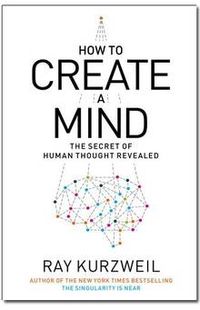
HowToCreateAMindHow do you know when your new book is a success? When Google promptly offers you a plum job as soon as the book is on the stands. That's the pleasant turn of events that Ray Kurzweil, 64, is enjoying. His most recent book, his sixth, is How to Create a Mind: The Secret of Human Thought Revealed. His new job at Google is director of engineering. Google made the announcement in December. Kurzweil has many fans. The Wall Street Journal once described him as “the restless genius” and Fortune said he was “a legendary inventor with a history of mind-blowing ideas.” Time put him on its cover, and Forbes called him “the ultimate thinking machine.”

…The thesis of How to Create a Mind is that the human brain itself is the most powerful thinking machine available today, so it is logical that we look to the brain for guidance on how to make devices smarter. He outlines a theory he calls “the pattern recognition theory of mind (PRTM),” which he says “describes the basic algorithm of the neocortex (the region of the brain responsible for perception, memory and critical thinking).” By reverse-engineering the human brain, we will be able to “to vastly extend the power of our own intelligence.” What will we do with this new intelligence? First, we will better understand the brain itself and develop superior treatments for the brain's ailments, such as psychiatric disorders. Second, we will use our expanded intelligence to solve the many problems that confront mankind. Finally, we will use the intelligence to teach us how to be smarter.

More here.

A Brazilian Autumn?

9097435128_19a982c454

Miguel Borba de Sa in Jacobin:

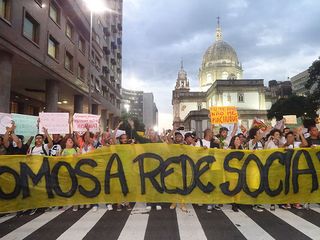
Mark Bergfeld: How could a twenty-cent increase in bus fares spark protests in more than 100 towns and cities across Brazil?

Miguel Borba de Sa: In his book, The Road To Serfdom the Austrian economist Friedrich Hayek wrote that there are two areas that one cannot leave to the competitive principle: transport and the environment. Brazil’s bourgeoisie consistently fails to understand this.

In the last ten years transportation has become a lucrative business for the Brazilian elite and local government officials. Enterprises and corporations bid for local routes and lines. Local government officials cosy up to the bus companies for benefits.

Here in Brazil, transport costs cut into workers’ wages far more than other utilities such as electricity or water. Fares have risen faster than inflation. An average workers’ wage is 650 Brazilian real. A bus ticket is 2 real. This private-public relationship has broken down.

The movement we see on the streets today actually started in Porto Alegre. People protested the fare increase two months ago. The police turned violent. Public outrage followed and the hike was halted. Was it a victory? No! The money for the bus company was raised by exempting the local bus company from future tax payments. In Rio, for every real I pay for a ticket the local authorities adds the same amount in subsidies or tax exemption.

At the same time the huge infrastructure projects like the Confederation Cup, the Pope’s visit later this year, the FIFA World Cup have displaced poor people from the city center and, in many cases, even cut them off from public transport. Dissatisfaction and “unfairness” have been simmering on Facebook, in the popular neighbourhoods and among working class youths. Radicalization and marginalisation have gone hand in hand. Now there is collective rage.

5 Surprising Fourth of July Facts

From LiveScience:

Statue-liberty-fireworks1. John Adams thought Americans would celebrate July 2

The Continental Congress officially declared its freedom from British rule on July 2, 1776, the day that John Adams wrongly thought would be commemorated by future generations. July Fourth, meanwhile, marks the day Congress adopted the Declaration of Independence. As copies of the declaration spread across the colonies, celebrations kicked off. Americans lit bonfires, fired celebratory shots from their guns, rang bells, and took down symbols of the British monarchy. At that point, the Boston Tea Party and the Battles of Lexington and Concord had already happened, but the American Revolutionary War wouldn't end until the Treaty of Paris was signed in 1783.

2. Three presidents died on the Fourth of July

John Adams and Thomas Jefferson passed away within hours of each other on July 4, 1826. The two had been political rivals and then friends later in life, and both signed the Declaration of Independence. James Monroe, the nation's fifth president, was the next U.S. leader to die, and he passed away on July 4, 1831. Calvin Coolidge, the 30th president, is the only U.S. chief to have been born on the Fourth of July.

More here.

A difficult way forward in Egypt

From the website of the International Crisis Group:

20130704_EGYPT-slide-XTKM-hpLargeAs Egypt teeters on the verge of a catastrophic confrontation, it is difficult to discern who has been more short-sighted: an arrogant Muslim Brotherhood that misread electoral gains for a political blank-check or a reckless opposition that has appeared ready to sink the country in order to bring down the Islamists and whose criteria for ousting the president – generalised incompetence and wide unpopularity – could send many presidents packing. The priority today must be to avoid further bloodshed. It is, too, to ensure that the next chapter in Egypt’s troubled transition, unlike the last, is inclusive and consensual. The alternative is to continue with exclusionary, confrontational politics, albeit with greater violence with only a change of characters at the helm.

Egypt’s profound divisions rarely have been on starker display than these past days. Millions took to the streets on 30 June to demand President Mohammed Morsi’s departure; smaller, yet still large numbers responded to insist on his remaining in office. From all sides has come talk of blood and martyrdom – from the Brotherhood, the youth-initiated Tamarrud (Rebellion) and the army itself. The forceful removal of the nation’s first democratically-elected civilian president risks sending a message to Islamists that they have no place in the political order; sowing fears among them that they will suffer yet another bloody crackdown; and thus potentially prompting violent, even desperate resistance by Morsi’s followers.

The current crisis to a large extent is the product of a fundamentally flawed political transition. Political actors were unable to reach basic agreement on rules of the game or the desired political system, instead proceeding with a winner-take-all mentality that was sure to alienate – and frighten –losers.

More here.

Thursday Poem

Father

Last night
I dreamt about you,
father.
You came
into my dream
as a deer
and stood astride
a grassy
mound.

I called you
by your name,
father.
I called you
by the word: father
I said:

Look,
my eyes are
two wet flowers
by the mountain
stream.
Come,
let your warm
deer tongue
dry the dew
that fell upon
my eyes.

And you stood
as in another
world,
as in another
dream,
on a mound,
overgrown with grass.

You shook your
mighty
antlers
and vanished in the white
cloud
of no one’s
dreams.

.
by Peter Semolic
from Bizantinske rože
publisher: DZS, Ljubljana, 1994
translation: 2004, Ana Jelnikar
.

Read more »

Show Trials and Sympathy

Image (2)

Sophie Pinkham in n+1:

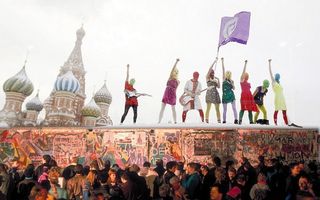
Last week, a new documentary about Pussy Riot aired on HBO. Two anonymous Pussy Riot members attended the premiere in New York, bumping shoulders with Salman Rushdie and Patti Smith but skipping the “Riotinis” at the Russian-themed SoHo afterparty. One year after the trial, the world is still on a first name basis with Nadya Tolokonnikova, Masha Alyokhina, and Katya Samutsevich, the “Pussy Riot girls,” the ones who got caught.

The Pussy Riot trial was only the first in a string of pseudo-legal proceedings meant to punish the opposition and teach the public a lesson, but it’s still the one that’s made the biggest splash abroad. The prosecutions of Aleksei Navalny, one of the Russian opposition’s strongest leaders, and of twenty-seven people arrested in connection with the political demonstrations on Moscow’s Bolotnaya Square have been equally absurd, hollow, and unfair. But they haven’t become pop culture phenomena in the way the Pussy Riot trial did; they don’t have the same simple hook or punk rock appeal.

Any trial that exists only to justify punishment is a kind of “show trial,” a performance rather than a judgment. Such trials have a long history in Russia. In the 19th century, Russia’s greatest lexicographer recorded proverbs and sayings that included, “Where there’s a court, there is falsehood,” and “Go before God with the truth, but before the courts with money.” Show trials come in many flavors, though Stalin’s are the ones we remember best. The stakes in the recent trials have been far lower than those in Stalinist trials: fortunately, no one was ever at risk of being shot. Putin doesn’t have Stalin’s iron grip, and in all of the politically motivated trials of the last year there have been plenty of loud, dissenting voices, both inside and outside the courtroom. In fact, these modern show trials have more in common with the lesser-known trials of the Brezhnev era and late imperial Russia, periods that saw authoritarian governments losing control of their narrative, upstaged by another, more compelling show—the defense.

How Austerity Has Failed

Wolf_1-071113_jpg_470x633_q85

Martin Wolf in the NYRB:

Austerity came to Europe in the first half of 2010, with the Greek crisis, the coalition government in the UK, and above all, in June of that year, the Toronto summit of the group of twenty leading countries. This meeting prematurely reversed the successful stimulus launched at the previous summits and declared, roundly, that “advanced economies have committed to fiscal plans that will at least halve deficits by 2013.”

This was clearly an attempt at austerity, which I define as a reduction in the structural, or cyclically adjusted, fiscal balance—i.e., the budget deficit or surplus that would exist after adjustments are made for the ups and downs of the business cycle. It was an attempt prematurely and unwisely made. The cuts in these structural deficits, a mix of tax increases and government spending cuts between 2010 and 2013, will be around 11.8 percent of potential GDP in Greece, 6.1 percent in Portugal, 3.5 percent in Spain, and 3.4 percent in Italy. One might argue that these countries have had little choice. But the UK did, yet its cut in the structural deficit over these three years will be 4.3 percent of GDP.

What was the consequence? In a word, “dire.”

In 2010, as a result of heroic interventions by the monetary and fiscal authorities, many countries hit by the crisis enjoyed surprisingly good recoveries from the “great recession” of 2008–2009. This then stopped (see figure 1). The International Monetary Fund now thinks, perhaps optimistically, that the British economy will expand by 1.8 percent between 2010 and 2013. But it expanded by 1.8 percent between 2009 and 2010 alone. The economy has now stagnated for almost three years. Even if the IMF is right about a recovery this year, it will be 2015 before the economy reaches the size it was before the crisis began.