Starving the Squid

64d6b01c38bdfd9edc2573ec4de31848.portrait

J. Bradford DeLong in Project Syndicate:

Back in 2011, I noted that finance and insurance in the United States accounted for 2.8% of GDP in 1950 compared to 8.4% of GDP three years after the worst financial crisis in almost 80 years. “[I]f the US were getting good value from the extra…$750 billion diverted annually from paying people who make directly useful goods and provide directly useful services, it would be obvious in the statistics.”

Such a massive diversion of resources “away from goods and services directly useful this year,” I argued, “is a good bargain only if it boosts overall annual economic growth by 0.3% – or 6% per 25-year generation.” In other words, it is a good bargain only if it collectively has a substantial amount of what financiers call “alpha.”

That had not happened, so I asked why so much financial skill and enterprise had not yielded “obvious economic dividends.” The reason, I proposed, was that “[t]here are two sustainable ways to make money in finance: find people with risks that need to be carried and match them with people with unused risk-bearing capacity, or find people with such risks and match them with people who are clueless but who have money.”

Over the past year and a half, in the wake of Thomas Philippon and Ariell Reshef’s estimate that 2% of US GDP has been wasted in the pointless hypertrophy of the financial sector, evidence that America’s financial system is less a device for efficiently sharing risk and more a device for separating rich people from their money – a Las Vegas without the glitz – has mounted.

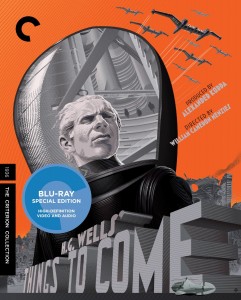
The Original Liberal Fascist World War Z – Now on Blu-Ray!

Cover-241x300

John Holbo in Crooked Timber:

Whenever I teach Philosophy and Film, I lecture about this film [the H. G. Wells-scripted/William Cameron Menzies-directed Things To Come (1936)] at some length. But some semesters I haven’t bothered to give it one of my screening slots because the DVD quality was meh. You can get a free meh copy from the Internet Archive. I’ve often told students they might as well just watch on their laptops. But now! But now!

Let me give you the short version of my previous posts about why this film is awesome and interesting.

First, you can see that the visuals are insane. All kneecaps and curtain rod shoulders and Darth Tweety helmets. ‘Nuff said.

In terms of the history, this film goes with Metropolis. It was Wells’ response to Lang’s film,which he hated. It was supposed to do everything intellectually right that Lang did intellectually wrong. But, in the end, it wasn’t enough fun and Metropolis turned out to be closer to the template for sf film success (even though Metropolis itself stunk up the box office.)

Things To Come is a big budget sf extravaganza that rigorously refuses all the standard, easy satisfactions of the genre. It is a sleek modernist lumberyard of missed opportunities to have more fun, in service of a hare-brained high-concept. That concept is: liberal fascism triumphant! Why don’t we make a film about a bunch of arrogant know-it-all scientist-types who force regular people to behave themselves better – because the scientists know what works, and the regular folks have screwed up the planet! – and it actually works! And in the end there’s a right-wing talk radio uprising, but it is easily put down. Buncha yahoos! I kid you not, that’s the plot.

I call it ‘liberal fascism’ because that actually was Wells’ term (that’s where Jonah Goldberg got it). Curious? Read my original post on the subject.

Anyway, the film is also the first modern zombie movie – in the Dan Drezner sense. (I talked about it here.) It contains a zombie outbreak that is a thinly veiled international relations allegory. It’s the first film in which, instead of a few zombie slaves in the swamp, there are deadly roving armies of the things. So why doesn’t anyone know this? Why isn’t it famous as such? Because it isn’t really a zombie film – not in the emotional sense. It contains all the elements but refuses to do anything fun with them, because that would make the audience sympathize with the ‘wrong’ characters.

Monday, July 1, 2013

The Quarterly DAG-3QD Peace and Justice Symposium: The Iraq War and Democracy in the Middle East

Online symposium new dark font-09

Dear Reader,

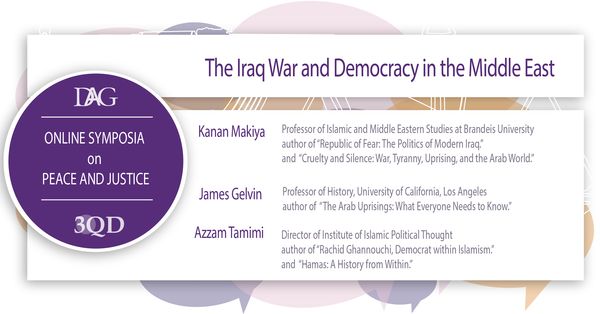
We are very pleased to collaborate with the Amsterdam-based Dialogue Advisory Group (DAG) to bring to you quarterly online symposia on topics of international peace and justice. This is the fourth in this series of symposia; the first three can be seen here, here, and here.

DAG is an organization which discreetly assists government, inter-government and other actors to confidentially manage national and international mediation efforts. Among their publicly known activities is DAG’s involvement in verifying the ETA ceasefire in Basque Country and the decommissioning of the weapons of INLA, a dissident Republican armed group in Northern Ireland.

DAG is directed by Ram Manikkalingam who also teaches politics at the University of Amsterdam. He advised the previous President of Sri Lanka during the peace process with the Tamil Tigers and prior to that advised the Rockefeller Foundation’s program in international peace and security.

In the DAG-3QD Peace and Justice Symposia internationally recognized figures will debate challenges in conflict resolution and human rights. One (or more) author(s) will present a thesis in the form of a short essay and then the others will present critiques of that point of view. Finally, the initial author(s) will also have an opportunity to present a rebuttal to the critiques.

The topic this time is whether the Iraq war helped or hurt the spreading of democracy in the middle east.

The distinguished participants in this symposium:

  • Kanan Makiya is the Sylvia K. Hassenfeld Professor of Islamic and Middle Eastern Studies at Brandeis University. He was a prominent member of the Iraqi opposition to Saddam Hussein and an influential proponent of the 2003 Iraq War. His books include Republic of Fear (1989), The Monument (1991), Cruelty and Silence: War, Tyranny, Uprising and the Arab World (1993), and The Rock: A Seventh Century Tale of Jerusalem (2001).
  • James L. Gelvin is professor of modern Middle Eastern history at the University of California, Los Angeles. He is the author of five books, including The Arab Uprisings: What Everyone Needs to Know (2012) and The Modern Middle East: A History (2011), along with numerous articles and book chapters on the social and cultural history of the region.
  • Azzam Tamimi is the Director of the London-based Institute of Islamic Political Thought (IIPT). He has been a visiting professor at Kyoto and Nagoya universities in Japan. His books include: Power-Sharing Islam (1993), Islam and Secularism in the Middle East (2000), Rachid Ghannouchi a Democrat within Islamism (2001), and Hamas Unwritten Chapters (2006). He is a regular commentator on a number of Arabic satellite channels including Aljazeera and Alhiwar and frequently makes appearances on a number of English channels as well.

I would like to thank the participants as well as Ram Manikkalingam, Fleur Ravensbergen, Michelle Gehrig, and the indefatigable Amanda Beugeling of the Dialogue Advisory Group for working closely with me in organizing these symposia. The logo for the symposia has also been designed by Amanda Beugeling.

We look forward to your comments and feedback.

Yours,

S. Abbas Raza

NOTE: DAG and 3QD wish to acknowledge the generous contribution of the Dutch Stichting Democratie en Media toward these symposia, as well as the support of our readers.

THE SYMPOSIUM

[Click the links below to read the essays.]

  1. How did the 2003 Iraq War both contribute to spreading the idea of democracy in the Middle East, and discredit that idea at the same time? by Kanan Makiya
  2. Here's What Actually Happened by James L. Gelvin
  3. Makiya's Theory is Farfetched by Azzam Tamimi
  4. Response to Gelvin & Tamimi by Kanan Makiya

***********************

***********

******

*

Please leave comments about any of the essays in the symposium in the comments area of this post. Thank you.

How did the 2003 Iraq War both contribute to spreading the idea of democracy in the Middle East, and discredit that idea at the same time?

by Kanan Makiya

Did the violent overthrow of the first Arab dictator to lose his hold on state power in more than thirty years, Saddam Hussein in 2003, have any kind of domino effect on the fall of other Arab dictators in the succession of events popularly known as the Arab Spring that started in Tunisia in late 2010 and continued through 2011? And if so, can it be said that in spite of all the blunders, misjudgments and hubris that accompanied the American-led Western coalition of armies that ended the regime of the Ba'th party in Iraq, its actions nonetheless contributed to the beginnings of a genuine democratization process in the Middle East, albeit one whose end is still not in sight? Finally does any of this have a bearing on what the US should or should not do in the horrific civil war that is today raging in Syria?

My contention in this essay is that there is a close connection between these two major cataclysmic events, one that has been overlooked due in part to the understandable hostility that the 2003 Iraq war has engendered in Western and Arab eyes, a hostility that was for the most part not there at the time of military action in 2003. A prime consequence of this hostility is the fact that none of the prime Arab actors on the ground during the Arab Spring be it in Tunisia, Egypt or Syria—and by actors I mean the brave young men and women doing all the protesting, and the dying—themselves saw a connection, or have been willing to even admit the possibility that there might be one.

The story of the 2003 war has its roots in an earlier war, and in an earlier uprising against tyranny directly linked to that war, that it behooves us to remember. The events in question began on August 2, 1990, the day that the Ba'th regime in Baghdad marched into Kuwait, an action that resulted in the first Gulf war of 1991 the uncompleted nature of which gave rise to repeated Western military intervention in 2003. On the heels of the ceasefire that followed the 1991 Gulf war, Iraqis south and north of the country rose up against the regime of Saddam, and were crushed within a period of 6-8 weeks.

What was this first Gulf war against Iraq in 1991 about? Remarkably, given where we are today, it was about a restoration of the Arab state system, a system we all know was set up for the most part artificially by the Western powers after WWI and the fall of the Ottoman Empire. This system had been grossly violated for the first time in 80 yearsfrom within, by Saddam Hussein, when he invaded, occupied, annexed and systematically raped the state of Kuwait for nine months starting on August 2, 1990. Nothing like this had ever happened in Arab politics before. The first Gulf war enjoyed the support of the Arab regimes in whose name it was waged, but not of its peoples. Even Hafez al-Assad's Ba'th regime in Syria joined in the 1991 effort to oust its sister Ba'th regime out of Kuwait.

Read more »

Here’s What Actually Happened

by James L. Gelvin

Confirmation bias: In cognitive science, the tendency for observers to interpret data in a way that confirms their preconceptions; e.g., “The Arab Spring Started in Iraq.”

Kanan Makiya's knowledge of Arab history is, at best, spotty. In The New York Times iteration of this article he places the 2005 presidential election in Egypt in 2006; here, he gets the date right but now concludes that an election in which the incumbent purportedly received 88.6% of the vote was “contested.” Again in the Times he locates the roots of the Lebanese Cedar Revolution in the US-led invasion and occupation of Iraq two years earlier; here, he correctly cites the assassination of Prime Minister Rafiq Hariri as the trigger, but then fumbles the ball again by imagining two Cedar Revolutions when the rest of the world witnessed only one. These and other mistakes might be deemed minor lapses by someone who just does not know or care much about the Arab world beyond Iraq. However, there are major lapses as well. It is a major lapse that after at least four published iterations of his argument Makiya still provides no proof beyond post hoc ergo propter hoc that there was a relationship between 1991 or 2003 and 2011. And Makiya's disingenuous division of modern Arab history into two periods—one before, the other after the invasion—is not a minor lapse but sheer willfulness on his part.

According to Makiya, in the pre-invasion dark times Arabs had been lulled into a state of lethargy by leaders who fed them a steady diet of propaganda consisting of the twin romances of armed struggle and pan-Arabism and anti-Israel, anti-imperialist invective, which the masses lapped up. (Pace Makiya, pan-Arabism—the idea that all Arabs should be unified within a single state—had ceased to be a factor in Arab politics decades before 2003. And the fact that anti-imperialism still strikes a chord among Arabs is hardly unreasonable: After all, American sponsorship and support for the Iraqi sanctions that Makiya decries, as well as for autocrats from Mubarak to the Al Saud to, at various times, Saddam Hussein himself demonstrates that the United States bears no little responsibility for the misery Arabs have experienced.) For Makiya, the invasion revealed to Arabs that the autocrats who governed them were mere paper tigers, roused them to take matters into their own hands, and awakened them to the possibilities of living lives where human rights were respected and democracy might flourish. Hence, the Arab Spring.

Oh, really? Here's what actually happened:

There was no “Arab Spring.” Conservative columnists originally cooked up the term in 2005 to describe a non-event that they imagined was taking place in the Arab world as a result of George W. Bush's “Freedom Agenda.” That Arab Spring did not live up to its hype, nor did democracy come to Egypt, Saudi Arabia, and yes, Iraq and Lebanon, where its cheerleaders had breathlessly predicted it would. The term was forgotten, then resurrected in 2011 after a string of uprisings that were in some ways similar and in other ways disparate broke out in the Arab world. “Arab Spring” is an unfortunate turn of phrase: By drawing on associations of hope and renewal that Spring brings, it raised expectations so high that it was inevitable they would not be met. More important, “Arab Spring” is an unfortunate turn of phrase because events in the Arab world in 2010-11 cannot be viewed as a discrete phenomenon that might be isolated within a single “season.” Rather, they were the culmination of decades-long struggles in the region that had begun long before America's misadventure in Iraq.

Read more »

Makiya’s Theory is Farfetched

by Azzam Tamimi

I find the theory that the eruption of the Arab Spring was somehow contributed to by the U.S. invasion of Iraq and the overthrow of Saddam Hussein farfetched. In fact, I don't see much relevance between the Arab Spring and the events that blighted Iraq during the period from the early 1990s to the late 2000s. If at all, any Iraqi relevance began to form only as the Sunni Arabs of the Anbar embarked on their own peaceful uprising against the Maliki regime. And this happened no more than two years after the Tunisian uprising was triggered by the self-immolation of fruit vender Bu Azizi. In other words, one may argue more convincingly in favour of a Tunisian or Egyptian influence on the recent Iraqi uprising than the other way round.

Undoubtedly, Saddam Hussein was an oppressive ruler, a tyrant loathed and feared by the majority of the people he ruled. Yet, it was not the Iraqi people who toppled him and it was not an uprising anywhere in Iraq that expedited the end of his tyrannical reign.

The marsh Arabs uprising was generally perceived, at the time, as an Iranian-instigated, U.S.-backed, riot aimed at exploiting the exhaustion of the regime in the aftermath of the defeat of its troops and their expulsion from Kuwait in 1991. The uprising never managed to gain the momentum needed to finish what its leaders hoped to achieve and the U.S. and its allies believed at the time that intervening directly to accomplish the mission was outweighed by the risks involved.

The 2003 U.S. invasion of Iraq had hardly anything to do with the Iraqi popular discontent or any meaningful domestic dynamic aimed at change. It was planned and executed entirely by external actors who brought with them from exile remnants of Iraqi, mostly Shi'ite, opposition. It was the U.S. invasion that enabled these figures to be installed in power once Saddam's Ba'thist regime was finished off. Iraqis who stood to benefit from the change of regime justified the U.S. invasion and considered it, at best, the lesser of the two evils. Yet, the U.S. predetermination that the Sunnis of Iraq were potential enemies, in accordance with the incredible theory of the Sunni triangle, and should therefore be treated as such led to a gradual estrangement of most Sunnis and to a profound sectarian division unprecedented in the recent history of Iraq. Iran, of course, was the greatest beneficiary from the U.S. invasion and mismanagement of Iraq. Ironically, Iran's men ended up being the new rulers of Iraq. You can hardly think of a happier ending for the Iranians to their long ‘war and peace' epic with Saddam's regime.

The model of governance the United States helped establish in post-Saddam Iraq was far from impressive. Opposition groups and individuals in Tunisia, Egypt and Yemen, the three Arab countries that led the Great Arab Popular Uprising (GAPU – referred to as the Arab Spring), had already been struggling peacefully for reform in their own countries during the years of the invasion and occupation. At the time they condemned the U.S. invasion and what they perceived as a U.S./Iranian stooge regime in Baghdad. Generally, nothing positive was seen about the U.S.-provoked change in Iraq. The U.S. & U.K. claims that one of the objectives of regime change in Iraq was to liberate the Iraqi people from tyranny and promote democracy and respect for human rights were hardly credible. Any claim that such a regime change encouraged Arabs elsewhere to engage in a dynamic aimed at achieving similar results is indeed illusory.

Read more »

Response to Gelvin & Tamimi

by Kanan Makiya

The field of modern Middle Eastern Studies in the US today is, alas, afflicted by deep ideological non-scholarly divisions, which reflect the divisions being played out today in the region. However that which is tragic and real about what is actually going on in the Middle East, is farcical and pure theatre in the hands of these academic zealots. Among the consequences of this sad state of affairs is that we have in the US today not one but two professional associations in the field (ASMEA and MESA), one excessively pro- and the other excessively anti-everything and anything the US does or does not do in the region. The two camps engage in fierce polemical exchanges, characterized by the use of epithet, insult and ad hominem attacks, to the point of publishing blacklists of faculty disliked by the one side or the other, and they do all this under the facade of a search for the truth and true scholarship. The field of modern ME Studies is, as a consequence, rightly held in contempt by academics in more traditional departments and disciplines, and by a US government that pays no attention whatsoever to ME ‘experts' when it comes to making important decisions about the region.

Mr. Gelvin's response to my essay is a perfect example of this disease afflicting our joint profession. In place of argument he deploys wild accusation and personal insult of the “he just does not know or care much about the Arab world” variety. His response is full of such statements in spite of the fact that we do not know and have never met one another. More importantly, he does not deal in any way with the substance of my argument, quibbling instead about typographical errors and the like. I may or may not know or care about the Arab world, but you will not find evidence for that in his angry rant. I wonder where he was when I spent eight wasted years in various organizations of the PLO in the 1960s and 70s? Such people cannot and should not be taken seriously.

Mr Azzam Tamimi, on the other hand, has made a real and important argument, one with which I disagree, but in which, through the prism of that disagreement, are played out some of the most fundamental problems afflicting Iraq today. That, needless to say, is what civilized intellectual discourse should be about.

Read more »

Sunday, June 30, 2013

How an Israeli billionaire wrested control of one of Africa’s biggest prizes

Patrick Radden Keefe in The New Yorker:

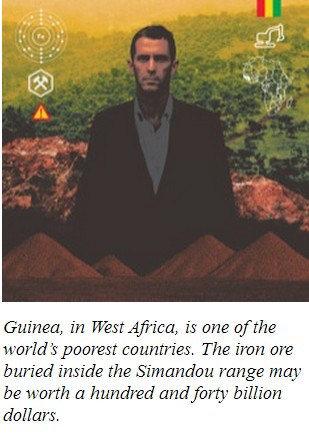
ScreenHunter_230 Jul. 01 10.01One of the world’s largest known deposits of untapped iron ore is buried inside a great, forested mountain range in the tiny West African republic of Guinea. In the country’s southeast highlands, far from any city or major roads, the Simandou Mountains stretch for seventy miles, looming over the jungle floor like a giant dinosaur spine. Some of the peaks have nicknames that were bestowed by geologists and miners who have worked in the area; one is Iron Maiden, another Metallica. Iron ore is the raw material that, once smelted, becomes steel, and the ore at Simandou is unusually rich, meaning that it can be fed into blast furnaces with minimal processing. During the past decade, as glittering mega-cities rose across China, the global price of iron soared, and investors began seeking new sources of ore. The red earth that dusts the lush vegetation around Simandou and marbles the mountain rock is worth a fortune.

Mining iron ore is complicated and requires a huge amount of capital. Simandou lies four hundred miles from the coast, in jungle so impassable that the first drill rigs had to be transported to the mountaintops with helicopters. The site has barely been developed—no ore has been excavated. Shipping it to China and other markets will require not only the construction of a mine but the building of a railroad line sturdy enough to support freight cars laden with ore. It will also be necessary to have access to a deepwater port, which Guinea lacks.

More here. [Thanks to Feisal H. Naqvi.]

Mimetic Desire: The Bling Ring

Nick Coccoma in Critics at Large:

ScreenHunter_229 Jul. 01 09.34Sofia Coppola’s first movie, The Virgin Suicides (1999), treated a cadre of teenage sisters and their relationship with the material and moral strictures surrounding them. With The Bling Ring she comes full circle in a way, but the detours she’s taken in the intermediary years bring her to a very different vantage point. Once again, a group of adolescent girls (plus one boy) are the main characters; once again, the effect of materiality and culture is the theme. But her take on this material is informed now by her intervening films, Lost in Translation (2003), Marie Antoinette (2006), and Somewhere (2010). Without those reference points, you could slip and pass off The Bling Ring as a pointless affair. So did the woman next to me in the theater when I saw it, who pronounced it the worst movie she’d ever seen (did she forget the Baz Luhrmann movie playing next door?). But with Coppola’s oeuvre hanging as an illuminating backdrop, The Bling Ring reveals itself as perhaps her most biting, damning portrait of society yet.

The story is so bizarre it can only be true. Over many months in 2008-9, a posse of Los Angeles teens burglarized the mansions of various celebrities and made off with millions of dollars in luxury goods, designer apparel, and cash. Their hijinks led to a Vanity Fair piece, which was the source for Coppola's screenplay. She alters some names but keeps the story intact, introducing us first to Marc, a new student at a school for problem kids. There he falls in with a Korean American girl named Rebecca, who initiates him into the circle of vandalizing Valley girls. What follows can best be described as some strange mix of unconventional high comedy, coming-of-age tale, and quasi-gangster movie, as the cohort pilfer and party their way through Hollywood. The gang want in on the monied entertainment club, and in the process create an exclusive clique of their own.

More here.

Will we ever… discover what happened to Amelia Earhart?

Clues suggest the pioneering aviator met a slow death as a castaway. Investigators are still searching for definitive evidence to solve this disappearance mystery, but think they may be closing in on the truth.

Rachel Nuwer at the BBC:

P01c162rThings were not going well for Amelia Earhart on the morning of 2 July 1937. Around 19 hours earlier, she’d taken off from New Guinea bound for Howland Island, a minuscule, 0.7-square mile (1.8-square kilometre) speck of land situated between Hawaii and Australia. She had already travelled 22,000 miles (35,400 km) around the equator, and just 7,000 miles (11,300 km) of Pacific Ocean stood between her and the record for world’s longest round-the-world flight. But one by one, problems had been accumulating on that fateful flight. Now, it was becoming apparent that not just her goal, but also her life was at stake.

“We must be on you, but cannot see you – but gas is running low,” she radioed to the United States Coast Guard ship assigned to help guide Earhart and her navigator, Fred Noonan, to Howland Island. Due to a series of still-debated misunderstandings and errors, the pair could not hear any of the voice transmissions from the ship, and their attempts to use radio navigation to locate the island failed.

At 8:43 am, reportedly sounding close to tears, Earhart broadcast her last known transmission – “We are on the line 157 337… We are running on line north and south” – indicating that she was following a particular bearing in the hope of stumbling across her destination. As history shows, she never made it.

More here.

Sir Bob Geldof: musician, humanitarian, and serial entrepreneur

Abigail Van-West in Startups:

Sir Bob Geldof largeWhen his mother died of a brain haemorrhage and his father began to work away from home, Geldof was required to look after himself at the age of seven and soon began to understand the value of independence.

“I was forced by circumstances into an independent life, an organised life. I had to organise the milk, the food, the coal, wrapping up the newspaper, and getting a newspaper to light the fire. I was forced back upon myself, forced into independence.”

Geldof is known for his refusal to hold back when it comes to expressing something he is passionate about, from convincing millions of the need for charity in poverty stricken Ethiopia through globally broadcast charity concert Live Aid in 1985, to demanding that politicians “make poverty history” at Live 8 20 years later. And he puts his strong opinions and determination down to the harsh lessons of his early years.

“There was no-one in the house so there was no-one to temper my opinions as I formulated them raw and child-like. But the downside of it was of course that I really didn’t understand what authority was. If your parents abandon you, even if it’s not their fault, you think, ‘Why should I trust authority? They always leave’.”

More here.

WOODY ALLEN ON LIFE: “THE WHOLE THING IS TRAGIC”

From The Talks:

Woody-Allen-01Mr. Allen, do you truly believe that happiness in life is impossible?

This is my perspective and has always been my perspective on life. I have a very grim, pessimistic view of it. I always have since I was a little boy; it hasn’t gotten worse with age or anything. I do feel that’s it’s a grim, painful, nightmarish, meaningless experience and that the only way that you can be happy is if you tell yourself some lies and deceive yourself.

I think it’s safe to say that most people would disagree.

But I am not the first person to say this or even the most articulate person. It was said by Nietzsche, it was said by Freud, it was said by Eugene O’Neill. One must have one’s delusions to live. If you look at life too honestly and clearly, life becomes unbearable because it’s a pretty grim enterprise, you will admit.

I have a hard time imagining Woody Allen having such a hard life…

I have been very lucky and I have made my talent a very productive life for me, but everything else I am not good at. I am not good getting through life, even the simplest things. These things that are a child’s play for most people are a trauma for me.

More here.

The Holy Quran Theme Park

Rafia Zakaria in Dawn:

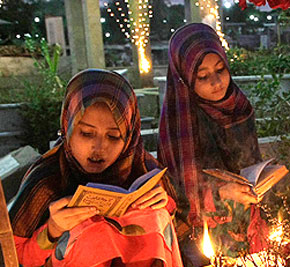
51cd6abd512b9It is going to be called The Holy Quran Park. Last Friday, June 21, 2013, officials in Dubai in the United Arab Emirates announced that the city would be constructing a theme park that will allow tourists to witness through rides and gardens, some of the content of the Holy Quran. According to Mohammad Noor Mashroom, Dubai Municipality’s Director of Projects, the park will be ready to go into operation sometime in September of next year and will cost $7.4 million dollars.

The sixty hectare Holy Quran Park will be located in an area known as Al-Khawaneej. Its features will include “the miracles of the Quran experienced through a variety of surprises by those visiting the Park”. Some of these surprises will be presented while park goers walk through an air-conditioned tunnel so they do not have to experience the searing heat of the desert. Other plans for the park include an “Umrah Corner” as well as gardens said to feature the 54 species of plants mentioned in the Quran. The Park will also have fountains, walking and biking paths and an outdoor theater. In addition to constructing The Holy Quran Theme Park, Dubai also recently bid to construct the “Angry Birds Theme Park” (built to emulate the popular game) and also the world’s largest Ferris wheel.

More here.

Why Living in a City Makes You More Innovative

From Smithsonian:

The research team, led by Wei Pan, analyzed all kinds of factors to tabulate the “social-tie density” of different cities–that’s the average number of people each resident will interact with personally. They looked at everything from the number of call partners with whom a cellphone user will end up sharing a cell tower to the number of people connecting through location-based social networks like Foursquare to the contagion rates of diseases spread only through personal contact. And they found that the higher a city’s social-tie density, the higher its levels of productivity and patents awarded. Says Pan: “What really happens when you move to a big city is you get to know a lot of different people, although they are not necessarily your friends. These are the people who bring different ideas, bring different opportunities and meetings with other great people that may help you.” His model doesn’t hold up, however, for some huge African and Asian cities that have even denser populations than cities in the West cities. But Pan has an explanation for that. Generally, those cities have terrible transportation systems. If people can’t get around, can’t have those serendipitous interactions, a city’s density has less impact. It’s all about the friction.

Here’s other recent research on what makes us more–and less–creative:

  • They are, however, extremely cranky: Lose the image of the creative genius so inflamed with inspiration that he or she can go days without sleep. Not likely. According to a study at the University of North Carolina at Greensboro, people who don’t get enough sleep tend not to be all that creative.
  • Does “Words With Friends” count?: On the other hand, if you are staying up late, it may do you good to read a little fiction. Research done at the University of Toronto determined that people who read fiction were more comfortable with disorder and uncertainty than people who read an essay and that fostered more sophisticated thinking and greater creativity.
  • Do not disturb. Daydreamer at work: And it turns out that being bored at work may not be such a bad thing. A team of British scientists found that people who do tasks they find boring tend to daydream more and that can lead to more creative thinking. The question that needs to be answered now, says lead researcher Sandi Mann, is: “Do people who are bored at work become more creative in other areas of their work — or do they go home and write novels?”

More here.

Study Advances New Theory of How the Brain Is Wired

From Columbia.edu:

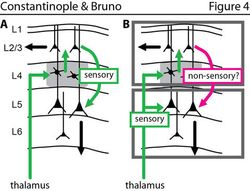
BrainSpeaking. Seeing. Hearing. Thinking. Remembering. Understanding this sentence and making a decision about whether or not to read on. All of this work is handled in the cerebral cortex, the deeply creased, outermost portion of the brain that is the center of all the higher brain functions that make us human. Humans have the thickest cortex of any species but, even so, it measures no more than 4 millimeters (.16 inches) thick. For decades, scientists thought they had a pretty clear understanding of how signals move through the cerebral cortex. By studying the anatomy of nerve axons—the wires that connect nerve cells—they had concluded that information is relayed through a “column” of six layers of specialized nerve cells in a series of hand-offs that begins in the mid-layer of the cortex, then moves to other layers before triggering a behavioral response.

Now a study by Columbia neuroscientist Dr. Randy Bruno indicates this longstanding view is incorrect. Looking at how sensory information is processed in rats, Bruno found that signals are processed in two parts of the cortex simultaneously rather than in series—almost as if there are two brains. “Our findings challenge dogma,” says Bruno, assistant professor of neuroscience and a faculty member at Columbia’s new Mortimer B. Zuckerman Mind Brain Behavior Institute and the Kavli Institute for Brain Science. “The upper and lower layers form separate circuits that do separate things.” The discovery, he says, “opens up a different way of thinking about how the cerebral cortex does what it does, which includes not only processing sight, sound and touch but higher functions such as speech, decision-making and abstract thought.”

More here.

Saturday, June 29, 2013

How 17 Equations Changed the World

Pythagoras_stamp

Maria Popova over at Brain Pickings [h/t: Jennifer Ouellette]:

When legendary theoretical physicist Stephen Hawking was setting out to release A Brief History of Time, one of the most influential science books in modern history, his publishers admonished him that every equation included would halve the book’s sales. Undeterred, he dared include E = mc², even though cutting it out would have allegedly sold another 10 million copies. The anecdote captures the extent of our culture’s distaste for, if not fear of, equations. And yet, argues mathematician Ian Stewart in In Pursuit of the Unknown: 17 Equations That Changed the World, equations have held remarkable power in facilitating humanity’s progress and, as such, call for rudimentary understanding as a form of our most basic literacy.

Stewart writes:

The power of equations lies in the philosophically difficult correspondence between mathematics, a collective creation of human minds, and an external physical reality. Equations model deep patterns in the outside world. By learning to value equations, and to read the stories they tell, we can uncover vital features of the world around us… This is the story of the ascent of humanity, told in 17 equations.

From how the Pythagorean theorem, which linked geometry and algebra, laid the groundwork of the best current theories of space, time, and gravity to how the Navier-Stokes equation applies to modeling climate change, Stewart delivers a scientist’s gift in a storyteller’s package to reveal how these seemingly esoteric equations are really the foundation for nearly everything we know and use today.