
Category: Recommended Reading
See My Jumper Hanging On the Line (1978)
For Better Social Skills, Scientists Recommend a Little Chekhov
Pam Belluck in The New York Times:
The researchers say the reason is that literary fiction often leaves more to the imagination, encouraging readers to make inferences about characters and be sensitive to emotional nuance and complexity. “This is why I love science,” Louise Erdrich, whose novel “The Round House” was used in one of the experiments, wrote in an e-mail. The researchers, she said, “found a way to prove true the intangible benefits of literary fiction.” “Thank God the research didn’t find that novels increased tooth decay or blocked up your arteries,” she added.
More here.
Saturday, October 5, 2013
ON MIKLÓS SZENTKUTHY’S ARS POETICA
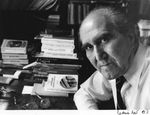
Originally published in 1935 and republished in 1985, Towards the One and Only Metaphor, Szentkuthy’s second book, is comprised of 112 numbered sections ranging in length from one sentence to several pages. The seeding ground out of which much of Szentkuthy’s future work would come, it is a text that defies classification, yet is perhaps most accurately thought of as literature in Blanchot’s expansive sense of the term, that which ‘ruins’ distinctions and limits in its creation of a unique and amorphous hybrid beyond the distinctions of a particular genre. As Dezső Baróti described when reviewing the book in 1935, it is comprised of “unconventional journal-like passages expanded into short essays, plans for novels, poetic meditations that have the effect of free verse, and paradoxical aphorisms,” all of which reveal a moral philosophy, a politics, an erotics. “Its predominant motifs (insofar as one can succinctly describe it in a few words) are most especially nature, love, eroticism, sex. All that, however, is constantly painted over by the vibration of the unconcealed presence of a writer constantly in search of himself, and rife with beguiling, stimulating, and ever-renewed surprises.”[16] This accords with Szentkuthy’s grandiose if not quixotic goal of creating what he repeatedly called “a Catalogus Rerum, a listing of entities and phenomena, a Catalogue of everything in the Entire World.”
more here.
why watching “The Room” is like getting stabbed in the head
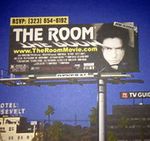
If you have not already done so, please see “The Room.” Certain films elicit so much joy they cannot be recommended highly enough. “The Room” is such a film. Not because it is good. No. “The Room” is not a good film. It is bad. Some call it “the best bad movie ever made.” But “bad” does not do it justice. In fact, no adjective I know fully conveys the comprehensive artistic disaster that is “The Room.” Perhaps some Amazonian tribe has a word that means “something so terrible it achieves a certain kind of majesty,” but in English we do not.
What makes “The Room” so very wonderfully, hilariously horrendous? Everything — Every. Single. Thing. The script? Yes. The performances? Yes. The costumes, sets, lighting? Yes, yes, yes. It is the “Citizen Kane” of awful, with the writer/director/producer/star Tommy Wiseau as its bizarro Orson Welles.
Self-financed by Wiseau in 2003 for an estimated $6 million, “The Room” grossed $1,800 in its initial two-week Los Angeles run, with one early review stating, “Watching this film is like getting stabbed in the head.”
more here.
The factors that plunged Europe into war in 1914
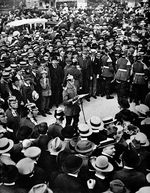
Events in the decade before 1914 pushed Europe closer to war. After Britain and France settled their colonial disputes in the Entente Cordiale, Germany tried to exploit the first Moroccan crisis of 1905-06 to drive a wedge between them. Rivalry between Vienna and St Petersburg intensified thanks to diplomatic duplicity and incompetence on both sides over Austria-Hungary’s annexation of Bosnia-Herzegovina in 1908. Arguably, the second Moroccan crisis of 1911 and two Balkan wars in 1912-13 inured politicians, generals and the European public to the idea that war was becoming inevitable.
Yet why did Europe’s leaders, having prevented earlier crises from triggering a general war, fail to do so in 1914? McMeekin, a US historian based at Koç university in Istanbul, contended in The Russian Origins of the First World War (2011) that Russia bore far more responsibility than once thought because it aimed to break up the Ottoman Empire, conquer the Turkish straits and seize Constantinople. July 1914 plays down this argument. At times it adopts the more established view that a decisive moment came on July 5-6, when Germany gave Austria-Hungary its infamous “blank cheque”. This allowed Vienna to intimidate Serbia with an ultimatum in the knowledge that, if war came, Germany would fight at Austria’s side.
more here.
How to pick up women (with science)
Dean Burnett in The Guardian:
But the thing about these guides to picking up women is that, despite the vast number of them and the dedicated researchers, known as pickup artists, looking into them, very few utilise legitimate science. That's where I come in.
Men are always saying to me “Dean, you're married; how the hell did that happen?”, but I can read between the lines and see what they really mean. I understand; it can't be easy asking for relationship advice from someone as successful, handsome and self-aware as I am.
I've never been part of the dating game and have never attempted to chat up an unfamiliar woman, but being a straight white male with a media platform means I'm allowed to speak with authority about groups and communities I have no involvement with. So, based on established scientific principles, here are a few techniques (or “moves”) that men can use that are almost certain to effectively woo any woman.
More here.
Researchers Demonstrate ‘Accelerator on a Chip’
From the website of the SLAC National Accelerator Laboratory:
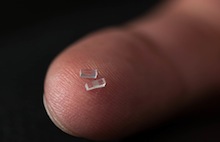
The achievement was reported today in Nature by a team including scientists from the U.S. Department of Energy’s (DOE) SLAC National Accelerator Laboratory and Stanford University.
“We still have a number of challenges before this technology becomes practical for real-world use, but eventually it would substantially reduce the size and cost of future high-energy particle colliders for exploring the world of fundamental particles and forces,” said Joel England, the SLAC physicist who led the experiments. “It could also help enable compact accelerators and X-ray devices for security scanning, medical therapy and imaging, and research in biology and materials science.”
Because it employs commercial lasers and low-cost, mass-production techniques, the researchers believe it will set the stage for new generations of “tabletop” accelerators.
At its full potential, the new “accelerator on a chip” could match the accelerating power of SLAC’s 2-mile-long linear accelerator in just 100 feet, and deliver a million more electron pulses per second.
This initial demonstration achieved an acceleration gradient, or amount of energy gained per length, of 300 million electronvolts per meter. That's roughly 10 times the acceleration provided by the current SLAC linear accelerator.
More here. [Thanks to Farrukh Azfar.]
Your Body, Their Property
Osagie K. Obasogie in the Boston Review:
Polio ravaged much of the United States during the 20th century, leaving thousands sick, paralyzed, and dead. Those who were not afflicted with the virus were constantly haunted by the terror that their loved ones—particularly children, who were most vulnerable—would awaken one morning unable to walk and destined to a life of leg braces and iron lungs. That is until 1953, when Jonas Salk created a vaccine. There were more than 45,000 total cases of polio in the United States in each of the two years before the vaccine became broadly available. By 1962 there were only 910. Salk’s invention was one of the greatest successes in the history of American public health.
Amidst the adulation and fame that came with saving untold numbers of lives, Salk did something that seems curious if not unwise by today’s standards: he refused to patent the vaccine. During a 1955 interview, Edward R. Murrow asked Salk who owned the patent, leading a seemingly bewildered Salk to respond, “The people, I would say. There is no patent. Could you patent the sun?”
These days, amid a patent-driven biotech boom, it is difficult to imagine a researcher making a similar appeal to the commons. But this sensibility received a crucial endorsement in the Supreme Court’s recent decision in Association for Molecular Pathology v. Myriad Genetics. The Court held that Myriad, a biotech firm in Utah, could not patent naturally occurring objects such as the two cancer-related human genes in question.
The decision upended many aspects of American intellectual property law that emerged in the wake of Diamond v. Chakrabarty (1980), when the Court held that living organisms—specifically, manmade crude–oil bacteria—are patentable subject matter. Chakrabartyinspired a rush to patent not just living things but also a growing array of biological materials, including human genes.
More here.
Trailer for the IMAX film, Jerusalem
Jerusalem: Filmed for IMAX and Giant Screen Theaters from JerusalemTheMovie on Vimeo.
[Thanks to Tariq J. Khan.]
Saturday Poem
Funny How
Funny how the breeze on my skin does its ruffling thing
with my thoughts. Not quite affectionate. Funny how
staring at the rug I tattoo the floor, thinking if my hair
were thicker maybe I'd like convertibles and other
big wind. Tonight you're away and I'm happy filling the bed
with such teasing itinerant notions, easy to love and let go.
Until the sound: the flat click of the kitchen door
brings metal to my mouth. Something from the driveway
is in the house—looking for what? I have my voice at hand
and the body that wants to use it as a shield, an elephant
behind a sapling. Funny that all I am is lying here,
a sweating piece of meat. Where is the maxim to unlock
my throat, how can I throw the pillar-of-salt I'm made of
over my left shoulder? I'd like a wrap of music please. This
is the time for a small earthquake, an insomniac neighbor—
any old clatter to put intruder fear to flight. But if he's real,
if tonight is marked for crime, please let me wake tomorrow
simply to find a hole where the TV was, chops thrown
from the freezer. Honey come home. Don't leave me here
waiting for some gloved hand holding polaroids of my nakedness.
I'm stuck in a child self under stale cloth, an old dream breathing
down my neck: the man without a face, all skin beneath a gray hat.
I need to know what's on the other side of that door,
the baldest reading of terror, the only way home.
.
by Ellen Doré Watson
from We Live in Bodies
Alice James Books, 1997
in praise of adultery
Hanif Kureishi in The Guardian:
…Nick and Meg go to Paris because love is the most considerable business of all, and they need to know what sort of relationships make life worth living, and, if they have a future together, what it might be like. Do they suffer less together than they would apart? The decision they make at the end of the film can only be provisional, and the questions they ask have to be confronted repeatedly, since there isn't one answer that can satisfy them.
More here.
Sense and Superstition
Jane L. Risen and A. David Nussbaum in The New York Times:
Research finds that people, superstitious or not, tend to believe that negative outcomes are more likely after they “jinx” themselves. Boast that you’ve been driving for 20 years without an accident, and your concern about your drive home that evening rises. The superstitious may tell you that your concern is well founded because the universe is bound to punish your hubris. Psychological research has a less magical explanation: boasting about being accident-free makes the thought of getting into an accident jump to mind and, once there, that thought makes you worry. That makes sense intuitively. What’s less intuitive is how a simple physical act, like knocking on wood, can alleviate that concern.
More here.
Friday, October 4, 2013
Scientists coax photons to bind into molecules for first time
Peter Reuell in the Harvard Gazette:
Scientists from Harvard University and the Massachusetts Institute of Technology (MIT) are challenging the conventional wisdom about light, and they didn’t need to go to a galaxy far, far away to do it.
Working with colleagues at the Harvard-MIT Center for Ultracold Atoms, a group led by Harvard Professor of Physics Mikhail Lukin and MIT Professor of Physics Vladan Vuletic managed to coax photons into binding together to form molecules — a state of matter that until recently had been purely theoretical. The work is described in a Sept. 25 paper in Nature.
The discovery, Lukin said, runs contrary to decades of accepted wisdom about the nature of light. Photons have long been described as massless particles that don’t interact with each other. Shine two laser beams at each other, he said, and they simply pass through one another.
Photonic molecules, however, behave less like traditional lasers and more like something you might find in science fiction: the light saber.
More here.
WHY IS NO ONE ON THE FIRST TREATMENT TO PREVENT H.I.V.?
Christopher Glazek in The New Yorker:
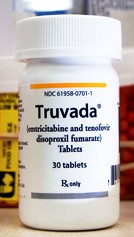
On the day the N.I.H. announced the results of the PrEP study, the research team received a congratulatory phone call from President Obama. Shortly thereafter, Time put PrEP in the first slot on its list of the year’s top medical innovations. Dr. Robert Grant, a professor at the University of California San Francisco and the N.I.H. study’s lead scientist, braced for a stampede. He told me, “The evening before we announced, we had meetings with the leadership of public health in California, and they were thinking, as we were, that there was going to be a rush, that everyone was going to descend on the clinics.” The Centers for Disease Control issued interim usage guidelines, despite the fact that the treatment was more than a year away from formal F.D.A. approval. The C.D.C. knew that some doctors were already prescribing Truvada for prevention off-label, and it expected more to follow suit.
But, in fact, adoption of the drug has been slow.
More here.
Daniel Gilbert speaks at the Harvard Initiative for Learning and Teaching 2013 conference
[Thanks to Scott Jacobsen.]
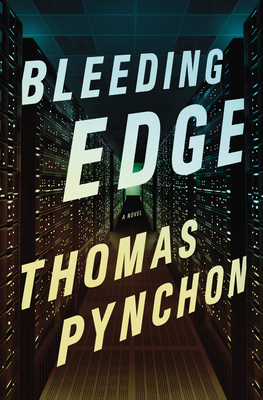
Thomas Pynchon’s Bleeding Edge
Bruce Stone in Numéro Cinq:
More here.
A philosophy of tickling
Aristotle famously defined man as the rational animal (zoon echon logon), and as the political animal (zoon politikon). But there are also passages in his work that indicate another less remarked upon, though no less profound, definition. In Parts of Animals, he writes: “When people are tickled, they quickly burst into laughter, and this is because the motion quickly penetrates to this part, and even though it is only gently warmed, still it produces a movement (independently of the will) in the intelligence which is recognizable. The fact that human beings only are susceptible to tickling is due (1) to the fineness of their skin and (2) to their being the only creatures that laugh.”1 Perhaps this notion of the “ticklish animal” was further elaborated in the second book of the Poetics, the lost treatise on comedy; indeed, the relationship between ticklish laughter and comic laughter remains an open question. Should tickling be investigated under the heading of comedy or of touch? Touch, Aristotle argues, is the most primary sense, and human beings are uniquely privileged in possessing the sharpest sense of touch thanks to the delicate nature of their skin. Though other animals have more advanced smell or hearing, “man’s sense of touch … excels that of all other animals in fineness.”2 We might view tickling as a side effect of the hyper-sensitivity of human touch. Our peculiar vulnerability to tickling is the price to be paid for more sophisticated and discriminating access to the world.
more here.
poets looking backward
In “A Backward Glance O’er Travel’d Roads,” Walt Whitman, at age seventy, calledLeaves of Grass “a sortie—whether to prove triumphant, and conquer its field of aim and escape and construction, nothing less than a hundred years from now can fully answer.” More than a century after his death, Whitman is often portrayed, stereotypically, as opening vistas of possibility to young poets. But his example is just as vital to poets who have, like him, devoted long lives to the art. Whitman’s poetic legacy includes the elements he enumerated in the prefaces—his expansive self; his inclusive catalogues; his formal and linguistic variety; his optimism; his celebration of the body, of sexuality, and of love between men; and his ambition to be the poet of American democracy. That legacy encompasses not only Leaves of Grass, and his many invitations to future poets to follow him down that road, but also the canniness with which he looked back on his achievement from the perspective of old age. Like Whitman, the four poets under review cast backward glances over travelled roads. And, in following Whitman, Adrienne Rich, Daniel Hoffman, Gerald Stern, and Frank Bidart also accept his invitation, issued in “Song of Myself,” to honor his style even as they “kill the teacher.”
more here.
remembering Seamus Heaney
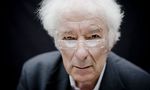
And so, volume by volume, decade by decade, Heaney translated feelings in resonant word-clusters. For “the Troubles” in Northern Ireland: “neighborly murders.” For early marriage: “the lovely and painful / Covenants of flesh… / The respite in our dewy dreaming faces.” For expressing his chosen but unnatural distance from his native North when he moved to the Republic: “I am neither internee nor informer; / an inner émigré.” After his mother’s death: “A soul ramifying and forever / Silent, beyond silence listened for.” For the destruction of the Twin Towers: “Anything can happen.” And in the course of a long career, around the clusters there clustered more clusters, until a constellation, and then in time a galaxy, shone from the assembled poems, making up what we call a poet’s style. Heaney’s own style went through many changes while remaining recognizable across time. Brought up a Catholic, he was no longer a believer as an adult, but he also remarked that one cannot forget the culture in which one was raised. He attended no church, but by his own wish was buried at a Catholic Mass: there is no other way to bury someone from the Catholic tradition in Ireland.
more here.