vermeer’s secrets

Vermeer_and_music_x8128.pr_

The charm of Vermeer is at once obvious and elusive. Everyone feels the pull of these paintings. No one can quite say how they exercise their magnetism, their unique beauty, their compelling mood. When people attempt to define the paintings, they often speak of Vermeer’s “poetry”. If you are a poet, you wonder what they mean by this. After all, there are many kinds of poetry, as Auden noted in “Letter to Lord Byron”: “By all means let us touch our humble caps to/La poésie pure, the epic narrative;/But comedy shall get its round of claps, too.” On 20 June, in his Guardian blog, Jonathan Jones talked about “the camera-crisp art of Vermeer”. Which is exactly wrong. Crisp. The paintings are clear, yes, but with a faint, phantom nimbus, much subtler than Man Ray’s photographic solarisations, where the image is surrounded by an edge of fierce light like an eclipse of the sun. Vermeer’s images are as if magnified. They have that shimmering granular quality you experience looking through binoculars. There is an indefinite surrounding glow, an almost infinitesimal tremor of light, common to the face of his ermine-clad female guitar player, the city of Delft and a milkmaid pouring from a jug, wearing coarse workaday cloth next to her white skin and the dark russet-pink of her hands.

more from Craig Raine at The New Statesman here.
Questlove: Trayvon Martin and I Ain’t Shit

Ahmir Questlove Thompson in New York Magazine:

A_250x375I'm trying not to internalize these feelings about the Trayvon Martin case and make it about me — but hey, it is what it is, and maybe I'm melodramatic. All I'm consumed with is my positioning in life.

I often tell cute, self-deprecating celebrity run-in stories that end with my own “pie in the face” moment. But rarely do I share stories of a more serious nature, another genre of “pie in the face” moments, mostly because in the age of social media, most people are quick to dismiss my tales as #FirstWorldProblems. But I can't tell you how many times a year I'm in a serious situation, only to hear the magic words “Oh, wait … Questlove?” Hey guys, it's Questlove. “We're so sorry, you can go!” Like, five to seven times a year, a night ending in the words “Thank God for that Afro or we'd never have recognized you” happens to me.

I'm in scenarios all the time in which primitive, exotic-looking me — six-foot-two, 300 pounds, uncivilized Afro, for starters — finds himself in places where people who look like me aren't normally found. I mean, what can I do? I have to be somewhere on Earth, correct? In the beginning — let's say 2002, when the gates of “Hey, Ahmir, would you like to come to [swanky elitist place]?” opened — I'd say “no,” mostly because it's been hammered in my DNA to not “rock the boat,” which means not making “certain people” feel uncomfortable.

I mean, that is a crazy way to live. Seriously, imagine a life in which you think of other people's safety and comfort first, before your own. You're programmed and taught that from the gate. It's like the opposite of entitlement.

More here.

Pataudi: Nawab of cricket

From The Telegraph:

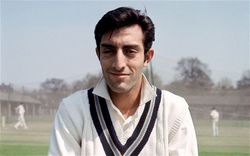
Pataudiweb_2619191bWhen the eighth Nawab of Pataudi died of a heart attack during a polo match at the age of 41, the Wisden obituary paid fulsome tribute. It noted Pataudi’s brilliant achievements for Oxford University’s First XI in the early Thirties, his superb century on his debut for England, and his dignified captaincy of the Indian team which toured England in 1946. It also recorded that he had left behind “an 11-year-old son who has shown promise of developing into a good cricketer”. That sentence soon looked like the understatement of the century. Dispatched to Winchester, the ninth Nawab (tutored by such outstanding schoolmasters as Harry Altham, “Podge” Brodhurst and Hubert Doggart) broke every batting record. By 1957, aged 16, he was playing first-class cricket for Sussex. By 1959 he broke the record for runs scored at Winchester in a single season. At Oxford the Nawab – known as “Tiger” to his friends – performed staggering feats that equalled even those of his remarkable father.

Then disaster struck. He lost his right eye in a car accident, and it was assumed that he could never play cricket at the top level again. Amazingly, he overcame this disability. Within six months he had made his Test debut for India against England, scoring a century in his third match. Asked at what point he first believed he could play Test cricket after his eye injury, he replied: “When I first saw the English bowling.” Three months later he was captain of India, and he went on to captain his country 40 times. Suresh Menon’s beautifully produced book, a collection of essays from family and friends, is a moving and much-needed tribute to a wonderful cricketer who died in 2011. It is a portrait of a man born out of his time, and is a pure delight.

More here.

Friday Poem

What the Old Woman Said

I will tell you this. There was a garden by the pump. Fallow land given me.
My father built flowerbeds. Offshoots of paths. Geometric patterns.
Cuttings. Bulbs from my mother. The texture of earth.
Stone. The smell of water. I could grow anything.

I will tell you this. There was a pond. Wrinkles of mud. Pups that were drowned there.
Dragged to the bank. Sacksful slit open. Way beyond saving.
Names that I gave them. Returned to the water. Each small splash.
Spirals expanding. My own face rippling.

I will tell you this. There was a heron. Constant. Returning.
Stilt-leg. Growing above water. Curtain of willows.
Everything still. A crowning of feathers.
Inflections of music. Nothing was moving.

I will tell you this. There were meadows. Light. Nectar from clover.
More flowers than I could name. Armfuls I carried.
Stems that I split. Smelling of summer.
Chains on my neck. Ankles. The bones of my wrists. Knowing nothing.

I will tell you this. There was a boy. Eyes like the sky.
Eyes like my father's. Children imagined. Rooms that were borrowed.
Rooms that were painted. Stories invented.
Histories. Futures. We knew everything.

I will tell you this. There was a man. Veins under skin.
Bones. Barely there. His stuttered breathing.
Green light on a screen. Intermittent beeping.
False light. False music. Someone was dying.

I will tell you this. I had seen his face on the shroud.
Running and bleeding. Wounds on his hands.
Pictures on glass. Coloured and leaded.
Faces on statues. A cross through his heart. Light always fading.

I will tell you this. There was a room. White. A white plate on the table.
A man at the table. Notes in his voice. A tune that I knew.
Beauty in the movements of his face. His arms. Frisson of wings.
Touch. Touch me. But he already had. I had forgotten everything.

I will tell you this. Some days are unbearable. Horizontal planes.
Moment to moment. Each long tick. I have been lonely.
Last night. A dream of a heron. The span of his wings.
Sounding through air. Listen. Listen. I am disappearing.

by Eileen Sheehan
from Song of the Midnight Fox
Doghouse Books, Tralee, 2004

Genome of largest viruses yet discovered hints at ‘fourth domain’ of life

From Nature:

VirusThe organism was initially called NLF, for “new life form”. Jean-Michel Claverie and Chantal Abergel, evolutionary biologists at Aix-Marseille University in France, found it in a water sample collected off the coast of Chile, where it seemed to be infecting and killing amoebae. Under a microscope, it appeared as a large, dark spot, about the size of a small bacterial cell. Later, after the researchers discovered a similar organism in a pond in Australia, they realized that both are viruses — the largest yet found. Each is around 1 micrometre long and 0.5 micrometres across, and their respective genomes top out at 1.9 million and 2.5 million bases — making the viruses larger than many bacteria and even some eukaryotic cells. But these viruses, described today in Science1, are more than mere record-breakers — they also hint at unknown parts of the tree of life. Just 7% of their genes match those in existing databases.

“What the hell is going on with the other genes?” asks Claverie. “This opens a Pandora’s box. What kinds of discoveries are going to come from studying the contents?” The researchers call these giants Pandoraviruses. “This is a major discovery that substantially expands the complexity of the giant viruses and confirms that viral diversity is still largely underexplored,” says Christelle Desnues, a virologist at the French National Centre for Scientific Research in Marseilles, who was not involved in the study.

More here.

Thursday, July 18, 2013

Dear Taliban leader, thank you for your letter to Malala Yousafzai

Mohammed Hanif in The Guardian:

Malala-Yousafzai-at-the-U-008Dear Adnan Rasheed,

I am writing to you in my personal capacity. This may not be the opinion of the people of Pakistan or the policy of the government, but I write to thank you in response to the generous letter you have written to Malala Yousafzai. Thanks for owning up that your comrades tried to kill her by shooting her in the head. Many of your well-wishers in Pakistan had been claiming the Taliban wouldn't attack a minor girl. They were of the opinion that Malala had shot herself in order to become a celebrity and get a UK visa. Women, as we know, will go to any lengths to get what they want. So thanks for saying that a 14-year-old girl was the Taliban's foe. And if she rolls out the old cliche that the pen is mightier than sword, she must face the sword and find it for herself.

Like you, there are others who are still not sure whether it was “Islamically correct or wrong”, or whether she deserved to be “killed or not”, but then you go on to suggest that we leave it to Allah.

There are a lot of people in Pakistan, some of them not even Muslims, who, when faced with difficult choices or everyday hardships, say let's leave it to Allah. Sometimes it's the only solace for the helpless. But most people don't say leave it to Allah after shooting a kid in the face. The whole point of leaving it to Allah is that He is a better judge than any human being, and there are matters that are beyond our comprehension – maybe even beyond your favourite writer Bertrand Russell's comprehension.

More here.

Khatyn

P10_Snyder_357253h

The Second World War was two separate wars for the Soviet Union, one to be entirely forgotten and one to be selectively remembered. Between 1939 and 1941, the Soviet Union fought as a German ally, invading or occupying Poland, Finland, Estonia, Latvia, Lithuania and Romania. During this period, the Soviets committed mass murder among populations that had not been Soviet citizens before the war, such as the Poles at Katyń, in 1940. Between 1941 and 1945, after Hitler betrayed Stalin and Germany invaded the Soviet Union, Germany committed mass murders on a still greater scale, such as those of Belarusians at Khatyn in 1943. Between 1945 and 1991, from the end of the war to the collapse of the Soviet Union, Soviet propaganda sought to displace the first war with the second, such that the Soviet Union and its citizens appeared unambiguously as victims and victors. German atrocities were supposed to annul Soviet atrocities. Khatyn was to supplant Katyń. In 1969, the opening of the memorial to the murdered Belarusians of Khatyn transformed the unfathomable suffering of Soviet citizens in Belarus into geopolitical propaganda. The chilling cynicism was required by the system: if all that mattered was the future of the socialist state, then the only past worth recalling was the one that served the present. The effect was to confuse minds about both the Soviet murder of Poles at Katyń and the German murder of Belarusians at Khatyn. As Soviet propagandists understood, few people can remember both.

more from Timothy Snyder at the TLS here.

after gezi park

Gezi3

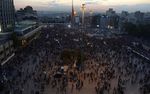
The dominant Western narrative of the events so far is serious, if formulaic, and well suited to a liberal appetite. The battle is against Erdoğan, a religious conservative, and his Justice and Development Party (AKP). Part of the antipathy towards Erdoğan is due to his assault on the urban middle-class lifestyle. Istanbul, for a Westerner, is quite a cheap city: not much more than a dollar for a kebab, half that to ferry across the Bosphorus, and under five dollars for an excellent, multi-course meal at a neighborhood restaurant. Alcohol is a different matter; because of taxes levied by the akp it costs roughly the same to have a drink in either Istanbul or Chicago. Under a new law, alcohol can’t be sold after 10 p.m. I can’t recall a time, though, when I made it to Taksim Square much before midnight. Crowds buy beer from small convenience shops and drink outside before going to bars. On warm nights students often stay outside, sitting underneath Galata Tower. Many of those small shops, I have to imagine, won’t survive under the new laws. People are afraid the new alcohol legislation is symptomatic of a wider push to impose a regime of conservative social values in a country regionally renowned for its secularism. This is the partial story the Western media has done an admirable job covering: the occupation as a reaction to an assault on liberal rights. And so the Western media has in a certain sense maintained a legitimacy in Turkey not afforded to the Turkish press: in a much-discussed incident on June 2nd, while cnn covered the brutal police reaction to the occupation, the satellite network cnn Türk broadcast a documentary on penguins. (Protestors have since taken to the street in penguin masks.)

more from William Harris at The Point here.

a new high

Image

A new “world’s tallest” building seems to crop up every year, with a frequency that calls to mind the home-run champs of the nineties, each attaining new, unthinkable heights with less and less meaning. Since 1998 alone, Petronas Towers 1 and 2, the Shanghai World Financial Center, and the Taipei 101 have all briefly claimed the title. But even among this craze of ascendance, the opening of Dubai’s reigning world’s-tallest, the Burj Khalifa in January 2010, did, in fact, seem meaningful. For one, the Burj is dramatically taller than the nearest world’s-tallest contender (if you stacked the Chrysler Building on top of the Empire State Building, the resulting behemoth would still not equal the Burj’s height). It is also beautiful. Many skyscrapers, while yearning quite obviously for style points, serve a clear utilitarian mission: to maximize office space in a crammed chunk of commercial real estate. This is true of the Empire State Building, the Willis (formerly Sears) Tower, and Shanghai’s World Financial Center. This is deeply untrue of the Burj, which houses even less commercial space than the much shorter World Financial Center and must fend for room not in the heart of midtown Manhattan or downtown Shanghai, but in the middle of a vast desert.

more from Jacob Rubin at n+1 here.

Being a White Person Who Talks about Race

6a00d83453bcda69e20192ac0f33bd970d-400wi

Justin Smith over at his website:

There is a deeply ingrained idea coming from what passes for the Left, and distracting the younger and more naive members of the Left, to their own detriment, according to which we can each only speak for our own group, and in relation to other groups the most we can hope to be is 'allies'.

A good example of this was in the reaction to the phrase that sprang up spontaneously as a call to rally against the verdict: I am Trayvon Martin. This was of course not new, but a recycling of a common reaction to galvanizing events, e.g., the banners around Paris that declared Nous sommes tous américains on September 12, 2001. (I say, with Whitman: I am everyone, I am each of you, at every moment.) By the next morning some bold white internauts had posted video clips of themselves declaring emphatically that they are not Trayvon Martin, that they could not possibly be Trayvon Martin, in view of the many privileges they have that keep them safe from Martin's fate. By nightfall of the same day white people were abuzz in social media about how other white people needed to stop trying to get attention by announcing how not-Trayvon Martin they were, that this was not about what they either were or were not.

Clearly, the white kids just don't know what to do with themselves.

A white South African friend of mine in social-media land, a journalist I admire very much who is also a former ANC activist, wrote recently about a limousine ride he took in New York with an unnamed American hip-hop star. The driver was a Palestinian socialist. All three got to talking about the fall of Apartheid, and apparently the American simply could not get it through his head that there were white, Jewish ANC members fighting against Apartheid right alongside Mandela. The Jewish South African and the Palestinian driver in turn were alarmed at the American rapper's black-and-white thinking (as it were): the ANC wasn't made up of black people plus their white 'allies'; it was made up of South Africans who hated Apartheid. Listen to the way Mandela talks about Joe Slovo, for example. Is there any hint that Mandela thinks the Lithuanian Jewish immigrant doesn't get, can't get, what's at stake in bringing down a racist totalitarian system? Of course not. That's not the way racism is defeated. And the distraction of identity politics, perpetuated by well-intentioned young people who take themselves to be on the Left, is, I'm sorry to say, helping to abet and sustain the racist system in the United States.

So what is my deal? Why did I decide to write about race?

How Spain fell in love with books again

From The Independent:

BooksIn 2003, Spain was one of three EU nations (together with Portugal and Greece) with the lowest average number of regular readers: just 47 per cent (compared to 70 per cent in Scandinavia and the UK) said they read at least one book a year. Now, though, that figure has risen to nearly 60 per cent. However, while libraries are increasingly at peril from spending cuts, as part of the embattled country’s attempts to solve its financial crisis, the desire to use these institutions among recession-hit Spaniards is booming. In Andalusia, where Granada is situated, there has been a 50.6 per cent rise in library borrowers since Spain’s economic troubles began in 2008. In some extreme cases, such as in Seville’s libraries, it is up by 150 per cent. “Above all there are more men,” says Roberta Megias Alcalde, a librarian working in a village near Granada, La Zubia. “Whereas before you’d mainly have housewives coming in for novels, now there’s a lot more unemployment and everybody in the household is borrowing books.” She and other librarians also say the recession has seen a large increase in the presence of the homeless in libraries, “many to read, others to get a wash and brush up”.

Her library, though, has faced dramatic cutbacks, with its staff reduced to just herself from January. As for Las Palomas, it was shut down by Granada town hall with no advance warning in August 2011, using the argument that a brand new library had been built on the far side of the Zaidín district. “Since then,” says Ms Calvo, “they’ve blamed the closure on the cuts too.” Those supporting Las Palomas point out that according to regional Spanish laws, with its 44,000 inhabitants the Zaidín should have two libraries, not one. They also say the new library, well over a mile away, is too far from the district’s centre, too student-orientated for their elderly clients and does not respond to the needs of one of the poorest areas of Granada, where for decades families have lived jammed together in a labyrinth of cramped flats and houses and narrow streets. “This library is small and can’t cope with all the district, it’s vast,” says Las Palomas volunteer Encarnación Gonzalez Martin, “and we supported the opening of the other one – but on condition this library wasn’t closed.”

More here.

Brain Exercise Benefits At Any Age

From Scientific American:

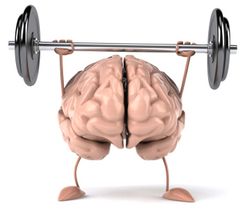
Brain-weights-isp-5A book a day may keep dementia away. Even if you read it as a kid. Because a study finds that exercising the brain, at any age, may preserve memory. The work appears online in the journal Neurology. [Robert S. Wilson et al, Life-span cognitive activity, neuropathologic burden, and cognitive aging]

Previous studies have shown that engaging in brain-building activities is associated with a delay in late-life cognitive decline. But why? Does flexing the old gray matter somehow buffer against age-related intellectual impairment? Or is cognitive loss simply a consequence of the aging brain’s physical decline? To find out, researchers questioned nearly 300 elderly individuals about their lifelong participation in intellectual pursuits—like reading books, writing letters and looking things up in the library. Then, every year, for an average of six years until they died, the subjects took tests to measure their memory and thinking. What the researchers found is that folks who worked their mental muscles, both early and late in life, remained more intellectually limber than those who didn’t—even when a post-mortem look at their brains revealed the telltale signs of physical decline.

More here.

Thursday Poem(s)

Three Small Poems
.

The birds have vanished down the sky
Now the last clouds drain away.

We sit together, the mountain and me,
until only the mountain remains.

by Li Po
translation Sam Hamill

Although the wind
blows terribly here,
the moonlight also leaks
between the roof planks
of this ruined house.


by Izumi Shikibu
translation Jane Hirshfield and Mariko Aratani


In the spring of joy,
when even the mud chuckles,
my soul runs rabid,
snaps at its own bleeding heels,
and barks: “What is happiness?”

by Phillip Appleman
from New and Selected Poems 1956-1996

What’s Wrong with Technological Fixes?

Morozov_solutionism_header

Terry Winograd interviews Evgeny Morozov in Boston Review:

In To Save Everything . . . I quote from Ken Alder'sfascinating book on engineering and the French revolution, where he argues that engineering is actually one of the most revolutionary professions, since engineers are so keen to “disrupt” and are always eager to look for the most efficient solution. Here is what he wrote:

Engineering operates on a simple, but radical assumption: that the present is nothing more than the raw material from which to construct a better future. In this process, no existing arrangement is to be considered sacrosanct, everything is to be examined in the light of present aspirations, and all practices refashioned according to the dictates of reason.

Now, there's much to like about this revolutionary spirit, at least in theory. I'm not the one to defend current practices because that's how we have always done things (even though I do realize why so many conservative commentators endorse my work; the best review I got is probably fromCommentary; I'm not yet sure how to react to such applause to my work). But this doesn't mean that everything should be up for grabs all the time—especially when efficiency is our guiding value. This to me seems dumb, not least because many of our political and social arrangements are implicitly based on the idea of inefficiency as the necessary cost of promoting some other values.

Take rent control or common carriers like taxis. Those two norms introduce a lot of inefficiency, as the proponents of AirBnB and Uber like to point out. But to say that these cool start-ups are good because they promote efficiency is not to say much—since efficiency may not be what we actually want.

Spike Lee’s Do the Right Thing as an American Epic

800-do-the-right-thing-blu-ray10sd-20130712-144133-large

Ashley Clark in Moving Image Source:

On paper, Spike Lee’s Do the Right Thing (1989)a modestly budgeted comedy-drama that took place entirely on a single Brooklyn block on the hottest day of the year—might seem a curious fit for the label of “American Epic.” Traditionally, when we think of what constitutes “epic” cinema, we might imagine inflated running times, mega budgets, sweeping vistas, and the leap-frogging of decades. And, if we’re talking specifically about Lee’s oeuvre, isn’t Malcolm X (1992), his 201-minute, $33 million, continent-hopping biopic of the life and times of the eponymous activist and orator, a safer bet for the label in such a retrospective?

If we cast away such generic preconceptions, it soon becomes apparent that the earlier film is the bolder choice. Within the strict temporal and location confines ofDo the Right Thing lies a work concerned with tackling the biggest of American themes—race relations, ambition, urban survival, economics, violence, and liberty—on a microcosmic scale. With its thrillingly unorthodox blend of Aristotelian unity and Brechtian artificiality, it locates the big in the small, and the national in the local. Over 120 swift minutes, it assails the viewer with a mixture of character drama, comedy, poetry, music, and then, in its riot finale precipitated by the cops’ murder of young Radio Raheem (Bill Nunn), dares to echo SNCC member H. Rap Brown’s darkly diagnostic pronouncement in the 1960s that “violence is as American as cherry pie.” (He meant “apple,” but he made his point.) Intended by Lee as an artistic response to the racial tensions in a New York City then under the Mayorship of Ed Koch, the film sparked huge controversy, prompting a host of misguided cultural critics to speculate that it would cause riots. It didn’t, of course, but it struck a nerve because it said more about the state of contemporary race relations, and with more complexity and brazen confidence, than any other film in the American cinema to date.

Misreading ‘Eichmann in Jerusalem’

03stone-hannah-blog427

Roger Berkowitz in the NYT's The Stone:

In his 2006 book “Becoming Eichmann,” the historian David Cesarani finds common ground with Arendt, writing, “as much as we may want Eichmann to be a psychotic individual and thus unlike us, he was not.” But Cesarani also uses the latest documents to argue what so many of Arendt’s detractors have expressed: “It is a myth that Eichmann unthinkingly followed orders, as Hannah Arendt argued.” Similarly, in her 2011 book “The Eichmann Trial,” the historian Deborah E. Lipstadt claims that Eichmann’s newly discovered memoir “reveals the degree to which Arendt was wrong about Eichmann. It is permeated with expressions of support for and full comprehension of Nazi ideology. He was no clerk.”

The problem with this conclusion is that Arendt never wrote that Eichmann simply followed orders. She never portrayed him, in Cesarani’s words, as a “dull-witted clerk or a robotic bureaucrat.” Indeed she rejected the idea that Eichmann was simply following orders. She emphasized that Eichmann took enormous pride in his initiative in deporting Jews and also in his willingness to disobey orders to do so, especially Himmler’s clear orders — offered in 1944 in the hope of leniency amid impending defeat — to “take good care of the Jews, act as their nursemaid.” In direct disobedience, Eichmann organized death marches of Hungarian Jews; as Arendt writes, he “sabotaged” Himmler’s orders. As the war ground to an end, as Arendt saw, Eichmann, against Himmler, remained loyal to Hitler’s idea of the Nazi movement and did “his best to make the Final Solution final.”

Finding Oneself in the Other

CohenGA

Ralf M. Bader reviews G. A. Cohen's Finding Oneself in the Other, in Notre Dame Philosophical Reviews (the preface can be found here):

Chapter 5 'Complete Bullshit' combines the well-known paper 'Deeper into Bullshit' with the previously unpublished piece 'Why one kind of Bullshit flourishes in France'. In the first part Cohen distinguishes two different kinds of bullshit. On the one hand, there is the kind of bullshit that was the focus of Frankfurt's seminal work and that is concerned with the intentions and mental states of the person making an utterance, consisting in a certain disregard of or indifference to truth. On the other, there is the kind that Cohen is primarily concerned: that which has to do with the meaning (or lack thereof) of what is asserted, and which consists in the unclarity of a statement that cannot be rendered clear. The second part of the paper then explains the prevalence of Cohen-bullshit in France in terms of factors such as the monolithic academic culture centred on Paris, a preoccupation with style, and the presence of a large lay audience interested in philosophy.

While Cohen does not provide an analysis of what it is for a statement to be unclarifiable, he puts forward a sufficient condition (which he attributes to Arthur Brown), namely “that adding or subtracting (if it has one) a negation sign from a text makes no difference to its level of plausibility: no force in a statement has been grasped if its putative grasper would react no differently to its negation from how he reacts to the original statement.”

Wednesday, July 17, 2013

Weird Life

Justin Hickey reviews David Toomey's book in Open Letters Monthly:

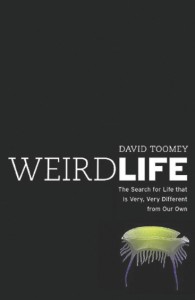
Weird-life-195x300The best place to start discussing English professor David Toomey’s speculative smorgasbord, Weird Life, is with the book’s cover. That beautiful, evocatively photographed green fellow certainly looks strange. Yet, those of us familiar with nature films might guess that it’s some form of zooplankton–the larval stage many sea creatures experience. Or perhaps it’s even smaller, originating in the microbial realm invisible to the naked eye. What we definitely won’t guess at first glance is that this creature is something that could live in the vast ammonia clouds of Jupiter.

And that is what Toomey means when he suggests searching for “life that is very, very different from our own.” He refers to life that doesn’t use water as a cellular medium, or is built from a different set of amino acids. Ultimately, he searches for life that does not share the ancestry common to everything else living on Earth, including frogs, strawberries, that orange mold in the shower, and you. Toomey, in his conversational prose, puts it this way:

The physical boundaries within which life is possible are unknown and undefined, but most biologists believe that they must exist, for the simple reason that there are temperatures and pressures under which the structures of organisms–cells, DNA, and proteins–will break down, no matter how well protected. In short, life must have ultimate limits.

My fist non-fiction encounter with such limits came from archeologist Charles Pellegrino’s epic and consilient book Ghosts of Vesuvius. In the opening chapter, he dives into a tangent about Jupiter’s moons Ganymede and Europa, and the fact that they’ve got volcanic zones and underground oceans that experience tides: “With so many throws of the hydrothermal dice, the probability of extraterrestrial life in our solar system (including, just maybe, complex creatures resembling fish and crabs and not just bacterial mats) rises so high as to approach a biochemical and statistical certainty.”

More here.