Adam’s Rib, van Gogh’s Ear, Einstein’s Brain

Florence Williams in The New York Times:
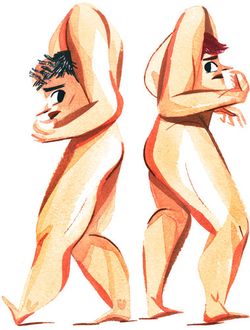
BodyFor a species so pleased with its own brain, we are surprisingly ambivalent about the rest of our body. We tend to admire other people’s bodies, especially if they’re Olympians or shirtless Russian presidents, but most of us are constantly seeking to improve our own by starving or stuffing, injecting, waxing, straightening, piercing, lifting and squeezing. In 2010 in the United States alone, we spent $10 billion on cosmetic surgery, and that’s not including Brazilian Blowouts.

We are also deeply uncomfortable with the bodily aspects of being human. Our brains light up in weird and remarkable ways at the sight of blood or fecal matter as if these weren’t, in fact, perfectly mundane. As Hugh Aldersey-Williams points out in “Anatomies: A Cultural History of the Human Body,” even television cartoons portray the skin as a rubbery and impregnable barrier. Weapons and falling objects dent it or merely bounce off it. You never see Elmer Fudd hemorrhaging through the jugular. Prudery doesn’t really explain our discomfort, but Aldersey-Williams hints at what might, namely fear. We fear the fragility, illness and suffering that are native to our corporeality. In “Anatomies,” he seeks to study the body full-on, frontally. He tells us straightaway that he knew nothing about anatomy when he started. A science writer and art critic, he’s interested in the intersection of science and culture. He thinks we should know our bodies, but he’s less interested in telling us how they work than in exploring how they’ve been perceived through art.

More here.
Saturday Poem

The Horse Fell off the Poem

The horse fell off the poem
and the Galilean women were wet
with butterflies and dew,
dancing above chrysanthemum

The two absent ones: you and I
you and I are the two absent ones
.
A pair of white doves
chatting on the branches of a holm oak
.
No love, but I love ancient
love poems that guard
the sick moon from smoke
.
I attack and retreat, like the violin in quatrains
I get far from my time when I am near
the topography of place
There is no margin in modern language left
to celebrate what we love,
because all that will be … was
.
The horse fell bloodied
with my poem
and I fell bloodied
with the horse’s blood …
.

Share
this text …?

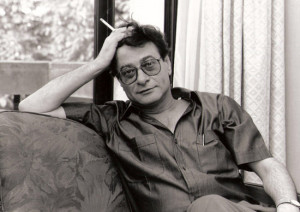
by Mahmoud Darwish
from The Butterfly’s Burden
Copper Canyon Press,
translated by Fady Joudah

Friday, August 9, 2013

Selected Works: On the 5th Anniversary of Mahmoud Darwish’s Death

This post is dedicated to our indefatigable and erudite and gifted and multi-talented poetry editor, Jim Culleny, whose birthday it happens to be today. Happy birthday, dear Jim!

From Arabic Literature:

Raja Shehadeh: Do you build on the work of others?

Darwish1Mahmoud Darwish: Yes. Very much so. I feel that no poem starts from nothing. Humanity has produced such a huge poetic output, much of it of a very high caliber. You are always building on the work of others. There is no blank page from which to start. All you can hope for is to find a small margin on which to write your signature.

RS: What sort of continuity is there in your own poetry?

MD: I have found that I have no poem that does not have its seeds in a poem that preceded it. Several critics have brought this to my attention. There is always a line or a word in an earlier work that I manage to take up and develop. My worry is always what’s next.

RS: Have you been writing prose?

MD: I like prose. I feel that sometimes prose can achieve a poetic state more poignant than poetry. But time is passing and my poetic project is still incomplete. There is competition in my personality between prose and poetry, but my bias is toward poetry.

Much more here. And here is a poem.

PELÉ: “MY FATHER AND MY MOTHER CLOSED THE MACHINE”

From The Talks:

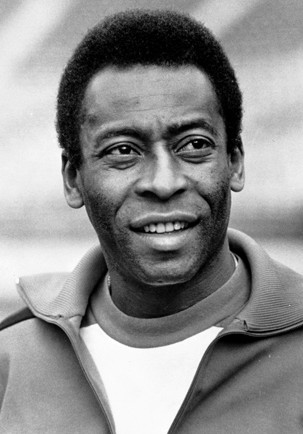
ScreenHunter_263 Aug. 09 19.06Pelé, when you are the best at something how hard is it not to get arrogant about it?

I used to tease the kids because I played better than them. But my father told me, “Don’t do this with the kids because you know how to play football; God gave you the gift to play football. You didn’t do anything. You have to respect people, because it is important to be a good man, a good person. From now on, you must be this example.”

I am not sure if it was only God who gave you that gift. Being at the top of the game must be hard work as well.

Of course the work is very, very important. That is exactly what my father meant: God gave you the gift to play football, but this is a present. You must respect people and work hard to be in shape. And I used to train very hard. When the others players went to the beach after training, I was there kicking the ball. Another thing I say is, if I am a good player, if I have a gift from God but I don’t have the physical condition to run on the field what am I going to do?

Did you ever feel like your abilities were super-human?

No, we are all human beings. I have to trust something that gives me power, I have to believe in something, but in my career I have a lot of moments I cannot explain with God. We went to Africa and we stopped the war in Africa because the people went to see Pelé play. They stopped the war. Just God can’t explain that. I don’t know why – it is impossible to know why – but they stopped the war. When we finished the game and we left they continue to fight.

More here.

An Interview with Charles Simic

1375697157191

Rachael Allen interviews Charles Simic in Granta:

Charles Simic’s first poems were published in 1959 when he was twenty-one; he is now one of the most prolific poets writing today. He has published over thirty collections of poetry, including the Pulitzer Prize-winning The World Doesn’t End, alongside fiction, essays and translations, having translated the works of French, Serbian, Croatian, Macedonian and Slovenian poets. His poem ‘Eternities’ appears in Granta 124: Travel. Here he answers questions for online editor Rachael Allen about poetic movements, simple dishes and tragicomedy.

RA: Your poem in the magazine, ‘Eternities’, is a panoramic vision that travels across landscapes and time. It is a vast poem for its size. How do you balance the large thematic concerns – generational and geographical scope – with its eight-line constraint?

CS: Of all the things ever said about poetry, the axiom that less is more has made the biggest and the most lasting impression on me. I have written many short poems in my life, except ‘written’ is not the right word to describe how they came into existence. Since it’s not possible to sit down and write an eight-line poem that’ll be vast for its size, these poems are assembled over a long period of time from words and images floating in my head. A brief poem intended to capture the imagination of the reader requires endless tinkering to get all its parts right.

Helen Vendler described you as a ‘lover of food who has been instructed in starvation’, and you’ve called yourself, when it comes to writing, a ‘monk in a whorehouse’. It is as though you revel in the restriction of working with as few words as possible. What do you find is gained from this restriction, and how do you know when to stop?

It’s both a matter of temperament and aesthetics. In the kitchen, I like simple dishes cooked to perfection rather than elaborate culinary creations. In music, too, the fewer the instruments there are, the better. Someone practising a piece of Bach’s on a cello as one walks by under their window, or a late-night bluesy piano in a bar with hardly a customer left, is bliss to me.

Indo-Aryans, Dravidians, and Waves of Admixture

Rolloff-dravidian-indoeuropean

Razib Khan in Gene Expression:

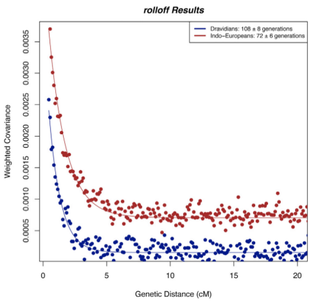
There is a new paper out of the Reich lab, Genetic Evidence for Recent Population Mixture in India, which follows up on their seminal 2009 work, Reconstructing Indian Population History. I don’t have time right now to do justice to it, but as noted this morning in thepress, it is “carefully and cautiously crafted.” Since I am not associated with the study, I do not have to be cautious and careful, so I will be frank in terms of what I think these results imply (note that confidence on many assertions below are modest). Though less crazy in a bald-faced sense than another recent result which came out of the Reich lab, this paper is arguably more explosive because of its historical and social valence in the Indian subcontinent. There has been a trend over the past few years of scholars in the humanities engaging in deconstruction and intellectual archaeology which overturns old historical orthodoxies, understandings, and leaves the historiography of a particular topic of study in a chaotic mess. From where I stand the Reich lab and its confederates are doing the same, but instead of attacking the past with cunning verbal sophistry (I’m looking at you postcolonial“theorists”), they are taking a sledge-hammer of statistical genetics and ripping apart paradigms woven together by innumerable threads. I am not sure that they even understand the depths of the havoc they’re going to unleash, but all the argumentation in the world will not stand up to science in the end, we know that.

Since the paper is not open access, let me give you the abstract first:

Most Indian groups descend from a mixture of two genetically divergent populations: Ancestral North Indians (ANI) related to Central Asians, Middle Easterners, Caucasians, and Europeans; and Ancestral South Indians (ASI) not closely related to groups outside the subcontinent. The date of mixture is unknown but has implications for understanding Indian history. We report genome-wide data from 73 groups from the Indian subcontinent and analyze linkage disequilibrium to estimate ANI-ASI mixture dates ranging from about 1,900 to 4,200 years ago. In a subset of groups, 100% of the mixture is consistent with having occurred during this period. These results show that India experienced a demographic transformation several thousand years ago, from a region in which major population mixture was common to one in which mixture even between closely related groups became rare because of a shift to endogamy.

I want to highlight one aspect which is not in the abstract: the closest population to the “Ancestral North Indians”, those who contributed the West Eurasian component to modern Indian ancestry, seem to be Georgians and other Caucasians.Since Reconstructing Indian Population History many have suspected this. I want to highlight in particular two genomebloggers, Dienekes and Zack Ajmal, who’ve prefigured that particular result. But wait, there’s more!

inventing the egghead

Einstein4

Is America anti-intellectual? The jury is still out. One could make equally plausible cases for our country as a hotbed of hostility to organized intelligence and as a sort of paradise for the cleverest, a place that elevates intellectual sophistication (especially when it has economic or technological applications) above basic moral decency. We oscillate wildly between demonizing our intellectuals and deifying them; they appear to us, in turn, as nuisances, threats, and saviors. We cut their funding and then study how their brains function. We trust them with our economy, our climate, our media and our institutions, then rage against them for their failures—and then trust them all over again. Of course, much depends on what is meant by “intellectual.” The term, which originated in France and entered the English language around the time of the Dreyfus Affair, is notoriously vague and unstable. Though in its most neutral sense it describes only a tendency toward speculative thought, it is very quickly made into a social category with determinate characteristics. Put a novelist, a philosopher, a physicist, a political analyst and a computer programmer in a room together and they’re likely to discover as many differences as similarities—provided they can understand each other at all—but all can be identified (for ease of condemnation, if nothing else) under this single heading.

more from Evan Kindley at The Point here.

Veritatis Splendor

VeritatisSplendor

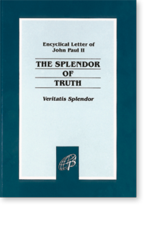
We live at a time when consequentialism governs every aspect of human existence, tyrannically claiming authority over everything. Not just those matters where efficiency and results have a proper place, but over the humane realities as well. Sex. Family. Marriage. Health. Property. Community. Faith. Education. All must bow before the calculators and weighers of worth, all must kneel before “objectivity,” however ignorant they are of genuine value, of the first and permanent things, of that which matters most, of those things which are intrinsically good or evil. Their ignorance is matched only by their appetite to control, and they are destructive to their core. In addition to the content of the teaching, Veritatis Splendor reveals valuable truths for us in how it teaches, in the manner it proclaims. Keeping with his earlier work, John Paul II places himself firmly within the limits of tradition, turning ad fontes, to the sources of faith, both in the Scriptural revelation of Christ and to the ongoing tradition which remain ever ancient, ever new. But he is unafraid to rise to the level of his time, borrowing heavily not only from the patristic and medieval sources but also, although not uncritically, from modern philosophy, particularly phenomenology.

more from R.J. Snell at Front Porch Republic here.

kerouac in florida

KerouacTypinglarge

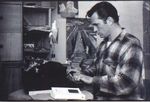
What arises and lingers, in the end, is not only Kerouac’s gradual self-realization of his own cracking up, but the greater conflict of the highly sensitive, creative, sometimes manic introvert who yearns for solitude and must then battle loneliness, versus the insatiable thirst for kinship with fellow artists, and above all, recognition. By spring of ’58, he has inserted himself back in the Greenwich Village scene, but his romance with Joyce Johnson falters soon after—the beginning of his infamous downward spiral. Yet Kerouac’s Florida legacy remains strong. The bungalow in Orlando where he spent so many contented working days was left forgotten until the mid-1990s, when Bob Kealing, a reporter and freelance journalist, heard about Kerouac’s rumored stay and got the address from Kerouac’s relatives. A group of locals raised funds to purchase and remodel the property. Today, the quaint bungalow at 1418 Clouser Avenue hosts four writers a year and is known as the Jack Kerouac Writers-in-Residence Project. In 2012, the house was listed on the National Registry of Historic Places. Kerouac’s typewritten scroll of The Dharma Bums is on display nearby in the Olin Library at Rollins College.

more from Vanessa Blakeslee at Paris Review here.

Gloria Steinem, a Woman Like No Other

President Obama awarded the Medal of Freedom to Gloria Steinem yesterday. The following article from The New York Times was published last year but captures some aspects of Ms. Steinem's great contributions:

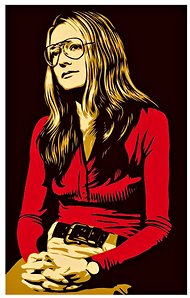
GloriaIN 1970, when the Senate was first debating passage of the Equal Rights Amendment, a featured speaker was Gloria Steinem, a 36-year-old magazine writer with a growing reputation as a forceful advocate of women’s issues. “During years of working for a living, I have experienced much of the legal and social discrimination reserved for women in this country,” Ms. Steinem told the almost exclusively male gathering. “I have been refused service in public restaurants, ordered out of public gathering places and turned away from apartment rentals. All for the clearly stated, sole reason that I am a woman.” Over the last 40 years, Gloria Steinem has almost always been at the other end of the phone when some member of the news media has sought comment about a pressing issue involving women’s rights, whether it was Roe v. Wade (“If men could get pregnant, abortion would be a sacrament,” said Florynce Kennedy, a lawyer for Ms. Steinem in the 1970s), the tax problems that all but doomed the chances of the first woman to run for vice president on a major ticket (“What has the women’s movement learned from Geraldine Ferraro’s candidacy for vice president? Never get married.”) and even the presidency of George W. Bush (“There has never been an administration that is more hostile to women’s equality, to reproductive freedom as a fundamental human right”).

…The past year has been a time of reflection about Ms. Steinem’s legacy: she was the subject of a widely viewed HBO documentary, “In Her Own Words,” and the recipient of Glamour magazine’s lifetime achievement award. In the magazine, describing the influence of Ms. Steinem, Christine Stansell, a University of Chicago history professor, said she “was to the women’s movement what Martin Luther King Jr. was to civil rights: the galvanizer.”

More here.

Visual neurons mapped in action

From Nature:

Scientists have mapped the dense interconnections and neuronal activity of mouse and fruitfly visual networks. The research teams, whose work is published in three separate studies today in Nature1–3, also created three-dimensional (3D) reconstructions, shown in the video above. All three studies interrogate parts of the central nervous system located in the eyes. In one, Moritz Helmstaedter, a neurobiologist at the Max Planck Institute of Neurobiology in Martinsried, Germany, and his collaborators created a complete 3D map of a 950-cell section of a mouse retina, including the interconnections among those neuronal cells. To do so, the team tapped into the help of more than 200 students, who collectively spent more than 20,000 hours processing the images1.

More here.

Where it Not

Where it Not

No one paid attention to details.
The day became clear in bits, there was no time
for continuity.

Someone disappeared at the corner.
A wind blew, it was
cloudy. The sun emerged
and hid.

Nothing hurts as it once did.
Were it not so short a time it could have been fun.
Boulevard Sébastopol was snarled
by traffic, but the bus inched
forward.
It was clear that I was late.
My past and future shone to the same degree.

.
by Israel Pincus
from Poetry International Web

Thursday, August 8, 2013

Why Freud Still Matters, When He Was Wrong About Almost Everything

Ku-bigpic

George Dvorksy in io9:

[T]he 20th century has often been called Freud’s century. His books landed with the subtlety of hand grenades, featuring such seminal titles as The Interpretation of Dreams (1900), The Psychopathology of Everyday Life (1901), and his Introductory Lectures on Psycho-Analysis (1915-1916).

Freud’s legacy has transcended science, with his ideas permeating deep into Western culture. Rarely does a day go by where we don’t find ourselves uttering a term drawn from his work: Mommy and daddy issues. Arrested development. Death wishes. Freudian slips. Phallic symbols. Anal retentiveness. Defense mechanisms. Cathartic release. And on and on and on.

As psychologist and Freud critic John Kihlstrom himself admits, “More than Einstein or Watson and Crick, more than Hitler or Lenin, Roosevelt or Kennedy, more than Picasso, Eliot, or Stravinsky, more than the Beatles or Bob Dylan, Freud's influence on modern culture has been profound and long-lasting.”

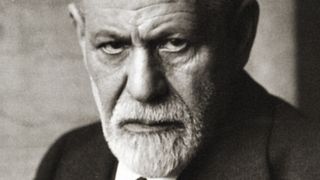
But his legacy is a shaky one. Freud has, for the most part, fallen completely out of favor in academia. Virtually no institution in any discipline would dare use him as a credible source. In 1996, Psychological Science reached the conclusion that “[T]here is literally nothing to be said, scientifically or therapeutically, to the advantage of the entire Freudian system or any of its component dogmas.” As a research paradigm, it’s pretty much dead.

The Crispy and the Crunchy

Justin E. H. Smith in his blog:

6a00d83453bcda69e20192ac54361f970d-350wiIn his 1957 structuralist masterpiece, Le croustillant et le gluant, the French anthropologist Jean-Robert Klein argued that the fundamental binary distinction through which the savage mind filters the world is that between the crispy and the chewy. The first and primary domain of application of these concepts is of course the alimentary one, but in primitive cultures, he argued, the crispy and the chewy are often projected from there into the cosmos as a whole. In his own fieldwork among the Yanomamö of Brazil, he showed in more than a few elaborate diagrams that, for them, men, rubber trees, the color green, the East, vipers, and butterflies are held to be ‘crispy’, while women, black, jaguars, the North, the stars, and ground foliage are in turn ‘chewy’.

Beginning in the late 1970s, Klein’s former student, Françoise Pombo, argued in a series of influential publications that her mentor had failed to notice something of great importance. What he was actually in the process of discovering, she claimed, was a tripartite schema, in which the crunchy [le croquant] was to be sharply distinguished from both the crispy and the chewy.

More here.

Arguing Over Jesus

Christ_money_jpg_470x844_q85

In the week since Reza Aslan’s Fox News webcast interview, his book, Zealot: The Life and Times of Jesus of Nazareth has become the number one best selling title on Amazon and reached the top of the New York Times Best Seller list. In Zealot, Aslan argues that Jesus of Nazareth would have borne little resemblance to the Jesus of the Gospels. Jesus of Nazareth, was, in Aslan’s view, a political incendiary, a dissident who railed against Roman rule and actively encouraged sedition. The early church, he suggests, subsequently “transformed Jesus from a revolutionary zealot to a Romanized demigod.” For all of the controversy surrounding Aslan and his book, the work follows in a long tradition of study of the historical figure of Jesus—a subject that has provoked vigorous debate in The New York Review’s pages over the decades.

more from Christopher Carroll at the NYRB here.

the lowry debate

P17_Whitford_361779h

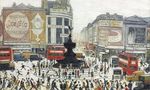
So what’s all the fuss about now? Accusations persist that the Tate, by wilfully ignoring Lowry for years, was being snobbish and overbearing, but the Tate must now be sensitive to an art public different from the one to which it formerly catered, and it has reconsidered. This might explain the appointment of a couple of outside curators, who admit that they know little about their subject. “We are not specialists in Lowry”, writes Clark in the catalogue, “or British twentieth-century painting.” But they have glittering American academic credentials (Harvard and Berkeley) and T. J. Clark is a well-known Marxist art historian, the author of The Absolute Bourgeois: Artists and politics in France 1848–1851 and Image of the People: Gustave Courbet and the 1848 Revolution (both 1973). Clark has influenced several generations of students in putting theory before practice, social history before connoisseurship. The exhibition’s title, Lowry and the Painting of Modern Life, is borrowed from another of Clark’s books, The Painting of Modern Life: Paris in the art of Manet and his followers (1999). The key phrase comes from Baudelaire who, in the Salon of 1845, first demanded that artists address their own experience and their own times. Baudelaire’s ideal, it turned out, was a jobbing illustrator for the Illustrated London News called Constantin Guys who was an “observer, philosopher, flâneur” and “the painter of the passing moment”. It takes some effort to imagine Lowry the flâneur moving from doorstep to doorstep collecting rents, and even more to grasp how his work “demonstrates important parallels with late nineteenth- and early twentieth-century French impressionist and realist painting”.

more from Frank Whitford at the TLS here.

notes from Uzbekistan

1375953132992

They come to us at Independence Square, shadow-like and all whispers. They have selected a leader, perhaps the one with the best English. Now she walks up to me, without any greeting, without introduction, the group of young girls and boys – no older than early teens – standing back a few steps behind her. ‘Can I take a photo of you?’ the messenger girl says in a small, careful voice, a smile wide on her face. It’s not the first time that I’ve been asked to have my picture taken in Uzbekistan and at this point it is starting to feel a little like objectification, as if I am a spectacle of sorts, and in a way I am, because, as the guides explain to me, a black person is a rare sight in Uzbekistan. I am not in the mood, but I try to be philosophical about it. Across from where we stand, a couple is sitting on a grey-white stone bench.

more from Chinelo Okparanta at Granta here.

Childhood Memories by Giuseppe Tomasi di Lampedusa

From The Telegraph:

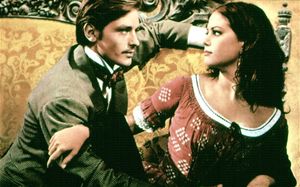
Leopard_2635668bI had never read the classic modern Italian novel Il Gattopardo (The Leopard, 1958) until I was entrusted with this short collection containing almost everything else by its author Giuseppe Tomasi di Lampedusa. I had seen Luchino Visconti’s film version from 1963 and been dazzled by the triple whammy of Claudia Cardinale, Alain Delon and Burt Lancaster, a trio that could make anyone with a pulse question their sexual orientation several times during each scene. Although Visconti is the father of Italian neo-realism, The Leopard is a stately costume drama and, misled by the film’s opulence, I had imagined the original novel would be a historical doorstopper.

I was surprised to discover a beautifully poised piece of streamlined minimalism. The central character is a Sicilian prince, known as Il Gattopardo after the insignia in his family’s heraldic crest. This beast is actually a slender, long-legged wildcat rather than a leopard, which hints at the Prince’s virility and the African or Arab exoticism of all Sicilians. Yet the name also taunts him, given his lumbering Germanic looks, courtesy of an ancestor’s marriage into the European aristocracy (Burt Lancaster was well cast in the film). The story begins on the eve of Italian unification and turns on the Prince’s acceptance that he cannot fight for his privileges, though he is incapable of adjusting or preparing his family for the future. The reader sees ahead of time how history will set the characters on different trajectories, and the book trembles in one’s hands as one reads. Quietly, yet inexorably, the Prince’s world crumbles to dust, like the dubious religious relics that are thrown on to a rubbish heap in the final devastating chapter. Finishing the novel in a single, day-long sitting, I wondered how a modern author could capture a decaying world so sympathetically yet so coolly.

More here.

Thursday Poem

Simone Weil: The Year of the Factory Work (1934-1935)

A glass of red wine trembles on the table,
Untouched, and lamplight falls across her shoulders.
.
She looks down at the cabbage on her plate,
She stares at the broken bread. Proposition:
.
The irreducible slavery of workers. “To work
In order to eat, to eat in order to work.”
.
She thinks of the punchclock in her chest,
Of night deepening in the bindweed and crabgrass,
.
In the vapors and atoms, in the factory
Where a steel vise presses against her temples
.
Ten hours per day. She doesn’t eat.
She doesn’t sleep. She almost doesn’t think
.
Now that she has brushed against the bruised
Arm of oblivion and tasted the blood, now
.
That the furnace has labelled her skin
And branded her forehead like a Roman slave’s.
.
Surely God comes to the clumsy and inefficient,
To welders in dark spectacles, and unskilled

Read more »

The History and Psychology of Clowns Being Scary

From Smithsonian:

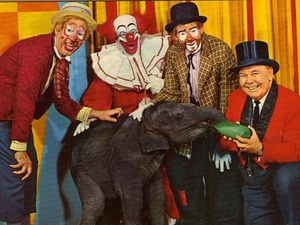
Scary-Clown-Bozo-center-631There’s a word— albeit one not recognized by the Oxford English Dictionary or any psychology manual— for the excessive fear of clowns: Coulrophobia.

Not a lot of people actually suffer from a debilitating phobia of clowns; a lot more people, however, just don’t like them. Do a Google search for “I hate clowns” and the first hit is ihateclowns.com, a forum for clown-haters that also offers vanity @ihateclowns.com emails. One “I Hate Clowns” Facebook page has just under 480,000 likes. Some circuses have held workshops to help visitors get over their fear of clowns by letting them watch performers transform into their clown persona. In Sarasota, Florida, in 2006, communal loathing for clowns took a criminal turn when dozens of fiberglass clown statues—part of a public art exhibition called “Clowning Around Town” and a nod to the city’s history as a winter haven for traveling circuses—were defaced, their limbs broken, heads lopped off, spray-painted; two were abducted and we can only guess at their sad fates. Even the people who are supposed to like clowns—children—supposedly don’t. In 2008, a widely reported University of Sheffield, England, survey of 250 children between the ages of four and 16 found that most of the children disliked and even feared images of clowns. The BBC’s report on the study featured a child psychologist who broadly declared, “Very few children like clowns. They are unfamiliar and come from a different era. They don't look funny, they just look odd.” But most clowns aren’t trying to be odd. They’re trying to be silly and sweet, fun personified. So the question is, when did the clown, supposedly a jolly figure of innocuous, kid-friendly entertainment, become so weighed down by fear and sadness? When did clowns become so dark?

Maybe they always have been.

More here.