Ant Farm

Ants-and-cocoa

Ed Yong in Aeon Magazine:

A few degrees north of the equator, in the hot, humid rainforests of Ghana, two groups of farmers are vying for dominance over the world’s most productive chocolate-growing region. Chocolate is made from cocoa beans found in the large, rugby-ball-shaped pods of cocoa trees. People have been planting these trees in Ghana since the late 19th century and the crop is a mainstay of the country’s economy. But the trees have recently proved an inviting target for a wily group of rival agriculturalists, whose practices threaten the long-term survival of cocoa in Ghana. The trouble is, these competitors aren’t humans. They’re ants.

Ants have been farming for millions of years longer than humans. These particular ants herd mealybugs — small, sap-sucking insects that look like woodlice dipped in flour. The ants shepherd and protect the mealybugs so they can ‘milk’ the sugary nutritious fluids in their waste. The bugs used to drink primarily from local rainforest trees, but when humans started clearing the forest to make way for cocoa, the ants adapted, by driving their livestock into the fresh cocoa pastures.

This strategy shift entangled the cocoa trees in a web of pests and pestilence. When mealybugs drink from trees, they inject them with a pathogen called cacao swollen shoot virus (CSSV). In local rainforest trees, the effects of CSSV are mild, but cocoa — a newcomer to these forests — hasn’t had a chance to evolve countermeasures. As a result, the virus pummels the trees, swelling their shoots and roots well beyond their usual size while draining the colour from their leaves. Before long, often only a few years, the trees die.


Science Is Not Your Enemy

Article_inset_pinker_2

Steven Pinker to “neglected novelists, embattled professors, and tenure-less historians,” in The New Republic:

One would think that writers in the humanities would be delighted and energized by the efflorescence of new ideas from the sciences. But one would be wrong. Though everyone endorses science when it can cure disease, monitor the environment, or bash political opponents, the intrusion of science into the territories of the humanities has been deeply resented. Just as reviled is the application of scientific reasoning to religion; many writers without a trace of a belief in God maintain that there is something unseemly about scientists weighing in on the biggest questions. In the major journals of opinion, scientific carpetbaggers are regularly accused of determinism, reductionism, essentialism, positivism, and worst of all, something called “scientism.” The past couple years have seen four denunciations of scientism in this magazine alone, together with attacks in Bookforum, The Claremont Review of Books, The Huffington Post, The Nation, National Review Online, The New Atlantis, The New York Times, and Standpoint.

The eclectic politics of these publications reflects the bipartisan nature of the resentment. This passage, from a 2011 review in The Nation of three books by Sam Harris by the historian Jackson Lears, makes the standard case for the prosecution by the left:

Positivist assumptions provided the epistemological foundations for Social Darwinism and pop-evolutionary notions of progress, as well as for scientific racism and imperialism. These tendencies coalesced in eugenics, the doctrine that human well-being could be improved and eventually perfected through the selective breeding of the “fit” and the sterilization or elimination of the “unfit.” … Every schoolkid knows about what happened next: the catastrophic twentieth century. Two world wars, the systematic slaughter of innocents on an unprecedented scale, the proliferation of unimaginable destructive weapons, brushfire wars on the periphery of empire—all these events involved, in various degrees, the application of sceintific research to advanced technology.

The case from the right, captured in this 2007 speech from Leon Kass, George W. Bush’s bioethics adviser, is just as measured:

Scientific ideas and discoveries about living nature and man, perfectly welcome and harmless in themselves, are being enlisted to do battle against our traditional religious and moral teachings, and even our self-understanding as creatures with freedom and dignity. A quasi-religious faith has sprung up among us—let me call it “soul-less scientism”—which believes that our new biology, eliminating all mystery, can give a complete account of human life, giving purely scientific explanations of human thought, love, creativity, moral judgment, and even why we believe in God. … Make no mistake. The stakes in this contest are high: at issue are the moral and spiritual health of our nation, the continued vitality of science, and our own self-understanding as human beings and as children of the West.

These are zealous prosecutors indeed. But their cases are weak.

Wednesday, August 7, 2013

How Much Is a Life Worth?

Ken Feinberg, the man tasked with compensating victims after a devastating tragedy, knows the answer—and it’s rarely the same.

James Oliphant in the National Journal:

DownloadTo Ken Feinberg, if you lose both your legs, you’re as good as dead.

Here, in the world of the living, inspirational media stories after the Boston Marathon bombings featured survivors who persevered, grittily relearning to walk atop state-of-the-art prosthetic limbs, fighting for normalcy with each new step. But in Feinberg’s world, it made no difference whether a person could still live a rewarding life or never left the race’s finish line. That didn’t enter the equation—his equation. His choice. His rules. Whether you died at the scene or you lost both your legs, you received the same amount of money—$2.2 million—from the victim fund established in the wake of the attack. If you lost one limb, you received considerably less. If you were hospitalized but kept your limbs, then still less.

Feinberg is the nearly ubiquitous expert who has been called in to divvy up funds for the fallen and the injured in a stomach-churning sequence of tragedies, from the Sept. 11 attacks to the Gulf of Mexico oil spill, from the Virginia Tech shootings to the Boston bombings. He’s Death’s accountant. When the stands collapsed at the Indiana State Fair in 2011, killing seven, they called Ken Feinberg. When a gunman murdered 27 children at Sandy Hook Elementary in Connecticut, they called Ken Feinberg. His is the grimmest of specialties.

More here.

Meet the Animats: How simple video-game creatures evolved a memory

Carl Zimmer in his excellent blog, The Loom:

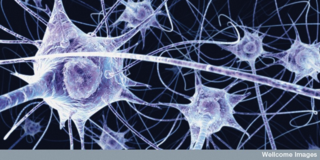
Neurons-wellcomeThese simple creatures were devised by a group of scientists to study life’s complexity. There are lots of ways to define complexity, but the one that they were interested in exploring has to do with how organisms behave.

Every creature from a microbe to a mountain lion can respond to its surroundings. E. coli has sensors on its surface to detect certain molecules, and it processes those signals to make very simple decisions about how it will move. It travels in a straight line by spinning long twisted tails counterclockwise. If it switches to clockwise, the tails unravel and the microbe tumbles.

A worm with a few hundred neurons can take in a lot more information from its senses, and can respond with more behaviors. And we, with a hundred billion or so neurons in our brains have a wider range of responses to our world.

A group of scientists from Caltech, the University of Wisconsin, Michigan State University, and the Allen Brain Institute wanted to better understand how this complexity changes as life evolves. Does life get more complex as it adapts to its environment? Is more complex always better? Or–judging from the abundance of E. coli and its fellow microbes on the planet today–is complexity overrated?

More here.

Meaning Is Healthier Than Happiness

Emily Esfahani Smith in The Atlantic:

HappybuddahmainFor at least the last decade, the happiness craze has been building. In the last three months alone, over 1,000 books on happiness were released on Amazon, including Happy Money, Happy-People-Pills For All, and, for those just starting out, Happiness for Beginners.

One of the consistent claims of books like these is that happiness is associated with all sorts of good life outcomes, including — most promisingly — good health. Many studies have noted the connection between a happy mind and a healthy body — the happier you are, the better health outcomes we seem to have. In a meta-analysis (overview) of 150 studies on this topic, researchers put it like this: “Inductions of well-being lead to healthy functioning, and inductions of ill-being lead to compromised health.”

But a new study, just published in the Proceedings of the National Academy of Sciences (PNAS) challenges the rosy picture. Happiness may not be as good for the body as researchers thought. It might even be bad.

More here.

D H Lawrence: A Letter from Germany

From The New Statesman:

This letter by D H Lawrence, written in 1928 and published in the NS of 13 October 1934, is one of the pieces in “The New Statesman Century”, our anthology of the best and boldest writing from the first 100 years of the NS, with contributions from Virginia Woolf, George Orwell, Christopher Hitchens and Bertrand Russell. This 250-page special issue is out now, available in selective WHSmiths and online at: newstatesman.com/century

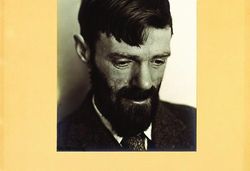
Archive_issue_4_dhlawrenceAnd it all looks as if the years were wheeling swiftly backwards, no more onwards. Like a spring that is broken and whirls swiftly back, so time seems to be whirling with mysterious swiftness to a sort of death. Whirling to the ghost of the old Middle Ages of Germany, then to the Roman days, then to the days of the silent forest and the dangerous, lurking barbarians.
Something about the Germanic races is unalterable. White-skinned, elemental, and dangerous. Our civilisation has come from the fusion of the dark-eyed with the blue. The meeting and mixing and mingling of the two races has been the joy of our ages. And the Celt has been there, alien, but necessary as some chemical reagent to the fusion. So the civilisation of Europe rose up. So these cathedrals and these thoughts. But now the Celt is the disintegrating agent. And the Latin and southern races are falling out of association with the northern races, the northern Germanic impulse is recoiling towards Tartary, the destructive vortex of Tartary. It is a fate; nobody now can alter it. It is a fate. The very blood changes. Within the last three years, the very constituency of the blood has changed, in European veins. But particularly in Germanic veins. At the same time, we have brought it about ourselves—by a Ruhr occupation, by an English nullity, and by a German false will. We have done it ourselves. But apparently it was not to be helped.
More here.

Wednesday Poem

Table in the Wilderness

I draw a window
and a man sitting inside it.

I draw a bird in flight above the lintel.

That's my picture of thinking.

If I put a woman there instead
of the man, it's a picture of speaking.

If I draw a second bird
in the woman's lap, it's ministering.

A third flying below her feet.
Now it's singing.

Or erase the birds,
make ivy branching
around the woman's ankles, clinging
to her knees, and it becomes remembering.

You'll have to find your own
pictures, whoever you are,
whatever your need.
.

by Li-young-Lee
from Book of my Nights
BOA Editions, 2001

Elysium

From KurzweilAI:

ElysiumThe science-fiction movie Elysium opens in theaters and IMAX in the U.S. on Friday, August 9. The ostensible bionics (exoskeleton technology) and special effects for this film are mesmerizing. The folk who live on the space station Elysium appear to have eliminated poverty, war, illness (including cancer), and possibly death. The unfortunate folk who remain on Earth have all of these problems in spades and worse. Recall the Los Angeles dystopia in the 1982 Ridley Scott film Blade Runner with Harrison Ford, in which the wealthy work for the Tyrell Corporation and live the good life.

In the year 2154 (well past our presumed “Singularity”), the very-wealthy and privileged classes live on Elysium, a toroidal high-tech space station governed by President Patel (Faran Tahir), in a utopian setting that includes access to private medical machines that offer instant cures, while everyone else lives below on an overpopulated, disease-ridden, ruined Earth. Los Angeles has become a third-world slum. Those who maintain Elysium will stop at nothing to enforce anti-immigration laws and preserve their citizens’ lifestyle, even destroying ships that attempt to arrive there.

More here.

Political Islam’s Loss of Democratic Legitimacy

2920cce644cfaeaf84c24cf31a3f637f

Timur Kuran in Project Syndicate:

This year, Islamist politics has faced massive setbacks in two major predominantly Muslim countries: Egypt and Turkey. But it is too soon to write political Islam off as a capable participant – even a leading force – in a pluralist democracy.

Just one year after the Muslim Brotherhood’s Mohamed Morsi became Egypt’s first elected president, millions of Egyptians took to the street, triggering the military coup that ousted him. Morsi’s political incompetence and lack of vision in the face of economic collapse would have been enough to diminish support for his government. But his rejection of pluralism and pursuit of an Islamic dictatorship, exemplified by his efforts to centralize power in the hands of the Brothers and place himself beyond the review of Egypt’s judiciary, proved to be his undoing.

Similarly, Turkey’s Prime Minister Recep Tayyip Erdoğan, of the Justice and Development Party (AKP), has taken to governing in a way that is unraveling a decade of progress, one marked by economic dynamism, rapid growth, and the subordination of the armed forces to civilian control. The Erdoğan government’s recent brutal crackdown on popular protests against planned construction in Istanbul’s Taksim Gezi Park made Turkey look like a one-party dictatorship. To make things worse, Erdoğan then spent weeks subverting pluralism through polarizing speeches that stigmatized Turks who do not share his social conservatism or subscribe to his particular interpretation of Islam.

Given that Egypt and Turkey are two of the three most populous countries of Islam’s historic core (the third is theocratic Iran), one might infer that their ongoing difficulties have destroyed any prospect of reconciling political Islam with pluralist democracy. But the two countries’ situations include fundamental differences, as do political Islam’s prospects for renewal.

A Much-Maligned Engine of Innovation

9780857282521_hi-res_2

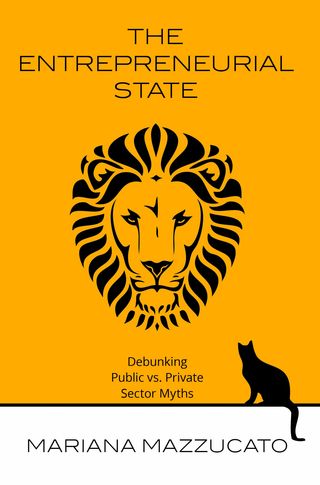
Martin Wolf reviews Mariana Mazzucato's Entrepreneurial State: Debunking Public vs Private Sector Myths, in the FT:

Growth of output per head determines living standards. Innovation determines the growth of output per head. But what determines innovation?

Conventional economics offers abstract models; conventional wisdom insists the answer lies with private entrepreneurship. In this brilliant book, Mariana Mazzucato, a Sussex university professor of economics who specialises in science and technology, argues that the former is useless and the latter incomplete. Yes, innovation depends on bold entrepreneurship. But the entity that takes the boldest risks and achieves the biggest breakthroughs is not the private sector; it is the much-maligned state.

Mazzucato notes that “75 per cent of the new molecular entities [approved by the Food and Drug Administration between 1993 and 2004] trace their research … to publicly funded National Institutes of Health (NIH) labs in the US”. The UK’s Medical Research Council discovered monoclonal antibodies, which are the foundation of biotechnology. Such discoveries are then handed cheaply to private companies that reap huge profits.

A perhaps even more potent example is the information and communications revolution. The US National Science Foundation funded the algorithm that drove Google’s search engine. Early funding for Apple came from the US government’s Small Business Investment Company. Moreover, “All the technologies which make the iPhone ‘smart’ are also state-funded … the internet, wireless networks, the global positioning system, microelectronics, touchscreen displays and the latest voice-activated SIRI personal assistant.” Apple put this together, brilliantly. But it was gathering the fruit of seven decades of state-supported innovation.

Why is the state’s role so important? The answer lies in the huge uncertainties, time spans and costs associated with fundamental, science-based innovation.

Tuesday, August 6, 2013

The Soul of Man under Socialism

Oscar_Wilde_by_Napoleon_Sarony

Oscar Wilde on the topic, in Berfrois:

The chief advantage that would result from the establishment of Socialism is, undoubtedly, the fact that Socialism would relieve us from that sordid necessity of living for others which, in the present condition of things, presses so hardly upon almost everybody. In fact, scarcely any one at all escapes.

Now and then, in the course of the century, a great man of science, like Darwin; a great poet, like Keats; a fine critical spirit, like M. Renan; a supreme artist, like Flaubert, has been able to isolate himself, to keep himself out of reach of the clamorous claims of others, to stand “under the shelter of the wall,” as Plato puts it, and so to realise the perfection of what was in him, to his own incomparable gain, and to the incomparable and lasting gain of the whole world. These, however, are exceptions. The majority of people spoil their lives by an unhealthy and exaggerated altruism – are forced, indeed, so to spoil them. They find themselves surrounded by hideous poverty, by hideous ugliness, by hideous starvation. It is inevitable that they should be strongly moved by all this. The emotions of man are stirred more quickly than man’s intelligence; and, as I pointed out some time ago in an article on the function of criticism, it is much more easy to have sympathy with suffering than it is to have sympathy with thought. Accordingly, with admirable though misdirected intentions, they very seriously and very sentimentally set themselves to the task of remedying the evils that they see. But their remedies do not cure the disease: they merely prolong it. Indeed, their remedies are part of the disease.

They try to solve the problem of poverty, for instance, by keeping the poor alive; or, in the case of a very advanced school, by amusing the poor.

Empire’s Wasteland

Gornick-Camus

Vivian Gornick on Camus's Alegerian chronicles, in Boston Review:

Sixty years ago, in the decade following the Second World War, the French-Algerian writer Albert Camus was an international cultural hero. The Nazis and the atomic bomb had destroyed the historic illusion that there were limits to the damage civilized human beings could or would inflict on one another. Humanity, as an enterprise, had never seemed a more desolating proposition than at this moment. Postwar Europe produced a multitude of writers who reflected the mood of the times, but none spoke more directly to it than Camus.

He was born into an uneducated, working-class family in French Algeria in 1913 and grew up in near-poverty. Due to the efforts of a perceptive grade school teacher, the young Albert made it to the lycée and went on to study at the University of Algiers, from which he emerged a man of the left, intent on the dismaying conditions of life that the colonial regime had visited upon his native land. He joined the Communist Party in 1935, was associated with a number of revolutionary groups, and for a few years wrote for left-wing newspapers. At 25, having been blacklisted because of his anti-colonial journalism, Camus left Algeria for France against his will, and all the years he lived there felt himself to be in exile. Yet when the Germans marched into Paris, he joined the Resistance and soon became the editor of Combat, one of its clandestine newspapers.

The Introduction from The Odyssey of Albert O. Hirschman

An excerpt from Jeremy Adelman's biography of Hirschman, over at Princeton University Press:

In early April 1933, a spasm of anti-Semitic violence rocked Berlin. Thugs beat Jews in the streets. Shops owned by Jews were looted and burned. Hitler slapped restrictions on Jewish doctors, merchants, and lawyers. For the Hirschmann family, well-to-do assimilated Jewish Berliners, the distress paled beside a more immediate shock. The family huddled in a cemetery as a coffin bearing Carl Hirschmann was lowered into his grave. His wife wept. His children did too. Except one. Otto Albert, known to us by a different name, Albert O. Hirschman, concealed his grief as the family bid their farewells to a father and husband.

This was not the only adieu of the day. Otto Albert, a law student at the University of Berlin and a militant anti-Nazi, was in danger. His friends were being arrested; the university was quickly becoming a hive of intolerance. So he decided to go clandestine and then leave for France. When the funeral was over, the seventeen-year-old Hirschmann announced to his anguished family that he was leaving Germany, promising to return after the passing of the storm surrounding Adolf Hitler’s ascent to power. Decades would pass before he did. Thus began an odyssey in the making of a pragmatic idealist that would send our subject across continents and languages on a journey over the frontiers ofa century’s social science.

Sergey Brin’s $330,000 hamburger does not come with fries

From Mercury News:

BurgerOr a soda. Or, regrettably, that telltale soupcon of fat that makes a burger actually taste like a burger. It does, however, come with a heaping side of bragging rights. Making its debut Monday at a tasting event at a London restaurant, the world's first manufactured beef patty was created in a laboratory from a living cow's stem cells, funded by the deep pockets of Google's quixotic co-founder. The burger's backers say cultured meat could help alleviate animal cruelty while combating climate change, with lab-grown meat easing the environmental burdens of livestock production.

And while those who tried it said the patty bordered dangerously close to being tasteless, its mere existence pleased animal-rights activists, stem-cell pioneers and food fetishists everywhere, not to mention millions of cows eyeing a new lease on life. “We're trying to create the first cultured beef hamburger,” Brin said in a videotaped message released Monday, as the world learned for the first time about his role in the project. “From there, I'm optimistic we can really scale up by leaps and bounds.” Already known for firing off “moonshots,” the call-me-crazy projects like Google Glass, the driverless car and personal genome analysis, the 39-year-old Brin can now add the test-tube burger to his résumé. This moonshot, Brin said, was driven by his concerns for animal welfare. In the video, he said the way animals are treated is “something I'm not comfortable with.” And he said creating alternatives like in-vitro meat makes more sense than expecting everyone to become vegetarian.

More here.

Seeing Narcissists Everywhere

From The New York Times:

NarcissistBy comparing decades of personality test results, Dr. Twenge has concluded, over and over again, that younger generations are increasingly entitled, self-obsessed and unprepared for the realities of adult life. And the blame, she says, falls squarely on America’s culture of self-esteem, in which parents praise every child as “special,” and feelings of self-worth are considered a prerequisite to success, rather than a result of it. “There’s a common perception that self-esteem is key to success, but it turns out it isn’t,” she said. Nonetheless, “young people are just completely convinced that in order to succeed they have to believe in themselves or go all the way to being narcissistic.” The message has hit a nerve. Since the 2006 publication of her first book on the subject, “Generation Me,” which sold more than 100,000 copies, Dr. Twenge (pronounced TWANG-ee) has become something of a celebrity psychologist, appearing on the “Today” show, “Good Morning America” and MSNBC, among others, to comment on topics as varied as Facebook and the rise in plastic surgery.

…But as her media profile has risen, so has the volume of criticism from her colleagues. “I think she is vastly misinterpreting or over-interpreting the data, and I think it’s destructive,” said Jeffrey Jensen Arnett, a research professor in psychology at Clark University. “She is inviting ridicule for a group of people about which there are already negative stereotypes.” Critics like Dr. Arnett see a number of problems with Dr. Twenge’s work. They say the test on which much of her research is based, the Narcissistic Personality Inventory, is inherently flawed — better designed to measure feelings of confidence and self-worth than actual narcissism. They also accuse her of focusing too much of her work on students at research universities, who they say are not representative of their generation.

More here.

Tuesday Poem

Chaos
.
A Venetian critic named Bruno Alfieri saw:
(in Jackson Pollocks work)

—chaos
—absolute lack of harmony
—complete lack of structural organization
—total absence of technique, however rudimentary
—once again, chaos
……… from Art in America, February 1994

1. Chaos
.
Being true to what we are, what is,
frayed around the edges, perhaps, and growing wierd.
Born in NYC, and from there, no movement.
It is our own terror, our own making,
abandoned in the high-rise night
like an impotent frog.

2. Absolute lack of harmony
.
There are times when you can't illuminate nothing, man.
Don't open that door, they say, don't even enter the room.
My second wife would know, she didn't belong
among the pacifists making music. Every
day you encounter some people going
straight to hell.
Read more »

Bid to Honor Austen Is Not Universally Acknowledged

AUSTEN-articleLarge

Katrin Bennhold in the NYT:

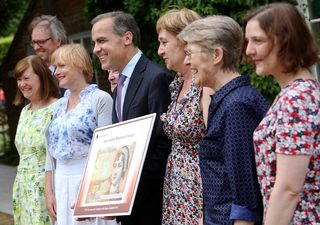
On July 24, Mr. Carney said that it had always been the bank’s intention to include another woman among the historical figures on the bank notes, and he announced that Austen would appear on future £10 notes. He also vowed to review the whole process of choosing historical figures for the notes.

A brilliant day for women,” Ms. Criado-Perez said in response.

But that same day on Twitter a trickle of abuse grew into a shower of crude rape and death threats against Ms. Criado-Perez at a rate of nearly one per minute. Several other women, from members of the public to members of Parliament, have also been the targets of Twitter attacks. Three female journalists received bomb threats.

“I’m going to pistol whip you over and over until you lose consciousness,” one Twitter user warned Ms. Criado-Perez, threatening to “then burn ur flesh.”

“I will rape you tomorrow at 9pm,” a Twitter user told Stella Creasy, a Labour Party legislator. “Shall we meet near your house?”

Two men, ages 21 and 25, have been arrested so far in connection with the harassment. Scotland Yard’s electronic-crime unit is investigating the Twitter attacks involving mostly anonymous Internet users, so-called trolls.

What is perhaps most striking about the reaction, said Caitlin Moran, a columnist for the Times of London and the author of the witty 2011 feminist manifesto “How to Be a Woman,” is how little it took to set it off.

“If even a small thing like this, a nice middle-class debate about putting Jane Austen’s picture on the opposite side of a bank note from the queen, causes a storm of abuse like this, what will happen when we get to the bigger issues?” Ms. Moran asked in a phone interview.

Paul Bracchi in The Daily Mail on the faces behind the trolls.