Your Thoughts Can Release Abilities Beyond Normal Limits

From Scientific American:

ThoughtsThere seems to be a simple way to instantly increase a person’s level of general knowledge. Psychologists Ulrich Weger and Stephen Loughnan recently asked two groups of people to answer questions. People in one group were told that before each question, the answer would be briefly flashed on their screens — too quickly to consciously perceive, but slow enough for their unconscious to take it in. The other group was told that the flashes simply signaled the next question. In fact, for both groups, a random string of letters, not the answers, was flashed. But, remarkably, the people who thought the answers were flashed did better on the test. Expecting to know the answers made people more likely to get the answers right.

Our cognitive and physical abilities are in general limited, but our conceptions of the nature and extent of those limits may need revising. In many cases, thinking that we are limited is itself a limiting factor. There is accumulating evidence that suggests that our thoughts are often capable of extending our cognitive and physical limits.

More here.

Wednesday Poem

Ghalib: An Elegy

لازم تھا کہ دیکھو مرارستا کوئی دن اور
تنہا گیے کیوں اب رہو تنہا کوئی دن اور

Go – fix your eyes on the road a few more days.
Gone alone, now wait alone a few more days.

Your headstone or my head, one has got to go.
Give me time to grieve – only a few more days.

Yesterday you came: now you declare, I go.
Can’t you stay back, just a few more days?

It’s good-bye & see you on Judgment Day?
Child, that day is now, not in a few more days.

God of antiquity, Ärif was not yet thirty.
Why could he not have just a few more days?

When were you such a stickler in your life?
The angel’s Q&A could wait a few more days.

I know you hated me and Nayyar was a bore.
O the boys cry, stay back a few more days?

Are they fools that ask, Why does Ghalib live?
My fate – I must crave this life a few more days.

Translated by M. Shahid Alam
from The Western Humanities Review/Summer 2013
.

Translator's note:
Nayyar was
a friend of Ghalib; he cherished the late Arif,
Ghalib’s nephew, whose death this ghazal commemorates.

Angel’s Q&A: In Islamic tradition, an angel questions the dead in
the grave.

Tuesday, August 13, 2013

As a gay parent I must flee Russia or lose my children

Masha Gessen in The Guardian:

ScreenHunter_266 Aug. 14 09.37The first time I heard about legislation banning “homosexual propaganda“, I thought it was funny. Quaint. I thought the last time anyone had used those words in earnest I had been a kid and my girlfriend hadn't been born yet. Whatever they meant when they enacted laws against “homosexual propaganda” in the small towns of Ryazan or Kostroma, it could not have anything to do with reality, me or the present day. This was a bit less than two years ago.

What woke me up was a friend who messaged me on Facebook: “I am worried about how this might impact you and other LGBT people with families.” This was enough to get my imagination working. Whatever they meant by “homosexual propaganda”, I probably did it. I had two kids and a third on the way (my girlfriend was pregnant), which would mean I probably did it in front of minors. And this, in turn, meant the laws could in fact apply to me. First, I would be hauled in for administrative offences and fined and then, inevitably, social services would get involved.

That was enough to get me to read the legislation, which by now had been passed in about 10 towns and was about to become law in St Petersburg, the second-largest city in the country. Here is what I read: homosexual propaganda was defined as “the purposeful and uncontrolled distribution of information that can harm the spiritual or physical health of a minor, including forming the erroneous impression of the social equality of traditional and non-traditional marital relations”.

More here.

How America’s ‘Culture of Hustling’ Is Dark and Empty

David Masciotra in The Atlantic:

ScreenHunter_265 Aug. 14 09.29One of America’s worst crimes, according to cultural historian and social critic Morris Berman, is the cultivation of a “culture of hustling.” Hustling—the surrender of everything to market forces and the sacrifice of life to consumer culture—is an energizing and often enriching enterprise, but it is ultimately empty, depressing, and destructive.

Berman’s previous books, The Twilight of American Culture, Dark Ages America, and Why America Failed, take the unpopular but persuasive view that the American empire is in freefall with no hope for recovery. But in his latest book, Spinning Straw Into Gold, he explains how he escaped this tedium of “unnecessary” and “stupid” pursuits and found meaning, purpose, and peace in his life by retiring to Mexico after years of working in academia at the University of New Mexico, the University of Victoria in British Columbia, and more.

The book eschews self-help clichés, and doesn’t presume to teach you to be happy. I spoke with Berman over email about embracing a reality that includes sadness, escaping poisonous American values, and how to stop obsessing over results and accept pleasure as it comes.

More here.

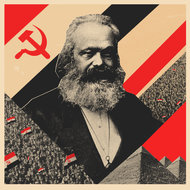
Marx’s Lesson for the Muslim Brothers

11EGYPT-articleInline

Sheri Berman in the NYT:

In 1848, workers joined with liberals in a democratic revolt to overthrow the French monarchy. However, almost as soon as the old order collapsed, the opposition fell apart, as liberals grew increasingly alarmed by what they saw as “radical” working class demands. Conservatives were able to co-opt fearful liberals and reinstall new forms of dictatorship.

Those same patterns are playing out in Egypt today — with liberals and authoritarians playing themselves, and Islamists playing the role of socialists. Once again, an inexperienced and impatient mass movement has overreached after gaining power. Once again, liberals have been frightened by the changes their former partners want to enact and have come crawling back to the old regime for protection. And as in 1848, authoritarians have been happy to take back the reins of power.

If Egypt’s army continues its crackdown and liberals continue to support it, they will be playing right into the hands of Marx’s contemporary successors. “Islamists of the world, unite!” they might say; “you have nothing to lose but your chains.” And, unfortunately, they will be right.

It should come as no surprise that Egyptian liberals would implore the military to begin a coup to end the country’s first experiment with democracy just two years after they joined hands with Islamists to oust an authoritarian regime. In the early stages of a country’s political development, liberals and democrats often don’t agree on anything other than the desirability of getting rid of the ancien régime.

Establishing a stable democracy is a two-stage process. First you get rid of the old regime, then you build a durable democratic replacement. Because the first stage is dramatic, many people think the game is over when the dictator has gone. But the second stage is more difficult.

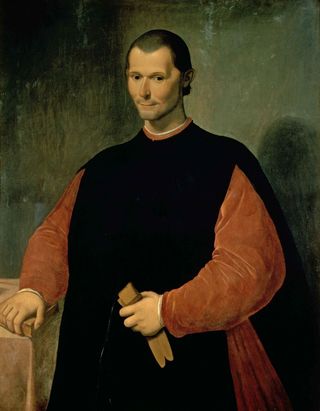
What Machiavelli Knew

BEN 62196

John Gray in New Statesman:

One of the peculiarities of political thought at the present time is that it is fundamentally hostile to politics. Bismarck may have opined that laws are like sausages – it’s best not to inquire too closely into how they are made – but for many, the law has an austere authority that stands far above any grubby political compromise. In the view of most liberal thinkers today, basic liberties and equalities should be embedded in law, interpreted by judges and enforced as a matter of principle. A world in which little or nothing of importance is left to the contingencies of politics is the implicit ideal of the age.

The trouble is that politics can’t be swept to one side in this way. The law these liberals venerate isn’t a free-standing institution towering majestically above the chaos of human conflict. Instead – and this is where the Florentine diplomat and historian Niccolò Machiavelli (1469-1527) comes in – modern law is an artefact of state power. Probably nothing is more important for the protection of freedom than the independence of the judiciary from the executive; but this independence (which can never be complete) is possible only when the state is strong and secure. Western governments blunder around the world gibbering about human rights; but there can be no rights without the rule of law and no rule of law in a fractured or failed state, which is the usual result of westernsponsored regime change. In many cases geopolitical calculations may lie behind the decision to intervene; yet it is a fantasy about the nature of rights that is the public rationale, and there is every sign that our leaders take the fantasy for real. The grisly fiasco that has been staged in Afghanistan, Iraq and Libya – a larger and more dangerous version of which seems to be unfolding in Syria – testifies to the hold on western leaders of the delusion that law can supplant politics.

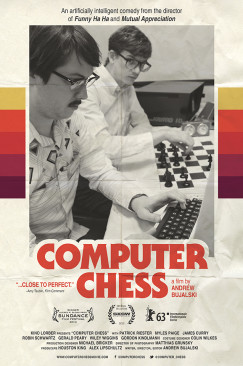
Analog Warmth: On Computer Chess

Computer-chess-poster-243x366Akiva Gottlieb in the LA Review of Books:

In the opening moments of his slippery and entirely excellent new movieComputer Chess, a young man points his PortaPak camera up toward the sky, and is quickly interrupted and chastised by a superior: “Don’t ever shoot at the sun!” The scene quickly articulates the film’s fixation with impulses and reprimands, moves and countermoves, but also its willingness to align its exploration of the limits of the human with the limits of the filmable.

Computer Chess is an existential comedy about, among other things, the various surrogates, extensions, and augmentations that promise to intensify the pleasure of being alive. It’s also about a camera. Bujalski’s longtime cinematographer Matthias Grunsky shot Computer Chess in black-and-white with a Sony AVC-3260 video camera, developed in 1969, that uses analog tubes to convert the captured image into electronic signals. (For this reason, a bright light source like the sun can leave a burn mark on the image — a sort of ghostly trace.) The boxy 4:3 aspect ratio resembles a cheap public-access television documentary, though the narrative quickly jettisons any pretense of Direct Cinema realism. Set at an annual gathering of socially maladapted computer programmers in a dingy Austin, Texas motel, circa 1980, the movie finds its characters — and these non-actors do seem foundas much as created — standing at the precipice of the posthuman. The film thus fashions an affective present tense that seems haunted by the future as much as by the past. In a time when even the word “computer” sounds antiquated, this movie wants to know: how would outmoded technology make sense of what we’ve done with it?

Why do they keep writing books about us?

Cover00

Eagleton’s Across the Pond chiefly shows why it’s dangerous to offer British academics secondary or tertiary appointments at American universities (in Eagleton’s case, at Notre Dame). They become know-it-alls. Across the Pond most closely resembles BAD and Class, the sardonic later works of Paul Fussell—slingshots from the prestigious literary scholar on a lark, unburdening his prejudices in any bloody way he pleases, with cheeks frequently stuffed of tongue. A large part of Eagleton’s outrage rides on the familiar George Bernard Shaw quip about two countries divided by a common language—mocking our use, for example, of “bathroom” and “restroom” for public closets where people neither bathe nor rest. A predictable, arch tone about obvious targets appears quickly, usually with enough overkill to sour the point. “If the word ‘awesome’ were banned from American speech,” Eagleton assures, “airplanes would fall from the skies, cars would lurch wildly off freeways, elevators would shudder to a halt between floors, and goldfish would commit suicide by leaping despairingly from their bowls.”

more from Carlin Romano at Bookforum here.

world lite

Image

The progress of World Literature since the ’90s has accompanied that of global capitalism. In the past, the spread of money — what Marx called the “universal equivalent,” for its ability to serve as an empty vessel of exchange value — strengthened rather than weakened national boundaries and languages. It wasn’t so much “world literature” as vernacular literature — composed in Florentine Italian, say, rather than universal Latin — that developed alongside international finance in northern Italy in the late 15th century. Later, the headquarters of capitalism shifted to Holland, then England, then the US, countries mainly inhabited by Protestants who distinguished themselves from Catholics (the word catholic meaning simply “universal”) largely by listening to, but especially by reading, the Bible in the same Dutch or English they spoke over dinner. Not coincidentally, these countries attained mass literacy sooner than Catholic ones. In these countries, and others gathered into the capitalist world-system, questions about how money was to be distributed, for example, were discussed in publications produced in the local and/or national language and thus legible to far more people than any “universal” language had ever been. The overall nationalization of literature, throughout modernity, didn’t mean there could never be an internationalist literature, of the kind once imagined by 19th-century radicals. But an internationalist literature would be different from World Literature as we know it.

more from the editors at n+1 here.

Near-Death Experiences

From LiveScience:

Light-tunnel-110912About 5 percent of dying patients and 10 percent of cardiac arrest patients describe having near-death experiences. These experiences often have similar elements, such as a feeling of being out-of-body, going through a tunnel or on a river toward a warm light, seeing lost loved ones and being told it's not time to go yet. Past research revealed that near-death experiences are more vivid than real life. But scientists strongly disagree about the source of these experiences. Some argue that near-death experiences reveal the existence of heaven or the duality between mind and body, while others claim the event is caused by a flood of chemicals in the dying brain.

To sort out the issue, Borjigin and her colleagues examined nine rats. They induced cardiac arrest while the animals were hooked up to EEG machines, and the team then measured the electrical activity in the animals' brains. About 30 seconds after the heart had stopped, all the animals experienced waves of synchronized brain activity that were characteristic of the conscious brain. Rats that were asphyxiated with carbon monoxide showed a similar pattern of brain activity. The rats' visual cortex, which processes visual imagery, was also highly activated. This could shed light on why NDEs are so vivid, Borjigin said. “They all show the fingerprints of neural consciousness at near-death is at a much higher level compared to the waking state. That explains the realer-than-real human experience,” Borjigin told LiveScience. The team believes that this electrical surge may be a mechanism the brain uses to rescue itself from a sharp drop in glucose and oxygen. Though it may not work for animals in cardiac arrest, Borjigin speculates that this mechanism spurs alertness or hyperawareness in less critical situations.

More here.

Talent Lies Within. But Where?

From The New York Times:

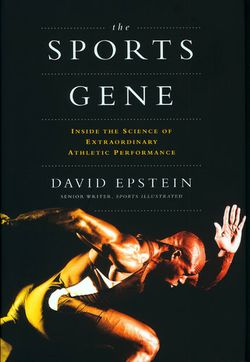
BookThese are the questions Mr. Epstein seeks to answer in this captivating book, which began as a feature in Sports Illustrated, where he is a senior writer. The book’s title misleads, since he forcefully argues that no single known gene is sufficient to ensure athletic success. His answer to the question “Nature or nurture?” is both.

…Mr. Epstein argues that we often confuse innate talent with spirit or effort. Even traits like desire may arise from DNA (see the Iditarod dogs selectively bred for enthusiastic pulling), but that does not mean they come down to any single gene. Whether it’s running faster, standing taller or jumping higher, multiple genetic pathways may lead there. In a particularly fascinating chapter, Mr. Epstein investigates an old theory that purports to explain why one small country, Jamaica, produces so many Olympic sprinters. The notion is that strong Africans were selected as slaves, that the strongest of them survived the voyage to Jamaica, and that the strongest survivors eventually escaped slavery and cloistered themselves in a remote region to form an isolated “warrior” gene stock that now produces world-class athletes. It makes a convenient story. But it is belied by the DNA research of Yannis Pitsiladis, a biologist at the University of Glasgow, who finds no genetically distinct subgroup of Jamaican sprinters. It appears that Jamaica churns out sprinters because almost everyone on the island tries the sport.

More here.

Monday, August 12, 2013

Idolatry and Utility: How Economics Functions as a Latter-Day Religion

by Ben Schreckinger

20050621-1_p45036-022jpg-515hMy alma mater, Brown University, was founded in 1764 for the purpose of training clergymen. Today, it trains economists. A lot changed in the interim. A lot didn't. Enlightenment thinking penetrated mainstream consciousness, the industrial revolution rapidly raised standards of living to remarkable levels, and a new world order emerged from the ashes of two world wars. But Brown's output, like those of the American Ivy League's other universities — which have emerged from sectarian pasts to produce economists at similarly high rates and whose graduates control institutions like the U.S. presidency, the U.S. Supreme Court, the World Bank, and the UN — represents a continuity. Today's economists constitute the West's priestly class. Yes, they're in most ways better equipped to guide our lives than the authorities of Catholicism and its Protestant successors. They aspire to the scientific method, for one. But their discipline comes with form, function, and flaws inherited from its medieval ancestor — and recognizable to students of any dogmatic religion. We need look no further than the recent dust-up over an Excel error in a paper by two Harvard economists, which discredited the most influential piece of intellectual output of the last five years, to see that. Once we do, we can start to put the discipline in its proper place.

* * *

But first, how did we get here? For most of history, religion has provided answers not just to metaphysical questions, but to ethical ones. What's the best structure for society? Should money be lent at a profit? How comfortable should we be with change? How should people decide what to do with their lives? How big should my family be? Should we accept newcomers into our midst? And what is the value of a human life? (Approximately $10 million in economics, which does not observe the same taboos as other religions). The answers provided by religion are ones most people can grasp, and when the questions got too difficult, or too pointed, religion appeals to some authority to cut the questioning off before things get out of hand. Despite what might seem like some pretty glaring flaws — Really, we're ruled by a giant invisible bull-man? A guy was dead for three days and then he wasn't? — religion has endured by proving valuable.

At a social level, we need religion to smooth coordination, to make sure we're all on the same page. Life is filled with uncertainty, but uncertainty can cause societies to break down into strife, or indecision, or fear. Religion fills in the gaps in our certainty, so that we can ignore them for a while and push onward. For much of the formation of the Western world, Catholicism played that role. Then people began to reject the structure of the church and ushered in new sects of the same religion. Christianity itself eventually took a backseat altogether and the West tried nationalism, a religion that goes awfully well with a nation-based system of politics. But two world wars provided the reductiones ad absurdum of nationalism's dogmas. The priestly class, those initiated into special knowledge and given special power at the universities, had to decide where to place its faith after God and country. A chunk of them became atheists — specifically existenialist, deconstructuralist, postmodernists — who identified and rejected the dogmas of nationalism and imperialism (and then all the other –isms they could get their hands on) so strongly that they no longer believed in anything, including science.

Read more »

Two Translations of N. M. Rashid

by Haider Shahbaz

20100411_29N.M. Rashid (1910-1975) was an Urdu poet born in Gujranwala, Punjab. At the time of his birth, Gujranwala was part of the British Raj but was later included in Pakistan after the partition of 1947. His first collection of poetry, Mavra, was published in 1941 and was hailed as one of the earliest Urdu poetry collections to use free verse instead of the Ghazal form. He published three other collections: Iran Main Ajnabi (1955), La=Insaan (1969) and Guman ka Mumkin (1977, posthumous). His break from the ghazal form was not simply a break from traditional meter and rhyme, but he also introduced a poetry that was concerned with metaphysical themes and broke with the traditional themes of love that were tackled in the Ghazal. During British rule, he was also involved with the anti-colonial Khaksar Movement. His poetry appealed to me personally because he engages with themes of colonialism, the dynamics of love and eroticism between the oppressor and the oppressed, as well as modernist themes of the relationship between words and meaning. In this latter aspect, and in his advocacy of free verse, he reminds me of the disciples of Mallarme. Indeed, his friend and close collaborator, Meeraji, translated a number of Mallarme's poems. Rashid died in a London hospital in 1975 and his body was cremated according to his will.

I have chosen the two following poems to translate because they showcase Rashid's early preoccupation with foreign rule in India as well as his later preoccupation with the legacy of Islam (the second poem takes its first line, “Society is God – do not criticize it” from a saying of Muhammad).

(Before I take my leave, I wanted to say Eid Mubarak. But then I was reminded that 30 men were killed in a suicide bombing in Quetta the night before Eid. The insurgents who killed them claim to be avenging men who have gone missing in Baluchistan or who have been killed by the security forces to put down the separatist resistance movement in Baluchistan. I don't know anymore whom to mourn – those who kill or those who die. There was a time when Eid was Eid in Pakistan. Today, amidst these tumbling walls, it feels like no Eid to me. I can only hope that what Darwish said was true: “Every beautiful poem is an act of resistance.”)

And now, as Rashid said in his preface to Mavra: “After this meaningless preface, some meaningless poems.”

Revenge

That face, those features, I cannot remember
A king's harem I remember
Next to the fireplace: a stripped body
Floor with carpet, carpet with couch
Alien gods of stone and metal
in a corner of the wall;
I can hear their laughter!
The roar of fire in the fireplace
furious – for these gods are insensitive!
Reflections on tall, tall walls
remind me of WHITE tyrants
whose swords lay in this room
foundations of WHITE rule!
That face, those features, I cannot remember
That nakedness I still remember
Unknown woman; alien body
on which, all night, my “lips” took
revenge – on behalf of my helpless gods
That nakedness I still remember!

[Urdu original here.]

Read more »

Sunday, August 11, 2013

Monogamy and Human Evolution

Carl Zimmer in the New York Times:

01zimmer-3-articleLarge“Monogamy is a problem,” said Dieter Lukas of the University of Cambridge in a telephone news conference last week. As Dr. Lukasexplained to reporters, he and other biologists consider monogamy an evolutionary puzzle.

In 9 percent of all mammal species, males and females will share a common territory for more than one breeding season, and in some cases bond for life. This is a problem — a scientific one — because male mammals could theoretically have more offspring by giving up on monogamy and mating with lots of females.

In a new study, Dr. Lukas and his colleague Tim Clutton-Brock suggest that monogamy evolves when females spread out, making it hard for a male to travel around and fend off competing males.

On the same day, Kit Opie of University College London and his colleagues published a similar study on primates, which are especially monogamous — males and females bond in over a quarter of primate species. The London scientists came to a different conclusion: that the threat of infanticide leads males to stick with only one female, protecting her from other males.

Even with the scientific problem far from resolved, research like this inevitably turns us into narcissists. It’s all well and good to understand why the gray-handed night monkey became monogamous. But we want to know: What does this say about men and women?

More here.

The ecology of Pooh

Adults may feel exiled from the intensity and sweetness of childhood places. But perhaps there are surprising ways home.

Liam Heneghan in Aeon:

Galleons-Lap2I recently sat with pencil sharpened and notebook at the ready, like an anthropologist in exotic terrain, to watch Disney’s The Many Adventures of Winnie the Pooh (1977), a feature-length collection of the earlier animated shorts. What happened, I wondered, when England’s most famous fictional bear migrated across the Atlantic and settled into an American landscape? Like Pooh, I had grown up in the British Isles and in my ripe maturity emigrated to the US. Like Pooh, I had spent much of my time out of doors. Over the back wall of our family home in southern County Dublin were mile after mile of farm fields, interspersed with shrubby hedgerow. Not quite as bucolic as Pooh’s Hundred Acre Wood, perhaps, but there, until the summer dusk drove us home, was where we largely spent our childhood vacations. Like the transplanted Pooh, the terrain in which I now dwell in the New World is hospitable enough in many ways, and yet it is also uncanny. It is not quite home. The suspicion I am investigating here is that, from an environmental perspective, there is more to this bear of ‘very little brain’ than meets the eye.

More here.

Here’s What Happens Inside You When a Mosquito Bites

Ed Yong in Not Exactly Rocket Science:

The video above shows a brown needle that looks like it’s trying to bury itself among some ice-cubes. It is, in fact, the snout of a mosquito, searching for blood vessels in the flesh of a mouse.

This footage was captured by Valerie Choumet and colleagues from the Pasteur Institute in Paris, who watched through a microscope as malarial mosquitoes bit a flap of skin on an anaesthetised mouse. The resulting videos provide an unprecedented look at exactly what happens when a mosquito bites a host and drinks its blood.

For a start, look how flexible the mouthparts are! The tip can almost bend at right angles, and probes between the mouse’s cells in a truly sinister way. This allows the mosquito to search a large area without having to withdraw its mouthparts and start over.

“I was genuinely amazed to see the footage,” says James Logan from the London School of Hygiene and Tropical Medicine, who studies mosquitoes. “I had read that the mouthparts were mobile within the skin, but actually seeing it in real time was superb. What you assume to be a rigid structure, because it has to get into the skin like a needle, is actually flexible and fully controllable. The wonders of the insect body never cease to amaze me!”

More here.

Calm reflections after a storm in a teacup

Richard Dawkins at his own website:

ScreenHunter_264 Aug. 11 17.49You have surely heard something like the following two statements, often uttered with a measure of truculence:-

1. “There are 1.6 billion Muslims, nearly a quarter of the world’s population, and we are growing fast.” There is even, sometimes, a hint of menace added. In the words of Houari Boumediene, President of Algeria, “Le ventre de nos femmes nous donnera la victoire” (the belly of our women will give us the victory).

2. “Islamic science deserves enormous respect.” There are two versions of this second claim, ranging from the pathetic desperation of “the Qu’ran anticipated modern science” (the embryo develops from a blob, mountains have roots that hold the earth in place, salt and fresh water don’t mix) to what is arguably quite a good historical point: “Muslim scholars kept the flame of Greek learning alight while Christendom wallowed in the Dark Ages.”

Putting these two claims together, you almost can’t help wondering something like this: “If you are so numerous, and if your science is so great, shouldn’t you be able to point to some pretty spectacular achievements emanating from among those vast numbers? If you can’t today but once could, what has gone wrong for the past 500 years? Whatever it is, is there something to be done about it?”

More here.