Is Atheism Irrational?

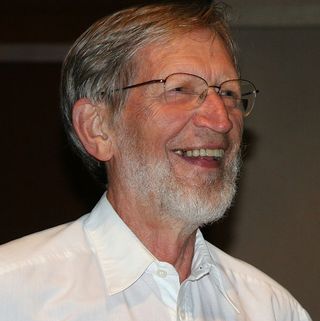
597px-AlvinPlantinga

Alvin Plantinga makes the case to Gary Gutting in The NYT's The Stone (image from Wikimedia Commons):

G.G.: You say atheism requires evidence to support it. Many atheists deny this, saying that all they need to do is point out the lack of any good evidence for theism. You compare atheism to the denial that there are an even number of stars, which obviously would need evidence. But atheists say (using an example from Bertrand Russell) that you should rather compare atheism to the denial that there’s a teapot in orbit around the sun. Why prefer your comparison to Russell’s?

A.P.: Russell’s idea, I take it, is we don’t really have any evidence against teapotism, but we don’t need any; the absence of evidence is evidence of absence, and is enough to support a-teapotism. We don’t need any positive evidence against it to be justified in a-teapotism; and perhaps the same is true of theism.

I disagree: Clearly we have a great deal of evidence against teapotism. For example, as far as we know, the only way a teapot could have gotten into orbit around the sun would be if some country with sufficiently developed space-shot capabilities had shot this pot into orbit. No country with such capabilities is sufficiently frivolous to waste its resources by trying to send a teapot into orbit. Furthermore, if some country had done so, it would have been all over the news; we would certainly have heard about it. But we haven’t. And so on. There is plenty of evidence against teapotism. So if, à la Russell, theism is like teapotism, the atheist, to be justified, would (like the a-teapotist) have to have powerful evidence against theism.

G.G.: But isn’t there also plenty of evidence against theism — above all, the amount of evil in a world allegedly made by an all-good, all-powerful God?

A.P.: The so-called “problem of evil” would presumably be the strongest (and maybe the only) evidence against theism. It does indeed have some strength; it makes sense to think that the probability of theism, given the existence of all the suffering and evil our world contains, is fairly low. But of course there are also arguments for theism. Indeed, there are at least a couple of dozen good theistic arguments. So the atheist would have to try to synthesize and balance the probabilities.

More here.
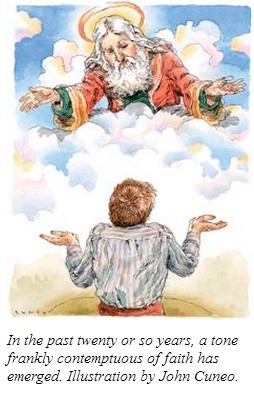
When did faith start to fade?

Adam Gopnik in The New Yorker:

ScreenHunter_486 Feb. 11 16.23In Tom Stoppard’s 1970 play “Jumpers,” the philosopher hero broods unhappily on the inexorable rise of the atheist: “The tide is running his way, and it is a tide which has turned only once in human history. . . . There is presumably a calendar date—a moment—when the onus of proof passed from the atheist to the believer, when, quite suddenly, the noes had it.” Well, when was that date—when did the noes have it? In 1890? In 1918, after the Great War? In 1966, when Time shocked its readers with a cover that asked whether God was dead? For that matter, do the noes have it? In most of the world, the ayes seem to be doing just fine. Even in secularized Manhattan, the Christmas Eve midnight Mass is packed tight with parishioners, and the few who came for the music are given dirty looks as they sheepishly back out after the Vivaldi.

The most generous poll never seems to find more than thirty per cent of Americans saying they are “not religious or not very religious,” though the numbers get up to around fifty per cent in Europe. But something has altered in the course of a century or so. John Stuart Mill said in the early nineteenth century that he was the only youth he knew who was raised as a skeptic; by the end of his life, skeptics were all around him. Yet, though the nineteenth-century novel is roiled by doubt, there isn’t one in which the doubters quite dominate. Whatever change has occurred isn’t always well captured by counting hands. At a minimum, more people can say they don’t think there is a God, and suffer less for saying so, than has been the case since the fall of Rome. The noes have certainly captured some constituency, obtained some place. What, exactly, do they have?

More here.

Jewfros in Palestine

Corey Robin in Jacobin:

AjlTablet has a moving piece by Samantha Shokin, a Brooklyn-based writer, on how a semester in Israel helped change the way she felt about herself, particularly her bodily self-image as a Jewish woman.

Shokin writes:

I spent a lifetime hating my Jewish hair — straightening it, covering it, or otherwise finding ways to diminish its presence. A trip to Israel is what it took for me to realize my hair was wonderful all its own, and much more than just an accessory.

Shokin does a wonderful job describing how her hair was caught up with her feelings of awkwardness, shame, and exclusion, how difficult it was as an adolescent to contend with images of Britney Spears and Christina Aguilera from the vantage of “frizzy brown hair and glasses.” This was no simple matter of teenage angst, Shokin makes clear; it cut to the heart of her Jewish identity, not to mention a long history of anti-Semitism. For centuries, Jewish looks, including hair, have been a dividing line between the drowned and the saved. As that simple line from Paul Celan reminds us: “your golden hair Margarete/ your ashen hair Shulamit.”

More here.

Kamila Shamsie in conversation with Pankaj Mishra

From Guernica:

BothKamila Shamsie: The decision to give the Nobel Prize for Literature to Mo Yan was heavily criticized by many writers, not because of his work’s literary merit, but on the grounds that he had refused to sign a petition calling for the freedom of Liu Xiaobo, a fellow laureate. The criticism grew even stronger when Mo Yan defended censorship, comparing it to airport security. You’ve always been politically outspoken, and have expressed your frustration with writers who remain quiet over political issues. You might have been expected to join the chorus of disapproval. Instead you turned around and criticized those who were criticizing Mo Yan. Is there a contradiction here in your own position?

Pankaj Mishra: I should say right away that at no point did I defend Mo Yan’s political positions, and that in fact made clear my own strong disagreement with them. What I objected to was the attempt to delegitimize his literary achievement through some selective reference to his political choices, like his refusal to sign a petition. If we were to take that narrow measure to many of the canonical figures of Western literature—from Dickens with his bloodthirsty writings during the Indian Mutiny, to Nabokov, who adored the war in Vietnam—those writers would have to be dismissed as worthless.

More here.

Kalashnikov’s pain

ID_PI_GOLBE_AK47_AP_001Stefany Anne Golberg at The Smart Set:

Over the long years, people would forget about the inventor Mikhail Kalashnikov. And then an AK-47 would end up in a news story, next to a teenager in the Ivory Coast maybe, and people would ask him again, “Are you troubled by your invention?”

And then, upon the death of Mikhail Timofeyevich Kalashnikov at the age of 94, was the revelation of a letter, written by Mikhail Kalashnikov to the head of Russia's Orthodox church with the help of his local priest. The letter, typed onto Kalashnikov’s home stationary, was published by the Russian paper Izvestiaand patchy translations soon found their way into the international media. It was the anguished confession of a terrified old man on his deathbed.

“My spiritual pain is unbearable,” he wrote. “I keep asking the same insoluble question. If my rifle deprived people of life then can it be that I … a Christian and an orthodox believer, was to blame for their deaths?

“Yes! An increasing number of churches and monasteries in our land. And yet evil does not decrease! … Light and shadow, good and evil, two opposites of a whole, that can't exist without each other?”

more here.

The True Story of the Monuments Men

Monuments-men.jpg__800x600_q85_crop_subject_location-439,153Jim Morrison at Smithsonian Magazine:

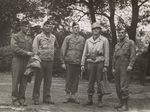
Captain Robert Posey and Pfc. Lincoln Kirstein were the first through the small gap in the rubble blocking the ancient salt mine at Altausee, high in the Austrian Alps in 1945 as World War II drew to a close in May 1945. They walked past one sidechamber in the cool damp air and entered a second one, the flames of their lamps guiding the way.

There, resting on empty cardboard boxes a foot off the ground, were eight panels of The Adoration of the Lamb by Jan van Eyck, considered one of the masterpieces of 15th-century European art. In one panel of the altarpiece, the Virgin Mary, wearing a crown of flowers, sits reading a book.

“The miraculous jewels of the Crowned Virgin seemed to attract the light from our flickering acetylene lamps,” Kirstein wrote later. “Calm and beautiful, the altarpiece was, quite simply, there.”

Kirstein and Posey were two members of the Monuments, Fine Arts, and Archives section of the Allies, a small corps of mostly middle-aged men and a few women who interrupted careers as historians, architects, museum curators and professors to mitigate combat damage. They found and recovered countless artworks stolen by the Nazis.

more here.

rebecca mead’s life in middlemarch

M2Rohan Maitzen at Open Letters Monthly:

Mead read Middlemarch for the first time when she was seventeen and found it “riveting, from the very first sentence of its first chapter.” Speaking as someone who has assigned Middlemarch to hundreds of students not much older than that, I would say that her reaction is not entirely typical (though speaking as someone who read Middlemarch for the first time at eighteen, loved it, and has been rereading it ever since, at least as often and as appreciatively as Mead, I would also say that I find it entirely credible, and not a little endearing). Many readers approach Middlemarch with trepidation or leave it in frustration.

Not that the novel is not difficult in the way, say, James Joyce’sFinnegans Wake is difficult. It is, as the subtitle promises, “A Study of Provincial Life.” It chronicles the intersecting stories of a range of characters in a small English town on the eve of the 1832 Reform Bill that, by altering the balance of political power in Britain, launched an era of broader reform and modernization. There’s idealistic Dorothea Brooke, whose naïve yearnings for an intellectually significant life blind her to the faults of her unlikely suitor, the pedantic scholar Mr. Casaubon; ambitious Dr. Lydgate, whose hopes to reform his profession are derailed by the limpid blue eyes of the Mayor’s self-centered daughter Rosamond; shrewd, forthright Mary Garth and her faithful but feckless sweetheart Fred Vincy; Mr. Casaubon’s bright but erratic cousin Will Ladislaw, who adores Dorothea, flirts with Rosamond, and struggles to find his place in a rapidly changing world.

more here.

Tuesday poem

Ghost Story

—for Matthew Z and Matthew R

I remember telling the joke
about child molestation and seeing
the face of the young man
I didn't know well enough
turn from something with light
inside of it into something like
an animal that's had its brain
bashed in, something like that, some
sky inside him breaking
all over the table and the beers.
It's amazing, finding out
my thoughtlessness has no bounds,
is no match for any barbarian,
that it runs wild and hard
like the Mississippi. No, the Rio Grande.
No, the Columbia. A great river
of thorns and when this stranger
stood up and muttered
something about a cigarette,
the Hazmat team
in my chest begins to cordon
off my heart, glowing
a toxic yellow,
and all I could think about
was the punch line “sexy kids,”
that was it, “sexy kids,” and all the children
I've cared for, wiping
their noses, rocking them to sleep,
all the nieces and nephews I love,
and how no one ever
opened me up like a can of soup
in the second grade, the man
now standing on the sidewalk, smoke smothering
his body, a ghost unable
to hold his wrists down
or make a sound like a large knee in between
two small knees, but terrifying and horrible all the same.

by Matthew Dickman

Emancipation Proclamation (1863)

From Blackpast.org:

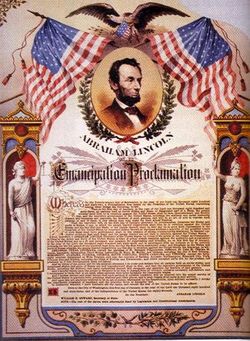
Emancipation_ProclamationFollowing the Union Army victory at Antietam, Maryland on September 17, 1862, President Abraham Lincoln issued a preliminary emancipation proclamation. This document gave the states of the Confederacy until January 1, 1863 to lay down their arms and peaceably reenter the Union, if these states continued their rebellion all slaves in those seceding states were declared free. Fearing the secession of neutral border slaveholding states such as Kentucky, Maryland, and Missouri, Lincoln’s Emancipation Proclamation, excluded those states which left almost one fifth of the four million slaves in bondage. Their freedom would come with the 13th Amendment, ratified in 1865. The Emancipation Proclamation also allowed freedmen to enlist into the Union Army. This provision struck a series blow to the economic structure of the seceding states as many black slaves labored for the Confederate Army or were engaged in vital agricultural or This Proclamation was not without its criticismindustrial production for the Confederacy.

This Proclamation was not without its criticism as as slavery and the issue of black freedom and equality were highly divisive issues even in the North. Confederate leaders threatened to summarily kill any black man they captured wearing a Union uniform. Anti-War Northern Democrats, who often attacked Lincoln’s policies, claimed that this one would irreparably harm the nation. Many northerners felt that freedmen would flock to the north and compete with white workers. That fear helped fuel the New York Draft Riots of 1863. Others feared the Proclamation would generate a race war between blacks and whites in the Confederacy.

More here. (Note: One post throughout February will be dedicated to Black History Month.)

Freezing Out the Bigger Picture

Justin Gillis in The New York Times:

IceScientists refer to global warming because it is about, well, the globe. It is also about the long run. It is really not about what happened yesterday in Poughkeepsie. The entire United States, including Alaska, covers less than 2 percent of the surface of the earth. So if the whole country somehow froze solid one January, that would not move the needle on global temperatures much at all. In fact, even this year’s severe winter weather has affected only part of the country. The Arctic blasts were caused by big dips in the jet stream that allowed frigid air to descend from the polar regions into the central and eastern United States. But toward the west, those dips have been counterbalanced by unusual northward swings of the jet stream that sent temperatures soaring. So while New Yorkers have been shivering this winter, California has been setting record or near-record high temperatures. The state is in its third year of a drought so severe that some towns have started to worry about running out of drinking water.

Alaska has been downright balmy for much of the winter. “Record warmth, confused plants: An Alaska January to remember,” The Anchorage Daily News declared. Likewise, large parts of Russia, Canada and Europe have had bizarrely warm temperatures this winter. Though the case is as yet unproven, a handful of scientists think the 50-degree temperatures in London and the frigid weather in Minneapolis might be a consequence of climate change. They contend the massive decline of sea ice in the Arctic has destabilized a weather pattern that normally keeps frigid air bottled up near the pole. That pattern is known as the polar vortex and its boundary is a fast-moving river of air called the jet stream. When the vortex weakens, the jet stream can develop big kinks, creating zones of extreme heat and cold.

More here.

The Precautionary Principle

PP Chart

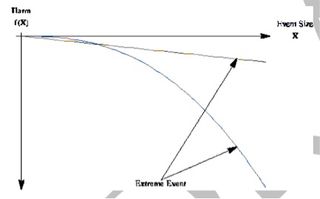
Yaneer Bar-Yam, Rupert Read, and Nassim Nicholas Taleb elaborate why under the precautionary principle GMOs should be banned but not nuclear power in a draft paper on the precautionary principle:

Genetically Modified Organisms, GMOs fall squarely under PP not because of the harm to the consumer [but] because of their systemic risk on the system. 

Top-down modifications to the system (through GMOs) are categorically and statistically different from bottom up ones (regular farming, progressive tinkering with crops, etc.) To borrow from Rupert Read, there is no comparison between the tinkering of selective breeding and the top-down engineering of taking a gene from an organism and putting itinto another. Saying that such a product is natural misses the statistical process by which things become ”natural”.

What people miss is that the modification of crops impacts everyone and exports the error from the local to the global. I do not wish to pay—or have my descendants pay—for errors by executives of Monsanto. We should exert the precautionary principle there—our non-naive version—simply because we would only discover errors after considerable and irreversible environmental damage…

In large quantities we should worry about an unseen risk from nuclear energy and certainly invoke the PP. In small quantities it may be OK and a matter of risk management—how small we should determine, making sure threats never cease to be local. Keep in mind that small mistakes with the storage of the nuclear are compounded by the length of time they stay around. The same with fossil fuels. The same with other sources of pollution.

More here.

Monday, February 10, 2014

Sunday, February 9, 2014

The Utter Silence of the Andalusian Refugee

9780691158518

Richard Marshall reviews Moshe Halbertal's Maimonides, in 3:AM Magazine:

Most philosophers are atheists, according to David Chalmers’ recent survey. Most philosophers of religion are not atheists according to the same survey. One might suppose that it is already being religious that draws an individual to study religion and this explains why this sub-set of philosophy is anomalous. But one might also expect that as the skeptical hypothesis is studied these individuals would fall into line with their other philosophical colleagues and eschew religious belief. Why don’t they? They may be stubborn or inept.

But an alternative might be that they notice that religions themselves don’t suppose they are answering any skeptical hypothesis (the enlightenment version or any other). Instead of being involved with a skeptical hypothesis they make an alternative metaphysical hypothesis. With this, they are making claims about fundamental reality, the reality that grounds even physics, the nature of mind, the creation of the world and so on. This is where Laurence Krauss, the eminent physicist and cosmologist, went so disastrously wrong in his discussion of nothingness. He mistook Heidegger’s question ‘why is there something rather than nothing?’ to be a scientific question rather than a metaphysical one. And much skepticism about religion makes the same kind of error when discussing religion. Religions make metaphysical claims about fundamental reality and skeptical arguments that treat them as alternative scientific arguments in the skeptical tradition misunderstand this. One of the consequences of accepting the metaphysical hypothesis of a religion is that it may be totally compatible with science and naturalism, both of which are usually presented as counterfactuals to religion by atheists.

If you doubt this then studying the Andalusian refugee Maimonides will be revealing and this terrific book by the philosopher Moshe Halbertal is a great place to begin. Maimonides is presented as a great religious thinker who thought science and reason the only route to knowledge, a man of action and passion and great intellect, who scorned anthropomorphic representations of fundamental metaphysical principles and similarly sneered at supernaturalism, miracles and spooky prophecy. Atheism based on a skeptical hypothesis gets little traction here.

More here.

Endless Love

Older-couple

Aaron Ben-Zeev in Aeon:

[M]any studies have consistently shown that sexual desire and intense romantic love decrease drastically over time. The findings show that the frequency of sexual activity with one’s partner declines steadily, occurring half as often after one year of marriage compared with the first month, and falling off more gradually thereafter, especially after the child-rearing years. This decline has been found in cohabiting, heterosexual couples and in gay and lesbian couples. Accordingly, many scholars have claimed that enduring intense love is uncommon, almost always evolving into companionate love which, as time goes by, is low in attraction and sexual desire. Love is a trade-off, the prevailing wisdom goes: we can either soar briefly to the highest heights or we can have contentment for many years. It is fruitless to despair like Emma and Hannah, because no one can have both.

Or can they? New research suggests that common wisdom might be wrong, and that a significant percentage of long-term couples remain deeply in love. In 2012, the psychologist Daniel O’Leary and his team at Stony Brook University in New York asked study participants this basic question: ‘How in love are you with your partner?’ Their national survey of 274 individuals married for more than a decade found that some 40 per cent said ‘very intensely in love’ (scoring seven on a seven-point scale). O’Leary’s team did a similar study of New Yorkers and found that 29 per cent of 322 long-married individuals gave the same answer. In another national study in 2011, the dating site Match.com found that 18 per cent of 5,200 individuals in the US reported feelings of romantic love lasting a decade or more.

Research in neuroscience identifies the possible mechanism behind these results. In a study published in 2012, Stony Brook psychologist Bianca Acevedo and colleagues reported on 10 women and seven men married an average of 21 years and claiming to be intensely in love. The researchers showed participants facial images of their partners while scanning their brains with fMRI. The scans revealed significant activation in key reward centres of the brain – much like the patterns found in people experiencing new love, but vastly different from those in companionate relationships.

I must admit that these findings puzzled me. Are we actually victims of romantic ideology? Should we cease striving for true love or hold out until a soul mate appears? In our modern times, these questions do not have an easy answer

More here.

Gay Propaganda and Russia’s Shrinking Public Space

Gessen_Author-Main

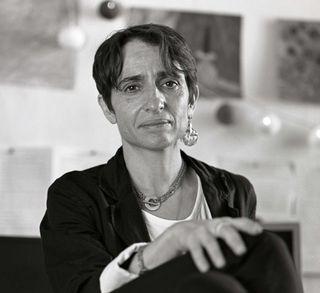
Meara Sharma interviews Masha Gessen in Guernica:

Guernica: What was your initial reaction to Joseph Huff-Hannon’s proposal that you document the love stories of LGBT Russians?

Masha Gessen: There was this very strange moment when the world discovered what was going on for LGBT people in Russia. It was very gratifying: I thought, there is a world out there, a saner world. It had felt sort of desperate and bizarre until that point.

At the time, I was getting all these phone calls and letters from people who wanted to do projects. Everyday, there’d be somebody interviewing me as a “lesbian living in Russia.” It got to the point where I would joke that I now have two jobs. I work as a writer and a journalist, and I also work as a lesbian. There’s a big difference between being out and having that be your sole identity, the only reason that someone is talking to you. My twelve-year-old daughter said, “I have a new job as well. I work as the daughter of a lesbian,” because she was also giving all these interviews.

So I was skeptical because I thought this book was going to be a “let’s show the Russian public that gay people aren’t so bad” project. And that would really miss the point. What’s going on in Russia is not that the public is homophobic, but that the Kremlin has unleashed a war. You don’t fight a war by distributing well-meaning books about how the other side really isn’t so bad. But when I talked to Huff-Hannon it became very clear that what he had in mind was much more localized: communicating to the people who felt most alone that they’re not alone.

More here.

We Cannot Control the Traffic

Screen-Shot-2014-02-06-at-5.01.44-PM-243x366

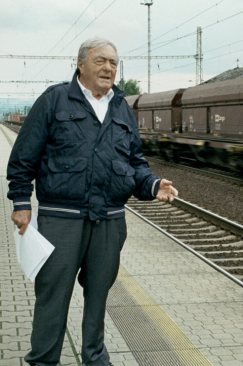
Leah Falk on Claude Lanzmann’s “The Last of the Unjust” in the LA Review of Books:

IN AN AGE of easy digital capture, we tend to think of visual and aural information as the ultimate proof of reality — a transient sunset over the walls of Rome or a conference with a nonagenarian can be recorded and broadcast almost as it happens. But merely recording and transmitting historic information isn’t a substitute for our informed reflection, the hours or years spent digesting what we’ve heard and seen. Having the data, as it were, doesn’t mean we immediately know what to do with it. Claude Lanzmann, whose 1985 film Shoah is composed of candid interviews with Holocaust survivors, SS officers, and others touched by the atrocities of the Holocaust, seems to know this: he kept some of that film’s footage away from the public eye for years, perhaps to allow it to develop its meaning.

In his new film, The Last of the Unjust, Lanzmann allows one of those preserved stories to emerge. (He’s done this before. In 2010’s Jan Karski, he responded to a popular — and, to Lanzmann, inaccurate — portrayal of the Polish resistance fighter with interview footage collected around the time he made Shoah.) Whereas Shoah’s unprecedented interviews made the war and its horrors feel newly fresh and wounding, in The Last of the Unjust,Lanzmann has allowed part of the story he presents to decay. He must make up for this with startling aesthetic choices that expose him as a filmmaker, thinker, and human being.

The footage in question is a series of interviews conducted in 1975 with Benjamin Murmelstein, the only surviving Jewish Elder of Terezín (Theresienstadt): Adolf Eichmann’s “model” or “show” ghetto, the death camp created to be paraded before the world. In a film presented to the International Red Cross to dispel the notion that the Nazis had interned Jews in death camps, Terezín was, infamously, portrayed as a town “given to the Jews.” (Murmelstein calls the camp “the town as if,” suggesting that while other interned Jews suffered unequivocally, in the undeniable present tense, the semistaged nature of Terezín warranted the use of the subjunctive — as if the Jews were living well under the Nazis).

Beginning in 1933, European Jewish institutions were forced to collaborate with the Nazis on the implementation of anti-Jewish policies. In the ghettos and camps, leaders of those institutions became a kind of local government under threat of terror, serving as liaisons between interned Jews and the SS. Murmelstein, a rabbi in the Viennese Jewish community, became one of these leaders and survived the war.

More here.