Jonathan Franzen’s Love Letter to the Doyen of Jewish Intellectual Vienna

Karl_kraus_100113_620px80

Adam Kirsch in Tablet:

For all its variety, Vienna’s Jewish intelligentsia had one thing in common: They all read Karl Kraus. In his autobiography, Elias Canetti describes how he moved to Vienna as a young man and was immediately told that he had to start reading Kraus’ magazine Die Fackel (“The Torch”) if he wanted to be au courant. Die Fackel was not just edited by Karl Kraus; after a few years, he was its sole contributor, and it became a decades-long virtuoso performance. The best English-language book about Kraus is titled The Anti-Journalist, by Paul Reitter, and Die Fackel can best be considered anti-journalism: journalism that attacked and criticized everyone, including other journalists.

In its pages, Kraus held up for mockery everything he hated about Viennese and Austrian society, which was everything: the government, the military, the law, business, advertising, consumer culture, the theater, literature, and above all, the press. His greatest target was Vienna’s main newspaper, the Neue Freie Presse, which was as authoritative in Austria then as the New York Times is in America today. To Kraus, however, the paper was both linguistically and politically corrupt, and he never tired of pointing out everything from clichéd language to actual cases of influence-peddling. In response, the editor of the Neue Freie Presse made a rule that Kraus’ name was never to be mentioned in its columns.

Kraus was such an influential figure, in such an influential time and place, that his name has come down to us through many channels. Canetti writes about him, as do Walter Benjamin and Gershom Scholem; he figures in a small way in the life of Freud, whom he predictably despised. But the actual substance of Kraus’ work remains curiously ghostly in the English-speaking world. While the whole run of Die Fackel is available online in the original German, only small selections have been translated. And even those are hard to appreciate, because of the intensely topical and critical nature of Kraus’ writing. His work took the form of commentary on local figures, passing scandals, the latest books and newspapers—none of which have even the slightest resonance for a 21st-century American reader. That Kraus exercised an enormous moral and literary authority is beyond doubt, but it’s impossible for us to really feel that authority; we have to take it largely on trust.

That situation is not changed by the appearance of The Kraus Project, the admirable and deeply eccentric new book by Jonathan Franzen.

More here.

Love & Death: Bollywood tackles assisted suicide

Jennifer Hancock in The Humanist:

Hancock2-300x240Suicide is a complex issue. To fully understand the implications of any assisted-suicide policy, we ideally should weigh the pros and cons. The problem is that most of our discussions about it are polarized. We choose a side based on personal or partisan preferences and argue without really engaging in the proper give-and-take that’s required for critical thinking. Likewise, one of the reasons it’s so hard to have a rational conversation about a person seeking help to end their life is that we all have a tendency to want to impose our ideas and our preferences on the actions and decisions of others. Do any of us have the right to second-guess another person’s decision about something as intimate as whether to continue living or not? And yet second-guessing is what we all do.

This brings us to Guzaarish (which in English means “request”). Ethan Mascarenhas (played by Hrithik) is a former magician paralyzed from the neck down as a result of a stage accident. He’s made a new career for himself as a motivational disc jockey, encouraging his listeners not to give up hope. It doesn’t matter your situation, he tells them, live life to the fullest and live life joyously. Indeed, Ethan is a very humanistic character. But on the fourteenth anniversary of his accident, when he calls his lawyer and friend Devyani to request her assistance in obtaining the right to commit suicide, his message comes into question. After a judge rejects Ethan’s petition, Devyani urges him to garner public support through his radio show. His campaign, which he dubs “Project Euthanasia,” becomes a big story. People are shocked and everyone in the country thinks they have the right to weigh in on whether Ethan should be allowed to die or not.

More here.

Delayed aging is better investment than cancer, heart disease research

From KurzweilAI:

SeniorsA new multi-university study shows that research to delay aging and the infirmities of old age would have better population health and economic returns than advances in individual fatal diseases such as cancer or heart disease. With even modest gains in our scientific understanding of how to slow the aging process, an additional 5 percent of adults over the age of 65 would be healthy rather than disabled every year from 2030 to 2060, revealed the study in the October issue of Health Affairs.

Put another way, an investment in delayed aging would mean 11.7 million more healthy adults over the age of 65 in 2060. The analysis, from top scientists at the University of Southern California (USC), Harvard University, Columbia University, the University of Illinois at Chicago and other institutions, assumes research investment leading to a 1.25 percent reduction in the likelihood of age-related diseases. In the U.S., the number of people aged 65 and over is expected to more than double in the next 50 years, from 43 million in 2010 to 106 million in 2060. About 28 percent of the current population over 65 is disabled. “In the last half-century, major life expectancy gains were driven by finding ways to reduce mortality from fatal diseases,” said lead author Dana Goldman, holder of the Leonard D. Schaeffer Director’s Chair at the USC Schaeffer Center for Health Policy and Economics. “But now disabled life expectancy is rising faster than total life expectancy, leaving the number of years that one can expect to live in good health unchanged or diminished. If we can age more slowly, we can delay the onset and progression of many disabling diseases simultaneously.”

More here.

Sunday Poem

Not the Heaven of Raccoons

philosophically and logistically speaking
there are some problems with my theory
of separate heavens for separate people
as my sister pointed out the other night
when we met for coffee after going to
the funeral home

wouldn't it be lonely she wondered

my response involves advanced theories of quantum physics in which the universe is expanding so fast that there are infinite alternate universes created which are almost identical to other universes except that in one universe there might be raccoons up in trees while hound dogs bark underneath them and in another universe the raccoons are in the cornfield feasting while in heaven right next door somebody has plugged a radio into a long extension cord and music from the local radio station has scared the raccoons away and bushels of corn are picked by a woman who loves the feel of the perfect ears in her hands because this is her heaven you see not the heaven of raccoons

by Julie Berry
from The Walnut Cracking Machine

Saturday, October 12, 2013

This Is the Average Man’s Body

James Hamblin in The Atlantic:

USA-Frontmanmain_jpgTodd is the most typical of American men. His proportions are based on averages from CDC anthropometric data. As a U.S. male age 30 to 39, his body mass index (BMI) is 29; just one shy of the medical definition of obese. At five-feet-nine-inches tall, his waist is 39 inches. Don't let the hyperrealistic toes fool you; Todd is an avatar. I gave Todd his name, and gave his life a narrative arc, but he is actually the child of graphic artist Nickolay Lamm as part of his Body Measurement Project.

Todd would prefer perfection—or at least something superlative, even if it's bad—to being average. But Todd is perfect only in being average. With this perfection comes the privilege of radical singularity, which is visible in his eyes. Though in his face this reads lonesome, Todd does have three international guyfriends. They met at a convention for people with perfectly average bodies, where each won the award for most average body in their respective country: U.S., Japan, Netherlands, and France. The others' BMIs, based on data from each country's national health centers, are 23.7, 25.2, and 25.6. I named them all Todd, actually, even though it could be confusing, because not everyone's name is a testament to their cultural heritage.

More here.

The Evolutionary Ethics of E. O. Wilson

Whitley Kaufman in The New Atlantis:

Dr_-E_O_-Wilson--006In his new book The Social Conquest of Earth (2012), naturalist E. O. Wilson argues that our best chance at understanding and advancing morality will come when we “explain the origin of religion and morality as special events in the evolutionary history of humanity driven by natural selection.” This is a bold claim, yet a familiar one for Wilson, who has been advocating something like this approach to human morality ever since his landmark 1975 work Sociobiology.

In that book, Wilson provocatively argued that “scientists and humanists should consider together the possibility that the time has come for ethics to be removed temporarily from the hands of the philosophers” and that ethics should instead be “biologicized”: questions once debated seemingly without end by philosophers will be settled by biologists using the same methods by which they have explained digestion, reproduction, and all of the other evolved drives and functions of the body. The unification of science and morality, on Wilson’s count, would be a much-needed revolution for ethics. ut it has also long been one of the desiderata of the Enlightenment project — which has been so successful in fulfilling its promise of advancing our scientific knowledge and our material wellbeing, yet seems to have made so little progress in settling debates over ethics. The consilience of the human and natural sciences that Wilson’s sociobiological project promises would carry on the scientific method’s “unrelenting application of reason” to the field of ethics, and finally begin to establish a stable, wise, and enduring ethical code for the future.

More here.

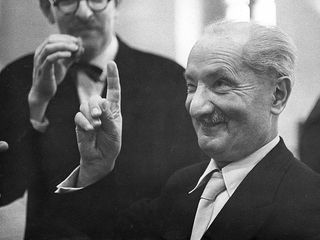
Jonathan Franzen’s ‘Kraus Project’

13SUBFAWCETT-articleInlineEdmund Fawcett at the NY Times:

Placing Kraus was never easy, least of all for Kraus. Like many educated West European Jews, he favored assimilation, not Zionism. In 1899 he abandoned Judaism and in 1911 joined the Catholic Church, only to abandon that in 1923. His great love was the aristocrat Sidonie Nadherny; when she ended their long liaison, some guessed it was because he was “still a Jew” — a phrase Kraus himself had used satirically to mock veiled hostility to assimilated Jews. More probably she saw too little room for a second person in Kraus’s one-man show.

In making a present-day case for Kraus, Franzen has avoided the easy choice. Rather than a tasty serving of epigrams, he and two scholarly Germanists have chosen a pair of essays from the early 1900s that, Franzen believes, speak powerfully to us now. The first is on Heinrich Heine (1797-1856), who along with Goethe was one of Germany’s most famous 19th-century poets. Kraus aimed to knock Heine off the perch where “progressive” middle-class taste had placed the poet as a domesticated house radical. The second essay championed the sparkling musical farces and unpreachy social comedies of an Austrian actor-playwright, Johann Nestroy (1801-62). In both pieces Kraus attacks cultural pretension, false sentiment, cheap irony and reckless faith in progress, especially the economic and technological kinds.

more here.

Drowning in the Digital Abyss

Gravity-1-1_jpg_600x529_q85

J. Hoberman in the NYRB blog:

That audience numbers and sales of 3-D equipment to theaters have decreased this year suggests that the novelty of stereo movies has worn off. As sometimes happens, the fullest expression of a particular pop culture trend appears with the trend itself in apparent decline. In any case, the possibility of using stereoscopy—the side by side images that are the basis of 3-D—to create the illusion of depth is hardly new: the stereopticon was a popular nineteenth-century parlor toy and Edwin Porter, an assistant to motion-picture pioneer Thomas Alva Edison, developed an early 3-D system based on superimposed green and orange images.

But the current, digitally-based work in stereo filmmaking began in earnest in 2003 with James Cameron’s under-the-sea IMAX documentary Ghosts of the Abyss, and continued with such films as Cameron’s Avatar, which succeeded hisTitanic as the highest-grossing motion picture in history. Avatar was still in release when some sixty new 3-D films were announced, including not a few finished movies crassly “retro-fitted” with 3-D. Most were undistinguished.Gravity is the first 3-D movie since Martin Scorsese’s 2011 Hugo to suggest that the filmmaker has pondered the nature of stereo filmmaking rather than its effects.

A fantasy about Georges Méliès, Hugo was a celebration of so-called movie magic. Gravity is more material in its concerns. No previous 3-D feature has ever given a more physical sense of the void. The characters hover on the edge of eternity. When they fall away from the camera we know that they will be falling, or rather spinning head over heels, into negative space forever.

More here.

The Library: A World History

473ae2c4-321a-11e3-a16d-00144feab7deSarah Bakewell at The Financial Times:

In 1338, the library of the Sorbonne in Paris had 1,728 manuscripts in its register, 300 of them marked lost. In 2013, the British Library has almost 100,000 times as many: around 170m items, with 3m more streaming in every year. The explosion of demands made on libraries is dizzying yet some elements remain constant: acquire good stuff, keep it safe, make it findable, and give readers a pleasant environment in which to consult it. Sounds simple.

James Campbell’s new history of library architecture, with spectacular photographs by Will Pryce, takes us on a global tour of how these requirements have been fulfilled over the years, from the clay tablet storehouses of ancient Mesopotamia and the beautiful repositories of Buddhist sutra blocks and paper prints in Korea and Japan, to the grandiose designs and multimedia extravaganzas of the 21st century. One recent example came too late to make the book: the £189m Library of Birmingham, which opened last month. Designed by the Dutch firm Mecanoo, and featuring an art gallery, cafés, theatre, restaurant, terraces, children’s area, media centre and herb gardens, it stretches the meaning of the word “library” to its limits, although, somewhere inside it, you can find books, too.

more here.

The Miley Cyrus Complex – An Ontology of Slut-Shaming

181621279

Laurie Penny in The New Statesman (via The Brooklyn Institute for Social Research):

What does empowerment look like for young women today? That’s the debate du jour and, as ever, it stars a pretty young pop star in her pants. It all started when Sinead O’Connor wrote an open letter to the perennially halfnaked sexpot of the moment, Miley Cyrus, advising her not to let the male-dominated music industry “make a fool” of her.

Cyrus responded, as she usually does, by sticking out her tongue and taking off her clothes. Other female rock stars weighed in: Amanda Palmer wants O’Connor to respect Cyrus’s integrity as an artist. Annie Lennox is disturbed by porny music videos. Whose camp are you in? And who is being exploited – apart from the millions of readers who have flicked guiltily through endless snaps of Miley Cyrus in her scanties just to check how shocking they really are?

Nobody has covered themselves in glory in this insalubrious episode. Not O’Connor, whose “motherly” advice strayed into slutshaming, as she warned the younger singer about the dangers of being a “prostitute” and advised her that “your body is for you and your boyfriend”; not Cyrus, whose response was a cruel jab at the older woman’s mental health history. Nor the rest of us, the clickbait hunters and tabloid outrage merchants rubbing our hands with glee.

This is a familiar discussion. On the one hand, the worried middle-aged woman lecturing the ingénue on the importance of wearing clothes in public; on the other, the girl who is sick of being cast as a pure and perfect princess, who wants to have fun and feel powerful and has limited options for doing so in a society that remains intolerant of women trying to claim space as anything at all except hot and half-dressed.

More here.

alice munro

La-afp-getty-sweden-nobel-literature-prize-files-j-20131010David L. Ulin at the LA Times:

Alice Munro was nowhere to be found on Thursday morning when the Swedish Academy awarded her the Nobel Prize in literature. The permanent secretary of the Swedish Academy, Peter Englund, had to leave her a voice mail. The short story writer surfaced briefly for a quick interview with the Canadian Broadcasting Corp., and then dropped out of sight.

This is utterly in character, for Munro has never sought the spotlight during her remarkable career. The author of 14 books of fiction, she's well-known to readers around the globe and a perennial Nobel contender for the acuity of her vision, the precision of her voice. Now 82, Munro publishes regularly in the New Yorker, and several of her stories have been translated into film, including “The Bear Came Over the Mountain,” which was adapted by Sarah Polley into the 2006 film “Away From Her.”

In 2009, Munro won the Man Booker International Prize for her body of work, and this year, shortly after the publication of her most recent story collection “Dear Life,” she announced she would not be writing anymore.

more here.

The search for other Earths

Alvin Powell in the Harvard Gazette:

ScreenHunter_355 Oct. 12 09.05Scientists at the Harvard-Smithsonian Center for Astrophysics (CfA) are among those drafting the target list for NASA’s next planet-finding telescope, the orbiting Transiting Exoplanet Survey Satellite, or TESS, which will search the Earth’s galactic neighborhood for planets that might support life.

TESS cleared a major hurdle in April, gaining NASA approval for final design and implementation. Pending a series of reviews, TESS is expected to launch sometime in early 2018 and focus on Earth’s stellar neighbors, 500,000 of the nearest and brightest stars. Their proximity will raise the chances for follow-up observations of systems that show the telltale dimming in starlight that indicates a planet is crossing the star’s face.

Harvard-Smithsonian astronomer David Latham, the project’s science director, said the CfA’s work eventually will involve as many as 36 scientists, fellows, and students, as well as possibly hundreds more from around the world who will pore over data, which will be released publicly within months of being collected.

“These are the nearest and best and brightest examples of transiting planets we’ll ever have, at least from the Earth,” Latham said.

More here.

Rise and shine: the daily routines of history’s most creative minds

Benjamin Franklin spent his mornings naked. Patricia Highsmith ate only bacon and eggs. Marcel Proust breakfasted on opium and croissants. The path to greatness is paved with a thousand tiny rituals (and a fair bit of substance abuse) – but six key rules emerge.

Oliver Burkeman in The Guardian:

Daily-rituals-010One morning this summer, I got up at first light – I'd left the blinds open the night before – then drank a strong cup of coffee, sat near-naked by an open window for an hour, worked all morning, then had a martini with lunch. I took a long afternoon walk, and for the rest of the week experimented with never working for more than three hours at a stretch.

This was all in an effort to adopt the rituals of some great artists and thinkers: the rising-at-dawn bit came from Ernest Hemingway, who was up at around 5.30am, even if he'd been drinking the night before; the strong coffee was borrowed from Beethoven, who personally counted out the 60 beans his morning cup required. Benjamin Franklin swore by “air baths”, which was his term for sitting around naked in the morning, whatever the weather. And the midday cocktail was a favourite of VS Pritchett (among many others). I couldn't try every trick I discovered in a new book, Daily Rituals: How Great Minds Make Time, Find Inspiration And Get To Work; oddly, my girlfriend was unwilling to play the role ofFreud's wife, who put toothpaste on his toothbrush each day to save him time. Still, I learned a lot. For example: did you know that lunchtime martinis aren't conducive to productivity?

More here.

Friday, October 11, 2013

We Know Your Genes Can Influence Your Health, But Can They Also Influence Who You Love?

Megan Gambino in Smithsonian:

GeneImagine a dating site where, in addition to a completed survey, you have to submit a genetic profile. This could be the future of matchmaking, especially now that some scientists think that our compatibility genes—the same genes that determine whether an organ transplant will take—play a role in sexual attraction. Daniel Davis, an immunologist at the University of Manchester in England, tells the story of these distinct genes and their impact on our relationships in his new book, The Compatibility Gene: How Our Bodies Fight Disease, Attract Others, and Define Ourselves .

In a nutshell, can you explain the big idea—the thesis—of your new book, The Compatibility Gene?

The big idea is that a surprising amount of who and what we are comes from the way our species has evolved to survive disease. Put another way, this is about the idea that our immune system influences many aspects of human biology. We each have a very similar set of genes—the 25,000 or so genes that make up the human genome—but there are variations that give us individual characteristics such as our hair or eye color. Crucially, the few human genes in this story—our compatibility genes—are those that vary the most from person to person. These genes are, in effect, a molecular mark that distinguishes each of us as individuals.

What role do compatibility genes play?

These genes are medically important because they influence the success of many types of medical transplants. These are the genes that doctors try to match in bone marrow transplantation, for example. And importantly, the versions of these genes that you have inherited influence which diseases you are susceptible or resistant to.

More here.