
Category: Recommended Reading
WHY DID RALPH ELLISON DESPISE MODERN JAZZ?
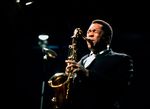
Ellison’s skepticism regarding modern jazz may be, in large measure, a mark of generational conflict. The musicians he revered, such as Louis Armstrong, Duke Ellington, Jimmy Rushing, Mahalia Jackson, and Charlie Christian, were born between 1899 and 1916. Charlie Parker, whom Ellison admired despite his wariness about the historical significance of his musical style, was born in 1920; Miles Davis and John Coltrane, whom he actively rejected, were born in 1926; Mingus, in 1922; Taylor, in 1929. Ellison was born in 1913; the musicians he loved had their styles set by the time of the writer’s own maturity.
More important, the experiences and the traditions of later jazz musicians may have differed in crucial ways from those of Ellison’s generation and earlier. For better or worse, traditions shift and dissipate; they’re worn away by political and societal changes, they’re replaced by a more self-conscious composition of influences and a more self-willed construction of identity. Ellison may well be seen as a leading theorist of communitarian values and the culture that develops from them. What’s certain is that Ellison perceived, and was troubled by, a shift in the social function of jazz: it stopped being connected to the popular music that blacks listened to.
more here.
a posthuman ethics

Louis Borges once grouped animals into three classes: those we watch television with, those we eat, and those we are scared of. Another more psychoanalytically inflected way of classifying these relationships might be the oedipal (you and me on the same sofa), the instrumental (you will end up by being eaten) and the fantasmatic (how exotic, sleek, dangerous you are). In Braidotti’s view a posthuman ethics implies an end to forms of “anthropolatry” which not only obscure emergent forms of species thinking but consign all other species to dangerous, destructive and ecologically untenable forms of subordination. If “becoming animal” in Hiberno-English is an occasional and unfortunate consequence of excessive alcohol consumption, for Braidotti it is a way of realising the irretrievably embodied, material nature of our existence on a planet that we share with innumerable other species that we continue to destroy in vast numbers. The current rate in the loss of species diversity alone is similar in intensity to the event that 65 million years ago wiped out the dinosaurs. As against this, the emerging fields of eco-criticism and animal studies show the new kinds of transdisciplinary formations that are coming to the fore in the wake of the crisis of the human in the Anthropocene. In a post-Orwellian move, some animals are beginning to recognise that they might not be more equal than others and are starting to wonder what this might mean for the planet.
more here.
Advancing Leadership
John S. Rosenberg in Harvard Magazine:

Ameliorating “controversial and systemic” problems, they wrote, depends on “new action models…that involve cross-sector collaboration based on cross-profession expertise.” The best chance to build effective collaborations, in turn, lay in “a new field of practice…particularly well suited to the capabilities and desires of experienced leaders” who have already proven their capacity to shape organizations and effect change in at least one realm and are now eager to develop “solutions to significant societal and global problems.”
More here.
Does Thinking Fast Mean You’re Thinking Smarter?
Maria Konnikova in Smithsonian:

Psychologist Michael Woodley of Umea University in Sweden and his colleagues had enough confidence in the link, in fact, to use more than a century of data on reaction times to compare our intellect with that of the Victorians. Their findings call into question our cherished belief that our fast-paced lives are a sign of our productivity, as well as our mental fitness. When the researchers reviewed reaction times from 14 studies conducted between the 1880s and 2004 (including Galton’s largely inconclusive data set), they found a troubling decline that, they calculated, would correspond to a loss of an average of 1.16 IQ points a decade. Doing the math, that makes us mentally inferior to our Victorian predecessors by about 13 IQ points.
More here.
Thursday, March 20, 2014
On the Wrong Side of Globalization
Joseph E. Stiglitz in the New York Times:
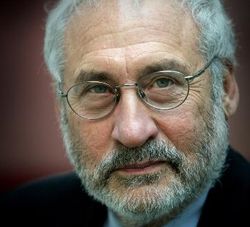
The conflicting views about the agreements are actually tearing at the fabric of the Democratic Party, though you wouldn’t know it from President Obama’s rhetoric. In his State of the Union address, for example, he blandly referred to “new trade partnerships” that would “create more jobs.” Most immediately at issue is the Trans-Pacific Partnership, or TPP, which would bring together 12 countries along the Pacific Rim in what would be the largest free trade area in the world.
Negotiations for the TPP began in 2010, for the purpose, according to the United States Trade Representative, of increasing trade and investment, through lowering tariffs and other trade barriers among participating countries. But the TPP negotiations have been taking place in secret, forcing us to rely on leaked drafts to guess at the proposed provisions. At the same time, Congress introduced a billthis year that would grant the White House filibuster-proof fast-track authority, under which Congress simply approves or rejects whatever trade agreement is put before it, without revisions or amendments.
Controversy has erupted, and justifiably so. Based on the leaks — and the history of arrangements in past trade pacts — it is easy to infer the shape of the whole TPP, and it doesn’t look good. There is a real risk that it will benefit the wealthiest sliver of the American and global elite at the expense of everyone else. The fact that such a plan is under consideration at all is testament to how deeply inequality reverberates through our economic policies.
More here.
Heidegger’s ‘black notebooks’ reveal antisemitism at core of his philosophy
Philip Oltermann in The Guardian:
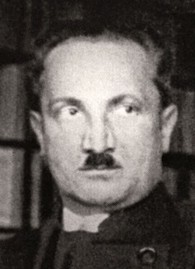
The philosopher's sympathies for the Nazi regime have been well documented in the past: Heidegger joined the party in 1933 and remained a member until the end of the second world war. But antisemitic ideas were previously thought to have tainted his character rather than touched the core of his philosophy – not least by Jewish thinkers such as Hannah Arendt or Jacques Derrida, who cited their debt to Heidegger.
This week's publication of the “black notebooks” (a kind of philosophical diary that Heidegger asked to be held back until the end of his complete work), challenges this view. In France the revelations have been debated vigorously since passages were leaked to the media last December, with some Heidegger scholars even trying to stop the notebooks' publication.
In Germany, one critic has argued that it would be “hard to defend”Heidegger's thinking after the publication of the notebooks, while another has already called the revelations a “debacle” for modern continental philosophy – even though the complete notebooks were until now embargoed by the publisher.
More here.
The infinite voices of Philip Roth

Sure, Roth is an American novelist. But it was his European capers that allowed him to develop his sad, hysterical Americana voices, his novels of fantasy arguments. (In a lovely aside, Pierpont says that Roth’s initial title for The Counterlife had been The Metamorphosis – “but the title was already taken”.) He took the ordinary realist plots of James and Chekhov – the plots of repressed desire, of thwarted hope, of marriages gone bad and rancorous, of compromise and dead illusions – but then voiced the frenzied monologues and thought balloons of characters trapped in such situations. Or even put himself inside them, too, using his own name. The setting is grisaille, but the foreground is all cartoon. “I didn’t know how to control a non-realistic book”, he tells Pierpont, and that may be right – but he is not a pure realist, either. Metafiction and fantasia are also his fiction’s modes – it’s just that they are used for unusually deflationary purposes. Portnoy, say, with its famous punchline of an ending – “So [said the doctor]. Now vee may perhaps to begin. Yes?” – closes the narrative on a hazy seal of realism: it turns out that Portnoy’s monologue has only been in his head – for the high jinx of Portnoy’s voice may not be accurate to a real conversation. As a fantasy of consciousness, however, who can doubt it?
In fact, throughout his thirty-one books, Roth has been so much the novelist of riff and rant and self-conversation that I wonder if it really makes sense to see him as the author of discrete novels. In the retrospective of Pierpont’s book, his whole oeuvre begins to form something more like one great improvisatory frieze: not books so much as sequences – comic bits, crazed arguments, stalled paragraphs.
more here.
The Life and Work of Marianne Moore

'The Infant Modernists' is one of the great unwritten works of critical biography. Shiningly specific childhood experience, the oeuvres of Woolf, Joyce and T S Eliot all insinuate, lies at the heart of their sophisticated mystery. John Updike put his finger on this when he parodied Eliot's later critical prose with an essay called 'What is a Rhyme?', which begins, with ponderous coyness, 'I do not know whether all childhoods are painful. My own, or that drastically edited set of snapshots which is all that remains to me of my own, did (or does) not seem especially so.'
If there is ever an adequate biography of Eliot, it will regroup and recolour all the 'drastically edited' snapshots that he scattered through his writings. Whoever attempts the restoration work will find an indispensable model of imaginative scholarship in Linda Leavell's Holding On Upside Down. As Leavell notes, Eliot and Marianne Moore 'were born within a year of each other in the same western city' (St Louis; Moore was born in November 1887). This remarkable coincidence for modernist poetry, she observes, 'may be at least a little explained by the value their grandfathers placed on education'. It is the formative experience of that turn-of-the-century ancestral imperative – New World in ambition, Old World in breadth – that the first half of this biography brings valuably to life.
more here.
Jean-Baptiste Carpeaux is gloriously uncategorizable

Carpeaux reminds us that many of the experiences that matter most—certainly many of the artistic experiences that matter most—can’t be fit into column A or column B, as if they were answers filled out on a multiple choice test. This man who went through the rigors of the Ecole des Beaux-Arts (the mother of all art academies), competed for all the prestigious prizes, and after many frustrations ultimately won the Prix de Rome, loved the art of the past with a passion so overheated that it freed him from conventional academic thinking. For Carpeaux, tradition wasn’t rules and regulations, but the supernatural heroism of Michelangelo and Raphael, which astonished him when he finally reached Rome in 1856. It may be Carpeaux’s yearning for an unattainable heroic power that gives his work its captivating energy and anxiety. His mythic protagonists aren’t quite as dramatically dark as Delacroix’s. His countesses aren’t quite as sublimely sensuous as Ingres’s. What Carpeaux gives us instead is the ordeal of the nineteenth-century imagination—the imagination that reaches for an ultimate greatness that remains just beyond his grasp. You can’t quite explain the particular quality of this work, which is by turns romantic and realist and classic and sometimes simultaneously all of the above. You feel that unresolvable power in every gallery of this remarkable retrospective. The exhibition has a terrific title—“The Passions of Jean-Baptiste Carpeaux”—but it could as easily have been called “The Ambiguities of Jean-Baptiste Carpeaux.”
more here.
More on BICEP2 and the inflationary universe story from Sean Carrol
Sean Carroll at Preposterous Universe:
Here I am at an extremely stimulating meeting on gravity and quantum spacetime in Santa Barbara, but I skipped yesterday’s afternoon session to talk on the PBS News Hour about the new inflation results:
There’s a great parallel (if the BICEP2 result holds up!) between Monday’s evidence for inflation and the Higgs discovery back in 2012. When talking about the Higgs, I like to point out the extraordinary nature of the accomplishment of those physicists (Anderson, Englert, Brout, Higgs, Guralnik, Hagen, Kibble) who came up with the idea back in the early 1960′s. They were thinking about a fairly general question: how can you make forces of nature (like the nuclear forces) that don’t obey an inverse square law, but instead only stretch over a short distance? They weren’t lucky enough to have specific, detailed experimental guidance; just some basic principles and an ambitious goal. And they (independently!) proposed a radical idea: empty space is suffused with an invisible energy field that affects the behavior of other fields in space in a profound way. A crazy-sounding idea, and one that was largely ignored for quite a while. Gradually physicists realized that it was actually quite promising, and we spent billions of dollars and many thousands of scientist-years of effort to test the idea. Finally, almost half a century later, a tiny bump on a couple of plots showed they were right.
The inflation story is similar. Alan Guth was thinking about some very general features of the universe: the absence of monopoles, the overall smoothness and flatness. And he proposed an audacious idea: in its very earliest moments, the universe was driven by the potential energy of some quantum field to expand at an accelerated rate, smoothing things out and diluting unwanted relics like monopoles. Unlike the Higgs idea, inflation caught on quite quickly, and people soon realized that it helped explain the origin of density perturbations and (potentially) gravitational-wave fluctuations.
More here.
Christopher Walken Dances Over the Years
For Sughra Raza:
Running Free: focusing on the great outdoors instead of the fancy footwear
Rose George in The Guardian:

…I've read a few, from Murakami to the recent Running Like a Girl by Alexandra Heminsley. They all have the same problem: they run their course before the end. I began to wonder whether it is possible to write interestingly about something that is, after all, just putting one foot in front of the other, at a speed of your choice. What is compelling about running is what goes on along with it: inside or outside your head. The best writers about it are writing about something else: about being alive, in Askwith's case, in predawn darkness in a Northamptonshire field; about being at peace with freezing rain and puddles and mud and bogs, rather than scared of them, and rather than putting up a barrier of weatherproof, waterproof health and safety against them. This is the Fifth Age of Running, though by now I've lost track. It's also what he calls Slow Running, although it's nothing to do with pace and everything to do with quality, as Slow Food is about valuing ingredients. In Slow Running, the ingredients are the outside world, and the runner's focus turns from digital numbers and Big Running kit to muntjacs and mice; to the ghosts of night-time animals; to exactly how the wind is blowing.
More here.
The $1,000 genome
Erika Check Hayden in Nature:

In the eyes of many, a fair share of the credit for this success goes to a grant scheme run by the US National Human Genome Research Institute (NHGRI). Officially called the Advanced Sequencing Technology awards, it is known more widely as the $1,000 and $100,000 genome programmes. Started in 2004, the scheme has awarded grants to 97 groups of academic and industrial scientists, including some at every major sequencing company. It has encouraged mobility and cooperation among technologists, and helped to launch dozens of competing companies, staving off the stagnation that many feared would take hold after the Human Genome Project wrapped up in 2003. “The major companies in the space have really changed the way people do sequencing, and it all started with the NHGRI funding,” says Gina Costa, who has worked for five influential companies and is now a vice-president at Cypher Genomics, a genome-interpretation firm in San Diego, California.
More here.
Thursday Poem
Oligodendroglioma
Seventeen letters across.
Draw it on paper,
write it down. Caterpillar,
centipede. See, it moves
off the page, and
drops, a soft tractor
under leaf or tissue.
Now expand the tree,
find your terminology –
Neoplasm, Brain –
on a lower branch
crawling with information
like cells appear well-defined,
compact, and rounded.
Actually, avascular.
Macroscopically, a pinkish smear.
Imaging studies show, how
they grow outwards from
white matter into grey matter.
Chemosensitive, yes.
Median age at diagnosis,
40-50 years. Either
sex. Shave your hair.
In a week or so.
Depends on size,
location. Ordinarily, no.
She wanted everything I had
on Oligodendroglioma.
.
by Andrew Steinmetz
from The Fiddlehead. No. 128, Winter 2003
Wednesday, March 19, 2014
An Interview with Kenneth Roth, Executive Director of Human Rights Watch
Jessica Kuhn at the Fletcher Forum of World Affairs:
FLETCHER FORUM: As Executive Director of Human Rights Watch since 1993, you’ve no doubt been witness to a multitude of global conflicts, crises, and challenges. And yet it seems that there is an almost unprecedented amount of crises around the world in 2014—from Syria to the Central African Republic to Ukraine. From your perspective, are today’s conflicts and crises fundamentally different or more intractable than those of the past twenty years? Has Human Rights Watch had to adjust the way it carries out its work to reflect these new realities?
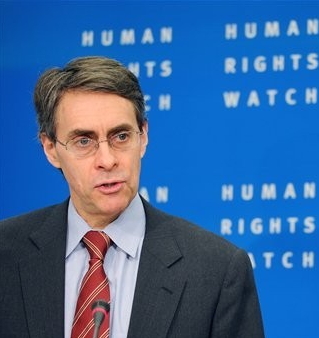
However, as non-Western nations have gained in relative influence, we have established a series of advocacy centers in such places as Brazil, India, Japan, and South Africa. Many of these countries do not have a history of promoting human rights in their foreign policies, but at home they are now thriving democracies. By working with local civil society and encouraging the national media to focus on their government’s foreign policy, we are working to bring that foreign policy more in line with the values informing their domestic policy. Our aim is to increase our capacity to exert influence on abusive governments from an ever-wider range of powerful international actors.
More here.
The Muslims are Coming!
Tanjil Rashid reviews the book by Arun Kundnani in the Financial Times:
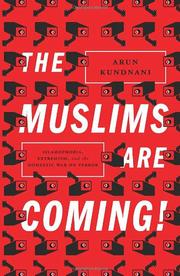
In The Muslims are Coming!, a critique of counterterrorism policy by Arun Kundnani, the west’s “domestic war on terror” at times resembles a Greene novel populated by a cast of counterterrorism warriors even unlikelier than a hawker of Hoovers in Havana.
Take, for example, Shahed Hussain, an American petrol pump attendant with a trade in fake drivers’ licences, whom the Federal Bureau of Investigation roped into ensnaring Muslims into terror plots against US targets – planned and financed by the US government itself.
As Judge Colleen McMahon stated in 2011 when sentencing one of Mr Hussain’s catches: “Only the government could have made a terrorist out of [James] Cromitie, a man whose buffoonery is positively Shakespearean in scope.” It is a pity the judgment is not quoted in full, for it succinctly exemplifies Kundnani’s argument. “[The government] created acts of terrorism out of his fantasies of bravado and bigotry,” she said, “and then made those fantasies come true.”
More here.
The curious career of Maximilian Schell
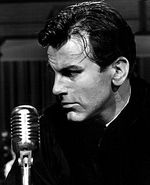
The curious career of Maximilian Schell ended last month when he died at the age of 83. Maximilian Schell was most famous for playing Nazis. But he spent the other half of his career playing Jews. After the Second World War, there was no shortage of film and television roles for German-speaking actors. An actor could play, for instance, the classic psychopathic wartime Nazi; the quiet concealed postwar Nazi; the subversive Nazi; the sympathetic confused Nazi; the hilarious bumbling Nazi. The world could not satisfy its hunger for watching Nazis onscreen. We wanted to see them cross-examined, punished, caught in the act. We wanted to bear witness to them, see them doing anything at all – shine their shoes, perform the most unexceptional tasks. We wanted to see the Jews too – brave, downtrodden and then, in later years, compromised, lost. Maximilian Schell had everything the roles required – he was dashing, intense, German-speaking, with a talent for portraying seductive emotional violence.
Maximilian Schell’s acting obsession began with his first film Children, Mothers, and a General (1955), in which Schell played a Nazi deserter fleeing from the Russian front.
Schell made a second film in 1955 called The Plot to Assassinate Hitler, with a small role as a co-conspirator in the plot. Schell would debut in Hollywood as a Nazi soldier in the 1958 film The Young Lions (which starred a platinum-blonde Marlon Brando, also a Nazi). He would go on to perfect his Nazi personas in The Condemned of Altona (1962) – as a disturbed Nazi war criminal living in the basement of his family’s mansion – and inCounterpoint (1968), as a music-loving Nazi general who forces an imprisoned conductor to create a symphony for his captors.
more here.
on magic

Shakespeare uses verbal magic, cantrips and ditties, nonsense songs and verses throughout the plays, but in Othello he gives a glimpse of how powerful a spell becomes when it’s no longer oral, but fixed in material form. The fatal handkerchief is no ordinary hanky; it’s a love spell, and it was made with gruesome and potent ingredients (mummified “maiden’s hearts”) by a two-hundred-year-old sibyl in Egypt—Egypt being the birthplace and pinnacle of magic knowledge. “In her prophetic fury,” Othello tells Desdemona, this crone “sew’d the work.” His mother kept it to ward off the evil eye from her marriage and secure the love of her husband, Othello’s father, and Othello has passed it on to his wife to the same ends. Unlike the witches’ broth in Macbeth, Othello the Moor’s silk handkerchief is made to last; in one sense it is a text, woven to keep active and working through time.
Muslim practices are frequently scoffed at for their superstition, but in many respects they resemble both Judaic and Catholic ritual trust in the power of the word, especially transfused into things—into relics or paper or stones or…clothes. They were charmed with many kinds of conjuration, formulaic repetitions with not a word changed or out of place from the Qur’an, the sayings of the Prophet and other texts established by custom: the ninety-nine epithets of god, the stories of the saints.
more here.
Does de man’s past explain his criticism?
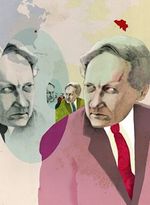
So when it was learned, in the spring of 1987, three and a half years after de Man’s death, that he had written during the war for two Belgian newspapers controlled by the Nazis more was at stake than the reputation of a deceased academic. The articles were found by a Belgian graduate student named Ortwin de Graef; he informed two former students of de Man’s, and they spread the news among the de Manians, all of whom were stunned. For the few people who knew, or thought they knew, anything about de Man’s past—de Man was always highly discreet about personal matters—the revelation upended the image they had formed. There was a vague understanding that de Man had had a complicated war, but it was assumed that this was because of his antipathy to the German occupiers, not, as it now appeared, the other way around.
At a conference at the University of Alabama in October, 1987, a group that included some of de Man’s former students and colleagues decided to publish all the wartime journalism—some two hundred articles, most of them column-length, that de Man wrote for the two German-controlled papers, plus pieces he published in other venues between 1939 and 1943—along with a companion volume of thirty-eight scholarly responses.
more here.