
Nick Marx & Matt Sienkiewicz at The Conversation:
 While Jimmy Kimmel cries and Jon Stewart rants, the right wing in the U.S. has successfully depicted itself as the new home for free speech and cutting edge comedy. We explored this development in our book, “That’s Not Funny: How the Right Makes Comedy Work for Them.”
The right has become a home for comedians not by making political arguments through jokes, but by positing that there are funnier things to do than to argue.
Liberal comedy and political satire have stuck to the same formula of Stewart’s “The Daily Show” for much of the 21st century.
It goes something like this: A sarcastic, eloquent host uses meticulously researched data to describe a pressing social issue, and then delivers a punchline directed at right-wing hypocrisy. The resultant pairing of righteous laughter and anger has been repeated by “The Colbert Report,” “Full Frontal with Samantha Bee” and “Patriot Act with Hasan Minhaj,” among other comedy programs.
These satirical shows filled the void left by an increasingly profit-driven news media. However, they have come to prioritize political preaching at the expense of laughs.
More here.
Enjoying the content on 3QD? Help keep us going by donating now.
 A twelve-hour opening shift and I dripped snot on the first customer’s debit card. But that’s Christmas tree season. Other than the barrel fire, there’s no place to get warm, so I wore fleece thermals with jeans on top, pockets full of pine needles already. Plus a hoodie and a blanket-lined denim trucker jacket that passes for hip. Ty doesn’t wear a coat, just three Carhartt hoodies on top of each other. Jack wears a knee-length puffer jacket from Goodwill. Brian wears a hoodie with the hood cinched tight around his face and his beard poking out. He looks the most like an elf. He also looks the most like Santa. Kids like to bring up one or the other. Sometimes we try to wear gloves, but they get caked in sap.
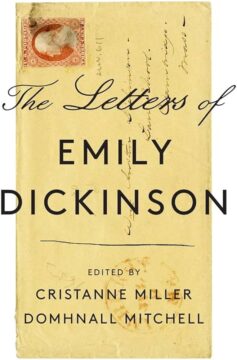 ‘A Letter is a joy of Earth –/It is denied the Gods’, Emily Dickinson wrote in 1885, a year before she died, aged fifty-five, at her home in Amherst, Massachusetts. It was a joy she indulged freely. This monumental new edition of her correspondence contains 1,304 items, including all the previously published letters, further uncollected material and some two hundred ‘letter-poems’. Still, all this represents just a fraction of Dickinson’s total correspondence.
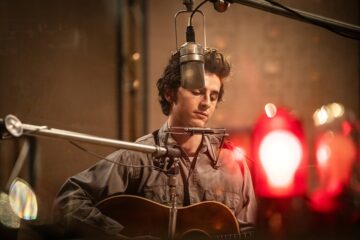 Bob Dylan is so inherently unclassifiable that, when the great filmmaker Todd Haynes made
  Andrew Cassy had spent his working life in a telecommunications research department until a diagnosis of Parkinson’s disease in 2010 pushed him into early retirement. Curious about his illness, which he came to think of as an engineering problem, he decided to volunteer for clinical trials. “I had time, something of value that I could give to the process of understanding the disease and finding good treatments,” he says.
 At first it seemed that we were doomed to bear witness to a grim spectacle, a media frenzy over the appalling details of a nauseating crime that left its victim, in her own words, “
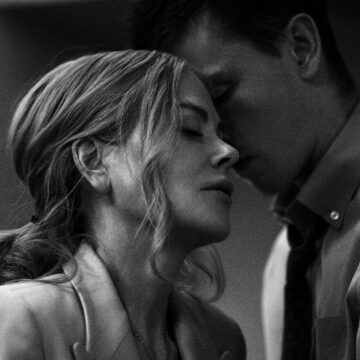 It has been a ghastly year for American women — at least those of us who are not looking forward to being ruled by a claque of cartoon chauvinists — but a pretty rich year for women in the movies. One of 2024’s biggest hits featured an unfairly maligned woman who channels her galvanic anger into a fight against fascism. (I’m talking, of course, about “Wicked.”) Demi Moore gave a scenery-chewing performance in “The Substance,” a gruesome body horror film about the pressure on women to stay nubile. Amy Adams starred in Marielle Heller’s supernaturally inflected “Nightbitch,” in which a woman starts to go feral, perhaps literally, amid the tedium of early motherhood. Mikey Madison was incandescent as a street-smart sex worker from a post-Soviet country in “Anora,” a movie that takes the silly Cinderella fantasy behind “Pretty Woman” and explodes it.
 Graceland. I am here, for the first time, for the forty-fifth anniversary of Elvis Presley’s death. The name does not feel apt. Surrounded by sweaty, mutton-chopped worshippers in shiny polyester jumpsuits, women with wrinkly tattoos, and little boys in capes, I gulp down hot, syrupy banana glopped with peanut butter on smashed Bunny Bread to condition myself, then set out to meet the fans who keep a dead man alive as an engine of consumerism, a weird religion, and an inexplicable (to me) lifelong obsession.
 What if I told you the next energy revolution isn’t in the sky, but under your feet?
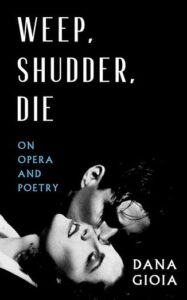 Poet and former National Endowment for the Arts chairman
  In his new book,