Twenty years after Nicole Brown Simpson’s murder, thoughts on Socrates, St. Augustine, If I Did It, and the nature of guilt

Morgan Meis in The Smart Set:

ID_IC_MEIS_OJ_AP_002If I Did It is an extremely confusing book written by an extremely confused man. That man is O. J. Simpson. He wrote the book as an act of confession. Or, maybe not, since the entire book is hypothetical. O. J. Simpson didn’t even write the book. He told his hypothetical account to a ghostwriter named Pablo F. Fenjves. In fact, the name O. J. Simpson is nowhere to be found on the cover of If I Did It. There is only the phrase “Confessions of The Killer.”

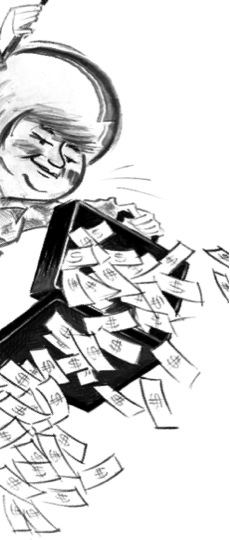
The book refers to that now-infamous night twenty years ago, June 12, 1994, when O.J.’s wife Nicole Brown Simpson was killed along with Ronald Goldman. Ron Goldman was, most likely, a man at the wrong place at the wrong time, a waiter returning a pair of glasses left at a restaurant by Nicole’s mother. Or maybe he was romantically involved with Nicole. Either way, it doesn’t matter anymore. Ron Goldman was caught up in the events of that night and was killed. After O. J. Simpson’s trial ended in a not-guilty verdict in 1995, there was another trial. This was a civil trial, brought by Ronald Goldman’s family. That trial reached verdict in 2007. O. J. Simpson was found liable for the wrongful death of Ronald Goldman. The Goldman family was awarded $33.5 million dollars in damages. They also received the publishing rights of If I Did It. The Goldmans were ordered by the judge of the civil trial to publish the book as a way to collect damages, (O. J. having nowhere near $33.5 million dollars readily to hand), and to prevent O. J. from profiting from the “wrongful death.” It was the members of the Goldman family who decided to call the author of If I Did It “The Killer.”

If I Did It includes an introduction by the Goldman family, a prologue by Pablo Fenjves explaining how the book was written, a history of the trial, an afterword by the journalist Dominick Dunne, and an epilogue by the Goldman’s lawyer Peter T. Haven. The sheer polyphony is enough to confuse anyone.

More here.

New tests prove what librarians have long believed: this book’s cover is made of human skin

Alexis C. Madrigal in The Atlantic:

LeadSurely, you've seen our recent work on anthropodermic bibliopegy, the early modern practice of binding books in human skin?

No? Well, a quick refresher: some books, since the 16th century but before our own time, were bound in human skin. Why? “The confessions of criminals were occasionally bound in the skin of the convicted,” Harvard librarian Heather Cole explained, “or an individual might request to be memorialized for family or lovers in the form of a book.”

Qué romantico!

Anyway, we know it happened because people refer to it happening in the literature of the time, and also because some books bore inscriptions that literally said that they were bound in skin.

But such tomes are suspect. You can't just trust anyone who says they've bound a book in human skin. For example, one had this inscription, but turned out to bestupid sheepskin:

The bynding of this booke is all that remains of my dear friende Jonas Wright, who was flayed alive by the Wavuma on the Fourth Day of August, 1632. King Mbesa did give me the book, it being one of poore Jonas chiefe possessions, together with ample of his skin to bynd it.

And so, I am happy to report, the Houghton Library's copy of Arsène Houssaye’s Des destinées de l’ame “is without a doubt bound in human skin,” Cole, who is the assistant curator of modern nooks and manuscripts at the library, reports in a new blog post.

More here.

THE GOOD, THE BAD, AND THE WHITE MAN’S MEXICO NOVEL

John Washington in Terrain:

ScreenHunter_675 Jun. 05 11.10If you’re a white American male looking to write a “Mexico novel,” you probably think you have a lot of material to work with. You might be inspired, for example, by the ostentatious cartel violence of the past decade, or perhaps the exhibitionistic political corruption of the past century, or the harrowing migration stories of hundreds of thousands of Central Americans crossing Mexico every year, or you might even want to latch on to the guerrilla uprising of the Zapatistas in the 90s, or the surge in auto-defense and vigilantism in Michoacan and Guerrero today, or you might find inspiration in the crowded megalopolis of Mexico City or the guitar-lonely streets of colonial ghost towns or the cockfights in the Sierras or the bullfights in Tijuana or the explosion of kidnappings plaguing much of the country, or maybe, like Cormac McCarthy’s characters, you might be simply starstruck by a girl, or a horse, or a wolf. The material—Mexico (also the title of a Michener novel)—seems ready, ripe, nearly moaning for novelization.

But rather than spend your lucubratory late nights pencil-tapping, muse-channeling, or violence-gazing as you craft your masterpiece, you might just come to the country with a recorder. Because the story, let’s call it “your” story—of kidnappings, hunger, jungle uprisings, street shootouts, or Holy Death—is being lived right now probably better than you can plot it out. And the stories aren’t exoticized or eroticized. That’s to say, Studs Turkel would probably do better here than Thomas Pynchon; Upton Sinclair better than Stephen King.

More here.

German museum exhibits Van Gogh’s ear replica grown from relative’s cells

Jonathan Jones in The Guardian:

ScreenHunter_674 Jun. 05 10.55Vincent van Gogh's ear has returned from the grave – or rather, the ditch or dump where the grisly piece of flesh he severed from the side of his head in December 1888 probably ended up. Van Gogh left it at a brothel in Arles. Presumably the prostitutes chucked it out with the rubbish.

Now it has been regrown from genetic material supplied by the great-great-grandson of Vincent's brother Theo. It is on display at a museum in Germany and Diemut Strebe, the artist behind this resurrection of art's most famous missing body part, hopes to tour it to New York. Will the ear get its own seat on the plane? Will it become an art world star?

Van Gogh's ear is one of the great icons of modern culture. When Allen Ginsberg called a poem Death to Van Gogh's ear! the severed ear of this painter and letter-writer of compulsive beauty and melancholy was already such a totem of popular culture that Ginsberg was sick of it. In the 1956 film Lust for Life, the harrowing ear removal is acted out by Kirk Douglas. This artistic gesture of self-harm has since then become a cliche of extreme creative behaviour.

More here.

SIX QUESTIONS WITH HARRIET HARRIS

From the website of the San Francisco Opera:

You might know actress Harriet Harris from her recurring roles on hit TV shows like Frasier, DesperateHousewives, Ally McBeal, Nurse Betty, and more. Or from her many feature films, or her Tony Award-winning turn on Broadway in Thoroughly Modern Millie. But one place that Harris has yet to make her debut is on the San Francisco Opera stage, which she will do in this summer's grand production of Show Boat. In today's blog post, we ask Harris six questions about her experience here at San Francisco Opera.

It’s not very often that we have the privilege of having a Tony Award winner (Thoroughly Modern Millie, 2002) join our cast! What has it been like to be part of an opera production as compared to a Broadway production?
Harriet-Harris-HeadshotIt's similar to being away from home on a business trip. You awaken in a not too familiar hotel, but you remember that it's a good hotel. For instance, there is a light switch within reach. It's just a matter of how high to reach and does one try the right or left side first. The first rehearsal was probably the best example of this. The opera singers arrived knowing their parts music and book. The actors did not. Actors almost always learn their lines in rehearsal. Whoever is playing Hamlet will probably get a jump on rehearsing, but not Claudius or Gertrude. It became clear that rehearsal means something else in the opera world. A good deal of time is spent introducing more and more elements into the same scene. The singing has been beautiful from the first day and now that we have an orchestra, it is thrilling. The sitzprobe, which is always the best day in a musical, was a revelation. Thirty two strings! That doesn't happen on Broadway. At certain moments from this symphony of lusciousness a banjo emerges as lone and wonky clarion — it's divine. Another aspect of the opera is realizing the depth of experience the company has with each other. It is in some cases years of interaction and love. In a play, it maybe two out of eight actors may have worked together before. Here it seems upwards of 40 out of 60 people have a history!
More here.

Do Rats Know When They Don’t Know?

Mary Bates in Wired:

Rat1Humans are masters of metacognition: thinking about thinking. We can evaluate what we know and what we don’t know. If you don’t know how to get somewhere, you Google directions. When studying for a test, you have an idea of which material you’re most unsure of and devote more time to it. Psychologists studying human metacognition usually rely on self-reports. Their subjects are able to simply tell the experimenter what they think. Studying metacognition in non-human animals is not as straightforward. How do you get an animal to “tell” you that it doesn’t know something? Instead of verbal reports, scientists interpret behavioral indicators of metacognition in animals. One such behavioral indicator is information seeking: If an animal doesn’t know the correct response, will it take appropriate action to seek out the information that it needs?

In studies with rhesus monkeys, apes, and two-year-old children, experimenters placed several opaque tubes horizontally in front of the subjects. Their job was to choose the one tube that contained a piece of food. When the experimenter placed the food into one of the tubes in full view of the subjects, they all chose the correct tube. But on some trials, a barrier was placed in front of the tubes so they couldn’t see which tube the experimenter loaded with food. On these trials, children, apes, and rhesus monkeys bent down to look through the tubes until they found the one with food and then chose it. This seems to indicate that they knew they were uninformed about the correct choice and thus took appropriate action to gather the information they needed.

More here.

A rethinking of homogeneity

Peter Dizikes in Phys.Org:

DiversityWhen people work in socially homogeneous groups, they overestimate their own contributions to the group's success, according to a new study co-authored by an MIT scholar. In fact, in some cases such “self-serving bias” occurs to a degree about five times as great in homogeneous groups as in ethnically diverse groups. Such results raise a larger point, suggests Evan Apfelbaum, the W. Maurice Young Assistant Professor of Organization Studies at the MIT Sloan School of Management, and the lead author of the new study: Researchers have often used homogeneous social groups as a “baseline” to see what effects social diversity can have—in the workplace, organizations, schools, and even markets. And yet, he contends, there are good reasons to think that such an approach fails to fully capture the social dynamics in play. “Both diversity and homogeneity have the ability to affect how people think or make decisions,” Apfelbaum says. But all too often, he contends, “We're really only considering that [diversity] could make a difference,” says Apfelbaum.

Apfelbaum drives home this point in a new article, “Rethinking the Baseline in Diversity Research,” published in the journal Perspectives on Psychological Science. Apfelbaum and his co-authors—Katherine Phillips of Columbia University and Jennifer Richeson of Northwestern University—believe there are two reasons to consider new approaches to diversity studies. For one thing, by certain objective measures, homogeneous groups sometimes produce effects on their members that are more anomalous than the effects that diverse groups produce—such as Apfelbaum found in his study on self-serving bias and group dynamics. More broadly, people may incorrectly assume that “homogeneity and diversity are just two sides of the same coin,” Apfelbaum says.

More here.

Tuesday, June 3, 2014

David Graeber: Savage capitalism is back – and it will not tame itself

David Graeber in The Guardian:

David-Graeber-take-it-out-from-the-topBack in the 90s, I used to get into arguments with Russian friends about capitalism. This was a time when most young eastern European intellectuals were avidly embracing everything associated with that particular economic system, even as the proletarian masses of their countries remained deeply suspicious. Whenever I'd remark on some criminal excess of the oligarchs and crooked politicians who were privatising their countries into their own pockets, they would simply shrug.

“If you look at America, there were all sorts of scams like that back in the 19th century with railroads and the like,” I remember one cheerful, bespectacled Russian twentysomething explaining to me. “We are still in the savage stage. It always takes a generation or two for capitalism to civilise itself.”

“And you actually think capitalism will do that all by itself?”

“Look at history! In America you had your robber barons, then – 50 years later – the New Deal. In Europe, you had the social welfare state … “

“But, Sergei,” I protested (I forget his actual name), “that didn't happen because capitalists just decided to be nice. That happened because they were all afraid of you.”

He seemed touched by my naivety.

At that time, there was a series of assumptions everybody had to accept in order even to be allowed to enter serious public debate. They were presented like a series of self-evident equations. “The market” was equivalent to capitalism. Capitalism meant exorbitant wealth at the top, but it also meant rapid technological progress and economic growth. Growth meant increased prosperity and the rise of a middle class. The rise of a prosperous middle class, in turn, would always ultimately equal stable democratic governance. A generation later, we have learned that not one of these assumptions can any longer be assumed to be correct.

More here.

Until an illness drove him mad, Goya was simply a Spanish court painter

Our own Morgan Meis in The Smart Set:

ScreenHunter_672 Jun. 03 16.46Francisco Goya was felled by a mysterious illness in 1792. He didn’t die, he just fell. The illness made him dizzy and disoriented. Goya stumbled; he teetered. He was nauseous. Voices sounded in his head. He was frequently in terror. His hearing began to fail. Soon, he was completely deaf. By all accounts, he was temporarily insane at points. Then he recovered, though he would never regain his hearing.

Before the illness, Goya had been a successful painter for the Spanish court. He was good, but unremarkable. After the illness, Goya became the extraordinary artist whose paintings — like The Third Of May 1808 — are among the most celebrated works in the history of art. In the late 1790s, Goya began working on a series of prints known asLos Caprichos. The Caprichos are commonly interpreted as satire. Goya was making fun of society’s corruptions and stupidities. Goya himself described the Caprichos as illustrating “the innumerable foibles and follies to be found in any civilized society, and from the common prejudices and deceitful practices which custom, ignorance, or self-interest have made usual.” The most famous print from the Caprichos is number 43, which bears the inscription: “El sueño de la razon produce monstrous,” or, “The Sleep of Reason Produces Monsters.” You’ve likely seen the print. It shows a man, presumably Goya, asleep with his head on a desk. He’s been writing or drawing something. Behind the sleeping man are a number of creatures. Some of the creatures are owls. There are also bats. A lynx sits at the foot of the desk looking directly at the sleeping man. Goya’s fascination with monsters and the edge of reason stayed with him until his dying day.

In his early 70s, Goya had another bout of illness. This second illness caused Goya to begin his final series of paintings, known as the Black Paintings.

More here.

what white people talk about when we talk about Ta-Nehisi Coates

Fredrik deBoer on his blog:

CoatesAt its most benign, the tendency to treat praising Coates as a kind of secular sacrament simply makes that praise more awkward than it should be, robs people of the language of simple sincere gratitude that we use to give thanks. He and his essay deserve that sincerity. At its worst, though, it’s an example of a really ugly tendency of white readers to treat black writers as a blank canvas on which to work out their own personal shit about race. Years ago, a commenter on Coates’s blog took this to a certain extreme: “I wish that I could articulate how this article reverberated in my soul. Better, I wish that you, TNC could feel that reverberation, and I could read how you described it.” I don’t know what that is. But it’s not real praise and it’s not real respect. The first respect to pay a writer is the first to pay to any human being, and that’s to treat them as their own particular human self. And my impression is that Coates feels some of this too. Recently, he wrote, “I have no desire to be anybody’s Head Negro—that goes for reparations and beyond.”

I have a transgendered friend who frequently complains that her liberal friends end up treating her as a kind of vessel through which they work out their attitude towards trans issues. I just think that’s a terrible kind of emotional violence to commit against someone. She is quick to say that this is better than an uglier alternative, and that’s true, of course, it is better. But that’s a false choice: we can respect and love people or their work without treating them as symbols first and people, or writers, second.

Read the rest here.

Toni Morrison: can we find paradise on Earth?

Tony Morrison in The Telegraph:

Toni-1-reuters_2272684cThe idea of paradise is no longer imaginable or, rather, it is overimagined, which amounts to the same thing — and has therefore become familiar, commercialised, even trivial. Historically, the images of paradise in poetry and prose were intended to be grand but accessible, beyond the routine but imaginatively graspable, seductive as though remembered. Milton speaks of “goodliest trees, loaden with fairest fruit, Blossoms and fruits at once of golden hue… with gay enamelled colours mixed…; of Native perfumes.” Of “that sapphire fount the crisped brooks, Rolling on orient pearl and sands of gold…” of “nectar visiting each plant, and fed flowers worthy of Paradise… Groves whose rich trees wept odorous gums and balm; Others whose fruit, burnished with golden rind, Hung amiable… of delicious taste. Betwixt them lawns, or level downs, and flocks Grazing the tender herb.” “Flowers of all hue and without thorn the rose.” “Caves of cool recess, o’er which the mantling vine Lays forth her purple grape and gently creeps Luxuriant …”

That beatific, luxurious expanse we recognise in the 21st century as bounded real estate owned by the wealthy and envied by the have-nots, or as gorgeous parks visited by tourists. Milton’s Paradise is quite available these days, if not in fact then certainly as ordinary, unexceptionable desire. Modern paradise has four of Milton’s characteristics: beauty, plenty, rest and exclusivity. Eternity seems to be forsworn. Beauty is benevolent, controllable nature combined with precious metal, mansions, finery and jewellery. Plenty in a world of excess and attending greed, which tilts resources to the rich and forces others to envy, is an almost obscene feature of a contemporary paradise.

More here.

Tuesday Poem

.
you receive a letter
which is so flat
that it’s nearly
empty

so white
and flat
that it cuts
itself into you
unread

into your eye
tightens your throat
turns your stomach inside out

stop,
says the child

I don’t want
this letter

yes, I say
it’s already written

it’s already on its way
into your eye

by Monica Aasprong
from Et diktet barn
publisher: Cappelen Damm, Oslo, 2010
,
translation: 2013, May-Brit Akerholt

Read more »

the Diamond Necklace Affair

Somerset_06_14Anne Somerset at Literary Review:

Packed with events so implausible a novelist would blush to include them in a work of fiction, the Diamond Necklace Affair had lasting consequences. In 1785 a fraud perpetrated for short-term gain by a shameless adventuress sowed 'the seed of the Revolution' that took place in France four years later, playing such a crucial part in Marie Antoinette's downfall that Napoleon later opined, 'The Queen's death must be dated from the diamond necklace trial.'

The adventuress in question, Jeanne de La Motte-Valois, boasted descent from a bastard son of a 16th-century French king. Having grown up in penury, she set about regaining her fortunes at the court of Louis XVI by duping Cardinal de Rohan in the most spectacular fashion imaginable. A scion of one of the grandest families in the land, Rohan had the prestigious position of Grand Almoner, but Marie Antoinette could not abide him. Rohan deluded himself that if he overcame her aversion, high ministerial office awaited him. Jeanne artfully exploited his gullibility by persuading him she held the key to the queen's favour.

Although the queen had walked on by when Jeanne tried to attract attention by staging a fainting fit, Jeanne convinced Rohan that Marie Antoinette had shown regal concern and that, having made her acquaintance in this way, she had progressed to becoming a royal confidante.

more here.

what exactly is knausgaard’s struggle?

My-struggleJoshua Rothman at The New Yorker:

There’s a very concrete struggle at the center of the book: the struggle between Knausgaard and his father. “I was so frightened of him that even with the greatest effort of will I am unable to recreate the fear; the feelings I had for him I have never felt since, nor indeed anything close,” Knausgaard writes, in the just-translated third volume. “His footsteps on the stairs—was he coming to see me? … The wild glare in his eyes. The tightness around his mouth. The lips that parted involuntarily. And then his voice … . His fury struck like a wave, it washed through the rooms, lashed at me, lashed and lashed and lashed at me, and then it retreated.” Much in the first three volumes, at least nominally speaking, has been about the experience of being this father’s son. When he’s a kid, Karl Ove thinks constantly about how to avoid his father’s anger or how to retaliate against it, or forgive it; as an adult, he struggles to write about it.

But Knausgaard’s book is more abstract than that; it’s about more than the experience of a son. That’s because, in exploring that experience, Knausgaard has ended up exploring all experience. If being a writer is like being a swimmer, and life is like the ocean through which you swim, then Knausgaard’s book starts out being about the waves but ends up being about the stroke. His father’s anger is one of those waves, and Knausgaard, early on, learned to see the wave coming, to brace himself, to swim up its face and, hopefully, to dive beneath before it swept him up. (If not—if he was knocked backward and pulled under—he learned the skill of patience: “Everything passed.”) You find that Knausgaard approaches all events in the same way. He traces the same pattern of serial, wave-like growth and recession in every context: love, friendship, sex, music, writing, art, intellectual life, spirituality.

more here.

What’s Lost as Handwriting Fades

Maria Konnikova in The New York Times:

WritingDoes handwriting matter? Not very much, according to many educators. The Common Core standards, which have been adopted in most states, call for teaching legible writing, but only in kindergarten and first grade. After that, the emphasis quickly shifts to proficiency on the keyboard. But psychologists and neuroscientists say it is far too soon to declare handwriting a relic of the past. New evidence suggests that the links between handwriting and broader educational development run deep.

Children not only learn to read more quickly when they first learn to write by hand, but they also remain better able to generate ideas and retain information. In other words, it’s not just what we write that matters — but how. “When we write, a unique neural circuit is automatically activated,” said Stanislas Dehaene, a psychologist at the Collège de France in Paris. “There is a core recognition of the gesture in the written word, a sort of recognition by mental simulation in your brain. “And it seems that this circuit is contributing in unique ways we didn’t realize,” he continued. “Learning is made easier.”

More here.

Two fictional takes on the war in Iraq

The-corpse-exhibitionWilliam T. Vollmann at Bookforum:

I BELIEVE THAT BOTH of our Iraq wars have been unjust wars, fought for specious reasons, and therefore productive of great evil. It is an understatement to say thatRedeployment and The Corpse Exhibition fortify my opinion.

What Klay himself thinks about the current Iraq war I don’t know for certain. Since the most haunting aspect of Redeployment, for me at least, is what its “message” might be, I have pored through it for clues. The dedication of Redeployment is “for my mother and father, who had three sons join the military in a time of war.” But if you read this book through, you will be hard put to find a character who feels enthusiastic about the American “accomplishment” in Iraq, no matter how many times he redeploys. To tell the truth, Klay’s soldiers are equal-opportunity haters. They hate Iraqis, and they despise the fat, self-indulgent civilians like me who are against these wars, not to mention all the other fat civilians who act proud of American soldiers and grateful for their service. (Did I leave anyone out?) Hence this soldier’s summation of Iraq Veterans Against the War: “We lived in a place that was totally different from anything those hippies in that audience could possibly understand. All those jerks who think they’re so good. . . . Alex is gonna go and act like a big hero, telling everybody how bad we were. We weren’t bad. I wanted to shoot every Iraqi I saw, every day. And I never did. Fuck him.”

more here.

Vote now for one of the nominees for the 3QD Arts & Literature Prize 2014

Alphabetical list of nominated blog names followed by the blog post title:

(Please report any problems with links in the comments section below.)

For prize details, click here.

  1. 3:AM Magazine: Honest work: an experimental review of an experimental translation
  2. 3 Quarks Daily: Ahsan Akbar talks to K. Anis Ahmed
  3. 3 Quarks Daily: Digging Up Bones or, The Labyrinths beneath Our Feet
  4. 3 Quarks Daily: European Crime Fiction – Mini Reviews
  5. 3 Quarks Daily: Every Genuine Encounter Destroys Our Existing World: On Things
  6. 3 Quarks Daily: Ghazal, Sufism, and the Birth of a Language
  7. 3 Quarks Daily: Haiku and Landays in Science
  8. 3 Quarks Daily: Industrial Township-ness or How I learnt to be Bourgeois
  9. 3 Quarks Daily: Jake and Dinos Chapman: Come and See
  10. 3 Quarks Daily: Landings
  11. 3 Quarks Daily: Mental Illness, the Identity Thief
  12. 3 Quarks Daily: My Pakistan Television Show
  13. 3 Quarks Daily: On Reading Emerson as a Fourteen-Year-Old Girl
  14. 3 Quarks Daily: San Francisco and the Storm of Progress
  15. 3 Quarks Daily: The Short Bus
  16. 3 Quarks Daily: The Terrain of Indignities
  17. 3 Quarks Daily: Three Seconds: Poems, Cubes and the Brain
  18. Book Haven: An interview with Philip Roth
  19. Campus Diaries: An Encounter with Lady Luck
  20. Gilded Birds: Kwame Anthony Appiah
  21. Gilded Birds: Michael Rosen
  22. Guernica: Poetry as Life, Life as Poetry
  23. Industrial Revelation: The Boiling Frog
  24. Kuppuswami: Looking and Seeing
  25. Los Angeles Review of Books: How Auden Was Modified in the Guts of the Living
  26. Los Angeles Review of Books: On Mario Bellatin’s “Mishima’s Illustrated Biography”
  27. Medium: The Death of the Urdu Script
  28. Meta-Metaphoricity: Is Poetry Universal? -a gristly verse of Mir
  29. n + 1: Everywhere and Nowhere
  30. n + 1: Fear and Agression in Florida
  31. n + 1: Kunicki, Water (I)
  32. New Savanna: What's Photography About Anyhow?
  33. Nobody Expects The Spanish Inquisition: I am Philip Seymour Hoffman . . . Minus the Heroin
  34. Northeast Review: Mofussil Junction
  35. Open Letters Monthly: It Might Have Been
  36. Orienteringsforsok: Dreaded analogy…not so fast
  37. Paris Review: Drinking in the Golden Age
  38. St. Orberose: José Saramago: The Year of the Death of Ricardo Reis
  39. Strange Violin Music: Some Things a Former Soldier of the Third Reich Told Me
  40. The Bombay Column: A Republic of Regret
  41. The GetHigh Files: A Room With a View
  42. The Mercenary Researcher: A Friend and a Feast
  43. The Millions: The Fictional Lives of High School Teachers
  44. The Nation: Breaking the Cycle of Anger
  45. The Smart Set: Under the Influence
  46. View from Elephant Hills: Trophies 101: a year of books and bookstores
  47. Vissi d'Arte: Elegy for Jon
  48. World Literature Today: World Literature Isn’t Foreign Food
  49. Writing Without Paper: Metastatic ~ A Cento (Poem)
  50. Writing Without Paper: Monday Muse Reads “Concertina”

If you are new to 3 Quarks Daily, we welcome you and invite you to look around the site after you vote. Learn more about who we are and what we do here, and do check out the full site here. Bookmark us and come back regularly, or sign up for the RSS feed. If you have a blog or website, and like what you see here, we would very much appreciate being added to your blogroll. Please don't forget!

Voting ends on June 9th at 11:59 pm NYC time.

Results of the voting round (the top twenty most-voted-for posts) will be posted on the main page on June 10th. The finalists will be announced on June 16 and winners of the contest will be announced on June 23rd, 2014.

PLEASE BE AWARE: We have multiple ways of detecting fraud such as multiple votes being cast by the same person. We will disqualify anyone attempting to cheat.

Now click here to vote.

Thank you.

Monday, June 2, 2014