Robert Paul Wolff over at his website:
Category: Recommended Reading
How Corrupt Are Our Politics?
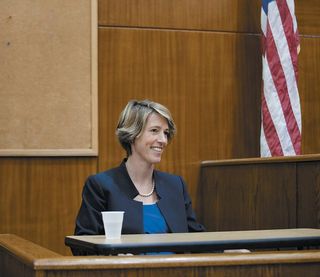
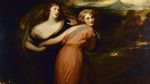
David Cole reviews Zephyr Teachout's Corruption in America: From Benjamin Franklin’s Snuff Box to Citizens United, in the NYRB (photo by Lauren Lancaster):
The US attorney for the Southern District of New York, Preet Bharara, is now investigating whether the governor or others violated federal laws by obstructing corruption investigations. Cuomo’s response has been to strong-arm former commission members into issuing public statements supporting him that contradict their own earlier complaints, and simultaneously to assert that since the commission was a creation of the executive branch, any obstacles he may have put in its path cannot possibly constitute interference. So much for independence.
In light of these problems, it is perhaps not surprising that Cuomo appears more threatened than he should be by a challenge in the primary for governor from Zephyr Teachout, an obscure law professor from Fordham Law School. Teachout has less than $200,000 in her campaign coffers as compared to Cuomo’s $32 million. Cuomo sued to bar Teachout from running for governor on the ground that she had not resided for the requisite five years in New York State, even though she has been employed at Fordham Law School and had an apartment in New York since June 2009. A trial court found Teachout eligible to run in the primary scheduled for September 9, and a court of appeals affirmed. Cuomo can’t really be concerned that she will pose a serious challenge at the polls. But Teachout’s central focus—as both a candidate and a professor of law—is on fighting corruption, and right now, that may well be Cuomo’s Achilles heel.
Indeed, according to Teachout, corruption is not just Cuomo’s—or New York’s—problem. It is the most pressing threat that our democracy faces. And the problem, as Teachout sees it, is that those in power refuse to admit it. Just as Cuomo shut down the Moreland Commission’s inquiry into corruption, so the Supreme Court, by adopting an ahistorical and improperly narrow view of corruption, has shut down an exploration of the very real threat that unrestricted campaign spending actually poses to our democracy.
More here.
The Death of Adulthood in American Culture
A.O. Scott in the NYT Magazine:
TV characters are among the allegorical figures of our age, giving individual human shape to our collective anxieties and aspirations. The meanings of “Mad Men” are not very mysterious: The title of the final half season, which airs next spring, will be “The End of an Era.” The most obvious thing about the series’s meticulous, revisionist, present-minded depiction of the past, and for many viewers the most pleasurable, is that it shows an old order collapsing under the weight of internal contradiction and external pressure. From the start, “Mad Men” has, in addition to cataloging bygone vices and fashion choices, traced the erosion, the gradual slide toward obsolescence, of a power structure built on and in service of the prerogatives of white men. The unthinking way Don, Pete, Roger and the rest of them enjoy their position, and the ease with which they abuse it, inspires what has become a familiar kind of ambivalence among cable viewers. Weren’t those guys awful, back then? But weren’t they also kind of cool? We are invited to have our outrage and eat our nostalgia too, to applaud the show’s right-thinking critique of what we love it for glamorizing.
The widespread hunch that “Mad Men” will end with its hero’s death is what you might call overdetermined. It does not arise only from the internal logic of the narrative itself, but is also a product of cultural expectations. Something profound has been happening in our television over the past decade, some end-stage reckoning. It is the era not just of mad men, but also of sad men and, above all, bad men. Don is at once the heir and precursor to Tony Soprano (fig. 2), that avatar of masculine entitlement who fended off threats to the alpha-dog status he had inherited and worked hard to maintain. Walter White, the protagonist of “Breaking Bad,” struggled, early on, with his own emasculation and then triumphantly (and sociopathically) reasserted the mastery that the world had contrived to deny him. The monstrousness of these men was inseparable from their charisma, and sometimes it was hard to tell if we were supposed to be rooting for them or recoiling in horror. We were invited to participate in their self-delusions and to see through them, to marvel at the mask of masculine competence even as we watched it slip or turn ugly. Their deaths were (and will be) a culmination and a conclusion: Tony, Walter and Don are the last of the patriarchs.
More here.
Cinema Europe I: Where It All Began
Dziga Vertov: Soviet Toys (1924)
death carol by walt whitman
Is ‘Progress’ Good for Humanity?
Jeremy Caradonna in The Atlantic:
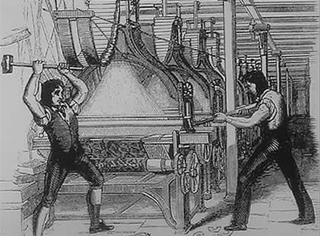
The stock narrative of the Industrial Revolution is one of moral and economic progress. Indeed, economic progress is cast as moral progress.
The story tends to go something like this: Inventors, economists, and statesmen in Western Europe dreamed up a new industrialized world. Fueled by the optimism and scientific know-how of the Enlightenment, a series of heroic men—James Watt, Adam Smith, William Huskisson, and so on—fought back against the stultifying effects of regulated economies, irrational laws and customs, and a traditional guild structure that quashed innovation. By the mid-19th century, they had managed to implement a laissez-faire (“free”) economy that ran on new machines and was centered around modern factories and an urban working class. It was a long and difficult process, but this revolution eventually brought Europeans to a new plateau of civilization. In the end, Europeans lived in a new world based on wage labor, easy mobility, and the consumption of sparkling products.
Europe had rescued itself from the pre-industrial misery that had hampered humankind since the dawn of time. Cheap and abundant fossil fuel powered the trains and other steam engines that drove humankind into this brave new future. Later, around the time that Europeans decided that colonial slavery wasn’t such a good idea, they exported this revolution to other parts of the world, so that everyone could participate in freedom and industrialized modernity. They did this, in part, by “opening up markets” in primitive agrarian societies. The net result has been increased human happiness, wealth, and productivity—the attainment of our true potential as a species.
Sadly, this saccharine story still sweetens our societal self-image.
More here.
Sunday Poem
True
To judge if a line is true,
banish the error of parallax.
Bring your eye as close as you can
to the line itself and follow it.
A master tiler taught me this.
People wish to walk where he has kneeled
and smoothed the surface.
They follow a line to its end
and smile at its sweet geometry,
how he has sutured the angles of the room.
He transports his tools by bicycle –
a bucket, a long plastic tube he fills with water
to find a level mark, a cushion on which to kneel,
a fine cotton cloth to wipe from the tiles the dust
that colours his lashes at the end of the day.
He rides home over ground that rises
and falls as it never does under his hands.
He knows how porcelain, terracotta and marble hold
the eye. He knows the effect of the weight
of a foot on ceramic. Terracotta’s warm dust
cups your foot like leather. Porcelain will appear
untouched all its life and for this reason
is also used in the mouth.
To draw a true line on which to lay a tile,
hold a chalked string fixed
at one end of a room and whip
it hard against the cement floor.
With a blue grid, he shakes out
the sheets of unordered space, folds
them into squares and lays them end on end.
Under his knees, a room will become whole and clear.
.
by Gabeba Baderoon
from: _Matter 3_
publisher: Leigh Money and Emily Pedder, Sheffield
Saturday, September 13, 2014
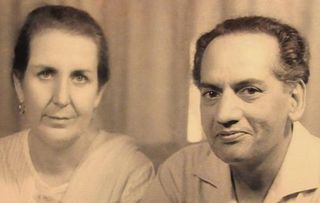
‘Someday I might end up as a poet’: Prison letters from Faiz Ahmed Faiz to his wife
Salima Hashmi in Scroll:
Since being Faiz Ahmed Faiz’s daughter has given me privileged access to the family archives, I have become an accidental archivist. In 2009 I embarked upon the Faiz Ghar project to set up a small museum in a house leased to us by a friend and admirer of my father. We commenced sorting through Faiz’s belongings, papers and books. It was not a massive collection by any means, owing to his nomadic, rather Spartan, but interesting life, that began on February 13, 1911, and ended on November 20, 1984. My mother Alys was instrumental in saving and sorting what little there was: a smart grey lounge suit, a cap, his scarf, his pen, and a reasonably large cache of letters, certificates and medals.
After my mother’s death in 2003 all these things had been packed away in cartons in my house, waiting for just the sort of opportunity that the Faiz Ghar project afforded. Sifting through the papers, I came across a plastic bag containing some scraps. On closer look, I deciphered Faiz’s writing, and the unmistakable stamp of the censor from the Hyderabad Jail, where Faiz spent part of his imprisonment between 1951 and 1955 for his role in the Rawalpindi Conspiracy – a Soviet- backed coup attempt against Prime Minister Liaquat Ali Khan. These few letters were in poor shape, but readable. It is surprising that they have survived at all. Alys and Faiz had moved to Beirut in 1978. On return, all seemed to be in order in the house – except the cupboard, which had been attacked by termites. That cupboard contained Faiz’s letters from jail, which were later preserved with the help of Asma Ibrahim, transcribed by Kyla Pasha, and published in 2011 under the title Two Loves.
More here.
Los Angeles Time-Lapse – Supermoon
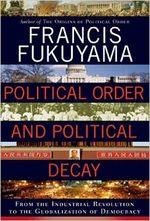
Francis Fukuyama’s ‘Political Order and Political Decay’
Sheri Berman at The New York Times:
Perhaps Fukuyama’s most interesting section is his discussion of the United States, which is used to illustrate the interaction of democracy and state building. Up through the 19th century, he notes, the United States had a weak, corrupt and patrimonial state. From the end of the 19th to the middle of the 20th century, however, the American state was transformed into a strong and effective independent actor, first by the Progressives and then by the New Deal. This change was driven by “a social revolution brought about by industrialization, which mobilized a host of new political actors with no interest in the old clientelist system.” The American example shows that democracies can indeed build strong states, but that doing so, Fukuyama argues, requires a lot of effort over a long time by powerful players not tied to the older order.
Yet if the United States illustrates how democratic states can develop, it also illustrates how they can decline. Drawing on Huntington again, Fukuyama reminds us that “all political systems — past and present — are liable to decay,” as older institutional structures fail to evolve to meet the needs of a changing world. “The fact that a system once was a successful and stable liberal democracy does not mean that it will remain so in perpetuity,” and he warns that even the United States has no permanent immunity from institutional decline.
more here.
earth: both extraordinary and insignificant
Tim Radford at The Guardian:
His book is an intoxicating collection of questions answered with other questions, and startling discoveries that make creation even more mysterious. A couple of decades ago, physicists spoke confidently of a “theory of everything” and one or two even proposed an “end to science”. All has now changed. The mysteries have multiplied.
Forget the tricksy parenthesis in the subtitle. Skip past an early tendency to label scientists as budding, and science as cutting-edge. This book expands, like spacetime itself, from a very small point. It begins with the microscope pioneer Antony van Leeuwenhoek's famous discovery in Delft in 1674 of a microcosm in a drop of lake water, and it ends with speculation about a lonely civilisation, 100bn years on, in a freezing vacuum that no longer contains information about anything. Books such as these remind us that we are lucky to be here at all, and even luckier to be here now.
more here.
limits to the pursuit of happiness
Stephen Cave at The Financial Times:
For most of the past 2,000 years of western culture, happiness on earth was considered neither achievable nor desirable. “Cursed is the ground for thy sake; in sorrow shalt thou eat of it all the days of thy life,” said God to Adam, in an early example of expectations management. But Christians also saw this misery as the key to the life-to-come: “Whosoever doth not bear his cross,” said Jesus, “cannot be my disciple.” And if the days before painkillers weren’t sorrowful enough already, the faithful would flail their backs to hasten their way to beatitude.
So how did happiness change from being a sin to our foremost earthly goal? The answer in short is that western culture retained the promise of paradise but brought it forward from the next world into this one. The process took a few hundred years, beginning with the Renaissance and the Reformation. But it owes most to the thinkers of the Enlightenment, who combined the Christian belief in progress towards a happier state with a new faith in science and reason. In doing so, they wrote the script to which we still speak: a doctrine that says we can have heaven here and now if only we try hard enough.
more here.
Saturday Poem
The Art of Leaving
The warmth is leaving
your shirt, hanging
over the back of the chair. Slowly
it is giving back everything
it had of yours.
by Gabeba Baderoon
from: The Best of MA Writing, 2202-2003
publisher: Sheffield
Sapiens: A Brief History of Humankind
Galen Strawson in The Guardian:
Human beings (members of the genus Homo) have existed for about 2.4m years. Homo sapiens, our own wildly egregious species of great apes, has only existed for 6% of that time – about 150,000 years. So a book whose main title is Sapiens shouldn't be subtitled “A Brief History of Humankind”. It's easy to see why Yuval Noah Harari devotes 95% of his book to us as a species: self-ignorant as we are, we still know far more about ourselves than about other species of human beings, including several that have become extinct since we first walked the Earth.
…At one point Harari claims that “the leading project of the scientific revolution” is the Gilgamesh Project (named after the hero of the epic who set out to destroy death): “to give humankind eternal life” or “amortality”. He is sanguine about its eventual success. But amortality isn't immortality, because it will always be possible for us to die by violence, and Harari is plausibly sceptical about how much good it will do us.
…there's no guarantee that amortality will bring greater happiness. Harari draws on well-known research that shows that a person's happiness from day to day has remarkably little to do with their material circumstances. Certainly money can make a difference – but only when it lifts us out of poverty. After that, more money changes little or nothing. Certainly a lottery winner is lifted by her luck, but after about 18 months her average everyday happiness reverts to its old level. If we had an infallible “happyometer”, and toured Orange County and the streets of Kolkata, it's not clear that we would get consistently higher readings in the first place than in the second. This point about happiness is a persistent theme in Sapiens. When Arthur Brooks (head of the conservative American Enterprise Institute) made a related point in the New York Times in July, he was criticised for trying to favour the rich and justify income inequality. The criticism was confused, for although current inequalities of income are repellent, and harmful to all, the happiness research is well confirmed. This doesn't, however, prevent Harari from suggesting that the lives lived by sapiens today may be worse overall than the lives they lived 15,000 years ago.
More here.
Can a Book Ever Change a Reader’s Life for the Worse?
Leslie Jamison in The New York Times:
At his sentencing hearing in 1981, after he was convicted of John Lennon’s murder, Mark David Chapman read aloud from J. D. Salinger’s “The Catcher in the Rye”: “I’m standing on the edge of some crazy cliff. What I have to do, I have to catch everybody if they start to go over. . . . I’d just be the catcher in the rye and all.” “The Catcher in the Rye” was the book Chapman had been reading at the crime scene when he was arrested. It was the book that held, as he claimed, his message for the world. He was standing at the cliff; he was just doing his work. A few years later, the serial killers Leonard Lake and Charles Ng embarked on what they called “Operation Miranda,” a violent spree of torture, rape and murder named for the woman abducted by a deranged butterfly collector in John Fowles’s novel “The Collector,” which they cited as their inspiration.
I’m not saying that Salinger or Fowles are responsible for what Chapman or Lake or Ng did. Clearly, they weren’t. Their novels weren’t. I mention them only to suggest the ways that novels can become embodiments of our own worst impulses, can christen or distill or liberate these impulses — and also because reading about these men makes me remember reading “The Collector” when I was young. I moved through it compulsively. I couldn’t turn away from it. I didn’t want to.
More here.
Friday, September 12, 2014
Letters by Vladimir Nabokov to his wife Véra
Donald Rayfield in the Literary Review:
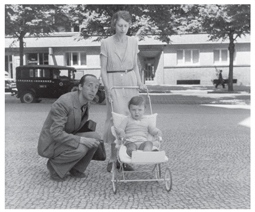
What seems to emerge is a portrait of a marriage of which most male writers can only dream: a wife who devotes all her talents, energy and steely character to nurturing her husband's genius and promoting his fame. (Véra's biographer, Stacy Schiff, simply called her a 'shrewish, controlling dragon-lady' and compared extracting information from her with extracting an angry cat from its box at the vet's.) In his foreword to this book, Brian Boyd presents a condensed version of his extensive and canonical biography of Nabokov. His very first sentence – 'No marriage of a major twentieth-century writer lasted longer than Vladimir Nabokov's' – is his only wrong call: Anthony Powell's sixty-five years of marriage to Lady Violet Pakenham is the obvious record-holder. Field in his biography, frustrated by the Nabokovs' manipulation, relied too much on gossip, speculation and psychoanalysis; Boyd, who won the family's total trust and who stuck to what was corroborated by documents or respectable sources, has superseded him. Nevertheless, he lets his love of Nabokov downplay, even ignore, uncomfortable facts.
One such fact is Nabokov's 1937 love affair in Paris with the young blonde Russian émigrée Irina Guadanini. It is clear (from other sources) that Véra, stuck in Prague with her mother-in-law and infant son, was told in an anonymous letter of the affair. The content of her letters to Nabokov that spring and summer can only be guessed at; the nervous tone that enters Nabokov's mixtures of cloying affection with irritable self-justification belies the sincerity of his declarations during the previous fourteen years: 'I can imagine how exhausted you are, my darling, and how overstrung, but believe me, you will get much better over summer.' Boyd dismisses Irina as a 'part-time poet who supported herself as a dog-groomer', which is about as fair as calling Catherine Walston, Graham Greene's great love, a part-time ballroom dancer who enjoyed herself as a Scrabble player.
More here.
Mining for Antibiotics, Right Under Our Noses
Carl Zimmer in the New York Times:
“Microorganisms are the best chemists on the planet,” declaredMichael A. Fischbach, a chemist himself at the University of California, San Francisco.
For evidence, Dr. Fischbach points to the many lifesaving drugs that microorganisms produce. In 1928, for example, Alexander Fleming discovered that mold wafting into his lab produced a bacteria-killing chemical that he dubbed penicillin.
Later generations of scientists found drugmaking microorganisms in more exotic locales. In 1951, a missionary in Borneo named William Bouw shipped a box of jungle dirt to Edmund C. Kornfield, a chemist at Eli Lilly. In that soil, Dr. Kornfield discovered a species of bacteria that made a potent antibiotic, later named vancomycin.
Scientists today are still searching jungles, oceans and other corners of the world for microorganisms that make medicines. But in a new study published Thursday in the journal Cell, Dr. Fischbach and his colleagues suggest that we should also be looking inward.
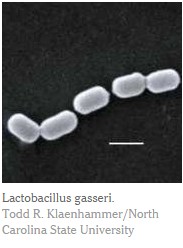
Analyzing the bacteria that live in our bodies, the scientists identified genes for making over 3,000 previously unknown molecules that may prove to be useful drugs.
“Nobody had thought to look that close to home,” said Dr. Fischbach.
More here.
How Vladimir Putin is revolutionizing information warfare
Peter Pomerantsev in The Atlantic:
At the NATO summit in Wales last week, General Philip Breedlove, the military alliance’s top commander, made a bold declaration. Russia, he said, is waging “the most amazing information warfare blitzkrieg we have ever seen in the history of information warfare.”
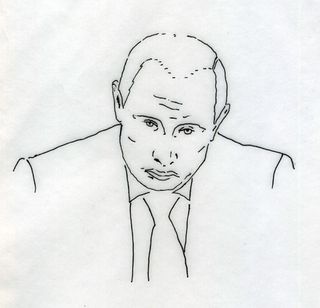
It was something of an underestimation. The new Russia doesn’t just deal in the petty disinformation, forgeries, lies, leaks, and cyber-sabotage usually associated with information warfare. It reinvents reality, creating mass hallucinations that then translate into political action. Take Novorossiya, the name Vladimir Putin has given to the huge wedge of southeastern Ukraine he might, or might not, consider annexing. The term is plucked from tsarist history, when it represented a different geographical space. Nobody who lives in that part of the world today ever thought of themselves as living in Novorossiya and bearing allegiance to it—at least until several months ago. Now, Novorossiya is being imagined into being: Russian media are showing maps of its ‘geography,’ while Kremlin-backed politicians are writing its ‘history’ into school textbooks. There’s a flagand even a news agency (in English and Russian). There are several Twitterfeeds. It’s like something out of a Borges story—except for the very real casualties of the war conducted in its name.
More here.