Narendra Modi and the new face of India

Pankaj Mishra in The Guardian:

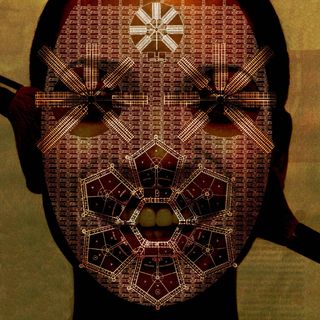
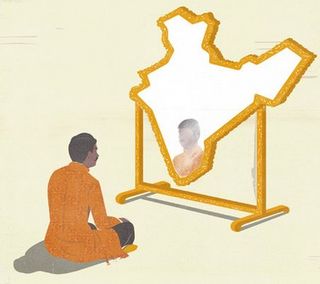
ModiIn A Suitable Boy, Vikram Seth writes with affection of a placid India's first general election in 1951, and the egalitarian spirit it momentarily bestowed on an electorate deeply riven by class and caste: “the great washed and unwashed public, sceptical and gullible”, but all “endowed with universal adult suffrage”. India's 16th general election this month, held against a background of economic jolts and titanic corruption scandals, and tainted by the nastiest campaign yet, announces a new turbulent phase for the country – arguably, the most sinister since its independence from British rule in 1947. Back then, it would have been inconceivable that a figure such as Narendra Modi, the Hindu nationalist chief minister of Gujarat accused, along with his closest aides, of complicity in crimes ranging from an anti-Muslim pogrom in his state in 2002 to extrajudicial killings, and barred from entering the US, may occupy India's highest political office.

Modi is a lifelong member of the Rashtriya Swayamsevak Sangh (RSS), a paramilitary Hindu nationalist organisation inspired by the fascist movements of Europe, whose founder's belief that Nazi Germany had manifested “race pride at its highest” by purging the Jews is by no means unexceptional among the votaries of Hindutva, or “Hinduness”. In 1948, a former member of the RSS murdered Gandhi for being too soft on Muslims. The outfit, traditionally dominated by upper-caste Hindus, has led many vicious assaults on minorities. A notorious executioner of dozens of Muslims in Gujarat in 2002 crowed that he had slashed open with his sword the womb of a heavily pregnant woman and extracted her foetus. Modi himself described the relief camps housing tens of thousands of displaced Muslims as “child-breeding centres”. Such rhetoric has helped Modi sweep one election after another in Gujarat.

More here.

What Are the Draws and Drawbacks of Success for Writers?

Mohsin Hamid in The New York Times:

Bookends-Mohsin-Hamid-tmagSFWriting fiction is, in many ways, like a religion. It is a daily practice, a way of life, a set of rituals, an orientation toward the universe. It is a communion with the intangible, a bridge between the finite and infinite. There’s a reason religions use stories to communicate, and it’s the same reason religions persecute storytellers: Stories are powerful. They are how we make sense of what cannot be known. So imagine a situation in which you were paid to pray, and in which a few of the devout were given huge payouts for their devotion. This does happen. It corrupts religions. And it corrupts writers too. In the words of the poet Jalaluddin Rumi: “If you want money more than anything, / you’ll be bought and sold. / If you have a greed for food, / you’ll be a loaf of bread. / This is a subtle truth: / whatever you love, you are.”

It’s a radical thought, but I wonder whether in some way we professional fiction writers might be better off if, like poets of old, we were to make nothing from our writing and had to earn our living elsewhere. Radical or not, it’s how most writers actually live today, working their day jobs, and writing — unpaid, alone, with passion — at night.

More here.

who are the schwenkfelders?

ID_LF_GOLBE_SHWENK_AP_001Stefany Anne Golberg at The Smart Set:

No one is quite sure just what a Schwenkfelder is these days, including many of those who call themselves Schwenkfelders. The number of these people is so very small, and gets smaller the more you investigate. It all began with the spiritual awakening of Silesian nobleman Caspar Schwenckfeld von Ossig in 1518 or maybe 1519. (How many American stories begin with a spiritual awakening.) Schwenckfeld had gotten fired up by the teachings of Martin Luther and was inspired to take Luther’s ideas further. The complicated theology of Caspar Schwenckfeld — described in Schwenckfeld’s Concept of the New Man as “a skillful blending of Johannine mysticism and Pauline Anthropology, modified by the sifting process of fifteen hundred years of Christian theology” — boiled down to this: That people could communicate directly with God, that true spirituality didn’t need all the machinery of hierarchies and priests and sacraments, that church was not a place but a community. Schwenckfeld wanted a theological system that would appeal to all Christians — he dreamed of a day when the warring factions of Europe would become brothers and worship as one. Schwenckfeld sent books and letters to Luther with the details of his discoveries, certain that the theologian would be interested. Schwenckfeld called it the “Middle Way.” There are several references to Caspar Schwenckfeld in the private letters of Martin Luther, in which Luther calls Schwenckfeld a simpleton and a maniac, and his Middle Way the “spue” of the devil. How frustrating it must have been for poor Martin Luther to see his proposals taken to such extremes. In time, Luther’s view of Schwenckfeld would be shared by the Silesian authorities. They would label the hard-of-hearing and gentle Schwenckfeld a heretic and eventually force him into a polite, voluntary exile. It is well known that Schwenckfeld prayed for Martin Luther every day, for all the days of his life.

more here.

Ivan Klíma’s crazy century

The-opposite-of-Kundera---010Ian Sansom at The Guardian:

Kafka's The Trial; Hašek's The Good Soldier Švejk; Kundera's The Joke; Bohumil Hrabal's Dancing Lessons for the Advanced in Age; Josef Škvorecký's Lieutenant Boruvka novels: one might be forgiven for thinking that all Czech literature is somehow synonymous with absurdism, dark humour and the erotic sublime. But this is too simplistic. Do Austen, Dickens and Larkin represent Eng lit? “I don't like it when people make generalisations about nations or ethnicities,” writes the novelist Ivan Klíma in his new memoir, which covers his life from early childhood in Prague to the Velvet Revolution in 1989, “claiming that Germans are disciplined, Czechs have a sense of humour, the English are tight-laced, the Russians are drunkards, Jews are businessmen and Gypsies are thieves”. Just as there is more to English literature than marriage plots, social panoramas and patiently lowered horizons, there is more to Czech literature than long jokes and the aesthetics of the forlorn. There is, for example, the work of Klíma.

With his once-fashionable shaggy Beatles haircut and his ever-serious and scholarly mien, Klíma looks well meaning and yet utterly out of touch – like a university professor. Yet Philip Roth once described Klíma as “my principal reality instructor”.

more here.

books on the Civil Rights Act of 1964

18BOYLE-master675-v3Kevin Boyle at The New York Times:

Over the past century, Congress has passed only a handful of truly transformative pieces of legislation. The Social Security Act comes to mind, as do the G.I. Bill, the Marshall Plan, the laws that created a mammoth military and laid down a web of highways, and the reforms that reopened the nation to immigration. Visionary laws — each and every one — meant to achieve policy aims of striking originality.

Then there’s the Civil Rights Act of 1964. Its provisions were simple enough: The key sections outlawed the segregation of public spaces and prohibited employers and federal agencies from discriminating on the basis of race, sex or national origin. But the act’s significance extended far beyond its particulars, its purpose defined as much by morality as policy. Drafted in the midst of a crisis created by the courage of children, pushed through the Senate past the defenders of an indefensible social order, it marked one of those extraordinary moments when the promise and practice of equality align and democracy is affirmed.

more here.

Saturday Poem

Acquainted With The Night

I have been one acquainted with the night.
I have walked out in rain—and back in rain.
I have outwalked the furthest city light.

I have looked down the saddest city lane.
I have passed by the watchman on his beat
And dropped my eyes, unwilling to explain.

I have stood still and stopped the sound of feet
When far away an interrupted cry
Came over houses from another street,

But not to call me back or say good-bye;
And further still at an unearthly height,
One luminary clock against the sky

Proclaimed the time was neither wrong nor right.
I have been one acquainted with the night.

by Robert Frost
from The Poetry of Robert Frost
Henry Holt & Co. LLC, 1964

Friday, May 16, 2014

Stretch Genes

Orr_2-060514_jpg_600x608_q85

H. Allen Orr reviews Nicholas Wade's A Troublesome Inheritance: Genes, Race and Human History, in the NYRB:

Wade’s main claim is that human races likely differ in social behavior for genetic reasons as a result of recent evolution. These slight differences in behavior may, in turn, explain why different sorts of social institutions appear among different peoples:

Institutions are not just sets of arbitrary rules. Rather, they grow out of instinctual social behaviors, such as the propensity to trust others, to follow rules and punish those who don’t, to engage in reciprocity and trade, or to take up arms against neighboring groups. Because these behaviors vary slightly from one society to the next as the result of evolutionary pressures, so too may the institutions that depend on them.

Evolutionary biology might therefore have something to say about why some peoples live in modern states and others in tribal societies, and why some nations are wealthy while others remain mired in poverty.

The science in A Troublesome Inheritance is mostly inspired by the genomics revolution of the last decade or so. (A genome is the full complement of DNA, the hereditary material, that an individual carries.) This revolution has been, to a considerable extent, a technological and economic one. The high-tech approaches needed to “sequence” a person’s genome—to decipher the three billion units ofDNA that make up a human genome—is now sufficiently automated and inexpensive that geneticists have sequenced the genomes of thousands of people from around the world. In the course of this work, results have emerged that throw light on racial differences. Geneticists, Wade says, have been reluctant to talk openly about these results, which are sometimes politically sensitive. He takes up this task here.

A Troublesome Inheritance cleaves neatly into two parts. The first is a review of what recent studies of the genome reveal about our evolution, including the emergence of racial differences. The second part considers the part that genetic differences among races may play in behavior and in the social institutions embraced by various races. These two parts fare very differently.

More here.

On Modi’s Landslide

133289005_13983926311131n

First, Siddharth Varadarajan over at his website (image from Xinhua):

Mr Modi’s remarkable election campaign may have been fuelled by unprecedented sums of money and magnified by the logic of the first-past-the-post system — which converted a 12 percentage point difference in vote share with the Congress into a 600 per cent difference in seats – but it has helped him banish, for all intents and purposes, the lingering shadows of a darker past.

Troubling questions about his record that were met earlier with menacing silence or anger, but never answers, can no longer be asked. With the absolute majority Mr Modi has now delivered for the BJP, a new ledger of accounts has been opened. Any audit of his record will henceforth be on his own terms.

Narendra Damodar Modi asked the electorate for 272+ seats and they have given it to him. He asked voters for a ‘Congress-mukt Bharat’ – an India free of the Congress – and they have handed it to him. So reviled was the Congress-led United Progressive Alliance government and so terrible its record of governance that the party has justifiably suffered the worst defeat in its 129-year history.

The ‘Modi Wave’ left nearly 60 per cent of the electorate cold and failed to make a major dent in those states where regional parties still enjoy a high degree of credibility with voters like Tamil Nadu, Odisha and West Bengal but it has wrecked the Congress everywhere.

More here. Vijay Prashad in The BRICS Post:

For the first time since 1984 a single party will have a majority in the Indian parliament. That year, the Congress Party led by Rajiv Gandhi secured 414 seats (out of the 533 seats in the Lok Sabha, the parliament). Mr. Gandhi’s mother, Indira, had been assassinated not long before the election, and the Congress won decisively on a massive sympathy wave. It did not matter to the electorate that the Congress had engineered an anti-Sikh pogrom that resulted in the death of 3000 Sikhs in two days. The 1984 election was the Congress’ largest victory yet.

In the 1984 election, the Hindu Right’s Bharatiya Janata Party (BJP) won only 2 seats. This year, the tide has turned. The BJP is projected to win a large majority, not near 414 but as decisive. It did not stop the Indian voters that the BJP leader, Narendra Modi, is accused of having a hand in an anti-Muslim pogrom in Gujarat in 2002. The Congress, led by Mr. Gandhi’s son, Rahul, has posted its lowest ever total. It will limp into second place.

India will now have a powerful Hindu Right government with a very weak opposition. It is the worst of all worlds.

To come to power, the BJP wiped out several major political parties across northern India – the major parties of Uttar Pradesh (BSP, SP) and of western India (including the NCP). It also decimated the Congress. How did the BJP manage this feat?

More here. Also see Google's India election results map here.

what did Christopher Lasch mean by Narcissism?

737349.jpgGeorge Scialabba at Boston Review:

Vivian Gornick’s review of The Americanization of Narcissism is written with her usual cogency, verve, and elegance. But I think she and the book’s author, Elizabeth Lunbeck, are mistaken about the motivation and import of Christopher Lasch’s views on the “underlying character structure” of late twentieth-century America.

Lasch was fundamentally a critic of mass society. He located the pivot of modern psychic development in the rise of mass production, with its concomitant deskilling of workers, destruction of economic independence, change in relations of authority from personal to abstract, and professionalization of education, management, mental health, social welfare, etc. The result of those epochal changes was a drastic change in the socialization of children. Individuation largely consists of the gradual reduction in scale of infantile fantasies of omnipotence and helplessness, accompanied by the child's modest but growing sense of mastery, continually measured against its human and material surroundings. Formerly, the presence of potent but fallible individuals, economically self-sufficient, with final legal and moral authority over their children's upbringing, provided one kind of template for the growing child's psychic development.

more here.

how Carl Van Vechten shaped the legend of Gertrude Stein

Van-vechten-self-portrait-1933-236x300Edward White at Paris Review:

After that first meeting Van Vechten’s interest in Stein swiftly morphed into an obsession. Back in New York he set himself the task of hauling her from obscurity and into the mainstream. Van Vechten’s encounter with this “cubist of letters,” as she was described in a New York Times article he wrote about her, came at a perfect moment for both of them. In the early months of 1913, many Americans got their first glimpse of artists such as Kandinsky, Matisse, Picasso, and Duchamp when the Armory Show exhibition of modern art hit New York with incendiary force. Stein’s links to these European radicals—“freaks,” as at least one American newspaper labeled them—generated much curiosity about her. Van Vechten, for his part, was at the beginning of his journey as a Manhattan tastemaker, loudly extolling the virtues of African-American theater, ragtime, and modern dancers such as Isadora Duncan. In Stein he found the perfect cause to champion: a unique artist whose mercurial work pulsated with the spirit of the age, but also one whose public image he could shape and bind himself to.

Early in February 1914, Van Vechten urged his friend and New York Times colleague Donald Evans to publish the manuscript of Tender Buttons through his new publishing house, the Claire Marie Press.

more here.

Narendra Modi: man of the masses

William Dalrymple in New Statesman:

ModiModi is the Hindu nationalist son of a station chai-wallah, and as different a man as could be imagined from the shahzada, or “princeling”, as Modi mockingly refers to the heir to the Nehru-Gandhi dynasty. With Kejriwal reduced to a minor player, the election in most of the country has been an unequal contest between the Modi juggernaut and a beleaguered Rahul, who is in the process of taking the can for the failings of a government he didn’t lead and can do little to redeem. The battle represents a whole world of contestations: left against right, insider against outsider, secular Nehruvian v sectarian nationalist, Brahminical dynastic princeling v lower-caste, working-class, self-made man. There is little doubt at this stage which of the two is going to come out on top. Certainly Modi’s face, with its neatly trimmed grey beard and fiercely unsmiling expression, firm and unwavering, is apparently all too convinced of its right to line the roads of the Indian capital, bringing to mind the old lines from Yeats, “The best lack all conviction, while the worst/Are full of passionate intensity.” Modi is a strong speaker. In the past few months he has been transformed into a hugely popular, even cult figure for many around India and is now widely admired by many who do not share his Hindu nationalism. This is because he has come to embody the collective longing, especially among India’s middle class of 300 million, for an economic rebirth of the nation: after all, under his stewardship, the economy of the state of Gujarat, for which he has been chief minister since 2001, has nearly tripled in size. He also has a reputation for decisiveness, getting things done, rooting out corruption, stimulating investment and slashing through the bureaucratic red tape and outdated, cumbersome regulations.

It is easy to understand why so many Indians feel a need for bold change and why the thought of another five years of a dithering, divided and corrupt Congress government fills them with dismay. But it is less easy to understand why so many are willing to overlook Modi’s extremely dodgy record with India’s religious minorities.

More here.

The Internet of Things

From KurzweilAI:

Things“The devices are going to disappear into what we wear and/or carry. For example, the glasses interface will shrink to near-invisibility in conventional glasses. The devices will also become robustly inter-networked. … “The biggest shift is a strong move away from a single do-everything device to multiple devices with overlapping functions and, above all, an inter-relationship with our other devices.” Survey respondents expect the Internet of Things to be evident in many places, including:

  • Bodies: Many people will wear devices that let them connect to the Internet and will give them feedback on their activities, health and fitness. They will also monitor others (their children or employees, for instance) who are also wearing sensors, or moving in and out of places that have sensors.
  • Homes: People will be able to control nearly everything remotely, from how their residences are heated and cooled to how often their gardens are watered. Homes will also have sensors that warn about everything from prowlers to broken water pipes, although we have some of that now with online services.
  • Communities: Embedded devices and smartphone apps will enable more efficient transportation and give readouts on pollution levels. “Smart systems” might deliver electricity and water more efficiently and warn about infrastructure problems.
  • Goods and services: Factories and supply chains will have sensors and readers that more precisely track materials to speed up and smooth out the manufacture and distribution of goods.
  • Environment: There will be real-time readings from fields, forests, oceans, and cities about pollution levels, soil moisture, and resource extraction that allow for closer monitoring of problems.

More here.

Friday Poem

I'm waiting for the sun to rise between

I'm waiting for the sun to rise between
the crooked fingers of the southern oaks,
to rend the heavy clouds with a brilliant
light reflected on the bayou's surface.

I'm waiting for the moon to set between
the tall branches of the patient pines,
to marry the quiet crescent's dim white
with the tepid vibrations of the water.

I'm lingering in the undetermined place
between dusk and dawn, the mysterious
separation of the lover from his beloved.

Yet the two meet in a moment of time
beyond the trees in the garden, held fast
by a testament whispered in the leaves.

by Rod Naquin
from Sunlit, Spring 2014

Glenn Greenwald, How I Met Edward Snowden

Glenn Greenwald on TomDispatch:

71QopTNqZmLOn December 1, 2012, I received my first communication from Edward Snowden, although I had no idea at the time that it was from him.

The contact came in the form of an email from someone calling himself Cincinnatus, a reference to Lucius Quinctius Cincinnatus, the Roman farmer who, in the fifth century BC, was appointed dictator of Rome to defend the city against attack. He is most remembered for what he did after vanquishing Rome’s enemies: he immediately and voluntarily gave up political power and returned to farming life. Hailed as a “model of civic virtue,” Cincinnatus has become a symbol of the use of political power in the public interest and the worth of limiting or even relinquishing individual power for the greater good.

The email began: “The security of people’s communications is very important to me,” and its stated purpose was to urge me to begin using PGP encryption so that “Cincinnatus” could communicate things in which, he said, he was certain I would be interested. Invented in 1991, PGP stands for “pretty good privacy.” It has been developed into a sophisticated tool to shield email and other forms of online communications from surveillance and hacking…

Despite my intentions, I did nothing, consumed as I was at the time with other stories, and still unconvinced that C. had anything worthwhile to say.

In the face of my inaction, C. stepped up his efforts. He produced a 10-minute video entitled PGP for Journalists.

It was at that point that C., as he later told me, became frustrated. “Here am I,” he thought, “ready to risk my liberty, perhaps even my life, to hand this guy thousands of Top Secret documents from the nation’s most secretive agency — a leak that will produce dozens if not hundreds of huge journalistic scoops. And he can’t even be bothered to install an encryption program.”

That’s how close I came to blowing off one of the largest and most consequential national security leaks in U.S. history.

Read the rest of the shortened and adapted version of Chapter 1 of Glenn Greenwald’s new book, No Place to Hide: Edward Snowden, the NSA, and the U.S. Security State, here.

Age of Ignorance

Charles Simic in the New York Review of Books:

ScreenHunter_627 May. 16 08.48Widespread ignorance bordering on idiocy is our new national goal. It’s no use pretending otherwise and telling us, as Thomas Friedman did in the Times a few days ago, that educated people are the nation’s most valuable resources. Sure, they are, but do we still want them? It doesn’t look to me as if we do. The ideal citizen of a politically corrupt state, such as the one we now have, is a gullible dolt unable to tell truth from bullshit.

An educated, well-informed population, the kind that a functioning democracy requires, would be difficult to lie to, and could not be led by the nose by the various vested interests running amok in this country. Most of our politicians and their political advisers and lobbyists would find themselves unemployed, and so would the gasbags who pass themselves off as our opinion makers. Luckily for them, nothing so catastrophic, even though perfectly well-deserved and widely-welcome, has a remote chance of occurring any time soon. For starters, there’s more money to be made from the ignorant than the enlightened, and deceiving Americans is one of the few growing home industries we still have in this country. A truly educated populace would be bad, both for politicians and for business.

More here.

The demise of the Asian houbara bustard in Pakistan

Eleni Panagiotarakou in the Jerusalem Post:

HB 4 Fuert 11 Feb 10_990This past April, Dawn, the oldest and most widely- read English-language newspaper in Pakistan, covered a report entitled “Visit of Prince Fahd bin Sultan bin Abdul Aziz Al Saud regarding hunting of houbara bustard.” The report was written by Jaffar Baloch, a divisional forest officer of the Balochistan forest in Pakistan, and it detailed the hunting activities of Prince Fahd of the House of Al Saud and his hunting party. This included the number, date and place of endangered Asian bustards killed. The staggering tally was 2,100 birds. The fact that these birds were killed for their purported aphrodisiac qualities grabbed the attention of the international media.

The moral obscenity of this act touched me deeply, as did the trophy photograph; hundreds of dead birds, their lifeless bodies laid out in geometrical rows across the soft desert sand, with their wings spread out. In a moment of ethical compulsion I began a petition at Change.org, the world’s largest petition platform. The petition’s title reads: “Donate lifetime supply of Viagra to the Saudi Prince Fahd bin Sultan bin Abdul Aziz Al Saud” and it is addressed to Ian C. Read, the president of the pharmaceutical corporation and manufacturer of Viagra Pfizer.

The petition’s goal is for 2,100 signatures – the number of bustards killed. Within minutes the petition began attracting media attention and hundreds of signatures from around the world. In the comments section the majority of the responses were split evenly between animal rights advocates, conservation enthusiasts and Pakistanis angered at their government’s lack of national sovereignty. The remainder of the responses were an eclectic mix ranging in scope from a Saudi woman chiding Prince Fahd for his intemperance and calling him a disgrace to the Royal House of Al Saud, to a Pakistani woman castigating all Saudi sheiks for treating Pakistan as their playground.

More here.

Woman’s cancer killed by measles virus in unprecedented trial

Lindsey Bever in the Washington Post:

167095303-188x300Her name is Stacy Erholtz. For years, the 50-year-old mom from Pequot Lakes, Minn., battled myeloma, a blood cancer that affects bone marrow. She had few options left.

She had been through chemotherapy treatments and two stem cell transplants. But it wasn’t enough. Soon, scans showed she had tumors growing all over her body.

One grew on her forehead, destroying a bone in her skull and pushing on her brain. Her children named it Evan, her doctor said. Cancer had infiltrated her bone marrow.

So, as part of a two-patient clinical trial, doctors at theMayo Clinic injected Erholtz with 100 billion units of the measles virus – enough to inoculate 10 million people.

Her doctor said they were entering the unknown.

Five minutes into the hour-long process, Erholtz got a terrible headache. Two hours later, she started shaking and vomiting. Her temperature hit 105 degrees, Stephen Russell, the lead researcher on the case, told The Washington Post early Thursday morning.

“Thirty-six hours after the virus infusion was finished, she told me, ‘Evan has started shrinking,’” Russell said. Over the next several weeks, the tumor on her forehead disappeared completely and, over time, the other tumors in her body did, too.

More here.

Thursday, May 15, 2014

ADVENTURES IN THE CANOPY

Su Blackwell in More Intelligent Life:

BaronTreesIt begins with a family argument at the dinner table. The year is 1767, and in a mansion in Liguria a small boy is taking a stand. Cosimo, our 12-year-old hero, refuses to eat the dish of snails that has been set before him. His father, the Baron Arminio Piovasco di Rondò, whose horsehair wig flaps over his ears, is in no mood for dissent. But Cosimo pushes away his plate, rises from the table, picks up his tricorn and rapier, runs out into the garden and climbs the great holm oak whose branches spread beyond the windows of the dining room. “I’ll never come down again!” he cries. And he never does. From the holm oak, Cosimo clambers into a nearby elm tree; from the elm to a carob, from the carob to a mulberry, from the mulberry to a magnolia—and then he is beyond the curtilage of his father’s property, and into the immense forests of late-18th-century Europe. Up in that continent-wide canopy, Cos­imo learns how to sleep, eat and wash at altitude, and how to fish and farm without setting foot on the earth. His legend as a levitator spreads; followers join him, and he founds an informal republic of the trees. For 53 years he haunts the branches, “Il Barone rampante”, looking down as Europe is wracked by revolution.

Imagine it. Imagine taking to the trees and staying there. It speaks to two dreams grained deep into many of us. The dream of escape to a forest Utopia (Robin Hood, Francois Truffaut’s “Enfant Sauvage”), and the dream of the wildwood—an impossibly vast forest as yet unruptured by roads and unschismed by settlements, through which you might travel for days in any direction.

More here.

Clive James on Robert Lowell and Elizabeth Bishop

P14_James_web_1068339hClive James at the Times Literary Supplement:

The business of poetry is now much more equally distributed between the sexes than it was even in the period after the Second World War, when women seemed to be taking up poetry as if it were a new kind of swing shift, the equivalent of putting the wiring into silver bombers. There had always been women poets, from Sappho onwards, and a few, such as Juana Inés de la Cruz, defined their place and time; but in English poetry, a small eighteenth-century triumph like Anne, Countess of Winchelsea’s poem “The Soldier’s Death” did little to remind the literary men of the immediate future that there could be such a thing as a poet in skirts. They might remember the poem, but they didn’t remember her. True equality really began in the nineteenth century: Christina Rossetti, for example, wrote poems of an accomplishment that no sensitive male critic could ignore, no matter how prejudiced he was. (There were insensitive male critics who ignored it, and patronized her as a cot-case: but the tin-eared reviewer is an eternal type.) Elizabeth Barrett Browning was spoken of in the same breath as her husband. He might have been the greater, but nobody except devout misogynists doubted that she was in the same game.

In the twentieth century, Marianne Moore achieved the same sort of unarguable status: she was acknowledged to be weighty even by those who thought she was fey. Back in the late 1950s, I would listen to an all-poetry LP that included Moore reciting “Distrust of Merits” and come away convinced that she had the strength to make seriousness sound the way it should. When she said “The world’s an orphans’ home” I thought hers was the woman’s voice that took the measure of the war in which the men had just been fighting to the death.

more here.