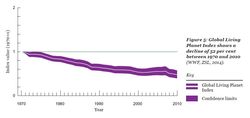
Animal populations ‘have halved since 1970’

Daniel Cressey in Nature:

Living-planet-2-jayEarth’s wild vertebrate populations have dropped to one-half the size they were in the 1970s, according to an analysis of more than 3,000 species. Researchers from the WWF wildlife NGO, headquartered in Woking, UK, and the Zoological Society of London (ZSL) aggregated data on 10,380 populations from 3,038 species into an index of the health of the five main groups of vertebrates — mammals, birds, reptiles, fishes and amphibians. Set at 1 in 1970, this index has decreased to 0.48 (meaning by 52%) since then, according to their latest report.

This analysis is the tenth ‘Living Planet Index’ from WWF and ZSL, but this year’s has a crucial difference from previous editions in that it is weighted to take account of the make-up of biodiversity in different areas. Previous versions treated every species on which data were available equally, whereas the new edition attempts to correct for the size of each taxonomic group in a region, for example by giving more weight to fish than mammals in the palearctic. The last index – published in 2012 – showed a 28% decrease between 1970 and 2008. The bleaker picture painted by the 2014 edition comes both from real declines in newer data, and from the new weighting.

More here.

Does the history of philosophy matter?

Malcolm Thorndike Nicholson in Prospect:

Bertrand-RussellIf you study philosophy at a British or American university, your education in the history of the subject will likely be modest. Most universities teach Plato and Aristotle, skip about two millennia to Descartes, zip through the highlights of Empiricism and Rationalism to Kant, and then drop things again until the 20th Century, where Frege and Russell arise from the mists of the previous centuries’ Idealism and call for a new kind of philosophy rooted in formal logic, science, and “common sense.” In most of your courses, you will probably be able to do well without reading a single paper written before the 20th century.

This is peculiar because, unlike science, philosophy is not a discipline in which new theories bury the old ones. Philosophers can resurface long after we think we’ve disposed of them. This tendency of old ideas to rise from the dead has led to some of the most interesting work in contemporary philosophy. The revival of virtue ethics owes much to figures such as Philippa Foot, whose re-evaluation of Plato, Aristotle and Nietzsche, helped her form a theory of normative ethics that offered an alternative to the two dominant schools, Kantian ethics and consequentialism. In epistemology, the celebrated American philosopher, Wilfrid Sellars, was deeply influenced by his close reading of Kant and Hegel. (Sellars also famously stated “philosophy without the history of philosophy is, if not blind, at least dumb.”) David Lewis’s reading of St Anselm and Leibniz led him to thinking about so-called “possible worlds;” now one can’t sit in a metaphysics seminar without talking about them.

Scholarship aimed at increasing our awareness of the history of philosophy is, in short, a good thing. That was my optimistic viewpoint as I began reading Peter Adamson’s Classical Philosophy: a history of philosophy without any gaps (OUP, £20), the first instalment of a series of books aimed at producing a more comprehensive history of philosophy.

More here.

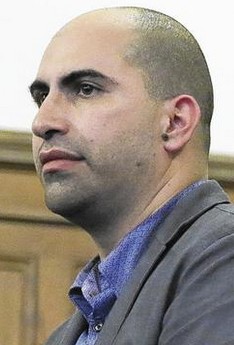
Steven Salaita: U. of I. destroyed my career

Steven Salaita in the Chicago Tribune:

ScreenHunter_823 Sep. 30 10.53Being recruited for a tenured faculty position at a major university is no small feat, nor should it be; tenure represents the pinnacle of an academic career. In my case, it involved numerous interviews with faculty in the American Indian studies program at the University of Illinois at Urbana-Champaign and an intensive review of my scholarship, pedagogy and professional service.

I survived this rigorous review and, having accepted an employment offer from the dean of the College of Liberal Arts and Sciences, resigned my tenured position at another university and prepared my family to move. A few weeks before classes were to start, and without any warning, I received a letter from the chancellor, Phyllis Wise, informing me of my termination.

How did this happen?

In the weeks before my move, I watched in anguish as Israel killed more than 2,100 people during its recent bombing of Gaza, 70 percent of them civilians, according to the United Nations. Like so many others, I took to my Twitter account. I posted tweets critical of Israel's actions, mourning in particular the death of more than 500 of Gaza's children.

More here.

God, Darwin and My College Biology Class

David P. Barash in the New York Times:

ScreenHunter_822 Sep. 30 10.33It’s irresponsible to teach biology without evolution, and yet many students worry about reconciling their beliefs with evolutionary science. Just as many Americans don’t grasp the fact that evolution is not merely a “theory,” but the underpinning of all biological science, a substantial minority of my students are troubled to discover that their beliefs conflict with the course material.

Until recently, I had pretty much ignored such discomfort, assuming that it was their problem, not mine. Teaching biology without evolution would be like teaching chemistry without molecules, or physics without mass and energy. But instead of students’ growing more comfortable with the tension between evolution and religion over time, the opposite seems to have happened. Thus, The Talk.

There are a few ways to talk about evolution and religion, I begin. The least controversial is to suggest that they are in fact compatible. Stephen Jay Gould called them “nonoverlapping magisteria,” noma for short, with the former concerned with facts and the latter with values. He and I disagreed on this (in public and, at least once, rather loudly); he claimed I was aggressively forcing a painful and unnecessary choice, while I maintained that in his eagerness to be accommodating, he was misrepresenting both science and religion.

More here.

Monday, September 29, 2014

Sunday, September 28, 2014

Virtue Ethics: an ancient solution to a modern problem

Peter D. O. Smith in Scientia Salon:

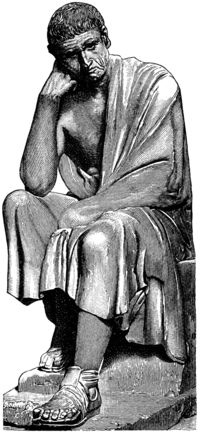
69729_aristotle_lgThis article is neither a defense of nor an attack against either religion or secularism. It treats them as well established sociological facts and no more than that. I take them as given and argue that a greater moral good can be achieved if the two belief systems find common moral ground in virtue ethics.

Moral choices infuse most aspects of our life, whether we know it or not. And a great number of these moral choices are bad ones. This is why our prisons are filled to overflowing [1], and recidivism is so high at 66% [2]. This is why we have so many war dead and this is why so many die violent deaths at the hands of murderers or radical ideologues. This is also why we have such an inequitable distribution of wealth. This is why cheating is rampant at schools and universities [3]. We maintain large standing armies to protect ourselves from the bad moral choices of others and on occasion we use it to inflict our bad moral choices on others. This is why we have no qualms in spying on our own citizens [4] or in killing without due process. This is why almost everyone has been the victim of crime, unfairness, injustice, discrimination, bullying [5], sexism, racism, ageism or other forms of bigotry, bias, and discrimination. This is why stalking is commonplace [6].

Bad moral choices touch us all and are the major cause of suffering in today’s world. Every person who has been jilted by a cheating partner has felt that suffering. Marital infidelity is the most common cause of divorce and abuse is another important cause [7]. One in five women are sexually assaulted at university [8]. Even natural disasters such as earthquakes or floods are compounded by moral failures as nations don’t respond adequately. Famines become moral failures when we cannot distribute food where and when it is needed. Our economic systems become moral failures when they turn into instruments of greed. Our political systems become moral failures when they are used for the advantage of the powerful, to exploit or neglect the weak.

The point I am making is that moral suffering is real, pervasive and needs attention. We have made great progress in reducing material suffering, but only some progress in reducing moral suffering. This is the important challenge that faces us today, to reduce moral suffering with the same degree of success that we have reduced material suffering.

More here.

The Viroid: A Tiny Emissary From the Ancient Past

Carl Zimmer in the New York Times:

ScreenHunter_820 Sep. 28 22.28In the early 1920s, farmers in New Jersey noticed their potatoes were shriveling, their leaves becoming deformed. The plants were sick with an illness that came to be known as potato spindle tuber disease. But it took almost five decades for someone to find the cause.

In 1971, Theodor O. Diener, a plant pathologist at the Department of Agriculture, discovered that the culprit is an inconceivably tiny pathogen — one-80th the size of a virus. Dr. Diener called it a viroid.

Since Dr. Diener’s initial discovery, scientists have identified nearly three dozen species of viroids that attack crops from tomatoes to coconuts, as well as flowers such as dahlias and chrysanthemums. In many cases, the only way to stop an outbreak is to destroy all the infected plants. These days many countries require that plants be certified viroid-free before being imported.

But viroids may be much more than agricultural pests. New research suggests that they existed at the earliest stages of life on Earth, enduring in their primitive state for billions of years. These are the pterodactyls of the microbial world — except that they are still very much with us. We just didn’t realize it.

More here.

To end inequality, we must realise that it isn’t about the rich, it’s about the poor

Clare Melamed in Aeon:

ScreenHunter_819 Sep. 28 22.24Close observers of the development scene will have noticed an interesting shift over the past few years. Where once institutions such as the World Bank and charities like Oxfam described their goal as simply ‘ending poverty’, today they tend to frame things in terms of poverty and inequality. Well, that makes sense: doesn’t it seem intuitively obvious that these two things must be connected in some way?

Yet those links can be surprisingly hard to bring into focus. In 15 years of working in the development sector – first for international NGOs and more recently running a research programme on poverty and inequality – I have found myself explaining over and over again exactly what the one has to do with the other. What does it matter to an impoverished farmer in South Sudan if 85 people hold as much wealth as half the world’s population? If those 85 people gave everything away, would that actually help the farmer?

The problem, I have come to think, is that there are two very different ways of thinking about inequality. The first is all about the rich. The second is all about the poor. The first is the one we usually hear about. The second is the one that really matters.

More here.

The Dismal Science

28KRUGMAN-master315-v2 (1)

Paul Krugman reviews 'Seven Bad Ideas,' by Jeff Madrick, in the NYT's Sunday Book Review (picture by Michael Lionstar):

In “Seven Bad Ideas: How Mainstream Economists Have Damaged America and the World,” Jeff Madrick — a contributing editor at Harper’s Magazine and a frequent writer on matters economic — argues that the professional failures since 2008 didn’t come out of the blue but were rooted in decades of intellectual malfeasance.

As a practicing and, I’d claim, mainstream economist myself, I’m tempted to quibble. How “mainstream,” really, are the bad ideas he attacks? How much of the problem is bad economic ideas per se as opposed to economists who have proved all too ready to drop their own models — in effect, reject their own ideas — when their models conflict with their political leanings? And was it the ideas of economists or the prejudices of politicians that led to so much bad policy?

I’ll return to those quibbles later, but Madrick’s basic theme is surely right. His bad ideas are definitely out there, have been expressed by plenty of economists, and have indeed done a lot of harm.

So what are the seven bad ideas? Actually, they aren’t all that distinct. In particular, bad idea No. 1 — the Invisible Hand — is pretty hard to distinguish from bad idea No. 3, Milton Friedman’s case against government intervention, and segues fairly seamlessly into bad idea No. 7, globalization as something that is always good. As an aside, this sometimes makes Madrick’s argument more disjointed than I’d like, with key propositions spread across nonconsecutive chapters. But there is an important point here, and Madrick has clarified my own thinking on the subject.

More here.

The Anti-Academic’s Anti-Academic

220px-ScientificReview

Charles Green in Inside Higher Ed (image from Wikimedia Commons):

Rebecca Schuman…has a Ph.D. in German studies and a forthcoming book on Kafka, Wittgenstein, and Modernism. Despite those impressive credentials, she left academe and the crumbling job prospects of German studies in 2013, so she’s well-positioned to comment on the real crises in higher education. She even professes, in one essay, “I’m a higher-ed expert.”

While I sometimes agree with her, I think she crafts fundamentally anti-academic arguments, anti-academic in that they rely heavily on unsourced and unsupported generality clothed in hyperbole. While she frames her essays with her expertise and experience, she presents a funhouse image of the academic world as the norm and recreates fabulist stereotypes of the ivory tower gone mad. Ultimately, her writing most often fails to offer substantive critique of academe’s problems and instead offers empty amusement that misleads readers about the world she claims to analyze with expertise.

Her July 15, 2014 essay, “Revise and Resubmit,” exemplifies her anti-academic methods. Most prominently in that essay, Schuman revels in psychologizing straw men, scarecrows who lack not brains but hearts: “Think of your meanest high school mean girl,” she writes, “at her most gleefully, underminingly vicious. Now give her a doctorate in your discipline, and a modicum of power over your future. That’s peer review.” The peer reviewer is a type with easily decipherable, easily dismissed motives.

Yes, Schuman’s being amusingly hyperbolic — I see Regina George and the Plastics of Mean Girls with their burn book, telling lesser academics “Stop trying to make ‘synecdochic heteronormativity’ happen. It’s not going to happen. It’s problematic.” If Schuman’s writing then moved to a more complex, realistic, or data-driven exploration of peer review, I might accept one hyperbolic stereotype — but the psychological profile of straw men predominates her argument.

More here. Rebecca Schuman responds.

He even goes so far as to perform what appears to be a rhetorical exegesis of “Revise and Resubmit,” a roast of the humanities peer-review process done in my usual style, which is a mixture of dark humor, open hyperbole, and cutting truth — and which quotes, yes, a small sample of hilarious tweets about peer-review experiences from my readers, which I culled for their sharpness from a much larger “data set” of about 100.

But yes, the piece exaggerated. Every op-ed I write does. Every sentence I say at home does! My voice has, for better or worse, basically been what it is since my first turn as a columnist at the age of 17 (I appeared bi-weekly in Eugene, Oregon’s paper of record from 1993 to 1994 — kind of a big deal, I know). But it was sharpened in graduate school in a particular vein, as I fell in love with the crotchety Austrians who would come to define my research: Robert Musil, whose over-the-top satire of a bunch of rich drifters also belies harsh truths about the decline and fall of the Austro-Hungarian dual monarchy; the playwright Johann Nepomunk Nestroy, whose untranslatable humor involves saying something that is a massive exaggeration and an unfortunate truth at the same time; Karl Kraus, the patron saint of pithy bile and my personal hero.

Is Green correct that my 1,500-word op-eds (the appropriatelength for such a medium, ahem) are not researched with the same rigor as my academic book, which took seven years to write, and for which I am receiving the standard advance of zero dollars? He is.

Military Containment is Only a Partial Solution to ISIL’s Evils

&MaxW=640&imageVersion=default&AR-140929061

Sheikh Mohammed bin Rashid Al Maktoum in The National (via Hussein Ibish):

Only one thing can stop a suicidal youth who is ready to die for ISIL: a stronger ideology that guides him onto the right path and convinces him that God created us to improve our world, not to destroy it. Credit is due to our neighbours in Saudi Arabia in this field for their successes in de-radicalising many young people through counselling centres and programmes. In this battle of minds, it is thinkers and scientists of spiritual and intellectual stature among Muslims who are best placed to lead the charge.

The second component is support for governments’ efforts to create stable institutions that can deliver real services to their people. It should be clear to everyone that the rapid growth of ISIL was fuelled by two governments’ failings: the first one made war on its own people, and the second one promoted sectarian division. When governments fail to address instability, legitimate grievances and persistent serious challenges, they create an ideal environment for hateful ideologies to incubate – and for terrorist organisations to fill the vacuum of legitimacy.

The final component is to address urgently the black holes in human development that afflict many areas of the Middle East. This is not only an Arab responsibility, but also an international responsibility, because providing grassroots opportunity and a better quality of life for the people of this region is guaranteed to ameliorate our shared problems of instability and conflict. We have a critical need for long-term projects and initiatives to eliminate poverty, improve education and health, build infrastructure, and create economic opportunities. Sustainable development is the most sustainable answer to terrorism.

Our region is home to more than 200 million young people. We have the opportunity to inspire them with hope and to direct their energies toward improving their lives and the lives of those around them. If we fail, we will abandon them to emptiness, unemployment and the malicious ideologies of terrorism.

Every day that we take a step towards delivering economic development, creating jobs, and raising standards of living, we undermine the ideologies of fear and hate that feed on hopelessness. We starve terrorist organisations of their reason to exist.

More here.

Sunday Poem

Roses

The house with the nick- and snigger-name Snort and Grunt .
Shunned trailer-house, (pocked) scorn-brunt. Side-indented,
thorn-bined, boondocked in a hollow.

In a green-holler clamber-mire of itch-moss and bramble.
Tremblescent ditch-jellies, globberous spawn-floss. Drupes of
(dapple-clinkling) bottle-glass in trees.

Strangs them old oaks of his with NEHI and liquor-pints. Magnesia!
Yard-splayed magnolia-blooms, carved of tractor-tire. Milk-
painted (fangle-plaited) barbwire-scapes and -vines.

And -fronds. A palm-shape gold with birds at the end of the yard.
Elaborated branches, branching. What is fixing to be a rose-bush
caning and twining. Is leaves.
.

by Atsuro Riley
from Romey's Order
University of Chicago Press, 2010

Really the Invisible Man Blues

Dave Marsh in Counterpunch:

“…all unorganized violence is like a blind man with a pistol.” ~ Chester Himes

KillingTrayvons1In his autobiography, Really the Blues, Mezz Mezzrow, locked up in a New York City jail on a drug charge, convinces the warden that he has a black mother and therefore must be placed in the Negro section of the prison – his life depends on it. Mezz Mezzrow, a pot proselytizer and dealer as well as a pretty good trumpet player, was white, or at least he came from an all-white family. His is one of the few real-life stories in American history in which a white man passes for black and gets away with it. Whether John Howard Griffin, author of Black Like Me, in which a middle-class white writer blackens his skin in order to research what the too-much-melanin blues are like, got away with it is open to debate. He did not die, as has been widely reported, from cancer caused by Oxsoralen, the chemical he used to darken his skin, but the fact that the idea persists thirty years after his death suggests what grim desires his project may have inspired. Griffin is not by any means the only mortal casualty of the American obsession with melanin.

Give or take Mark Twain’s Pudd’nhead Wilson, a reasonably fine novel, and Norman Mailer’s essay, “The White Negro,” which is a complete crock, that’s about the end of the literary aspect of passing for black. In Invisible Man, Ralph Ellison’s nameless protagonist, unquestionably a black citizen, has retreated to a clandestine life in a cellar in a whites-only building somewhere in New York. This man is invisible because other people refuse to see him. And throughout the story, whenever he is seen, disaster of one degree of another ensues. Somewhere among these fantasies lies a truth about George Zimmerman, who, by his own account, accidentally on purpose murdered Trayvon Martin. Somewhere in there is an authentic human being, like Mezzrow, who imagined himself a superhero. Mezz sold reefer to the stars; Louis Armstrong was his best customer. George Zimmerman stalked the streets of a podunk Florida condo community with a gun by his side, a Batman vigilante.

More here.

Basement Sanctuaries

Gesche Wurfel in lensculture:

Base2“Basement Sanctuaries” explores how apartment building superintendents decorate the basements of their buildings in Northern Manhattan, NYC. These intimate photos attempt to illuminate the process of how migrants adapt to their new homes.

The basements occupy a strange space in every apartment building. On the one hand, they feel like special sanctuaries for the supers and their families, since the supers often live in the basement. The spaces are mostly hidden from the public and from visitors, thus giving them a sense of privacy. However, the basement is also a space of work for supers and the environment is on display for the residents of the building. Under these circumstances, the supers’ decorations function as a territorial claim over the basement’s semi-public/private space. Most of the supers in Northern Manhattan are migrants from Latin America or the Caribbean, and images from their home countries might connect their new home to a past they have left behind. This can be especially important given the grueling nature of their work and the difficulty of establishing themselves in NYC.

More here.

Saturday, September 27, 2014

Among the Kurds in southeastern Turkey

John Palattella in The Nation:

ScreenHunter_816 Sep. 27 18.55The highway leading from the airport to town is new, or at least has been recently upgraded: four lanes of smooth blacktop running north-south and bordered by broad sidewalks empty under the blistering summer sun. The surrounding area is sparsely populated scrubland, but new businesses hug the edge of the road. There are car dealerships for Citroën, Fiat and Renault, and their big-box showrooms are adorned with logos that gleam as brightly as the latest models in their oversize lots. Gas stations outfitted with enough pumps to fuel a fleet of taxis are scattered along the route; several double as parking lots for idle backhoes and bulldozers. Like the airport, an elegant and airy structure where just two of the eighteen check-in windows are in use, the road is a sign of growth and a promise of more.

The scene could have been from any number of French New Wave films smitten with the sparkling stuff of urbanization they satirized. But the road is in the countryside of southeastern Turkey, not the suburbs of postwar Paris, and the path it takes from the new airport in Kiziltepe to Mardin, about twenty kilometers to the north, is evidence of an older, modernized Turkey—Citroën, Fiat and Renault have been manufacturing cars in the country for decades—as well as a more recent one. The road rises from the plains and snakes up the mountains to Mardin, and as the city’s skyline comes into view, one sees the tower cranes and residential construction projects that have become the signature of Recep Tayyip Erdogan, Turkey’s ambitious and controversial recent prime minster and newly elected president. In Mardin, the developments form an escarpment that spreads beyond the city limits into desolate valleys where unfinished apartment towers seem to waver in the heat.

More here.

The Secret Goldman Sachs Tapes

Michael Lewis at Bloomberg:

ScreenHunter_815 Sep. 27 18.09Our financial regulatory system is obviously dysfunctional. But because the subject is so tedious, and the details so complicated, the public doesn't pay it much attention.

That may very well change today, for today — Friday, Sept. 26 — the radio program “This American Life” will air a jaw-dropping story about Wall Street regulation, and the public will have no trouble at all understanding it.

The reporter, Jake Bernstein, has obtained 46 hours of tape recordings, made secretly by a Federal Reserve employee, of conversations within the Fed, and between the Fed and Goldman Sachs. The Ray Rice video for the financial sector has arrived.

More here.

The Source of Bad Writing

Steven Pinker in the Wall Street Journal:

BN-ES328_writin_G_20140925111406Why is so much writing so bad? Why is it so hard to understand a government form, or an academic article or the instructions for setting up a wireless home network?

The most popular explanation is that opaque prose is a deliberate choice. Bureaucrats insist on gibberish to cover their anatomy. Plaid-clad tech writers get their revenge on the jocks who kicked sand in their faces and the girls who turned them down for dates. Pseudo-intellectuals spout obscure verbiage to hide the fact that they have nothing to say, hoping to bamboozle their audiences with highfalutin gobbledygook.

But the bamboozlement theory makes it too easy to demonize other people while letting ourselves off the hook. In explaining any human shortcoming, the first tool I reach for is Hanlon's Razor: Never attribute to malice that which is adequately explained by stupidity. The kind of stupidity I have in mind has nothing to do with ignorance or low IQ; in fact, it's often the brightest and best informed who suffer the most from it.

I once attended a lecture on biology addressed to a large general audience at a conference on technology, entertainment and design. The lecture was also being filmed for distribution over the Internet to millions of other laypeople. The speaker was an eminent biologist who had been invited to explain his recent breakthrough in the structure of DNA. He launched into a jargon-packed technical presentation that was geared to his fellow molecular biologists, and it was immediately apparent to everyone in the room that none of them understood a word and he was wasting their time. Apparent to everyone, that is, except the eminent biologist. When the host interrupted and asked him to explain the work more clearly, he seemed genuinely surprised and not a little annoyed. This is the kind of stupidity I am talking about.

Call it the Curse of Knowledge: a difficulty in imagining what it is like for someone else not to know something that you know.

More here.