Karen Armstrong in The New York Times:
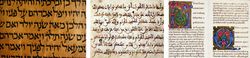
At its best, religion helps people to live creatively and kindly with the inescapable sorrow and perplexity of human existence.
More here.

Karen Armstrong in The New York Times:
At its best, religion helps people to live creatively and kindly with the inescapable sorrow and perplexity of human existence.
More here.
Pervez Hoodbhoy in Dawn:
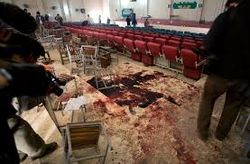
If Pakistan had a collective conscience, just one single fact could have woken it up: the murder of nearly 60 polio workers — women and men who work to save children from a crippling disease — at the hands of the fanatics. Hence the horrible inevitability: from time to time, Pakistan shall continue to witness more such catastrophes. No security measures can ever prevent attacks on soft targets. The only possible solution is to change mindsets. For this we must grapple with three hard facts. First, let’s openly admit that the killers are not outsiders or infidels.
More here.

I began learning the mathematical underpinnings of string theory during an intense period in the spring and summer of 1985. I wasn’t alone. Graduate students and seasoned faculty alike got swept up in the potential of string theory to be what some were calling the “final theory” or the “theory of everything.” In crowded seminar rooms and flyby corridor conversations, physicists anticipated the crowning of a new order.
But the simplest and most important question loomed large. Is string theory right? Does the math explain our universe? The description I’ve given suggests an experimental strategy. Examine particles and if you see little vibrating strings, you’re done. It’s a fine idea in principle, but string theory’s pioneers realized it was useless in practice. The math set the size of strings to be about a million billion times smaller than even the minute realms probed by the world’s most powerful accelerators. Save for building a collider the size of the galaxy, strings, if they’re real, would elude brute force detection.
Making the situation seemingly more dire, researchers had come upon a remarkable but puzzling mathematical fact. String theory’s equations require that the universe has extra dimensions beyond the three of everyday experience—left/right, back/forth and up/down. Taking the math to heart, researchers realized that their backs were to the wall. Make sense of extra dimensions—a prediction that’s grossly at odds with what we perceive—or discard the theory.
more here.
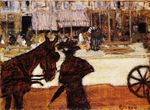
Every morning before breakfast, sketchpad in hand, Pierre Bonnard (1867-1947) went for a walk to observe and absorb his surroundings. This lifelong practice began early, when the artist launched his career in Paris in the tumultuous fin-de-siècle period, long before he left the urban sidewalks for the greener paths of Vernon and Le Cannet.1 These daily walks were his way of immersing himself, both visually and bodily, in the life of the city and – along with the radical perspectives and bold linear patterns of Japanese ukiyo-e prints2 – inspired many of his early works. Bonnard produced over one hundred paintings and prints in the 1890s that capture the bustling pace and brisk energy of Paris. He later referred to this subject as “the theater of the everyday,”3 and it is his particular vision of this sidewalk theater, and the viewer’s involvement in it, that I will investigate here, with particular attention to how his engagement with new media mattered to developing this vision. In particular, Bonnard’s use of color and his plays with space and figure-ground relations take advantage of the limits and potentials of printmaking as a medium, a medium that was more immediate and accessible yet less flexible than the painting for which he would become known. Playing off the chromatic constraints of lithography, Bonnard shuttles the viewer between foreground and background, intimate proximity and distance. In so doing he explores the duality of the street as a disorienting amalgam of schematic backdrops and looming intrusions into our personal space, both seemingly captured at the limits of our visual field.
more here.

Finding Vivian Maier investigates the case of a provokingly secretive woman who took thousands of photographs but kept them locked away, never showing or selling them during her lifetime. The documentary features interviews with people who knew Maier, including those who employed her as a nanny or who as children were her charges. They construct a fascinating, contradictory, unsettling verbal portrait of the artist, complicating rather than simplifying our understanding of her. It seems she was conscious of being a puzzle, even gleefully so: one speaker quotes Maier calling herself “the mystery woman.”
Vivian Maier was a strange, difficult person, and those who knew her have spent a lot of time trying to understand her. But when people in the film say, “Why was a nanny taking all these photographs?” or “What’s the use of taking it if no one sees it?” they reveal less about Maier than about common assumptions of what art is for, and who artists are. Maier’s photographs, to which she devoted herself rigorously but for which she never sought recognition, illustrate the paradox of someone who wanted to stay hidden yet obsessively documented her existence, a solitary outsider who could form profound, fleeting connections with strangers.
more here.
Faisal Devji in The Hindu:
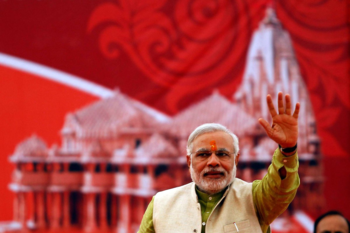
One of the peculiarities of Indian political debate is that everyone claims to be secular while accusing others of not being so. Secularism’s hegemony as an idea was made clear by L.K. Advani, when he coined the now famous term “pseudo-secular” to describe his political enemies. But if secularism is so dominant an idea, this is because it is and has always been deployed as a polemical category as much as a constitutional principle, and indeed its insertion into the Constitution by Indira Gandhi was itself a partisan act. In colonial times, for example, Congressmen identified secularism with nationalism, which was in turn held to be the real antonym of communalism. In other words it was the pluralism and popularity of the Congress, compared with the supposedly sectarian appeal of Hindu and Muslim parties, that was seen as defining its secular credentials, and this in a demographic rather than constitutional way.
Since Independence, however, secularism is increasingly opposed to communalism, with the nation no longer central to its definition. Is it therefore being separated from a strictly populist logic to assume a purely juridical character — and does this indicate the failure of the nation to demonstrate its plurality and therefore secularism, which must instead be sought in the pre-modern past? Even in the days of its alleged dominance under Nehru, secularism could hardly be said to possess its own history or even existential reality, given that its membership included both the religious and irreligious. Indeed, secularists had to lay claim to explicitly religious precedents, such as bhakti or Sufi forms of devotion, and the pluralistic festivals with which these were often associated. In other words, the condescending reference was invariably to the “folk” devotions that had never, in fact, been part of the “culture” of self-professed secularists.
And so both the Congress and the Bharatiya Janata Party (BJP) continue to invoke a populist and indeed majoritarian logic to define the secular, but the changing nature of the Indian polity has given this rhetoric a quite different meaning. For the folk elements of its demographic logic have been replaced by varieties of ostensibly high-culture religiosity that no longer needs to display any pluralism, as long as it is assumed to be “tolerant”, a term that in the nationalist past had been used for another kind of high culture, that of royalty and aristocrats like Asoka or Akbar. Nehru himself preferred this form of the secular, which also served as a historical mask for the Congress’s quasi-colonial vision of itself. Before Independence, after all, its claims to hold the demographic middle ground between religious extremes had mirrored British attempts to constitute the colonial state as a neutral third party between Hindus and Muslims, itself a classically liberal position, despite the fact that it was deployed in an illiberal political system.
Read the full article here.
More here.
Sean Carroll in Preposterous Universe:

We had an extremely productive summer, focusing on our different stances toward quantum mechanics. At the time I was a casual adherent of the Everett (many-worlds) formulation, but had never thought about it carefully. Chip was skeptical, in particular because he thought there were good reasons to believe that EQM should predict equal probabilities for being on any branch of the wave function, rather than the amplitude-squared probabilities of the real-world Born Rule. Fortunately, I won, although the reason I won was mostly because Chip figured out what was going on. We ended up writing a paper explaining why the Born Rule naturally emerges from EQM under some simple assumptions. Now I have graduated from being a casual adherent to a slightly more serious one.
But that doesn’t mean Everett is right, and it’s worth looking at other formulations. Chip was good enough to accept my request that he write a guest blog post about another approach that’s been in the news lately: a “Newtonian” or “Many-Interacting-Worlds” formulation of quantum mechanics, which he has helped to pioneer.
More here.
In the school auditorium,
the Theodore Roosevelt statue
is nostalgic
for the Spanish-American war
each fist lonely for a saber,
or the reins of anguish-eyed horses,
or a podium to clatter with speeches
glorying in the malaria of conquest.
But now the Roosevelt school
is pronounced Hernandez.
Puerto Rico has invaded Roosevelt
with its army of Spanish-singing children
in the hallways,
brown children devouring
the stockpiles of the cafeteria,
children painting Taino ancestors
that leap naked across murals.
Roosevelt is surrounded
by all the faces
he ever shoved in eugenic spite
and cursed as mongrels, skin of one race,
hair and cheekbones of another.
Once Marines tramped
from the newsreel of his imagination;
now children plot to spray graffiti
in parrot-brilliant colors
across the Victorian mustache
and monocle.
by Martin Espada
from After Aztlan
publisher: David R. Godine, 1992
David Marquand in New Statesman:
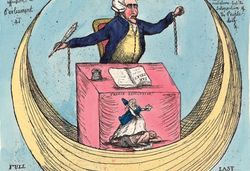
It is an arresting thought. Amartya Sen’s democracy – democracy as public reasoning – is impossible without social spaces in which reasoning can take place. With all the manifold failings of today’s American republic, the complex checks and balances that have been central to US federalism from the beginning offer a template for a system in which Sen-style democracy could flourish. I like to think that if Burke were to return from the grave, he would campaign for a British constitution based on the principle of devolved power. He was, after all, the great champion of what he called “the little platoons”, which he saw as the nurseries of public affection.
More here.
From Medical Xpress:
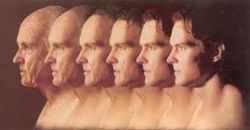
“It's really all about natural selection and survival of the fittest,” says James DeGregori, PhD, investigator at the CU Cancer Center, professor of Biochemistry and Molecular Genetics at the CU School of Medicine, and the paper's senior author. “When you're young, healthy cells are optimized to the surrounding tissue – they're the 'fittest',” DeGregori says. “At that point, any mutation that affects function makes a cell less fit, so cells with mutations, even cancer-causing mutations, are out-competed by the young, fit, healthy cells. But when the tissue landscape changes with aging, healthy cells may no longer be optimized to their surroundings. In this aged landscape, mutations may actually make certain cells better, allowing them to out-compete the normal cells and form tumors. That's why older people get cancer.”
More here.
Nassim Nicholas Taleb and Gregory F. Treverton in Foreign Affairs:
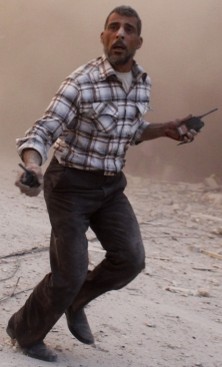
But appearances were deceiving: today, Syria is in a shambles, with the regime fighting for its very survival, whereas Lebanon has withstood the influx of Syrian refugees and the other considerable pressures of the civil war next door. Surprising as it may seem, the per capita death rate from violence in Lebanon in 2013 was lower than that in Washington, D.C. That same year, the body count of the Syrian conflict surpassed 100,000.
Why has seemingly stable Syria turned out to be the fragile regime, whereas always-in-turmoil Lebanon has so far proved robust? The answer is that prior to its civil war, Syria was exhibiting only pseudo-stability, its calm façade concealing deep structural vulnerabilities. Lebanon’s chaos, paradoxically, signaled strength. Fifteen years of civil war had served to decentralize the state and bring about a more balanced sectarian power-sharing structure. Along with Lebanon’s small size as an administrative unit, these factors added to its durability. So did the country’s free-market economy. In Syria, the ruling Baath Party sought to control economic variability, replacing the lively chaos of the ancestral souk with the top-down, Soviet-style structure of the office building. This rigidity made Syria (and the other Baathist state, Iraq) much more vulnerable to disruption than Lebanon.
More here.
Heather Havrilesky in Bookforum:

And if we narrow our focus to the No. 1 spot on the New York Times’ hardcover-nonfiction best-seller list in the twenty years since Bookforumwas first published,we discover an increasingly shrill, two-decade-long cry for help from the American people. As I Want to Tell You by O. J. Simpson (1995) and The Royals by Kitty Kelley (1997) yield to Dude, Where’s My Country? by Michael Moore (2003) and Plan of Attack by Bob Woodward (2004), you can almost see the support beams of the American dream tumbling sideways, the illusions of endless peace and rapidly compounding prosperity crumbling along with it. The leisurely service-economy daydreams of the late ’90s left us plenty of time to spend Tuesdays with Morrie and muse about The Millionaire Next Door or get worked up about The Day Diana Died. But such luxe distractions gave way to The Age of Turbulence, as our smug belief in the good life was crushed under the weight of 9/11, the Great Recession, and several murky and seemingly endless wars. Suddenly the world looked Hot, Flat, and Crowded, with the aggressively nostalgic waging an all-out Assault on Reason. In such a Culture of Corruption, if you weren’t Going Rogue you inevitably found yourself Arguing with Idiots.
More here.
Sara Black McCulloch in The New Inquiry:
Language is said to be a virus, but anxiety is the virus that language only carries. “Only,” and yet a virus is nothing without a carrier. Old misconceptions thrive on and on in our words. “We are not being invaded,” Susan Sontag wrote inIllness as Metaphor, decades ago. “The body is not a battlefield. The ill are neither unavoidable casualties nor the enemy… About that metaphor, the military one, I would say, if I may paraphrase Lucretius: Give it back to the war-makers.” Yet in our words we are still more often war-makers than nurses, far from immune or safe, terrified often that our bodies won’t heal without a fight.
Sometimes our immune systems lie to us. Autoimmune disorders attack the nonthreatening self, destroying vital body tissue, as with rheumatoid arthritis, multiple sclerosis, and Graves’ disease. Like even the best intelligence agencies, our immune systems sometimes fail to recognize when the self becomes a threat, the body a double agent: the cancer is coming from inside the house, at least where the house is flesh, and the immune system doesn’t see its cells as foreign. Some of us get chicken pox again, and shingles. Many of us still have allergies. A simple answer is that the immune system isn’t a perfect system. Another answer is that the immune system is perfect, and we just don’t know it well enough yet.
Read the full article here.
Steve Snyder in Scientia Salon:
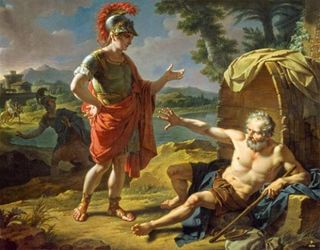
And, if they think they’re talking about Cynicism the philosophy, with a capital C, they’re dead wrong. With a lowercase spelling, cynicism as a psychological attitude may be just that. As one of the great philosophies of classical Greece, with roots in the pre-Alexandrine Hellenic era, older than Stoicism and perhaps with pre-Socratic connections, they’re dead wrong.
Even people with some interest in philosophy usually know little that is true about Cynicism: that its founder, Diogenes, told Alexander to get out of his light, and that he (Diogenes) was known for masturbating in public.
Those are (likely) true, but they are mere tidbits, and the second was trotted out more than 2,000 years ago, and from that time on, as a transparent attempt to denigrate Cynicism. A denigration which was helped, to be fair, by the fact that later Cynicism did at times — perhaps in part facing the stark nature of Roman might — become a bit more like its own caricature.
More here.
Beena Sarwar in the Huffington Post:

The innocent lives lost in Peshawar are among a staggering 50,000 civilians killed by the Taliban and their aligned groups in Pakistan since 9/11. Such civilian attacks have intensified in the last five years.
The Tehrik-i-Taliban Pakistan (TTP) said it carried out the Peshawar school attack in retaliation for the Pakistani army's ongoing military offensive against the Taliban. “This is a reaction to the killing of our children and dumping of bodies of our mujahideen [jihadis],” said a spokesman.
The attack on the Peshawar school is actually a measure of the success of the operation that was belatedly launched in June this year as it indicates the desperation of the Taliban, who had already been badly affected by America's drone strikes.
Many Pakistanis and allies in other countries like the U.S. have been demanding a decisive move against the Taliban and their aligned groups for years, but the army and government kept putting it off due to “lack of political consensus.” Leaders like former cricket hero Imran Khan have added to the confusion. Khan will condemn the Taliban but then also justify their actions by saying that they are acting in response to drone strikes or American imperialism.
More here.
Nathaniel Comfort in The Point:

That stream was increasingly polluted, Galton was convinced. Vexed by the fact that people paid more attention to breeding their cattle than themselves, in 1883 he proposed a scheme of hereditary improvement he called “eugenics,” meaning “well-born.” The stream of British germ plasm could be socially filtered, and even enriched, by persuading the “fittest” people (borrowing loosely from Darwin) to have more children; the “unfit,” fewer. A techno-optimist to the core, Galton believed that, given proper instruction, people would see the logic of this scheme and participate voluntarily. In this he was naïve—at least about the abstinence part. After 1900, eugenics became coercive, while the state’s trust in the population shriveled. Marriage restriction and sexual sterilization laws were keystones of state-run programs of hereditary improvement. When most people think of eugenics, they think of a scientifically rationalized program of racial purification, which it was. But eugenics always had a medical and public health dimension as well. The vast majority of forced sterilizations were carried out in a medical milieu—particularly in psychiatric hospitals. Eugenic sterilization was considered preventive medicine for incurable mental or other hereditary disease. This is the origin of medical genetics. Mainstream genetic medicine today isn’t eugenics, but it has a deep taproot in ideas of hereditary social control.
More here.

The uncomfortable fact about Kazan’s HUAC testimony is that it liberated him to be himself—at least in film. His relationship to the theater echoed his marriage with Thacher: genuine devotion curdled by the furious sense that making it work required denying his instincts. Kazan did have to compromise when dealing with movie executives, but that was business, and he didn’t compromise much. His four films following the back-to-back successes of On the Waterfront and East of Edenput him squarely in the forefront of the struggle to make American cinema more honest and adult.
They were very different in tone and content: Baby Doll was a gothic comedy, A Face in the Crowd a prescient portrait of media-fueled political demagoguery, Wild River a provocative reconsideration of New Deal social engineering, Splendor in the Grass a romantic melodrama. But all four had a forthright sexuality that alarmed the industry’s censorship board. In his correspondence with his studio bosses, Kazan drew a firm line: he would negotiate over trims to get the required Production Code Administration’s seal of approval, but he would not cut material he deemed essential to the story or crucial to understanding the characters, nor would he make concessions to appease pressure groups such as the National Legion of Decency.
more here.
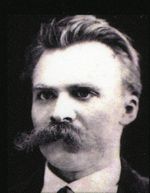
In his Basel lectures, we can begin to see how Nietzsche the philologist became Nietzsche the philosopher, the moral psychologist who would go on to diagnose the ills of modernity. He would have his readers believe that his observations were untimely, indeed timeless, but they were only partly so. Even as a young, increasingly disaffected professor of classics, Nietzsche assumed a prophetic voice, but his prophecies were woven out of the particularities of late nineteenth-century German culture in transition.
Nietzsche arrived in Basel in 1869, just two years before the Prussian victory over Napoleon III in the Franco-Prussian War and the declaration of the German Kaiserreich. He was a keen observer of Otto von Bismarck’s Kulturkampf—the decades-long conflict between the Catholic Church and a Protestant-dominated German state. Bismarck’s battle to secularize the German state was waged through bureaucratic chicanery, but Nietzsche saw it as a mere skirmish in the larger battle to define Germany’s religious and cultural future. Writing to a friend in 1870, shortly before Prussia’s military triumph, Nietzsche cautioned that “we must be philosophers enough to remain sober in the universal ecstasy so that the thief does not come and steal or diminish something to which—for me—all the greatest military deeds, even all national uprisings, cannot compare. For the coming period of culture, fighters will be needed. We must save ourselves for this.”1 For Nietzsche, the confessional conflict of the new German empire portended a larger and more significant struggle for culture. And like many of his contemporaries, he doubted that political unity would easily translate into cultural and spiritual unity.
more here.

NOVEMBER 26, 8:55 P.M. I woke to the wail of a siren last night, got to my feet, and hurried downstairs to find out what it was. My first thought was the fire alarm, even though the sound was too loud and powerful for that. Still confused from sleep, heart pounding, I ruled out the fire alarm. I hurried to the window at the far end of the house, thinking it might be the car alarm, even though I knew the sound was wrong, but the car stood unmoved and untouched in the driving snow. The siren continued to wail and now I knew it was coming from outside. Someplace close by. It had the power of an air-raid siren but was different, it went off and on.
Then it stopped. I went around and looked out all the windows. Nothing out of the ordinary. Just snow drifting along the empty road, beneath the yellow glow of the streetlights.
The clock in the kitchen showed twenty to four. I went back up to bed and fell fast asleep. When I woke, it was daytime. The sky was covered in clouds, the wind gusting, ground snow joining the flurries that filled the air. I’ll probably never find out what kind of siren it was.
more here.